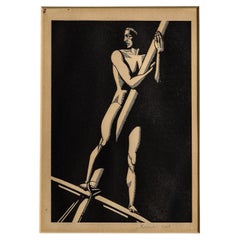
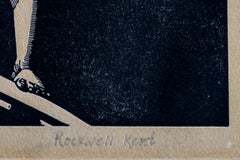
Rockwell Kent "The Lookout"
By Rockwell Kent
Located in West Palm Beach, FL
Rockwell Kent Woodcut "The Lookout" An iconic Graphic Image
Category
1930s Vintage Rockwell Kent Furniture
Materials
Paper
Rockwell Kent "The Lookout"
By Rockwell Kent
Located in West Palm Beach, FL
Rockwell Kent Woodcut "The Lookout" An iconic Graphic Image
Paper
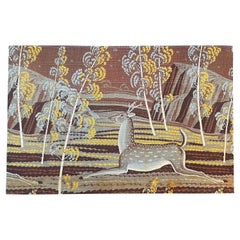
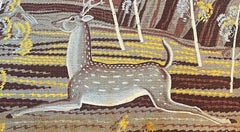
"Deer Season", Rare Art Deco Fabric Designed by Rockwell Kent, circa 1950
By Rockwell Kent
Located in Philadelphia, PA
This rare and striking Art Deco fabric panel, featuring a running deer in a forest expressed in rich red and maize, was designed by Rockwell Kent for Bloomcraft Inc. in 1950. The de...
Fabric
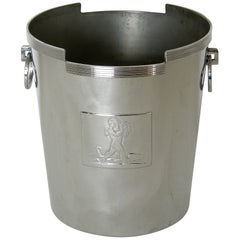
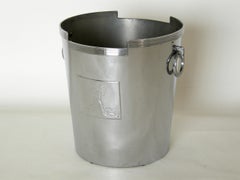
Chase Art Deco Chrome Champagne Ice Bucket Lurelle Guild Rockwell Kent Design
By Rockwell Kent, Chase Brass and Copper Company
Located in Chicago, IL
This chrome-plated champagne bucket has a Classic Art Deco style. The top edge is stepped and trimmed with a ribbed band; the front is adorned with a decorative plaque depicting Bacc...
Chrome
$2,500Sale Price|41% Off
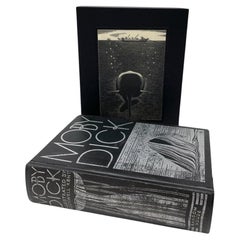
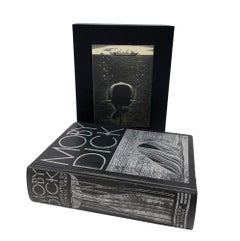
Moby Dick by Herman Melville, Illustrated by R. Kent, First Trade Edition Thus
By Rockwell Kent
Located in Colorado Springs, CO
Melville, Herman. Moby-Dick. New York: Random House, 1930. Illustrated by Rockwell Kent. First trade edition (thus). Octavo. Original publisher’s pictorial black front cloth board, s...
Fabric, Paper

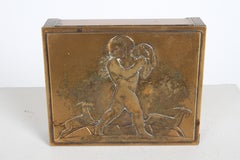
Rare Rockwell Kent for Chase Bacchus Art Deco Copper Cigarette Box
By Rockwell Kent, Chase Brass and Copper Company
Located in St. Louis, MO
Rockwell Kent (American, 1882-1971) Rare Bacchus Art Deco copper cigarette box for Chase Chrome & Brass company, only offered in 1935 and 1936. Rockwell Kent designed only three items for chase, all with the same young Bacchus motiff, and all are considered rare today. The other two were a "Wine cooler" and "Wine bottle stand...
Copper
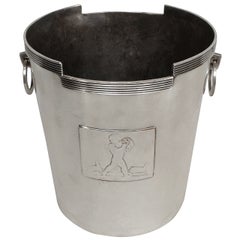
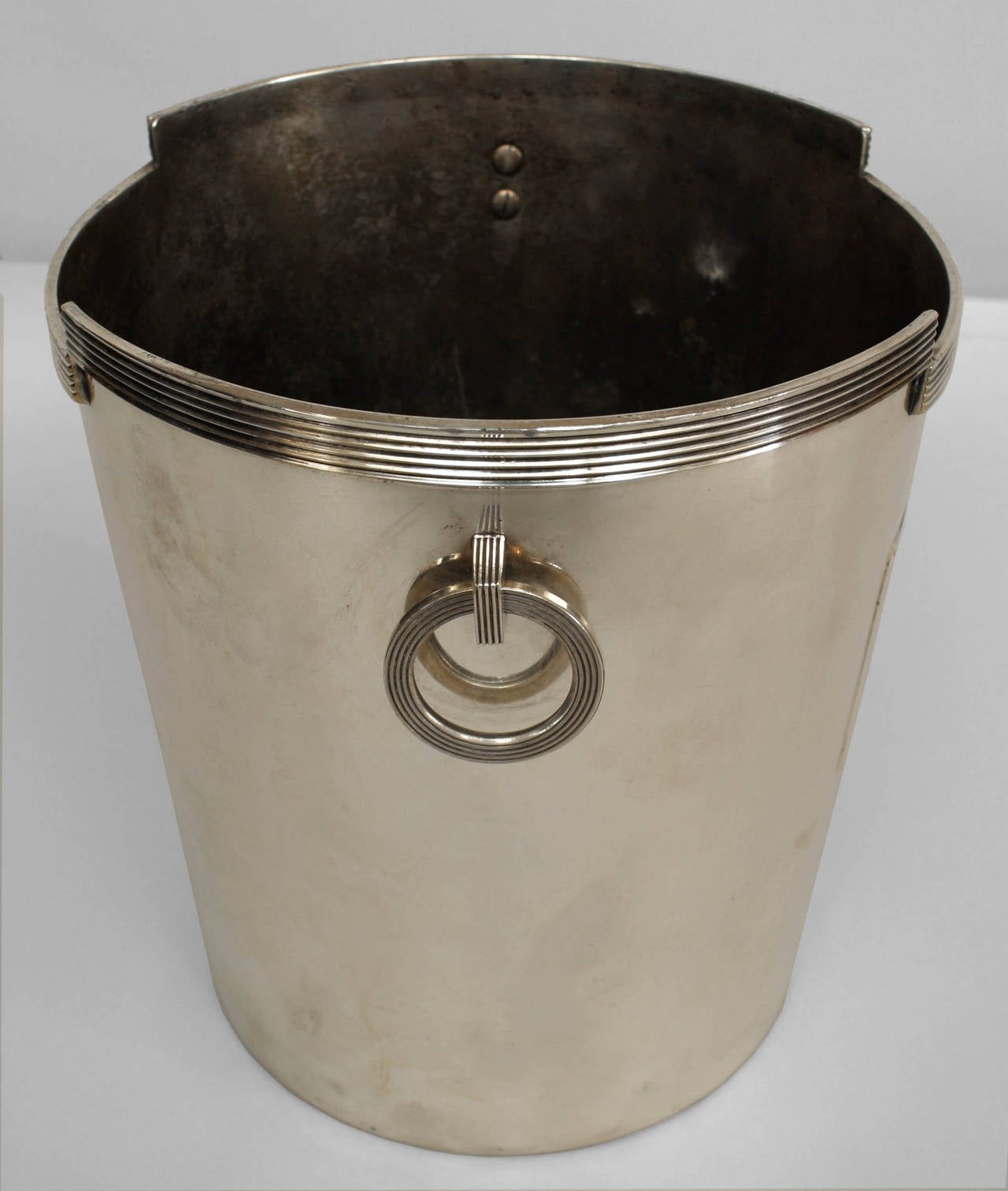
Art Deco Chrome Plated Champagne Bucket by Rockwell Kent, 1930s
By Rockwell Kent, Chase Brass and Copper Company
Located in Queens, NY
American Art Deco chrome plated champagne bucket with geometric shape & fluted trim with ring handles; panel with figure & 2 deer designed by Rockwell Kent (CHASE) (Ref: Magazine Ant...
Chrome

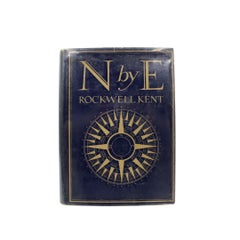
N by E by Rockwell Kent, First Trade Edition in Dust Jacket, 1930
By Rockwell Kent
Located in Colorado Springs, CO
Kent, Rockwell. N by E. New York: Brewer & Warren, 1930. Printed by Lakeside Press, Chicago. First trade edition. In the publisher's original beige cloth boards, embossed in navy...
Paper
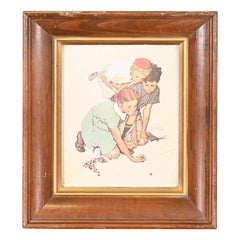
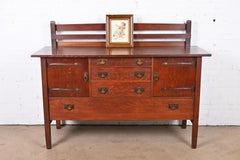
Vintage Norman Rockwell Framed Print of Children Playing Marbles
By Norman Rockwell
Located in South Bend, IN
A vintage Norman Rockwell framed print of children playing marbles. Recently procured from Frank Lloyd Wright's DeRhodes House. Measures: 11.5"W ...
Glass, Wood, Paper
$925 / set
H 2.5 in W 7.25 in D 3.125 in
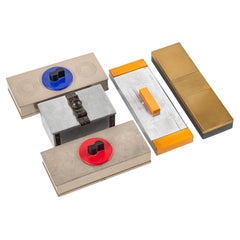
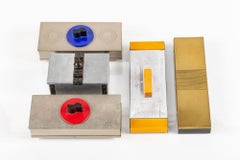
Rare Antique Art Deco Chase & Revere Metal Cigarette Smoking Boxes 1930s
By Chase and Co., Revere
Located in Detroit, MI
Rare Antique Art Deco Chase & Revere Metal Cigarette Smoking Boxes 1930s A collection of five rare antique Art Deco Chase metal cigarette and smoking boxes. Beautiful, collectib...
Metal, Copper, Steel, Chrome
$899
H 9.25 in W 10 in D 7.75 in
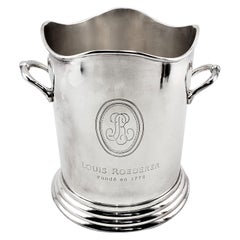
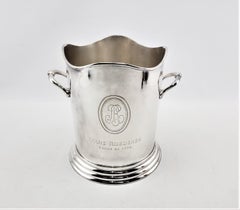
Louis Roederer Commemorative Mid-Century Era Chrome Plated Champagne Bucket
Located in Hamilton, Ontario
This silver or chrome plated champagne bucket is unsigned, but presumed to have originated from France and date to approximately 1960 and done in a Renaissance Revival style. The champagne bucket was made to advertise or commemorate the highly respected Louis Roederer...
Silver Plate
$2,120
H 0.6 in W 3.75 in D 2.96 in
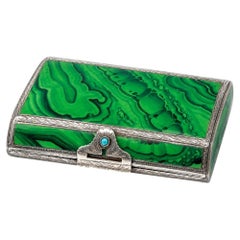
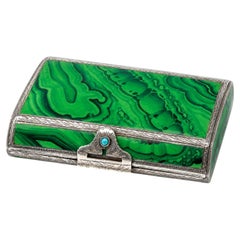
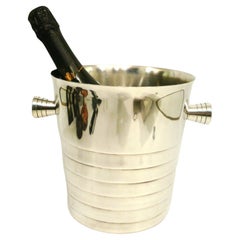
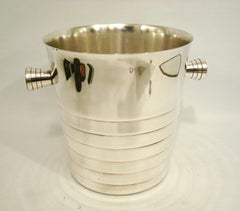
Rare Art Deco 925 Sterling Silver Import Malachite Enamel Cigarette Case 111g
Located in Reading, Berkshire
A striking Art Deco cigarette case dating from the early 20th century, crafted in 925 sterling silver and decorated with vivid green malachite-effect enamel. The gently curved recta...
Malachite, Metal, Sterling Silver, Enamel
$1,650Sale Price|25% Off
H 8.08 in Dm 10.04 in
Christofle Art Deco / Modern Design Champagne, Wine Cooler, France, 1970s
By Christofle
Located in Buenos Aires, Olivos
Christofle Art Deco design champagne, wine cooler, France, 1980s. Very chic! We have specialized in the sale of Art Deco and Art Nouveau and Vintage styles since 1995. If you have ...
Metal
$48,000
H 0.25 in W 72 in D 42 in
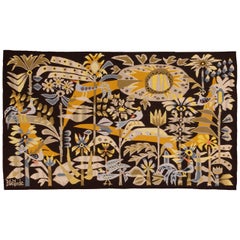
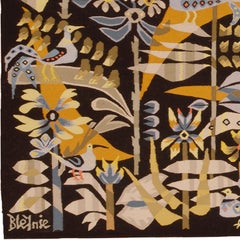
French Art Deco Tapestry, Handwoven Wool, Signed, Circa 1970s, 72x42"
Located in New York, NY
French Art Deco tapestry France, circa 1970s Handwoven Signed: Bleynie.
Wool
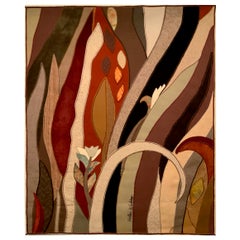

$8,500
H 67 in W 82 in D 1 in
One of a Kind Fabric Collage Tapestry Designed and Hand Made by Helen Webber
By Helen Webber
Located in New York, NY
Unique one of a kind custom tapestry designed and hand made by California master tapestry artist Helen Webber (American 1928-2019). The artist utilizes a collage technique combining...
Tapestry
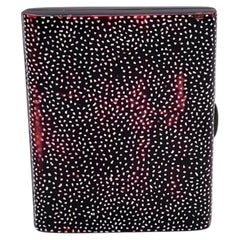
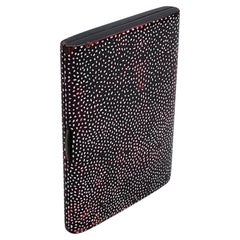
$12,000
H 3.25 in W 2.63 in D 0.38 in
Rare Jean Dunand Art Deco Cigarette Case, Circa 1930 – Bronze & Eggshell Lacquer
By Jean Dunand
Located in Red Lion, PA
Rare Jean Dunand Art Deco Cigarette Case, Circa 1930 – Bronze, Coquille d’Œuf, and Lacquer This exceptional Art Deco Jean Dunand cigarette case,...
Bronze
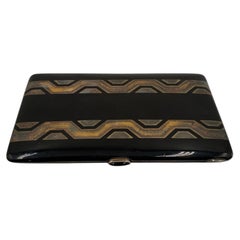
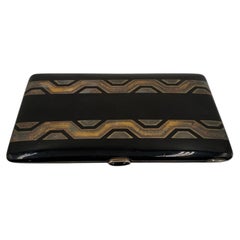
$2,500
H 0.2 in W 3.35 in D 5.12 in
French Art Deco Silver and Black Lacquer Cigarette Box Jean Dunand
By Jean Dunand
Located in Buenos Aires, Argentina
An exceptional French Art Deco cigarette box, dating to approximately 1930, crafted in silver with elegant black lacquer decoration accented by gilt details. This refined piece perfe...
Silver

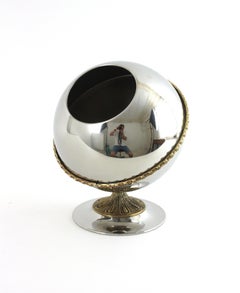
Spanish Ball Footed Ice Bucket Champagne / Wine Cooler
By Valenti
Located in Barcelona, ES
Eye-catching Midcentury Ball Shaped Ice Bucket with Bronce Details. This sexy stainless steel and brass wine chiller features a ball standing on ba...
Metal, Brass, Steel, Stainless Steel
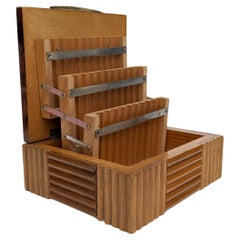
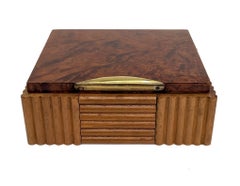
Art Deco Walnut Cigar / Cigarette Box, c1930
Located in Devon, England
Wonderfully styled Art Deco cigar box with a internal concertina three tier cigar/ cigarette dispenser with chrome accents. Originates from France, in good vintage condition with no ...
Brass
$2,000Sale Price|20% Off
H 22.25 in W 17.75 in D 1 in
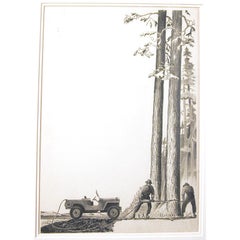
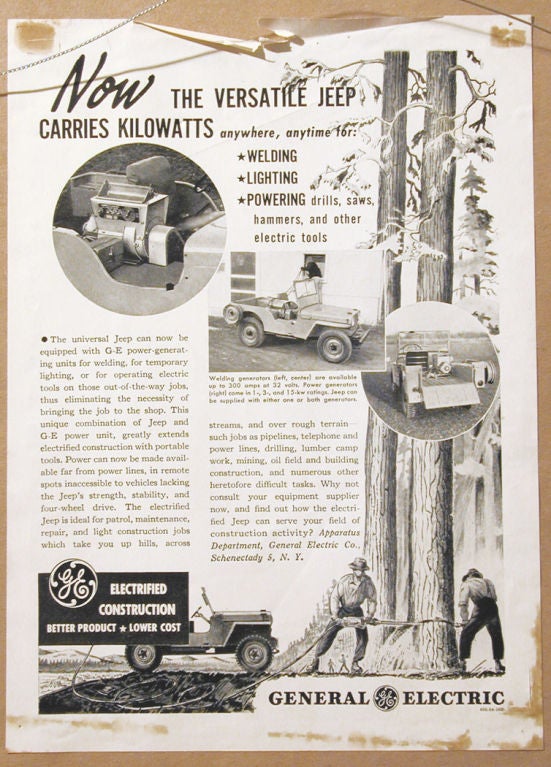
Drawing for General Electric/Jeep, possibly by Rockwell Kent
By Rockwell Kent
Located in Philadelphia, PA
This original drawing was created for an advertisement by General Electric for its portable power generators, here shown powering a saw wielded by two lumberjacks. Attributed to Roc...
Paper
Sold
H 9.25 in W 6.25 in D 1.63 in
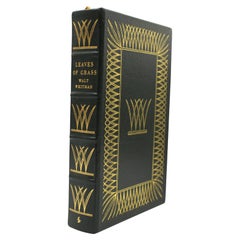
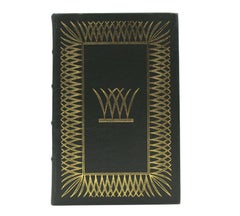
The Leaves of Grass by Walt Whitman, Illustrated by Rockwell Kent, Easton Press
By Walt Whitman, Rockwell Kent
Located in Colorado Springs, CO
Whitman, Walt. The Leaves of Grass. Norwalk: Easton Press, 1977. The 100 Greatest Books Ever Written. Collector's Edition. Illustrations by Rockwell Kent. Bound in original full gree...
Leather, Silk, Paper

Sold
H 8.57 in W 6.5 in D 1.44 in
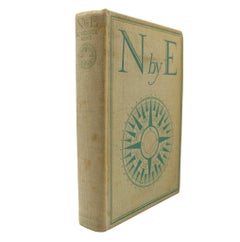
N by E by Rockwell Kent, Illustrated by Rockwell Kent, First Trade Edition, 1930
By Rockwell Kent
Located in Colorado Springs, CO
Kent, Rockwell. N by E. New York: New York Literary Guild, 1930. Printed by Lakeside Press, Chicago. First trade edition. In the publisher's original tan boards, embossed in green to...
Fabric, Paper
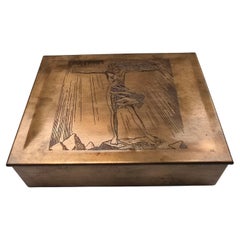
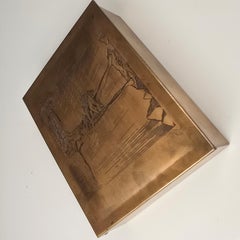
Rockwell Kent Etched Art Deco Brass Box
By Rockwell Kent
Located in Kilmarnock, VA
A stunning Art Deco box made out of brass with etched image by Kent made in 1928 for A.G. Spalding Bros, 52p Fifth Ave and executed by Chade Brass. The engraved image is of "Sally"...
Brass
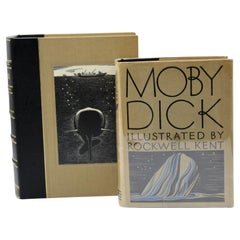
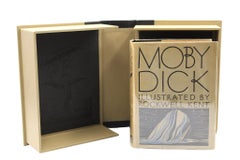
Moby Dick by Herman Melville, Illustrated by Rockwell Kent, 1930
By Rockwell Kent
Located in Colorado Springs, CO
Melville, Herman. Moby-Dick. New York: Random House, 1930. Illustrated by Rockwell Kent. First trade edition (thus). Octavo. Original publisher’s pictorial black cloth boards, stamped in silver. Original pictorial dust jacket. Presented with new archival ¼ leather and cloth clamshell case, with raised bands, gilt tooling and titles to spine. Presented is a first trade edition (thus) of Moby-Dick; Or, the Whale by Herman Melville. First published in 1851, the book was reissued by Lakeside Press in 1930 in a three-volume limited edition, the first to feature Rockwell Kent's beautiful illustrations and limited to only 1000 copies. The limited edition quickly sold out and was followed by an equally popular one-volume trade edition, published later that year by Random House and printed by Lakeside Press. These two illustrated Rockwell Kent editions helped establish Moby-Dick as an American classic. The book featured here is the small format, one-volume first trade edition (thus), filled with Kent’s numerous illustrations. It is presented in the publisher’s original pictorial black cloth boards, stamped in silver, with the original illustrated dust jacket, and a new archival ¼ leather and clamshell case. Herman Melville began writing Moby-Dick in February of 1850. In preparation for his book, Melville spent a substantial amount of time researching the whaling business on a whole. The historical ship, Essex, that was attacked by a sperm whale in 1820 was a major inspiration for much of Melville’s plot. Even the memorable name of the monstrous whale in the story is derived from a historically aggressive whale off the coast of Chile named Mocha Dick. Melville also drew inspiration from his own time as a sailor in the 1840s. The book was first published in three volumes as The Whale in London in October 1851, by Richard Bentley. In November of that same year, it was published in New York under its definitive title, Moby-Dick; or, The Whale, in a single-volume edition by Harper and Brothers. Moby-Dick was not a critical or popular success in Melville’s lifetime. Fewer than 4,000 copies were sold and the book was decades out of print by the turn of the twentieth century. The novel eventually received a positive reception from readers, literary figures, and critics in the 1920s. Most notably, biographer Raymond M. Weaver’s August 1919 article in The Nation, titled “The Centennial of Herman Melville,” and his subsequent full-length biography helped launch the “Melville Revival” of the 1920s. Moby-Dick was also well considered in critic Carl Van Doren’s discussion of “The American Novel” in 1921 and novelist D. H. Lawrence’s “Studies in Classic American Literature” in 1923. With the help of these 1920s literary tastemakers, Melville and Moby-Dick were rescued from historical obscurity and secured their place in the American literary canon. As Moby-Dick came to be viewed as a great work of American literature, it started to appear in expensive editions geared toward collectors of rare and special books. When Lakeside Press decided to launch their "Four American Books" campaign, they reached out to painter and illustrator Rockwell Kent. Lakeside Press asked Kent to design an illustrated edition of Richard Henry Dana...
Leather, Fabric, Paper
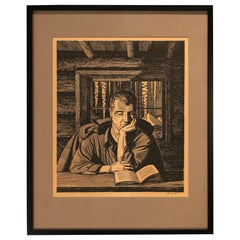
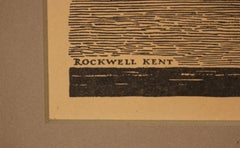
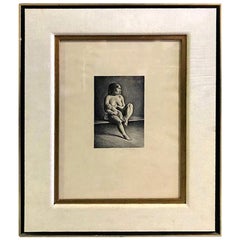
1938 "Books Make the Home" Print by Rockwell Kent
By Rockwell Kent
Located in Chapel Hill, NC
1938 "Books Make the Home" print by Rockwell Kent. American, 1882-1971. Signed in print & in pencil, lower right. Not examined out of frame. Image: 13 11/16" x 11 6/16". Frame: 21 3/...
Paper
Sold
H 1.63 in W 6.5 in D 5.38 in
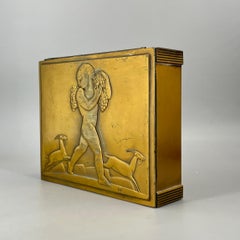
1930s Rockwell Kent Bacchus Copper Cigarette Box Chase Art Deco Relief Sculpture
By Rockwell Kent, Chase Brass and Copper Company
Located in Hyattsville, MD
"An incredibly rare piece of American Art Deco history. A "Bacchus" cigarette box designed by Rockwell Kent (American, 1882-1971) for the Chase Company. On...
Copper
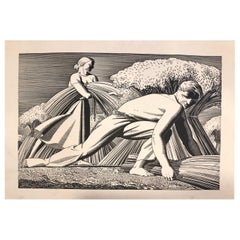
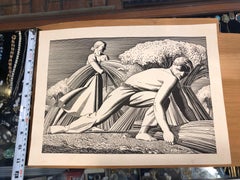
Rockwell Kent 1934 "Harvest Time"
By Rockwell Kent
Located in Redding, CT
Rockwell Kent 1934 "Harvest Time". Unsigned print. Excellent detailed masterpiece. Rare subject matter. Done for the Commercial National Bank of NY, Nice piece of original advertising art...
Paper

Sold
H 22 in W 18 in D 1.6 in
Rockwell Kent Pencil Signed Lithograph "Greenland Mother, Nursing Child", 1934
By Rockwell Kent
Located in Studio City, CA
A wonderful image by American artist Rockwell Kent. This work can be found in the Philadelphia Museum of Art, the Cleveland Museum of Art and the Fine Arts Museums of San Francisc...
Paper
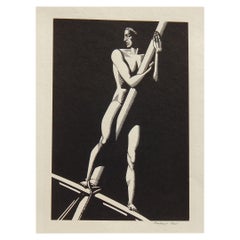

Rockwell Kent Original Wood Engraving, 1930, "The Lookout"
By Rockwell Kent
Located in Phoenix, AZ
Rockwell Kent (1882-1971) wood engraving, 1930. Image measures: 8.75" H x 6" W. #51 in the Burne Jones book. Presents in an 8-ply museum mat measuring approximately 16" H x 12" W. ...
Paper
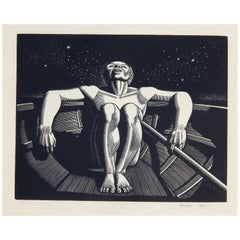
Rockwell Kent Original Wood Engraving, 1933 "Drifter"
By Rockwell Kent
Located in Phoenix, AZ
Rockwell Kent original wood engraving, 1933. Signed in pencil lower right. 5.38" H x 6 7/8" W image size. Title: Drifter. #92 Kent Raisonne. Edi...
Paper

Sold
H 0.79 in W 7.88 in D 11.42 in
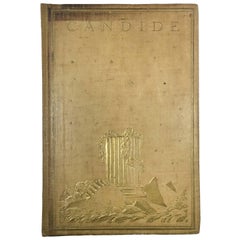
Candide, Voltaire, Illustrated by Rockwell Kent 'Signed and Numbered', 1928
By Rockwell Kent, Voltaire
Located in CA, CA
First in this edition, 792 of 1470, published by Random House, 1928. This edition of Jean François Marie Arouet de Voltaire’s Classic novel, ‘Candide’ is decorated beautifully on ev...
Paper
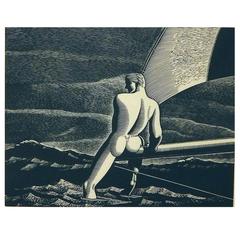
Rockwell Kent Original Wood Engraving, 1931 "Fair Wind"
By Rockwell Kent
Located in Phoenix, AZ
Rockwell Kent original wood engraving. Pencil signed lower right 5.5" H x 6.88" W image size. Edition: 170. #383 in the Danburn Jones book. Title: Fair Wind...