Roland Ayers Paintings

American, 1932-2014

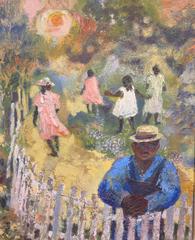
Roland Ayers was born on July 2, 1932, the only child of Alice and Lorenzo Ayers and grew up in the Germantown district of Philadelphia. Ayers served in the US Army (stationed in Germany) before studying at the Philadelphia College of Art (currently University of the Arts). He graduated with a BFA in art education, 1954. He traveled Europe, 1966–67, spending time in Amsterdam and Greece in particular. During this period, he drifted away from painting to focus on linear figurative drawings of a surreal nature. His return home inaugurated the artist’s most prolific and inspired period (1968–1975). Shortly before his second major trip abroad in 1971–72 to West Africa, Ayers began to focus on African themes and African American figures populated his work almost exclusively. Despite Ayers’ travel and exploration of the world, he gravitated back to his beloved Germantown, a place he endowed with mythological qualities in his work and literature. His autobiographical writing focuses on the importance of place during his childhood. Ayers’ journals meticulously document the ethnic and cultural make-up of Germantown and tell a compelling story of class marginalization that brought together poor families despite racial differences. The distinctive look and design of Germantown inform Ayers’ visual vocabulary. It is a setting with distinctive Gothic Revival architecture and haunting natural beauty. These characteristics are translated and recur in the artist’s imagery. During his childhood, one of the only books in the Ayers household was an illustrated Bible. The images within had a profound effect on the themes and subjects that would appear in his adult work. Figures in Ayers’ drawing often seem trapped in a narrative of loss and redemption. Powerful women loom large in the drawings, they suggest the female role models his journal record in early life. The drawings can sometimes convey a strong sense of conflict and at other times, harmony. Nature and architecture seem to have an antagonistic relationship that is, ironically, symbiotic. A critical turning point in the artist’s career came in 1971, when he was included in the extremely controversial Whitney Museum show, Contemporary Black Artists in America. The exhibition gave Ayers an international audience and served as a calling card for introductions he would soon make in Europe. Ayers is a particularly compelling figure in a period when black artists struggled with the idea of authenticity. A question often asked was “Is your work too black or not black enough?” Abstractionists were considered by some peers to be sell-outs, frauds or worse. Figurative work was accused of being either sentimental or politically radical depending on the critical source. Ayers made the choice early on to be a figurative artist but considered his work devoid of political content. Organizations such as Chicago’s Afri-Cobra in the late 1960s asserted that the only true black art of any relevance must depict the black man and woman. A martial agenda of this nature trivialized the work in Ayers’ view. A devotee of Eastern religions, Ayers sought to explore deeper subjects of a less topical nature, thereby stepping outside political discourse. This is not to suggest that he was a man who rejected the physical world. He was profoundly interested in awareness of the environment and how it relates to self-awareness. He often spoke of universality and timelessness as qualities to strive for in his art. Roland Ayers, In His Own Words, ”A person who refuses or is unable to give in to the consensus of his or her society may retain the capacity to see the world in a vastly different way. That person, in addition to having his or her construct of the world — and we all have that — usually has also retained the capacity to be more aware of that unique way of seeing as well as to use it."

to
2
2
Overall Width
to
Overall Height
to
2
2
2
1
1
2
2
36
787
758
753
665
2
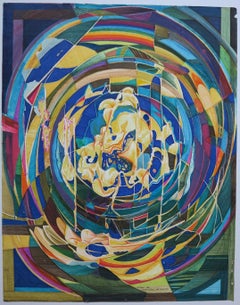
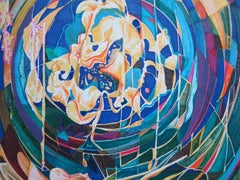
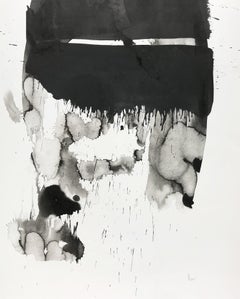
Artist: Roland Ayers
Untitled
Untitled

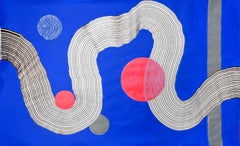
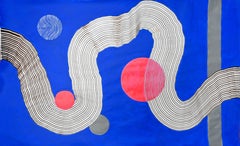
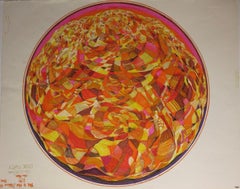
Roland AyersUntitled, 1982

$960Sale Price|20% Off

Untitled

By Roland Ayers

Located in Wilton Manors, FL

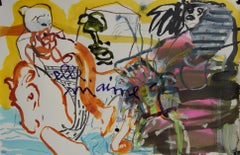
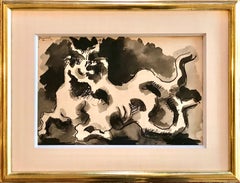
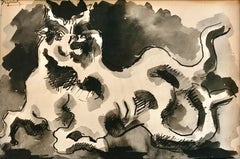
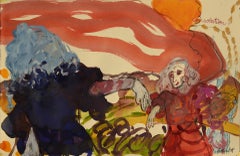
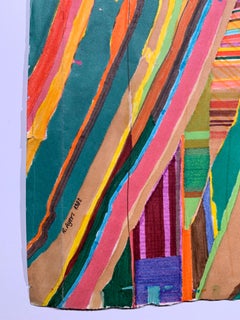
Roland Ayers (1932-2017). Untitled, 1983. Ink on paper, measures 17 x 23 inches. Unframed and unmounted. Signed and dated lower left. Ayers holds the distinction of having participated in the first important survey of African-Americans, Contemporary Black Artists in America, a 1971 show at The Whitney. Biography: Artist and art educator, Roland Ayers was born on July 2, 1932, the only child of Alice and Lorenzo Ayers, and grew up in the Germantown district of Philadelphia. Ayers served in the US Army (stationed in Germany) before studying at the Philadelphia College of Art (currently University of the Arts). He graduated with a BFA in Art Education, 1954. He traveled Europe 1966-67, spending time in Amsterdam and Greece in particular. During this period, he drifted away from painting to focus on linear figurative drawings of a surreal nature. His return home inaugurated the artist’s most prolific and inspired period (1968-1975). Shorty before his second major trip abroad in 1971-72 to West Africa, Ayers began to focus on African themes, and African American figures populated his work almost exclusively. In spite of Ayers’ travel and exploration of the world, he gravitated back to his beloved Germantown, a place he endowed with mythological qualities in his work and literature. His auto-biographical writing focuses on the importance of place during his childhood. Ayers’ journals meticulously document the ethnic and cultural make-up of Germantown, and tell a compelling story of class marginalization that brought together poor families despite racial differences. The distinctive look and design of Germantown inform Ayers’ visual vocabulary. It is a setting with distinctive Gothic Revival architecture and haunting natural beauty. These characteristics are translated and recur in the artist’s imagery. During his childhood, one of the only books in the Ayers household was an illustrated Bible. The images within had a profound effect on the themes and subjects that would appear in his adult work. Figures in an Ayers’ drawing often seem trapped in a narrative of loss and redemption. Powerful women loom large in the drawings: they suggest the female role models his journals record in early life. The drawings can sometimes convey a strong sense of conflict, and at other times, harmony. Nature and architecture seem to have an antagonistic relationship that is, ironically, symbiotic. A critical turning point in the artist’s career came in 1971 when he was included in the extremely controversial Whitney Museum show, Contemporary Black Artists in America. The exhibition gave Ayers an international audience and served as a calling card for introductions he would soon make in Europe. Ayers is a particularly compelling figure in a period when black artists struggled with the idea of authenticity. A questioned often asked was “Is your work too black, or not black enough?” Abstractionists were considered by some peers to be sell-outs, frauds or worse. Figurative* work was accused of being either sentimental or politically radical depending on the critical source. Ayers made the choice early on to be a figurative artist, but considered his work devoid of political content. Organizations such as Chicago’ s Afri-Cobra in the late 1960‘s asserted that the only true black art of any relevance must depict the black man and woman...

Category

1980s Abstract Roland Ayers Paintings

Materials

Paper, Ink
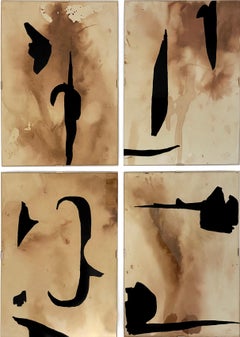
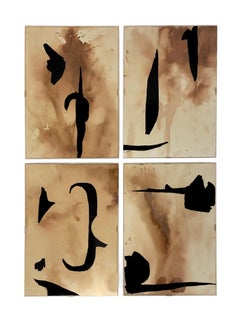
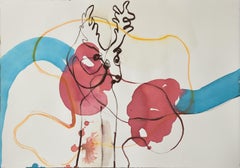
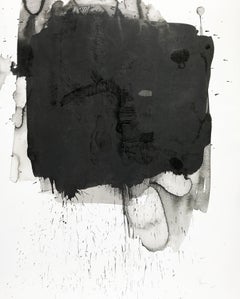
Improvisation abstract African-American artist painting.

Improvisation abstract African-American artist painting.

By Roland Ayers

Located in Wilton Manors, FL

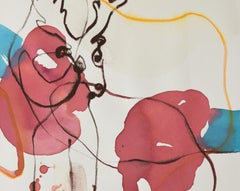
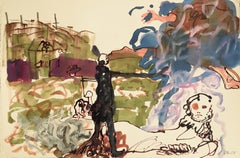
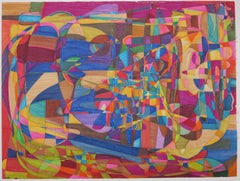
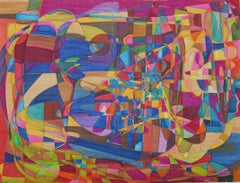
Roland Ayers (1932-2017). Improvisation, 2nd Series, #5. Ink on paper, measures 19 x 24 inches. Unframed and unmounted. Signed and dated lower right, titled lower left. There are a few minor areas of loss in margins as depicted in close-up photos. Additionally, there a a few minor tears in margins. Ayers holds the distinction of having participated in the first important survey of African-Americans, Contemporary Black Artists in America, a 1971 show at The Whitney. Biography: Artist and art educator, Roland Ayers was born on July 2, 1932, the only child of Alice and Lorenzo Ayers, and grew up in the Germantown district of Philadelphia. Ayers served in the US Army (stationed in Germany) before studying at the Philadelphia College of Art (currently University of the Arts). He graduated with a BFA in Art Education, 1954. He traveled Europe 1966-67, spending time in Amsterdam and Greece in particular. During this period, he drifted away from painting to focus on linear figurative drawings of a surreal nature. His return home inaugurated the artist’s most prolific and inspired period (1968-1975). Shorty before his second major trip abroad in 1971-72 to West Africa, Ayers began to focus on African themes, and African American figures populated his work almost exclusively. In spite of Ayers’ travel and exploration of the world, he gravitated back to his beloved Germantown, a place he endowed with mythological qualities in his work and literature. His auto-biographical writing focuses on the importance of place during his childhood. Ayers’ journals meticulously document the ethnic and cultural make-up of Germantown, and tell a compelling story of class marginalization that brought together poor families despite racial differences. The distinctive look and design of Germantown inform Ayers’ visual vocabulary. It is a setting with distinctive Gothic Revival architecture and haunting natural beauty. These characteristics are translated and recur in the artist’s imagery. During his childhood, one of the only books in the Ayers household was an illustrated Bible. The images within had a profound effect on the themes and subjects that would appear in his adult work. Figures in an Ayers’ drawing often seem trapped in a narrative of loss and redemption. Powerful women loom large in the drawings: they suggest the female role models his journals record in early life. The drawings can sometimes convey a strong sense of conflict, and at other times, harmony. Nature and architecture seem to have an antagonistic relationship that is, ironically, symbiotic. A critical turning point in the artist’s career came in 1971 when he was included in the extremely controversial Whitney Museum show, Contemporary Black Artists in America. The exhibition gave Ayers an international audience and served as a calling card for introductions he would soon make in Europe. Ayers is a particularly compelling figure in a period when black artists struggled with the idea of authenticity. A questioned often asked was “Is your work too black, or not black enough?” Abstractionists were considered by some peers to be sell-outs, frauds or worse. Figurative* work was accused of being either sentimental or politically radical depending on the critical source. Ayers made the choice early on to be a figurative artist, but considered his work devoid of political content. Organizations such as Chicago’ s Afri-Cobra in the late 1960‘s asserted that the only true black art of any relevance must depict the black man and woman...

Category

1980s Abstract Roland Ayers Paintings

Materials

Paper, Ink
Related Items
CENTERED - Oil Gold Leaf on Canvas, abstract contemporary, white, brown

CENTERED - Oil Gold Leaf on Canvas, abstract contemporary, white, brown

By Yuri Figueroa

Located in Signal Mountain, TN

"Snowy Mudslide" features the central, gold leaf circle found in Yuri Figueroa's oil paintings. The geometric gold leaf circle is surrounded by layered oil on canvas. Yuri builds tex...

Category

2010s Abstract Roland Ayers Paintings

Materials

Gold Leaf

1

Carol Schanker1

$12,000

H 40 in W 60 in

1

Located in New York, NY

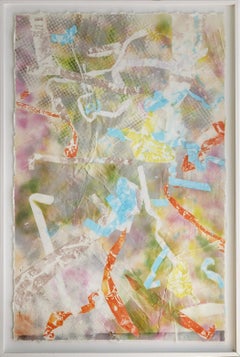
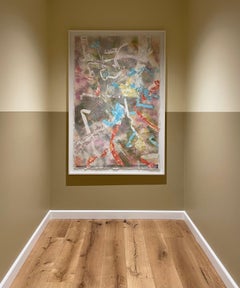
Abstract painting. Acrylic paint and ink on archival paper. In white frame.

Category

2010s Abstract Roland Ayers Paintings

Materials

Ink, Acrylic, Archival Paper

The Secret Life of Plants (Abstract Painting)

The Secret Life of Plants (Abstract Painting)

By Gudrun Mertes-Frady

Located in London, GB

The Secret Life of Plants (Abstract Painting) Sumi Ink on thin Kozo - Unframed Mertes-Frady creates layered, expressionistic, abstract compositions She is inspired by instinct and ...

Category

2010s Abstract Roland Ayers Paintings

Materials

Paper, Ink
0218-11
0218-11

Tracey Adams0218-11, 2018

$1,808

H 18.9 in W 12.6 in

0218-11

By Tracey Adams

Located in London, GB

Pigmented wax and ink on Shikoku paper. Unframed. Working on paper has always been an important part of Tracey Adams daily practice. For almost thirty years, drawing has provided a...

Category

2010s Abstract Expressionist Roland Ayers Paintings

Materials

Paper, Ink, Wax, Pigment

Fire and ice (Abstract Painting)

Fire and ice (Abstract Painting)

By Gudrun Mertes-Frady

Located in London, GB

Fire and ice (Abstract Painting) Ink on handmade paper - Unframed Mertes-Frady creates layered, expressionistic, abstract compositions She is inspired b...

Category

2010s Abstract Roland Ayers Paintings

Materials

Paper, Ink
0118.5
0118.5

Tracey Adams0118.5, 2018

$1,809

H 18.9 in W 12.6 in

0118.5

By Tracey Adams

Located in London, GB

Pigmented wax and ink on Shikoku paper - Unframed Working on paper has always been an important part of Tracey Adams daily practice. For almost thirty years, drawing has provided a ...

Category

2010s Abstract Expressionist Roland Ayers Paintings

Materials

Paper, Ink, Wax

Warren St 18
Warren St 18

Peter SorianoWarren St 18, 2011

$2,714

H 12.6 in W 34.85 in

Warren St 18

By Peter Soriano

Located in London, GB

Spray paint, pencil, ink, watercolor on paper. Unframed. Peter Soriano is a Philippines-born French-American abstract artist who divides his time between New York City and Penobscot...

Category

2010s Abstract Roland Ayers Paintings

Materials

Paper, Ink, Mixed Media, Spray Paint, Watercolor, Pencil

Test Pattern 6 (Grey study)

Test Pattern 6 (Grey study)

By Tom McGlynn

Located in London, GB

Ink, gouache and acrylic on Fabriano paper - Unframed. Test Pattern series sets up a generic template as a poetic prompt to consider how behavioural responses to color and form stim...

Category

Early 2000s Abstract Roland Ayers Paintings

Materials

Paper, Ink, Acrylic, Gouache

LETTER PRESSED INK ON PAPER, PANEL V - Geometric Abstraction w/ Earth Tones

LETTER PRESSED INK ON PAPER, PANEL V - Geometric Abstraction w/ Earth Tones

By Jessica Gatlin

Located in Signal Mountain, TN

An exercise in language and rule making. Partly intuitive, partly randomized, modular blocks are arranged and rearranged on the letterpress bed. Colors are placed, shifted, or replac...

Category

2010s Abstract Roland Ayers Paintings

Materials

Wood, Paper, Ink

Clouds (Abstract Painting)

Clouds (Abstract Painting)

By Gudrun Mertes-Frady

Located in London, GB

Clouds (Abstract Painting) Ink on Mylar - Unframed Mertes-Frady creates layered, expressionistic, abstract compositions She is inspired by instinct and intuition. By freeing hersel...

Category

2010s Abstract Roland Ayers Paintings

Materials

Paper, Ink

PVB-7600 - Contemporary Abstract Collage Painting, purple, brown, blue

PVB-7600 - Contemporary Abstract Collage Painting, purple, brown, blue

Located in Signal Mountain, TN

PVB-7600 is part of Eric Mack's ongoing body of work utilizing multi-media, complex compositions, and a grid centered around urban design. Using a grid to create the framework of the painting, Mack has utilized paper adhered by a matte medium to create graphic imagery of text and color blocks on top of a canvas dyed in ink. This painting is gallery wrapped with canvas on top of stretcher bars. Mack's paintings have been described as "intellect on top of emotion". Eric Mack (b.1976, Charleston) creates mathematically based renderings with a distinct post-modern twist. Works are informed with super imposed grids, patterns, and portals. Layered surfaces are created with paint, found objects, natural fibers, and synthetic substrates that explore the systems of our visual world. Collections include High Museum Atlanta...

Category

2010s Abstract Roland Ayers Paintings

Materials

Canvas, Ink, Acrylic, Handmade Paper

Sun in the balance (Abstract Painting)

Sun in the balance (Abstract Painting)

By Gudrun Mertes-Frady

Located in London, GB

Sun in the balance (Abstract Painting) Ink on French paper - Unframed Mertes-Frady creates layered, expressionistic, abstract compositions She is inspired by instinct and intuition...

Category

2010s Abstract Roland Ayers Paintings

Materials

Paper, Ink

Previously Available Items
3rd Mandala
3rd Mandala

3rd Mandala

By Roland Ayers

Located in Wilton Manors, FL

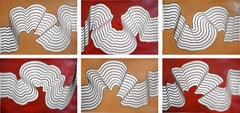
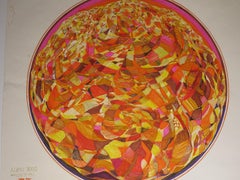
Roland Ayers (1932-2017). 3rd Mandala, 1982. Ink on paper, measures 17 x 23 inches. Unframed and unmounted. Signed and dated lower right. A note in corner may indicate the occasion for the creation of this piece, or it may me an incidental, unrelated note jotted in the margin. Ayers holds the distinction of having participated in the first important survey of African-Americans, Contemporary Black Artists in America, a 1971 show at The Whitney. Biography: Artist and art educator, Roland Ayers was born on July 2, 1932, the only child of Alice and Lorenzo Ayers, and grew up in the Germantown district of Philadelphia. Ayers served in the US Army (stationed in Germany) before studying at the Philadelphia College of Art (currently University of the Arts). He graduated with a BFA in Art Education, 1954. He traveled Europe 1966-67, spending time in Amsterdam and Greece in particular. During this period, he drifted away from painting to focus on linear figurative drawings of a surreal nature. His return home inaugurated the artist’s most prolific and inspired period (1968-1975). Shorty before his second major trip abroad in 1971-72 to West Africa, Ayers began to focus on African themes, and African American figures populated his work almost exclusively. In spite of Ayers’ travel and exploration of the world, he gravitated back to his beloved Germantown, a place he endowed with mythological qualities in his work and literature. His auto-biographical writing focuses on the importance of place during his childhood. Ayers’ journals meticulously document the ethnic and cultural make-up of Germantown, and tell a compelling story of class marginalization that brought together poor families despite racial differences. The distinctive look and design of Germantown inform Ayers’ visual vocabulary. It is a setting with distinctive Gothic Revival architecture and haunting natural beauty. These characteristics are translated and recur in the artist’s imagery. During his childhood, one of the only books in the Ayers household was an illustrated Bible. The images within had a profound effect on the themes and subjects that would appear in his adult work. Figures in an Ayers’ drawing often seem trapped in a narrative of loss and redemption. Powerful women loom large in the drawings: they suggest the female role models his journals record in early life. The drawings can sometimes convey a strong sense of conflict, and at other times, harmony. Nature and architecture seem to have an antagonistic relationship that is, ironically, symbiotic. A critical turning point in the artist’s career came in 1971 when he was included in the extremely controversial Whitney Museum show, Contemporary Black Artists in America. The exhibition gave Ayers an international audience and served as a calling card for introductions he would soon make in Europe. Ayers is a particularly compelling figure in a period when black artists struggled with the idea of authenticity. A questioned often asked was “Is your work too black, or not black enough?” Abstractionists were considered by some peers to be sell-outs, frauds or worse. Figurative* work was accused of being either sentimental or politically radical depending on the critical source. Ayers made the choice early on to be a figurative artist, but considered his work devoid of political content. Organizations such as Chicago’ s Afri-Cobra in the late 1960‘s asserted that the only true black art of any relevance must depict the black man and...

Category

1980s Abstract Roland Ayers Paintings

Materials

Paper, Ink

Improvisation #8, Series 1

Improvisation #8, Series 1

By Roland Ayers

Located in Wilton Manors, FL

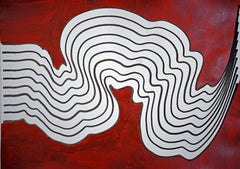
Roland Ayers (1932-2017). Improvisation #8, Series 1, 1980. Ink on paper, measures 18 x 24 inches. Unframed and unmounted. Signed and dated lower right, titled lower left. Ayers holds the distinction of having participated in the first important survey of African-Americans, Contemporary Black Artists in America, a 1971 show at The Whitney. Biography: Artist and art educator, Roland Ayers was born on July 2, 1932, the only child of Alice and Lorenzo Ayers, and grew up in the Germantown district of Philadelphia. Ayers served in the US Army (stationed in Germany) before studying at the Philadelphia College of Art (currently University of the Arts). He graduated with a BFA in Art Education, 1954. He traveled Europe 1966-67, spending time in Amsterdam and Greece in particular. During this period, he drifted away from painting to focus on linear figurative drawings of a surreal nature. His return home inaugurated the artist’s most prolific and inspired period (1968-1975). Shorty before his second major trip abroad in 1971-72 to West Africa, Ayers began to focus on African themes, and African American figures populated his work almost exclusively. In spite of Ayers’ travel and exploration of the world, he gravitated back to his beloved Germantown, a place he endowed with mythological qualities in his work and literature. His auto-biographical writing focuses on the importance of place during his childhood. Ayers’ journals meticulously document the ethnic and cultural make-up of Germantown, and tell a compelling story of class marginalization that brought together poor families despite racial differences. The distinctive look and design of Germantown inform Ayers’ visual vocabulary. It is a setting with distinctive Gothic Revival architecture and haunting natural beauty. These characteristics are translated and recur in the artist’s imagery. During his childhood, one of the only books in the Ayers household was an illustrated Bible. The images within had a profound effect on the themes and subjects that would appear in his adult work. Figures in an Ayers’ drawing often seem trapped in a narrative of loss and redemption. Powerful women loom large in the drawings: they suggest the female role models his journals record in early life. The drawings can sometimes convey a strong sense of conflict, and at other times, harmony. Nature and architecture seem to have an antagonistic relationship that is, ironically, symbiotic. A critical turning point in the artist’s career came in 1971 when he was included in the extremely controversial Whitney Museum show, Contemporary Black Artists in America. The exhibition gave Ayers an international audience and served as a calling card for introductions he would soon make in Europe. Ayers is a particularly compelling figure in a period when black artists struggled with the idea of authenticity. A questioned often asked was “Is your work too black, or not black enough?” Abstractionists were considered by some peers to be sell-outs, frauds or worse. Figurative* work was accused of being either sentimental or politically radical depending on the critical source. Ayers made the choice early on to be a figurative artist, but considered his work devoid of political content. Organizations such as Chicago’ s Afri-Cobra in the late 1960‘s asserted that the only true black art of any relevance must depict the black man and...

Category

1980s Abstract Geometric Roland Ayers Paintings

Materials

Ink

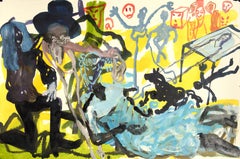
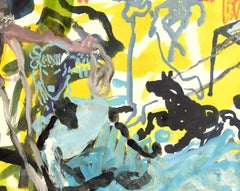
The People (Urban African-American Afrofuturism Landscape)

The People (Urban African-American Afrofuturism Landscape)

By Roland Ayers

Located in Wilton Manors, FL

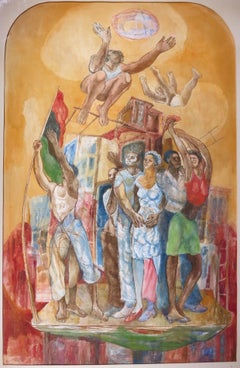
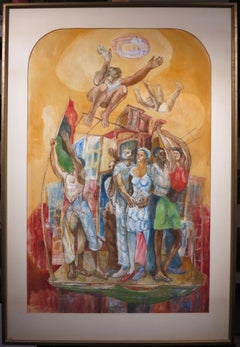
Roland Ayers (1932-2014), The People, 1975. Image measures 25 x 39 inches, 32 x 46 inches framed. Signed and dated lower left. Search terms: Black artist; Philadelphia artist; Afrofuturism; Afrofuturist Biography: Artist and art educator, Roland Ayers was born on July 2, 1932, the only child of Alice and Lorenzo Ayers, and grew up in the Germantown district of Philadelphia. Ayers served in the US Army (stationed in Germany) before studying at the Philadelphia College of Art (currently University of the Arts). He graduated with a BFA in Art Education, 1954. He traveled Europe 1966-67, spending time in Amsterdam and Greece in particular. During this period, he drifted away from painting to focus on linear figurative drawings of a surreal nature. His return home inaugurated the artist’s most prolific and inspired period (1968-1975). Shorty before his second major trip abroad in 1971-72 to West Africa, Ayers began to focus on African themes, and African American figures populated his work almost exclusively. In spite of Ayers’ travel and exploration of the world, he gravitated back to his beloved Germantown, a place he endowed with mythological qualities in his work and literature. His auto-biographical writing focuses on the importance of place during his childhood. Ayers’ journals meticulously document the ethnic and cultural make-up of Germantown, and tell a compelling story of class marginalization that brought together poor families despite racial differences. The distinctive look and design of Germantown inform Ayers’ visual vocabulary. It is a setting with distinctive Gothic Revival architecture and haunting natural beauty. These characteristics are translated and recur in the artist’s imagery. During his childhood, one of the only books in the Ayers household was an illustrated Bible. The images within had a profound effect on the themes and subjects that would appear in his adult work. Figures in an Ayers’ drawing often seem trapped in a narrative of loss and redemption. Powerful women loom large in the drawings: they suggest the female role models his journals record in early life. The drawings can sometimes convey a strong sense of conflict, and at other times, harmony. Nature and architecture seem to have an antagonistic relationship that is, ironically, symbiotic. A critical turning point in the artist’s career came in 1971 when he was included in the extremely controversial Whitney Museum show, Contemporary Black Artists in America. The exhibition gave Ayers an international audience and served as a calling card for introductions he would soon make in Europe. Ayers is a particularly compelling figure in a period when black artists struggled with the idea of authenticity. A questioned often asked was “Is your work too black, or not black enough?” Abstractionists were considered by some peers to be sell-outs, frauds or worse. Figurative* work was accused of being either sentimental or politically radical depending on the critical source. Ayers made the choice early on to be a figurative artist, but considered his work devoid of political content. Organizations such as Chicago’ s Afri-Cobra in the late 1960‘s asserted that the only true black art of any relevance must depict the black man and woman...

Category

1970s American Realist Roland Ayers Paintings

Materials

Watercolor, Archival Paper

The Backyard
The Backyard

Roland AyersThe Backyard, 1960

Sold

H 25 in W 21 in D 2 in

The Backyard

By Roland Ayers

Located in Wilton Manors, FL

Magical Realist painting by African-American artist, Roland Ayers (1932-2014). The Backyard, 1960. Oil on artist board, 16 x 20 inches; 21 x 25 inches in a carved and gilt wood frame...

Category

1950s Surrealist Roland Ayers Paintings

Materials

Board, Oil

Roland Ayers paintings for sale on 1stDibs.

Find a wide variety of authentic Roland Ayers paintings available for sale on 1stDibs. You can also browse by medium to find art by Roland Ayers in ink, paper and more. Much of the original work by this artist or collective was created during the 1980s and is mostly associated with the abstract style. Not every interior allows for large Roland Ayers paintings, so small editions measuring 19 inches across are available. Customers who are interested in this artist might also find the work of Allie William Skelton, Ronald Ahlstrom, and William (Bill) Alpert. Roland Ayers paintings prices can differ depending upon medium, time period and other attributes. On 1stDibs, the price for these items starts at $1,200 and tops out at $1,800, while the average work can sell for $1,500.