By Ross Bleckner
Located in Surfside, FL
ROSS BLECKNER (American, b. 1949)
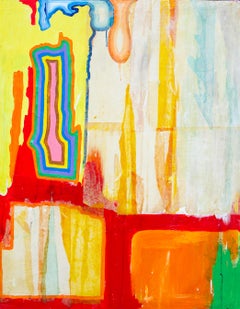
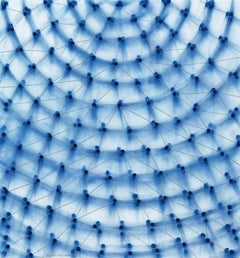
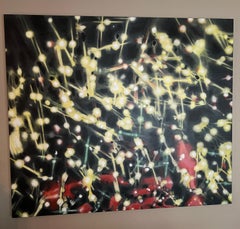
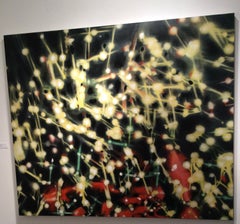
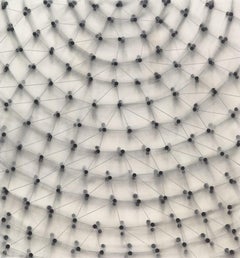
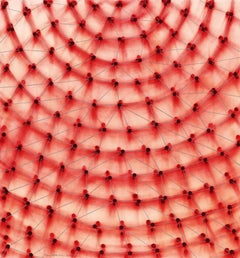
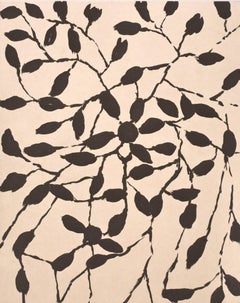
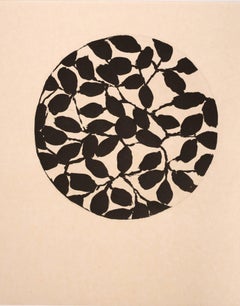
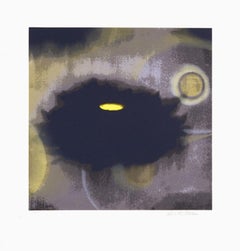
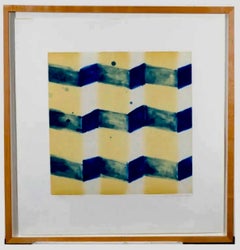
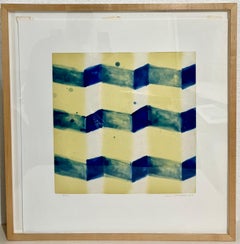
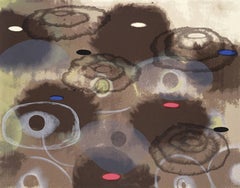
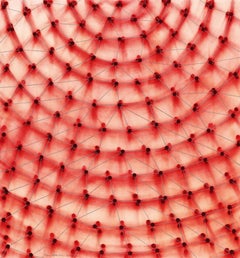
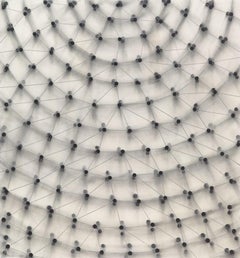
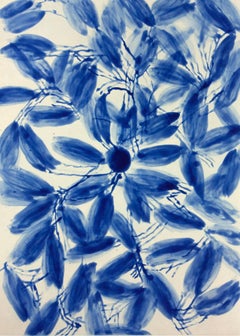
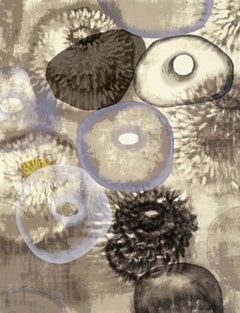
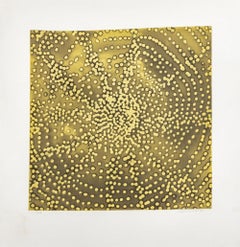
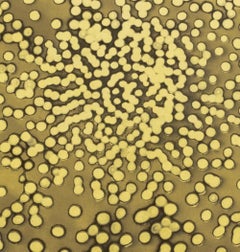
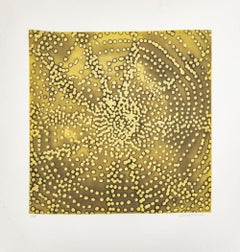
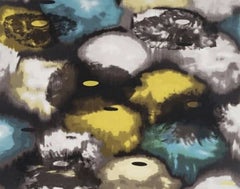
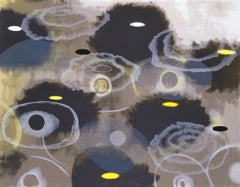
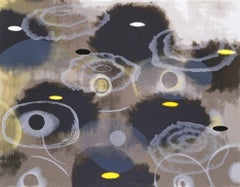
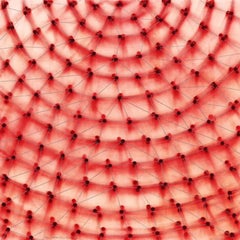
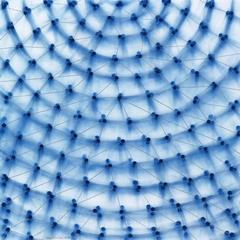
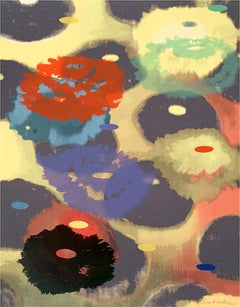
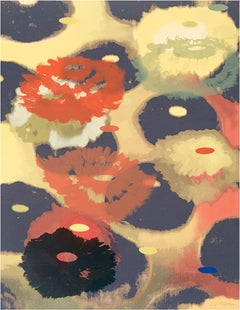
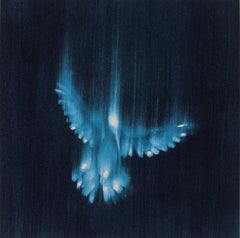
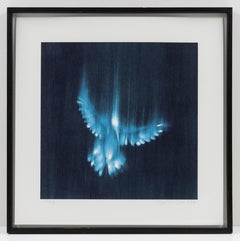
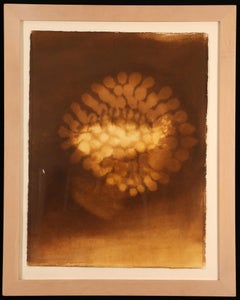
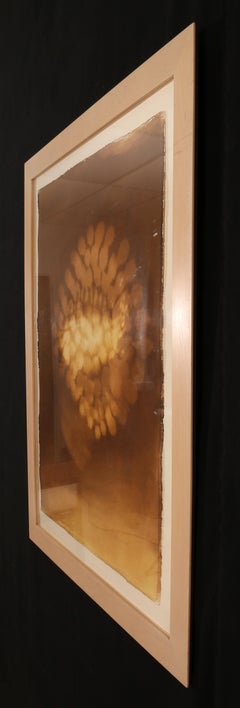
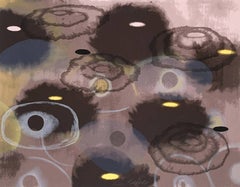
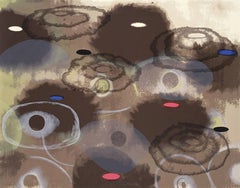
"D Loop," 2002
Limited Edition Print : Color Aquatint With Spit Bite Aquatint And Gampi Chine-Collé on Somerset Paper
Approximate dimensions - Frame 29.5 X 28,.5 inches, sheet 27 x 26 inches.
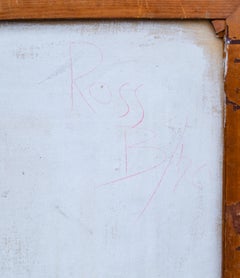
Edition lower left: 2/20, Hand signed lower right.
Publishers blind stamp lower right margin: Paulson Press.
Ross Bleckner draws inspiration from science, psychology, and his own personal experience. The title of this print, D Loop, refers to molecular biology and DNA repair abstracted in vivid blue and yellow.
Ross Bleckner (born May 12, 1949) is an American artist. He currently lives and works in New York City. His artistic focus is on painting, and he held his first solo exhibition in 1975. Bleckner grew up in Brooklyn, New York and he grew up Jewish. In an interview, Bleckner commented that he was fortunate to have supportive parents. In 1961, Bleckner and his family moved to a more affluent town in Hewlett Harbor, New York, where he attended George W. Hewlett High School. In 1965, Bleckner saw his first art exhibition, The Responsive Eye, at the Museum of Modern Art, which went on to have a huge impact on his artwork. Eventually, this was a time when he realized that he wanted to become an artist. Bleckner went on to study at New York University, where he studied alongside fellow artist Sol LeWitt and Chuck Close. During college, Bleckner worked in an art supply store and drove a taxi. He received his Bachelor of Fine Arts (B.F.A) from New York University (1971), and later received his Master of Fine Arts (M.F.A) at California Institute of the Arts.
In 1974, when Bleckner moved back to New York, he moved into a Tribeca loft building. Three of the floors were rented to the painter Julian Schnabel and from 1977 to 1983 the Mudd Club, a nightclub frequented by musicians and artists, was in the same building. In 2004 Bleckner sold the building. He held his first solo exhibition in 1975 at Cunningham Ward Gallery in New York. Then In 1979 he began what was to become a long association with Mary Boone Gallery in New York. In 1981 Bleckner met Thomas Ammann, who was an influential Swiss art dealer who went on to collect Bleckner's work.
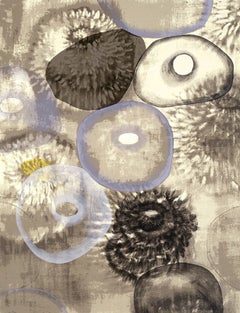
Early 1990s, Bleckner did his first abstract painting called Cell painting which showed an example of human body cell diseases. Since either the 1980s or 1990s as an openly gay artist, his art has been largely an investigation of change, loss, and memory, often addressing the subject of AIDS. Bleckner uses symbolic modernist imagery rather than direct representation, and his work is visually elusive, with forms that constantly change focus. While much of Bleckner's work can be divided into distinct groups or series with motifs repeated from painting to painting, he is also in the habit of redeploying and combining old motifs. Bleckner has posited that a painting is never finished, provided it is still in his studio, because it can always be improved.
In 2009, Bleckner published a book of his theoretical art statements entitled Examined Life: Writings, 1972-2007 that was published by Edgewise Press.
In 1995, the Solomon R. Guggenheim Museum had a major retrospective exhibition of his works from the last two decades of exhibitions at acclaimed institutions such as San Francisco Museum of Modern Art, Moderna Museet in Stockholm, and the Carnegie Museum of Art. He was one of the youngest artists to be featured at the Guggenheim.
Bleckner's works are held in collections around the world including Museum of Modern Art, New York, (he was included in the show Contemporary Works from the Collection, MoMA along with Carl Andre,
Richard Artschwager, Marcel Broodthaers, Jim Dine, Howard Hodgkin, Jasper Johns, Donald Judd, Anish Kapoor, Ellsworth Kelly, Robert Mangold...
Category
Early 2000s Ross Bleckner Art
MaterialsEtching, Aquatint