By Stuart Davis
Located in New York, NY
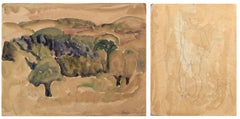
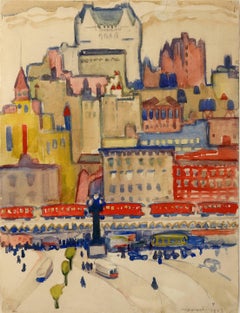
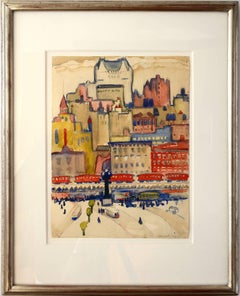
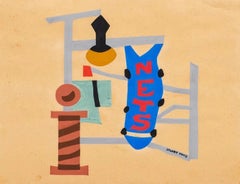
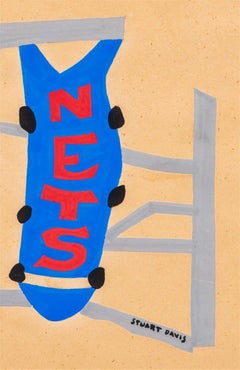
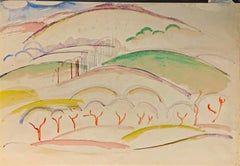
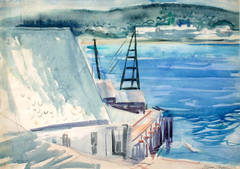
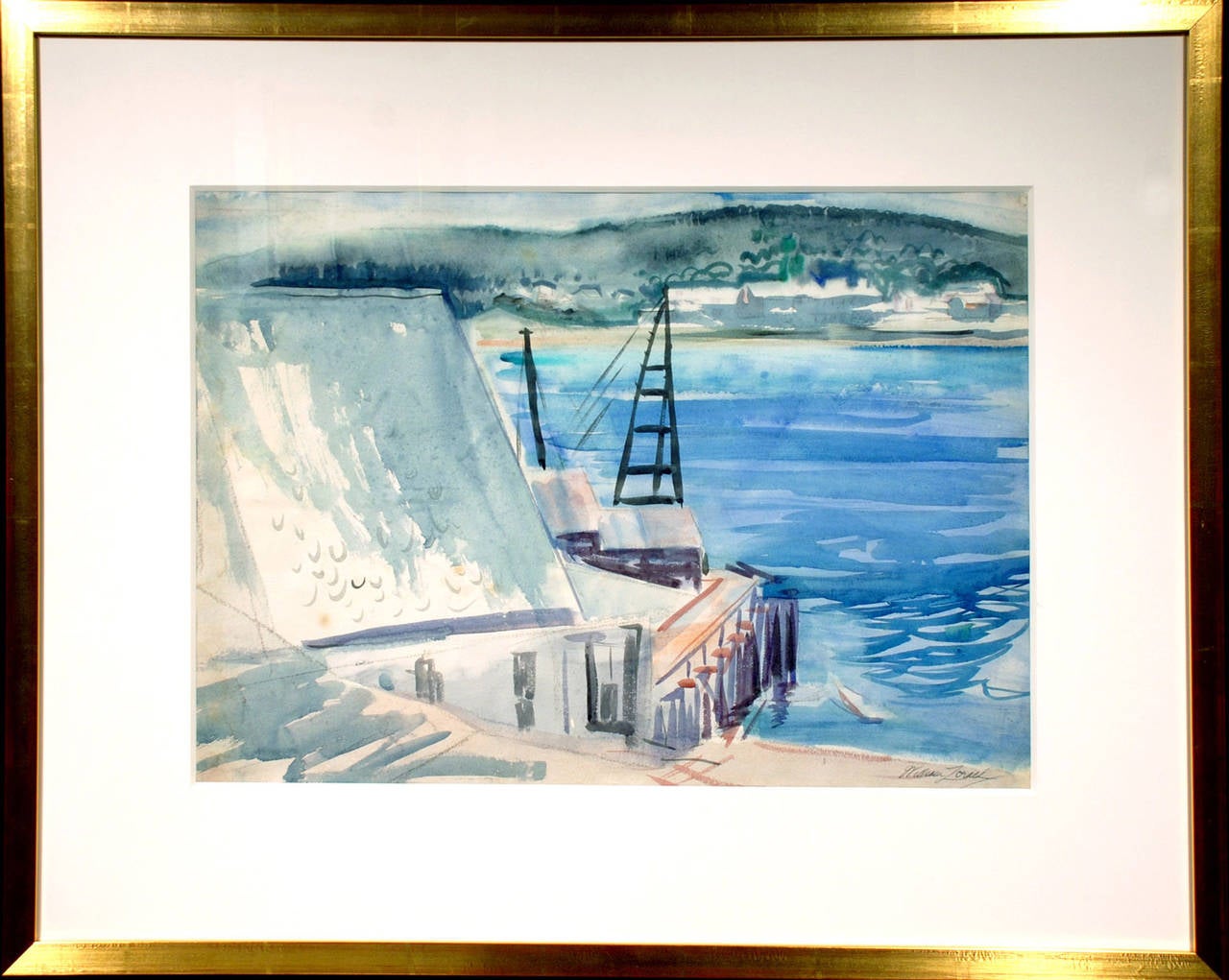
"NY Street Signs" Mid-20th Century WPA 1938 Modernist Abstract Realism Pop Art
Stuart Davis (American, 1892-1964) "Street Signs" Modernist gouache and traces of pencil on paper in the proto-pop art style Davis is celebrated for, 1938, signed to lower right, framed. Image: 11 1/4 x 15 1/4 inches. Frame by Bark: 18 1/2 x 22 inches.
LITERATURE: A, Boyajian, M. Rutkowski, Stuart Davis, A Catalogue Raisonne, Vol. 2, New Haven, Connecticut, 2007, vol. II, p. 632, no. 1232, illustrated.
EXHIBITIONS: ACA Galleries, New York American Artists' Congress: Group Exhibition of Paintings and Sculpture, Dec. 3-16, 1939 (SDAB I, 12/3/39, p. 129). Outlines Gallery, Pittsburgh, Stuart Davis, Mar. 3-16, 1946. Coleman Art Gallery, Philadelphia, 5 Prodigal Sons: Former Philadelphia Artists: Ralston Crawford, Stuart Davis, Charles Demuth, Julian Levi, Charles Sheeler, Oct 4 - 30, 1947 (pamphlet), no. 12.
PROVENANCE: The artist; Mr. and Mrs. Frank Bowles, New York, Apr. 3, 1956; thence by descent, Private Collection, New York.
NOTES: According to the Catalogue Raissonne, "the title 'Street Signs' is recorded in the artist's account books...
Category
1930s American Modern William Zorach Art
MaterialsPaper, Gouache, Pencil