About Bridges Over Time
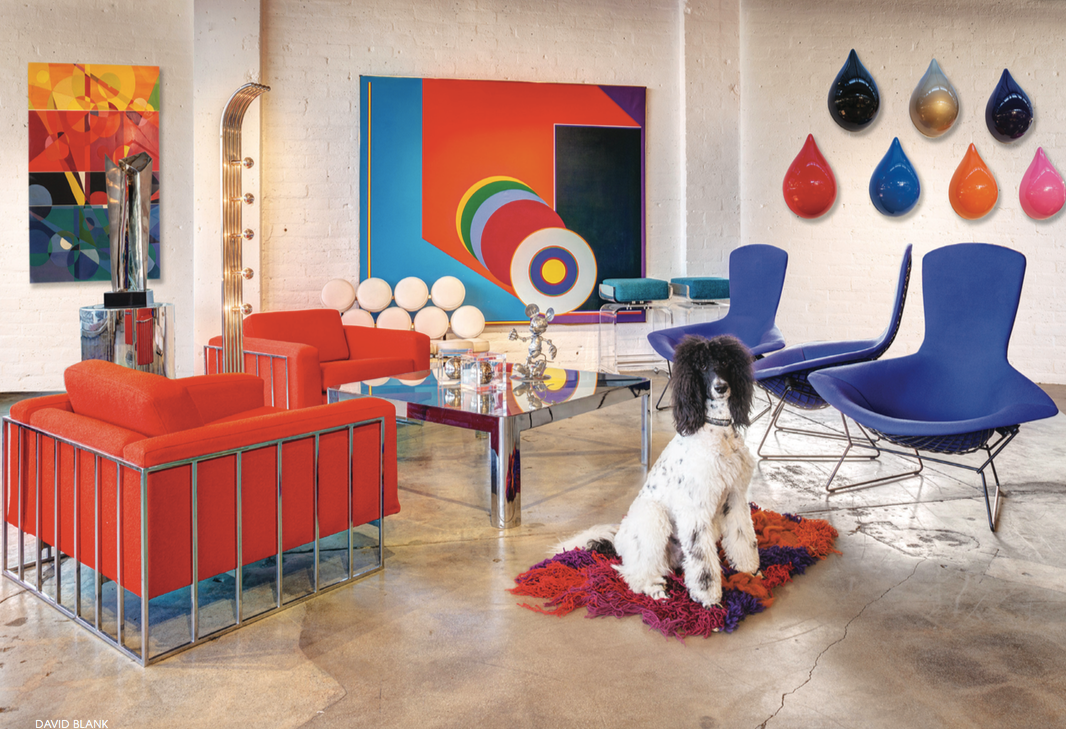
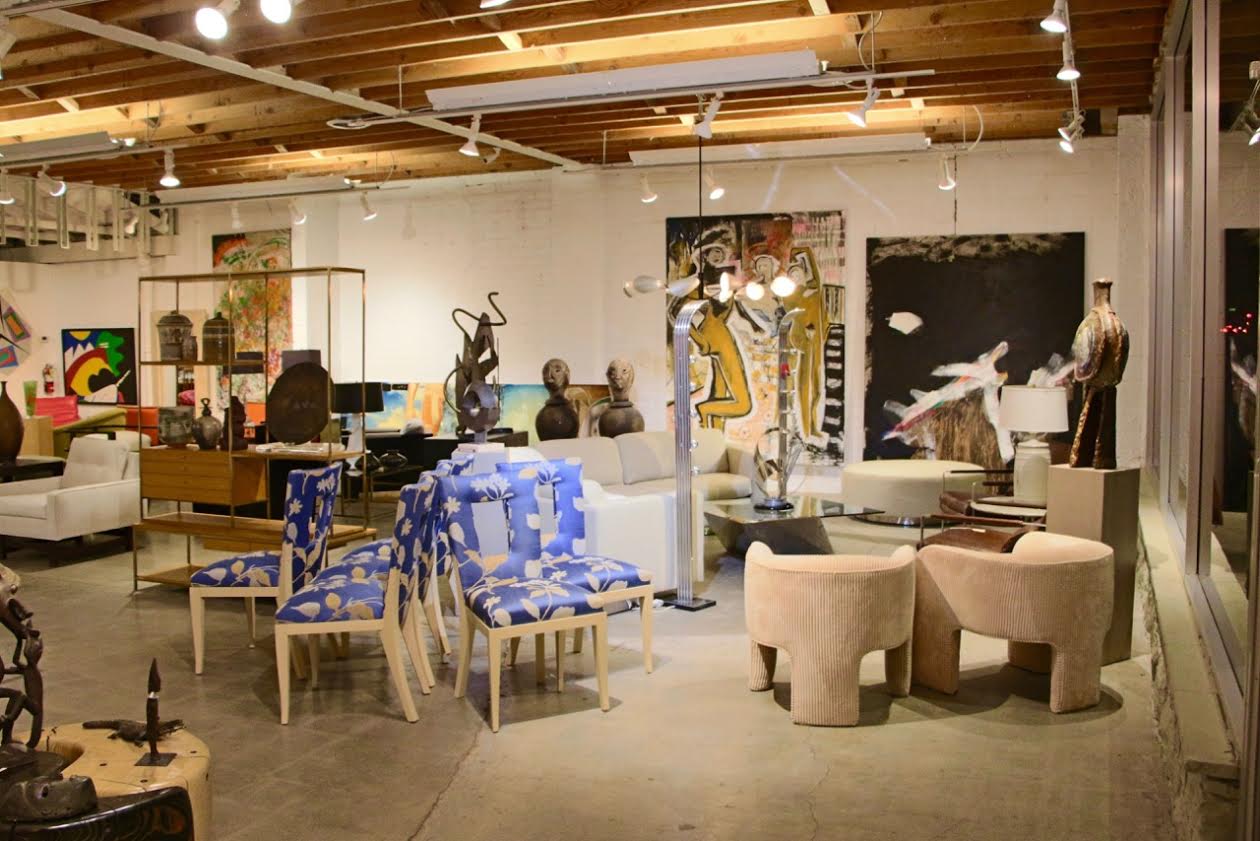
We are a full time art and design gallery specializing in 20-21th century design. We have recently opened a new gallery in Beautiful Palm Springs California. Our spacious 4500 square foot gallery is generally open Thursday-Monday 11-5 and features unique works of furniture, art and sculpture. We welcome you to come visit and explore. We also maintain a full show schedule and actively seek out a wide variety of items to purchase. Our Gallery is located at 2500 North Palm Canyon Drive, Suite B4 in Palm Springs, California. Please call ahead if you plan a visit, our Galler...Read More
1stDibs seller since 2007
Featured Pieces
Mated Pair 19th Century NeoClassical Bronze Tazzas after the Pompeiian Antiques
Located in Palm Springs, CA
A wonderful pair of mated 19th century patinated Bronze relief Tazzas mounted on marble bases after the Pompeiian Antiquities. The reliefs are wonderful and quite well cast and finis...
Category
Antique 19th Century Italian Vases
Materials
Marble, Bronze
Pair 19th Century Grand Tour Neo Classical Silver Plated Warwick & Albani Urns
Located in Palm Springs, CA
A beautiful crafted late 19th century pair of silver plated bronze neoclassical grand tour souvenirs of the Warwick and Albani Urns. The Warwick Vase is an ancient Roman marble (part...
Category
Antique Late 19th Century Italian Vases
Materials
Silver Plate, Bronze
David Weeks Studio #444 Otto Two Arm Pendant
By David Weeks Studio
Located in Palm Springs, CA
We were fortunate to find this wonderful David Weeks Studio Otto 2 arm fixture out of a local Palm Springs Estate. The fixture is number #444. It is in the chrome plated finish with ...
Category
2010s American Chandeliers and Pendants
Materials
Aluminum, Brass
Jean-Louis Corby “Balance 1” Massive Bronze on Marble Plinth
Located in Palm Springs, CA
A monumental yet delicately balanced Bronze sculpture by the world renowned Parisian Artist Jean Louis Corby. This piece is titled “Balance 1” and is ...
Category
20th Century French Figurative Sculptures
Materials
Marble, Bronze
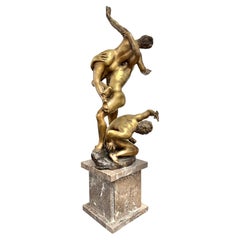
George Nelson for Koch and Lowy Half Nelson Lamp Circa 1980
By George Nelson
Located in Palm Springs, CA
A beautiful Half Nelson lamp manufactured by Koch and Lowy circa 1980. This lamp was originally designed in 1949/50 by George Nelson. The lamp is in working condition and is in good condition. There are scuff marks to the top along with some swirl marks and small spots of paint loss and scuffs on the base, please see the detailed photos.
The top hood is adjustable and will allow a variety of different looks.
It is pictured in our gallery resting on a Eero Saarinen for Knoll Tulip table and chair...
Category
Vintage 1980s American Table Lamps
Materials
Metal
Set of 4 1970’s Walnut Chairs Attributed to Adrian Pearsall
By Adrian Pearsall
Located in Palm Springs, CA
a nice set of 4 Walnut legged chairs attributed to Adrian Pearsall. The set is comprised of two armchairs and a two side chairs. These are in all original condition with the original...
Category
Vintage 1970s American Chairs
Materials
Fabric, Walnut
1930’s Horse Andirons in Brass and Aluminum
Located in Palm Springs, CA
A wonderful pair of Horse Andirons made of brass heads on aluminum columns with brass bases. The andirons date from the 1930’s and are most likely American. The iron backs detach and...
Category
Vintage 1930s American Andirons
Materials
Aluminum, Brass
Frank Eliscu Bronze of a Jumping Horse
By Frank Eliscu
Located in Palm Springs, CA
A beautifully detailed bronze of a jumping horse on a marble base by the talented, noted American Sculptor Frank Eliscu. The artist is most known as the creator of the Heisman Trophy, one of American Sports’ most iconic symbols. This piece is beautifully detailed with sea shells forming the body of the whale or fish.
The bronze is in good condition with some surface grime and a few imperfections to the marble base.
From Wikipedia:
Frank Eliscu (July 13, 1912 – June 19, 1996) was an American sculptor and art teacher who designed and created the Heisman Memorial Football Trophy in 1935[1] when he was only 23 years old. The first Heisman Trophy, a strong young bull of a football player cast in bronze, was presented to a college football player in 1935, and is considered one of the greatest honors a college athlete can receive. Over the years the Heisman Committee has paid tribute to Eliscu and his creation several times, and in 1985, the Heisman Committee invited him to speak at the 50th Anniversary Heisman ceremonies.[2]
Eliscu amassed a body of work that spans from public fountains to ex-President Gerald Ford's inaugural medal (later given as a gift to Leonid Brezhnev when Ford visited Russia), to the five-story bronze frieze that decorates the glass panes above the doors to the Library of Congress. This massive sculpture won the Henry Hering Memorial Medal from the National Sculpture Society. Eliscu also is represented in the Metropolitan Museum of Art with his Sea Treasures.[3]
A resident of New York and later Sarasota, Eliscu died in Sarasota, Florida on June 19, 1996 at the age of 83.[4]
Family
Frank Eliscu was born in Washington Heights, Manhattan. His parents were Charles Eliscu and Florence Kane who was of Jewish descent.[3] He had a sister, Rita Rothman and two brothers, William Eliscu and Nelson Eliscu. He married Mildred Norman and had one daughter, Norma Eliscu Banas.
Education
Eliscu graduated from Pratt Institute in 1931 and from New York Teacher's College in 1942. He was awarded a permanent teaching certificate in 1944. In 1941, Eliscu apprenticed with Rudolph Evans and worked with him on the sculpting of the statue of Thomas Jefferson for the Jefferson Memorial.[5]
Military service
Eliscu served in the army in World War II from 1942 to 1945. He was first put to work on camouflage and maps for the Allied invasion. In 1943, he developed a unique technique used by the US Army to rehabilitate facial disfigurements from war injuries. According to his discharge papers, "Made drawings in the operating room of surgical procedures, modeling of features for reconstructive surgery, and carving cartilage for grafting in plastic surgery, pigmentation of skin in plastic procedures. Had three assistants working under him. Served at Valley Forge General Hospital in Plastic Surgery Department."[6] Following his service, the unique research Eliscu did on tattooing pigmentation to cover the discoloration from skin grafts and for people with port wine stains was used at the New York Hospital. Eliscu applied for a patent for the tool he developed to use intradermal injections of permanent pigments.[7]
Career
Teacher, School of Industrial Art, NYC (currently called the High School of Art and Design) 1945 to 1970. As a sculptor, Eliscu had his first one-man show in 1929 at age 17. From there, Eliscu went on to a career that brought him international fame.
He has two National Monuments to his credit, "Uncle Joe Cannon" at the Cannon House Office Building and "Falling Books", a four-story bronze at the James Madison Library of Congress.[8] The four-story falling books on the face of the Library of Congress building in Washington, D.C., took Eliscu 10 years to complete and in 1985 won him top honors from the National Sculpture Society. The heroic bronze, along with Eliscu's plaque of Uncle Joe Cannon in the same city, has been declared a national monument, and by law can never be removed or changed in any way.[2]
He is represented in Brookgreen Gardens;[9] in the Metropolitan Museum with a medallion titled Sea Treasures, 1965;[10] in the Smithsonian Museum Archives, coins titled, Lewis & Clark, 1966;[11] and in National Academy of Fine Arts Museum, with a bronze, 1967.
Eliscu created medals for the Society of Medalists...
Category
Vintage 1950s American Animal Sculptures
Materials
Bronze
Bronze Whale Sculpture by the Noted American Frank Eliscu
Located in Palm Springs, CA
A beautifully detailed bronze of a whale on a marble base by the talented, noted American Sculptor Frank Eliscu. The artist is most known as the creator of the Heisman Trophy, one of American Sports’ most iconic symbols. This piece is beautifully detailed with sea shells forming the body of the whale or fish.
The bronze is in good condition with some surface grime and a few imperfections to the marble base.
From Wikipedia:
Frank Eliscu (July 13, 1912 – June 19, 1996) was an American sculptor and art teacher who designed and created the Heisman Memorial Football Trophy in 1935[1] when he was only 23 years old. The first Heisman Trophy, a strong young bull of a football player cast in bronze, was presented to a college football player in 1935, and is considered one of the greatest honors a college athlete can receive. Over the years the Heisman Committee has paid tribute to Eliscu and his creation several times, and in 1985, the Heisman Committee invited him to speak at the 50th Anniversary Heisman ceremonies.[2]
Eliscu amassed a body of work that spans from public fountains to ex-President Gerald Ford's inaugural medal (later given as a gift to Leonid Brezhnev when Ford visited Russia), to the five-story bronze frieze that decorates the glass panes above the doors to the Library of Congress. This massive sculpture won the Henry Hering Memorial Medal from the National Sculpture Society. Eliscu also is represented in the Metropolitan Museum of Art with his Sea Treasures.[3]
A resident of New York and later Sarasota, Eliscu died in Sarasota, Florida on June 19, 1996 at the age of 83.[4]
Family
Frank Eliscu was born in Washington Heights, Manhattan. His parents were Charles Eliscu and Florence Kane who was of Jewish descent.[3] He had a sister, Rita Rothman and two brothers, William Eliscu and Nelson Eliscu. He married Mildred Norman and had one daughter, Norma Eliscu Banas.
Education
Eliscu graduated from Pratt Institute in 1931 and from New York Teacher's College in 1942. He was awarded a permanent teaching certificate in 1944. In 1941, Eliscu apprenticed with Rudolph Evans and worked with him on the sculpting of the statue of Thomas Jefferson for the Jefferson Memorial.[5]
Military service
Eliscu served in the army in World War II from 1942 to 1945. He was first put to work on camouflage and maps for the Allied invasion. In 1943, he developed a unique technique used by the US Army to rehabilitate facial disfigurements from war injuries. According to his discharge papers, "Made drawings in the operating room of surgical procedures, modeling of features for reconstructive surgery, and carving cartilage for grafting in plastic surgery, pigmentation of skin in plastic procedures. Had three assistants working under him. Served at Valley Forge General Hospital in Plastic Surgery Department."[6] Following his service, the unique research Eliscu did on tattooing pigmentation to cover the discoloration from skin grafts and for people with port wine stains was used at the New York Hospital. Eliscu applied for a patent for the tool he developed to use intradermal injections of permanent pigments.[7]
Career
Teacher, School of Industrial Art, NYC (currently called the High School of Art and Design) 1945 to 1970. As a sculptor, Eliscu had his first one-man show in 1929 at age 17. From there, Eliscu went on to a career that brought him international fame.
He has two National Monuments to his credit, "Uncle Joe Cannon" at the Cannon House Office Building and "Falling Books", a four-story bronze at the James Madison Library of Congress.[8] The four-story falling books on the face of the Library of Congress building in Washington, D.C., took Eliscu 10 years to complete and in 1985 won him top honors from the National Sculpture Society. The heroic bronze, along with Eliscu's plaque of Uncle Joe Cannon in the same city, has been declared a national monument, and by law can never be removed or changed in any way.[2]
He is represented in Brookgreen Gardens;[9] in the Metropolitan Museum with a medallion titled Sea Treasures, 1965;[10] in the Smithsonian Museum Archives, coins titled, Lewis & Clark, 1966;[11] and in National Academy of Fine Arts Museum, with a bronze, 1967.
Eliscu created medals for the Society of Medalists...
Category
Vintage 1950s American Animal Sculptures
Materials
Bronze
Bronze Stag by the noted American Sculptor Frank Eliscu Original Receipt
Located in Palm Springs, CA
A beautifully detailed bronze of a stag by the talented, noted American Sculptor Frank Eliscu. The artist is most known as the creator of the Heisman Trophy, one of American Sports’ most iconic symbols. This piece has the original sales receipt from 1959 taped to the base. It is dated 1959 and cost $125 plus tax then which was an enormous sum for the time.
The bronze is in good condition with some surface grime and a few edge chips to the marble base.
From Wikipedia:
Frank Eliscu (July 13, 1912 – June 19, 1996) was an American sculptor and art teacher who designed and created the Heisman Memorial Football Trophy in 1935[1] when he was only 23 years old. The first Heisman Trophy, a strong young bull of a football player cast in bronze, was presented to a college football player in 1935, and is considered one of the greatest honors a college athlete can receive. Over the years the Heisman Committee has paid tribute to Eliscu and his creation several times, and in 1985, the Heisman Committee invited him to speak at the 50th Anniversary Heisman ceremonies.[2]
Eliscu amassed a body of work that spans from public fountains to ex-President Gerald Ford's inaugural medal (later given as a gift to Leonid Brezhnev when Ford visited Russia), to the five-story bronze frieze that decorates the glass panes above the doors to the Library of Congress. This massive sculpture won the Henry Hering Memorial Medal from the National Sculpture Society. Eliscu also is represented in the Metropolitan Museum of Art with his Sea Treasures.[3]
A resident of New York and later Sarasota, Eliscu died in Sarasota, Florida on June 19, 1996 at the age of 83.[4]
Family
Frank Eliscu was born in Washington Heights, Manhattan. His parents were Charles Eliscu and Florence Kane who was of Jewish descent.[3] He had a sister, Rita Rothman and two brothers, William Eliscu and Nelson Eliscu. He married Mildred Norman and had one daughter, Norma Eliscu Banas.
Education
Eliscu graduated from Pratt Institute in 1931 and from New York Teacher's College in 1942. He was awarded a permanent teaching certificate in 1944. In 1941, Eliscu apprenticed with Rudolph Evans and worked with him on the sculpting of the statue of Thomas Jefferson for the Jefferson Memorial.[5]
Military service
Eliscu served in the army in World War II from 1942 to 1945. He was first put to work on camouflage and maps for the Allied invasion. In 1943, he developed a unique technique used by the US Army to rehabilitate facial disfigurements from war injuries. According to his discharge papers, "Made drawings in the operating room of surgical procedures, modeling of features for reconstructive surgery, and carving cartilage for grafting in plastic surgery, pigmentation of skin in plastic procedures. Had three assistants working under him. Served at Valley Forge General Hospital in Plastic Surgery Department."[6] Following his service, the unique research Eliscu did on tattooing pigmentation to cover the discoloration from skin grafts and for people with port wine stains was used at the New York Hospital. Eliscu applied for a patent for the tool he developed to use intradermal injections of permanent pigments.[7]
Career
Teacher, School of Industrial Art, NYC (currently called the High School of Art and Design) 1945 to 1970. As a sculptor, Eliscu had his first one-man show in 1929 at age 17. From there, Eliscu went on to a career that brought him international fame.
He has two National Monuments to his credit, "Uncle Joe Cannon" at the Cannon House Office Building and "Falling Books", a four-story bronze at the James Madison Library of Congress.[8] The four-story falling books on the face of the Library of Congress building in Washington, D.C., took Eliscu 10 years to complete and in 1985 won him top honors from the National Sculpture Society. The heroic bronze, along with Eliscu's plaque of Uncle Joe Cannon in the same city, has been declared a national monument, and by law can never be removed or changed in any way.[2]
He is represented in Brookgreen Gardens;[9] in the Metropolitan Museum with a medallion titled Sea Treasures, 1965;[10] in the Smithsonian Museum Archives, coins titled, Lewis & Clark, 1966;[11] and in National Academy of Fine Arts Museum, with a bronze, 1967.
Eliscu created medals for the Society of Medalists...
Category
Vintage 1950s American Animal Sculptures
Materials
Bronze
19th Century Specimen Marble Table Top with Custom Base
Located in Palm Springs, CA
A beautiful 19th Century Specimen Marble Table top with a new custom made stand. The top is approximately 18.375 inches in diameter. The tabl...
Category
Antique 19th Century Italian Side Tables
Materials
Marble
19th Century Micro Mosaic Specimen Marble Table Top with Custom Base
Located in Palm Springs, CA
A beautiful Micro Mosaic Specimen Marble table top from the late 19th Century. The center circle of Micro Mosaic depicts the ruins of the tem...
Category
Antique 19th Century Italian Side Tables
Materials
Marble
More About Bridges Over Time