Daniel Hunt Fine Art

to
9
3
6
14
9
19
Overall Width
to
Overall Height
to
29
11
10
1
12
16
2
2
1
1
1
1
26
24
34
16
15
14
9
8
6
4
4
3
2
2
2
2
2
2
2
1
1
1
48
48
13
13
2
2
1
1
1
1
22
51
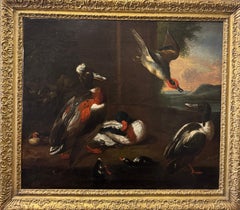
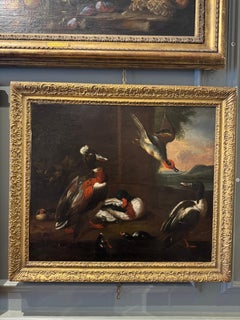
Consort of birds in an ornamental landscape

Consort of birds in an ornamental landscape

By Jan Van Oolen

Located in London, GB

Jan Van OOLEN (Dutch, 1651 – 1698) Consort of birds in an ornamental landscape Oil on canvas Dimensions: 32 in (H) x 38 in (W)

Category

17th Century Dutch School Animal Paintings

Materials

Canvas, Oil

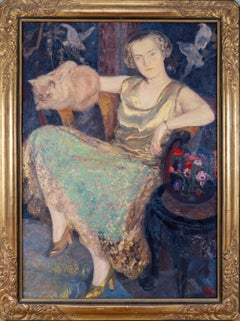
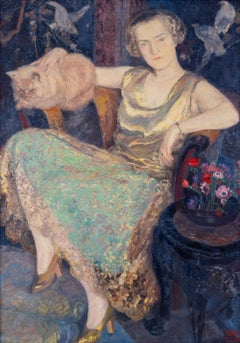
Madame Bonnel with a cat 1918

Madame Bonnel with a cat 1918

Located in London, GB

François Pycke (Belgian, 1890-1960)  Madame Bonnel 1918 Oil on canvas Signed and dated lower right, 'FPycke, 17-4 au 21-5, Londres' Dimensions: (Frame) 55 in. (H) x 41 in. (W)  (Can...

Category

20th Century Art Deco Portrait Paintings

Materials

Canvas, Oil

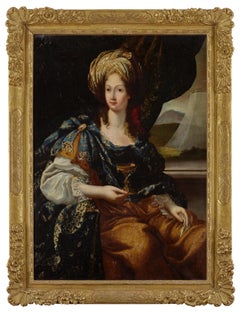
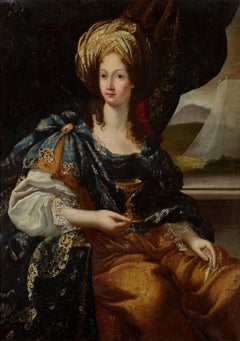
17th Century Turquerie portrait of a Lady Oriental in Silk Brocade and Turban

17th Century Turquerie portrait of a Lady Oriental in Silk Brocade and Turban

Located in London, GB

French School, 17th Century, Circle of Philippe de Champaigne (1602 - 1674) A Turquerie portrait of a Lady dressed in the Oriental Style of Sumptuous Silk Brocade and a Turban, a ten...

Category

17th Century French School Portrait Paintings

Materials

Canvas, Oil

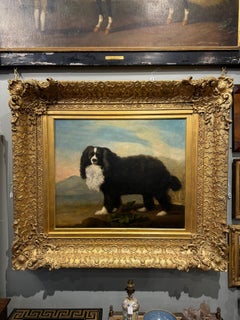
A King Charles Spaniel in a landscape

A King Charles Spaniel in a landscape

By George Stubbs

Located in London, GB

George Stubbs (1724-1806) A King Charles Spaniel in a landscape Oil on canvas Signed lower right With labels verso Provenance: Arthur Ackermann & Sons, London; Major P G G Shuter, c...

Category

18th Century English School Animal Paintings

Materials

Canvas, Oil

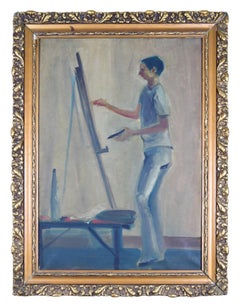
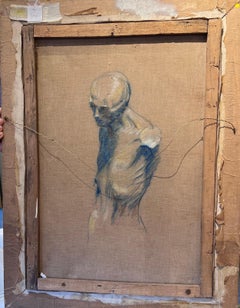
Self Portrait at his Easel with a male study verso

Self Portrait at his Easel with a male study verso

Located in London, GB

Seif Wanly (Egyptian, 1906-1979) 20th Century Self Portrait at His Easel With a male study verso Oil on canvas From the Dr Mohammed S Farsi Collection Dimensions: (Canvas) 27.5 in...

Category

20th Century Modern Portrait Paintings

Materials

Canvas, Oil

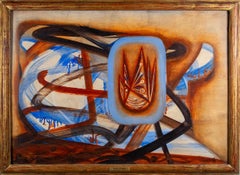
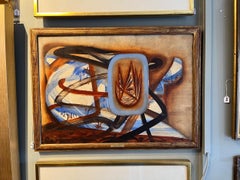
Robin Baring A Song 1968

Robin Baring A Song 1968

Located in London, GB

Robin Baring (British, b. 1931) A Song, 1968 Oil on board Signed and dated lower left With a Crane Kalman Gallery sticker verso Exhibited: Crane Kalman Gallery, 1971 Dimensions: (F...

Category

20th Century Abstract Abstract Paintings

Materials

Oil, Board

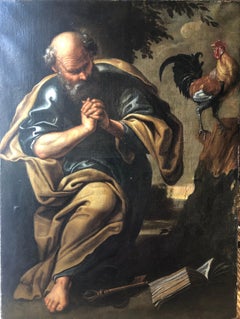
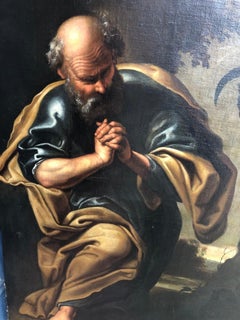
Large Beautiful Early 17th Century Painting of St Peter

Large Beautiful Early 17th Century Painting of St Peter

Located in London, GB

17th Century Italian School St Peter Oil on Canvas 55 1/2 x 41 inches This large and tender rendering of Saint Peter was painted by the hand of great Italian painter of the 17th Cen...

Category

Early 17th Century Baroque Portrait Paintings

Materials

Oil

Sir Anthony Van Dyck 17th Century Oil Painting Study of a Head of a Man

Sir Anthony Van Dyck 17th Century Oil Painting Study of a Head of a Man

By Anthony van Dyck

Located in London, GB

Sir Anthony Van Dyck (1599-1641, Flemish) Study of a Head of Man Circa 1627-32, Van Dyck’s second Antwerp period Oil on paper, laid down on canvas Dimensions 15 x 14 inches (38.1 x 3...

Category

17th Century Old Masters Portrait Paintings

Materials

Oil

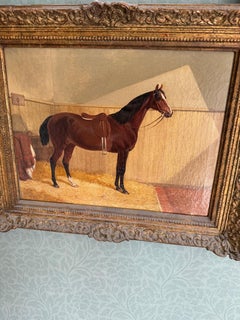
Saddled bay hunter horse Oil on canvas British 1863

Saddled bay hunter horse Oil on canvas British 1863

Located in London, GB

Benjamin Herring Snr (British, 1830-1871) Saddled bay hunter 1863 Oil on canvas With old Christie's stencil verso Property of a gentleman From the collection of Peter Roe Dimension...

Category

18th Century English School Animal Paintings

Materials

Oil

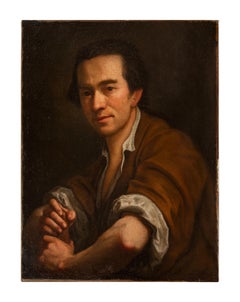
An Artist Grinding Colours, Possibly a Self-Portrait

An Artist Grinding Colours, Possibly a Self-Portrait

Located in London, GB

Jan Kupetsky (1667 - 1740) Czech School An artist grinding colours, possibly a self-portrait Oil on canvas Signed, verso : "Joseph Prinzig" Provenance: Private Collection, Hungary ...

Category

Late 17th Century Paintings

Materials

Canvas, Oil

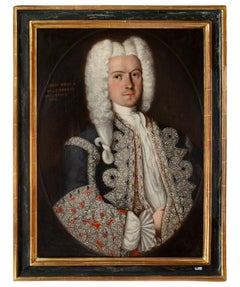
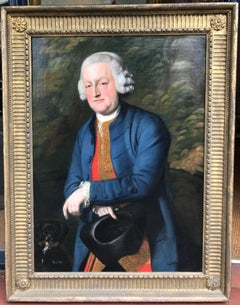
A Portrait of a Gentleman, thought to be Moses Diego Lopez Pereira

A Portrait of a Gentleman, thought to be Moses Diego Lopez Pereira

Located in London, GB

Austrian School, 18th Century A Portrait of a Gentleman, thought to be Moses Diego Lopez Pereira, 1st Baron d’Aguilar, in an elaborate coat and a powdered wig Oil on canvas Provena...

Category

18th Century Paintings

Materials

Canvas, Oil

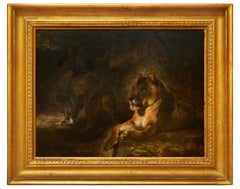
A Lion and a Lioness in a Landscape

A Lion and a Lioness in a Landscape

By William Huggins

Located in London, GB

William Huggins (1820 - 1884) A lion and a lioness in a landscape Oil on panel  Signed and dated, lower right: 'Huggins 1847' With gallery and exhibition labels, verso Provenance: ...

Category

Mid-19th Century Paintings

Materials

Oil, Panel

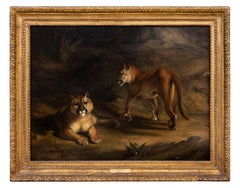
Two Pumas in a Landscape

Two Pumas in a Landscape

By William Huggins

Located in London, GB

William Huggins (1820 - 1884) Two pumas in a landscape Oil on panel Signed and dated, 'W. Huggins 1840' Exhibition and gallery labels, verso Provenance: Ex-Collection, the Master of...

Category

Mid-19th Century Paintings

Materials

Oil, Panel

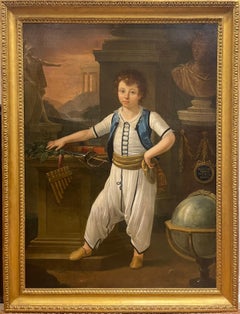
A Full-Length Portrait of Nicholas I of Russia in a Classical Setting

A Full-Length Portrait of Nicholas I of Russia in a Classical Setting

Located in London, GB

A Full-Length Portrait of Nicholas I of Russia in a classical setting. Pietro Labruzzi (1739–1805). 1802.    Signed, located and dated lower left: ‘Pietro Labruzzi Roma Pinx Anno 1802.’ Oil on canvas.   Dimensions:  Unframed: 135.7 x 98.5 cm.; 53½ x 38¾ in. Framed: 151.6 x 115.6 cm.; 59¾ x 45½ in. Description:  Nicholas I (Russian: Nikolay Pavlovich) (1796-1855), Russian Emperor...

Category

Early 1800s Paintings

Materials

Canvas, Oil

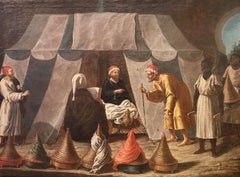
Venetian School, Ottoman Honey Merchant

Venetian School, Ottoman Honey Merchant

Located in London, GB

This incredibly rare early depiction of an Eastern Mediterranean or North African honey merchant is thought have been painted circa 1620. It predates th...

Category

Early 17th Century Paintings

Materials

Canvas, Oil

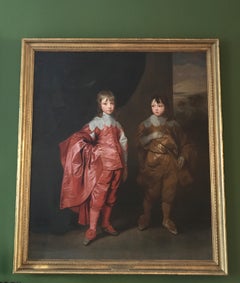
Double Portrait Oil Painting Brothers George, 2nd Duke Buckingham & Lord Francis

Double Portrait Oil Painting Brothers George, 2nd Duke Buckingham & Lord Francis

By (After) Anthony Van Dyck

Located in London, GB

Aftrer Anthony VAN DYCK - maybe Studio (1599, Antwerp – 1641, London) Flemish Double Portrait of George Villiers, 2nd Duke of Buckingham (1628-1687) & Lord Francis Villiers (1629-1648) Oil on Canvas 170 x 147 cm Anthony Van Dyck (1599-1641) No painter has done more to define an era than Anthony van Dyck. He spent only seven and a half years of his short life (1599- 1641) in England. He grew up in Antwerp, where his precocious talent was recognised by Peter Paul Rubens, the greatest painter of his age. He worked in Rubens’s studio and imitated his style as a religious artist, painting biblical scenes redolent of the lush piety of the counter-reformation. But soon he was on the move. In 1620, he visited London for a few months, long enough to paint a history picture, The Continence of Scipio, for the royal favourite, George Villiers, Marquess of Buckingham, and a portrait of his other English patron, the great art collector, Thomas Howard, 2nd Earl of Arundel. After a stint in Italy, making imposing portraits of the wealthy aristocracy and sketching and copying works by Titian, he returned to the Spanish Netherlands in 1627, becoming court artist to Archduchess Isabella before departing for The Hague in 1631 to paint the Dutch ruler Frederick Henry, Prince of Orange. Charles I’s invitation in 1632 led Van Dyck back to London where he was knighted, paid an annual salary of £200 and installed in a house in Blackfriars with a special jetty at which the royal barge might tie up when the King was visiting his studio. By this time Van Dyck was recognised as the leading court painter in Europe, with Velazquez at the court of Philip IV of Spain his only rival. He also excelled as a superbly observant painter of children and dogs. Van Dyck’s notoriety in depicting children led to the introduction of groups of children without their parents as a new genre into English painting (amongst other new genres). For the next 300 years, Van Dyck was the major influence on English portraiture. Nearly all the great 18th Century portraitists, from Pompeo Batoni and Allan Ramsay to Thomas Gainsborough and Joshua Reynolds, copied Van Dyck’s costumes, poses and compositions. George Duke of Buckingham & his brother Francis Villiers Painted in 1635, this double portrait was originally commissioned by Charles I, who raised the two brothers after their father, George Villiers, was assassinated in 1628. Together with their sister, Lady Mary Villiers, they enjoyed the King’s favour absolutely. Francis whose absolute ‘inimitable handsomeness’ was noted by Marvell (who was killed in a skirmish near Kingston upon Thames). The young duke who commanded a regiment of horse at the Battle of Worcester, remained closely associated with Charles II, held a number of high offices after the Restoration and was one of the most cynical and brilliant members of the King’s entourage, immortalised as ‘Zimri’ in Dryden’s Absalom and Achitopbel. As a young man he had sold his father’s great collection of pictures in the Spanish Netherlands, many of them to the Archduke Leopold Willhelm. Painted for Charles I and placed near the portrait of their sister in the Gallery at St James’ Palace. The handling of both costumes is very rich, and the heads are very carefully and sensitively worked. That of the younger boy in particular is more solidly built up than the lower part of the figure. A preparatory drawing for the younger boy is in the British Museum. There are copies at, e.g., Highclere Castle...

Category

17th Century Old Masters Portrait Paintings

Materials

Oil

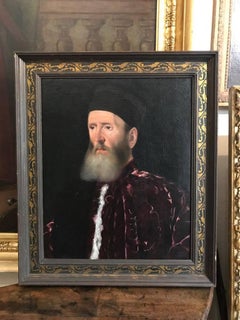
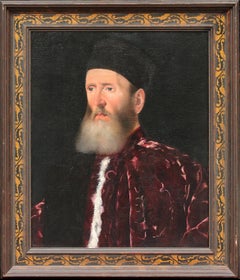
16th Century Italian Renaissance Old Master Portrait of a Procuratore

16th Century Italian Renaissance Old Master Portrait of a Procuratore

By Jacopo Bassano

Located in London, GB

Jacopo BASSANO (c. 1510-1592, Italian) Portrait of a Procuratore Oil on canvas 30 ¼ x 26 inches (including frame) Provenance: Lucien Bonaparte’s Collection (as Portrait of Doge Priuli, Tiziano); Rich-mond, Virginia Museum, Portrait of Doge Lorenzo Priuli. The painting is a portrait of a man half-length, on a black background. It is a three-quarter portrait, according to a custom very common in the genre of portraiture in sixteenth century. The man is wearing a decorated...

Category

16th Century Old Masters Portrait Paintings

Materials

Oil

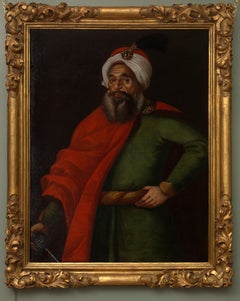
Portrait of Ochius, also called The Passia Ahmed ex Royal Collection of Hanover

Portrait of Ochius, also called The Passia Ahmed ex Royal Collection of Hanover

By (Attributed to) Sir Godfrey Kneller

Located in London, GB

Attributed to Sir Godfrey Kneller (1646 - 1723) A Portrait of Ochius, also called The Passia Ahmed Oil on canvas In a gilded frame Painted circa 1689 following the siege of Belgrad...

Category

17th Century Portrait Paintings

Materials

Oil

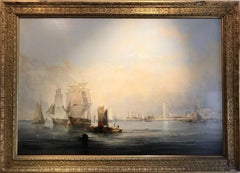
Grand 19th Century English Marine Painting in Stunning Light

Grand 19th Century English Marine Painting in Stunning Light

By John Wilson Ewbank

Located in London, GB

John Wilson Ewbank (1799 - 1847) Shipping in the Harbour, South Shields Oil on canvas 39.5 x 58 inches unframed 47.75 x 66.5 inches framed Provenance: Christie's October 2002; Lot 11. Fine Art Society; Private Collection This marvellous up to scale Ewbank is full of light and warmth and almost certainly his greatest work of the sort rarely - if ever - seen on the market. John W. Ewbank (4 May 1799–28 November 1847), was an English-born landscape and marine painter largely operational from Scotland. The Humber river is a large tidal estuary on the east coast of Northern England. Life Ewbank was born at Darlington on 4 May 1799, the son of Michael Ewbank, an innkeeper. He was adopted as a child by a wealthy uncle who lived at Wycliffe, on the banks of the River Tees, in the North Riding of Yorkshire. Intended for the Roman Catholic priesthood, he was sent to Ushaw College, from which he absconded. In 1813 Ewbank was apprenticed to Thomas Coulson, an ornamental painter in Newcastle. In around 1816 he moved with Coulson to Edinburgh, where he had some lessons with Alexander Nasmyth. He found work both as a painter and a teacher. He was nominated in 1830 one of the foundation members of the Royal Scottish Academy. In 1833 he is listed as living at 7 Union Street on the eastern fringe of the New Town in Edinburgh. Works His sketches from nature were especially admired, and a series of 51 drawings of Edinburgh by him were engraved by W. H. Lizars for James Browne's Picturesque Views of Edinburgh (1825). He also made a reputation with cabinet pictures of banks of rivers, coast scenes, and marine subjects. As an illustrator he illustrated some early editions of Scott's Waverley Novels and one edition of Gilbert White...

Category

19th Century Old Masters Figurative Paintings

Materials

Oil

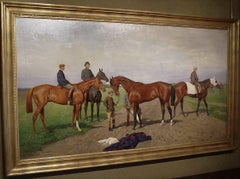
Magnificent early 20th Century Oil Painting of Race horses - At the Gallops

Magnificent early 20th Century Oil Painting of Race horses - At the Gallops

By Julius von Blaas

Located in London, GB

Julius von Blaas (1845-1923) At The Gallops circa 1905 Oil on canvas Signed and dated “Julius von Blass / 1905” (lower left) 110 x 200 cm (140 x 230 cms framed ish) This enormous and grand depiction of horses exercising is an iconic image not only of the edwardien era but also of today’s racing elite. Julius von Blaas was taught by his father Carl von Blaas (1815-1994) and trained in Venice, Florence and Rome. He was also influenced by his celebrated brother Eugen von Blaas...

Category

Early 20th Century Academic Animal Paintings

Materials

Oil

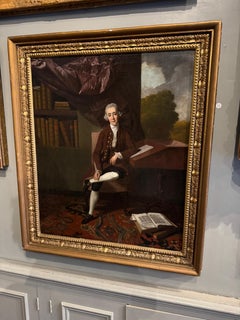
Striking 18th Century Portrait of the 12th Earl of Caithness

Striking 18th Century Portrait of the 12th Earl of Caithness

By Sir Henry Raeburn

Located in London, GB

Sir Henry Raeburn (1756-1823) James Sinclair, 12th Earl of Caithness (1766-1823) Oil on Canvas 30 X 25 inches Unframed 37 X 32 inches framed Sir Henry Raeburn FRSE RA RSA (4 March 1756 – 8 July 1823) was a Scottish portrait painter and Scotland's first significant portrait painter since the Union to remain based in Scotland. He served as Portrait Painter to King George IV in Scotland. Raeburn was born the son of a manufacturer in Stockbridge, on the Water of Leith: a former village now within the city of Edinburgh. He had an older brother, born in 1744, called William Raeburn. His ancestors were believed to have been soldiers, and may have taken the name "Raeburn" from a hill farm in Annandale, held by Sir Walter Scott's family. Orphaned, he was supported by William and placed in Heriot's Hospital, where he received an education. At the age of fifteen he was apprenticed to the goldsmith James Gilliland of Edinburgh, and various pieces of jewellery, mourning rings and the like, adorned with minute drawings on ivory by his hand, still exist. Soon he took to the production of carefully finished portrait miniatures; meeting with success and patronage, he extended his practice to oil painting, at which he was self-taught. Gilliland watched the progress of his pupil with interest, and introduced him to David Martin, who had been the favourite assistant of Allan Ramsay the Latter, and was now the leading portrait painter in Edinburgh. Raeburn was especially aided by the loan of portraits to copy. Soon he had gained sufficient skill to make him decide to devote himself exclusively to painting. George Chalmers (1776; Dunfermline Town Hall) is his earliest known portrait. In his early twenties, Raeburn was asked to paint the portrait of a young lady he had noticed when he was sketching from nature in the fields. Ann was the daughter of Peter Edgar of Bridgelands, and widow of Count James Leslie of Deanhaugh. Fascinated by the handsome and intellectual young artist, she became his wife within a month, bringing him an ample fortune. The acquisition of wealth did not affect his enthusiasm or his industry, but spurred him on to acquire a thorough knowledge of his craft. It was usual for artists to visit Italy, and Raeburn set off with his wife. In London he was kindly received by Sir Joshua Reynolds, the president of the Royal Academy, who advised him on what to study in Rome, especially recommending the works of Michelangelo, and gave Raeburn letters of introduction for Italy. In Rome he met his fellow Scot Gavin Hamilton, Pompeo Girolamo Batoni and Byers, an antique dealer whose advice proved particularly useful, especially the recommendation that "he should never copy an object from memory, but, from the principal figure to the minutest accessory, have it placed before him." After two years of study in Italy he returned to Edinburgh in 1787, and began a successful career as a portrait painter. In that year he executed a seated portrait of the second Lord President Dundas. Examples of his earlier portraiture include a bust of Mrs Johnstone of Baldovie and a three-quarter-length of Dr James Hutton: works which, if somewhat timid and tentative in handling and not as confident as his later work, nevertheless have delicacy and character. The portraits of John Clerk, Lord Eldin, and of Principal Hill of St Andrews belong to a later period. Raeburn was fortunate in the time in which he practised portraiture. Sir Walter Scott, Hugh Blair, Henry Mackenzie, Lord Woodhouselee, William Robertson, John Home, Robert Fergusson, and Dugald Stewart were resident in Edinburgh, and were all painted by Raeburn. Mature works include his own portrait and that of the Rev. Sir Henry Moncrieff Wellwood, a bust of Dr Wardrop of Torbane Hill, two full-lengths of Adam Rolland of Gask, the remarkable paintings of Lord Newton and Dr Alexander Adam in the National Gallery of Scotland, and that of William Macdonald of St Martin's. Apart from himself, Raeburn painted only two artists, one of whom was Sir Francis Leggatt Chantrey, the most important and famous British sculptor of the first half of the 19th century. It has recently been revealed that Raeburn and Chantrey were close friends and that Raeburn took exceptional care over the execution of his portrait of the sculptor, one of the painter's mature bust-length masterpieces. It was commonly believed that Raeburn was less successful in painting female portraits, but the exquisite full-length of his wife, the smaller likeness of Mrs R. Scott Moncrieff in the National Gallery of Scotland, and that of Mrs Robert Bell, and others, argue against this. Raeburn spent his life in Edinburgh, rarely visiting London, and then only for brief periods, thus preserving his individuality. Although he, personally, may have lost advantages resulting from closer association with the leaders of English art, and from contact with a wider public, Scottish art gained much from his disinclination to leave his native land. He became the acknowledged chief of the school which was growing up in Scotland during the early 19th century, and his example and influence at a critical period were of major importance. So varied were his other interests that sitters used to say of him, "You would never take him for a painter till he seizes the brush and palette." In 1812 he was elected president of the Society of Artists in Edinburgh; and in 1814 associate, and in the following year full member, of the Royal Scottish Academy. On 29 August 1822 he was knighted by George IV and appointed His Majesty's limner for Scotland at the Earl of Hopetoun house. He died in Edinburgh. Raeburn had all the essential qualities of a popular and successful portrait painter. He was able to produce a telling and forcible likeness; his work is distinguished by powerful characterisation, stark realism, dramatic and unusual lighting effects, and swift and broad handling of the most resolute sort. David Wilkie recorded that, while travelling in Spain and studying the works of Diego Velázquez, the brushwork reminded him constantly of the "square touch" of Raeburn. Scottish physician and writer John Brown wrote that Raeburn "never fails in giving a likeness at once vivid, unmistakable and pleasing. He paints the truth, and he paints it with love". Raeburn has been described as a "famously intuitive"portrait painter. He was unusual amongst many of his contemporaries, such as Reynolds, in the extent of his philosophy of painting directly from life; he made no preliminary sketches. This attitude partly explains the often coarse modelling and clashing colour combinations he employed, in contrast to the more refined style of Thomas Gainsborough and Reynolds. However these qualities and those mentioned above anticipate many of the later developments in painting of the 19th century from romanticism to Impressionism. Sir Henry Raeburn died in St Bernard's House (17 St Bernards Crescent), Stockbridge, Edinburgh. He is buried in St. Cuthbert's churchyard against the east wall (the monument erected by Raeburn in advance) but also has a secondary memorial in the Church of St John the Evangelist, Edinburgh. James Sinclair, 12th Earl of Caithness was born at Barrogill Castle (Castle of Mey) on 31 May 1766. He was the son of Sir John Sinclair of Mey, Baronet who he succeeded in the baronetcy in 1774. He succeeded as 12th earl of Caithness in 1789. He was lord-lieutenant of the county of Caithness and lieutenant-colonel of the Ross-shire militia. He married at Thurso Castle on 2 January 1784 Jane, second daughter of Alexander Campbell...

Category

18th Century Portrait Paintings
Materials

Oil

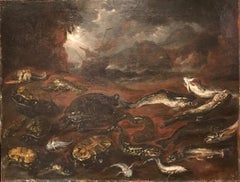
17th Century Oil Painting Still Life: Turtles & Fish with a Ship in Stormy Seas

17th Century Oil Painting Still Life: Turtles & Fish with a Ship in Stormy Seas

Located in London, GB

A Still Life of Turtles, An Eel, Pike, Lobsters and other Fish on the Shore, A Ship in the Stormy Seas Beyond Signed and dated lower left 1640 Inscribed with inventory number lower right: no. 44 Oil on canvas Framed 29.5 x 37.9 inches Provenance Anonymous sale, London, Sotheby's, 15 April 1999, lot 87, (as 'Circle of Giuseppe...

Category

17th Century Old Masters Animal Paintings

Materials

Oil

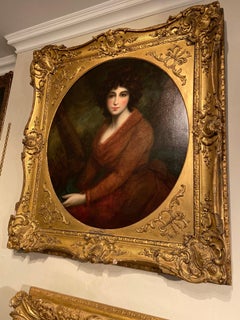
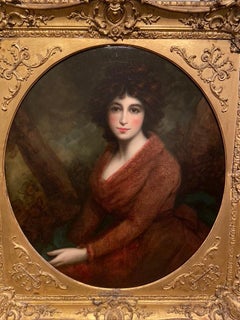
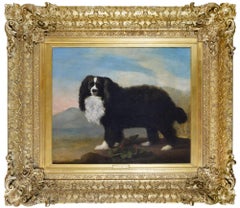
19th Century Oil Painting Portrait of a Muse

19th Century Oil Painting Portrait of a Muse

Located in London, GB

John Opie RA (1761-1807, English) c. 1802 Oil on canvas Canvas dimensions 36 x 32 inches Framed dimensions 46.5 x 43.25 inches Original gilded period frame. John Opie was a Corni...

Category

Early 19th Century Portrait Paintings
Materials

Oil

1920s Famous Alfred Munnings Oil Painting of his Favourite Hound

1920s Famous Alfred Munnings Oil Painting of his Favourite Hound

By Alfred Munnings

Located in London, GB

Sir Alfred Munnings R.A. (1878 - 1959) 'Favourite Hound' Oil on Wood Framed 98 x 74 cm Sir Alfred Munnings R.A. was known as one of England's finest painters of animals and as an ou...

Category

Early 20th Century Naturalistic Animal Paintings

Materials

Oil

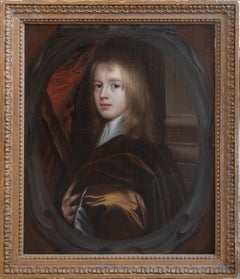
17th Century Oil Painting Portrait of a Young English Boy

17th Century Oil Painting Portrait of a Young English Boy

By Gerard Soest

Located in London, GB

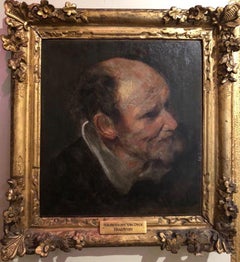
Gerard SOEST (1600 - 1681) Portrait of a Young Boy oil on canvas 35.5 x 30.5 inches inc. frame Gerard Soest (circa 1600 – 11 February 1681), also known as Gerald Soest, was a portra...

Category

17th Century Old Masters Portrait Paintings
Materials

Oil

18th Century Lanscape Oil Painting of Matlock High-Torr

18th Century Lanscape Oil Painting of Matlock High-Torr

By Thomas Smith (b.1720)

Located in London, GB

Thomas Smith of Derby Matlock High-Torr Landscape Oil on canvas 27 x 34.5 inches unframed 34 x 41.5 inches including frame Thomas Smith of Derby (died 12 September 1767) was an Engl...

Category

18th Century Old Masters Landscape Paintings

Materials

Oil

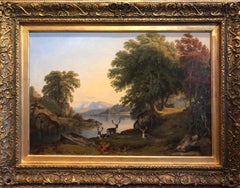
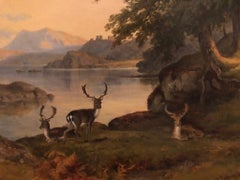
19th Century Landscape Oil Painting - Deer by the Banks of a Lake

19th Century Landscape Oil Painting - Deer by the Banks of a Lake

By Jacob Thompson

Located in London, GB

Jacob THOMPSON (1806 – 1879) Deer by the Banks of a Lake 1842 oil on canvas 18.9 x 27.6 inches; 22.5 x 31 inches Inc. frame Jacob Thompson (1806–1879) was an English landscape-pa...

Category

1840s Old Masters Figurative Paintings

Materials

Oil

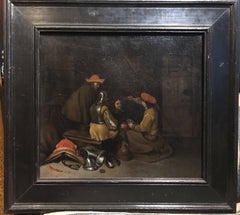
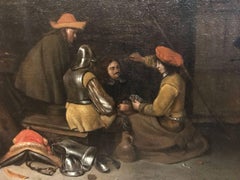
Dutch 17th Century Oil Painting - The Card Game by Ter Borch

Dutch 17th Century Oil Painting - The Card Game by Ter Borch

By Gerard ter Borch the Younger

Located in London, GB

Gerard ter Borch The Cards Game Oil on canvas 14 x 15.5 inches unframed 19 3/4 x 21 1/2 inches framed Gerard ter Borch (Dutch; December 1617 – 8 December 1681), also known as Gerard Terburg, was an influential and pioneering Dutch genre painter who lived in the Dutch Golden Age. He influenced fellow Dutch painters Gabriel Metsu...

Category

17th Century Old Masters Interior Paintings

Materials

Oil

18th Century Oil Painting Portrait of Phillip, 6th Viscount Wenman.

18th Century Oil Painting Portrait of Phillip, 6th Viscount Wenman.

By Nathaniel Dance-Holland

Located in London, GB

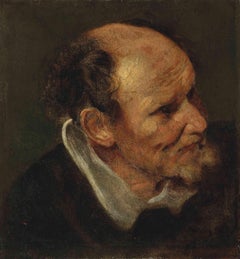
Sir Nathaniel Dance-Holland (1750-1811) was an English portrait painter and one of the founding members of the Royal Academy in 1768. Justly celebrated in his lifetime he won several...

Category

Late 18th Century Old Masters Portrait Paintings
Materials

Oil

C 20th Portrait of Female Nude by Hollywood favourite Vargas: 'Reclining Nude'

C 20th Portrait of Female Nude by Hollywood favourite Vargas: 'Reclining Nude'

By Alberto Vargas

Located in London, GB

Alberto Vargas was a Peruvian artist best known for his drawings and paintings of pin-up girls that were featured in many notable publications in the 20th century including Esquire a...

Category

Late 20th Century Nude Drawings and Watercolors

Materials

Pencil

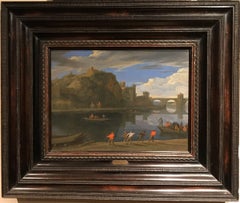
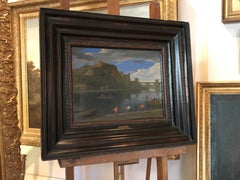
Oil Painting of Landscape with 'The Papal Palace at Avignon'

Oil Painting of Landscape with 'The Papal Palace at Avignon'

By Pieter Bout

Located in London, GB

Provenance: Sotheby’s December 5th 2006, Lot 388 Bout was a Flemish painter, draughtsman and etcher. He is known mainly for his landscapes, city, coast and country views and archite...

Category

Early 18th Century Old Masters Landscape Paintings

Materials

Oil

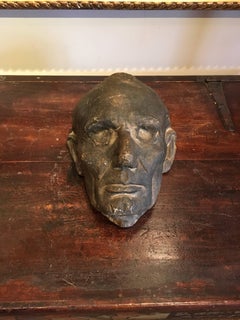
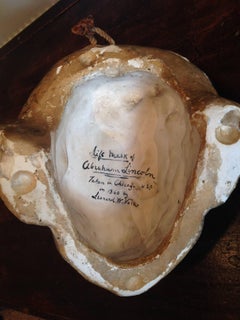
Life Mask of Abraham Lincoln

Life Mask of Abraham Lincoln

By Leonard Wells Volk

Located in London, GB

Leonard Wells Volk was a famous American sculptor. He went to posterity after making one of only two life masks of United States President Abraham Lincoln. I...

Category

1860s Victorian Figurative Sculptures

Materials

Plaster

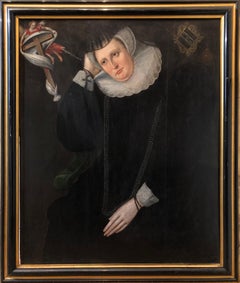
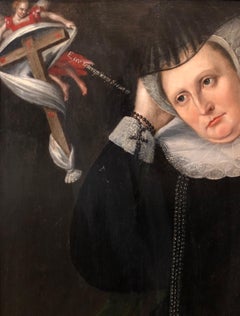
Lady Dormore - A 16th Century Portrait of a key member of Shakespeare's England

Lady Dormore - A 16th Century Portrait of a key member of Shakespeare's England

Located in London, GB

Lady Dormer, Mary Browne c. 1592 oil on panel 35 x 29 inches, unframed; 41 x 34.75 inches, inc. frame Inscribed 'Lady Dormore' Mary married Henry Wriothesley, 2nd Earl of Southampton who gave birth to Henry Wriothesley, 3rd Earl of Southampton - one of the great figures in Shakespears"s circle and founder of the Virginia company, developers of Virginia USA. Henry Wriothesley, born 6 October 1573 at Cowdray House, Sussex, was the only son of Henry Wriothesley, 2nd Earl of Southampton, by Mary Browne, the only daughter of Anthony Browne, 1st Viscount Montague, and his first wife, Jane Radcliffe.[5] He had two sisters, Jane, who died before 1573, and Mary (c. 1567 – 1607), who in June 1585 married Thomas Arundell, 1st Baron Arundell of Wardour.[6] After his father's death, Southampton's mother married firstly, on 2 May 1595, as his second wife, Sir Thomas Heneage (d. 17 October 1595), Vice-Chamberlain of the Household, and secondly, between 5 November 1598 and 31 January 1599, Sir William Hervey. She died in November 1607.[7] Early life When his father died on 4 October 1581 Southampton inherited the earldom and landed income valued at £1097 6s per annum. His wardship and marriage were sold by the Queen to her kinsman, Charles, Lord Howard of Effingham, for £1000. According to Akrigg, Howard then "entered into some further agreement, of which no documentation can now be found, which transferred to Lord Burghley personally the custody and marriage of the young Earl, but left Howard holding his lands", and late in 1581 or early in 1582 Southampton, then eight years of age, came to live at Cecil House in the Strand.[8] In October 1585, at age twelve, Southampton entered St John's College, Cambridge,[9] graduating M.A. on 6 June 1589.[10] His name was entered at the Gray's Inn legal society before he left the university, and he was admitted on 29 February 1588.[11] On Southampton's 16th birthday, 6 October 1589, Lord Burghley noted Southampton's age in his diary, and by 1590 Burghley was negotiating with Southampton's grandfather, Anthony Browne, 1st Viscount Montague, and Southampton's mother, Mary, for a marriage between Southampton and Lord Burghley's eldest granddaughter, Elizabeth Vere, daughter of Burghley's daughter, Anne Cecil, and Edward de Vere...

Category

16th Century Old Masters Figurative Paintings

Materials

Oil

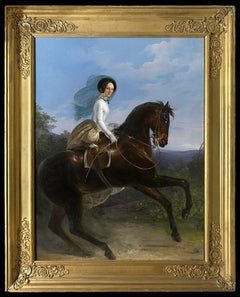
C19th Portrait Princesse de Joinville of Brazil - Spectacular fit for a palace

C19th Portrait Princesse de Joinville of Brazil - Spectacular fit for a palace

By Henri d'Ainecy Montpezat

Located in London, GB

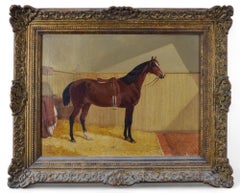
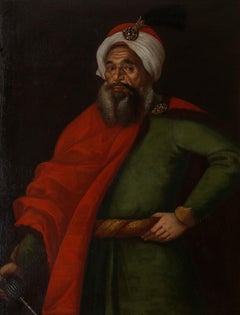
Portrait of Princess de Joinville riding a Bay Horse Henri d’Aincy, Le Comte Monpezat (French 1817-1859) Painted circa 1837-9 oil on canvas 113 x 92 inches (including frame) 92 x 70 inches (unframed) Provenance – from a private royal collection This magnificent portrait depicts Princess de Joinville, the daughter of Pedro I, Emperor of Brazil and the King of Portugal. Through her illustrious family she was directly related Alexander III and Nicholas II of Russia and the Russian royal family, as well as to many of the great ruling families of Europe. The work clearly confirms Monpezat as one of the most accomplished equestrian portrait painters in France in the early nineteenth century. In terms of scale, quality and dramatic power, it must surely be considered amongst his finest works. The stance of the powerful thoroughbred - in half rear - emphasises the calm nature and courage of the Princess. Francisca of Brazil (1824-98) married a son of Louis Philippe I, the King of the French, and had three children. Born at the Imperial Palace of Saint Christopher, her youngest brother was the future Pedro II...

Category

1830s Old Masters Portrait Paintings
Materials
Oil

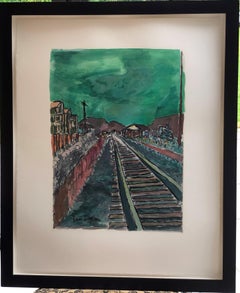
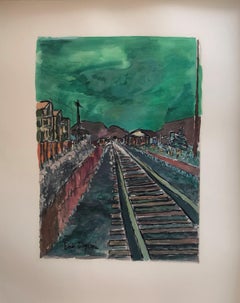
Train Tracks
Train Tracks

Train Tracks

By Bob Dylan

Located in London, GB

Bob DYLAN (1941-) Train Tracks mixed media 76 x 61 cm Signed Dylan's iconic Train Tracks image has resonated with fans and collectors since the initial s...

Category

21st Century and Contemporary Contemporary Mixed Media

Materials

Mixed Media