Galeria Sastre s l

Platinum
5 / 5
Sitges, ES
THANKS!
Follow

About Galeria Sastre s l

Galería Sastre is an independent gallery based in Sitges, on the Mediterranean coast of Spain. Founded in 2008 by Santiago Pérez Córdoba, the gallery specializes in carefully selected 20th-century European paintings, with a particular focus on luminous Mediterranean landscapes, figurative works, and artists connected to the School of Paris. Many of the painters represented in our collection worked within the vibrant artistic circles of 20th-century Europe, shaped by the modern traditions that also produced figures such as Pablo Picasso and his contemporaries. Our aim i...Read More

Galeria Sastre s l

Established in 20071stDibs seller since 2019

Featured Pieces

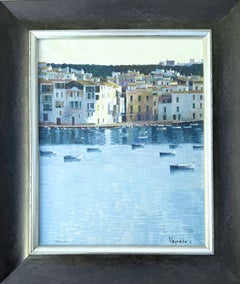
Cadaqués Harbor Oil Painting, Mediterranean Coastal Village, Spanish Modern Art
By Josep Maria Vayreda Canadell
Located in Sitges, Barcelona
Cadaqués Harbor Oil Painting, Mediterranean Coastal Village, Spanish Modern Art Artist: Josep Maria Vayreda Canadell (1932–2001) Title: Cadaqués Harbor Medium: Oil on canvas Period: Circa 1990 Style: Spanish Modernism, Mediterranean Realism, Coastal Landscape Canvas dimensions: 41 × 33 cm (16.14 × 12.99 inches) Framed dimensions: 54 × 46 cm (21.26 × 18.11 inches) Signature: Signed lower right, "Vayreda C." Condition: Good condition Frame: Included, black wooden frame with silver-toned inner molding Origin: Spain DESCRIPTION A beautiful and atmospheric original oil painting depicting the picturesque Mediterranean harbor of Cadaqués, one of the most celebrated coastal villages on Spain's Costa Brava, by the distinguished Catalan painter Josep Maria Vayreda Canadell (1932–2001). Painted circa 1990, this elegant composition captures the timeless beauty of Cadaqués, a charming fishing village internationally renowned for its whitewashed architecture, artistic heritage and extraordinary Mediterranean light. The composition presents a peaceful waterfront scene, with traditional white and ochre buildings rising above the harbor and small fishing boats resting quietly on the shimmering blue water. Vayreda demonstrates his remarkable sensitivity to architectural structure, atmospheric perspective and the subtle interplay of Mediterranean sunlight and shadow. The upper section of the painting is organized around the village's distinctive architecture, where white façades, warm terracotta roofs and muted earth tones create a harmonious visual rhythm. Below, the deep blue harbor gradually dissolves into luminous shades of turquoise, pale blue and silvery reflections. The artist dedicates much of the composition to the tranquil surface of the Mediterranean Sea, creating an exceptional sense of openness, stillness and contemplation. This generous expanse of water gives the painting a particularly elegant and contemporary decorative quality, making it especially attractive for modern interiors. The carefully positioned boats introduce delicate visual accents without disturbing the serenity of the composition. The painting combines precise architectural observation with a restrained, poetic interpretation of Mediterranean light. Its sophisticated palette of powder blue, slate blue, ivory, soft grey and muted ochre makes it exceptionally versatile for contemporary, coastal, minimalist and traditional interiors. Beyond its decorative appeal, this original painting represents an attractive example of late 20th-century Catalan landscape painting by an established Spanish artist whose career extended across Europe and the United States. CADAQUÉS: AN ICON OF MEDITERRANEAN ART Located on the Cap de Creus peninsula in Catalonia, Cadaqués has occupied a special place in the history of European modern art. Its distinctive coastal architecture, fishing boats, luminous atmosphere and surrounding landscapes have fascinated generations of painters, writers and collectors. The village is especially associated with Salvador Dalí, who lived nearby in Portlligat, and with the artistic world of Pablo Picasso, Joan Miró and Marcel Duchamp. Cadaqués continues to symbolize the Mediterranean way of life, combining natural beauty, artistic sophistication and the quiet charm of a traditional seaside village. Vayreda's painting captures this atmosphere through an intimate and beautifully balanced view of the waterfront, transforming an everyday harbor scene into a timeless Mediterranean image. ABOUT THE ARTIST Josep Maria Vayreda Canadell (1932–2001) was a distinguished Spanish painter associated with the rich artistic traditions of Catalonia. Born in Olot, Girona, he belonged to the celebrated Vayreda family, one of the most important artistic dynasties in the history of Catalan painting. Among its most prominent members was Joaquim Vayreda (1843–1894), a leading Spanish landscape painter and founder of the influential Olot School of Landscape Painting. Growing up within this remarkable artistic environment, Josep Maria Vayreda developed a strong appreciation for landscape painting, architectural subjects and the expressive possibilities of natural light. He studied at the School of Arts and Crafts in Olot and began exhibiting his work at an early age. In 1958, he exhibited in Barcelona and received an award from the Press Association. That same year he moved to Paris, where he further developed his artistic career. His years in France helped shape his distinctive approach to urban landscapes, cafés, quiet streets and atmospheric architectural compositions. Unlike the more naturalistic traditions of the nineteenth-century Olot School, Vayreda developed a highly personal form of realism characterized by structured compositions, restrained color harmonies and contemplative atmospheres. His favorite subjects included the streets of Paris, the architecture of Girona and Olot, Mediterranean coastal villages such as Cadaqués, and European cities including Venice. He exhibited internationally in major cultural centers such as Paris, London, New York, Los Angeles, Boston and Philadelphia. His paintings are admired for their architectural precision, subtle tonal relationships and poetic interpretation of everyday environments. Vayreda frequently signed his paintings "Vayreda C.", distinguishing his work within the extensive artistic family. Today, his paintings offer collectors an appealing connection to the traditions of twentieth-century Spanish figurative painting, Catalan landscape art and Mediterranean modernism. ARTISTIC INSPIRATION AND INTERNATIONAL CONTEXT The artistic character of this painting can be appreciated in relation to several major figures of European modern painting. Its carefully structured architectural composition recalls the Mediterranean landscapes of Paul Cézanne, particularly his interest in translating buildings and natural forms into balanced geometric arrangements. The luminous coastal palette evokes aspects of Henri Matisse and André Derain, whose interpretations of Mediterranean light helped define the visual language of modern European painting. The intimate atmosphere of the waterfront and its quiet buildings also invites comparisons with the poetic urban landscapes of Maurice Utrillo and Pierre Bonnard. The treatment of light and the restrained interpretation of the Spanish coastline connect the work aesthetically with the Mediterranean sensibility associated with Joaquín Sorolla and the Catalan landscape tradition. The setting of Cadaqués also establishes a geographical connection with Salvador Dalí, Pablo Picasso and Joan Miró, artists whose histories are closely linked to this extraordinary corner of the Mediterranean. These references provide an artistic context rather than suggesting direct influence or association. COLLECTING AND INTERIOR DESIGN An attractive original Spanish oil painting for collectors of Mediterranean landscapes, European modern art, coastal paintings and twentieth-century Catalan art. Its vertical format and luminous blue palette make it especially suitable for a coastal residence, Mediterranean-inspired living room, elegant bedroom, contemporary apartment or sophisticated vacation home. The combination of historic Mediterranean architecture, peaceful fishing boats and expansive blue water creates a timeless image of tranquility and understated elegance. The painting is presented in its black and silver-toned frame, ready for display. Cadaqués oil painting, Cadaques harbor painting, Mediterranean oil painting, Spanish coastal landscape, Costa Brava painting, Mediterranean seascape, Spanish modern art, Catalan modern painting, European modern art, original oil on canvas, Mediterranean village painting, coastal village artwork, blue seascape painting, fishing boats painting, Spanish landscape painting, Mediterranean harbor scene, Cadaqués Spain art, Catalan landscape artist, European coastal painting, vintage Mediterranean painting, twentieth century Spanish art, figurative landscape painting, Mediterranean wall art, blue coastal artwork, modern coastal decor, Spanish fine art, collectible European painting, Salvador Dali Cadaques...
Category

1990s Contemporary Landscape Paintings

Materials

Canvas, Oil

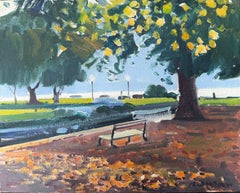
Autumn at Lake Garda – Italian Lakeside Park Post-Impressionist Oil Painting
By Rafael Duran Benet
Located in Sitges, Barcelona
Autumn at Lake Garda – Italian Lakeside Park Post-Impressionist Oil Painting Artist: Rafael Durán Benet (Terrassa, 1931 – Barcelona, 2015) Title: Autumn in Riva del Garda Year: 1984...
Category

1980s Post-Impressionist Landscape Paintings

Materials

Oil

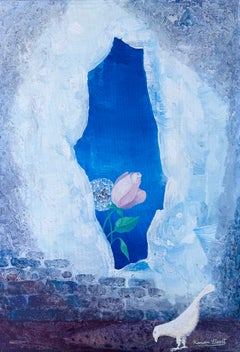
Surrealist Blue Wall with Pink Flower and White Bird, Symbolist Oil Painting
By Ramon Llovet Miserol
Located in Sitges, Barcelona
Surrealist Blue Wall with Pink Flower and White Bird, Symbolist Oil Painting Artist: Ramon Llovet i Miserol (Barcelona, 1917–1987) Original title: Esboranc en el mur (Breach in the Wall) Year: 1976 Origin: Spain, Catalonia Medium: Oil on canvas Dimensions: 64 × 44 cm (25.20 × 17.32 inches) Signature: Hand-signed lower right Verso: Signed, titled and dated 1976 by the artist Condition: Vintage condition, with surface details visible in the photographs Framing: Unframed Style: Surrealism, Symbolism, Poetic Surrealism, Modern Art Period: 1970s DESCRIPTION An enchanting and highly poetic surrealist oil painting by Ramon Llovet i Miserol (1917–1987), a distinctive figure in 20th-century Catalan modern art, celebrated for his deeply personal exploration of symbolism, spirituality and the human condition. Painted in 1976 and titled "Esboranc en el mur" (Breach in the Wall), this remarkable composition belongs to the artist's mature period, when his earlier expressionist language had evolved into a luminous, dreamlike world of symbolic imagery and metaphysical contemplation. The painting depicts a mysterious opening in a heavily textured wall, revealing an intense ultramarine blue space. Within this enigmatic passage, a delicate pink flower emerges alongside an intricate white floral form, while a solitary white bird stands in the foreground. The contrast between the rough, almost sculptural surface of the wall and the extraordinary depth of the blue background creates a compelling sense of mystery, silence and transcendence. The flower suggests renewal and the fragile beauty of life, while the white bird evokes peace, innocence and freedom. The opening in the wall can be interpreted as a symbolic passage between the material world and an inner, spiritual dimension. The composition is particularly striking for its refined chromatic harmony: vibrant cobalt and ultramarine blues, icy whites, subtle lavender and pink tones, and a restrained touch of green. Llovet's sophisticated use of texture and carefully controlled brushwork gives the painting a remarkable tactile quality, reinforcing the contrast between physical matter and poetic imagination. Created during the height of the artist's spiritual and philosophical maturity, this work reflects his fascination with pacifism, Eastern thought and the search for universal harmony. An evocative example of Spanish and Catalan poetic surrealism, combining the visual fascination of modernist painting with an intimate, contemplative atmosphere. The painting is signed on the front and additionally signed, titled and dated 1976 on the reverse, providing valuable documentary information about the original work. ARTIST BIOGRAPHY Ramon Llovet i Miserol (Barcelona, 1917–1987) was a Spanish-Catalan painter, engraver and sculptor whose artistic career followed a remarkable evolution from social realism and expressive figuration toward a highly individual language of poetic symbolism and spiritual surrealism. Born in the working-class Poble-sec district of Barcelona, Llovet developed an early passion for drawing and painting. Largely self-taught, he attended classes at the prestigious Escola de la Llotja and the Ateneu Obrer, while the work of Antoni Clavé became an important early reference. His experiences during the Spanish Civil War profoundly influenced his worldview, encouraging a lifelong commitment to humanism and pacifism. He held his first exhibition in Barcelona in 1939 and subsequently participated in the influential Salons d'Octubre, important gatherings of modern Catalan artists during the postwar period. During the 1950s, his painting developed an expressive and socially conscious character, inspired in part by the Spanish painter José Gutiérrez Solana. His scenes of humble neighborhoods, solitary figures and urban landscapes attracted critical attention. Llovet became associated with Barcelona's prestigious Sala Gaspar, one of the most important galleries promoting modern and contemporary art in Spain, where his work was exhibited over several decades. From the 1960s onward, his artistic direction underwent a profound transformation. Influenced by the philosopher Jiddu Krishnamurti, the pacifist thinker Lanza del Vasto, theosophy and Eastern spirituality, he progressively abandoned the darker atmosphere of his earlier paintings. His mature work embraced luminous colors, symbolic flowers, birds, mysterious spaces and metaphysical compositions, developing an unmistakably personal visual language centered on peace, transcendence and spiritual freedom. His artistic importance has received renewed institutional recognition. In 2026, the Biblioteca de Catalunya in Barcelona presented the retrospective exhibition "Ramon Llovet, entre la realitat i el lirisme" (Ramon Llovet, Between Reality and Lyricism), examining the evolution of his career and the distinctive symbolic language of his mature period. His work is represented in the collection of the Museu Nacional d'Art de Catalunya (MNAC), Barcelona, and the Museu d'Art de Girona, while the Biblioteca de Catalunya preserves an important collection of his graphic work. Today, Ramon Llovet is appreciated as an individual voice within 20th-century Spanish modernism, whose paintings combine expressive sensitivity, philosophical depth and poetic imagination. ARTISTIC INSPIRATION The dreamlike imagery, symbolic composition and metaphysical atmosphere of this painting establish fascinating artistic connections with several internationally renowned masters of modern art. Joan Miró: The poetic use of simplified forms, delicate organic motifs and symbolic elements suspended within mysterious pictorial spaces. René Magritte: The enigmatic relationship between ordinary objects and impossible or ambiguous spaces, transforming familiar subjects into visual metaphors. Marc Chagall: The lyrical treatment of flowers, birds and dreamlike imagery, evoking emotional and spiritual dimensions beyond conventional reality. Salvador Dalí: The surrealist fascination with hidden meanings, psychological landscapes and the boundaries between the visible and invisible worlds. Odilon Redon: The symbolic representation of flowers and imaginary environments, where nature becomes an expression of inner spirituality and contemplation. Paul Klee: The delicate visual poetry, symbolic abstraction and intimate relationship between color, form and philosophical imagination. These artistic affinities position Llovet's work within a broader European tradition of Symbolism, Surrealism and poetic modernism, while preserving the unmistakable individuality of his Catalan artistic identity. Ramon Llovet, Ramon Llovet Miserol, Spanish surrealist painting, Catalan surrealism, 1970s surrealist art, vintage surrealist oil painting, symbolic flower painting, pink flower painting, white bird painting...
Category

1970s Symbolist Animal Paintings

Materials

Canvas, Oil

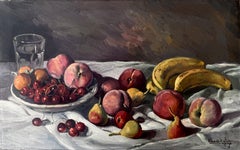
Spanish Post-Impressionist Fruit Still Life with Peaches Cherries Bananas Oil
By Albert Rafols Culleres
Located in Sitges, Barcelona
Spanish Post-Impressionist Fruit Still Life with Peaches, Cherries and Bananas Artist: Albert Ràfols Cullerés (Barcelona, 1892–1986) Title: Still Life with Fruit Period: Circa 1930s–1940s Origin: Spain, Catalonia Medium: Oil on burlap (hessian canvas) Dimensions: 14.96 × 24.02 inches (38 × 61 cm) Signature: Hand-signed by the artist, lower right Condition: Good vintage condition, with minor age-related surface wear and the characteristic texture of the original burlap support, as visible in the photographs. Framing: Unframed Style: Post-Impressionist, Catalan Modernism, Figurative Art DESCRIPTION An exceptional and richly textured Spanish Post-Impressionist still life by Albert Ràfols Cullerés (1892–1986), a distinguished Catalan painter and father of the internationally renowned abstract artist Albert Ràfols-Casamada. Painted circa the 1930s–1940s, this evocative original oil painting on burlap presents an abundant arrangement of fresh Mediterranean fruit, capturing the warmth, color and timeless beauty of everyday life through a remarkably expressive painterly technique. The composition features ripe peaches, vibrant red cherries, golden bananas, pears and citrus fruits arranged across a softly draped white tablecloth. A transparent drinking glass and a shallow ceramic plate introduce subtle reflections and structural balance, while the dark, atmospheric background intensifies the luminosity of the fruit. Particularly captivating is the contrast between the vivid reds and purples of the peaches and cherries, the warm yellows of the bananas and the cool, silvery whites of the fabric. The artist achieves remarkable depth through confident, visible brushstrokes, sophisticated tonal transitions and a sensitive understanding of natural light. The unusual burlap support adds a particularly attractive tactile dimension to the painting. Its pronounced woven texture interacts with the oil pigment, producing a richly textured surface that enhances the expressive character of the work. Thick, energetic applications of color coexist with delicate passages of light and shadow, revealing the artist's technical confidence and painterly spontaneity. The elongated horizontal composition, measuring 61 cm in width, creates an elegant panoramic arrangement that makes this vintage European still life especially appealing for sophisticated interiors, traditional collections and contemporary spaces seeking the warmth of original Mediterranean art. Signed "Albert Ràfols" in the lower right corner, this charming fruit still life represents a particularly attractive example of early-to-mid-20th-century Catalan figurative painting. ARTISTIC INSPIRATION This beautiful still life belongs to the rich European tradition of fruit painting, recalling the structural compositions of Paul Cézanne, the intimate atmosphere of Henri Fantin-Latour and the expressive color harmonies associated with Pierre Bonnard. Like Cézanne, Ràfols Cullerés constructs his composition through carefully balanced volumes and chromatic relationships rather than purely photographic precision. The dark background, luminous fruit and subtle reflections evoke the refined still-life tradition of Fantin-Latour, while the free, textured brushwork and vibrant Mediterranean palette reveal affinities with the Post-Impressionist sensibility of Bonnard. These stylistic parallels situate the painting within the broader development of European modern figurative art, while preserving the distinctive personality and spontaneous elegance of the Catalan school. ARTIST BIOGRAPHY Albert Ràfols Cullerés (Barcelona, 1892–1986) was a Catalan painter associated with the figurative and Post-Impressionist traditions of early-20th-century Spanish art. He studied at the prestigious Escola de Belles Arts de La Llotja in Barcelona, where his teachers included Lluís Labarta and Arcadi Mas i Fontdevila, two important figures in Catalan academic painting. Following his artistic education, he received a scholarship that allowed him to continue his studies in Madrid. In 1917, Ràfols Cullerés held his first solo exhibition at the celebrated Galeries Laietanes in Barcelona, one of the city's leading exhibition venues during the development of Catalan modern art. He subsequently exhibited regularly at La Pinacoteca, establishing himself within Barcelona's artistic community. His artistic production encompassed portraits, interiors, landscapes and still-life compositions. His paintings are particularly appreciated for their intimate atmosphere, expressive brushwork, distinctive framing and sensitive treatment of light. Still-life painting formed an important part of his artistic practice. The Museu d'Art de Girona preserves an example of his work in this genre, confirming its significance within his broader career. Ràfols Cullerés was also the father and early artistic mentor of Albert Ràfols-Casamada (1923–2009), one of the most celebrated Spanish abstract painters of the 20th century. His father's Post-Impressionist approach contributed to Ràfols-Casamada's early artistic development before the younger painter embraced abstraction. Works by Albert Ràfols Cullerés are represented in Catalan institutional collections, including the Museu d'Art de Girona and the Reial Acadèmia Catalana de Belles Arts de Sant Jordi in Barcelona. Today, his paintings offer collectors an appealing connection to the history of Catalan Modernism, European Post-Impressionism and the distinguished Ràfols artistic family. Albert Rafols Culleres; Albert Ràfols Cullerés; Albert Rafols; Albert Rafols Casamada; Spanish still life painting; Spanish fruit still life; Catalan still life; Post Impressionist still life; Spanish Post Impressionism; antique fruit painting; vintage oil painting; oil on burlap; oil on hessian; original oil painting; 1930s Spanish painting; 1940s Spanish painting; Mediterranean still life; European still life; cherries painting; peaches painting; bananas painting; pears painting; fruit bowl painting...
Category

1930s Modern Still-life Paintings

Materials

Oil

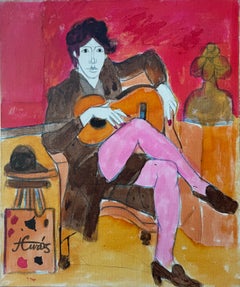
Woman with Guitar in Pink Stockings Colorful Spanish Fauvist Figurative Painting
By Jordi Curos Ventura
Located in Sitges, Barcelona
Woman with Guitar in Pink Stockings – Colorful Spanish Fauvist Figurative Painting Artist: Jordi Curós Ventura (1930–2017) Title: Woman with Guitar Origin: Spain, Catalonia Period: ...
Category

1970s Fauvist Interior Paintings

Materials

Mixed Media

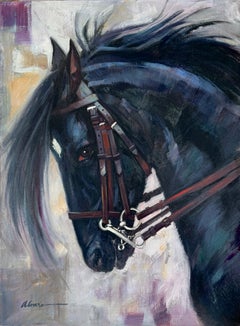
Original Powerful Black Horse Portrait, Colombian Modernist Equestrian Art Oil
Located in Sitges, Barcelona
Powerful Black Horse Portrait, Colombian Modernist Equestrian Art Artist: Álvaro Gómez Hurtado (Colombia, 1919–1995) Title: Black Horse (descriptive title) Medium: Oil on canvas Dim...
Category

1950s Modern Animal Paintings

Materials

Canvas, Oil

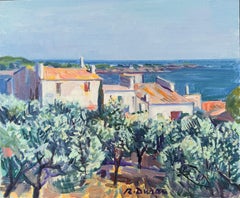
Original Mediterranean Coastal Village with Olive Trees, Post-Impressionist Oil
By Rafael Duran Benet
Located in Sitges, Barcelona
Mediterranean Coastal Village with Olive Trees, Post-Impressionist Oil Painting Artist: Rafael Duran Benet (1931–2015) Signature: Signed “R. Duran” lower right Medium: Oil on canvas board Period: Second half of the 20th century Origin: Catalonia, Spain Artwork dimensions: 46 × 38 cm (18.11 × 14.96 in) Frame dimensions: Unframed Condition: Good vintage condition, with no significant damage apparent in the photographs. Subject: Mediterranean coastal landscape, olive grove, whitewashed houses and sea Style: Post-Impressionism, Mediterranean Impressionism, Fauvism DESCRIPTION A beautiful and luminous original oil painting by Rafael Duran Benet (1931–2015), an accomplished Catalan painter celebrated for his expressive Mediterranean landscapes and vibrant interpretation of light and color. This captivating composition depicts a peaceful Mediterranean coastal village, where traditional whitewashed houses and warm terracotta rooftops emerge from a luxuriant grove of silvery olive trees. Beyond the village, the deep blue Mediterranean Sea stretches toward the horizon, creating an atmosphere of tranquility and timeless Southern European charm. The scenery is strongly evocative of Cadaqués and the Costa Brava, landscapes that played a central role in Duran Benet's artistic career. The artist's confident, spontaneous brushwork and sophisticated chromatic contrasts give the composition extraordinary vitality. Cool turquoise greens, delicate lavender shadows and silvery foliage contrast beautifully with the golden sunlight and warm coral tones of the rooftops. Particularly striking is the treatment of the olive trees in the foreground, rendered through energetic, fragmented brushstrokes that transform the vegetation into a rich tapestry of Mediterranean colors. The balanced composition, expressive painterly texture and harmonious palette capture the essence of the Catalan coastline. An excellent example of Spanish Mediterranean Post-Impressionism, this original painting would make an elegant addition to a curated collection of European modern art, coastal landscapes or twentieth-century Spanish painting. ARTISTIC INSPIRATION Rafael Duran Benet's artistic language belongs to the rich tradition of Catalan Post-Impressionism, combining Impressionist sensitivity to natural light with the expressive chromatic freedom of Fauvism. His work reveals affinities with Henri Matisse in its confident use of color, Raoul Dufy in its spontaneous interpretation of Mediterranean architecture and coastal scenery, and Paul Cézanne in its structural simplification of buildings and natural forms. In this particular painting, the interplay of blue-green foliage, violet shadows and sunlit architecture recalls the luminous Mediterranean landscapes associated with French Fauvism. Yet Duran Benet develops these influences through a distinctly personal vision, deeply rooted in the pictorial traditions of Catalonia and the landscapes of the Costa Brava. The vigorous brushwork, poetic atmosphere and remarkable sensitivity to Mediterranean light place his work within the continuing evolution of twentieth-century European landscape painting. ABOUT THE ARTIST Rafael Duran Benet (Terrassa, 1931 – Barcelona, 2015) was a distinguished Spanish Catalan painter known for his Mediterranean landscapes, seascapes and still-life compositions. Born into a family with strong artistic connections, he received early guidance from his uncle, the respected painter and art critic Rafael Benet, and from the renowned sculptor Manolo Hugué. His artistic education was further enriched by periods spent in France and the Netherlands, where he absorbed important elements of European Impressionism and modern painting. Duran Benet developed a particularly close relationship with Cadaqués, the celebrated Mediterranean village that attracted such major twentieth-century artists as Salvador Dalí, Marcel Duchamp and Pablo Picasso. He held his first exhibition in Collioure in 1955 and made his Barcelona solo debut at Sala Vayreda in 1958. From 1960 onward, he maintained a long professional association with the prestigious Sala Parés in Barcelona. His artistic career included exhibitions in Spain and internationally, and his achievements were recognized through several distinctions, including the Diputación de Barcelona Prize in 1967 and the Henri Forman Prize awarded by the Société Nationale des Beaux Arts in Paris in 1980. His paintings are represented in important Catalan art collections, including the Fundació Vila Casas and the Museu d'Art de Girona. Today, his work is appreciated for its vivid Mediterranean colors, expressive brushwork and sensitive interpretation of the landscapes of Catalonia. Rafael Duran Benet, Rafael Duran, Spanish oil painting, Mediterranean landscape, Mediterranean seascape, Costa Brava painting, Cadaqués landscape, Catalan painting, Spanish Post-Impressionism, Mediterranean Impressionism, Fauvist landscape, olive trees painting...
Category

1980s Post-Impressionist Landscape Paintings

Materials

Oil

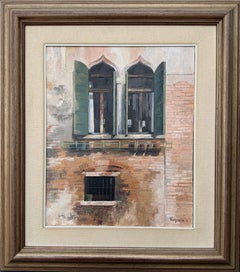
Venetian Gothic Windows Original Oil Painting of Venice, Italian Architecture
By Josep Maria Vayreda Canadell
Located in Sitges, Barcelona
Venetian Gothic Windows – Original Oil Painting of Venice, Italian Architecture Artist: Josep Maria Vayreda Canadell (1932–2001) Signature: Si...
Category

1980s Post-War Interior Paintings

Materials

Canvas, Oil

Indian Woman with Water Vessel, Spanish Surrealist Hyperrealist Oil Painting
Located in Sitges, Barcelona
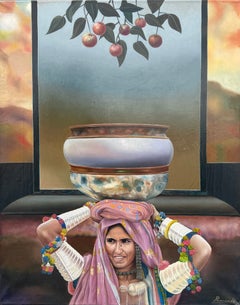
Indian Woman with Water Vessel, Spanish Surrealist Hyperrealist Oil Painting Artist: Ángel Preciados Vega (Spanish, born 1953) Original Title: India Year: 1990 Medium: Oil on canvas Dimensions: 92 × 73 cm (36.22 × 28.74 inches) Signature: Signed and dated "Preciados 96" lower right Country of Origin: Spain Period: Late 20th Century, 1990s Style: Surrealism, Hyperrealism, Figurative Realism, Symbolism Subject: Indian woman, female portrait, traditional costume, decorative vessel Orientation: Vertical Framing: Unframed Description: An exceptional large-scale Spanish figurative oil painting from 1990, portraying an Indian woman in richly ornamented traditional clothing, rendered with extraordinary hyperrealist precision and a captivating surrealist atmosphere. Created by Spanish painter Ángel Preciados Vega, this original oil on canvas combines the technical virtuosity of European realist portraiture with the imaginative symbolism and mysterious visual language of 20th-century Surrealism. Entitled "India", this remarkable composition presents a striking female figure wearing an elaborate pink and mauve turban decorated with delicate floral motifs, traditional silver jewelry, intricate bracelets, and colorful textile ornaments. With both arms raised, the woman balances a large ornamental vessel upon her head, creating a powerful and beautifully structured composition that celebrates cultural identity, femininity, human dignity, and the richness of traditional craftsmanship. The artist's exceptional attention to detail is immediately evident in the woman's expressive face. Her intense sideways gaze, carefully modeled features, natural complexion, and subtle expression convey a remarkable psychological presence. The realistic treatment of her eyes, lips, skin, and facial contours demonstrates Preciados' mastery of figurative oil painting and his ability to capture human character through meticulous observation. Particularly impressive is the rendering of the woman's traditional clothing and jewelry. The soft folds of her embroidered headdress, the delicate floral decorations, the reflective surfaces of her silver ornaments, and the colorful pom-poms adorning her wrists are depicted with almost photographic precision. Every detail contributes to the extraordinary richness of the image, demonstrating the artist's fascination with material textures, optical effects, and illusionistic painting. The monumental decorative vessel resting upon the woman's head forms another remarkable focal point. Its elegant rounded silhouette, polished copper-colored bands, softly graduated violet surfaces, and richly patterned lower section showcase an exceptional understanding of reflected light, volume, and surface texture. The object acquires an almost sculptural presence, reinforcing the painting's unusual balance between realistic representation and imaginative construction. Above the figure, a leafy branch bearing luminous red and golden apples descends into the composition. Suspended against a softly graduated blue and olive-green background, the fruit introduces an enigmatic natural element that transforms the scene from conventional ethnographic portraiture into a subtly surreal and symbolically suggestive image. The interplay between the hanging fruit, the ornamental vessel, and the human figure creates an intriguing visual dialogue between nature, femininity, fertility, abundance, balance, and cultural tradition. These familiar elements appear carefully orchestrated within an architectural setting whose unusual atmosphere invites interpretations beyond the purely descriptive. The window-like structure framing the upper portion of the painting reinforces its theatrical quality. Warm atmospheric colors appear beyond the dark architectural borders, while the softly illuminated central background creates an impression of suspended time and contemplative stillness. This unusual spatial arrangement reveals the artist's ability to introduce dreamlike ambiguity into an otherwise meticulously realistic composition. The painting is distinguished by a sophisticated and harmonious chromatic palette. Dusty rose, mauve, lavender, turquoise, copper, olive green, pale blue, and warm golden tones combine to produce an exceptionally refined decorative effect. The delicate balance between luminous colors and darker architectural elements gives the image depth, elegance, and an unmistakable visual identity. Although the subject is firmly rooted in traditional figurative portraiture, the painting transcends straightforward realism through its symbolic arrangement, unexpected spatial relationships, and poetic atmosphere. The result is a fascinating example of Spanish contemporary figurative art in which hyperrealist technique and surrealist imagination coexist. The work belongs to a broader tradition of European figurative painting that maintained a strong commitment to technical excellence throughout the late 20th century. Its precise modeling, sophisticated lighting, remarkable surface effects, and imaginative composition demonstrate the expressive possibilities of traditional oil painting within contemporary artistic practice. Painted in 1990, during a period when Ángel Preciados was exhibiting in Catalonia, this ambitious composition illustrates an especially intriguing aspect of his artistic production: his ability to combine the precision of hyperrealist representation with the symbolic ambiguity characteristic of Surrealism. Unlike conventional portrait paintings, the image establishes a visual relationship between the central female figure and the carefully arranged elements surrounding her. The woman's striking expression, the elaborate vessel, the hanging fruit, and the architectural framing create a distinctive narrative atmosphere, inviting the viewer to discover new details and associations over time. This combination of extraordinary craftsmanship, captivating subject matter, and sophisticated symbolic imagery makes the painting particularly appealing to collectors of Spanish Surrealism, European hyperrealism, contemporary figurative painting, realistic female portraiture, and original late 20th-century oil paintings. With its impressive dimensions of 92 × 73 cm (36.22 × 28.74 inches), the canvas possesses a substantial architectural presence. Its vertical format, elegant proportions, and richly detailed composition make it an outstanding statement artwork for a sophisticated living room, contemporary residence, private art collection, eclectic interior, collector's library, or carefully curated hospitality space. The refined interplay of pink, lavender, copper, and muted green tones allows the painting to complement both contemporary and traditional interiors. Its combination of technical precision, decorative richness, and intriguing symbolism offers a distinctive alternative to conventional figurative portraiture. An original hand-painted European oil painting, not a reproduction or limited-edition print, this work presents a compelling opportunity for collectors seeking distinctive Spanish contemporary art with strong visual character, outstanding figurative detail, and a meaningful connection to the traditions of Surrealism and hyperrealist painting. The painting is signed and dated by the artist in the lower right corner and retains its original title, "India", as documented in a published auction catalogue. Artistic Inspiration: The extraordinary precision, dreamlike atmosphere, and symbolic complexity of this painting establish fascinating visual connections with several internationally celebrated artists. The meticulous rendering of facial features, reflective surfaces, and decorative objects recalls the technical mastery of Salvador Dalí, whose surrealist compositions frequently transformed recognizable subjects into mysterious and psychologically charged images. The unexpected relationship between the female figure, the suspended fruit, and the architectural background evokes the enigmatic visual arrangements of René Magritte, where ordinary objects acquire an extraordinary poetic significance through their placement and interaction. The psychological intensity of the portrait, the emphasis on traditional clothing, and the integration of natural symbolism suggest thematic affinities with Frida Kahlo, whose celebrated figurative paintings explore personal identity, cultural heritage, and the relationship between humanity and nature. The subtle theatricality and carefully constructed sense of mystery also invite comparisons with the metaphysical painting of Giorgio de Chirico. These associations are artistic parallels rather than documented direct influences. Through his individual pictorial language, Ángel Preciados Vega unites the illusionistic precision of hyperrealism, the imaginative freedom of European Surrealism, and the enduring tradition of expressive figurative portraiture, creating a distinctive work of considerable technical refinement and symbolic appeal. Artist Biography: Ángel Preciados Vega (born 1953 in Puerto Real, Cádiz, Spain) is a Spanish figurative and surrealist painter whose artistic production combines exceptional technical precision with imaginative symbolism, elaborate compositions, and a distinctive understanding of illusionistic oil painting. Although primarily associated with Surrealism, Preciados has also explored hyperrealism and detailed figurative painting, demonstrating considerable versatility in his approach to representation. His works frequently incorporate enigmatic human figures, carefully rendered architectural settings, symbolic objects, reflective surfaces, and dreamlike landscapes, creating compositions in which recognizable reality merges with imaginative invention. Born in Andalusia, Preciados developed a professional artistic career extending from the 1970s into the 21st century. His exhibition history is closely associated with Catalonia, particularly Barcelona and the surrounding artistic centers, while also extending to other parts of Spain, France, and Switzerland. Published biographical records place his earliest exhibitions in Córdoba and Cádiz during the 1970s. His subsequent career includes a presentation at Sala Arte 41 in Barcelona in 1979, followed by exhibitions in Megève and Bayeux, France, in 1983. During the 1980s, his professional activity continued with presentations associated with the cultural exhibition program of La Caixa in Barcelona in 1984, Galería Caoba in Palma de Mallorca in 1985, and exhibitions in France later in the decade. His international presence expanded during the 1990s, with exhibitions reported at Arte Avenir in Paris in 1992 and in Neuchâtel, Switzerland. In Barcelona, his exhibition history includes March Gallery in 1993, Galería Dubé in 1994, and Sala San Marino in 1995. In 1996, the same year in which the present painting was created, Preciados exhibited at Galería José Fajo in Figueres and Sala Vayreda in Olot, two important artistic centers in Catalonia. His published exhibition record also includes collective presentations in Sitges, Sant Pere de Ribes, Barcelona, Olot, and Vilanova i la Geltrú, reflecting sustained involvement in the Catalan artistic community. Biographical listings additionally report a first prize associated with the Real Academia de Bellas Artes de Córdoba in 1979, illustration work for Barcelona-based Norma Editorial in 1987, and portrait commissions involving prominent public figures. These details are recorded in secondary biographical sources. Stylistically, Preciados' work belongs to the rich tradition of Spanish figurative Surrealism, where precise representation and imaginative invention frequently coexist. His paintings demonstrate a particular interest in optical illusion, symbolic relationships, complex textures, dramatic lighting, and the psychological potential of recognizable imagery. The artist's technical versatility allows him to move between highly realistic human portraiture and fantastical compositions, often combining elements of both approaches within a single painting. His precise treatment of anatomy, textiles, metal, glass, atmospheric light, and elaborate decorative surfaces reveals a strong command of traditional painting techniques, while his imaginative arrangements introduce ambiguity, mystery, and poetic suggestion. Ángel Preciados Vega represents a distinctive voice within late 20th-century Spanish figurative painting, maintaining the traditions of classical artistic craftsmanship while exploring the expressive freedom of contemporary Surrealism. Angel Preciados Vega, Angel Preciados, Preciados painting, Spanish surrealist painting, Spanish surrealism, Spanish surrealist artist, surrealist oil painting, hyperrealist oil painting, hyperrealism painting, hyperrealist portrait, photorealistic painting, photorealism, Spanish photorealism, European hyperrealism, European surrealism, contemporary surrealism, figurative surrealism, figurative oil painting, Spanish figurative art, Spanish figurative painting, European figurative painting, figurative realism, contemporary realism, symbolic realism, magical realism, illusionist painting, trompe l'oeil realism, realistic portrait, female portrait painting, Indian woman painting, Indian woman portrait, Indian portrait painting, traditional Indian woman, Indian traditional costume, Indian woman with water pot, woman carrying water vessel, woman with pot on head, woman with vessel, ethnic portrait painting, cultural portraiture, traditional costume painting, embroidered clothing painting, traditional Indian jewelry, exotic portrait art, oriental inspired painting, South Asian portrait, Rajasthan inspired portrait, expressive female portrait, psychological portrait painting, symbolic female figure, botanical symbolism, apples in surrealism, symbolic figurative painting, surrealist portrait, detailed oil painting, large Spanish oil painting, original oil on canvas, original European artwork, 1990s art, 1990s oil painting...
Category

1990s Surrealist Figurative Paintings

Materials

Canvas, Oil

Original Spanish Surrealist Female Figure, Monumental Expressionist Oil
By Alvar Sunol Munoz-Ramos
Located in Sitges, Barcelona
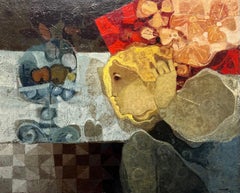
Original Spanish Surrealist Female Figure, Monumental Expressionist Composition Artist: Alvar Suñol Munoz-Ramos Title: Figurative Composition Date: circa 2000 Medium: Oil on canvas Dimensions: 81 × 100 cm / 31.9 × 39.4 in Framed: Yes Signed: Lower right Condition: Excellent Origin: Spain DESCRIPTION A monumental and highly distinctive figurative composition by internationally recognized Spanish artist Alvar Suñol, combining psychological intensity, sculptural presence and a sophisticated balance between figuration and abstraction. The composition is dominated by one of Suñol’s characteristic introspective female figures, rendered with a monumental sense of volume and surrounded by overlapping geometric planes, textured surfaces and richly modulated color. Earthy greys, ochres and muted blues contrast dramatically with areas of deep red and luminous yellow, creating a complex visual architecture that rewards prolonged viewing. Measuring 81 × 100 cm / 31.9 × 39.4 inches, this is an imposing large-format work with considerable decorative and intellectual presence. Its scale, compositional complexity and mature handling make it particularly suitable for an important contemporary interior, private collection or architect-designed space. This painting belongs to the mature period of Suñol’s career, when his visual language had developed into a highly personal synthesis of Mediterranean figuration, modernist structure and poetic symbolism. The female figure, simultaneously monumental and introspective, becomes less a portrait than a universal psychological presence. The work is presented framed and in excellent condition, ready to display. BIOGRAPHY Alvar Suñol Munoz-Ramos, widely known as Alvar Suñol, was born in Montgat, near Barcelona, in 1935. He studied at the Escola Superior de Belles Arts de Sant Jordi in Barcelona and quickly emerged as one of the most internationally recognized Spanish figurative artists of his generation. His career developed between Spain, Paris and the United States, where his work found a particularly strong following among collectors. Suñol became known for a highly personal figurative language characterized by monumental human figures, architectural structures, symbolic imagery and richly worked surfaces. Throughout his long career, his paintings, sculptures, lithographs and monumental projects have been exhibited internationally and are represented in numerous private and institutional collections. His mature work occupies a distinctive position between Mediterranean lyricism, European modernism and a deeply personal form of poetic figuration. Rather than abandoning the human figure, Suñol transformed it into a vehicle for memory, contemplation and psychological depth. ARTISTIC INSPIRATION Suñol’s work belongs to the wider European figurative tradition shaped by artists such as Pablo Picasso, Georges Braque, Marc Chagall and Amedeo Modigliani, while maintaining a strongly individual Mediterranean sensibility. The monumental treatment of the figure recalls certain aspects of Picasso’s later figurative work, while the fragmented planes and structural organization reveal the lasting influence of Cubism and European modernism. At the same time, Suñol’s poetic atmosphere and symbolic use of the human figure place his work in dialogue with Chagall and other artists who maintained narrative and emotional content within modern art. This combination of Mediterranean identity, modernist construction and psychological figuration gives Suñol’s work a particularly distinctive presence within post-war Spanish and European painting. Alvar Suñol, Alvar Sunol, original Spanish painting...
Category

Early 2000s Symbolist Abstract Paintings

Materials

Canvas, Oil

Mallorca Coastal Seascape Sa Dragonera Island Mediterranean Impressionist Oil
By Antoni Llobet Aracil
Located in Sitges, Barcelona
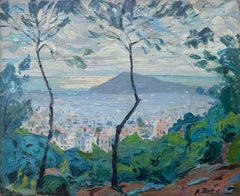
Mallorca Coastal Landscape with Sa Dragonera Island – Mediterranean Post-Impressionist Oil Painting Artist: Antoni Llobet Aracil (Barcelona, 1910) Title: Sa Dragonera, Mallorca Medi...
Category

1960s Post-Impressionist Landscape Paintings

Materials

Canvas, Oil

Mediterranean Woman in a Sunlit Garden, Colorful Spanish Expressionist Oil
By Jose Antonio Pineda Bueno
Located in Sitges, Barcelona
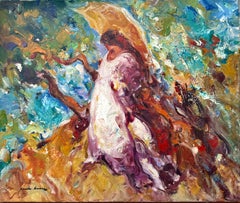
Mediterranean Woman in a Sunlit Garden, Colorful Spanish Expressionist Oil Painting Artist: José Antonio Pineda Bueno (Motril, Spain, 1950) Title: Luz estival (Summer Light) Medium:...
Category

1990s Expressionist Figurative Paintings

Materials

Canvas, Oil