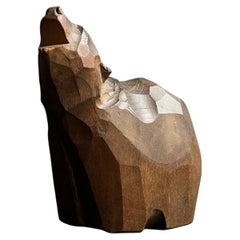
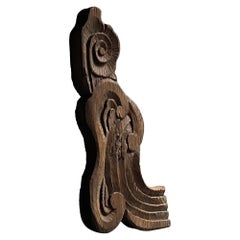
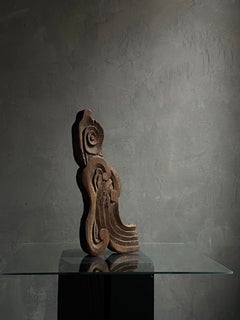
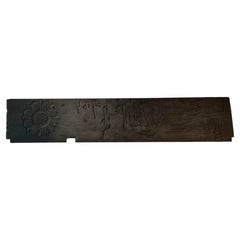
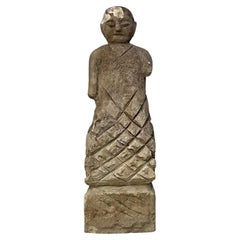
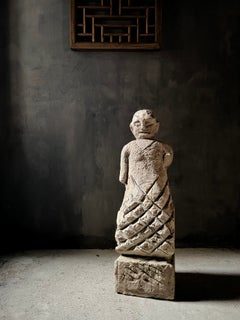
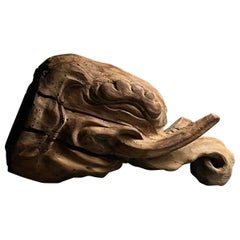
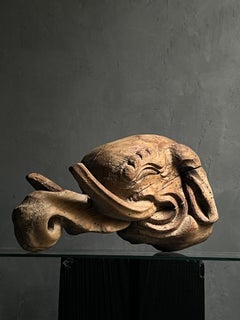
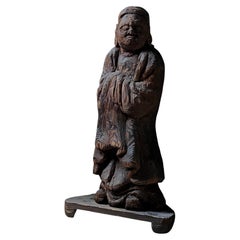
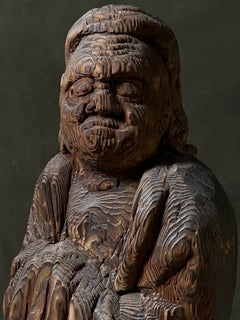
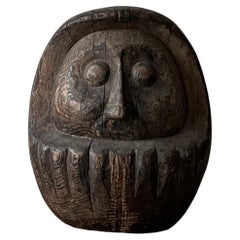
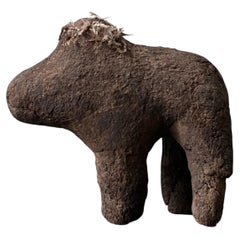
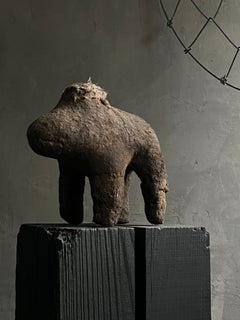
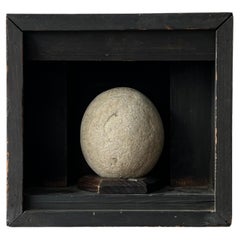
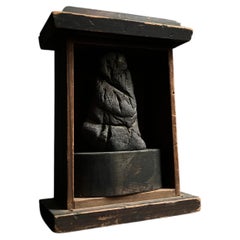
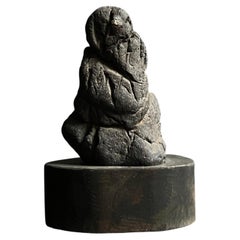
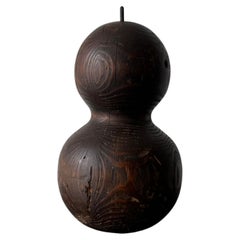
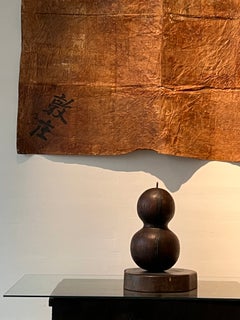
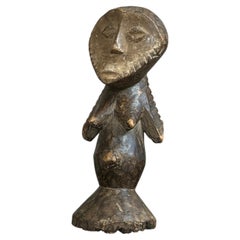
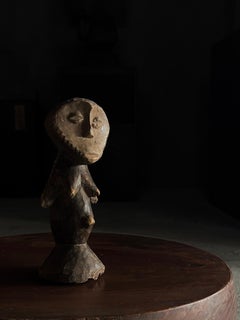
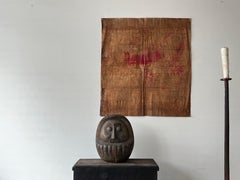
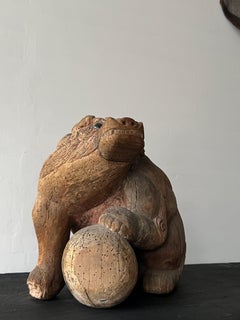
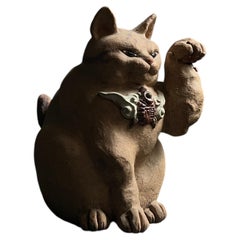
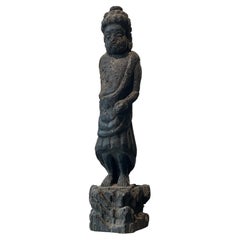
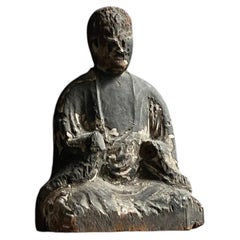
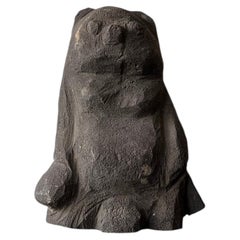
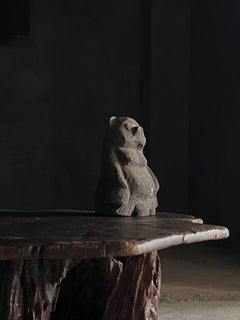
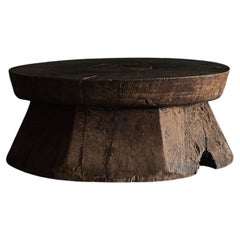
An exceptionally rare 19th-century Edo period Japanese folk art sculpture: an authentic Tama-Daruma wooden mold in the rare "Owl" (Fukuro) style, carved from a solid, heavy block of Keyaki (Japanese zelkova) wood from the Tama region of Tokyo.
Daruma represents Bodhidharma, the 5th-century Indian monk who founded Zen Buddhism. According to legend, Bodhidharma meditated facing a wall for nine years until his limbs withered away, giving rise to his iconic limbless form—a timeless Japanese symbol of perseverance ("Seven times down, eight times up").
Unlike standard red Daruma dolls, this piece represents a highly coveted regional variant crafted in the Tama region of Tokyo (Edo) known as the Fukuro (Owl) Daruma. The stylized face—featuring large concentric eyes (moku-zan, referencing Bodhidharma's unblinking Zen meditation) and a beak-like nose—closely mirrors an owl, a revered bird in Japanese folklore symbolizing wisdom, protection, and good fortune (Fuku).
Carved from dense, heavy Keyaki wood, this master matrix (Ki-gata) served as the mold for artisans to layer damp washi paper for Hariko (papier-mâché) figures. Transcending its functional origin, it stands today as a powerful piece of primitive Zen folk art (Mingei). The face exhibits rhythmic chisel marks (Nomi-ato), while the reverse displays a hollowed base and a dramatic natural age crack along the grain, embodying pure Wabi-sabi aesthetics.
Item Details
Object: Japanese Fukuro (Owl) Tama-Daruma Mold...
Category
Antique Early 19th Century Japanese Edo Sculptures and Carvings