Located in San Francisco, CA
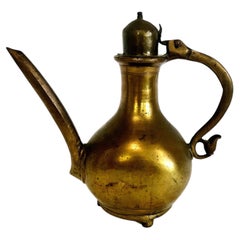
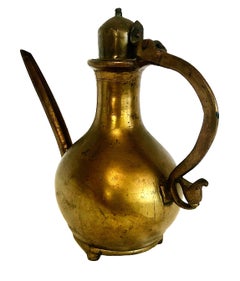
This item is a vintage brass Aftaba (also known as an Aftabeh or Surahi), a traditional water ewer historically used across India and the Middle East for handwashing, serving liquids or Islamic rituals.
Given the stamped "INDIA" text on the underside and its smooth, unetched style, this piece is likely a mid-to-late 20th-century decorative export item inspired by classic Mughal-style metalwork.
It features a bulbous pear-shaped body, a tall neck and a long, straight-angled spout designed for a clean pour. The domed top includes a functional hinge attached directly to a heavy, sweeping "S-shape" handle. The vessel stands on three small, rounded peg feet cast directly into the underside, which provides stabilization on uneven surfaces.
Unlike many common Indian brass ewers...
Category
Mid-20th Century Indian Agra Metalwork