Solomon Treasure

to
34
144
72
16
13
10
9
8
6
2
2
2
1
1
1
1
1
11
6
6
5
4
Alfred Copestick, Fort Hamilton from the Narrows, New York, 1857

Alfred Copestick, Fort Hamilton from the Narrows, New York, 1857

Located in Queens, NY

Alfred Copestick (1837–1859) Fort Hamilton from the Narrows, New York, 1857 Oil on canvas, in the original giltwood frame 14 ¼ x 20 ⅛ in. (canvas) Signed lower left: A. Copestick NY 1857 Painted when Copestick was only twenty years old, Fort Hamilton from the Narrows, New York captures both the military fortifications and maritime vitality of New York Harbor at mid-century. In the foreground, the fortress bastion commands the shoreline, while sail and steam vessels traverse the Narrows — the strategic waterway linking Upper New York Bay to the Atlantic. Copestick conveys not only the architectural solidity of Fort Hamilton but also the shifting atmosphere above, where cloud formations build and dissolve across a wind-driven sky. The painting is a remarkable marriage of documentary precision and romantic sensibility. The young artist’s brush imbues the fortress with weight and presence, yet the broader scene is alive with the transience of weather and the ceaseless motion of the sea. In its original giltwood frame, richly carved and preserving the period character, the canvas is a rare survival of a gifted hand cut short in its prime. This canvas reveals Copestick’s deep engagement with the maritime traditions of American art. The careful delineation of sailing vessels recalls the precision of James E. Buttersworth, while the atmospheric breadth echoes the influence of Fitz Henry Lane and John F. Kensett. The choice of subject — the strategic Narrows and its fortress — also reflects the national mood of the 1850s, when American identity was bound up with its coasts, harbors, and defenses. The romantic skies and dramatic contrasts suggest the impact of the Hudson River School, particularly the legacy of Thomas Cole and Asher B...

Category

19th Century Academic Landscape Paintings

Materials

Canvas, Oil

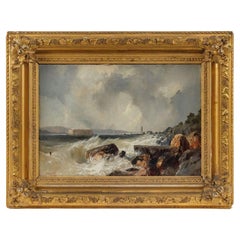
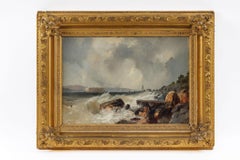
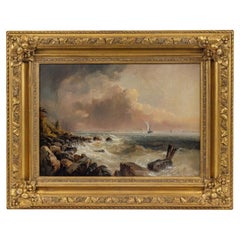
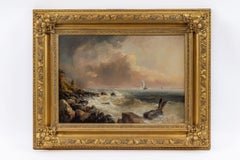
Alfred Copestick, Coastal Scene: New York, Oil on Canvas, 1857

Alfred Copestick, Coastal Scene: New York, Oil on Canvas, 1857

Located in Queens, NY

Alfred Copestick (1837–1859) Coastal Scene: New York, 1857 Oil on canvas, in the original giltwood frame 14 ¼ x 20 ⅛ in. (canvas) Signed lower right: A. Copestick NY 1857 Painted at just twenty years of age, Coastal Scene: New York demonstrates Alfred Copestick’s remarkable promise as a marine painter in antebellum America. The scene brims with energy: a single sailboat heels sharply into the wind, its rigging taut against the storm, while foamy waves break against a rugged shoreline. Above, clouds mass and dissolve, illuminated by shafts of storm-lit light. Copestick’s treatment is both romantic and naturalistic, conveying the sublime tension between man, sea, and sky. His confident brushwork captures atmosphere with an immediacy and sensitivity rarely found in so young an artist. The work survives in its original giltwood frame, richly carved in a mid-nineteenth-century American style, which not only underscores its historical authenticity but also heightens the tonal drama of the painting. Alfred Copestick came of age during a fertile moment in American painting, when marine art and landscape were central to cultural identity. Though little is known of his formal training, his works suggest familiarity with and admiration for leading marine painters such as James E. Buttersworth, famed for his racing yachts; Francis Augustus Silva, who later developed a luminist style of coastal painting; and earlier masters like Thomas Birch, whose shipwrecks and storm scenes set a precedent for drama at sea. Copestick also absorbed broader currents in American landscape painting. The Hudson River School, led by Thomas Cole, Asher B...

Category

19th Century Academic Landscape Paintings

Materials

Canvas, Oil

Spanish School (18th Century), A Rare Portrait of Juan Procopio de Bassecourt

Spanish School (18th Century), A Rare Portrait of Juan Procopio de Bassecourt

Located in Queens, NY

Spanish School (18th Century), A Rare Portrait of Juan Procopio de Bassecourt, count of Santa Clara, governor of the island of Cuba between December 1796 and May 1799. The lighthouse...

Category

18th Century Portrait Paintings

Materials

Oil

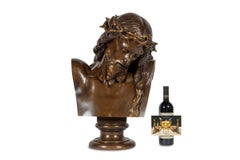
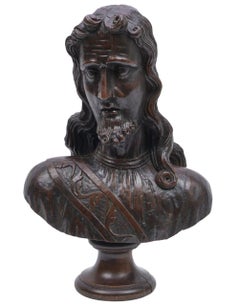
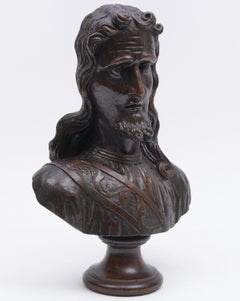
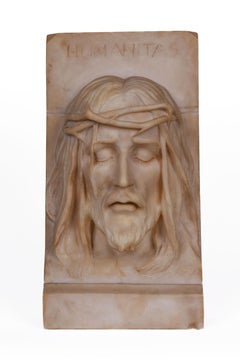
A Monumental 16th Century Renaissance Carved Oak Bust of Jesus Christ

A Monumental 16th Century Renaissance Carved Oak Bust of Jesus Christ

Located in Queens, NY

Magnificent and Monumental 16th Century Renaissance Carved Oak Bust of Christ, Flemish Netherlandish, C. 1550 A powerful and deeply expressive Renaissance carved oak bust of Jesus C...

Category

16th Century Figurative Sculptures

Materials

Oak

11 Oil Painting Panels in a Majestic Fan Shape, Featuring Isidor Kaufmann

11 Oil Painting Panels in a Majestic Fan Shape, Featuring Isidor Kaufmann

Located in Queens, NY

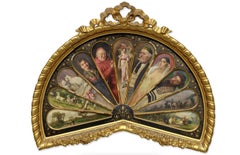
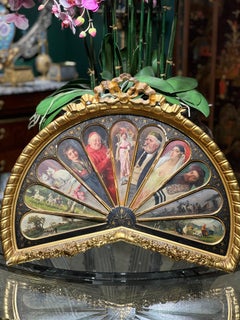
A Rare and Important Treasure: 11 Oil Painting Panels in a Majestic Fan Shape Signed by Significant 19th-Century Austrian Artists, Featuring Isidor Kaufmann A magnificent and unique artistic achievement, this rare and important assemblage of 11 oil painting panels forms a majestic fan shape, uniting the work of significant 19th-century Austrian artists in a singular, breathtaking display. Each oil on panel is signed by the artist, showcasing a rich variety of subjects—ranging from evocative landscapes to compelling portraits—all rendered in the refined and masterful techniques characteristic of the era. Bringing together the talents of Isidor Kaufmann, Adolf Kaufmann, Carl Reichert, Emma (Edle von Seehof) Müller, Ernst Novak, Johann Hamza...

Category

19th Century Portrait Paintings

Materials

Oil

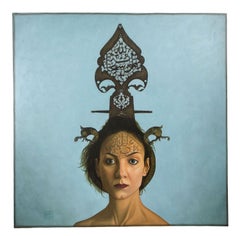
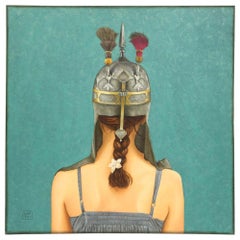
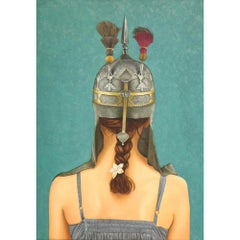
Morteza Pourhosseini "The Circus 1" Oil and Acrylic on Canvas

Morteza Pourhosseini "The Circus 1" Oil and Acrylic on Canvas

By Morteza Pourhosseini

Located in Queens, NY

Morteza Pourhosseini (Iran, born 1985) "The Circus 1" oil and acrylic on canvas, 2013 . Depicting a gorgeous tattooed woman in Safavid armour, and a steel "Allam". An exceptional I...

Category

21st Century and Contemporary Portrait Paintings

Materials

Oil, Acrylic

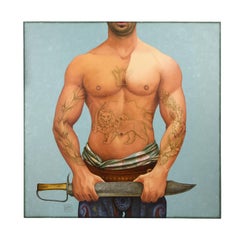
Morteza Pourhosseini "The Circus 15" Oil and Acrylic on Canvas

Morteza Pourhosseini "The Circus 15" Oil and Acrylic on Canvas

By Morteza Pourhosseini

Located in Queens, NY

Morteza Pourhosseini (Iran, born 1985) "The Circus 15" oil and acrylic on canvas, 2013 . Depicting a muscular male nude with "The Persian Iranian Lion" tattooed on his stomach and a...

Category

21st Century and Contemporary Nude Paintings

Materials

Oil, Acrylic

Morteza Pourhosseini "The Circus 5" Oil and Acrylic on Canvas

Morteza Pourhosseini "The Circus 5" Oil and Acrylic on Canvas

By Morteza Pourhosseini

Located in Queens, NY

Morteza Pourhosseini (Iran, born 1985) "The Circus 5" oil and acrylic on canvas, 2013 . Depicting a woman in Safavid gold and metal armour. An exceptional Iranian Contemporary Artw...

Category

21st Century and Contemporary Portrait Paintings

Materials

Oil, Acrylic

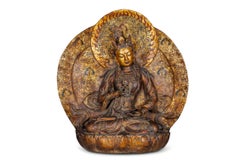
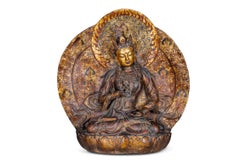
A Monumental Gilt-Lacquered Bronze Ornamental Sculpture of Vajravidarana

A Monumental Gilt-Lacquered Bronze Ornamental Sculpture of Vajravidarana

Located in Queens, NY

A Monumental Gilt-Lacquered Bronze Ornamental Buddha Sculpture of Vajravidarana: A Masterpiece of Sino-Tibetan Craftsmanship, Late 19th Century, Qing Dynasty This monumental gilt-lacquered bronze ornamental sculpture of Vajravidarana is an extraordinary and commanding piece of art, showcasing the pinnacle of Sino-Tibetan craftsmanship from the late 19th century. The figure of Vajravidarana, a powerful purification deity in Tibetan Buddhism, is meticulously sculpted to embody both spiritual authority and artistic excellence. Vajravidarana is primarily known for his role in removing spiritual impurities and negativities. Unlike other deities associated with wisdom or compassion, Vajravidarana’s function is centered on purification and healing. He is typically depicted holding a vajra and a bell, symbolizing the cutting away of delusions and the resonance of divine truth. In this striking sculpture, Vajravidarana is shown holding a vishva vajra (the double vajra), a unique and powerful variation of the traditional iconography, which signifies ultimate protection and the dispelling of negative karma. Vajravidarana: The Supreme Purifier and Protector Vajravidarana is revered in Tibetan Buddhism as the deity of spiritual purification, called upon to cleanse practitioners of defilements and negative influences. His vajra represents the indestructibility of truth, while his bell signifies the wisdom that resonates through purification rituals. In this sculpture, the presence of the vishva vajra, or double vajra, enhances his association with supreme protection, ensuring the destruction of all spiritual obstacles and afflictions. The figure’s powerful yet composed expression conveys a sense of unwavering resolve and divine authority. His posture, along with the carefully sculpted details of his robes and ornaments, highlights his function as a guardian against impurity. The inclusion of the vishva vajra rather than the usual single vajra reinforces his role as a supreme protector, capable of dispelling all forms of negativity and restoring balance. Symbolism of the Mantras and Aureole: Unlike deities that embody wisdom through duality, Vajravidarana’s iconography is centered on purification and exorcism. The aureole surrounding him is inscribed with sacred purification mantras rather than depictions of a consort. These mantras emphasize his function as a remover of obstacles and impurities, reinforcing his role in Buddhist healing rituals. The presence of the sacred inscriptions elevates the sculpture’s spiritual significance, making it a focal point for meditation and ritual purification. Practitioners often visualize Vajravidarana radiating purifying light, dissolving afflictions and negative karma. This theme is mirrored in the sculptural repetition of the purification symbols on the aureole, reinforcing the deity’s role as a divine cleanser. Gilt-Lacquered Bronze: The Artistry of Sino-Tibetan Metalwork: The craftsmanship of this monumental figure reflects the expertise of late 19th-century Sino-Tibetan metalwork, where traditional Tibetan themes were infused with Chinese artistic sensibilities. Cast in bronze and finished with a rich gilt lacquer, the statue has an otherworldly glow, giving it an ethereal, almost divine presence. The gilding process—applied with exceptional skill—gives the sculpture a striking luminosity that enhances the fine details of the facial features, flowing robes, jewelry, and other elements of the deity’s attire. The technique employed to create this figure speaks to the high level of craftsmanship that flourished during the late Qing Dynasty and early modern Tibetan art. The ornate details of the robes and the fine texture of the sculpture highlight the exceptional skill of the artisans who brought this work to life. The use of gold and lacquer not only reflects the preciousness of the sculpture but also its spiritual significance as an object meant to inspire reverence and meditation. An Ornamental Sculpture of Monumental Scale: Unlike smaller devotional objects, this sculpture is designed as an ornamental masterpiece, intended to make a grand visual and spiritual statement. Its monumental size allows it to dominate any space, offering a commanding presence that is both physically and symbolically impressive. In Buddhist practice, large sculptures of this nature are often placed in temples or meditation halls, where their imposing size and serene presence would encourage contemplation and devotion. The grand scale of the statue further amplifies the spiritual power it is meant to convey. As a representation of Vajravidarana, it is not only a physical object of beauty but also a conduit for meditation, purification, and enlightenment. The scale of the sculpture also emphasizes the divine stature of the deity, highlighting his importance in the Buddhist tradition as the ultimate force for spiritual cleansing and protection. Provenance: Acquired in China in circa 1900 1905 Private Buddhist Temple, Northeast, USA Private Sale Solomon Treasure...

Category

19th Century Figurative Sculptures

Materials

Bronze

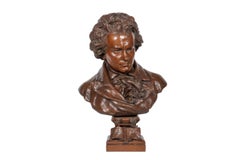
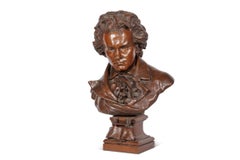
A Monumental, Richly Patinated Bronze Bust of Beethoven by G. Leroux

A Monumental, Richly Patinated Bronze Bust of Beethoven by G. Leroux

By Gaston Leroux

Located in Queens, NY

A Monumental, Richly Patinated Bronze Bust of Beethoven by Gaston Veuvenot Leroux (1854-1942) Eugène Blot, Fondeur This magnificent sculpture powerfully captures the iconic composer...

Category

19th Century Figurative Sculptures

Materials

Bronze

Circle of Jean Honore Fragonard (1732–1806) A Painting of Three Putti and Fire

Circle of Jean Honore Fragonard (1732–1806) A Painting of Three Putti and Fire

By Jean-Honoré Fragonard

Located in Queens, NY

Circle of Jean Honore Fragonard (French 1732–1806) An Exceptional Painting of Three Putti and Fire, circa 1795. Masterfully painted in the late ...

Category

18th Century Rococo Portrait Paintings

Materials

Cotton Canvas, Oil

A Rare Louis XVI Gold and Enamel Rock Crystal Snuff Box, Rothschild Provenance

A Rare Louis XVI Gold and Enamel Rock Crystal Snuff Box, Rothschild Provenance

Located in Long Island City, NY

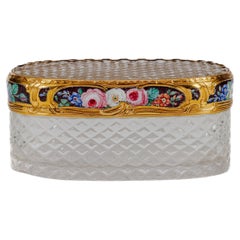
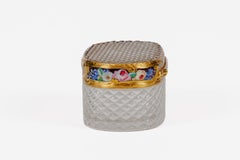
A Rare Louis XVI Enamel and Gold-Mounted Rock Crystal Snuff Box By François-Vincent Garand, Paris, 1760/61 An exceptional and highly refined Louis XVI gold-mounted snuff box, master...

Category

Antique 18th Century French Boxes and Cases

Materials

Rock Crystal, Gold, Enamel

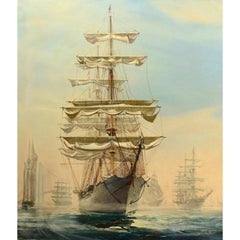
English School, A Rare Portrait of John Scott Russell and "The Great Eastern"

English School, A Rare Portrait of John Scott Russell and "The Great Eastern"

Located in Queens, NY

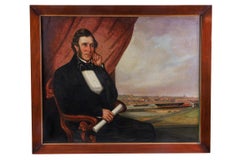
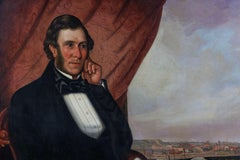
English School, A Rare Historical and Important Portrait Painting of John Scott Russell and "The Great Eastern", (19th Century) Oil on canvas, in a period hardwood frame. John Scott Russell of Scotland (1808-1882) was one of the great marine engineers of the 19th century. In 1858 he launched the Great Eastern, (depicted here in this painting) then the world's largest ship, which would make history by laying the first transatlantic telegraph cable...

Category

19th Century Portrait Paintings

Materials

Canvas, Oil

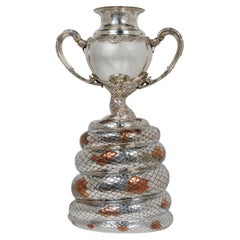
A Rare Tiffany & Co. Sterling Silver and Mixed Metal Python Snake Trophy Vase

A Rare Tiffany & Co. Sterling Silver and Mixed Metal Python Snake Trophy Vase

By Tiffany & Co.

Located in Long Island City, NY

A Rare Tiffany & Co. Sterling Silver Python Trophy Vase: A Masterpiece of Mixed Metal Artistry, circa 1880 Presenting a truly exceptional Tiffany &a...

Category

Antique 19th Century American Vases

Materials

Sterling Silver, Mixed Metal

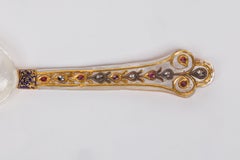
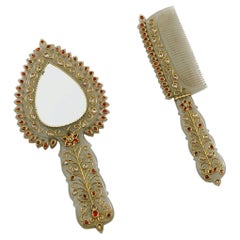
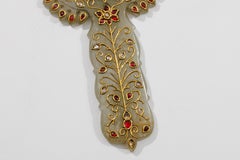
A Rare Mughal Style Gem-Set Jade Hand Mirror and Comb India, Late 19th Century

A Rare Mughal Style Gem-Set Jade Hand Mirror and Comb India, Late 19th Century

Located in Long Island City, NY

A Rare Mughal Style Gem-Set Jade Hand Mirror and Comb India, Late 19th Century An exquisite and highly refined Mughal style toilet ensemble, comprising a hand mirror and matching co...

Category

Antique Late 19th Century Indian Vanity Items

Materials

Diamond, Jade, Ruby, 24k Gold

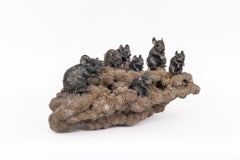
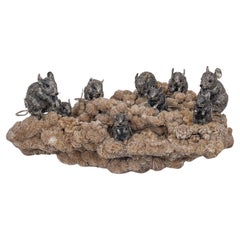
Playful Companions: A Rare Buccellati Sterling Silver Sculpture of Nine Mice

Playful Companions: A Rare Buccellati Sterling Silver Sculpture of Nine Mice

By Buccellati

Located in Long Island City, NY

Playful Companions: A Rare Mario Buccellati Sterling Silver Sculpture of Mice on Desert Rose Crystal Base. This exceptional and rare Buccellati sculpture features nine meticulously ...

Category

20th Century Italian Figurines and Sculptures

Materials

Sterling Silver

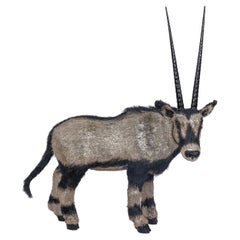
Desert Majesty: A Majestic Buccellati Sterling Silver Arabian Oryx

Desert Majesty: A Majestic Buccellati Sterling Silver Arabian Oryx

By Buccellati

Located in Long Island City, NY

Desert Majesty: A Majestic Buccellati Sterling Silver Arabian Oryx A masterful creation by the renowned Italian house of Buccellati, this exceptional sterling silver model depicts t...

Category

20th Century Italian Figurines and Sculptures

Materials

Sterling Silver

A Whimsical Family of Three Buccellati Sterling Silver Ducks

A Whimsical Family of Three Buccellati Sterling Silver Ducks

By Buccellati

Located in Long Island City, NY

A Whimsical Family of Three Buccellati Sterling Silver Ducks A delightful and finely crafted set of three sterling silver “furry” ducks by Buccellati, Italy. Each naturalistically modeled and intricately hand-chased to create the lifelike texture of soft feathers, a signature technique of Buccellati’s master silversmiths. The ducks vary in size, forming an endearing family grouping that perfectly captures the maison’s celebrated blend of artistry, charm, and realism. Renowned for their exceptional silverwork, Buccellati is especially admired for these whimsical animal sculptures...

Category

20th Century Italian Figurines and Sculptures

Materials

Sterling Silver

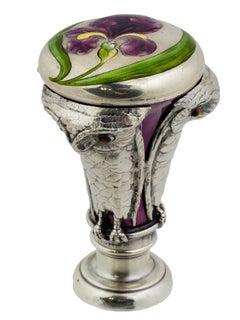
A Rare Austrian Art Nouveau Silver and Enamel Owl Seal by Georg Adam Scheid

A Rare Austrian Art Nouveau Silver and Enamel Owl Seal by Georg Adam Scheid

By Georg Adam Scheid

Located in Long Island City, NY

Charming and Rare Austrian Art Nouveau Silver and Enamel Owl Seal by Georg Adam Scheid. A rare and enchanting work of Viennese decorative art, this early 20th-century Austrian silve...

Category

Early 20th Century French Art Nouveau Desk Accessories

Materials

Silver, Enamel

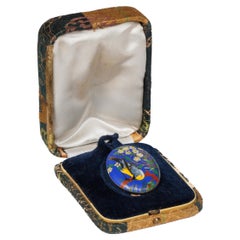
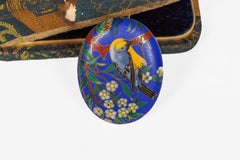
A Rare Alexis Falize Antique Gold and Cloisonné Enamel Locket, Circa 1867

A Rare Alexis Falize Antique Gold and Cloisonné Enamel Locket, Circa 1867

By Falize

Located in Long Island City, NY

A Rare Alexis Falize Antique Gold and Cloisonné Enamel Locket, Circa 1867 This exquisite oval-shaped locket, crafted circa 1869, epitomizes the fusion of French artistry and Japanese aesthetic that characterized Alexis Falize's work during the late 19th century. The obverse features a meticulously rendered cloisonné enamel scene of a bird perched gracefully on a branch, while the reverse presents a serene landscape, showcasing Falize's mastery of the cloisonné technique and his deep appreciation for Japanese motifs.​ The locket is housed in its original Japanese silk box, reflecting the authenticity and preservation of this remarkable piece. Falize, a distinguished Parisian jeweler (1811–1898), was profoundly influenced by Japanese and Chinese art, integrating Oriental motifs and palettes into his creations. This fascination was part of the broader Japonisme movement that swept through Europe following Japan's opening to Western trade in 1854, introducing Japanese decorative arts to a captivated Western audience.​ Employing the cloisonné enamel technique—a method prevalent in traditional Japanese and Chinese metalwork—Falize delineated intricate designs using fine metal wires to create compartments (cloisons), which were then filled with vibrant enamels. This locket exemplifies such craftsmanship, with its vivid colors and precise detailing. Notably, Falize collaborated with esteemed enameller Antoine Tard, renowned for his Oriental-style cloisonné enamels. Tard's exceptional skill earned him accolades, including a gold collaborator’s medal at the 1867 Exposition Universelle in Paris. Their partnership produced some of the most celebrated cloisonné jewels of the era.​ Comparable works by Falize are held in prestigious institutions worldwide. The British Museum houses a gold locket adorned with cloisonné enamel by Falize, highlighting the significance of his work in their collection. The Metropolitan Museum of Art features a reversible brooch attributed to Falize, further exemplifying his expertise in cloisonné enamel. Additionally, the Cleveland Museum of Art acquired a similar cloisonné locket marked by Falize, underscoring the widespread recognition of his craftsmanship. The Victoria and Albert Museum and the Schmuckmuseum in Pforzheim also include Falize's cloisonné enamelled lockets in their collections, attesting to the enduring legacy of his work. ​ In the realm of private collections, Wartski London has featured rare cloisonné...

Category

Antique 19th Century French Brooches

Materials

Gold, Enamel

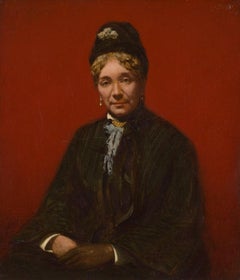
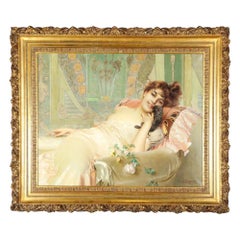
A Rare Portrait Of Mrs. Sanford Robinson Gifford (Mary Cecelia Gifford), 1878

A Rare Portrait Of Mrs. Sanford Robinson Gifford (Mary Cecelia Gifford), 1878

By Sanford Robinson Gifford

Located in Queens, NY

Sanford Robinson Gifford (American 1823-1880) A Rare Portrait Of Mrs. Sanford Robinson Gifford (Mary Cecelia Gifford) "The Artist's Wife" Oil on Paper mounted on canvas, painted in 1878, 2 years before his death. In original giltwood frame. Painting: 8 1/4" high by 7 1/4" wide Frame: 15" high x 13.5" wide Provenance: Private Collection (acquired by descent directly from the artist in 1878) Alexander Gallery, New York (acquired from the above) Acquired from the above in 1986 by the present owner The Art Institute of Chicago (Reference Number 1986.184) New York, Private Collection Literature: Ila Weiss, The Poetic Landscape: The Art and Experience of Sanford R. Gifford, Newark, 1987, no. 10, p. 309, illustrated The Art Institute of Chicago, letter from Milo Naeve to Mr. and Mrs. William Y...

Category

19th Century Portrait Paintings

Materials

Oil

An Imperial Mughal Gold Jade Box Set With Diamonds and Semi Precious Stones

An Imperial Mughal Gold Jade Box Set With Diamonds and Semi Precious Stones

Located in Long Island City, NY

An Exquisite Masterpiece of Mughal Splendor: A Rare Gold-Mounted Jade Box with Diamonds and Semi-Precious Stones Introduction to a Regal Artifact: This exceptional jade box, hailing from the storied Mughal Dynasty, is an unparalleled exemplar of imperial artistry and luxury. Acquired from the prestigious Spink & Son of London, this artifact transcends its material beauty to stand as a significant piece of historical and cultural importance. With its rich provenance and intricate craftsmanship, this jade box embodies the opulence and refined tastes of one of history’s most powerful and influential empires. Craftsmanship: The Art of Mughal Luxury: At the heart of this piece lies a finely carved jade...

Category

Antique 18th Century Indian Boxes and Cases

Materials

Diamond, Emerald, Jade, Ruby, Blue Sapphire, Gold

Exquisite Victorian English Gold and Scottish Agate Perfume Bottle, Circa 1870

Exquisite Victorian English Gold and Scottish Agate Perfume Bottle, Circa 1870

Located in Long Island City, NY

Exquisite Victorian English Gold and Scottish Agate Perfume Bottle, Circa 1870 Presenting a truly exceptional Victorian gold perfume bottle, crafted in England around 1870, and showcasing the distinctive "Scottish pebble" design. This exquisite piece is a masterpiece of Victorian artistry, blending luxurious materials with impeccable craftsmanship. The perfume bottle is elegantly tapered and cylindrical in form, adorned with a stunning array of alternating lozenge, diagonal, and wavy band panels, meticulously inlaid with a rich selection of hardstones, including jasper, agate, and bloodstone. The intricate patterning of these precious stones creates a captivating visual display, embodying the refined taste of the Victorian era. A touch of opulence is added by the hinged lid, crowned with a striking bloodstone, and the delicate pearl push-button release, which adds a subtle, yet luxurious detail. This beautiful piece is further complemented by its original fitted box, a rare find that enhances its historical value and desirability. This Victorian perfume bottle...

Category

Antique 19th Century Scottish Vanity Items

Materials

Agate, Jasper, Gold

A Large Buccellati Silver Model of a Realistic Caribbean Spiny Lobster

A Large Buccellati Silver Model of a Realistic Caribbean Spiny Lobster

By Mario Buccellati

Located in Long Island City, NY

A Large Buccellati Italian Silver Model of a Realistic Caribbean Spiny Lobster Expertly crafted to capture the essence of the real lobster, this mo...

Category

20th Century Italian Figurines and Sculptures

Materials

Silver

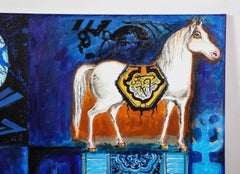
Nasser Ovissi, 'Iranian, Born 1934' "Four Blue Squares" Oil on Canvas Painting

Nasser Ovissi, 'Iranian, Born 1934' "Four Blue Squares" Oil on Canvas Painting

By Nasser Ovissi

Located in Queens, NY

Nasser Ovissi, (Iranian, Born 1934) "Four Blue Squares" oil on canvas painting. Very fine quality painting by Persian Artist Nasser Ovissi who is considered to be known as the "Picasso of Iran". This paintings is four in one. Each corner of the painting represents something else in the Middle-Eastern tradition. The top right corner is representing the passion for Arabian horses. The top left corner is representing the traditional fish and eyes against evil eye. The lower right corner is representing the traditional turquoise colored ceramics. The lower left corner is representing the Holy House of Prayer. Very interesting and unique combination, this painting will create a beautiful, warm energetic in any room that it's placed. A true, modern Iranian masterpiece. Oil on canvas, unframed. Signed. Size: 30" high x 40" wide Nasser Ovissi is an American-Iranian painter whose work is characterized by stylized figures of Arabic women and horses. Set amidst geometric patterns and decorative elements, his figures seem to merge into and out of the space behind them. “My work is dedicated to the beauty of life and I hope those who experience my work will walk away with an experience of beauty.” Born in Tehran, Iran in 1934, Ovissi studied Law and Political Sciences at the University of Tehran before studying Fine art at Beaux Fine Art in Rome. The artist has achieved numerous awards and honors, including being exhibited at the 1959 Paris Biennial and a grand prize at the 1962 Biennale of fine arts of Tehran. Ovissi lives and works in Reston, VA. His works are included in the collections of the Contemporary Art Museum in Madrid and the National Art Gallery of Greece in Athens. Artist Exhibitions: 1957 Tehran, First Prize 1959 Paris Biennial 1960 Tehran, Exhibition in Farhang Hall, during the International Congress of Music 1961 Exhibition in Bombay, India New Delhi, International Exhibition of Contemporary Art Tehran, Iran, First Prise in Drawing Competition 1962 Tehran Biennial (Abyaz Palace), Grand Prize of the Biennial Venice, Italy Biennial 1963 Paris, Museum of Modern Art; Exhibition of Iranian Painters Sao Paulo Biennial, Brazil 1964 Tehran Biennial, Grand Prize 1965 Rome, National Museum of Oriental Art 1966 Milan, San Fedele Gallery 1968 Rome: Gallery 88 Florence, International Biennial of Graphic Arts New York, Columbia University, Modern Iranian Art Italy, Gold Medal at the Campione International Salon 1969 Zurich, Huber Gallery 1970 Ankara, Fine Arts Gallery 1971 Rome, Temple University Athens, Fine Arts Salon New York, Columbia University Washington, Agra Gallery 1972 Paris, Autumn Salon, Grand Palais Paris, Guiot Gallery Ottawa, National Art Center Ottawa, University of Ottawa Baltimore, John Hopkins Gallery Brussels, Palace of Fine Arts 1973 Belgrade, Museum of Modern Art Monaco, International Art Exhibition (Grand Prize) 1976 Basel, Feriart 1977 Madrid, Bruaugut Gallery 1978 Valence, Artis Gallery 1978 Madrid, Contemporary Art Museum 1979 Caracas, Guipuzcoa Gallery 1981 Washington, D.C., Calvert Collection 1982 Dallas, International Art Exhibition 1983 Houston, Texas, Galeria Arte 1984 Pasadena, Pacific Asia Museum Washington, D.C., Calvert Collection Washington, D.C., World Bank New York, Leila Taghinia-Milani Gallery 1985 Paris (France), Mille et Une Nuits New York: Taghinia-Milani Gallery Washington, D.C., Calvert Collection 1986 New York, Mussavi Art Center Washington D.C., Fine Arts Gallery, Georgetown Park Vancouver (Canada), The Art Circle Visalia (California), The Art Circle 1987 New York, Art Expo Cadiz (Spain), Sato Grande Fairfax (Virginia), Broadway Gallery 1988 Los Angeles, Galeria Arte Washington, D.C., Fine Arts Gallery, Georgetown Park McLean (Virginia), Abott Gallery Geneva (Switzerland), Bronz Gallery 1989 New York, Mussavi Art Center San Francisco, Hourian Art Gallery 1990 Montreal (Canada), Maison d'Art Saint Laurent Maui (Hawaii), Metropolitan Art Gallery 1991 Montreal (Canada), Maison d'Art Saint Laurent Austin (Texas), University of Texas Art Gallery New York, Elaine Benson Gallery Maui (Hawaii), Metropolitan Gallery Boca Raton (Florida), Curzon Gallery 1992 Maui (Hawaii), Metropolitan Gallery New York, Space Gallery McLean (Virginia), Tower Club Los Angeles, Beverly Hills Town Center 1993 Cambridge (Massachusetts), Harvard University Maui (Hawaii), Metropolitan Gallery Boca Raton (Florida), Curzon Gallery Washington, DC, Very Special Art Gallery 1994 Tokyo (Japan), Metropolitan Gallery Maui (Hawaii), Metropolitan Gallery Osaka (Japan), Metropolitan Gallery Detriot (Michigan), Michigan University Montreux (Canada), Aurom Gallery Boca Raton (Florida), Curzon Gallery 1995 Washington, DC, Designer Art Gallery 1996 Great Exhibition at Art Festival, Kuwait 1997 Montreal (Canada), Maison d'Art Saint Laurent Tokyo (Japan), Metropolitan Gallery Maui (Hawaii), Metropolitan Gallery Osaka (Japan), Metropolitan Gallery 1998 Fez (Morocco), Sufi Music Festival Los Angeles (California), Exhibition Art Centre Hawaii, Dole Gallery 1999 London (U.K.), Bourlet Gallery Montreux (Switzerland), The Oriental Palace...

Category

21st Century and Contemporary Interior Paintings

Materials

Oil

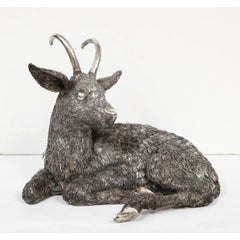
Mario Buccellati, a Rare and Exceptional Italian Silver Goat

Mario Buccellati, a Rare and Exceptional Italian Silver Goat

By Mario Buccellati

Located in Long Island City, NY

Mario Buccellati, A Rare and Exceptional Italian Silver Goat circa 1940. Made in Milan Italy. Very fine quality and workmanship and very large in size. Measures: 12" high x 14" w...

Category

20th Century Italian Figurines and Sculptures

Materials

Silver

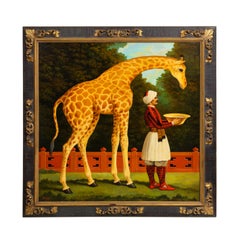
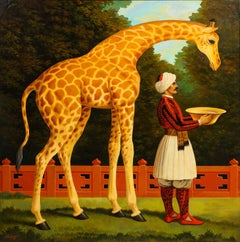
William Skilling (American/British, 1862–1964) Giraffe & Attendant Oil Painting

William Skilling (American/British, 1862–1964) Giraffe & Attendant Oil Painting

By William Skilling

Located in Queens, NY

William Skilling (American/British, 1862–1964) A Standing Giraffe Drinking Water from his Orientalist Nubian Attendant, Oil on Canvas in original artists frame. A massive and exceptionally striking painting - almost certainly his best work. For a Similar one: Jacques-Laurent Agasse: The Nubian Giraffe, Commissioned by George IV in 1827. (Royal Collection Trust...

Category

20th Century Animal Paintings

Materials

Oil

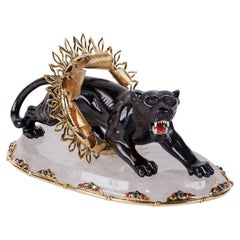
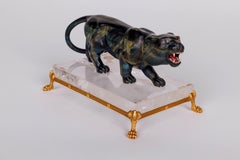
Alexandre Reza, Rare Obsidian, Silver-Gilt, and Rock Crystal Circus Panther

Alexandre Reza, Rare Obsidian, Silver-Gilt, and Rock Crystal Circus Panther

Located in Long Island City, NY

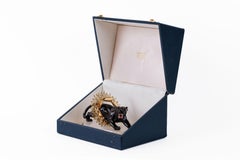
Alexandre Reza, A Rare Obsidian, Silver-Gilt, and Rock Crystal Circus Panther, mounted with Cabochon Sapphires and Rubies. "Panthère au cirque"" / Panther at the circus" - an exquisite jeweled mounted objet. 5.5" high x8" wide x 4.5" deep. In very good condition, no damages noted. Ready to place. In its original presentation box from Maison Alexandre Reza. Alexandre Reza (November 1, 1922 – January 15, 2016) was a Paris-based jeweler known for his diverse and rare collection of precious gemstones.He is lauded as the greatest gem collector of modern times. Alexandre Reza was born in 1922 in Moscow, of ancient Samarkand heritage. The son of a jeweler, he moved to France with his family when he was a child. He set out on his own at the age of eighteen, the same time as the onset of World War II. After the war, he began his career as a diamond expert, traveling extensively to source each stone, which served as the key design inspiration for his work.Early on, he supplied gems to jewelry brands such as Boucheron, Bulgari, Cartier, Chaumet, Harry Winston, Louis Gérard...

Category

20th Century French Art Deco Figurines and Sculptures

Materials

Rock Crystal, Ruby, Blue Sapphire, Silver

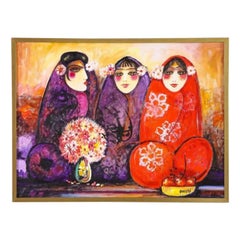
Nasser Ovissi, 'Iranian, Born 1934' "Three Seated Girls" Oil on Canvas Painting

Nasser Ovissi, 'Iranian, Born 1934' "Three Seated Girls" Oil on Canvas Painting

By Nasser Ovissi

Located in Queens, NY

Nasser Ovissi, (Iranian, Born 1934) "Three Seated Girls" oil on canvas painting Very fine quality painting by Persian Artist Nasser Ovissi who is considered to be known as the "Picasso of Iran". A true modern Iranian masterpiece depicting three Safavid style seated girls with a bowl of Pomegranates. Oil on canvas, framed. Signed. Canvas Size: 30" high x 40" wide Frame Size: 32" high x 42" wide Nasser Ovissi is an American-Iranian painter whose work is characterized by stylized figures of Arabic women and horses. Set amidst geometric patterns and decorative elements, his figures seem to merge into and out of the space behind them. “My work is dedicated to the beauty of life and I hope those who experience my work will walk away with an experience of beauty.” Born in Tehran, Iran in 1934, Ovissi studied Law and Political Sciences at the University of Tehran before studying Fine art at Beaux Fine Art in Rome. The artist has achieved numerous awards and honors, including being exhibited at the 1959 Paris Biennial and a grand prize at the 1962 Biennale of fine arts of Tehran. Ovissi lives and works in Reston, VA. His works are included in the collections of the Contemporary Art Museum in Madrid and the National Art Gallery of Greece in Athens. Artist Exhibitions: 1957 Tehran, First Prize 1959 Paris Biennial 1960 Tehran, Exhibition in Farhang Hall, during the International Congress of Music 1961 Exhibition in Bombay, India New Delhi, International Exhibition of Contemporary Art Tehran, Iran, First Prise in Drawing Competition 1962 Tehran Biennial (Abyaz Palace), Grand Prize of the Biennial Venice, Italy Biennial 1963 Paris, Museum of Modern Art; Exhibition of Iranian Painters Sao Paulo Biennial, Brazil 1964 Tehran Biennial, Grand Prize 1965 Rome, National Museum of Oriental Art 1966 Milan, San Fedele Gallery 1968 Rome: Gallery 88 Florence, International Biennial of Graphic Arts New York, Columbia University, Modern Iranian Art...

Category

20th Century Portrait Paintings

Materials

Oil

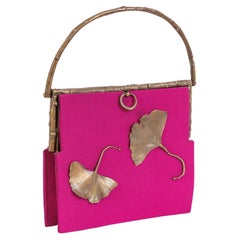
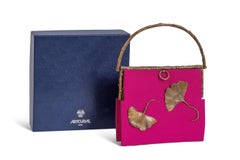
Claude Lalanne (French, 1925-2019) A Rare Pink Silk and Bronze Ginkgo Handbag

Claude Lalanne (French, 1925-2019) A Rare Pink Silk and Bronze Ginkgo Handbag

By Claude Lalanne

Located in Long Island City, NY

Indulge in the enchanting world of Claude Lalanne with the exquisite Ginkgo Handbag, a wearable masterpiece from Lalanne's iconic Ginkgo collection. Crafted with unparalleled artistr...

Category

20th Century French Vanity Items

Materials

Bronze

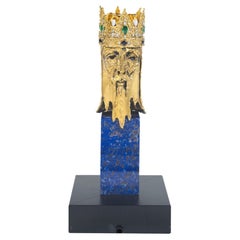
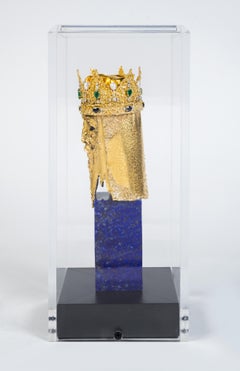
An 18K Gold and Gem Set Bust of a King, by George Weil London

An 18K Gold and Gem Set Bust of a King, by George Weil London

By George Weil

Located in Long Island City, NY

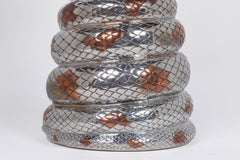
An 18K Gold and Gem Set Bust of a King, by George Weil London, circa 1970 This magnificent 18K gold and gem-set bust of a king, crafted by George Weil in London, stands as an embodi...
Category

20th Century British Figurines and Sculptures

Materials

Diamond, Emerald, Lapis Lazuli, Pearl, Blue Sapphire, 18k Gold

Gianmaria Buccellati, a Rare and Exceptional Italian Silver Bobcat

Gianmaria Buccellati, a Rare and Exceptional Italian Silver Bobcat

By Gianmaria Buccellati

Located in Long Island City, NY

Gianmaria Buccellati, a rare and exceptional Italian silver bobcat circa 1990s. Made in Milan Italy. Retail price in the Buccellati Boutique was $72,000 USD + Tax. Very fin...
Category

20th Century Italian Figurines and Sculptures

Materials

Silver

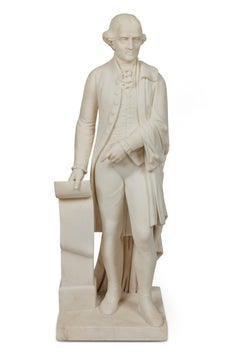
A Rare and Important American Marble Sculpture of Thomas Jefferson, Circa 1870

A Rare and Important American Marble Sculpture of Thomas Jefferson, Circa 1870

Located in Queens, NY

A Rare and Important American White Marble Sculpture of Thomas Jefferson Holding The Declaration of Independence. Circa 1870, in the Manner of Horatio Stone (1808 –1875). Inscribed on scroll: 'The Declaration of Independence, It becomes necessary for one people to dissolve the political bands which have connected them with another. etc. etc. T. Jefferson. The present work is unsigned but is reminiscent of Horatio Stone's life-size marble figure of John Hancock...
Category

19th Century Figurative Sculptures

Materials

Marble

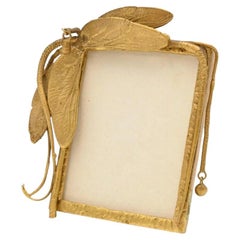
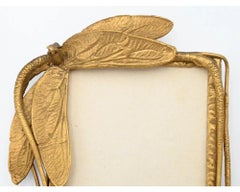
Claude Lalanne, a Rare Gilt-Bronze Dragonfly Frame, France, C. 1985

Claude Lalanne, a Rare Gilt-Bronze Dragonfly Frame, France, C. 1985

By Claude Lalanne

Located in Long Island City, NY

Claude Lalanne (1925-2019) a rare gilt-bronze dragonfly frame, France C. 1985, Signed on reverse Cl. Lalanne Artcurial 25/450. Measures: 4" high x 3.5" wide Great condition. Ready...
Category

Late 20th Century French Frames

Materials

Bronze

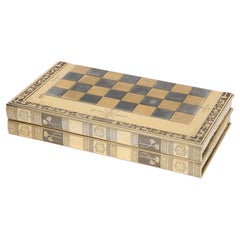
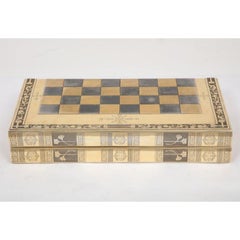
Rare English Silver-Gilt Book-Form Chess and Backgammon Game Board, circa 1976

Rare English Silver-Gilt Book-Form Chess and Backgammon Game Board, circa 1976

Located in Long Island City, NY

Rare English silver-gilt book-form chess and backgammon game board, circa 1976. This exceptional and rare solid silver chess board converts into a backgammon board and can also be placed in a bookshelf to add more opulence. (3 in 1). This was most definitely a private commissioned piece by the House of Garrard...
Category

20th Century British More Objets d'Art and Vertu

Materials

Silver

22K Indian Gold and Enamel Mango Shaped Pendant

22K Indian Gold and Enamel Mango Shaped Pendant

Located in Long Island City, NY

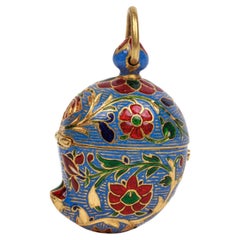
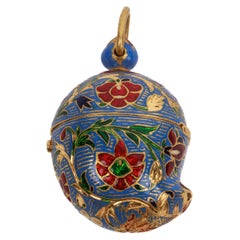
A 22K Indian Gold and Enamel Mango Shaped Pendant, Jaipur, 19th Century. Finley enameled with green, red, and blue enamel throughout, decorated with f...
Category

Antique 19th Century Indian Pendant Necklaces

Materials

Gold, Enamel

Margaret Thatcher and State of Qatar, Garrard & Co. Silver Gilt Presentation Set

Margaret Thatcher and State of Qatar, Garrard & Co. Silver Gilt Presentation Set

By Garrard & Co. Ltd.

Located in Long Island City, NY

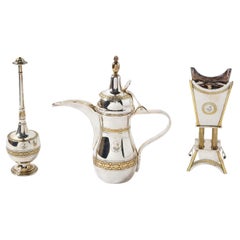
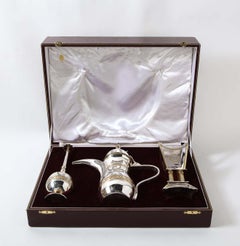
Margaret Thatcher and State of Qatar, Garrard & Co. Silver Gilt Presentation Set, London, 1983. MARK OF GARRARD LTD, LONDON, 1983 A Three piece Elizabeth II, silver and silver ...

Category

20th Century British Enamel Frames and Objects

Materials

Silver

Rare Qajar Gold and Enamel Parasol Cane Handle

Rare Qajar Gold and Enamel Parasol Cane Handle

Located in Long Island City, NY

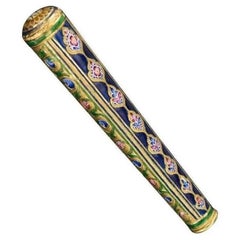
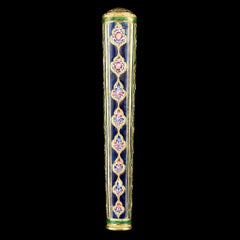
A Rare Qajar Gold and Enamel Parasol Cane Handle A very rare Persian, Qajar, polychrome enamelled gold cane handle, of cylindrical form, decorated with fl...

Category

Antique 19th Century Unknown Enamel Frames and Objects

Materials

Gold, Enamel

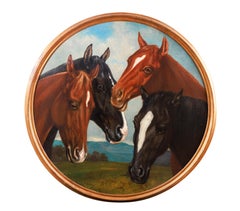
Frederick Rondel (American 1826-1892) A Large, Rare Painting of "Four Horses"

Frederick Rondel (American 1826-1892) A Large, Rare Painting of "Four Horses"

By Frederick Rondel

Located in Queens, NY

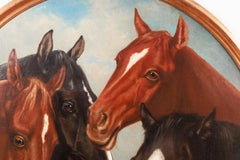
Frederick Rondel (American 1826-1892) A Large, Rare Painting of "Four Horses", 1866 A magnificent and rare oval painting of horses, oil on board, measuring 52" in diameter, with exceptional quality to detail of the horses and landscape. It is indeed very rare for an American artist to paint horses in this quality and size, thus making this painting an extremely important...

Category

19th Century Animal Paintings

Materials

Oil, Board

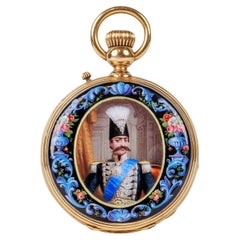
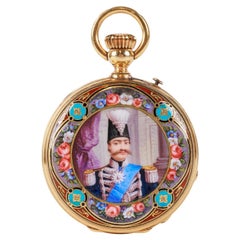
Rare Gold and Enamel Presentation Pocket Watch with Portrait of Naser Shah

Rare Gold and Enamel Presentation Pocket Watch with Portrait of Naser Shah

Located in Long Island City, NY

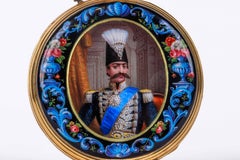
A Rare Swiss Gold and Enamel Hunting Case Presentation Pocket Watch with A Portrait of Naser Al Din Shah, of Persia. Circa 1880. Diameter 49 mm (2" diameter x 3" high) 19'" ligne movement, 10 jewels Case in yellow gold, front panel centered by a peinture sur émail portrait of Naser al-Din Shah of Persia in a royal interior, the reverse with the Lion and Sun...

Category

Antique 19th Century Swiss Pocket Watches

Materials

Gold, Enamel

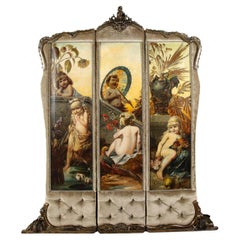
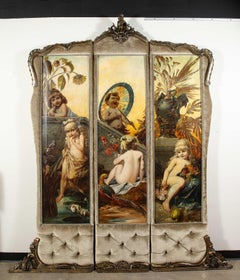
Palatial and Opulent Belle Epoque Giltwood & Oil on Canvas Three-Panel Screen

Palatial and Opulent Belle Epoque Giltwood & Oil on Canvas Three-Panel Screen

Located in Queens, NY

A Palatial and Opulent Belle epoque giltwood & oil on canvas three-panel screen, circa 1890. "Allegory of Youth" Comprising of three exquisite hand-painted triptych oil on canvas panels of cherubs and putti amongst a peacock, all by Ferdinand Wagner II (German, 1847-1927). Each panel depicting different playful and joyous scenes of putti and cherubs. All three-in-one panels within individually carved giltwood and upholstered frames. One panel signed at the lower left: Ferd.Wagner. A truly magnificent and one of a kind piece, perfect for any room in the home. Overall: 101" high 85" wide x 5" deep Very good condition. Ready to place. Ferdinand Wagner II (German, 1847-1927) was the son of Passau Ferdinand Wagner Senior, a teacher at a vocational art school who began training him professionally at a young age. After traveling to Italy in 1867-1868, he continued with his art studies at The Munich Academy of Arts led by Peter Von Cornelius and Julius Schnorr Von Carolsfeld. Wagner II was influenced by the Munich School of master painters and by his art teacher, Karl von Piloty, who had been teaching at the Munich Art Academy since 1856. Piloty’s approach to historical paintings was influenced by the French art academic Paul Delaroche and by the fine artworks by Rubens and the Venetians. After his return to Germany he was commissioned to decorate the former the Tenormayer Wine Tavern in Munich, subsequently he received numerous other commissions as a decorator. Ferdinand Wagner II wall paintings and ceiling frescos...

Category

19th Century Romantic Figurative Paintings

Materials

Oil

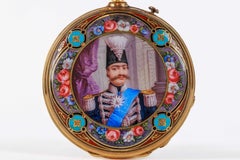
Rare Gold and Enamel Presentation Pocket Watch with Portrait of Naser Shah

Rare Gold and Enamel Presentation Pocket Watch with Portrait of Naser Shah

Located in Long Island City, NY

A Rare Swiss Gold and Enamel Hunting Case Presentation Pocket Watch with A Portrait of Naser Al Din Shah, of Persia. Circa 1880. Diameter 47 mm (2" diameter x 3" high) 18’’’ nickel lever movement, bi-metallic compensation balance, wolf's-tooth winding, gold cuvette • white enamel dial, Roman numerals, subsidiary seconds • the front panel centered by a polychrome enamel portrait of Naser al-Din Shah of Persia in an interior, the reverse with the Lion and Sun...

Category

Antique 19th Century Swiss Pocket Watches

Materials

Gold, Enamel

Fine Mughal Gem Set Rock Crystal and Gold Box, India, 18th Century

Fine Mughal Gem Set Rock Crystal and Gold Box, India, 18th Century

Located in Long Island City, NY

A Fine and Exquisite Mughal Gem Set Rock Crystal and Gold Box, India, 18th Century. Finley set in 22k gold, mounted with rubies and pearls. The body carved...

Category

Antique 18th Century Indian Boxes and Cases

Materials

Rock Crystal, Gold

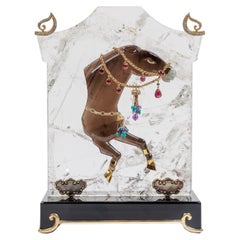
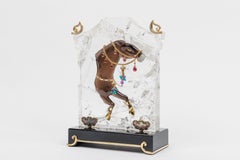
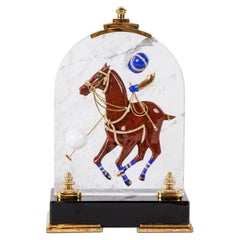
Mellerio Paris, French Gold, Diamonds, Silver, Lapis, and Obsidian Polo Player

Mellerio Paris, French Gold, Diamonds, Silver, Lapis, and Obsidian Polo Player

By Mellerio dits Meller

Located in Long Island City, NY

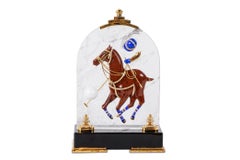
Mellerio Paris, A French Gold, Diamonds, Silver-Gilt, Rock Crystal, Enamel, Emerald, Lapis Lazuli, Agate, Emerald, and Obsidian Polo Player, Carved Horse Sculpture, Jeweled Mounted Object. An extremely rare and unique, one of a kind French Carved Horse Sculpture, Jeweled Mounted Object sculpture "CHEVAUX DE LEGENDE", "A Legendary Horse" by Mellerio, Paris, circa 1999. Sitting on black obsidian base, the solid rock-crystal slab is finely applied with a carved obdisian hardstone horse and polo player, mounted in 18k gold, brilliant -cut diamonds, emaralds, enamel, lapis lazuli, and agate, .The obsidian base with a plaque engraved: CHEVAUX DE LEGENDE" / MELLERIO DITS MELLER PARIS / 5003 DIV The piece is in excellent condition and comes with a custom made wood case made for transport. It's very elegant and has French hallmarks throughout. A truly magnificent piece. Measures 12" high x 8" wide x 4" deep Founded in France in 1613 by the descendants of Italian immigrants from the Vigezzo Valley in the north of Italy, Mellerio is one of the oldest jewellery houses in Europe. The family business soon attracted the attention of the Royal Court and Marie Antoinette herself reportedly purchased a precious bracelet featuring 7 cameos surrounded by rubies in 1780. Later on, in the 19th century, Mellerio became the official supplier of the French Royal family and the Court of Netherland. Mellerio creates many jewellery items, all set with rare gems such as peridots, amethysts, aquamarines, citrines and topaz, applying for a patent, the flexible stem, a very supple and light jewellery mechanism. Mellerio remains also well known for their spectacular series of Art Nouveau jewels, created at the beginning of the 20th century, as well as for the creation of trophies rewarding some of the greatest footfall and tennis players of history. In 1993, the jewellery house launched their first watch collection. Today, Mellerio has stores in Paris, Japan and Hong Kong. July 14, 1789: this date is known throughout the world as the beginning of the French Revolution. According to a ledger belonging to House of Mellerio, this was also the day that the jeweler sold a golden key to the Comte de Coutance for 10 livres. This ledger, as well as inventories dating as far back as 1768, are the jeweler’s oldest archives. These archives have continued to grow over the years, as the House, established on rue de la Paix in Paris, still lives on today, still in the hands of the same family from Craveggia, in the North of Italy. The tumultuous history of the Mellerio family in France probably goes as far back as the Italian wars of the Renaissance, but the first official document proving their commercial activity in Paris dates back to 1613. This document is the famous royal warrant awarded by Marie de Medici to a number of Italian families established along the rue des Lombards, including the Mellerios, allowing them to sell “small jewelery items”, therefore granting them a small exception to the traditional monopoly enjoyed by Parisian jewelers. At that time, powerful corporations regulated the operations and customs of Parisian business, but thanks to this exceptional warrant, the Mellerios managed to escape the confines of this framework. Today, this wax-sealed document is kept at the city hall of Craveggia. From 1613 to the Revolution, the Mellerios lived between France and Italy. The corporations tried many times to put an end to their trade privileges, but all in vain, as a dynasty of sovereigns renewed the warrant. Always marrying and often retiring in Craveggia, the Mellerios continued to maintain their jewelry business in Paris. At first, they did this without a shop. Wearing backpacks (wooden boxes divided into small compartments where jewels were kept), they would tour town fairs around Paris and royal castles. This is how Jean-Baptiste Mellerio (1765-1850) is said to have sold a bracelet set with rubies and Antique cameos to Marie-Antoinette, which still exists today. Many elements seem to prove the veracity of this anecdote. The queen was particularly fond of cameos, which cover the entire background of her famous jewelry cabinet, and ruby was her favorite stone after diamond. The famous bracelet, reacquired a few years ago by the House of Mellerio, is indeed an 18th century jewel, set with antique cameos representing the profiles of Roman emperors. Two branches of the family were operating in Paris during this time, under the reign of Louis XVI: that of Jean-François (1746-1828), the paternal ancestor of the current Mellerios, and that of Jean-Baptiste (1765-1850). The French Revolution forced them to return to Italy. However, both Jean-Baptiste and François Mellerio (1772-1843), who was the son of Jean-François, were eventually able to return to Paris after the founding of the Consulate. Jean-Baptiste opened a shop at the Iron Crown of rue Vivienne, and François opened his at the Palais des Tuileries, rue du Coq Saint-Honoré. His well-organized order books give an idea of his high-ranking clientele during the “Old Regime”, among which were the Comte and Comtesse Octave de Segur, the Marquise (later Duchess) de Tourzel, former governess of the royal children, and her daughter, the Comtesse de Bearn, the Craufurds -who organized the flight to Varennes, the Duc and Duchess de Gramont, the Comtesse de Boigne, and Madame de Souza, Talleyrand’s mistress. We also see the names of the imperial family: Empress Josephine, the Queen of Holland, Princess Elisa, Caroline and Pauline. At that time, the House of Mellerio specialized, among other things, in the trade of antique cameos, a newly fashionable genre of jewel that captured the imagination of all the princesses and noble women of the time. The years of the Restauration and July Monarchy were among the most glorious. The Bourbons were back on the throne, and the clientele of the House of Mellerio had regained its former wealth. Mellerio supplied Louis-Philippe, Duke of Orléans, as well as his mother, wife and sister, with sumptuous jewels, including a set of emeralds made piece by piece, while the Duke of Bourbon, last prince of the House of Condé, offered diamonds to his mistress, the scheming Baronne de Feucheres, and Monsieur de LaFayette also bought cameos for one of his granddaughters. For the first time, Mellerio ventured into the world of arts in 1815, when Carlotta Grisi, a famous dancer who created Giselle, as well as an actress named Rachel, bought jewels at the Mellerio store on rue de la Paix. 1848 marked a new turning point. France once again became a Republic. François Mellerio handed the company over to his son, Jean, and the latter decided to travel to Spain to build a new clientele. He later became one of the jewelers of the royal family, and met Eugénie de Montijo, who remained a faithful client when she became empress of the French people. The Imperial years were lavish. During the Second Empire, Paris was a pageant of crinoline dresses designed by Worth, while jewels by Mellerio, Worth’s neighbour on the rue de la Paix, adorned the noble women of the Tuileries court. The Empress bought pearls. Mathilde Bonaparte...

Category

20th Century French Art Deco Figurines and Sculptures

Materials

Agate, Diamond, Emerald, Rock Crystal, Gold, Silver