SUBERT Decorative Objects

to
17
1
8
3
6
1
5
1
1
2
2
1
5
3
2
1
7
6
6
6
4
18
18
12
4
1
Height
to
Width
to
18
18
18
3
2
1
1
1
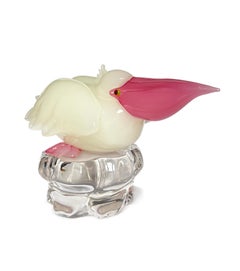
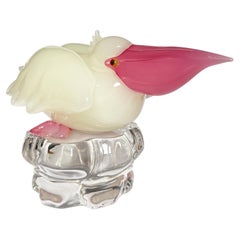
Pelican - shaped glass sculpture, Pino Signoretto, Murano, circa 1973

Pelican - shaped glass sculpture, Pino Signoretto, Murano, circa 1973

By Pino Signoretto

Located in Milano, IT

Pelican - shaped glass sculpture Pino Signoretto Murano, circa 1973 Engraved signature "Pino Signoretto" on the front of the base It measures: 10.04 in in height x 7.28 x 17.32 (2...

Category

Vintage 1970s Italian Other Animal Sculptures

Materials

Murano Glass

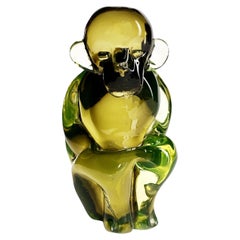
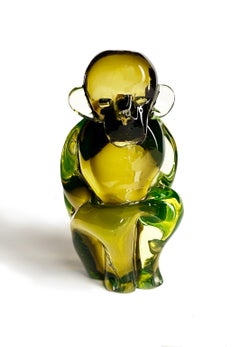
Monkey - shaped glass sculpture, Vetreria Salviati & C, Murano, circa 1960

Monkey - shaped glass sculpture, Vetreria Salviati & C, Murano, circa 1960

By Salviati

Located in Milano, IT

Monkey - shaped glass sculpture Salviati & C Glassworks Murano, circa 1960 It measures: 7.48 in in height x 3.86 x 4.53 in (19 cm x 9.8 x 11.5) It weighs: 5.29 lb (2.4 kg) State of ...

Category

Vintage 1960s Italian Other Animal Sculptures

Materials

Murano Glass, Uranium Glass

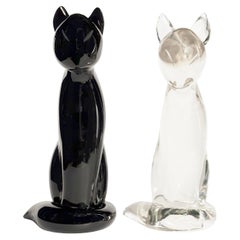
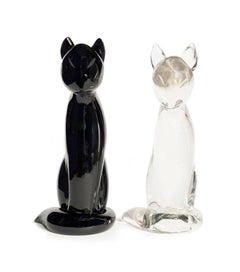
Pair of Glass Cat Sculptures by Archimede Seguso, Murano, Circa 1960

Pair of Glass Cat Sculptures by Archimede Seguso, Murano, Circa 1960

By Archimede Seguso

Located in Milano, IT

Pair of glass sculptures Cats Archimede Seguso (attr.) Seguso Vetri d’arte Murano, circa 1960-1970 Dimensions: achrome cat: height 9.45 in x 4.49 in x 5.24 (24 cm x 11.4 x 13.3); ...

Category

Vintage 1960s Italian Other Animal Sculptures

Materials

Murano Glass

Greyhound - Shaped Glass Sculpture, Flavio Poli, I.V.A.M.  Murano, Circa 1930

Greyhound - Shaped Glass Sculpture, Flavio Poli, I.V.A.M. Murano, Circa 1930

By Flavio Poli

Located in Milano, IT

Greyhound - shaped glass sculpture Flavio Poli I.V.A.M. Murano, circa 1930 It measures 4.72 in in height x 12.59 x 3.74 (12 cm x 32 x 9.5) It weighs 2.42 lb (1.1 kg) State of conse...

Category

21st Century and Contemporary Italian Modern Animal Sculptures

Materials

Murano Glass

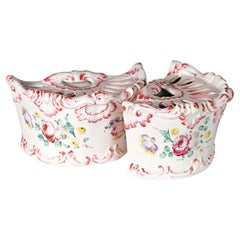
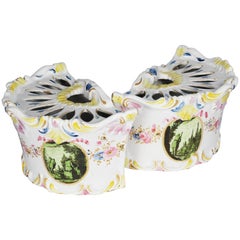
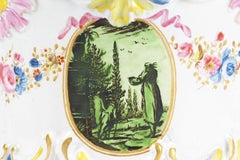
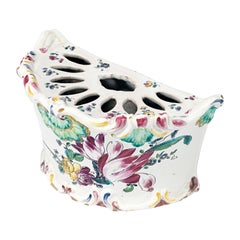
Maiolica flower pots Samson & Fils Factory, France, late 19th century

Maiolica flower pots Samson & Fils Factory, France, late 19th century

By Emile Samson

Located in Milano, IT

Maiolica flower pots “a mezzaluna” Samson & Fils Factory Montreuil-sous-Bois, France, late 19th century They measure 4.72 in in height x 8.66 x 5.03 (12 cm x 22 x 12,8) Weight: 1.88...

Category

Antique Late 19th Century French Rococo Planters, Cachepots and Jardinières

Materials

Maiolica

Renaissance Inkwell Calamelli workshop, Italy, Faenza, second half of the 16th

Renaissance Inkwell Calamelli workshop, Italy, Faenza, second half of the 16th

By Virgiliotto Calamelli

Located in Milano, IT

Inkwell Calamelli workshop (attr.). Faenza, second half of the 16th century Height 4.33 in; length 8.07 in; depth 2.95 in (11 cm; 20.5 cm; 7.5 cm) Weight: 0.800 lb (363 g) State of conservation: some chipping to the top of the mask around the mouth. Handle glued, without any restorations; minor chips in some raised areas. This object has the shape of a foot wearing Greek-style footwear, as can be seen in some raised areas. The foot is anatomically modeled with bare toes, while the ankle is partially covered by the footwear. On the heel, there is a small circular handle to support the object. The mouth of the container is shaped like a mask. The interior, completely enameled, suggests that the piece was intended to be used as an inkwell or to contain some other liquid. The base, however, is not enamelled. The painted decoration, scant and brief, consists of rapid cobalt blue shading between the toes of the foot, with more precise emphasis on the nails. It is accompanied by yellow citrine accents to enhance the forms. The mask is painted with the tip of the brush, to accentuate the tense nature of the eyes and to accentuate their outline. Thin strokes of yellow-orange line the interior of the mouth. Since the Renaissance, this decoration has been referred to as "compendiaria" and it characterizes the period of production extending from the mid-16th century to approximately the middle of the following century. It significantly influenced tastes at the time. It evolved from the polychrome style "istoriato" and transformed into a new style that "summarized" (compendia), or condensed, the ornamentation of the works into a few colors, placing greater prominence on the shapes. It was often inspired by metal specimens. Since the Renaissance, this decoration has been referred to as "compendiaria" and it characterizes the period of production extending from the mid-16th century to approximately the middle of the following century. It significantly influenced tastes at the time. It evolved from the polychrome style "istoriato" and transformed into a new style that "summarized" (compendia), or condensed, the ornamentation of the works into a few colors, placing greater prominence on the shapes. It was often inspired by metal specimens. This artwork finds parallels in similar objects all characterized by this refined style and produced in the city of Faenza and other Italian centers starting from the mid-16th century. The closest comparable example in majolica is a foot acquired by the British Museum in 2011 (inv. 2011, 8008.1). This was previously published by Carmen Ravanelli Guidotti in 1996 and later by Dora Thornton in 2016 during the conference on Renaissance ceramics...

Category

Antique 16th Century Italian Renaissance Inkwells

Materials

Maiolica

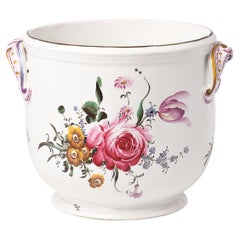
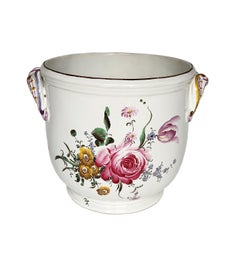
Maiolica Bottle Cooler Joseph Hannong, Strasbourg France, circa 1771

Maiolica Bottle Cooler Joseph Hannong, Strasbourg France, circa 1771

By Joseph Hannong

Located in Milano, IT

Bottle cooler Manufacture Joseph Hannong Strasbourg, France, circa 1771 Maiolica polychrome decorated “a piccolo fuoco” (third fire) It measures 7.40 in in height x 9.64 in diam...

Category

Antique 1770s French Rococo Vases

Materials

Maiolica

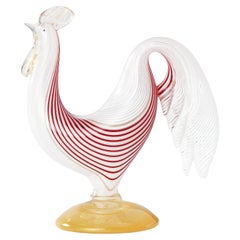
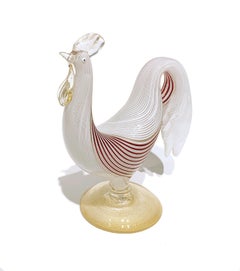
Murano Glass Rooster Sculpture by Dino Martens, Aureliano Toso, 1954

Murano Glass Rooster Sculpture by Dino Martens, Aureliano Toso, 1954

By Dino Martens

Located in Milano, IT

Rooster- shaped sculpture Galletto Dino Martens (1894 - 1970) Vetreria Artistica Rag. Aureliano Toso, 1954 It measures 9.25 inches in height x 8.18 in x 4.4 in (23.5 cm x 20.8 cm x 11.4 cm) It weighs 2.57 lb (1.169 g) State of conservation: intact. The small glass sculpture...

Category

Vintage 1950s Italian Modern Animal Sculptures

Materials

Glass

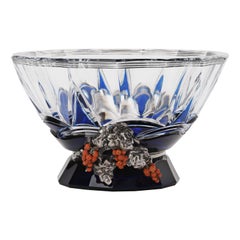
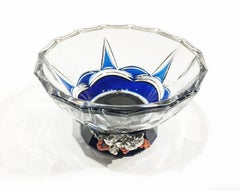
Eliseo Mangili Crystal Bowl, Silver & Coral Accents, Milan, Circa 1940

Eliseo Mangili Crystal Bowl, Silver & Coral Accents, Milan, Circa 1940

By Eliseo Mangili

Located in Milano, IT

Crystal bowl with silver and coral decorative elements Eliseo Mangili (1890-1977) Milan, circa 1940 It measures 4.8 in high x Ø 8.26 in; foot Ø 4.33 in (12.2 x Ø 21 cm; Ø foot 11 cm) 5.51 lb (2.55 kg) The rounded bowl narrows and rests on a flared foot with a polygonal section in blue crystal. The bowl itself is crafted in transparent crystal and continues the polygonal motif. The base of the bowl is decorated with a series of engraved blue arches which somewhat overlap creating a corolla and with five vertical cusps of the same colour. The rim is accented with a triple cut line around the entire circumference. A silver band representing a currant branch wraps the “waist” where the foot joins the bowl with currants made of orange coral. The bowl features the following marks along the silver band which defines its narrowing towards the foot. These help us date the work: 1) a lozenge with the abbreviation of the province (MI); Roman fasces; the number 08. This was the mark in force after the promulgation of the law of 5 February 1934 n. 305, which provided for the use of a uniform mark for the identification of the silversmith and of the province. In this case it is the Milanese smith Eliseo Mangili during the period 1935-1944. 2) 800 without a border. Title in thousandths of silver. Eliseo Mangili was one of the most talented goldsmiths flanking Alfredo Ravasco...

Category

Vintage 1930s Italian Other Decorative Bowls

Materials

Crystal, Coral, Silver

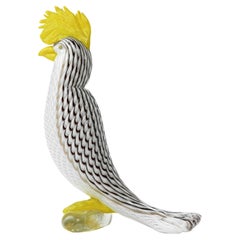
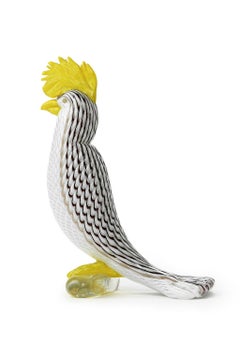
Glass Parrot-Shaped Sculpture, Dino Martens, Venice, Aureliano Toso, 1953-1956

Glass Parrot-Shaped Sculpture, Dino Martens, Venice, Aureliano Toso, 1953-1956

By Dino Martens

Located in Milano, IT

Parrot-shaped sculpture Psitaccus Dino Martens (1894 - 1970) Vetreria Artistica Rag. Aureliano Toso, 1953-1956 It measures 9.055 inches in height x 4.13 in x 5.90 in (23 cm, 10.5 cm x 15 cm) It weighs 1.997 lb (906 g) State of conservation: intact. The small glass sculpture...

Category

Vintage 1950s Italian Modern Animal Sculptures

Materials

Blown Glass

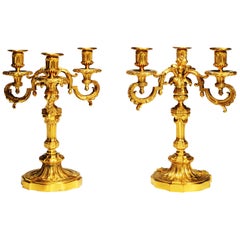
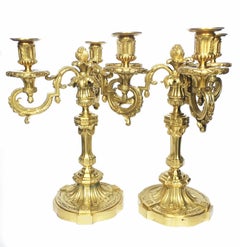
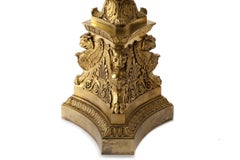
Pair of Antique French Bronze Candelabra, Mercury Gilded, Circa 1860

Pair of Antique French Bronze Candelabra, Mercury Gilded, Circa 1860

Located in Milano, IT

Pair of three-flame candelabra Cast bronze, chiselled and mercury gilded France, third quarter of the nineteenth century Height 14.96 in (38 cm) X 12.59 (32 cm) Weight 11.46 lb ...

Category

Antique 1860s French Napoleon III Candelabras

Materials

Bronze

Meissen Porcelain Bear by J.J. Kaendler, Baroque Style, Circa 1735

Meissen Porcelain Bear by J.J. Kaendler, Baroque Style, Circa 1735

By J.J. Kaendler

Located in Milano, IT

Hard porcelain bear modeled and painted in gray-brown and black Manufacture of Meissen, by Johann Gottlieb Kirchner and Johan Joachim Kaendler, 1735 It...

Category

Antique 1730s German Baroque Animal Sculptures

Materials

Porcelain

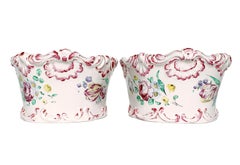
Pair of Maiolica Flower Pots by Pasquale Rubati, Milan, Circa 1770

Pair of Maiolica Flower Pots by Pasquale Rubati, Milan, Circa 1770

By Pasquale Rubati

Located in Milano, IT

Maiolica flower pot “a mezzaluna” decorated with trompe l’oeil Pasquale Rubati Factory Milan, circa 1770 Measures: each 4.7 in (cm 12) x 5 in (c...

Category

Antique 1770s Italian Rococo Planters, Cachepots and Jardinières

Materials

Maiolica

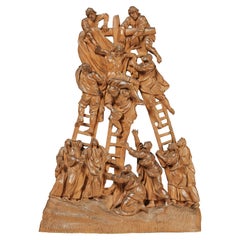
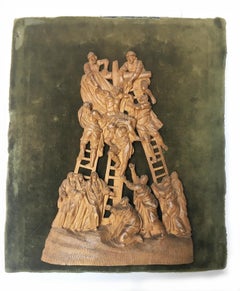
Boxwood Micro Carving Deposition Sculpture, Central Europe, Circa 1740

Boxwood Micro Carving Deposition Sculpture, Central Europe, Circa 1740

Located in Milano, IT

Boxwood micro carving Deposition Central Europe, first half of the 18th century It measures: the sculpture 7.40 x 5.31 x 0.6 in (18.8 x 13.5 x 1.6 cm); w...

Category

Antique 1740s European Baroque Figurative Sculptures

Materials

Boxwood

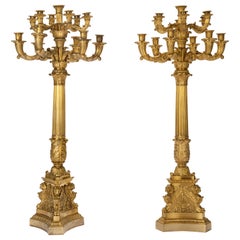
Nineteenth Century Gilt Bronze Candelabra Pair, French or Russian

Nineteenth Century Gilt Bronze Candelabra Pair, French or Russian

Located in Milano, IT

Pair of thirteen-flame candelabra France or Russia Second quarter of 19th century Cast, chiseled and gilt bronze Height 40.95 in (cm 104), diameter 17,7 in (cm 45) 97 lb (44 kg) Sta...

Category

Antique 1830s French Neoclassical Candelabras

Materials

Ormolu

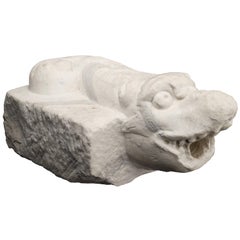
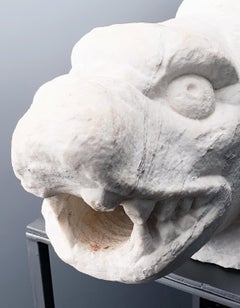
16th Century Italian Carrara Marble Sea Monster Fountain Sculpture

16th Century Italian Carrara Marble Sea Monster Fountain Sculpture

Located in Milano, IT

Sea monster Carrara marble mouth fountain Italy, late 16th century It measures 13.8 x 31.5 x 18.9 in (35 x 80 x 48 cm) State of conservation: some small evident gaps and widespread signs of wear due to outdoor exposure. The gray marks crossing it do not come from restoration, but are rather the natural veins of the marble. This work has some morphological characteristics typically associated with the iconography of the sea monster: an elongated muzzle, sharp teeth, protruding eyes, elongated ears, and a coiled serpent's tail. An in-depth series of studies on artistic depictions of the sea monster attempted to verify how this symbol evolved in antiquity in the European and Mediterranean contexts and how it gradually changed its image and function over time. The iconography itself is mutable and imaginative and its history is rich with cultural and artistic exchange, as well as the overlapping of ideas. This occurred so much that it is difficult to accurately pinpoint the "types" that satisfactorily represent its various developments. However, we can try to summarize the main figures, starting from the biblical Leviathan and the marine creature that swallowed Jonah (in the Christian version, this figure was to become a whale or a "big fish", the “ketos mega”, translation of the Hebrew “dag gadol”). Other specimens ranged from the dragons mentioned in the Iliad (which were winged and had legs) to "ketos” (also from Greek mythology), the terrifying being from whose Latinized name (“cetus”) derives the word "cetacean". See J. Boardman, “Very Like a Whale” - Classical Sea Monsters, in Monsters and Demons in the Ancient and Medieval Worlds, in Papers presented in Honor of Edith Porada, Mainz am Rhein 1987, pp. 73-84). In Italy the monster underwent yet further variations: it can be found in Etruscan art on the front of some sarcophagi representing the companion of souls, while among the Romans we find the “Pistrice” (cited by Plinio in Naturalis Historia PLIN., Nat., II 9, 8 and by Virgilio in Eneide: VERG., Aen., III, 427), which appeared in the shape of a stylized hippocampus or a very large monstrous cetacean and evolved into a hideous being with a dragon's head and long webbed fins. During the Middle Ages, the sea monster was the object of new transformations: at this time, it is often winged, the head is stretched like a crocodile, the front legs are often very sharp fins - sometimes real paws - until the image merges with dragons, the typical figures of medieval visionary spirituality widely found throughout Europe (on this topic and much more, see: Baltrušaitis, J., Il Medioevo fantastico. Antichità ed esotismi nell’arte gotica, Gli Adelphi 1997). In Italy during the 15th and 16th centuries, the revival of classicism - representative of the humanistic and Renaissance periods - led to a different reading of these "creatures". Indeed, the sea monster was also to find widespread use as an isolated decorative motif, especially in numerous fountains and sculptures where dolphins or sea monsters were used as a characterizing element linked to water (on this theme see: Chet Van Duzer, Sea Monsters on Medieval and Renaissance Maps, London, The British library, 2013). From the morphological point of view, the "sea monsters" of this period are mostly depicted as hybrid figures, in which the body of a mythological or real being (a hippocampus, a sea snake, a dolphin), is joined to a head with a rather indistinct appearance. It was usually characterized by large upright ears, an elongated snout, sharp teeth and globular, protruding eyes; a complex and indefinite figure, both from the symbolic point of view and from that of its genesis. The work we are examining is placed as a cross between the medieval sea serpent and the Renaissance dolphin, with stylistic features which recall the snake as often used in heraldry (such as the "snake" depicted in the coat of arms of the Visconti - the lords and then dukes of Milan between 1277 and 1447 - and which, for some, may be derived from the representations of the “Pistrice” that swallowed Jonah). In the search for sources, Renaissance cartography and in particular woodcuts should not be neglected. See for example the monsters of Olaus Magnus, from the editions of the “Historia de gentibus septentrionalibus” (“History of the peoples of the north”) and the natural histories of Conrad Gesner, Ulisse...

Category

Antique 16th Century Italian Renaissance Animal Sculptures
Materials

Carrara Marble

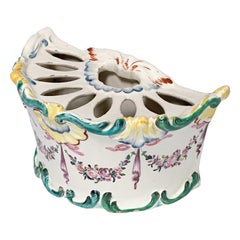
Antique Maiolica Flower Pot by Pasquale Rubati, Milan, Circa 1770

Antique Maiolica Flower Pot by Pasquale Rubati, Milan, Circa 1770

By Pasquale Rubati

Located in Milano, IT

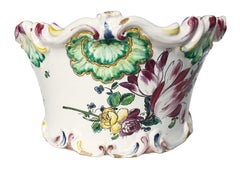
Maiolica flower pot “a mezzaluna” decorated with tulip Pasquale Rubati Factory Milan, circa 1770. Measures: 4.7 in x 4.7 in x 8.6 in 12 cm x 12...

Category

Antique 1770s Italian Rococo Planters, Cachepots and Jardinières

Materials

Maiolica

Italian Maiolica Flower Pot by Pasquale Rubati, Milan, Circa 1770

Italian Maiolica Flower Pot by Pasquale Rubati, Milan, Circa 1770

By Pasquale Rubati

Located in Milano, IT

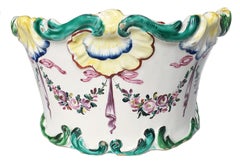
Maiolica flower pot “a mezzaluna” decorated with garlands of flowers Pasquale Rubati Factory Milan, circa 1770 Measures: 4.7 in x 5 in x 8.8 in ...

Category

Antique 1770s Italian Rococo Planters, Cachepots and Jardinières

Materials

Maiolica

Related Items
19th Century French Majolica Flowers Jardinière

19th Century French Majolica Flowers Jardinière

By Onnaing

Located in Austin, TX

19th Century French Majolica Flowers Jardinière. This jardinière is inspired by the Art Nouveau and the Naturalism movement of the end of 19th Century.

Category

Antique 1880s French Art Nouveau Planters, Cachepots and Jardinières

Materials

Ceramic, Faience, Majolica

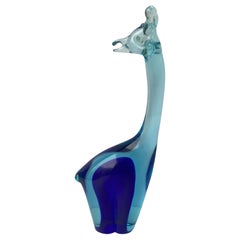
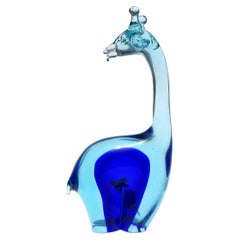
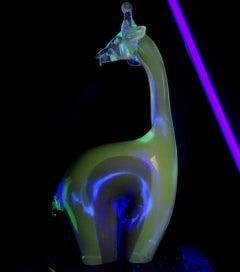
Salviati, Murano Sommerso Glass, Blue Cobalt and Uranium Giraffe Sculpture

Salviati, Murano Sommerso Glass, Blue Cobalt and Uranium Giraffe Sculpture

By Salviati

Located in Los Angeles, CA

This is part of a series called " Zoo" beautiful animals in sommerso glass .In black light you can see light uranium green glass .

Category

Vintage 1950s Italian Modern Glass

Materials

Glass

Flavio Poli Murano Yellow Faceted Glass Ashtray

Flavio Poli Murano Yellow Faceted Glass Ashtray

$899

H 1.97 in W 3.55 in D 3.55 in

Flavio Poli Murano Yellow Faceted Glass Ashtray

By Flavio Poli

Located in Barcelona, ES

Beautiful faceted Murano glass ashtray in yellow color attributed to Flavio Poli, circa 1950s. The color changes depending on the light. Neon yellow under white ligth and more orang...

Category

Mid-20th Century Italian Mid-Century Modern Decorative Bowls

Materials

Glass, Art Glass, Murano Glass

Pino Signoretto Murano Glass Sculpture of Woman, 1980s

Pino Signoretto Murano Glass Sculpture of Woman, 1980s

$1,199

H 11.42 in W 5.52 in D 5.91 in

Pino Signoretto Murano Glass Sculpture of Woman, 1980s

By Pino Signoretto

Located in Morazzone, Varese

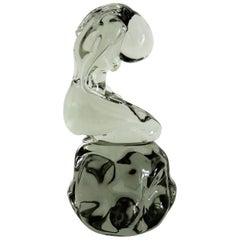
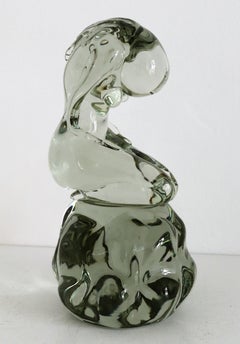
Beautiful glass sculpture made by Italian Murano Glass Master Pino Signoretto (1944-2017) during the 1980s. The sculpture shows a woman with long hair, kneeling, with her head bowed...

Category

Late 20th Century Italian Mid-Century Modern Figurative Sculptures

Materials

Murano Glass

Crystal Inkwell, Italy, 20th Century

Crystal Inkwell, Italy, 20th Century

$419

H 4.34 in Dm 3.94 in

Crystal Inkwell, Italy, 20th Century

Located in Roma, IT

Crystal Inkwell with stopper is a beautiful decorative object. The Inkwell is hexagonal and it is in good condition. Light oxidation at the base of the stopper.

Category

20th Century Italian Inkwells

Materials

Crystal

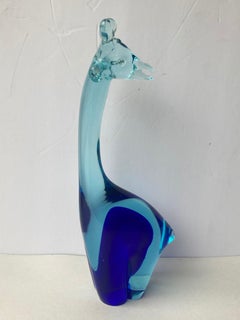
Salviati Murano Sommerso Blue Over Cobalt Italian Art Glass Giraffe Sculpture

Salviati Murano Sommerso Blue Over Cobalt Italian Art Glass Giraffe Sculpture

By Salviati, Luciano Gaspari

Located in Kissimmee, FL

Beautiful, and large, vintage Murano hand blown Sommerso light blue over cobalt blue Italian art glass giraffe figure sculpture. The piece is documented to the Salviati company, circa 1960s. It is published in "The Glass Ark" book on Murano glass animals. The piece has a well detailed head, with floppy ears and "ossicones" (the parts that look like horns on the head). The body itself is very minimalistic and streamline. The giraffe is also made with some Uranium / UV reactive glass, as It glows neon green under a black light (see photo). Would make a great display piece on any desk, credenza or side table. Mid-century era. Measures 11 1/8" tall x 5 1/4" long x 2 1/2" wde. Literature: The Glass Ark, Animals in the Pierre Rosenberg...

Category

Mid-20th Century Italian Mid-Century Modern Animal Sculptures
Materials

Glass, Art Glass, Blown Glass, Murano Glass, Sommerso

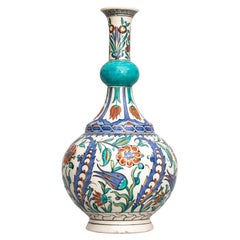
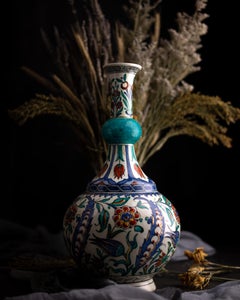
Late 19th-Century Iznik-Style Vase by Samson

Late 19th-Century Iznik-Style Vase by Samson

By Edmé Samson

Located in Fort Lauderdale, FL

An Iznik-style vase made by Edmé Samson et Cie after a 16th-century Turkish bottle vase in the collection of the Musée d'Ecouen. The vase’s bulbous body is decorated in a red, cobalt blue, turquoise, and green floral design of saz leaves, roses, and tulips. The neck is decorated with delicate floral sprays. The design is highlighted with gilding throughout, and is intentionally sparse around the turquoise area of the neck to mimic the wear of the 16th-century vase after which it was modelled. As with many other Samson Iznik...

Category

Antique Late 19th Century British Islamic Vases

Materials

Ceramic, Porcelain

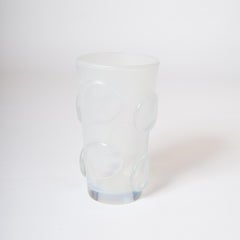
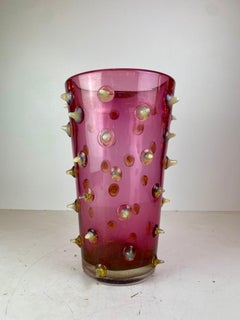
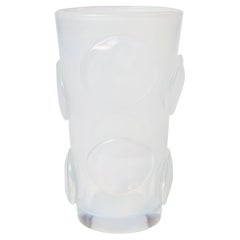
Modern Italian Opalescent Murano Glass Vase with Applications by Pino Signoretto

Modern Italian Opalescent Murano Glass Vase with Applications by Pino Signoretto

By Pino Signoretto

Located in Salzburg, AT

Modern Italian opalescent Murano glass vase signed Pino Signoretto on the bottom. Straight lined transparent glass object with 8 round (Diameter 12cm) glass applications. Size and weight: Diameter 24cm x Height 42cm x Weight: 11.5kg Biography Pino Signoretto Born September 28, 1944 in Favaro Veneto. 1954 He worked for a muranese glass chandelier souvenir manufacturer. 1959 Apprenticeship with master glassblower Alfredo Barbini and works with the master Livio Seguso, Ermanno Nason, and Angelo Seguso. 1960 He got the title of master glassblower. 1961-77 he worked in different factories, to get full technical knowledge of glass. 1978 Signoretto opens his own furnace showroom in Murano. 1978 – 84 He collaborates with artists and architects, Dalì, Licata, Dal Pezzo, Vitali, Pomodoro, Willson. 1985 Signoretto undertakes the first of a long series of trips to Japan. 1989 He participates in a demostration for the japanese imperial family. Exhibition at Museo dell'Arte Veneziana in Otaru Japan. Works for Dale Chihuly - Seattle U.S.A. Teaches at the Pilchuch School of Glass - Seattle U.S.A. 1990 Signoretto executes the trophies for various international sporting events, including the European Basketball - Paris France and for N.B.A. - U.S.A. Teaches at Tulane University - U.S.A. Teaches at Aomori Otaru - Giappone. Teaches at Toyama School of Glass - U.S.A. Teaches at Pilchuck School of Glass Seattle - U.S.A. 1991 Excutes a series of pieces for Jeff Koons exhibition at Sonnabend Gallery New York - U.S.A. Teaches at Rochester Institute of Technology, Massachussetts College of Art - U.S.A Demonstration, G.A.S. Conference in Corning New York - U.S.A. Teaches at Pilchuck School of Glass Seattle - U.S.A. 1992 Signoretto Executes a series of sculptures for Jan Vercruysse - exhibition at Castello di Rivoli Museo d'Arte Contemporanea Rivoli - Torino Italy. Works with Elisabeth Murray, Kiki Smih and Raimund Kummer. Teaches at Pilchuck School of Seattle U.S.A. 1993 He designs and executes a series of 12 fountains for Hotel American Gei Ken - Japan. Teaches at Experimental Glass Workshop - U.S.A. Demostrations Massachusetts College of Art - U.S.A. Teaches at Pilchuck School of Glass Seattle - U.S.A. 1994 Conference at G.A.S. Conference Oakland - U.S.A. Teaches at New Orleans School of Glasswork - U.S.A. Exhibition at Gallerie Differences Parigi - Francia. Teaches at Pilchuck School of Glass Seattle - U.S.A. He exhibits at Sandra Ainsley Gallery Toronto - Canada. 1995 Signoretto exhibits at Chiristy Taylor Galleries Florida - U.S.A. He exhibits at Galleria San Nicolò - Venice - Italy. He participates at C.C.I.A.A. of Venice exhibition l'Art de verre a Murano au XXemme siecle Paris Passage de Retz - Francia. He partecipates in exhibition Maestri Maestri vetrai creatori di Murano del '900 Comacchio - Ferrara - Italy. He partecipates in exhibition for United Foundation for AIDS Godparent House Florida - U.S.A. Pino, during his teaching stage at Pilchuck School of Glass partecipates to built a house in glass. 1996 He designs and executes some door-handle, exhibitis at Pull of Beauty - Storefront for Art and Architecture New York - U.S.A. Signoretto works with Martin Bradley at the glass chess-set. He executes The boodygarden series of sculptures for Mariagrazia Rosin - Kunstmuseum Dùsseldorf im Ehrenhof - Germania. He Designs and executes some animal objects, exhibits at Portia Gallery di Chicago - U.S.A. Works with painter Eulisse and professor Gaspari. He designs and executes some insects exhibition at Korpus II nel Kremlino di Mosca - Russia. He works with Raimund Kummer e G. Kruft. He executes some sculpures for Jan Vercruysse exhibition at: - Brooke Alexander - New York - U.S.A. - Kunsthalle Bern - Berna - Svizzera. - Castello di Rivoli Museo d'Arte Contemporanea - Rivoli (TO). - Studio per l'Arte Contemporanea E. Di Grazia - Torre Pellice (TO). He executes a large chandelier with Dale Chihuly and Lino Tagliapietra. He executes some clear animals for Kiki Smith exhibition at La Pace Gallery - New York. He executes some sculptures with Marc Quinn, exhibition at Withe Cube - Londra. 1996 He designs and executes some animals with Portia Gallery - Chicago U.S.A., exhibition at Sofa- Miami 1997 He executes some sculptures with Marc Quinn. He works with Martin Bradley. He executes some fish in glass for Dale Chichuly. He works for Timo Sarpaneva. 1997 He designs and executes some animals with Portia Gallery Chicago - U.S.A.; exhibition at Sofa-Miami 1 Pino makes a Pantheon in glass done by eight pillars, two meters high, and fountain in the middle. Il Legno in Vetro (Wood in glass) with the collaboration of LIVIO DE MARCHI - Venice. Teaches at the Penland School of Crafts, Penland North Carolina - U.S.A. Completes the sculpture "OHM" for the Hindu Temple, Cincinnati - U.S.A. Creates a house completely in glass located amongst the woods of the Swiss Alps. Exhibits some sculptures at the exhibition Dalì & Murano Artists at the San Marco Museum - Venice. Continues the collaboration with the Portia Gallery Chicago - U.S.A. and with the artists CHIHULY, KUMMER and VERCRUYSSE. 2001 - Pino teaches at the Venice "Accademia delle Belle Arti". Creates 700 snowballs exhibited at the De Pury & Luxembourg Gallery, Zürich - Switzerland. Teaches at the Esashi Glass Work Shop - Japan. Teaches at the San Servolo International Glass Workshops on l'isola di S. Servolo Venice - Italy. Pino opens his new workshop in F.ta Serenella 3 Murano Venice - Italy. Creates some sculptures, for the furnishings industry OAK di Cantù - Italy, destined for a Saudi Palace. Continues collaborations with CHIHULY AND KUMMER. 2002 - two sculptures at the Habitat Gallery - U.S.A. Teaches for the second consecutive year at the Venice "Accademia delle Belle Arti". Participates at the Amsterdam GAS Conference - Netherlands. Teaches at the Esashi San Servolo International Glass Workshops - Japan. Receives the award "Gallo d'oro di Murano" as Muranese personality of the year. 2003 - Creates a clothes rack, inclusive of several items of clothing made entirely out of glass, displayed at the Housang Rachtian Gallery in Venice. Makes a pig out of glass and gold leaf, as the fourth place award at the 2003 Regata Storica di Venezia. Participates as a lecturer at the GAS Conference - Seattle U.S.A. Creates a series of chandeliers based on marine life, shown at the Caffè Florian in Venice, in collaboration with MARIA GRAZIA ROSIN. Creates a series of 100 "fantastic" shoes for the Japanese designer HIROKO UEKI, that were the subject of an exhibition tour throughout Japan. Continues to be the primary glass master and maker for the ideas of many artists including: DALE CHIHULY, ALDO MONDINO...

Category

Vintage 1980s Italian Modern Vases

Materials

Murano Glass

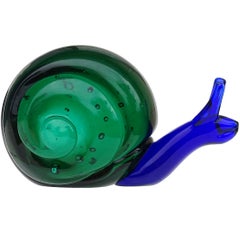
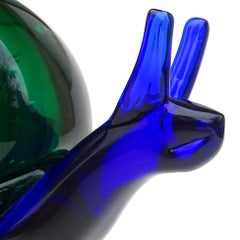
Salviati Murano Sommerso Blue Green Italian Art Glass Snail Figure Sculpture

Salviati Murano Sommerso Blue Green Italian Art Glass Snail Figure Sculpture

By Luciano Gaspari, Salviati

Located in Kissimmee, FL

Beautiful, and large, vintage Murano hand blown Sommerso emerald green with bubbles, and sapphire blue Italian art glass snail sculpture. The piece is documented to the Salviati comp...

Category

Late 20th Century Italian Mid-Century Modern Animal Sculptures
Materials

Glass, Art Glass, Blown Glass, Murano Glass, Sommerso, Uranium Glass

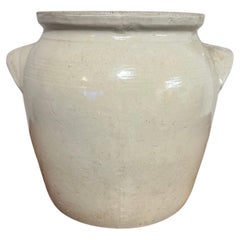
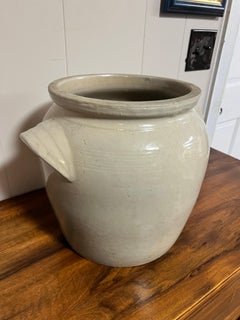
19th Century French Terracotta Confit Pot

19th Century French Terracotta Confit Pot

$700

H 13 in W 12.75 in D 10.5 in

19th Century French Terracotta Confit Pot

Located in Winter Park, FL

A 19th century French earthenware confit pot with traditional yellow glaze. Some chips and losses to glaze. These ordinary earthenware vessels were once used daily in the French cou...

Category

Antique 19th Century European French Provincial Vases

Materials

Terracotta

Flavio Poli Murano Art Glass Vessel

Flavio Poli Murano Art Glass Vessel

$675

H 3 in W 3.25 in D 3.25 in

Flavio Poli Murano Art Glass Vessel

By Flavio Poli, Seguso Vetri d'Arte

Located in New York, NY

A beautiful emerald-green and yellow Italian Murano art glass vessel, by Flavio Poli, for glassmaking company Seguso Vetri d’Arte, Italian midcentury modern design period, circa mid-...

Category

Mid-20th Century Italian Mid-Century Modern Vases

Materials

Murano Glass

Pair of Chinese Figural Statues in Murano Glass by Pino Signoretto, Italy, 1970s

Pair of Chinese Figural Statues in Murano Glass by Pino Signoretto, Italy, 1970s

By Pino Signoretto

Located in Brescia, Brescia

This elegant pair of Chinese figural statues, crafted by renowned Murano glass artist Pino Signoretto in the 1970s, exemplifies the exquisite art...

Category

Vintage 1970s Italian Mid-Century Modern Figurative Sculptures
Materials
Murano Glass