WOLFS More Art

to
5
11
2
1
2
Overall Width
to
Overall Height
to
1
5
10
1
1
1
1
1
7
4
1
7
6
3
3
3
1
1
16
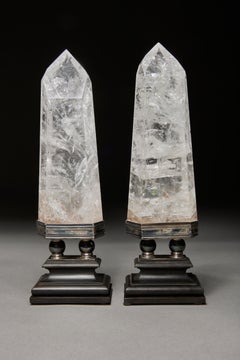
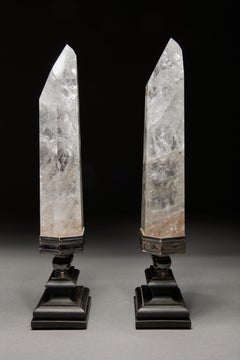
Pair of 20th Century Giuliano Tincani Rock Crystal Obelisks

Pair of 20th Century Giuliano Tincani Rock Crystal Obelisks

Located in Beachwood, OH

Giuliano Tincani (Italian, 20th Century) Pair of Rock Crystal Obelisks Clear quartz crystal and sterling silver 13 x 4 x 2.5 inches, each These obelisks present as a matched pair of...

Category

20th Century Figurative Sculptures

Materials

Silver

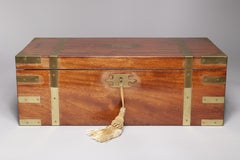
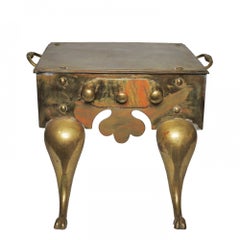
English Brass Bound Mahogany Lap Desk, Late 19th Century

English Brass Bound Mahogany Lap Desk, Late 19th Century

Located in Beachwood, OH

English Brass Bound Mahogany Lap Desk, Late 19th Century 20 inches wide This is an elegant English brass-bound mahogany lap desk, likely dating from the late 19th to early 20th cent...

Category

Late 19th Century More Art

Materials

Brass

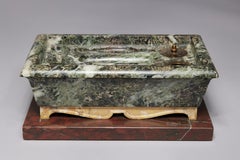
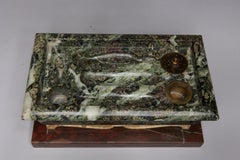
Green Onyx Marble Napoleonic Desk Trough, 19th Century

Green Onyx Marble Napoleonic Desk Trough, 19th Century

Located in Beachwood, OH

Napoleonic Desk Trough, 19th Century Green onyx marble 4 x 9.5 x 5.5 inches

Category

19th Century More Art

Materials

Marble

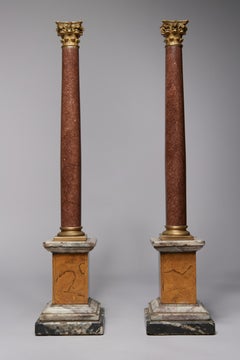
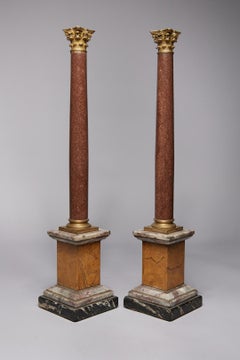
Pair of Porphyry Marble Columns with Gilt Bronze Capitals, 19th Century

Pair of Porphyry Marble Columns with Gilt Bronze Capitals, 19th Century

Located in Beachwood, OH

Pair of Porphyry Marble Columns with Gilt Bronze Capitals, 19th Century Porphyry marble & gilt bronze 20 x 4.25 x 4.25 inches Porphyry is an igneous rock, not marble, known for its...

Category

19th Century Figurative Sculptures

Materials

Marble, Bronze

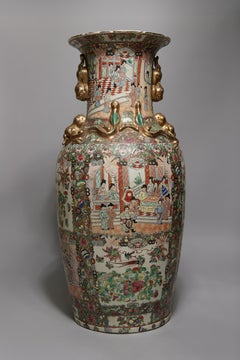
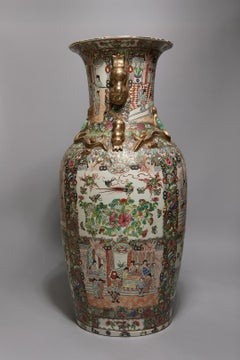
Monumental Chinese Famille Rose Medallion Vase, 20th Century

Monumental Chinese Famille Rose Medallion Vase, 20th Century

Located in Beachwood, OH

Monumental Chinese Famille Rose Medallion Vase, 20th Century Porcelain 36 x 18 inches Famille rose is an 18th century Chinese porcelain, characterized by its pink-colored enamel.

Category

20th Century More Art

Materials

Porcelain

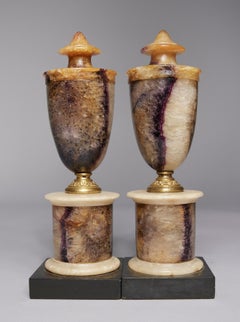
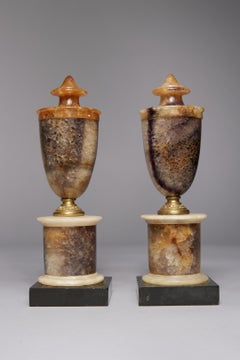
Pair of English Regency Blue John (Derbyshire Spar) Urns, 19th Century

Pair of English Regency Blue John (Derbyshire Spar) Urns, 19th Century

Located in Beachwood, OH

Pair of English Regency Blue John (Derbyshire Spar) Urns, 19th Century 9.5 x 3 x 3 inches Obtained from the Derbyshire England, Blue John is a semi-precious mineral, a rare form of ...

Category

19th Century Figurative Sculptures

Materials

Marble

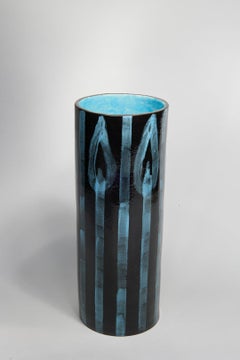
Large 20th Century Ceramic Vase w/ Flowers, French Artist

Large 20th Century Ceramic Vase w/ Flowers, French Artist

By Roger Capron

Located in Beachwood, OH

Roger Capron (French, 1922-2006) Vase Ceramic Signed on bottom 15.75 x 6 inches French ceramist Roger Capron was born in Vincennes in 1922. He studied at Paris’s School of Applied A...

Category

Late 20th Century More Art

Materials

Ceramic

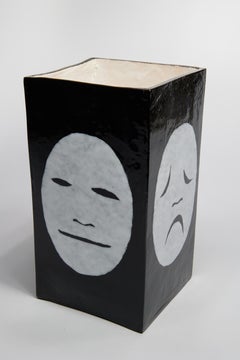
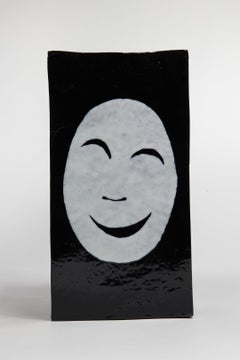
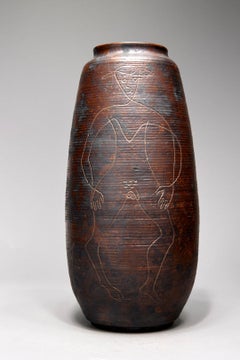
Faces Vase, 20th Century Ceramic Drama Masks, Italian Artist

Faces Vase, 20th Century Ceramic Drama Masks, Italian Artist

By Marcello Fantoni

Located in Beachwood, OH

Marcello Fantoni (Italian, 1915-2011) Faces Vase Ceramic Signed on bottom 10.5 x 5.5 x 6 inches Marcello Fantoni was an Italian sculptor, ceramicist, metalworker, multi-media artist...

Category

Mid-20th Century More Art

Materials

Ceramic

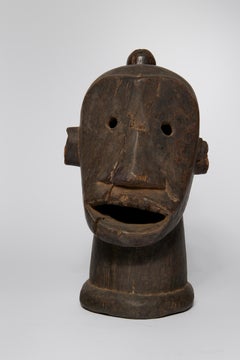
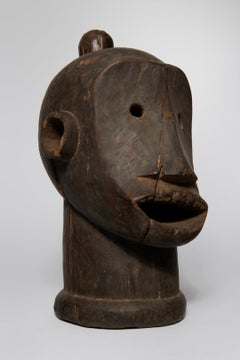
African Carved Wooden Makonde Initiation Ceremony Mask

African Carved Wooden Makonde Initiation Ceremony Mask

Located in Beachwood, OH

African Carved Wood Makonde Mask Heavy wood carved ceremonial mask symbolizing an ancestor 16.5 x 8 x 10 inches A carved ceremonial mask symbolizing an ancestor, this African facial...

Category

20th Century Figurative Sculptures

Materials

Wood

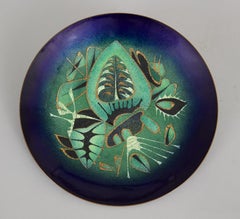
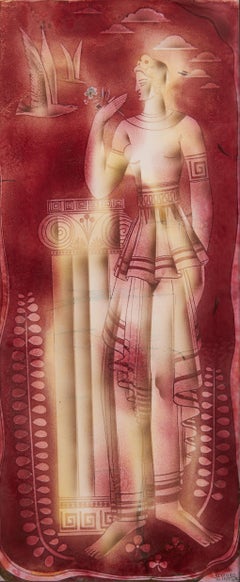
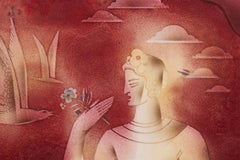
Helen of Troy, Early 20th Century Enamel, Cleveland School Artist

Helen of Troy, Early 20th Century Enamel, Cleveland School Artist

Located in Beachwood, OH

Edward Winter (American, 1908-1976) Helen of Troy, 1938 Enamel Signed and dated lower right 43 x 18 inches 44.5 x 19.5 inches, framed Exhibited: Cleveland Museum of Art, May Show 19...

Category

1930s Mixed Media

Materials

Enamel

Related Items
“Sylva” Contemporary Porcelain Wall Sculpture Trio

“Sylva” Contemporary Porcelain Wall Sculpture Trio

By Element Clay Studio

Located in Savannah, GA

“Sylva” is a contemporary porcelain wall sculpture installation by Heather Knight, founder of Element Clay Studio, a Savannah-based studio recognized for organic modern ceramic works...

Category

2010s Contemporary Abstract Sculptures

Materials

Ceramic, Porcelain

Contemporary Porcelain Wall Sculpture Installation “Bloom”

Contemporary Porcelain Wall Sculpture Installation “Bloom”

By Element Clay Studio

Located in Savannah, GA

“Bloom” is a contemporary porcelain wall sculpture installation by Heather Knight, founder of Element Clay Studio, a Savannah-based studio recognized for organic modern ceramic works...

Category

21st Century and Contemporary Contemporary Abstract Sculptures

Materials

Ceramic, Porcelain

YOSHITOMO NARA - WE ARE PUNKS MUG (Large) Design modern pop art urban Japan

YOSHITOMO NARA - WE ARE PUNKS MUG (Large) Design modern pop art urban Japan

By Yoshitomo Nara

Located in Madrid, Madrid

Yoshitomo Nara - We are punks Mug Large Date of creation: 2011 Medium: Porcelain Edition: Open Size: 95 x Φ85 mm (300ml) Condition: Brand new, inside its custom box Description: The big sibling in Yoshitomo Nara's We Are Punks porcelain series, this 300 cc mug features a vampire-fanged girl peering over a wall on its side with the quiet menace of someone who arrived first and has no intention of leaving. "We Are Punks" is printed on the exterior as both a title and a statement of intent. The image derives from Nara's 2011 colour-pencil drawing of the same name, part of a practice where childhood defiance and subcultural energy merge into a visual language recognisable across a room. Made in Hasami ware from Nagasaki Prefecture, the mug is fired, glazed and finished in Japan. Hasami potters developed their craft supplying everyday tableware to the domestic market, which means the porcelain is built to be used, not merely admired. It is microwave and dishwasher safe. The white ground is clean and unglazed on the outside where the illustration sits, giving the print a tactile, almost paper-like quality that feels closer to a drawing than to a mass-produced transfer. At 300 cc it holds enough coffee to start the morning with the same stubborn composure Nara's children have been modelling for over three decades. Pair it with the small mug: the two stack together and, like any well-conceived double act, gain from being seen as a set. That stacking detail is not accidental. Nara has long been interested in objects that nest inside one another. His room-sized installations are built as huts and cabins that shelter smaller works, creating a mise en abyme of intimacy. Two mugs sitting one inside the other carry a faint echo of that idea, scaled down to the kitchen shelf. ABOUT THE ARTIST Yoshitomo Nara (奈良美智, b. 1959, Hirosaki) is one of the most influential Japanese artists working today. Round-headed children with piercing gazes populate his canvases and sculptures, images that have gone well beyond the art world to become a broader cultural phenomenon. Childhood in Aomori: Solitude, Nature, and Radio Waves Nara grew up in Hirosaki, a small city in Aomori Prefecture at the northern tip of Honshū. Both parents worked long hours, leaving young Yoshitomo to fend for himself after school. The Japanese have a word for children like him, kagikko, latchkey kids who come home to an empty house and learn to keep their own company. That early acquaintance with solitude runs through every painting. Look at any of Nara's figures and you will find a self-contained being who meets your eye with a steadiness that could be courage or could just as easily be vulnerability. During those solitary years, Western music reached him through the Far East Network (FEN), the U.S. Armed Forces radio station. Rock, folk, and later punk gave him a way to feel before painting ever did. As a young boy he bought his first record, Suzie Q, and has often said that album covers were his earliest art gallery. Later, he would design covers for Shonen Knife, R.E.M., and Bloodthirsty Butchers, and every exhibition he puts on is accompanied by a playlist of his own making. Education: Aichi and the Kunstakademie Düsseldorf After earning a BFA (1985) and MFA (1987) at the Aichi Prefectural University of Fine Arts and Music, Nara relocated to Germany to enrol at the Kunstakademie Düsseldorf, the same school that had shaped Joseph Beuys and Gerhard Richter. Under Neo-Expressionist painter A.R. Penck (1991–1993), he received one piece of advice that stuck: "Paint on the canvas as if you are drawing." Bold, pared-back figures, large rounded heads set against bare backgrounds, began to take shape on his canvases. At the Kunstakademie's annual student show in 1992, visitors saw The Girl with the Knife in Her Hand (1991), a painting that crystallised the tension running through all of Nara's work: an apparently innocent girl holding a tiny knife, a gesture he reads not as aggression but as self-defence against a threatening adult world. Once finished with his studies, Nara settled in Cologne in 1994 and set up in a former cotton mill. Cut off by the language barrier, he turned painting into a conversation with himself, and it was in that solitude that the gaze people remember long after leaving the gallery first appeared. Return to Japan and International Acclaim Twelve years later, Nara came back to Japan. I DON'T MIND, IF YOU FORGET ME. opened at the Yokohama Museum of Art in 2001 and toured five Japanese venues, including Hirosaki. MoMA New York acquired 130 of his drawings around the same time, and the travelling retrospective Nothing Ever Happens (2003–2005) cemented his reputation in the United States. Within the Japanese "New Pop" wave, he shared the stage with artists such as Takashi Murakami, Makoto Aida, and Mariko Mori...

Category

2010s Pop Art More Art

Materials

Porcelain

YOSHITOMO NARA - WE ARE PUNKS MUG (Small) Design modern pop art urban Japan

YOSHITOMO NARA - WE ARE PUNKS MUG (Small) Design modern pop art urban Japan

By Yoshitomo Nara

Located in Madrid, Madrid

Yoshitomo Nara - We are punks Mug Small Date of creation: 2011 Medium: Porcelain Edition: Open Size: 65 x Φ85 mm (200ml) Condition: Brand new, inside its custom box Description: A small porcelain mug based on Yoshitomo Nara's We Are Punks (2011), a colour-pencil drawing of a defiant, round-headed child whose expression falls somewhere between a lullaby and a battle cry. The piece belongs to a body of work where Nara channels the raw energy of the punk and folk records he grew up listening to on U.S. Armed Forces radio in rural Aomori, a thread that runs from his earliest sketchbooks to his large-scale canvases and limited editions. Crafted in Hasami ware from Nagasaki Prefecture, the mug is dishwasher and microwave safe. The clay is fired and glazed in Japan using techniques passed down through four centuries of potters in the hills above Nagasaki. The result is a clean white body, light but solid in the hand, with a matte finish that lets the illustration sit naturally on the surface rather than floating under a layer of gloss. Peek inside once you have finished your espresso and you will find one of Nara's girls staring back at you from the bottom of the cup, as if she got there first and has no intention of leaving. It is a small, private encounter: exactly the kind of moment Nara builds into his work. His figures never perform for a crowd; they address you one-on-one, and finding one at the bottom of a coffee cup is about as intimate as it gets. ABOUT THE ARTIST Yoshitomo Nara (奈良美智, b. 1959, Hirosaki) is one of the most influential Japanese artists working today. Round-headed children with piercing gazes populate his canvases and sculptures, images that have gone well beyond the art world to become a broader cultural phenomenon. Childhood in Aomori: Solitude, Nature, and Radio Waves Nara grew up in Hirosaki, a small city in Aomori Prefecture at the northern tip of Honshū. Both parents worked long hours, leaving young Yoshitomo to fend for himself after school. The Japanese have a word for children like him, kagikko, latchkey kids who come home to an empty house and learn to keep their own company. That early acquaintance with solitude runs through every painting. Look at any of Nara's figures and you will find a self-contained being who meets your eye with a steadiness that could be courage or could just as easily be vulnerability. During those solitary years, Western music reached him through the Far East Network (FEN), the U.S. Armed Forces radio station. Rock, folk, and later punk gave him a way to feel before painting ever did. As a young boy he bought his first record, Suzie Q, and has often said that album covers were his earliest art gallery. Later, he would design covers for Shonen Knife, R.E.M., and Bloodthirsty Butchers, and every exhibition he puts on is accompanied by a playlist of his own making. Education: Aichi and the Kunstakademie Düsseldorf After earning a BFA (1985) and MFA (1987) at the Aichi Prefectural University of Fine Arts and Music, Nara relocated to Germany to enrol at the Kunstakademie Düsseldorf, the same school that had shaped Joseph Beuys and Gerhard Richter. Under Neo-Expressionist painter A.R. Penck (1991–1993), he received one piece of advice that stuck: "Paint on the canvas as if you are drawing." Bold, pared-back figures, large rounded heads set against bare backgrounds, began to take shape on his canvases. At the Kunstakademie's annual student show in 1992, visitors saw The Girl with the Knife in Her Hand (1991), a painting that crystallised the tension running through all of Nara's work: an apparently innocent girl holding a tiny knife, a gesture he reads not as aggression but as self-defence against a threatening adult world. Once finished with his studies, Nara settled in Cologne in 1994 and set up in a former cotton mill. Cut off by the language barrier, he turned painting into a conversation with himself, and it was in that solitude that the gaze people remember long after leaving the gallery first appeared. Return to Japan and International Acclaim Twelve years later, Nara came back to Japan. I DON'T MIND, IF YOU FORGET ME. opened at the Yokohama Museum of Art in 2001 and toured five Japanese venues, including Hirosaki. MoMA New York acquired 130 of his drawings around the same time, and the travelling retrospective Nothing Ever Happens (2003–2005) cemented his reputation in the United States. Within the Japanese "New Pop" wave, he shared the stage with artists such as Takashi Murakami, Makoto Aida, and Mariko Mori...

Category

2010s Pop Art More Art

Materials

Porcelain

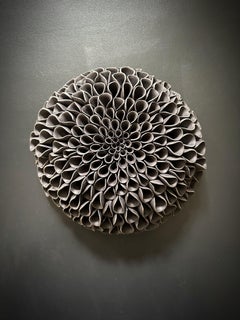
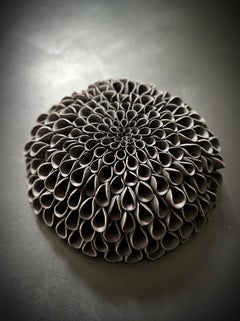
Porcelain Wall Sculpture Installation, Set of Five Hand-Sculpted Ceramic Forms

Porcelain Wall Sculpture Installation, Set of Five Hand-Sculpted Ceramic Forms

By Element Clay Studio

Located in Savannah, GA

This sculptural wall installation is composed of five hand-sculpted porcelain wall sculptures exploring repetition, texture, and organic structure. Each circular form is individuall...

Category

21st Century and Contemporary Modern More Art

Materials

Ceramic, Porcelain

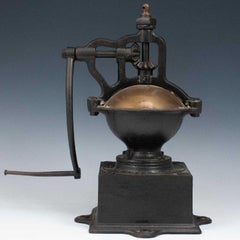
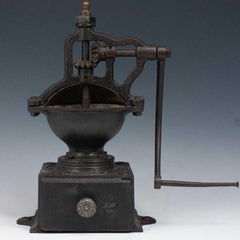
Antique, 19th C. Peugeot Frères Brevetés French Coffee Grinder Table Sculpture

Antique, 19th C. Peugeot Frères Brevetés French Coffee Grinder Table Sculpture

Located in Surfside, FL

This is being sold as a piece of (functional?) decorator table sculpture for a kitchen or restaurant. I do not know if or how it works. the wheel and gears turn. It might be missing a cover on the handle. It is a lovely antique piece. Made in France. A halfcentury before they produced their first car, the Peugeot brothers were making coffee grinders, continuing to do so for over 100years. In 1840 the Peugeots produced their first moulin a cafe out of a combination of metal and wood. The beans were inserted into the metal hopper up top; metal gears were turned by a woodenknob-capped metal...

Category

Late 19th Century Modern Still-life Sculptures

Materials

Metal, Brass

YOSHITOMO NARA - LET'S TALK ABOUT "GLORY" Design modern pop art urban Japan

YOSHITOMO NARA - LET'S TALK ABOUT "GLORY" Design modern pop art urban Japan

By Yoshitomo Nara

Located in Madrid, Madrid

Yoshitomo Nara - Let's talk about "Glory" Date of creation: 2011 Medium: Porcelain Edition: Open Size: Φ22 mm Condition: Brand new, inside its custom box Description: A Hasami ware porcelain plate reproducing Yoshitomo Nara's Let's Talk About "Glory" (2012), an acrylic-on-canvas painting where one of the artist's trademark children stares out with brow slightly furrowed and mouth set in a line that says she has heard what glory is and remains unconvinced. The original work, measuring roughly life-size, belongs to the period following the 2011 Great East Japan Earthquake, when Nara's palette softened, his paint layers multiplied, and the angry scowls of his earlier figures gave way to a different register: heavy-lidded, searching, charged. "I was so depressed that I couldn't help feeling that what I'd been doing was totally meaningless," he later recalled. When the brushes finally came back out, the defiant scowls had gone. What replaced them was a gaze that holds more weight precisely because it asks for less. No raised fist, no bared fangs — just a pair of eyes that have seen something and are still deciding what to make of it. Like the rest of Nara's Hasami porcelain series, this plate is crafted in Nagasaki Prefecture, home to one of Japan's oldest ceramic traditions. Smooth and surprisingly heavy for its size, the body holds a print sharp enough to preserve the layered, almost translucent quality of Nara's post-2011 palette — the soft greens and muted flesh tones that replaced the flat, punchy colours of his earlier work. ABOUT THE ARTIST Yoshitomo Nara (奈良美智, b. 1959, Hirosaki) is one of the most influential Japanese artists working today. Round-headed children with piercing gazes populate his canvases and sculptures, images that have gone well beyond the art world to become a broader cultural phenomenon. Childhood in Aomori: Solitude, Nature, and Radio Waves Nara grew up in Hirosaki, a small city in Aomori Prefecture at the northern tip of Honshū. Both parents worked long hours, leaving young Yoshitomo to fend for himself after school. The Japanese have a word for children like him, kagikko, latchkey kids who come home to an empty house and learn to keep their own company. That early acquaintance with solitude runs through every painting. Look at any of Nara's figures and you will find a self-contained being who meets your eye with a steadiness that could be courage or could just as easily be vulnerability. During those solitary years, Western music reached him through the Far East Network (FEN), the U.S. Armed Forces radio station. Rock, folk, and later punk gave him a way to feel before painting ever did. As a young boy he bought his first record, Suzie Q, and has often said that album covers were his earliest art gallery. Later, he would design covers for Shonen Knife, R.E.M., and Bloodthirsty Butchers, and every exhibition he puts on is accompanied by a playlist of his own making. Education: Aichi and the Kunstakademie Düsseldorf After earning a BFA (1985) and MFA (1987) at the Aichi Prefectural University of Fine Arts and Music, Nara relocated to Germany to enrol at the Kunstakademie Düsseldorf, the same school that had shaped Joseph Beuys and Gerhard Richter. Under Neo-Expressionist painter A.R. Penck (1991–1993), he received one piece of advice that stuck: "Paint on the canvas as if you are drawing." Bold, pared-back figures, large rounded heads set against bare backgrounds, began to take shape on his canvases. At the Kunstakademie's annual student show in 1992, visitors saw The Girl with the Knife in Her Hand (1991), a painting that crystallised the tension running through all of Nara's work: an apparently innocent girl holding a tiny knife, a gesture he reads not as aggression but as self-defence against a threatening adult world. Once finished with his studies, Nara settled in Cologne in 1994 and set up in a former cotton mill. Cut off by the language barrier, he turned painting into a conversation with himself, and it was in that solitude that the gaze people remember long after leaving the gallery first appeared. Return to Japan and International Acclaim Twelve years later, Nara came back to Japan. I DON'T MIND, IF YOU FORGET ME. opened at the Yokohama Museum of Art in 2001 and toured five Japanese venues, including Hirosaki. MoMA New York acquired 130 of his drawings around the same time, and the travelling retrospective Nothing Ever Happens (2003–2005) cemented his reputation in the United States. Within the Japanese "New Pop" wave, he shared the stage with artists such as Takashi Murakami, Makoto Aida, and Mariko Mori...

Category

2010s Pop Art More Art

Materials

Porcelain

American Flag Signed by USA Olympic Women Medalists

American Flag Signed by USA Olympic Women Medalists

Located in San Francisco, CA

A framed commemorative piece, this Stars and Stripes has been signed by women who achieved world-class athletic success as Olympic winners. Not confined to just one year’s event or p...

Category

2010s Other Art Style More Art

Materials

Brass

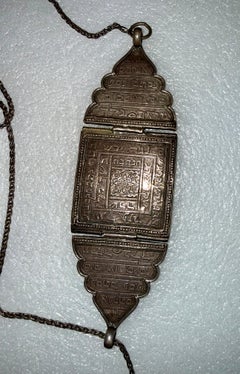
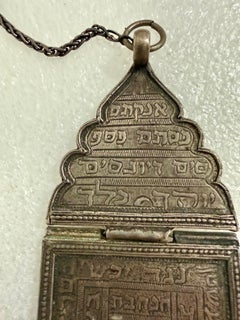
19th C Antique Silver Sephardic Judaica Kabbalah Birth Amulet Hebrew Inscription
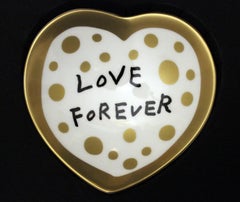
19th C Antique Silver Sephardic Judaica Kabbalah Birth Amulet Hebrew Inscription
Located in Surfside, FL

Antique Middle Eastern Judaic Birth Amulet Buckle with Kabbalistic Inscription. On woven silver chain. Most likely from Iran, Persia, (possibly from Afghanistan or Bukharian Jews) Ci...

Category

19th Century Folk Art More Art

Materials

Silver