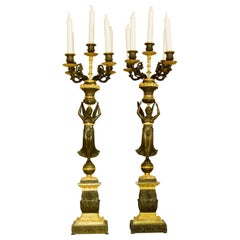
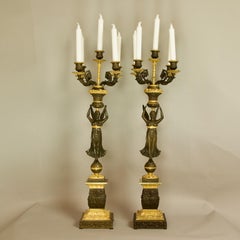
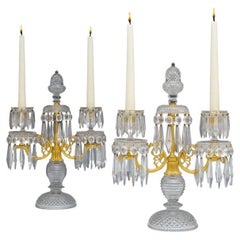
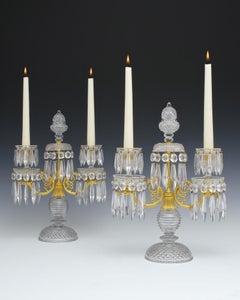
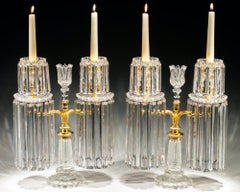
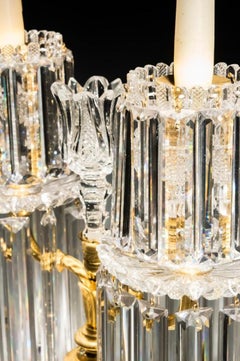
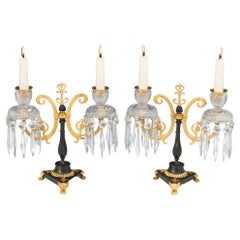
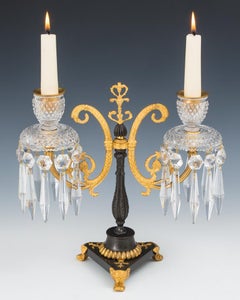
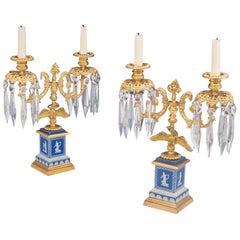
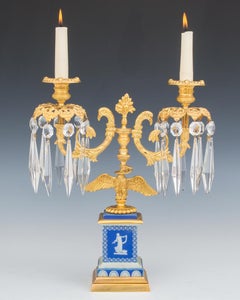
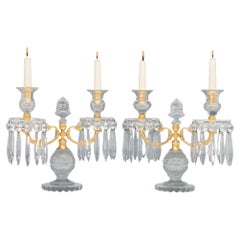
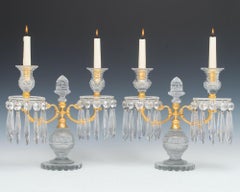
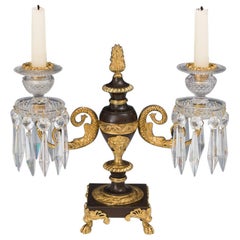
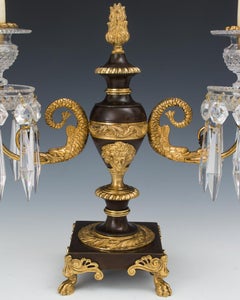
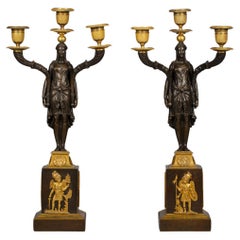
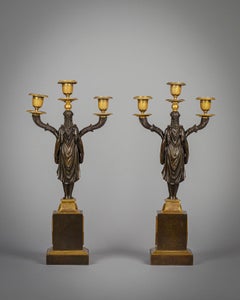
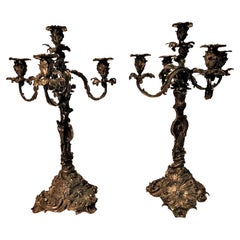
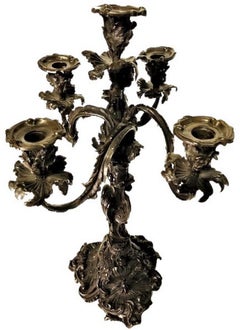
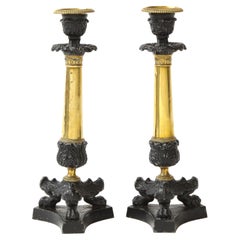
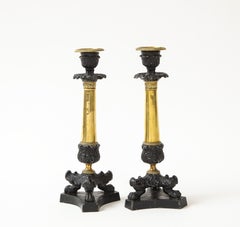
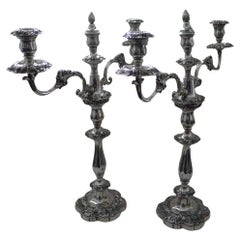
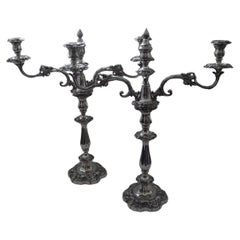
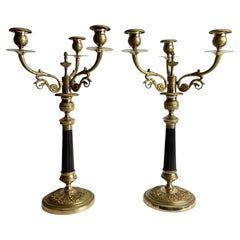
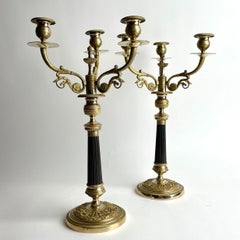
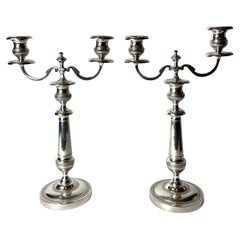
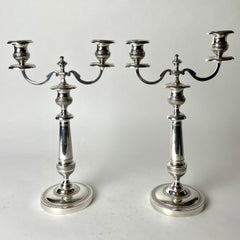
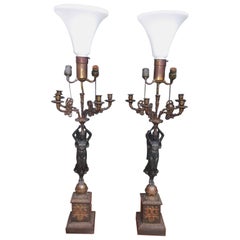
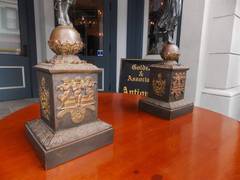
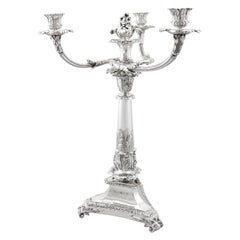
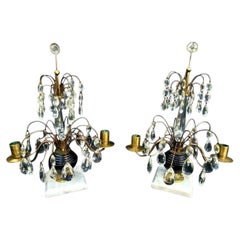
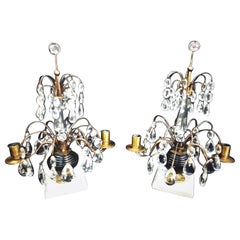
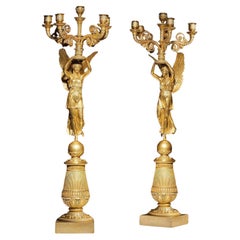
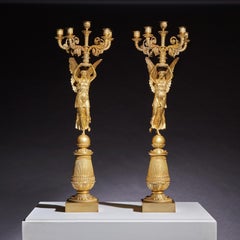
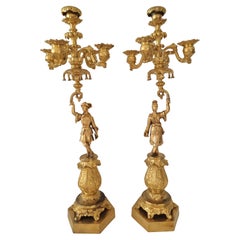
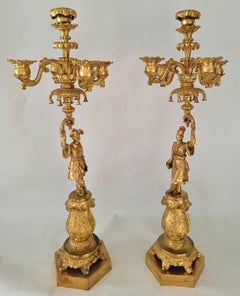
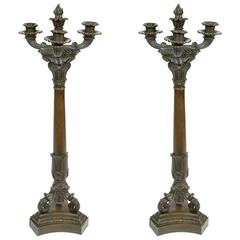
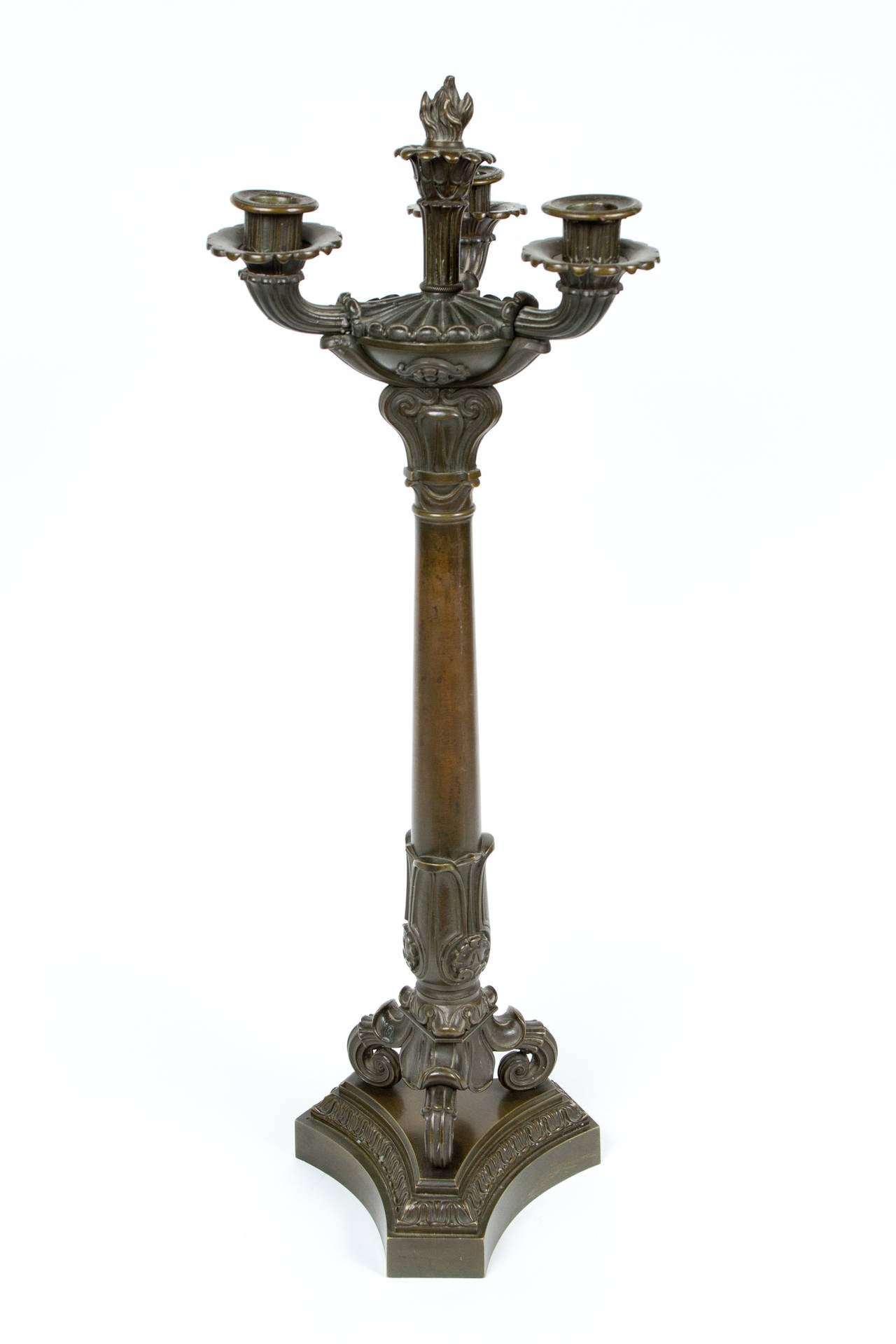
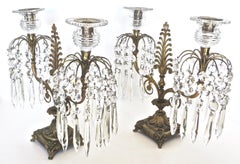
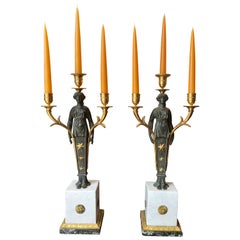
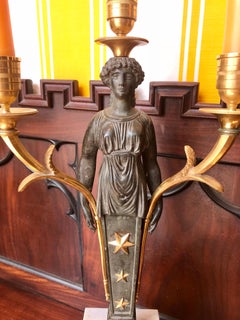
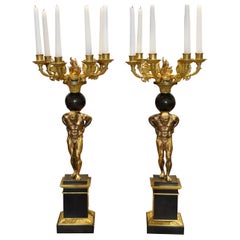
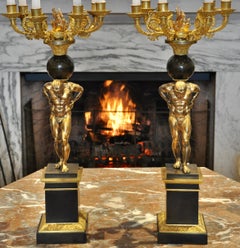
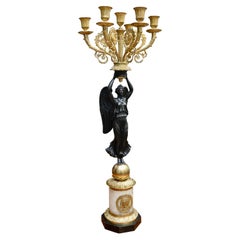
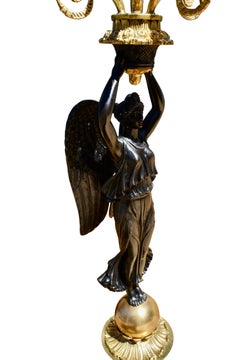
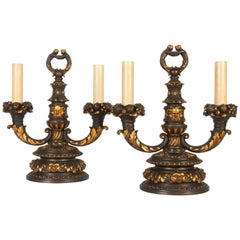
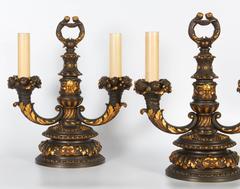
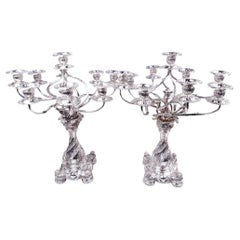
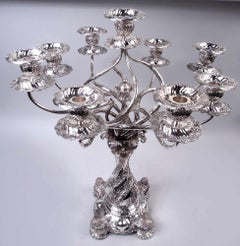
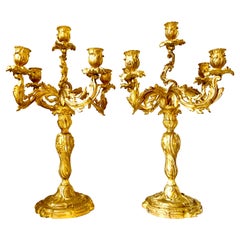
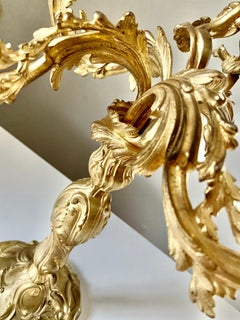
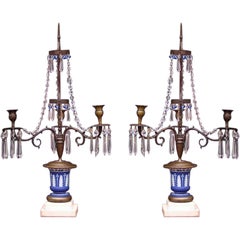
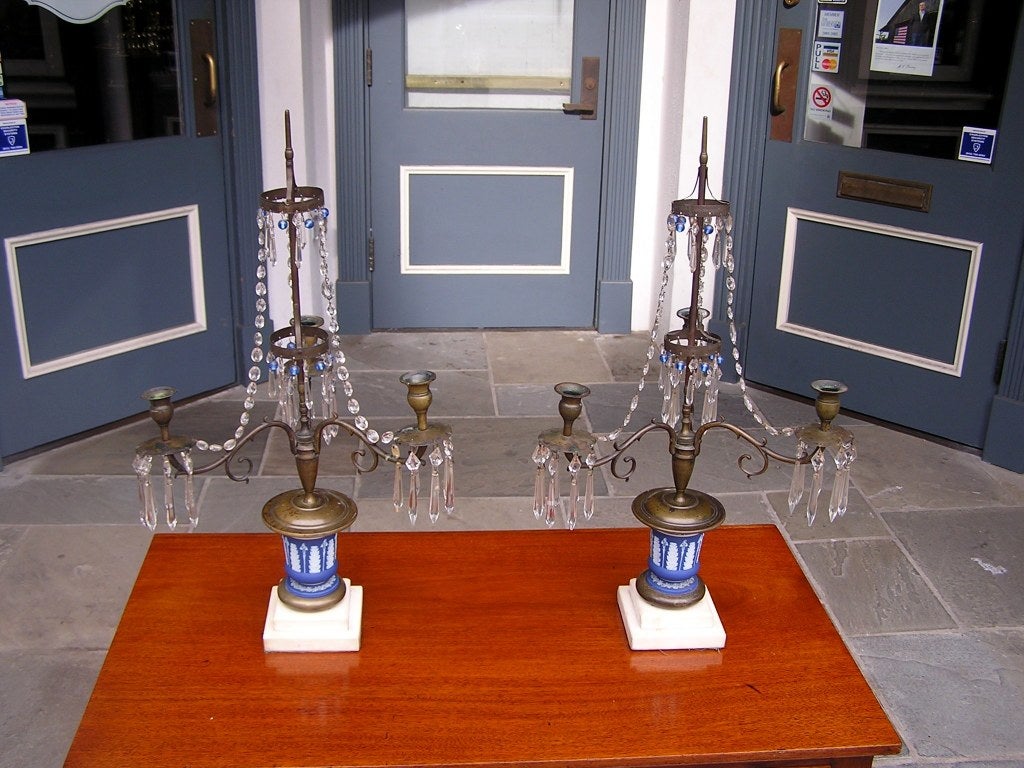
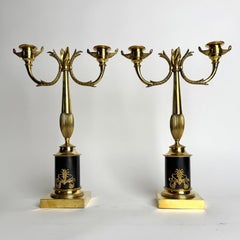
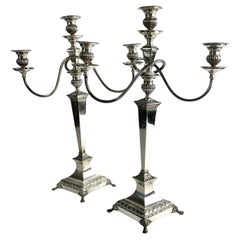
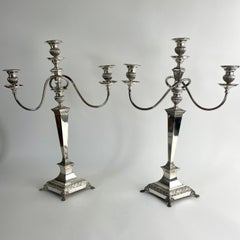
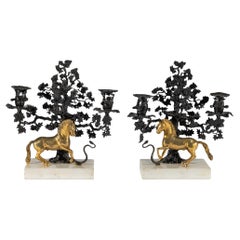
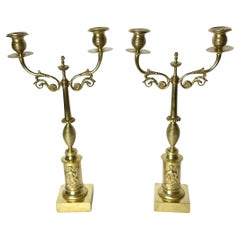
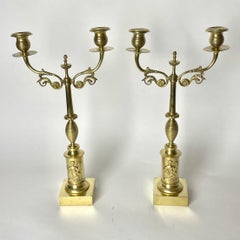
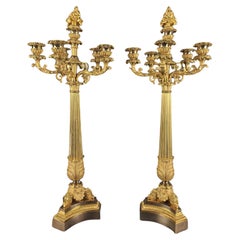
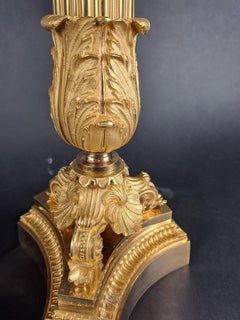
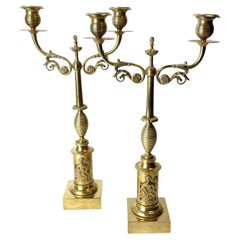
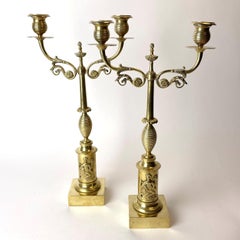
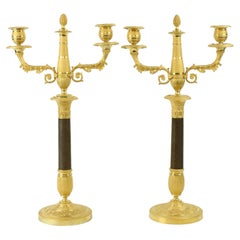
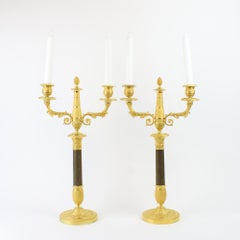
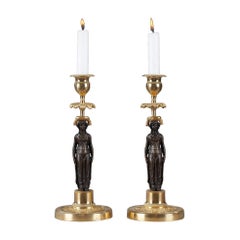
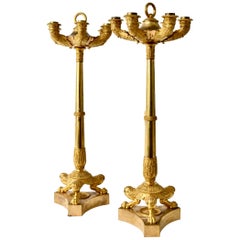
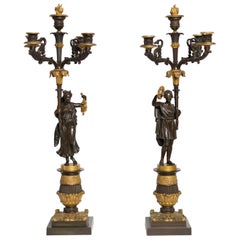
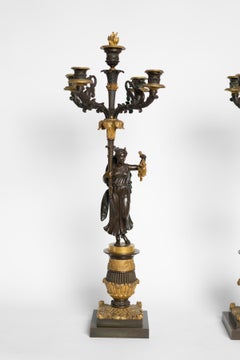
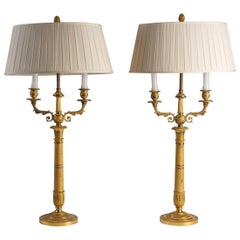
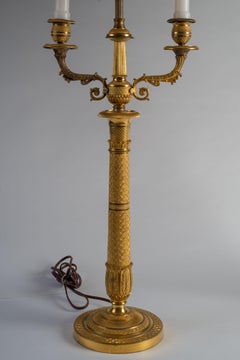
Pair of American Rococo Revival Patinated Bronze Candelabras, Ca. 1825
Bronze, dark-brown patina, unmarked.
Measures: Height: 23”
Width: 14”
The notion of an “American Rococo” seems a contradiction in terms. The very word rococo is as French as Camembert. It connotes a style that reigned along with Louis XV in the aristocratic decadence of the 18th Century. It was garlanded, nonchalant, associated with erotic marshmallow nudes by Francois Boucher and foppish courtiers costumed as shepherds pretending they understood Jean-Jacques Rousseau when all they really wanted was romantic dalliance in the formal gardens of Versailles. In the history of painting it produced but one great artist, Antoine Watteau.
By contrast, Americans of the period are remembered as the flinty inheritors of New England Puritans, full of rectitude and having not a moment for furbelow or frippery. Such few painters as were around included hard-nosed realists like John Singleton Copley and Charles Willson Peale.
Well, as it turns out, life once again acts according to the principle of paradox. There was an American rococo. It came to us indirectly via England disguised under the name Chippendale. Now for the first time the style receives comprehensive survey in the exhibition “American Rococo, 1750-1775: Elegance in Ornament.” Jointly organized by New York’s Metropolitan Museum and the Los Angeles County Museum of Art, it opens here Sundaywith a spread of some 170 works of decorative art and a conscientious catalogue with essays by Met and LACMA curators Morrison H. Heckscher and Leslie Greene Bowman.
There are at least two ways of looking at the decorative arts. Connoisseurs appreciate their design and craftsmanship. Those of sociological bent examine objects of material culture for their revelations of history and the temper of the times. Actually neither view is complete without the other.
Stylistically the rococo reveals a longing for intimacy in its small scale and an urge to organic nature in its love of stylized vines, tendrils, tiny flowers and seashells. If it were a new manner being promoted by Madison Avenue today it would probably be called “Baroque Lite.” There is an ease about the style that makes it airy, but it has an underlying formality that bespeaks lives of gentrified cultivation rather than beer-bellied sloth. It’s fascinating to examine the flintlock firearms on view and find these weapons of death shaped and decorated with the most exquisite care by wood carvers and metal engravers.
All of this is completely consistent with the main currents of 18th-Century European thought. In France, Rousseau sang the virtues of nature and the noble savage like a present-day ecologist. In England, John Locke...
Category
American Rococo Revival Antique 1820s Candelabras