Want more images or videos?
Request additional images or videos from the seller.

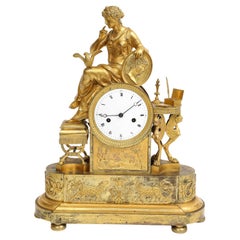
Table Clock, Ormolu, 19th Century

$3,511.53
£2,623.92
€3,000VAT Included
CA$4,917.15
A$4,927.49
CHF 2,889.99
MX$60,452.47
NOK 33,087.61
SEK 34,548.46
DKK 22,875.04

About the Item

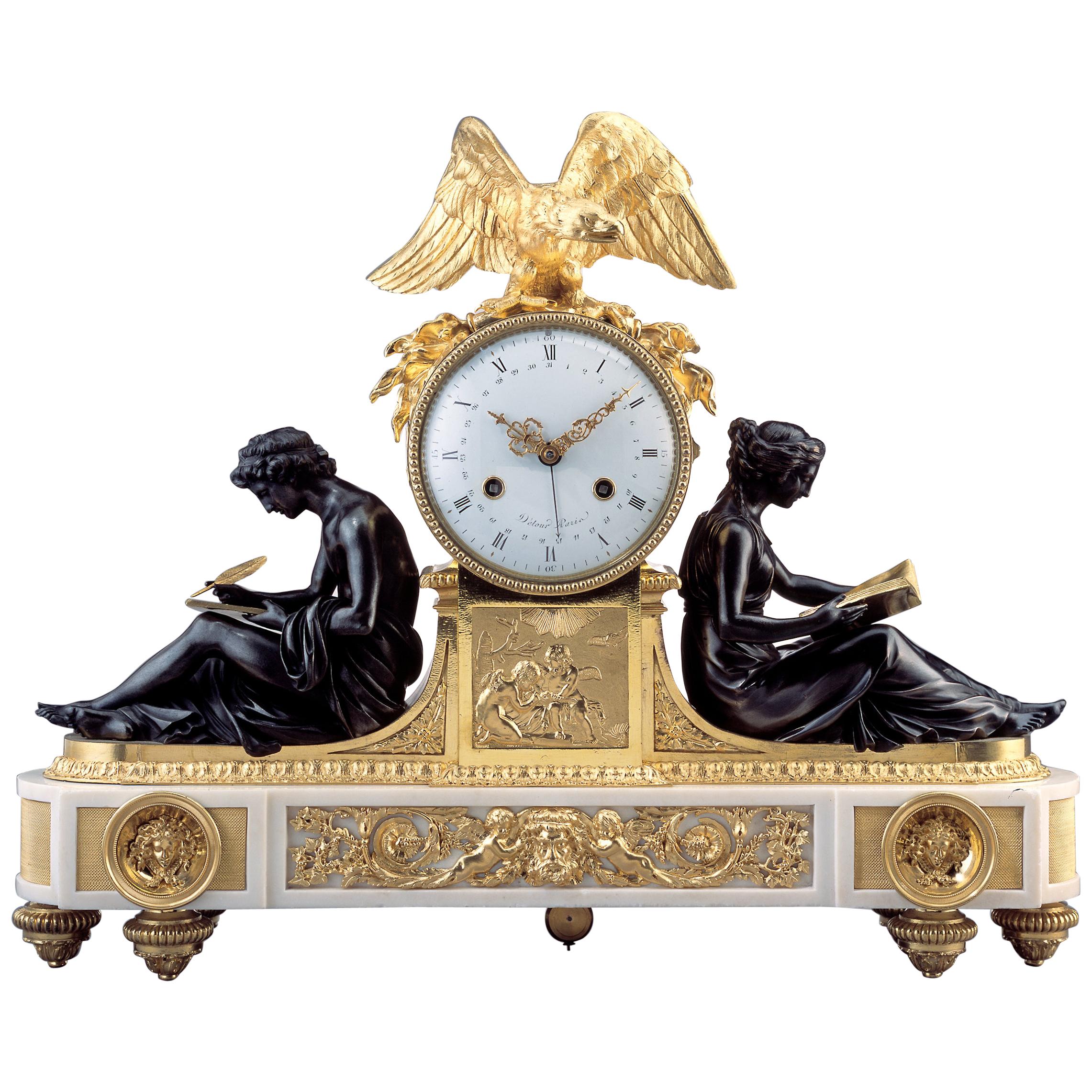
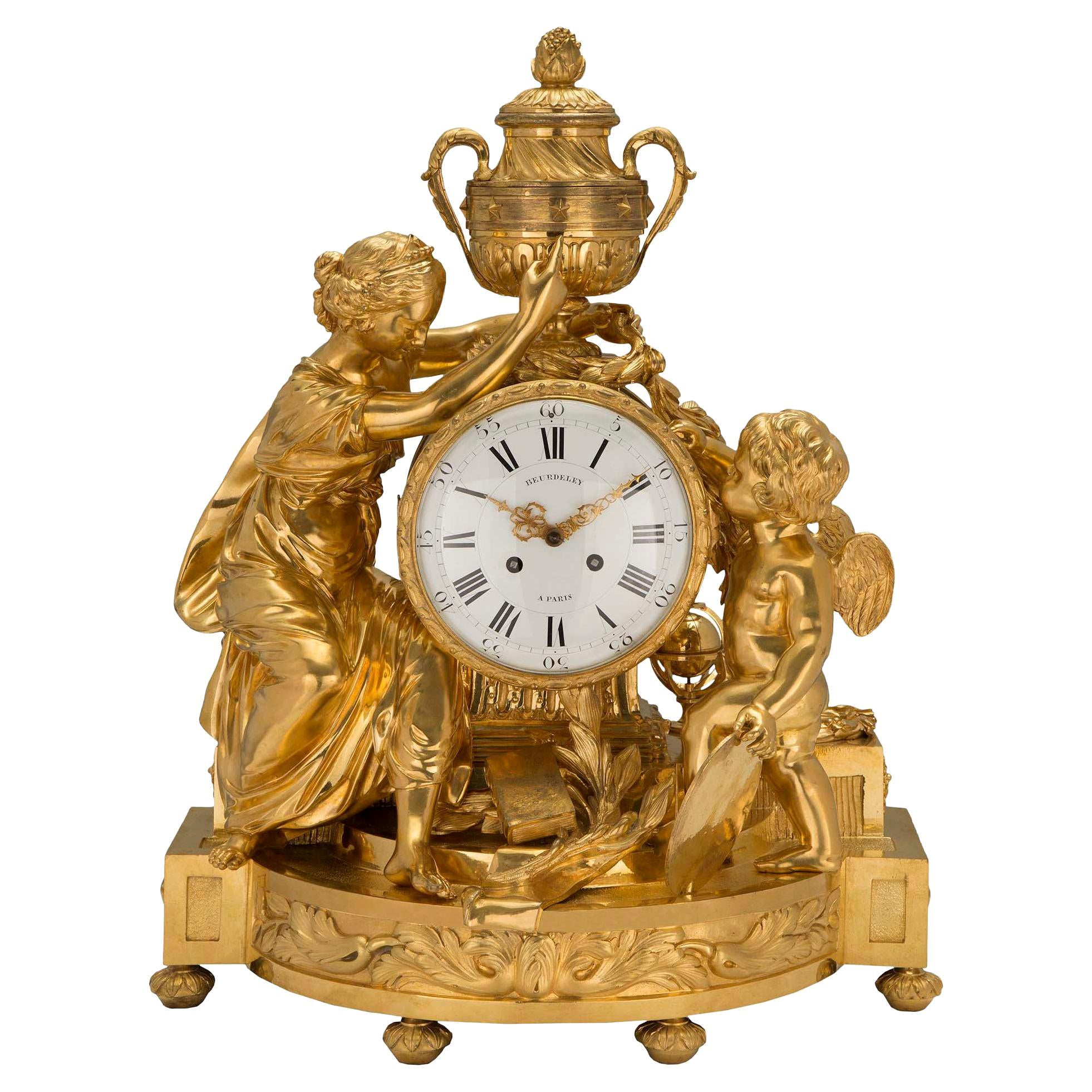
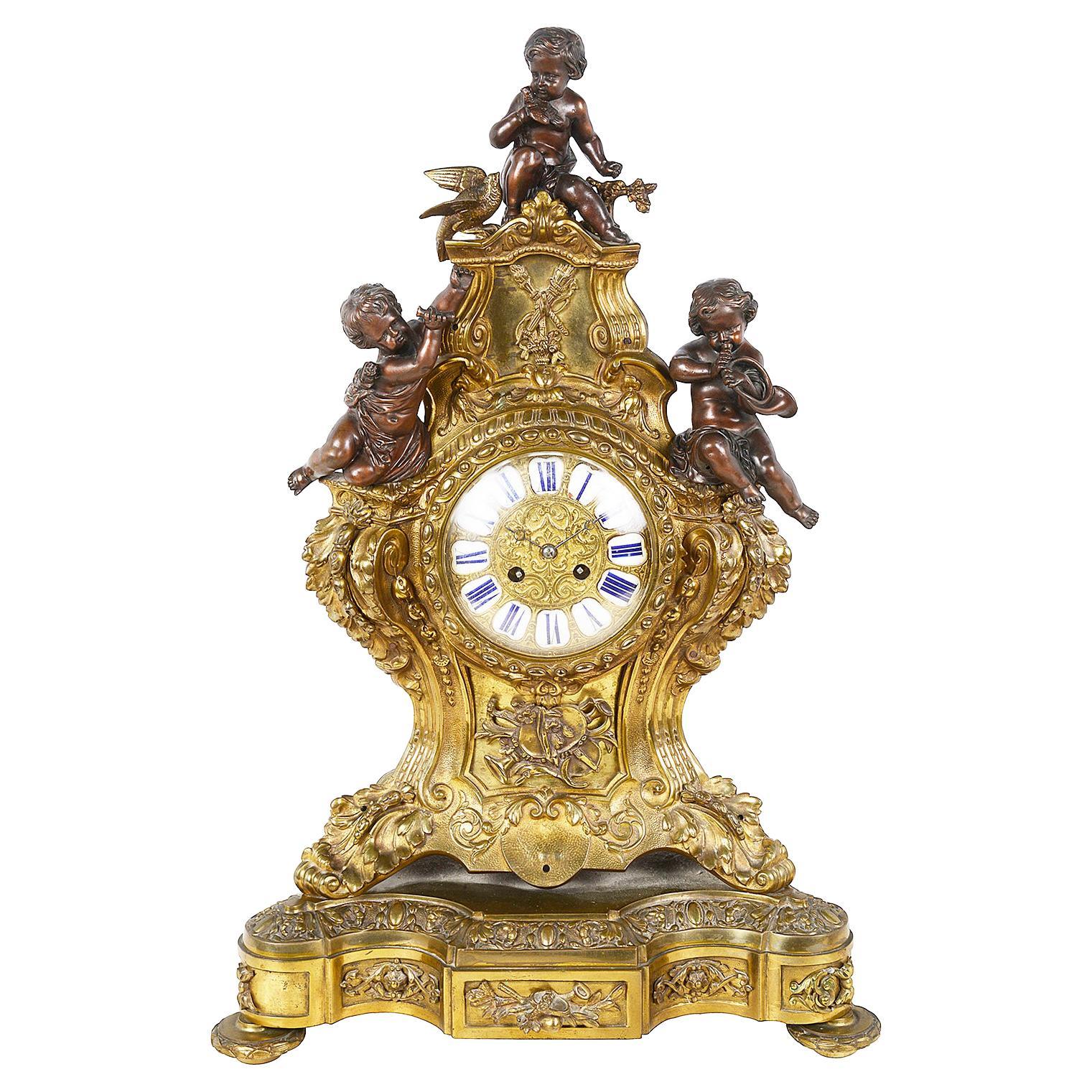
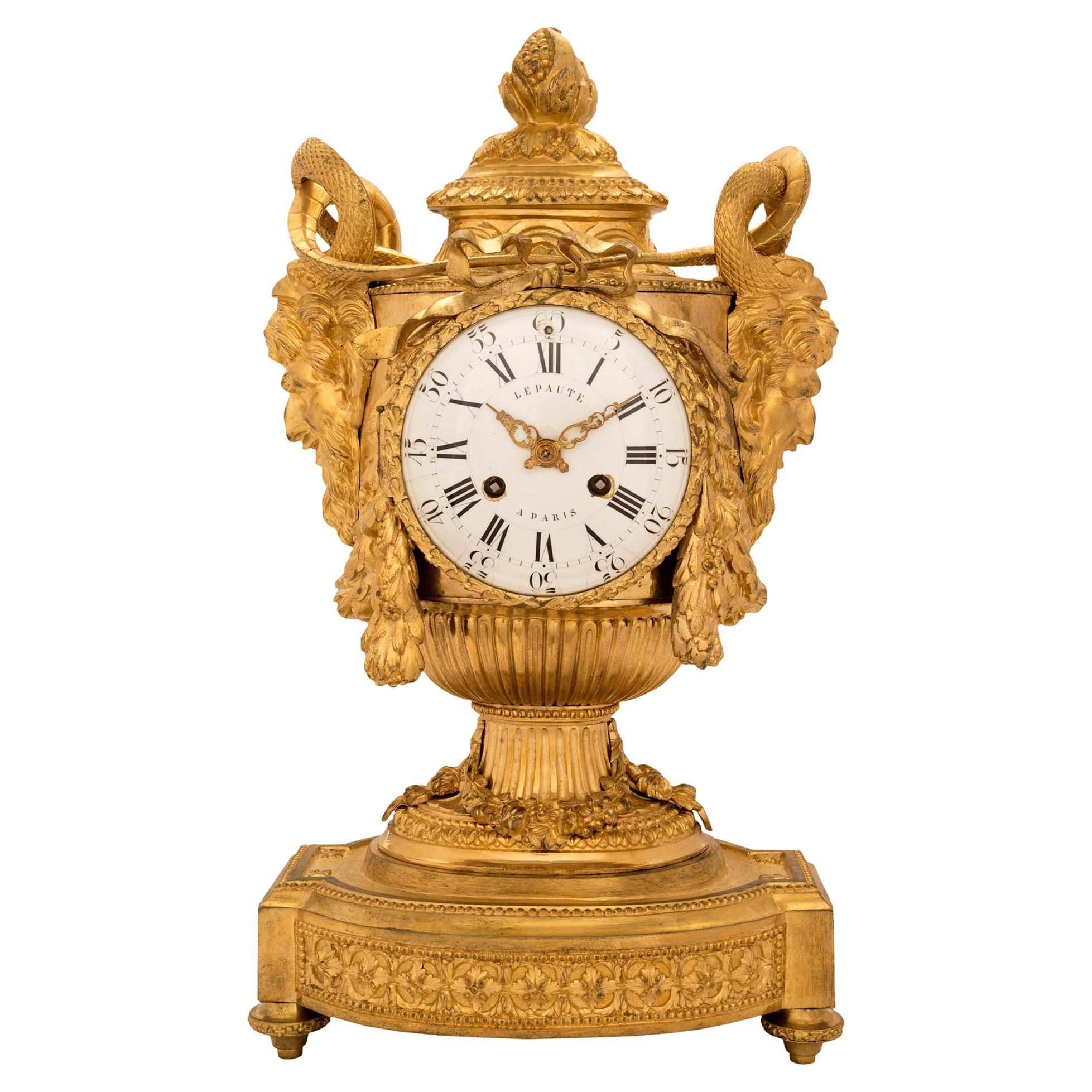
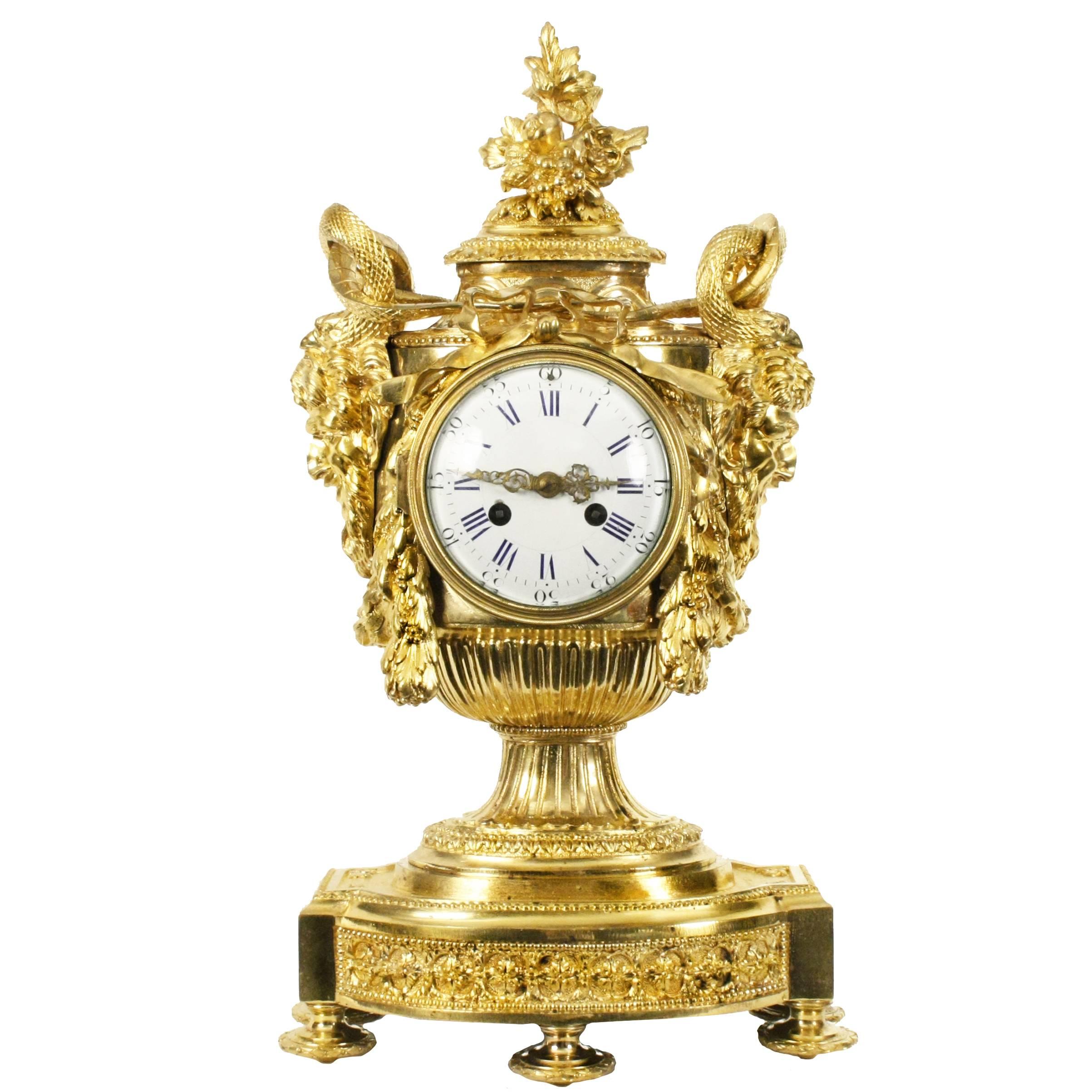
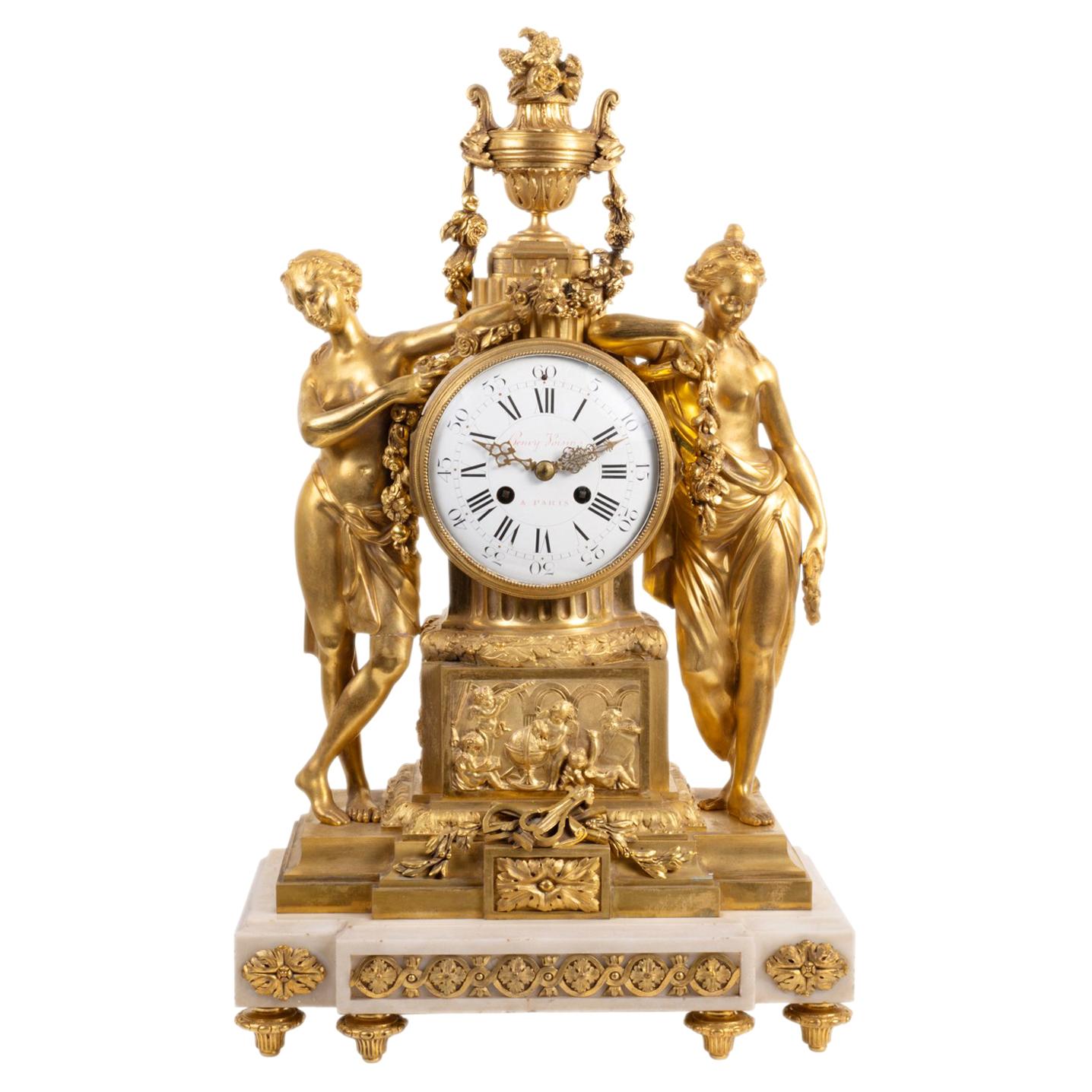
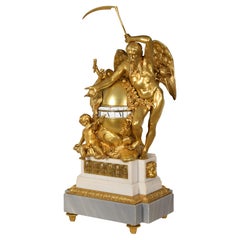
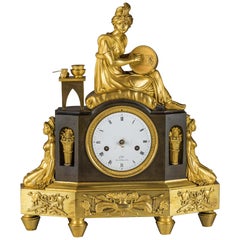
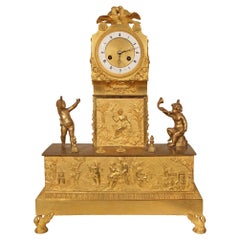
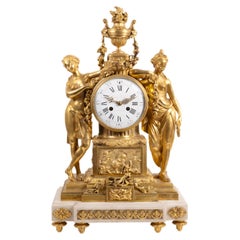
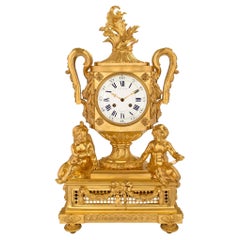
Table clock made of gilded bronze with a powerful base, enhanced with legs decorated with vegetal and architectural motifs of classicist inspiration and a series of details on the front (volutes in the chamfered corners, volutes and a center with a globe from which light radiates and a parchment, with inscriptions in both), as well as bands of simple architectural elements and smooth spaces to enhance those decorations. On this pedestal has been placed a parchment for the sphere (white, with Roman numerals for the hours and lines for the minutes, breguet-type needles), surrounded by a garland. In this area there is a male figure, dressed in suits reminiscent of the Renaissance, holding a drawn sword; In addition, a series of elements have been placed on the part of the sphere (a terrestrial globe, documents with cursive texts in French, etc.). The allusion to the sciences is clear when presenting at such a prominent point the documents with the respective texts and the sphere. The detail of the sword refers to the war. Thus, it would be a figure that would unite wisdom and action, uniting in the gentleman of a certain age both, as it should be in a ruler or people of a certain social class. The best examples of bronze table clocks were made in France during the 19th century, or so it was considered. This is due to the care with which it was organized and legislated the manufacture of applications and elements in bronze, the gold bronze technique to mercury, and the participation in the creation process of front-line artists who were in charge of the designs of the figures and decorative motifs (likewise, it was not unusual to make figures inspired by or more directly copying great works of Art History). The resulting clocks were much appreciated, being destined to decorate interiors of palaces and outstanding residences. Size: 43 x 17 x 55 cms.
  • Dimensions:
    Height: 21.66 in (55 cm)Width: 16.93 in (43 cm)Depth: 6.7 in (17 cm)
  • Style:
    Neoclassical (Of the Period)
  • Materials and Techniques:
  • Place of Origin:
  • Period:
  • Date of Manufacture:
    19th Century
  • Condition:
    Wear consistent with age and use.
  • Seller Location:
    Madrid, ES
  • Reference Number:
    Seller: Zf02071stDibs: LU295139958353

More From This Seller

View All
Louis XVI style table clock. Honoré Pons and Louis-Auguste Marquis. 19th century

Louis XVI style table clock. Honoré Pons and Louis-Auguste Marquis. 19th century

Located in Madrid, ES

Louis XVI style table clock. Gilt bronze, glass, metal, etc. French school, Honoré Pons and Louis-Auguste Marquis. Possibly 1827-1847, following a model by Etienne Martincourt. With...

Category

Antique 19th Century French Neoclassical Revival Mantel Clocks

Materials

Bronze, Other

Louis XVI style mantel clock. Biscuit, metal, glass. Crosnier, Paris, France

Louis XVI style mantel clock. Biscuit, metal, glass. Crosnier, Paris, France

Located in Madrid, ES

Louis XVI style mantel clock. Biscuit, metal, glass. Crosnier, Paris, France, circa 1900. It has defects. A table clock made of bisque porcelain with metal fittings, featuring a wh...

Category

Early 20th Century French Other Table Clocks and Desk Clocks

Materials

Other, Metal

Louis XVI Style Clock Garniture, Gilt Bronze Marble, 19th Century

Louis XVI Style Clock Garniture, Gilt Bronze Marble, 19th Century

Located in Madrid, ES

Two cups on pedestals and a clock. The French style known as Louis XVI is characterized by its inspiration in classicism and covers approximately from 1760 to 1789. In the 19th cent...

Category

Antique 19th Century French Louis XVI Garniture

Materials

Marble, Bronze

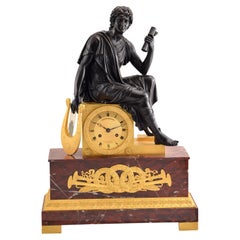
Table Clock, Apollo, Bronze, Marble, Model of Lenoir-Ravrio, Louis-Stanislas

Table Clock, Apollo, Bronze, Marble, Model of Lenoir-Ravrio, Louis-Stanislas

Located in Madrid, ES

Table clock, Apollo. Bronze, marble. Model of Lenoir-Ravrio, Louis-Stanislas(1783-1846). Paris, around 1820. Table clock composed of a staggered rectangular base made of red veined...

Category

Antique Early 19th Century French Neoclassical Mantel Clocks

Materials

Bronze, Other

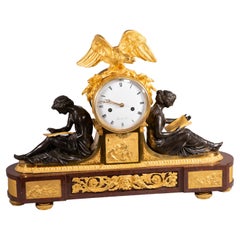
Table clock, “L'Etude” and “La Philosophie”. Gilt bronze, Rouge Griotte, etc. Me

Table clock, “L'Etude” and “La Philosophie”. Gilt bronze, Rouge Griotte, etc. Me

Located in Madrid, ES

Table clock, “L'Etude” and “La Philosophie”. Gilt bronze, Rouge Griotte, etc. Mesnil movement, Paris, France, circa 1815. In perfect working order. Table clock with a Rouge Griotte...

Category

Antique 19th Century European Other Mantel Clocks

Materials

Marble, Bronze, Other

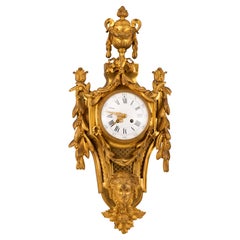
Wall clock. Gilt bronze. France, 19th century.

Wall clock. Gilt bronze. France, 19th century.

Located in Madrid, ES

Wall clock. Gilt bronze. France, 19th century. Gilt bronze wall clock of the type known as a "cartel" due to its shape, featuring Parisian movement and a white dial with Roman numer...

Category

Antique 19th Century French Neoclassical Revival Wall Clocks

Materials

Bronze, Other

You May Also Like

French Empire Ormolu Figural Mantel Clock

French Empire Ormolu Figural Mantel Clock

Located in New York, NY

The enamel dial signed 'GALLE RUE VIVIENNE A PARIS’ Movement: Claude Galle (1759-1815) Origin: French Date: 19th century Size: Height 14 x 12 x 4 3/4 inches Claude Galle ...

Category

Antique 19th Century French Mantel Clocks

Materials

Bronze

French 19th Century Louis XVI St. Ormolu Mantel Clock

French 19th Century Louis XVI St. Ormolu Mantel Clock

Located in West Palm Beach, FL

A spectacular and unique French early 19th century Louis XVI st. ormolu mantel clock, signed by Chapsal a Paris. The clock is raised on finely chased swan supports below a rectangula...

Category

Antique 19th Century French Louis XVI Mantel Clocks

Materials

Ormolu

Ormolu Mantel Clock, Belgium, circa 1810-1820

Ormolu Mantel Clock, Belgium, circa 1810-1820

Located in Belmont, MA

Empire ormolu mantel clock, Belgium, circa 1810, Signed "J.B. Romaet a Gand". Decorated with a shepherd scene. Strikes the hour and half hour on a bell. With enamel clock face and si...

Category

Antique 1810s Belgian Empire Mantel Clocks

Materials

Ormolu

Large Louis XVI Style Ormolu Mantel Clock, 19th Century

Large Louis XVI Style Ormolu Mantel Clock, 19th Century

By Henri Voisin

Located in Brighton, Sussex

A Fine quality French 19th century gilded ormolu and white marble mantel clock in the Louis XVI style. Having a two handled urn to the top with flowers and garlands draping down to t...

Category

Antique Early 19th Century French Louis XVI Mantel Clocks

Materials

Marble, Ormolu

French 19th Century Louis XVI St. Ormolu Clock Signed Cheuret À Marseilles

French 19th Century Louis XVI St. Ormolu Clock Signed Cheuret À Marseilles

Located in West Palm Beach, FL

An extremely decorative and large scale French 19th century Louis XVI st. ormolu clock signed Cheuret à Marseilles. The clock is raised on topie feet below a straight frieze with pro...

Category

Antique 19th Century French Louis XVI Mantel Clocks

Materials

Ormolu

French Empire Ormolu Mantel Clock “Lettre d’Amour”, Att. François-Louis Savart

French Empire Ormolu Mantel Clock “Lettre d’Amour”, Att. François-Louis Savart

Located in New York, NY

An Important French Empire Ormolu Mantel Clock “Lettre d’Amour,” Attributed to François-Louis Savart, Paris The clock is formed with a rectangular case rising from a shaped plinth base set on four flattened bun feet. The base displays a continuous frieze cast in relief with two sheep flanking a central urn, framed by scrolling foliage at each end. Above, the main case supports a circular white enamel dial with Roman numerals and two winding apertures, enclosed within a beaded ormolu bezel. Beneath the dial, a rectangular panel is cast with a reclining male figure in a landscape setting, accompanied by trees. To the left, a female figure is seated on a cushion supported by an X form empire stool, her body turned toward the dial. She raises one hand toward her face while a bird rests on her knee, and she holds a circular medallion bearing a profile portrait. To the right, a tripod table stands on three supports formed as winged griffins with lion heads and clawed feet. The table surface holds a writing box with an open lid, a quill, and a candlestick. The surfaces throughout are finished in gilt, with visible chasing across the figures, drapery, and ornamental borders. The clock is attributed to François Louis Savart, a bronzier active in Paris. Savart produced objects in gilt bronze including clocks, candelabra, and decorative mounts. He maintained a workshop in Paris where he developed figural clock models incorporating classical motifs and narrative subjects. Comparable models associated with Savart include figural compositions with seated female figures, auxiliary furniture elements, and narrative relief panels, reflecting established design types within Parisian bronze production. Savart’s workshop operated within the Paris bronze industry, where cast ormolu objects were produced using sand casting followed by chasing and gilding. The construction of this clock case reflects the use of multiple cast components assembled into a unified structure, including separately cast figures, furniture elements, and applied relief panels. The inclusion of tripod tables, X form seating, and winged supports corresponds to design sources drawn from Greco Roman models that were adapted in Empire period decorative arts. The precise casting, crisp chasing, and consistent gilt surface across the figures, mounts, and relief panels indicate a high level of production quality, with the complexity of the assembled components supporting its desirability among Paris ormolu figural clocks...

Category

Antique 1810s French Empire Mantel Clocks

Materials

Gold Plate, Bronze