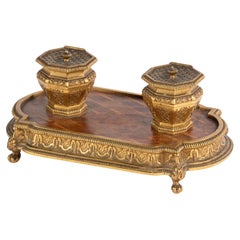
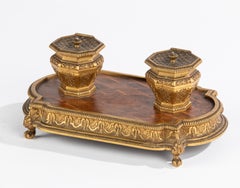
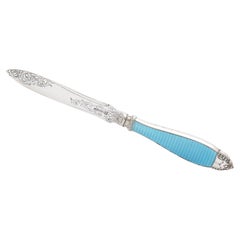
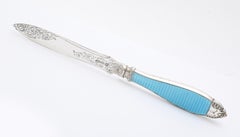
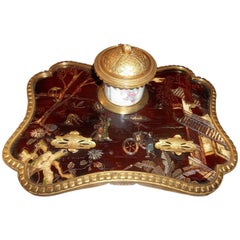
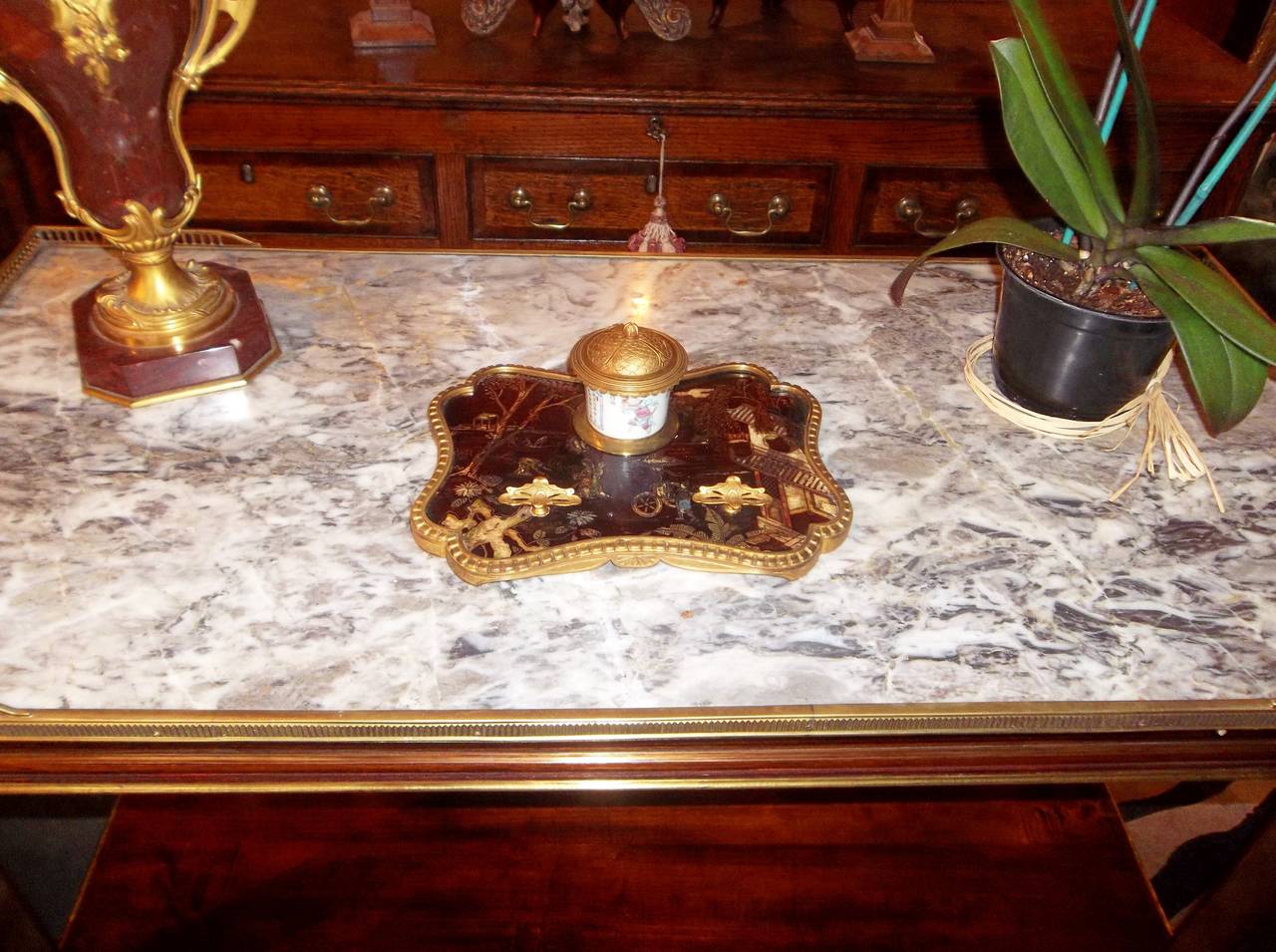
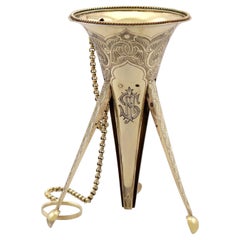
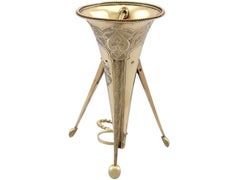
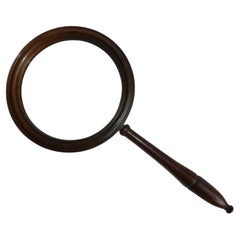
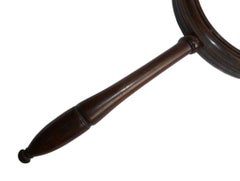
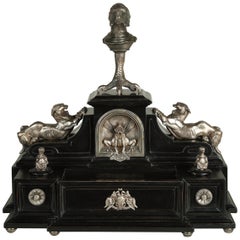
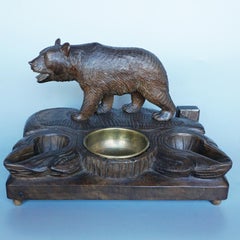
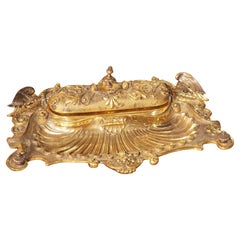
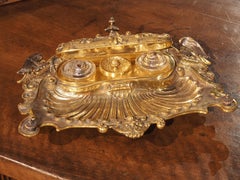
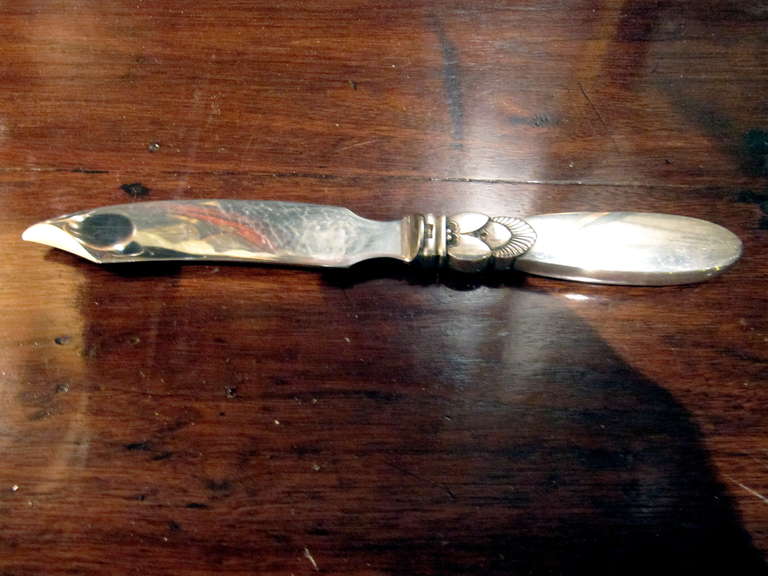
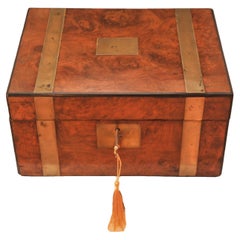
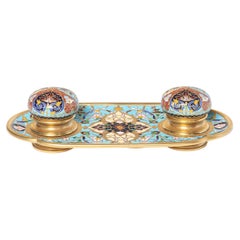
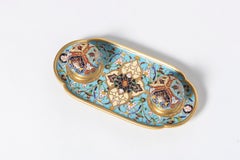
Neo-Greek Inkwell by C.G. Diehl, E. Frémiet and J. Brandely, France, Circa 1867
Signed Diehl à Paris.
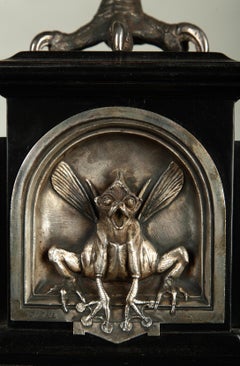
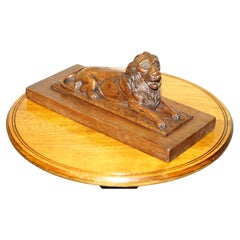
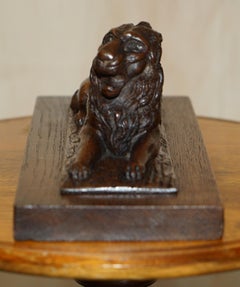
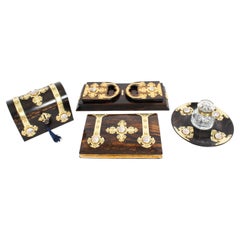
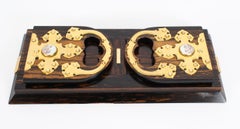
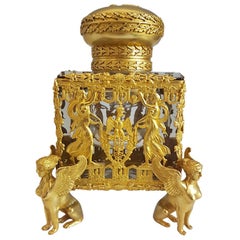
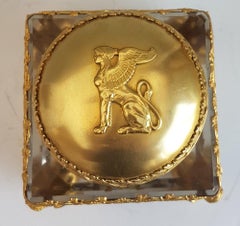
Wood and silvered copper inkwell. Central drawer ornamented with an escutcheon and flanked by two small lateral drawers forming two containers, surmounted by a lid representing a nestling. Central niche ornamented with a winged creature. Inkwell flanked by two felines. Toped by a penholder representing a Moorish head resting on an eagle claw.
This exceptional piece was realized thanks to the collaboration of ornemanist J. Brandely, sculptor E. Frémiet and cabinet-maker C.-G. Diehl. The motif of the fantasy creature dear to Diehl, is to be seen on the famous cabinet made by him in 1867 and now exhibited at the Metropolitan Museum of Art in New York (Inv. 1989.197).
Arriving in Paris in about 1840 Charles-Guillaume Diehl (1811-1885) founded his cabinet making and decoration firm at 19 rue Michel-le-Comte in 1885. His workshops produced elegant little pieces of furniture in rosewood and thuja and novelties with bronze and porcelain embellishments (see “Les ébénistes du XIXème siècle”, D. Ledoux-Lebard, Ed. de l’amateur, 1982, p.164). It was his luxury boxes, however (liqueur cellarettes, cigar cabinets, games boxes, cashmere cases, jewelry cases) which assured Diehl’s renown (see “l’Art en France sous le Second Empire”, Exposition Grand-Palais, Paris, 1979, p.133). Already rewarded with a bronze medal at the Universal Exhibition of 1855 in Paris, he exhibited a jardinière with china columns and a liqueur cabinet at the Industrial Arts Exhibition in 1861.
In collaboration with the designer Jean Brandely (active from 1867 until 1873), Diehl renovated his decorative repertory and created astonishing pieces of furniture in the Grecian style which had a dazzling success at the Universal Exhibition in Paris in 1867, where his cabinets also won a silver medal. Certain motifs were so typical of Diehl’s work that they received extensive commentary by the art critic J. Mesnard in his book “Les Merveilles de l’Exposition Universal de 1867” (vol. II, pp. 133 & 149). He writes of a table of which “the pendant bearing hooks and the fan shaped radiating motif which ornaments the entablature are engraved with love” (p. 133) and a jewelry case where “The head in fine Grecian style makes up the essential part of the fine gilt bronze ornamentation” (p. 149).
For this Universal Exhibition Diehl also formed a partnership with two famous sculptors: Emile Guillemin (1841-1907) who carved the relief for a mahogany sideboard with galvanic gilt bronzes (Orsay Museum, Paris, Inv. O.A.O. 992) and Emmanuel Frémiet (1824-1910) who executed the low relief for a cedar medal cabinet...
Category
French Greek Revival Antique 1860s Desk Accessories