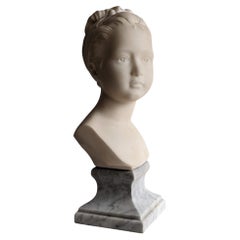
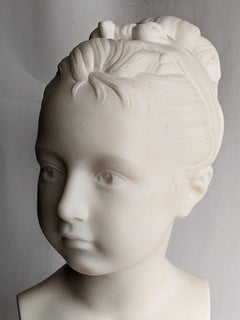
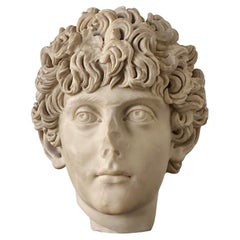
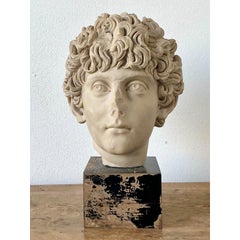
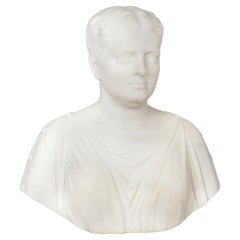
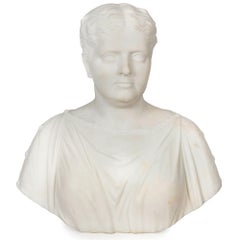
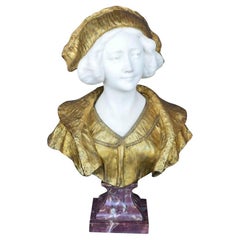
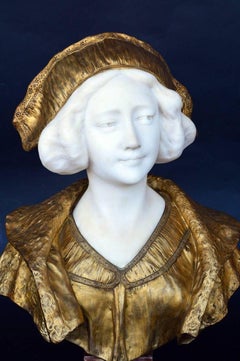
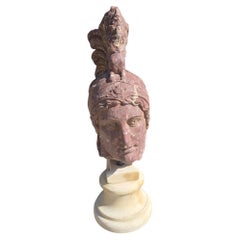
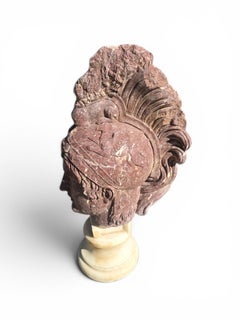
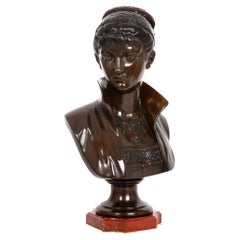
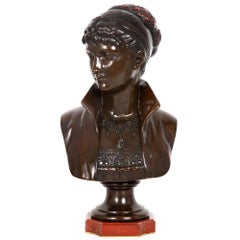
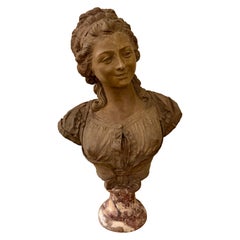
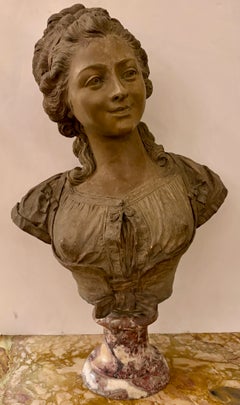
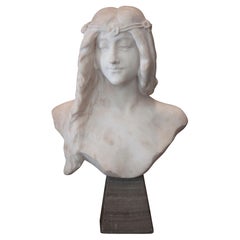
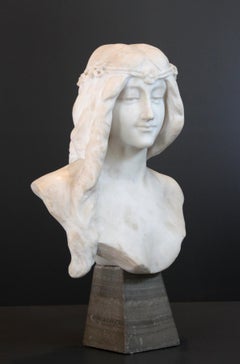
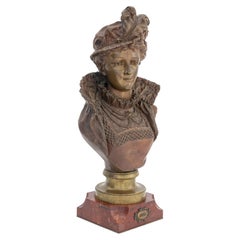
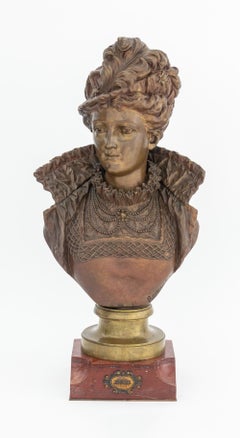
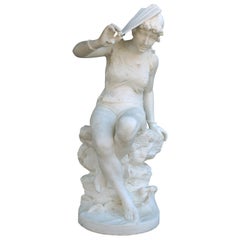
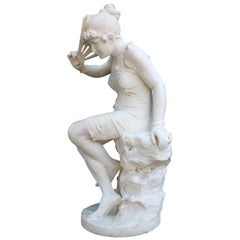
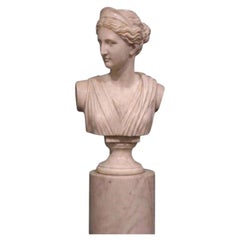
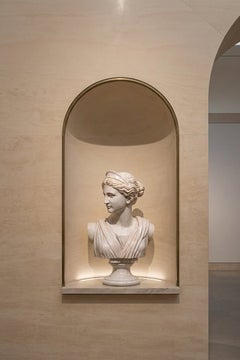
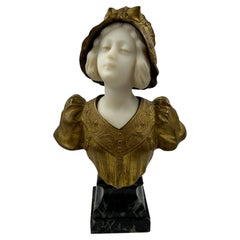
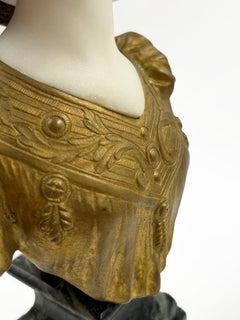
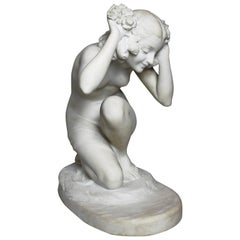
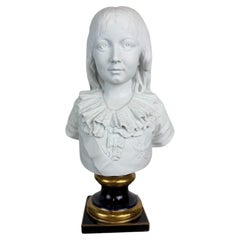
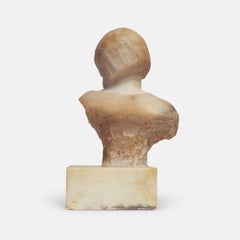
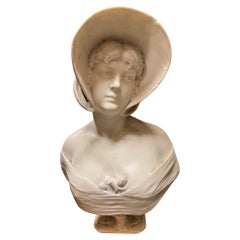
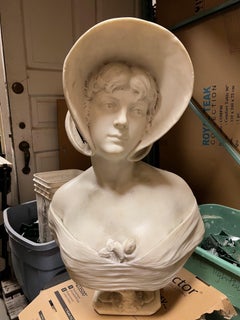
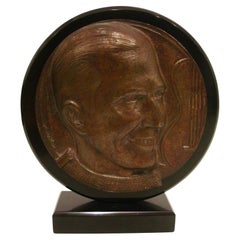
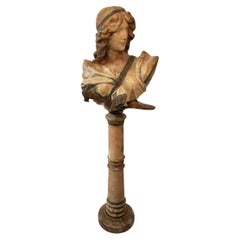
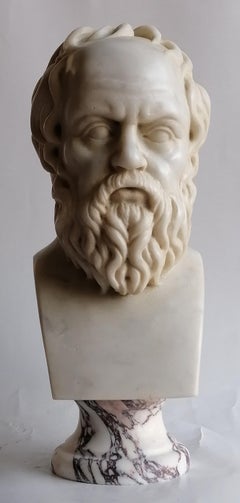
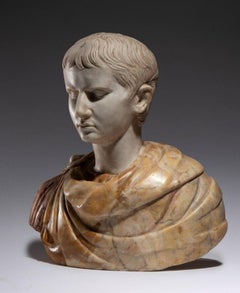
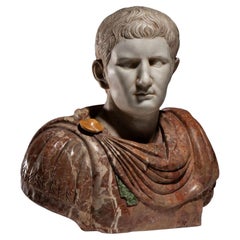
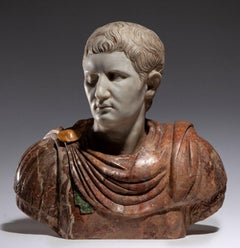
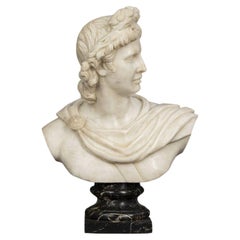
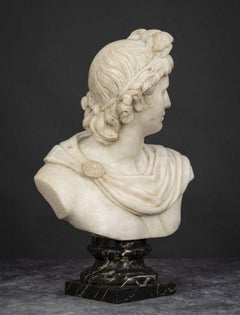
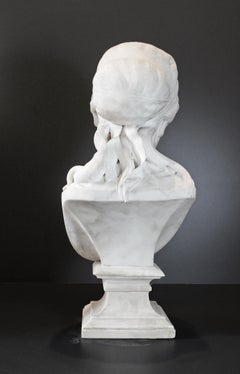
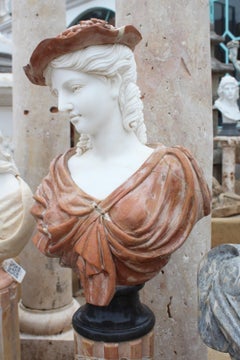
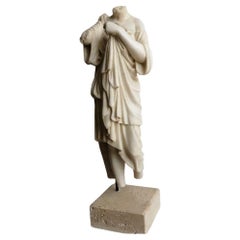
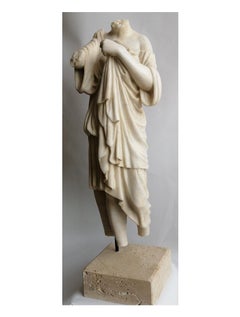
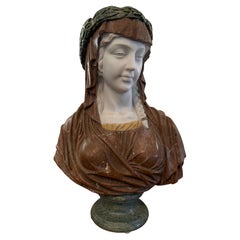
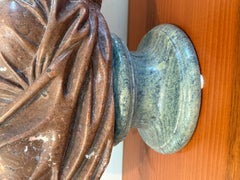
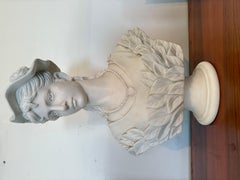
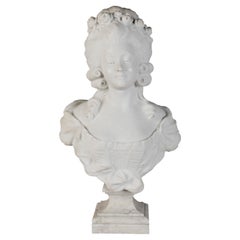
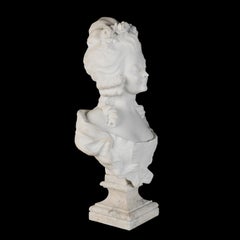
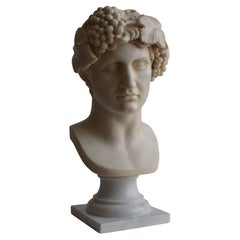
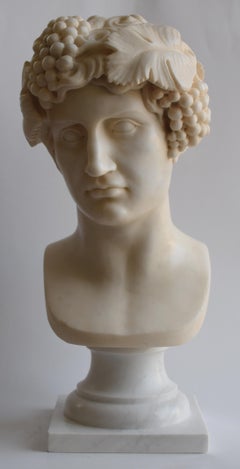
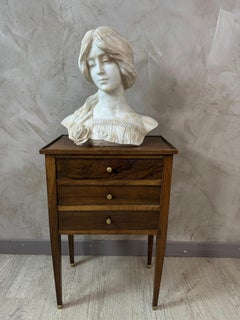
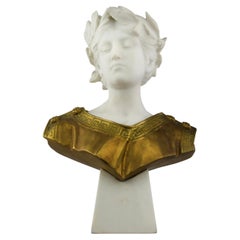
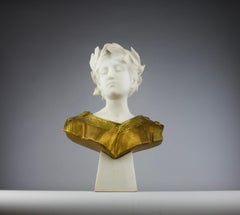
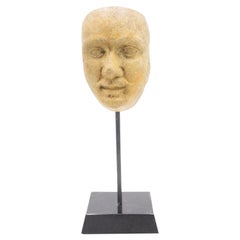
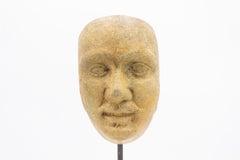
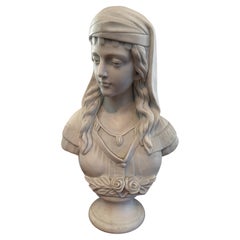
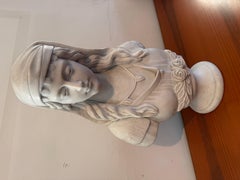
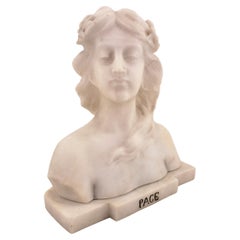
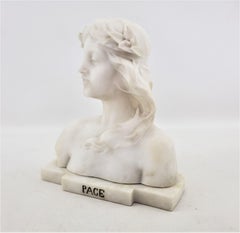
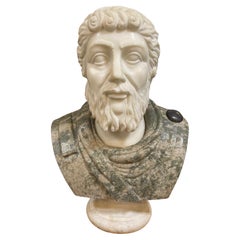
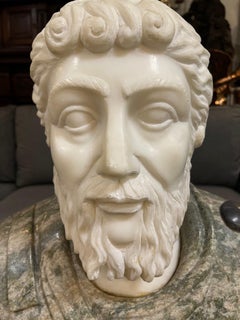
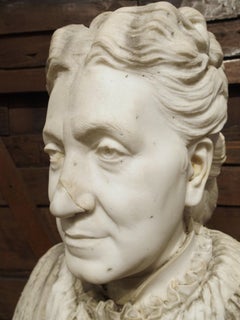
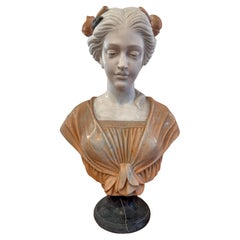
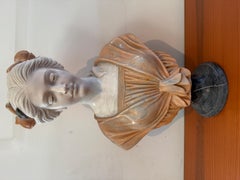
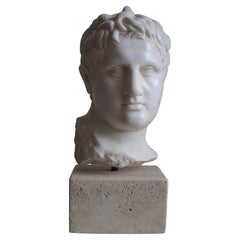
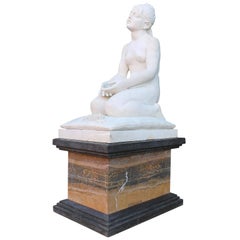
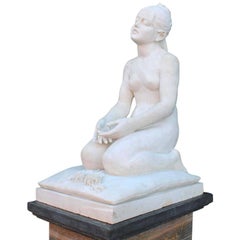
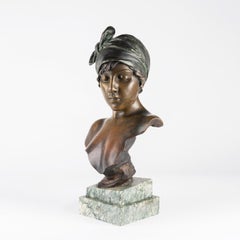
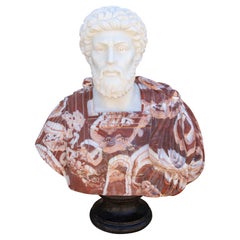
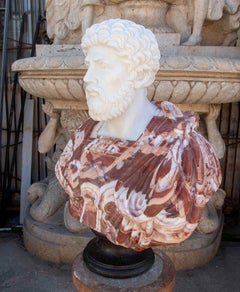
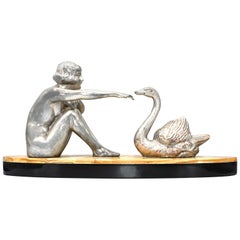
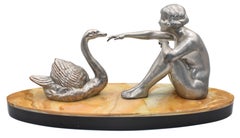
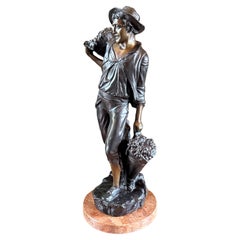
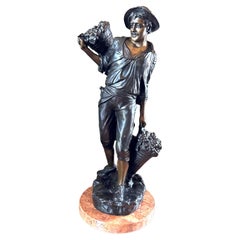
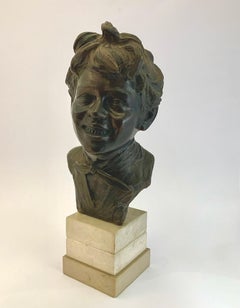
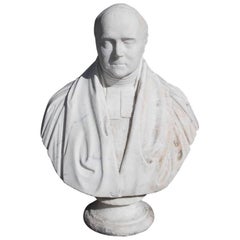
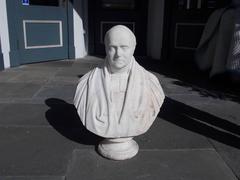
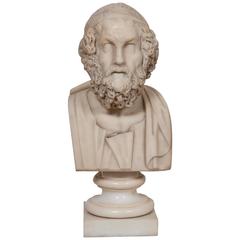
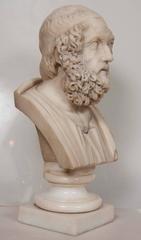
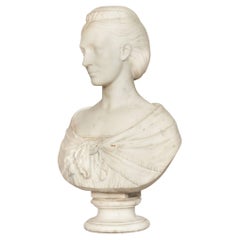
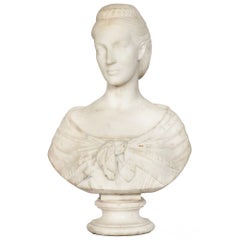
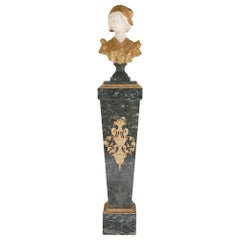
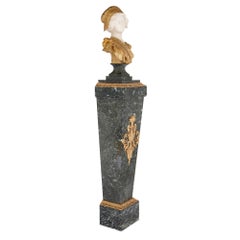
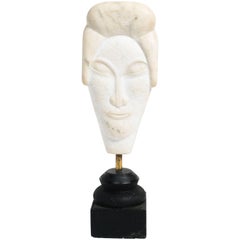
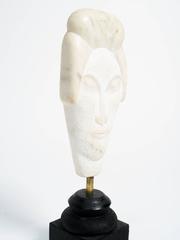
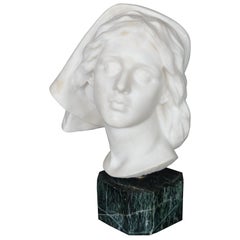
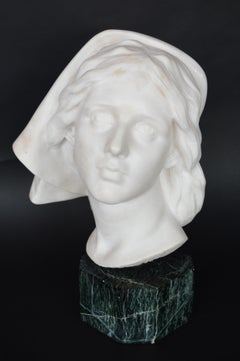
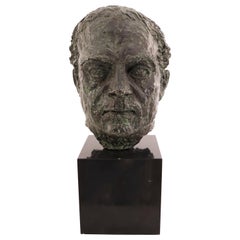
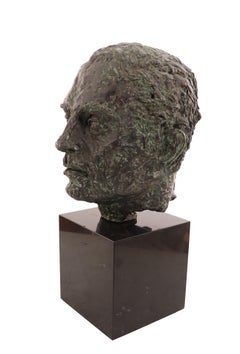
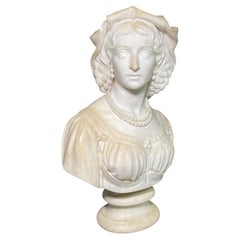
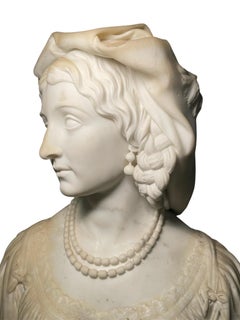
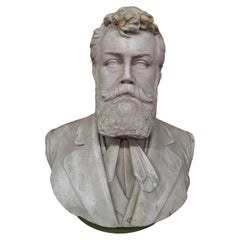
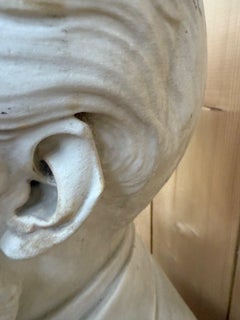
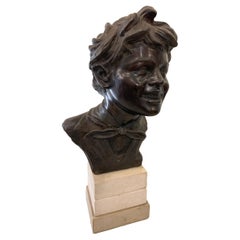
Green serpentine marble sculpture
Late 19th century
Height approx. 88 cm.
The flying mercury and the bronzes
While he was still busy working on the fountain in piazza Maggiore, the papal delegate Cesi asked Giambologna for a statue to be placed in the courtyard of the Archiginnasio, seat of the ancient and prestigious Bolognese university; he should have painted a bronze depicting the god Mercury with his index finger stretched towards the sky, a symbol of the divine origin of knowledge, which would have served as a warning to all students.
The project was never completed, but Giambologna elaborated a model preserved at the Civic Museum of Bologna, which is only the first of the numerous bronzes with the same subject made by the artist, defined precisely as flying Mercury. In later versions, the sculptor transformed Mercury into a much more dynamic figure reaching upwards, as if ready to take flight, giving it an unprecedented freedom of movement and lightness. When he returned to Florence, the sculptor certainly proposed it to the Medici, who enthusiastically immediately ordered one to be sent to Emperor Maximilian II of Habsburg, as a diplomatic gift for the ongoing negotiations of the wedding between Francesco and Giovanna, sister of the sovereign.
Giambologna replied with the two bronzes preserved in Vienna and Dresden and in 1580 cast the large Mercury now exhibited in the Bargello, originally intended for the loggia of the villa of Cardinal Ferdinando dei Medici to crown a fountain placed in the center of a magnificent decorative complex; the only variant with respect to the previous examples is constituted by the head of Zephyr placed under the foot of the god and from which a breath of wind blows it upwards, accentuating the sense of immateriality. In addition to the successful invention of the flying Mercury, Giambologna acquired immense fame by making numerous other bronzes for the Florentine collectors of the time; his first patron, Bernardo Vecchietti must certainly have owned many, given to him in part by the sculptor in exchange for his protection, but around the 1880s it can be said that there was no collector who did not aspire to own a work by Giambologna, especially those of small format.
The development of this trend in Florence is largely due to the artistic passions of the Grand Duke Francesco I, who with the creation of environments such as the Studiolo in Palazzo Vecchio and the Tribuna degli Uffizi, provided new criteria for the exhibition of the works, pushing all collectors to imitate his extraordinary collection. In the Studiolo, in addition to the painted tables that decorated the doors of the cupboards filled with all kinds of things, there were 8 niches containing bronze figures of divinities; Giambologna painted the one depicting Apollo (1573-75), with the characteristic serpentine pose and beautifully finished.
The placement of the statuette in the niche was no longer an impediment to the plurality of views as Giambologna endowed it with a sort of mechanism that allowed it to rotate. For the Tribune he instead created the six Labors of Hercules (1576-1589), small silver sculptures...
Category
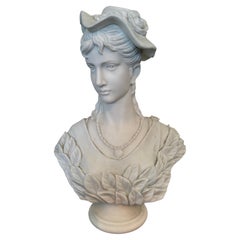
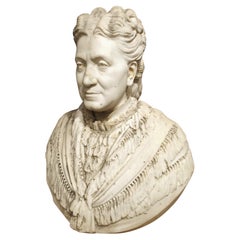
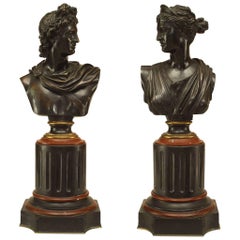
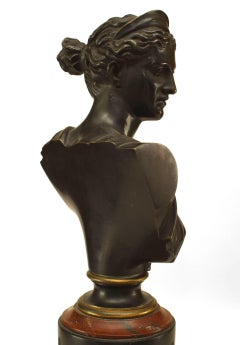
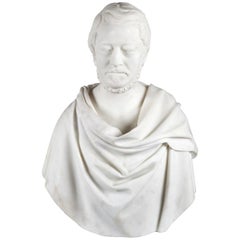
Late 19th Century Italian Antique Marble Busts