By English School
Located in Valladolid, ES
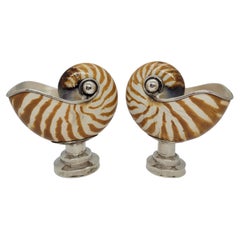
On of a kind pair of nautilus set in 925 sterling silver, with a highly refined garnish. They come from England, from the beginning of the 20th century. Beginning in the 16th century, nautilus shells from the Pacific Ocean became highly valued by collectors. In addition, with this valuable piece already in itself, the best craftsmen began to create true works of art, removing the outer layer of the shell to reveal the pearly interior surface.
Either way, both in their natural state and worked by skilled goldsmiths, these shells began to conquer the Wunderkammer, also known as a cabinet of curiosities or a room of wonders. Very popular among the European bourgeois of the 16th, 17th and 18th centuries were rooms or simply furniture in which they collected and exhibited exotic objects from all corners of the world. They became the direct ancestors of modern museums, especially those of natural history.
They arose during the Renaissance and their collections were enriched thanks to the great geographical discoveries; They were further divided into four sets: naturalia, artificialia, sciencia and exotica. Naturalia refers to objects of mineral, animal and plant natural history; while artificialia are the objects created or modified by man. Some of the most impressive collections were managed to treasure, for example, Emperor Rudolf II of Habsburg, Ferdinand II of Austria or Tsar Peter the Great. Nautilus glasses...
Category
English Baroque Vintage 1920s Mounted Objects