Medieval Sculptures

MEDIEVAL STYLE

The Middle Ages in Europe followed the end of the Roman Empire, and in this time of change, which preceded the Renaissance, furniture was simple and utilitarian, with most homes having only the necessities like chests and benches. Much of medieval furniture, which was often made in oak or walnut, was built for the elite, particularly the emerging merchant class who owned multiple homes.

Life for many in the medieval era was unstable, and furniture was designed to be functional and portable. Peasants worked the fields for affluent landowners and didn’t have access to literature in the way that nobles and people of the church did (women less so than men). The furniture in their modest dwellings was typically limited to cookware and a handful of stools. Foldable chairs, while uncommon in homes of the early Middle Ages and emblematic of wealth, like all other furnishings of the time, allowed for easy transportation of a household. Trestle tables with detachable legs and collapsible beds were designed to be simply moved from place to place.

Medieval blanket chests were among the most important furniture objects and could further serve as tables or even beds. Some ancient traditions were carried forward to build this sturdy furniture, such as turnery. Although the furniture was minimally designed, embellishments like carvings added elegance to the heavy wood pieces. These details sometimes reflected trends in religious art like rose windows.

By the later Middle Ages, storage pieces like chests of drawers were often adorned with high relief carvings, such as geometric and floral motifs. By the 14th and 15th centuries, design had developed to include more involved pieces like cupboards and desks, while benches frequently doubled as chests with hinged seats. Beds also changed in this era from basic boards to four-post designs with large drapes to keep the sleeper warm. These beds and other medieval bedroom furniture were significant status symbols, passed down through families and used as places to conduct business and receive visitors.

Surviving examples of medieval furniture are very rare, yet its distinctive aesthetics influenced later styles like William and Mary and Arts and Crafts.

Find a collection of medieval seating, garden elements, decorative objects and other furniture on 1stDibs.

to
18
121
1
1
66
33
22
2
10
4
7
1
1
1
1
1
5
6,981
4,750
2,969
890
878
711
647
538
467
461
374
246
215
204
93
87
83
78
47
30
29
25
19
100
22
111
27
26
25
16
Height
to
Width
to
123
123
123
5
4
2
2
1
Style: Medieval
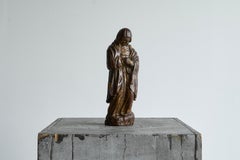
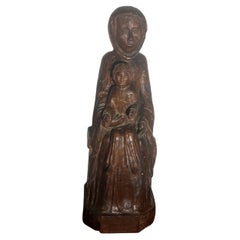
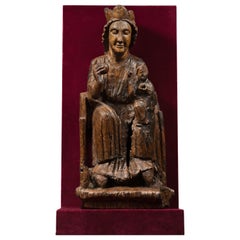
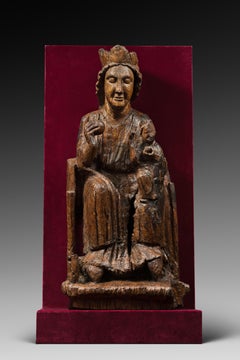
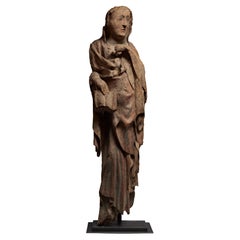
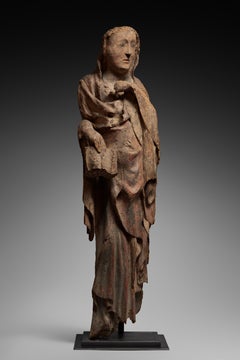
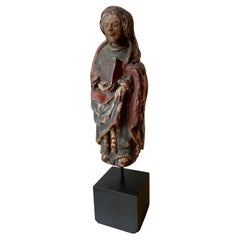
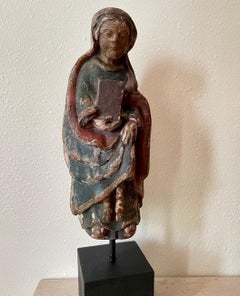
12th Century Rare Romanesque Wood Sculpture of the Virgin Mary

12th Century Rare Romanesque Wood Sculpture of the Virgin Mary

Located in Vero Beach, FL

12th century extremely rare romanesque wood sculpture of the Virgin Mary. Magnificent wood hand carved sculpture of the Virgin Mary holding a book to her chest. It is an extremely rare survivor of the 12th century. The style is European, possibly French or English. This statue is a testimony to beautiful religious art from about 1150. A truly rare Romanesque sculpture...

Category

15th Century and Earlier English Antique Medieval Sculptures

Materials

Stone

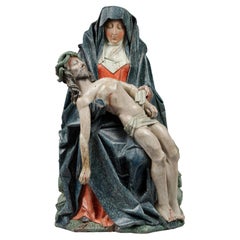
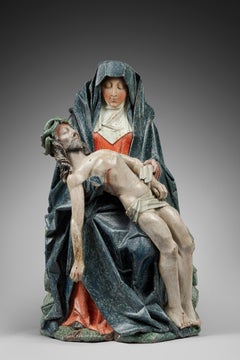
Beautiful German Pieta known as "Vesperbild"

Beautiful German Pieta known as "Vesperbild"

Located in Saint-Ouen, FR

BEAUTIFUL GERMAN PIETA KNOWN AS “VESPERBILD” ORIGIN : GERMANY PERIOD : 15th CENTURUY Height : 74 cm Width : 43 cm Depth : 22,5 cm Good condition Oak wood This beautiful 15th-c...

Category

15th Century and Earlier German Antique Medieval Sculptures

Materials

Oak

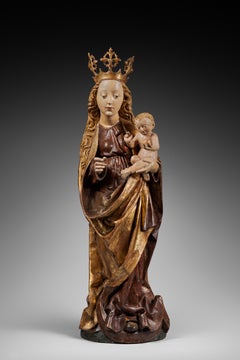
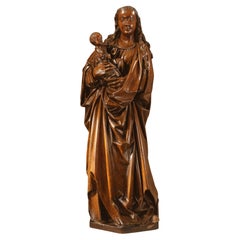
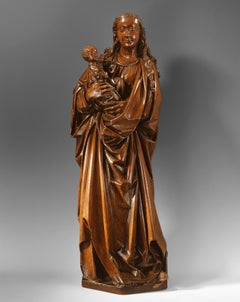
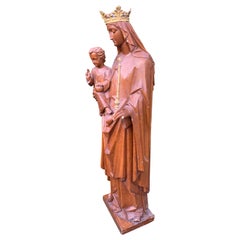
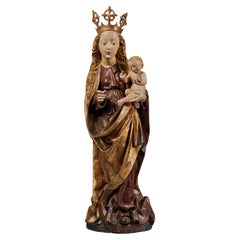
Polychrome carved wood Virgin and Child from the 15th Century

Polychrome carved wood Virgin and Child from the 15th Century

Located in Saint-Ouen, FR

POLYCHROME CARVED WOOD VIRGIN AND CHILD FROM THE 15TH CENTURY   ORIGIN: SOUTH GERMANY, SWABIA, NUREMBERG REGION PERIOD: 15th CENTURY   Height: 94,6cm Width : 28 cm Depth : 18 cm   Lime wood Original Polychromy Good state of conservation     From 1430 onwards, sculpture underwent a profound stylistic renewal which continued until 1530, the so-called late Gothic period. In the Germanic countries, original sculptures flourished in an expressive and sensitive vein.
This renewal was inspired by the art of Nicholas of Leiden, who was active in Strasbourg in the 1460's. His style broke with the refined and delicate art of the international Gothic style in force throughout Europe around 1400. The figures became more authentic and realistic. The bodies became denser. Clothes are animated by deep, broken folds, the fabrics are heavy and have a great decorative value. In addition, the polychromy is intended to be illusionistic. The painting makes it possible to restore the texture of the materials, the richness of the textiles and the natural skin tone of the characters.   The dissemination of images through engraving and the great mobility of the artists led to the success of this style, which conquered the Upper Rhine, Swabian, Tyrolean and Franconian regions, contributing to the formation of a common stylistic identity in these regions. The economic boom in the flourishing German cities was conducive to the development of original production. Attracted by this prosperity, numerous workshops were set up in order to meet the orders of religious communities, the Church and the laity, including a clientele of middle-class rockers.      This precious Virgin and Child is depicted standing on a crescent moon, her head encircled by a crown of tall flowers. Her long wavy hair spreads over her shoulders, framing her beautiful oval face. Under fine eyebrows drawn with a brushstroke, her almond-shaped, slightly drooping eyes look at the Child with infinite softness. She is dressed in a long red dress with a rounded neckline, belted under the chest. The heavy fabric of her dress spreads out in broken folds at her feet. On her shoulders she wears a golden cloak. The drapery has deep folds. She holds out her right hand while she holds the Christ Child with her left.   Christ, with his well-defined hair, is naked. His cheeks are highlighted with red, he holds an apple in his left hand and with the other hand makes a sign of blessing towards the faithful.   Virgins with Child on a crescent moon were very popular in the second half of the 15th century, especially as the central subject of altarpieces in southern Germany and Austria. The crescent moon on which Mary is standing is reminiscent of the Woman of the Apocalypse. Often equated with the Virgin Mary.    This episode is taken from the Book of Revelation (12:1-6)   1 Then a great sign appeared in heaven: a woman clothed with the sun, with the moon under her feet and a crown of twelve stars on her head. ; 2 She was pregnant, and she cried out because she was in labor, in pain from giving birth. ; 3 Then another sign appeared in heaven: it was a great fiery red dragon, with seven heads and ten horns, and seven royal crowns on his heads. ; 4 His tail swept down a third of heaven's stars and threw them to the earth. The dragon stood in front of the woman who was about to give birth so that when she gave birth, he might devour her child. ; 5 She gave birth to a son, a male child who is to rule all the nations with an iron rod. Her child was snatched up to God and his throne. ; 6 Then the woman fled into the desert, where God has prepared a place for her. There she will be taken care of for one thousand two hundred sixty days.   Some theologians see in this woman a reference to the Virgin Mary and in the child, Jesus.    
This remarkable work is a very fine example of sculpture from Swabian workshops in the last decades of the 15th century. It presents all the characteristic stylistic elements: a highly girdled silhouette, an abundant drapery with angular folds, but also a great physical presence accentuated by the polychromy that restores the anatomical details. This group is made of a wooden log. The deep folds of the drapery highlight the movement of the Virgin holding the child.       Bibliography :   Sophie Guillot de Suduiraut, Dévotion et Séduction, Sculptures souabes des musées de France, vers 1460-1530, Paris musée du Louvre-Éditions somogy, 2015   “Revelation 12 -   Common English Bible...

Category

15th Century and Earlier German Antique Medieval Sculptures
Materials

Wood

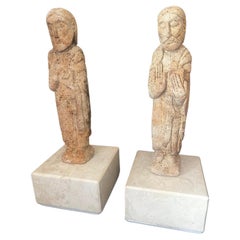
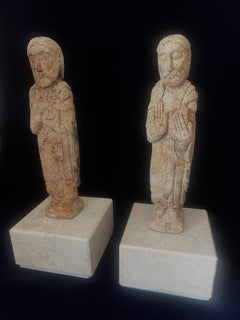
Antique French Romanesque 11th Century Pair of St.Peter and St.Paul Limestone

Antique French Romanesque 11th Century Pair of St.Peter and St.Paul Limestone

Located in Doha, QA

An extremely rare pair of original 11th century French Romanesque limestone hand carved sculptures of Saint Peter and Saint Paul. Each figure is represented on a marble block, withou...

Category

15th Century and Earlier French Antique Medieval Sculptures

Materials

Limestone

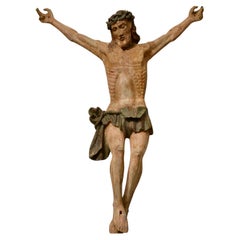
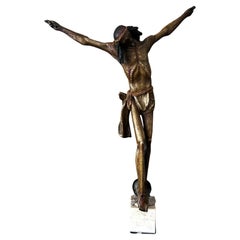
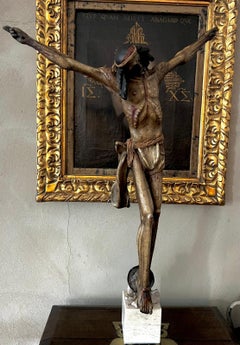
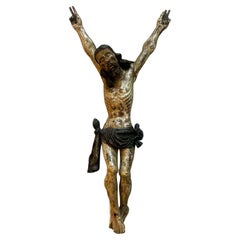
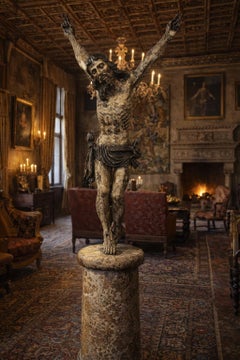
Rare Antique Gothic Corpus Christi 1480 -1530

Rare Antique Gothic Corpus Christi 1480 -1530

Located in Doha, QA

An extraordinary and museum-worthy 15th century Gothic Corpus Christi, masterfully hand-carved in wood with exceptional anatomical detail and partially polychromed in white and royal...

Category

15th Century and Earlier German Antique Medieval Sculptures
Materials

Wood

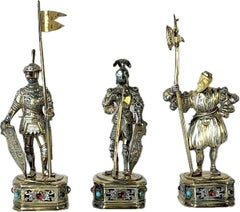
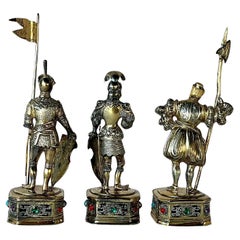
Sterling Silver with Parcel Gilt Medieval Knights, Set of Three

Sterling Silver with Parcel Gilt Medieval Knights, Set of Three

Located in Bradenton, FL

Early 20th Century Sterling Silver with Gold Wash Historical Knight Figurines, likely German ,Set of Three. Each depicts an iconic medieval warrior . Modeled in full armor with parce...

Category

Early 20th Century German Medieval Sculptures

Materials

Sterling Silver

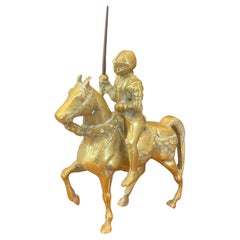
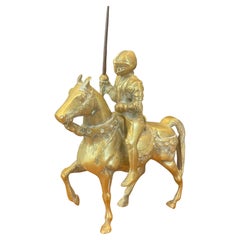
Solid Cast Brass Medieval Armored Knight on Horse Sculpture

Solid Cast Brass Medieval Armored Knight on Horse Sculpture

Located in San Diego, CA

A very cool and well detailed solid cast brass medieval armored knight on horse sculpture, circa 1970s. The piece is in very good vintage condition and...

Category

20th Century American Medieval Sculptures

Materials

Brass

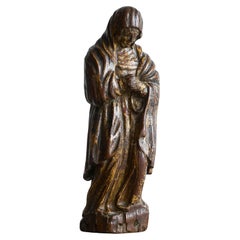
16th Century Mary Magdalene in Polychromed Carved Walnut

16th Century Mary Magdalene in Polychromed Carved Walnut

Located in Meer, VAN

Mary Magdalene in Polychromed Carved Walnut 16th Century Devotional figure in carved wood, depicting Mary Magdalene. Walnut, most probably Flemish and from the 16th century. It de...

Category

16th Century European Antique Medieval Sculptures

Materials

Walnut

Wood Sculpture Depicting John the Baptist

Wood Sculpture Depicting John the Baptist

Located in Saint-Ouen, FR

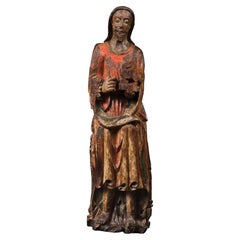
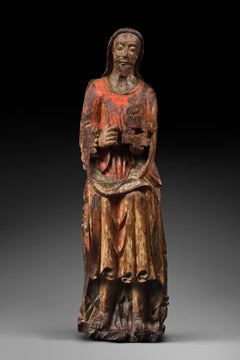
This wood scultpure showing fine traces of polychromy depicts John the Baptist, one the Old Testament’s last prophets and the first martyr of the New Testament. He is easily recognizable with the lamb he is carrying in his left hand. The way the artist has carved the face exudes a spiritual strenght inherited from previous centuries. Description Saint John the Baptist is depicted bare feet, seated in a hieratic manner. His elongated face is marked by a beard and a moustache. The straight nose and wide eyes indicate a Spanish origin. This asumption is reaffirmed by the Saint’s resigned expression. His parted hair frames his face while uncovering his ears. He wears a round collar red-orange tunic, draped onto the body and belted at the waist. A flap of his green coat covers his knees and falls down in stylized pleats. Following iconographic rules Saint John the Baptist is pointing with his right hand the lamb seated...

Category

15th Century and Earlier Spanish Antique Medieval Sculptures

Materials

Wood

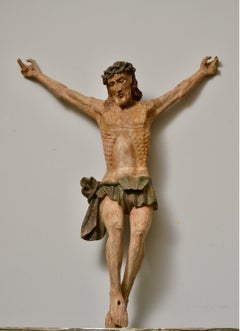
Very Large and Rare Christ on the Cross ( height 130. cms )  14th Century

Very Large and Rare Christ on the Cross ( height 130. cms ) 14th Century

Located in PARIS, FR

Very large Christ on the Cross ( height 1,30 m), Painted and carved in the round in poplar wood. Some old traces of polychromy. Restorations to the fingers. but not recently. South...

Category

15th Century and Earlier German Antique Medieval Sculptures
Materials

Poplar

Important 14th Century Polychrome Limestone Virgin from Lorraine

Important 14th Century Polychrome Limestone Virgin from Lorraine

Located in Saint-Ouen, FR

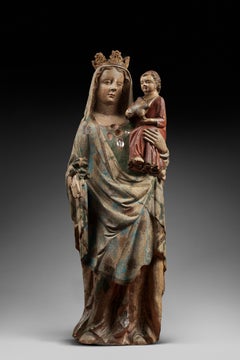
Provenance : - Kunsthaus Heinrich Hahn, Frankfurt am Main, sale 16, June 17, 1930, lot 16. - Sotheby's, Amsterdam, Feb. 26, 2006, lot 201. HISTORIC Located between Moselle valley and Meuse valley, framed by the Vosges Mountains on the south side and the duchy of Luxembourg on the north side, the duchy of Lorraine is the result of several partitions. It starts with the 9th century when the Carolingian empire is divided, with Lothar 1st inheriting Lotharingia. In 959 this territory was in turn divided in two; Lower and Upper Lotharingia, the latter being the forebear of the duchy of Lorraine. This duchy was under the rule of the Holy Roman Germanic Empire until 1736 when it was absorbed by the kingdom of France. All along its history the duchy of Lorraine has found itself in the midst of many conflicts. Alliances and feuds marking European history were always particularly sensible in Lorraine where instability was frequent. Because of its geographic position the duchy of Lorraine was also an artistic crossroad. Hence the duchy of Lorraine becomes from the 13th century onwards an important artistic centre where a particular type of Virgin and Child appears. According to professor J. A. Schmoll the characteristics of Lorraine sculpture burgeon around 1280-1300 in the Aube region. It presents “vigorous volumes, restrained movements, rare but solemn gestures and a strong interiorised and stern expression”. Those Virgins look similar with a wide forehead, a shield- or oval-shaped face, large neck, small lips and a cleft chin. This model is particularly in favour during the 13th century because of the revival for Marial worship and for the theme of the Virgin and Child. It bears witness to a new religious sensibility with a more intimate vision of religious practice. DESCRIPTION The important 14th century Virgin we present to you is one of the most beautiful examples of sculptural art from Eastern France, with her fascinating distant gaze. Her contrapposto posture is induced by the weight of the child she carries high on her left side. The child has a chubby face framed by blond hair with well defined curls and he wears a long red V-collared tunic from which emerge his feet. The fabric is animated by long folds. The position of the right foot turned to the back is a detail we can notice on several Virgins from Lorraine. He holds a bird that seems to be pecking his thumb. “The bird /held by the child in his hands/ has been read as a reference to an episode from Christ’s childhood when he has moulded sparrows with clay before giving them life. It appears in the apocryphal gospel of Pseudo-Matthew (ch. 27) and later in the Quran (III, 43, v. 110). However the iconography seems to be more influenced by the concept of Redemption or of Eucharist, the bird symbolising the soul of the Christian about to be redeemed or revitalised.” Mary wears a long dress with two rock crystal cabochons remaining from the original five. She is covered by a red cloak enriched with old-gold motifs draped as an apron falling in long pleats along her left hip. The relief treatment and the volume of the cloak developing a network of concentric pleats contrast with the the flat pleating of her dress. They nevertheless suggest the curve of her bent right leg. She wears a floret crown securing a short thin veil carved in very low relief. From it emerges her blond curled hair characteristic of the 13th century. The large face with almond-shaped eyes, straight nose, small lips and cleft chin casts its gaze afar in a fashion typical of 13th century Virgins. In her right hand she holds a lily flower. In a very refined manner the artist has carved a band on her right ring-finger. In the back, carefully sculpted, spreads the minutely detailed short veil. COMPARATIVE STUDIES This sculpture of great quality presents obvious similarities with Virgins from Lorraine, designated by William Forsythe...

Category

15th Century and Earlier French Antique Medieval Sculptures

Materials

Limestone

Early 20th Century Gilt Spelter Small Bust Jesus Christ

Early 20th Century Gilt Spelter Small Bust Jesus Christ

Located in Casteren, Noord-Brabant

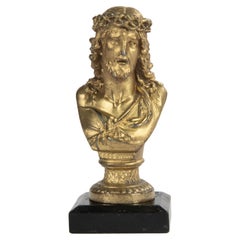
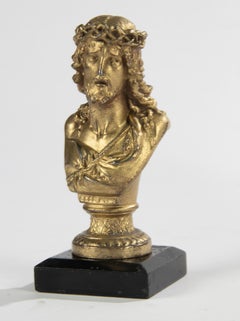
A small antique bust of Jesus Christ. Made of gilded spelter (zinc alloy). On a black marble plinth. No signature. Minor wear to the gilt patina. Dimensions: 14 (h) x 6 x 6 cm Free...

Category

1920s French Vintage Medieval Sculptures

Materials

Marble, Spelter

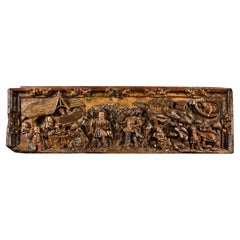
15th Century Burgundian Low-Relief Depicting Scenes of the Nativity

15th Century Burgundian Low-Relief Depicting Scenes of the Nativity

Located in Saint-Ouen, FR

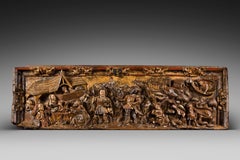
Provenance : In the same private collection for several generations, Burgundy. The canonical Gospels describe briefly the episode of the Nativity. It comprises three parts : • The Preludes : the Journey to Bethlehem, the Census • The Nativity • The Announce to the Shepherds and the Adoration of the Magi Only the Gospel according to Matthew (2, 1-12) speaks about the Adoration of the Magi. Staying vague about their number it does say they brought the newborn gold, incense and myrrh. The apocryphals, the fathers of the Church and many other authors have filled in the gaps of the evangelic tale. The sobriety and symbolic of the story have been a huge inspiration to artists. Although one of the oldest depictions of the Adoration of the Magi dates from the 2nd century the theme became very popular in Christian art during the late 14th century. One of the reasons explaining this success is that it celebrates both the Virgin and Christ at the same time. This important walnut panel is carved in a strong relief and depicts the different steps of the story of Jesus’ birth. On the left, the donkey and ox that have accompanied Mary and Joseph from Bethlehem are depicted behind a trough. On the thatch roof appears the star that would guide the magi to the place of birth of Jesus. Mary is wearing a veil and is seating on a bed. She holds her baby at arm’s length to present him to the magi. Saint Joseph is by her side. The old man is holding a cane in his left hand while from the right hand he seems to uncover himself to greet the visitors. A woman assists to the scene. In front of the holy family the three magi stand behind one another to pay their homage to the newborn. The first magi has a pointed beard. He is already kneeling out of deference and has placed his crown to his feet. He gives the baby a hanap filled with gold coins. This is Melchior as the legend describes him with white hair and a long beard. Caspar, the second magi bears a cup of incense. He is looking at the third magi and with his right hand he points to the star that has guided them there. He has a short beard and wears crakow shoes, breeches and a wide sleeved doublet. Finally Balthazar, the elegant last magi proceeds proudly towards the holy family with his one hand on the saber’s hilt and the other holding a cup. He brings the divine child the myrrh. He probably just dismounted as the horse can be seen behind him. The scene is set in a very detailed and narrative decor. In the right part of the panel the shepherd receive the announce of Jesus’ birth. An angel comes down from heaven with a scroll bearing the good news in his hands. The herding dog sleeps peacefully while sheeps graze. At the top of the cliff we notice the gilded sheeps enclosure. The panel’s moulded frame is carved with a foliated decor. In it’s centre appears a coat-of-arms. It is the alliance of the three magi’s arms. Indeed as it was common for legendary figures the three of them received imaginaries coat-of-arms. Thus, on a field of azure stands a star for Melchior, a crescent for Caspar and a pennon for Balthazar. This high-relief panel is undeniably the work of a very skilled and imaginative artist. This key moment in the New Testament is transposed to a contemporary environment thanks to the figures’ clothing and the rural daily life scene. This way the universal dimension of the episode is highlighted allowing a better understanding for the contemporaries. The sculptor has represented the episodes of the Adoration of the Magi and the Announce to the Shepherd with great talent and numerous details giving life to a picturesque and narrative scene. The important traces of polychromy give those already very animated scenes a stronger pictorial power and a rich dynamism. Because of the picturesque and familiar realism so dear to the artists of the late Medieval era, of the didactic function of this type of panel as well as the quality of the sculpture this piece is an astounding example of Burgundian art of the 15th century. Literature Louis Réau, Iconographie de l’Art chrétien...

Category

15th Century and Earlier French Antique Medieval Sculptures

Materials

Walnut

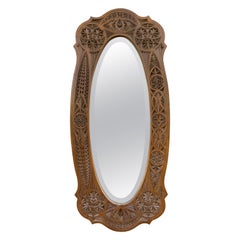
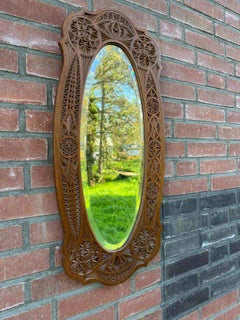
Rare & Beautifully Hand-Carved Antique Dutch Arts & Crafts Beveled Wall Mirror

Rare & Beautifully Hand-Carved Antique Dutch Arts & Crafts Beveled Wall Mirror

Located in Lisse, NL

Striking wall mirror with handcarved geometrical 'flowers' and trefoil symbols. Via one of our foreign contacts we recently purchased this perfectly fine and deeply handcarved, sc...

Category

Early 20th Century European Medieval Sculptures

Materials

Mirror, Wood

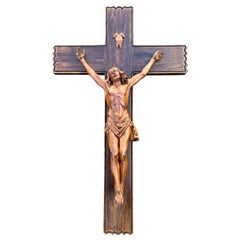
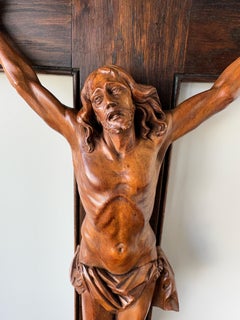
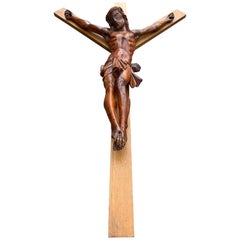
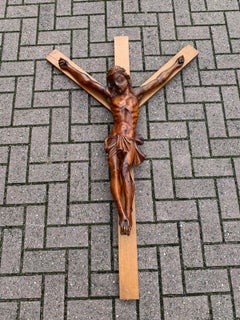
Great Quality Carved & Superb Condition Wooden Corpus Christi on Crucifix, 1800s

Great Quality Carved & Superb Condition Wooden Corpus Christi on Crucifix, 1800s

Located in Lisse, NL

Antique crucifix with stunning hand carved details and an amazing patina. This remarkable and good size crucifix with a sculpture of a suffering Christ on the cross is another one...

Category

Early 19th Century German Antique Medieval Sculptures

Materials

Fruitwood, Oak

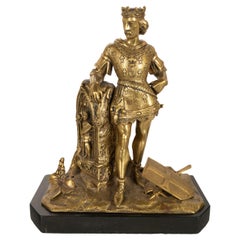
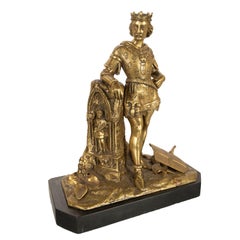
Antique French Gilt Bronze Statue Medieval King Louis VII Knight Templar 1880

Antique French Gilt Bronze Statue Medieval King Louis VII Knight Templar 1880

Located in Portland, OR

A fine Antique 19th century cast gilt bronze statue of the medieval French King Louis VII of France, circa 1880. King Louis VII (1120–1180) was the King of France from 1137 until his death and was famous for his role in the crusades. The statue is very finely cast and depicts Kind Louis VII wearing his crown and medieval armor decorated with Fleur de Lis and his coat of arms with a coronet, his swork hanging by his side. The figure is resting on a ruin of a gothic arch niche with a Knight templar standing with his sword, to the right on the ground is the kings shield featuring a cross and resting on his battleaxe. The statue is raised on a black marble plinth, condition is excellent, the quality of the casting & gilding is of the finest quality and done by the lost wax method (or Cire Perdue in French) This very fine antique gilt bronze is ready to grace your space. Louis VII is best known for his involvement in the Second Crusade (1147–1149), an ill-fated military campaign to the Holy Land aimed at recapturing territory from Muslim forces. Louis VII was also married to Eleanor of Aquitaine...

Category

1880s French Antique Medieval Sculptures

Materials

Marble, Bronze

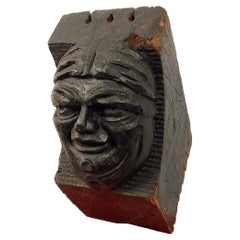
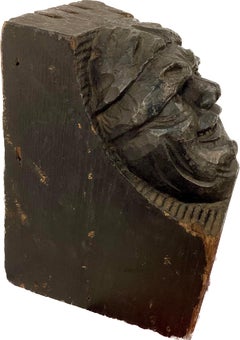
Large Carved Oak Grotesque Corbel

Large Carved Oak Grotesque Corbel

Located in Bradenton, FL

Large heavy 18th century or earlier carved oak corbel. The corbel depicts a large male open-eyed smiling face with broad features. Finly carved details with wonderful old patina.

Category

18th Century European Antique Medieval Sculptures

Materials

Oak

Gothic Virgin and Child from Flanders

Gothic Virgin and Child from Flanders

Located in Saint-Ouen, FR

Exhibition Museum Cantini, 1952, The art of the Middle Ages in the Marseille collections, n°101 Provenance Former collection Louis Bresset (before 1952) Former collection Profe...

Category

15th Century and Earlier Dutch Antique Medieval Sculptures

Materials

Oak

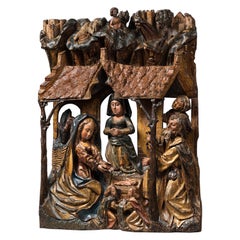
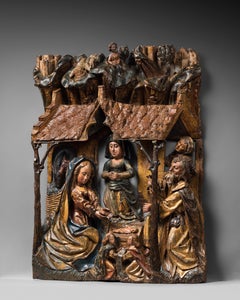
Late 15th Century Polychrome Wood Carving Depicting the Nativity

Late 15th Century Polychrome Wood Carving Depicting the Nativity

Located in Saint-Ouen, FR

While the birth of Christ is briefly told in the Gospel of Luke (2, 7) it is in the apocryphal texts that we find most of the elements and details that have then inspired artists. As of the 14th century and even more of the 15th century the subject of the Adoration of the Child replaces in Western art the scene of the Birth, much favoured in Byzantine art. Instead of being depicted lying with the new-born swathed in the manger, the Virgin is now kneeling, her hands joined in prayer in front of the naked child. This change was probably hastened by the popularity of the visions of Saint Bridget of Sweden to whom the Virgin allegedly appeared to show how she had given birth to Jesus (Visions, VII, chap. 21). Sheltered by a thatch-roofed structure the Virgin is kneeling in front of the Child Jesus. She wears a magnificent red dress under a large gold cloak. Her curled blond hair is partially veiled. The newborn is lying on a straw mat. Joseph is depicted with a parted beard and stands opposite from the Virgin. He wears a tunic and a coat with a purse hanging from the belt. His costume reminds us of the long journey him and Mary have accomplished to reach Bethlehem. Two other women are present. One is looking through the stable’s window to observe the Holy Family while another one kneels in prayer in front of the divine child. The rich costume of the lady might indicate she is a donator. However they could also both represent the women who took part in the birth of Christ, Zelemi and Salome. Salome, incredulous did not believe in the virginal conception of Mary and she is represented far from the scene. The artist has depicted her with an expression of doubt on her face. Zelemi, on the contrary, is a believer. She is rewarded by a place of honour at the heart of the scene, close to Mary. To the left the donkey and ox that have accompanied Mary and Joseph to Bethlehem observe quietly the scene. On the foreground two angels hold a scroll reading an excerpt from the Gloria : “/Gloria/ in excelsis /Deo/.” One of the angels wears a blue cape while the other’s is red Those two colours are very significant as during Middle-Ages blue symbolises hope and red charity. Together they express the hope in redemption thanks to the advent of Christ and his sacrifice to come. Above the main scene, up a cliff, a small shepherd lets his herd of sheep graze amidst the trees. He is framed by two walled cities. This wood carving is the work of a very skilled and inventive artist. The piece bears witness to his exceptional talent. The realism of the scene is emphasised by the amount of details depicted. The refinement of the carving itself is highlighted by the well preserved polychromy. This key moment of the New Testament is set in a contemporary context thanks to the clothes of the characters and the scenes of rural life. The universal dimension of the scene is intensified while allowing contemporary viewers to grasp its meaning more easily. This care for details, the picturesque realism as well as the extraordinary rendition of the cloths suggest it was made by a Flemish artist during the late 15th century. This relief can be compared with the panel of the Nativity from the Saint-Vaast altarpiece made by Jacques Daret between 1433 and 1435, today in Madrid’s Thyssen-Bronemisza Museum. Literature Louis Réau, Iconographie de l’Art chrétien...

Category

15th Century and Earlier Dutch Antique Medieval Sculptures

Materials

Wood

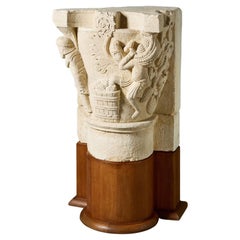
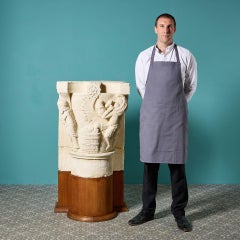
French Museum Plaster Romanesque Capital Model on Plinth

French Museum Plaster Romanesque Capital Model on Plinth

By Atelier de moulage du Louvre

Located in Wormelow, Herefordshire

An impressive plaster Romanesque capital model elevated by a later 20th century bespoke oak display plinth, made by the French Louvre Museum workshops in the late 19th/early 20th century (stamped). The cast is a museum reproduction taken from the original medieval limestone capital dating back to the 12th century, circa 1125-1130. It is just one of various carved capitals in the Louvre’s diverse artistic collection that was sourced from the Moutiers-St-Jean, a Benedictine Church in Burgundy, France. This area, famed for its wines, is reflected in the cast carving of this model, the capital displaying a vineyard scene with figures harvesting grapes to make wine. Steeped in history, this reproduction medieval capital...

Category

Early 20th Century French Medieval Sculptures

Materials

Plaster, Oak

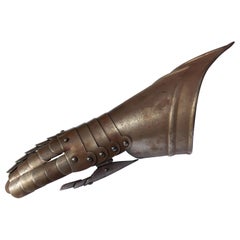
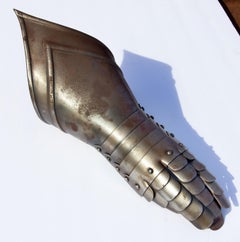
Medieval Style Armor Gauntlet Articulated Steel

Medieval Style Armor Gauntlet Articulated Steel

Located in Rochester, NY

Articulated medieval style steel gauntlet. Well made, mid-20th century.

Category

Mid-20th Century Medieval Sculptures

Materials

Metal, Steel

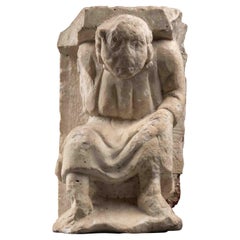
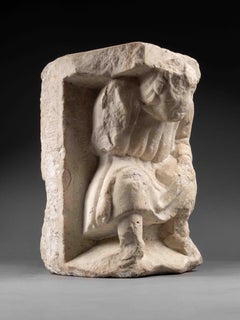
Romanesque Telamon - Northern Italy, late 12th (Reemployed Roman marble)

Romanesque Telamon - Northern Italy, late 12th (Reemployed Roman marble)

Located in Bruxelles, BE

Telamon Northern Italy, late 12th - early 13th century Reemployed Roman marble H 32 x L 18 x P 17 cm « Sono coloro che hanno dimenticato che l’uomo é solo un bruco, destinato a dive...

Category

15th Century and Earlier Italian Antique Medieval Sculptures

Materials

Marble

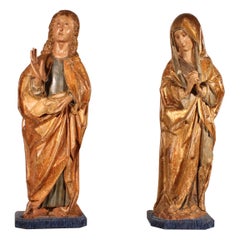
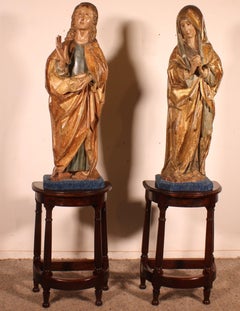
Saint John The Evangelist And The Virgin From A Crucifixion Group, Spain, Circa

Saint John The Evangelist And The Virgin From A Crucifixion Group, Spain, Circa

Located in Brussels, Brussels

Saint John the Evangelist and the Virgin from a Crucifixion Group, Spain, circa 1500, in walnut. Superb pair of gilded and polychrome wood sculptures from the late 15th century, circ...

Category

15th Century and Earlier Spanish Antique Medieval Sculptures

Materials

Walnut

Old Viking Drinking Horn on Sculptural Copper Stand

Old Viking Drinking Horn on Sculptural Copper Stand

Located in Esbjerg, DK

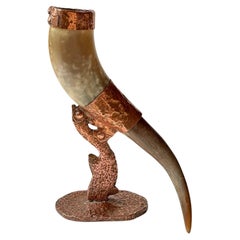
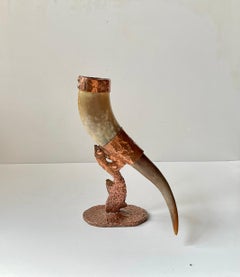
A so called viking drinking horn inspired by Nordic Mythology. It can be utilized as a vase or an unusual sculptural element. It is a unique piece handmade in Scandinavia during the ...

Category

Early 20th Century Scandinavian Medieval Sculptures

Materials

Copper

Virgin and Child in Majesty, also known as "Sedes Sapientae"

Virgin and Child in Majesty, also known as "Sedes Sapientae"

Located in Saint-Ouen, FR

VIRGIN AND CHILD IN MAJESTY, ALSO KNOWN AS "SEDES SAPIENTIAE"   ORIGIN : SPAIN, CATALOGNE PERIOD: EARLY 13th CENTURY   Height :  95 cm Width : 32 cm Depth : 28 cm   Softwood No polychromy     In the middle of the 12th century, the Virgin took her place in churches, seated in Majesty, serving as a throne for her son Jesus. She is then called Sedes Sapientiae, meaning the Throne of Wisdom. At that time, she is not represented for herself and only exists because she has been designated as Theotokos, the mother of God, at the Council of Ephesus in 431, where the divine nature of Christ was proclaimed from his birth.   The upright and perfectly hieratic bust of this Virgin and Child in Majesty is seated on a throne-bench. She is dressed in a tunic with a rounded neckline and covered with a fine mantle placed on her narrow shoulders. The supple and natural drapery follows the lines of the body.   Large curls frame her face with delicate and regular features, a long straight nose, almond-shaped eyes, and small lips.   She supports the Infant Jesus with her left hand. Like his mother, he is dressed in a long tunic, and his little feet are visible in the folds. He holds a small sphere in his left hand, while with his right hand, he gestures in blessing. The face of Christ bears a strong resemblance to his mother’s one, and he gives a slight smile.   The position of the Child is no longer as hieratic, nor frontal or central as in the early 12th century, but his face still turns towards the faithful.   The 13th century indeed emerges as a period of transition in the artistic domain. The statuary, while retaining certain characteristics still belonging to the habits of the previous century, also develops new formal solutions.   As a result, Mary maintains a hieratic and frontal position, while her son shifts to place himself well to the left on her knee. Similarly, while the Virgin seems perfectly still, Jesus, on the other hand, appears much more animated, especially in the positioning of his hands. His left hand holds the orb, and judging by the raised right arm directed towards the faithful, one can easily imagine that he was making a gesture of blessing.   The influence of the Sedes Sapientiae from previous centuries still seems particularly prevalent in this work.   These few characteristics allow dating this Spanish Virgin...

Category

15th Century and Earlier Spanish Antique Medieval Sculptures

Materials

Softwood

15th Century Corpus Christi Wood Sculpture

15th Century Corpus Christi Wood Sculpture

Located in Stockholm, SE

Rare late 15th century or early 16th century Gothic Corpus Christi wood sculpture. Probably North German or South Sweden. This large Christ sculpture...

Category

15th Century and Earlier German Antique Medieval Sculptures
Materials

Wood

Antique French Romanesque 12th century Enthroned Madonna and Child

Antique French Romanesque 12th century Enthroned Madonna and Child

Located in Doha, QA

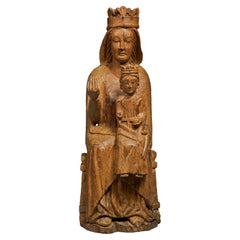
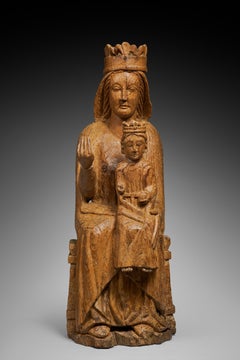
This extraordinary museum piece Enthroned Virgin Mary/Madonna with child on her lap comes from the Rhone region in France. The saint symbol and protec...

Category

15th Century and Earlier French Antique Medieval Sculptures

Materials

Wood, Walnut

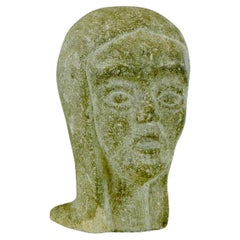
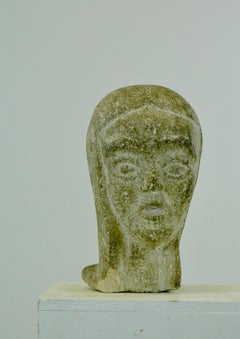
A granite sculpture of a young woman's head  - France - 1960

A granite sculpture of a young woman's head - France - 1960

Located in SOTTEVILLE-LÈS-ROUEN, FR

A refined granite sculpture portraying the head of a young woman, believed to likely represent Saint Joan of Arc, crafted in France during the 1950s. It features a magnificent patina...

Category

1960s European Vintage Medieval Sculptures

Materials

Granite

Large Size French Wall Crucifix / Jesus Christ on the Cross with Crown of Thorns

Large Size French Wall Crucifix / Jesus Christ on the Cross with Crown of Thorns

Located in Lisse, NL

Antique large size sculpture and an impressive, religious work of art. Looking at Christ suffering like this, the crucifix (in our view) is a symbol of what 'telling people the trut...

Category

Late 19th Century French Antique Medieval Sculptures

Materials

Wood

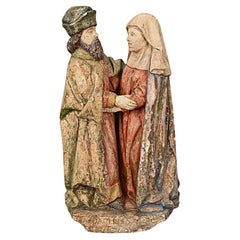
Flemish Polychrome Sculpture of the Meeting of St. Joachim and St. Anna

Flemish Polychrome Sculpture of the Meeting of St. Joachim and St. Anna

Located in Bradenton, FL

Flemish Polychrome Sculpture of the Meeting of St. Joachim and St. Anna. Sandstone cast over limestone depicting St. Joachim and St. Anna's embrace at the Golden Gate after the news ...

Category

19th Century Belgian Antique Medieval Sculptures

Materials

Limestone

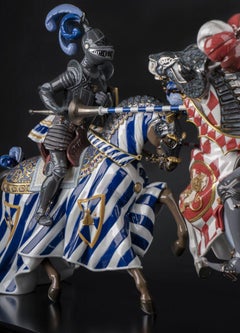
Lladró Medieval Tournament Sculpture. Limited Edition

Lladró Medieval Tournament Sculpture. Limited Edition

By Lladro

Located in New York City, NY

Honor and loyalty are the supreme values of medieval knights, the heroes of a fascinating, romantic era that inspired this spectacular high porcelain limited edition. The ornamental ...

Category

21st Century and Contemporary Spanish Medieval Sculptures

Materials

Porcelain

Saint Ambrosius Italian Sculpture 17th Century

Saint Ambrosius Italian Sculpture 17th Century

Located in Madrid, ES

Saint Ambrosius Italian sculpture 17th century in painted and gilded wood. The figure is represented standing up blessing with the hand. Faults and defects. Dimensions. Heigh...

Category

Mid-17th Century Italian Antique Medieval Sculptures

Materials

Wood

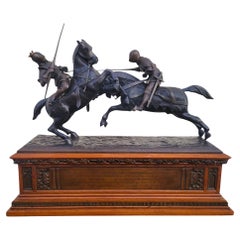
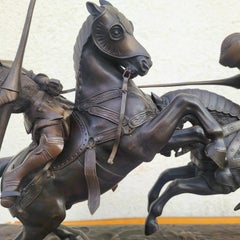
Model Of Nieuwerkerke, Battle Of The Duke Of Clarence, Bronze, Late 19th Century

Model Of Nieuwerkerke, Battle Of The Duke Of Clarence, Bronze, Late 19th Century

By Count Alfred Émilien O'Hara van Nieuwerkerke

Located in MARSEILLE, FR

Large bronze representing the Death of the Duke of Clarence during a tournament: beautiful brown patina, the large quantity of details of precision and finesse make this sculpture li...

Category

Late 19th Century French Antique Medieval Sculptures

Materials

Bronze

13th Century Virgin and Child from Catalonia

13th Century Virgin and Child from Catalonia

Located in Saint-Ouen, FR

Seating on a bench-like throne the Virgin carries her child on her left knee. She bears an important crown high on her head .The Virgin has an ovoid face with bulging eyes, straight long nose and thin lips. The hair parts in the middle and are carved as thick horizontals parallel hair strands...

Category

15th Century and Earlier Spanish Antique Medieval Sculptures

Materials

Oak

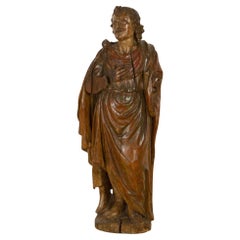
17th Century Carved Figure of a Saint

17th Century Carved Figure of a Saint

Located in Gloucestershire, GB

Mid 17th century Northern European carved figure of a saint. This striking statue depicts a saint who is dressed in robes, whilst holding his hand over his heart. This figure is freestanding and is stood within a leaning position which makes him stand out. It has been beautifully carved from oak and has remnants of its original paintwork. Likely to have stood within a church for many years and would have been removed due to renovation reasons. This historical figure...

Category

17th Century German Antique Medieval Sculptures
Materials

Oak, Paint

16th C. Polychromed Carved St. Florian, Former N. Rothschild Collection

16th C. Polychromed Carved St. Florian, Former N. Rothschild Collection

Located in Doha, QA

From the esteemed former collection of Baron Nathaniel de Rothschild, this exquisite early 16th-century polychromed carved wood figure of St. Florian stands as a rare example of late...

Category

16th Century German Antique Medieval Sculptures
Materials

Wood, Giltwood

17th Century German Carved Oak Religious Sculpture

17th Century German Carved Oak Religious Sculpture

Located in Bradenton, FL

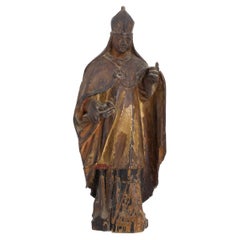
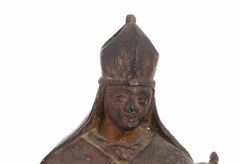
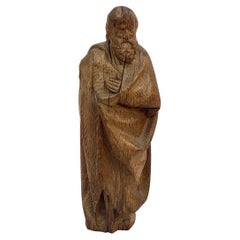
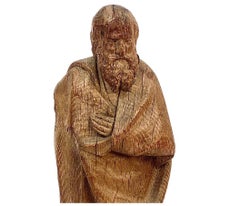
17th Century German hand-carved oak religious sculpture. Possibly a saint or a bishop. The bearded man is cloaked in draped fabric with only left ...

Category

17th Century German Antique Medieval Sculptures
Materials

Oak

19th Century Brass Wall hanging Shield  A Decorative Gothic wall hanging Shield

19th Century Brass Wall hanging Shield A Decorative Gothic wall hanging Shield

Located in Godshill, Isle of Wight

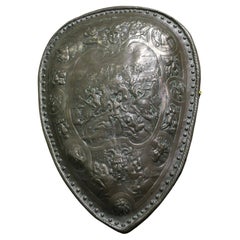
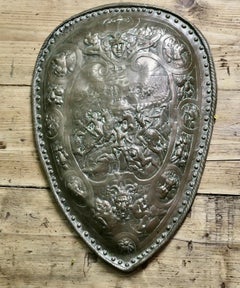
19th Century Brass Wall hanging Shield A Decorative Gothic wall hanging Shield hand made in brass, the shield is decorated with mythical Warriors and beasts, there are 2 images of t...

Category

19th Century Antique Medieval Sculptures

Materials

Brass

Saint Woman in polychrome carved wood

Saint Woman in polychrome carved wood

Located in Saint-Ouen, FR

SAINT WOMAN IN POLYCHROME CARVED WOOD   ORIGIN : ITALY PERIOD : late 13th century   Height : 103 cm Length : 28  cm Width : 16 cm  Remains of polychromy   ...

Category

15th Century and Earlier Italian Antique Medieval Sculptures
Materials

Softwood

19th Century Medieval Style Terracotta Plaque on Stand

19th Century Medieval Style Terracotta Plaque on Stand

Located in Wormelow, Herefordshire

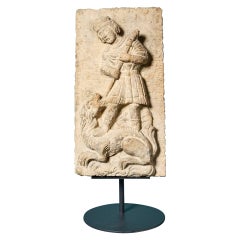
A fascinating mid-19th century medieval style buff terracotta plaque handcarved in relief with Saint George and the Dragon. In this artistic retelling of this legendary story of fol...

Category

Mid-19th Century Antique Medieval Sculptures

Materials

Steel

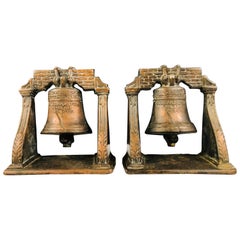
Antique Decorative Cast Bronze Mission Bell Sculpture, a Pair

Antique Decorative Cast Bronze Mission Bell Sculpture, a Pair

Located in Plainview, NY

A decorative set of two antique cast bronze Mission bells sculptures. Each bell features fine details and engraving. Perfect to decorate your desk, st...

Category

1880s Antique Medieval Sculptures

Materials

Bronze

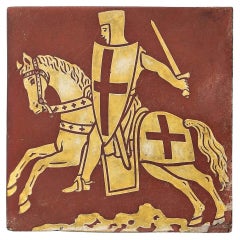
Minton Encaustic Neo-Medieval Old English Tile

Minton Encaustic Neo-Medieval Old English Tile

By Minton

Located in Wormelow, Herefordshire

An antique neo-medieval old English encaustic tile depicting a knight on horseback, attributed to Minton & Co. This tile was commissioned in 1840-42 by L. N. Cottingham for Temple Ch...

Category

Mid-19th Century English Antique Medieval Sculptures

Materials

Clay

Medieval English Alabaster Statue

Medieval English Alabaster Statue

Located in Wormelow, Herefordshire

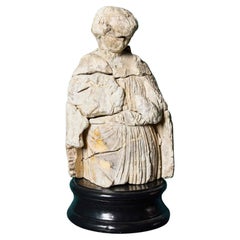
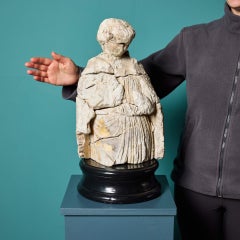
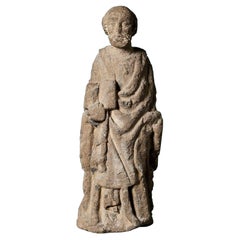
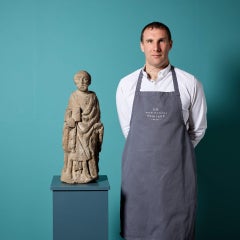
A medieval English alabaster statue, possibly dating as far back as the late 14th / early 15th century, mounted on one of our exclusive large display plinths. Well weathered over the centuries, this 600-year-old statue depicts a medieval cloaked figure, possibly a monk, offering a glimpse into English architecture and sculpture of the Middle Ages. This sculpture is possibly made from Nottingham alabaster. During the 14th and 15th centuries, Nottingham was the centre of alabaster carving and painting. Alabaster works were mostly made as small alabaster models with religious themes. During the 16th century Reformation, many alabaster carvings were destroyed under King Henry VIII's rule, making any surviving examples even more significant. Provenance From the collection of Peter Hone (b. 1941). A master plaster caster, he is an expert and experienced collector, building up an extraordinary, museum-worthy collection of items in his one-bedroom flat in London W11...

Category

15th Century and Earlier English Antique Medieval Sculptures

Materials

Alabaster

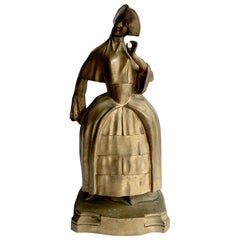
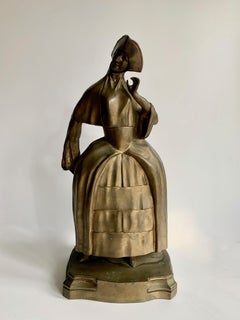
Bronze Woman Sculpture Door Stop Bookend

Bronze Woman Sculpture Door Stop Bookend

Located in Los Angeles, CA

A wonderful sculptural figure of a lady, intricate in detail and wearing women's medieval attire and hat. A good weight at 18 lbs - use as a heavy duty bookend, decor or door sto...

Category

Early 20th Century French Medieval Sculptures

Materials

Bronze

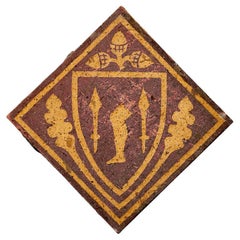
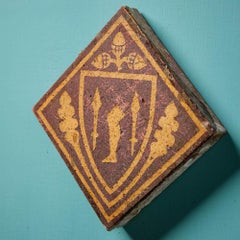
Post-Medieval English Encaustic Tile by Godwin

Post-Medieval English Encaustic Tile by Godwin

Located in Wormelow, Herefordshire

A 19th century post-medieval encaustic tile by English makers Godwin of Lugwardine; one of 6 similar we have available. Dating to circa 1870, this antique tile features a heraldic, ...

Category

19th Century English Antique Medieval Sculptures

Materials

Clay

Antique Post Medieval Carved Stone Saint Statue

Antique Post Medieval Carved Stone Saint Statue

Located in Wormelow, Herefordshire

An antique post medieval carved grit stone statue depicting a figure of a saint. Dating the 16th/17th century, this English sculpture is of a small scale with a characterful time wo...

Category

17th Century English Antique Medieval Sculptures

Materials

Stone

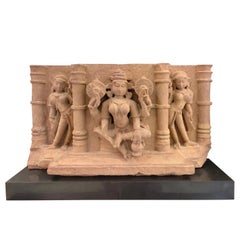
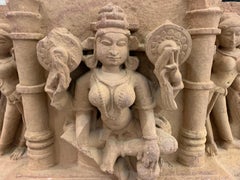
Carved Sandstone Jain Family Group, 6th-7th Century, Uttar Pradesh, India

Carved Sandstone Jain Family Group, 6th-7th Century, Uttar Pradesh, India

Located in Austin, TX

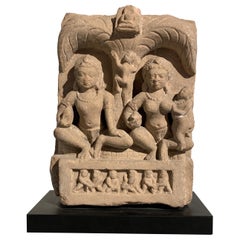
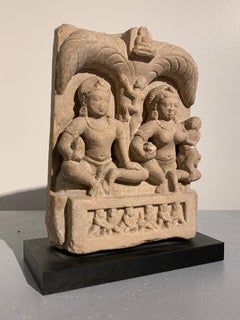
A fine and rare Indian carved sandstone stele of a Jain family group, Sarnath style, early Indian Medieval period, 6th-7th century, Uttar Pradesh, India. Carved from a single block of buff sandstone, the stele features a Jain family group comprised of a father, mother, and two children. The family group is portrayed upon a lotus pedestal under a tall palm tree. The mother and father both seated in a relaxed pose known as lalitasana, or royal ease pose, a jovial expression on their faces. The mother holds the daughter in her lap. The younger son scampers mischievously up the trunk of the palm tree, his head turned to look back at his parents. Above the family, nestled in a niche amongst the palm fronds, an image of a Jain Tirthankara...

Category

15th Century and Earlier Indian Antique Medieval Sculptures
Materials

Sandstone

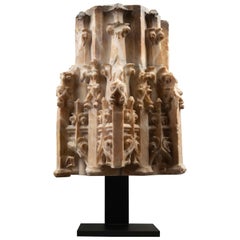
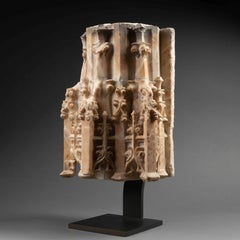
Gothic Canopy, France, 15th Century

Gothic Canopy, France, 15th Century

$23,443Sale Price|20% Off

Gothic Canopy, France, 15th Century

Located in Bruxelles, BE

Gothic canopy France, 15th century Alabaster, some traces of polychromy 33 x 23 x 20 cm Provenance: - Private collection Genève, Switzerland ...

Category

15th Century and Earlier French Antique Medieval Sculptures
Materials

Alabaster

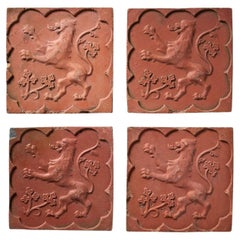
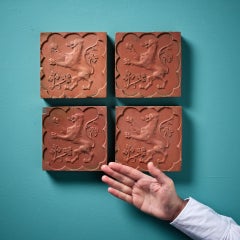
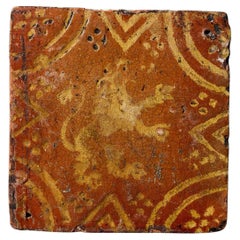
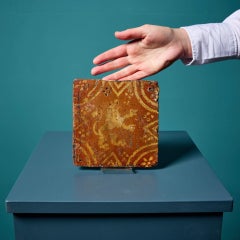
Set of 4 Medieval Style Terracotta Rampant Lion Tiles

Set of 4 Medieval Style Terracotta Rampant Lion Tiles

Located in Wormelow, Herefordshire

A stunning set of 4 identical medieval style terracotta tiles decorated with raised rampant lions and foliage within scalloped borders, dating to circa 1920. These antique tiles are ...

Category

Early 20th Century Belgian Medieval Sculptures

Materials

Terracotta

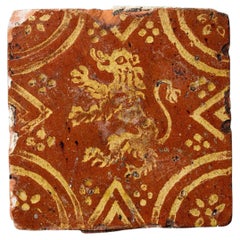
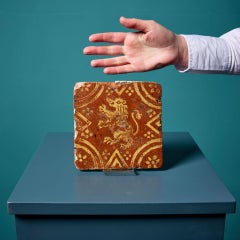
16th Century Late Medieval Encaustic Tile with Rampant Lion

16th Century Late Medieval Encaustic Tile with Rampant Lion

Located in Wormelow, Herefordshire

A 445-year-old late medieval 16th century encaustic tile of Flemish origin (unmarked), detailed with a rampant lion. Made from terracotta and glazed, this 6-inch antique tile is an e...

Category

16th Century Dutch Antique Medieval Sculptures
Materials

Terracotta

16th Century Late Medieval Heraldic Encaustic Tile

16th Century Late Medieval Heraldic Encaustic Tile

Located in Wormelow, Herefordshire

A 445-year-old late medieval 16th century heraldic encaustic tile of Flemish origin (unmarked). Made from terracotta and glazed, this 6-inch antique tile is an excellent collector’s ...

Category

16th Century Dutch Antique Medieval Sculptures
Materials

Terracotta

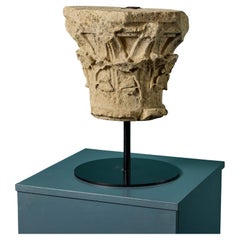
Rare English Romanesque Limestone Capital on Stand

Rare English Romanesque Limestone Capital on Stand

Located in Wormelow, Herefordshire

This weathered English Romanesque limestone capital is centuries old, dating from the Norman era of the 11th and 12th centuries. Originating from Oxf...

Category

15th Century and Earlier English Antique Medieval Sculptures
Materials

Stone, Limestone

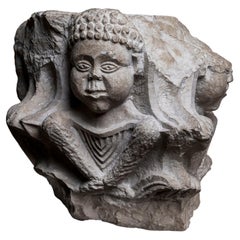
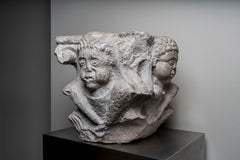
Rare Romanesque Capital Depicting Four Africans, Apulia, 13th Century

Rare Romanesque Capital Depicting Four Africans, Apulia, 13th Century

Located in Bruxelles, BE

Large stone capital carved on each side in strong relief. The basket is covered with two crowns of vertical acanthus leaves which sprout from the astragal and fill the space between ...

Category

15th Century and Earlier Italian Antique Medieval Sculptures
Materials

Stone

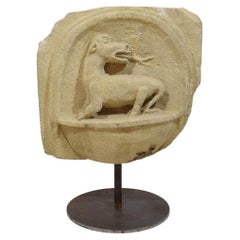
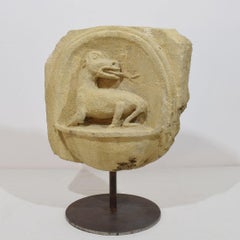
Spanish Medieval Carved Stone Fragment Depicting A Dragon/ Mythical Figure

Spanish Medieval Carved Stone Fragment Depicting A Dragon/ Mythical Figure

Located in Buisson, FR

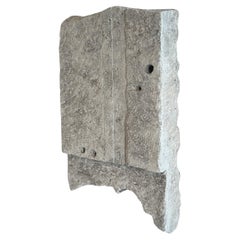
Amazing period piece. Beautiful hand-carved fragment depicting a dragon / mythical creature. Once had its place in wall of a medieval church or chapel in Spain. Weathered stone full ...

Category

15th Century and Earlier Spanish Antique Medieval Sculptures
Materials

Stone

Medieval sculptures for sale on 1stDibs.
Find a broad range of unique Medieval sculptures for sale on 1stDibs. Many of these items were first offered in the 21st Century and Contemporary, but contemporary artisans have continued to produce works inspired by this style. If you’re looking to add vintage sculptures created in this style to your space, the works available on 1stDibs include decorative objects, more furniture and collectibles, building and garden elements and other home furnishings, frequently crafted with wood, stone and other materials. If you’re shopping for used Medieval sculptures made in a specific country, there are Europe, France, and Italy pieces for sale on 1stDibs. While there are many designers and brands associated with original sculptures, popular names associated with this style include Europa Antiques, Argenteria Etruria, Lladro, and Saint Clément. It’s true that these talented designers have at times inspired knockoffs, but our experienced specialists have partnered with only top vetted sellers to offer authentic pieces that come with a buyer protection guarantee. Prices for sculptures differ depending upon multiple factors, including designer, materials, construction methods, condition and provenance. On 1stDibs, the price for these items starts at $265 and tops out at $134,141 while the average work can sell for $3,746.