By Antonio Ferretti
Located in Milano, IT
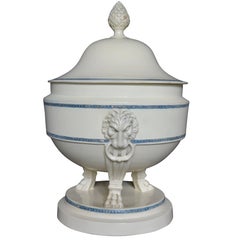
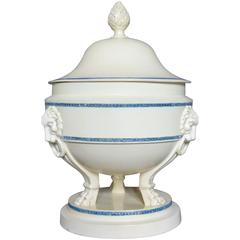
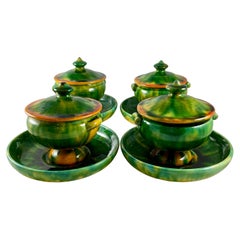
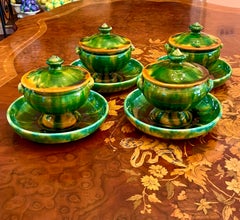
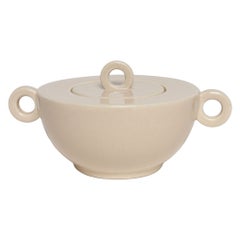
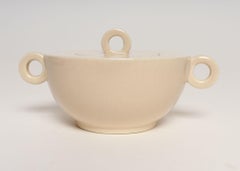
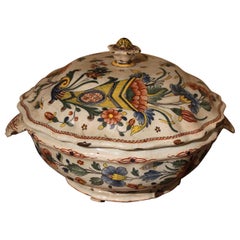
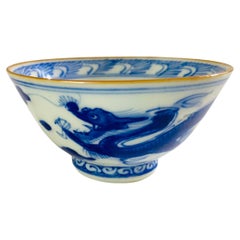
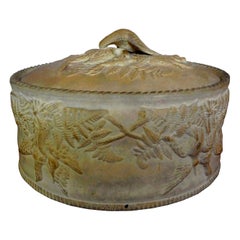
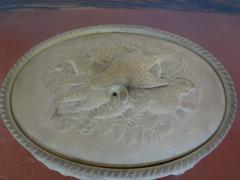
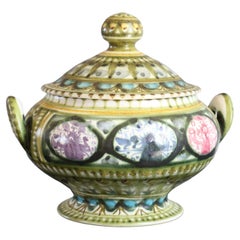
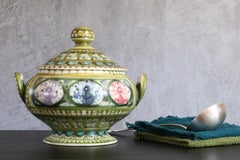
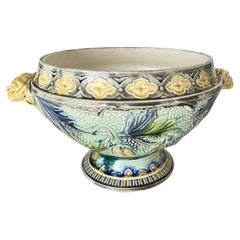
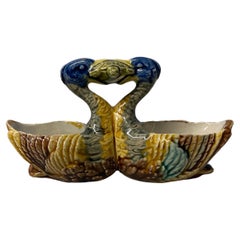
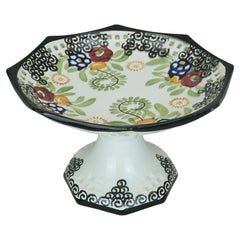
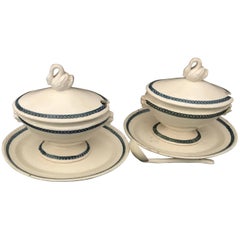
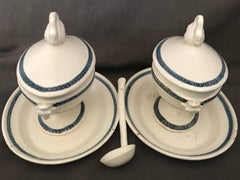
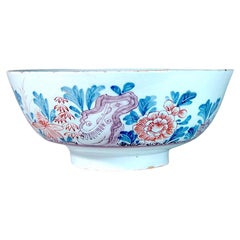
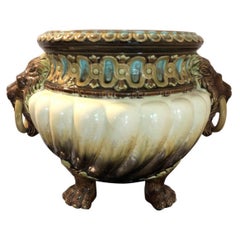
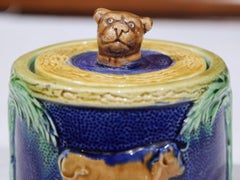
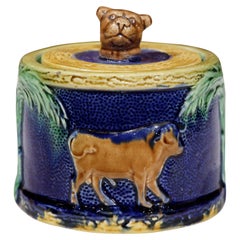
Maiolica puerperal cup
Antonio Ferretti Manufacture
Lodi, Circa 1770 - 1780
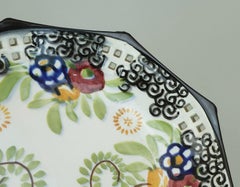
Maiolica polychrome decorated “a piccolo fuoco” (third fire).
It measures: 4.3 x 6.8 x 5.3 in (11 x 17,5 x 13,5 cm)
Weight: 0.78 lb (358 g)
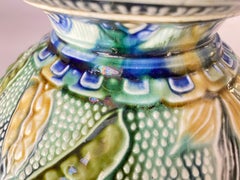
State of conservation: some closed pass-through fêlures on the cup, barely visible on the outside. Some use chips on the edge of the lid, two of which are more marked.
From about the mid-sixteenth century, the puerperal soup tureen or puerperal cup became one of the most popular wedding gifts in central Italy. As an auspicious symbol, it replaced the birth table (“desco da parto”) which, on the occasion of high-ranking marriages, from the thirteenth century, had been painted by famous artists, especially in Tuscany.
In France this same tureen is called "écuelle de mariée", as it is given to spouses as a sign of fertility.
During the eighteenth century this custom spread even outside Italy to all social levels. Depending on availability and rank, it was made of different materials: precious metals, maiolica, porcelain, glass, pewter, etc.
Beginning in the mid-twentieth century, the custom of this symbolic homage gradually disappeared, although famous designers such as Gio Ponti and Giuseppe Gariboldi, even as recently as the 1940s, revisited a model of a small puerperal soup bowl for the Ginori and, also in Italy in 1940, in a national competition for young potters, one of the themes of the test was indeed a modern model of a puerperal cup as an auspicious gift.
This particular cup was also called a "service cup" or "puerperal vase" or "stuffed cup" - the windows were sealed with straw to prevent drafts of air for women in labor.
In the eighteenth century the line of the puerpera cup was simplified, so much so that it took the form of a small tureen with two handles - the typical broth cup...
Category
1770s Italian Rococo Antique Earthenware Serving Bowls