By Josiah Spode
Located in London, GB
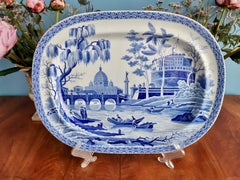
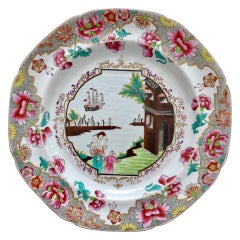
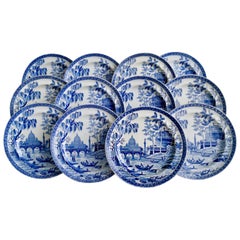
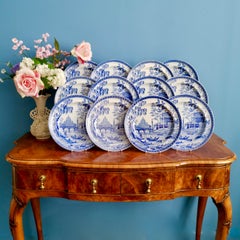
This is a beautiful Spode plate made between 1812 and 1833, which was the Regency era. The plate is made of stone china and is decorated in the chinoiserie style with the very famous and now rare "Ship" pattern.
I have a series of these chinoiserie plates available; please have a look in the Spode section of this shop. I am happy to offer them together with a discount.
Blue on white decorations were done in East Asia for many centuries, and were made popular in the West by the Dutch Delftware potters in the 17th century. In circa 1800, the famous Spode factory in Staffordshire created a transfer printing process that could mass produce beautifully decorated blue and white wares, making this a very common and desired choice of tableware for the two centuries to come. Potters all-over Britain quickly started to make use of this new technology and copied the famous Spode patterns. Once the blue on white transfers had caught on, Spode started to print in color; mostly printing in one color (in this case: brown) and then filling in the other colors by hand. This way, they could offer wonderfully colorful dinner services at a much lower cost, as they needed only a skilled engraver for the plate that provided the outline of the image, and the transferring and coloring could be done by less skilled people. These were often women and apprenticed teenage children.
The image on this plate is a very famous one, and one of the most desired, which is reflected in the price. It is of a mother and child with a European tall ship in the background, they look like they have waved good bye to the ship and are in conversation. Also in the background is a typical European trading post, this plate clearly celebrates the lively trade between East and West at the time. The pattern is a copy of an 18th century Chinese pattern and it could be depicting Dutch, Portuguese or British trade. It is of beautiful flowers against a backdrop of little waves, referring to the sea.
This plate is made of stone china, which was Spode's recipe for very strong pottery with a high percentage of Cornish rock, which gives it the beautiful greyish hue.
The plate carries the printed Spode stone China...
Category
English Regency Antique 1810s Pottery