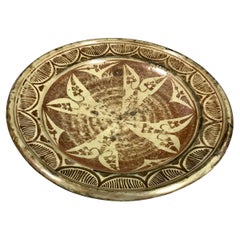
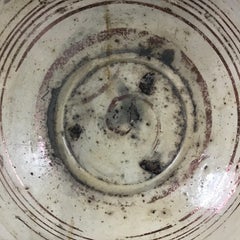
17th Century Hispano-Moresque Copper-Lustre Charger
Located in Bradenton, FL
17th C. Spanish Hispano Moresque Copper Lustre ceramic bowl / charger.
17th Century Spanish Antique Bakshaish Serveware, Ceramics, Silver and Glass
Pottery
17th Century Hispano-Moresque Copper-Lustre Charger
Located in Bradenton, FL
17th C. Spanish Hispano Moresque Copper Lustre ceramic bowl / charger.
Pottery
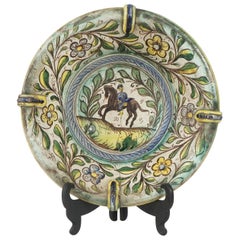
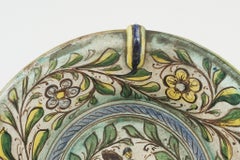
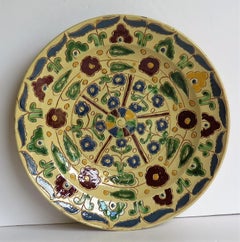
Late 17th-Early 18th Century Italian Majolica Bowl
Located in Hudson, NY
This good sized bowl is a great example of the majolica wares produced in Italy throughout the 15th, 16th, 17, and 18th centuries. Humble and simple but highly decorative and enterta...
Majolica
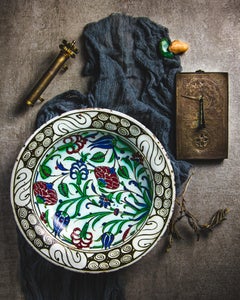
Early 17th Century Ottoman Empire Iznik Pottery Dish
Located in Fort Lauderdale, FL
An Iznik pottery dish made in the first half of the 17th century and decorated with chrysanthemums and tulips. The rim features the rock and wave pattern. Under the direction of O...
Ceramic
$356Sale Price|89% Off
H 2.25 in Dm 11.75 in
Rare Sgraffito Redware Slip Decorated Pottery Charger Large Plate, 19th Century
Located in Lincoln, Lincolnshire
A large charger plate made of Redware pottery, all hand decorated in the Sgraffito Slip Decorated technique, with a stylized floral pattern. Thi...
Earthenware
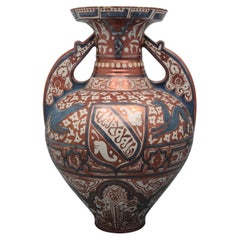
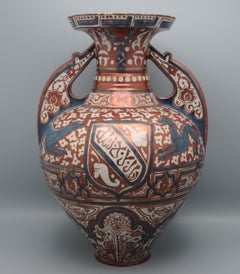
Hispano Moresque Lustreware Alhambra Vase - early 20th century Valencia
Located in DELFT, NL
Alhambra vase by La Ceramo, Valencia desde 1889. Early 20th century Hispano-Moresque lusterware vase The model of this vase is an 20th century produc...
Earthenware, Faience, Luster, Maiolica
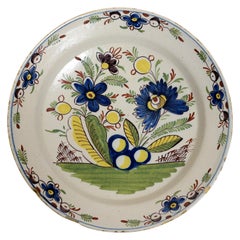
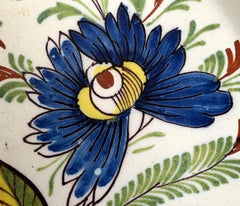
Fine 18th c Dutch Polychrome Painted Delft Charger
Located in valatie, NY
A fine 18th c Dutch Polychrome painted delft charger, decorated with vibrantly colored stylized tulips and flowers painted in manganese, green, yellow...
Delft
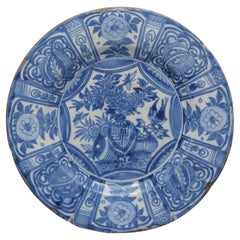
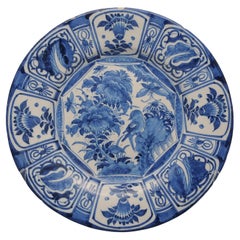
Delft - Wanli style 'Kraak' Charger - 17th century
By Delft
Located in DELFT, NL
Fine Delftware dish painted in cobalt blue on tin-glazed faience, featuring central vases filled with blossoming branches, accompanied by a bird and insects. The border is divided in...
Earthenware, Delft, Faience
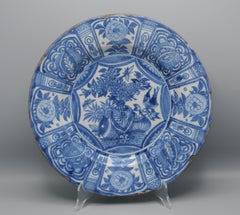
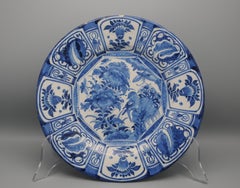
Delft - Wanli style 'Kraak' Charger - 17th century
By Delft
Located in DELFT, NL
Very good late 17th century Blue Delftware dish with a Wanli Style "Kraak' decoration of a bird on a blossoming branch amidst blossoming peonies and insects. Border with alternatin...
Earthenware, Delft, Faience
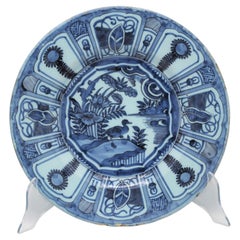
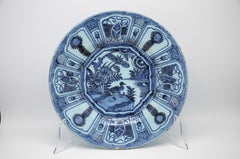
Delft - 'Kraak' Wanli style charger, late 17th century
By Delft
Located in DELFT, NL
Late 17th century Blue Delftware platter with Chinese Wanli period kraak style decoration of a duck in a marsh landscape with flowerds in a central hexagonal medallion. On the sides ...
Earthenware, Delft, Faience
$8,900
H 2.25 in Dm 12 in
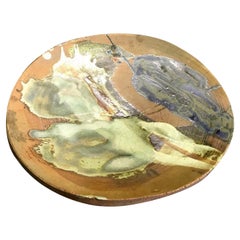
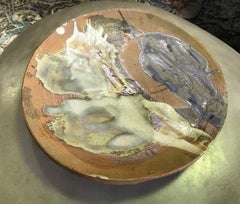
Peter Voulkos Signed Mid-Century Modern California Studio Pottery Plate Charger
Located in Studio City, CA
A fantastic, freeform, large, heavy plate/ charger by American master potter Peter Voulkos who is known for his abstract expressionist ceramic pottery pieces and sculptures. Very unique and scarce work with rare use of color. Very hard to come by. One of our personal favorites along with the Chawan tea bowl. Signed on base and dated (1961) by Voulkos. This was made during one of his most magical and experimental phases. From of Private Collection, New York. Voulkos is widely considered to be the most important and impactful ceramist of the modern era. He won the Rodin Museum Prize at the first Paris Biennale in 1959 and was the winner of a Guggenheim fellowship in 1984. Voulkos received the College Art Association’s Distinguished Artist Award for Lifetime Achievement in 1997. He was made an honorary member of the American Academy and Institute of Arts and Letters in 2001. He also received six honorary doctorate degrees as well as three National Endowment for the Arts awards. His work can be found in many prominent collections and museums including: Aichi Prefectural Ceramic Museum, Nagoya, Japan Albany Mall, Albany, New York American Museum of Ceramic Art...
Stoneware
$16,000
H 1.63 in Dm 9.75 in
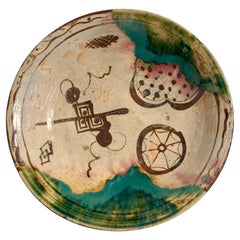
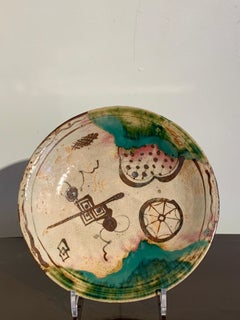
Japanese Ao-Oribe Glazed Stoneware Dish, Early Edo Period, 17th Century, Japan
Located in Austin, TX
A fine and rare Japanese ao-oribe glazed minoyaki stoneware dish, late Momoyama or early Edo period, 17th century, Japan. The circular dish of wheel thrown ...
Stoneware
$5,000
H 2 in Dm 19.5 in
19th Century Minton’s Art Pottery Studio Kensington Gore Hand-Painted Charger
By Minton
Located in Cincinnati, OH
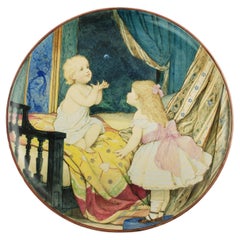
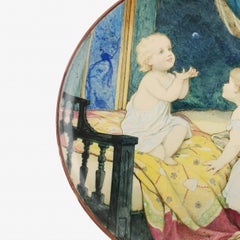
This large hand-painted charger was made by Mintons Art Pottery Studio of Kensington Gore, London. The studio traces its origins to the renowned earthenware and fine bone china factory Minton, located in Stoke-on-Trent, Staffordshire England. Colin Minton Campbell, descendant of founder Thomas Minton, took over company management in 1858 and went on to establish Mintons Art Pottery Studio in 1871 for the purpose of hand decorating pottery and tiles. The studio initially operated under the direction of painter and book illustrator William Stephen Coleman and drew upon the talents of artists studying at the Kensington's National Art Training School, now known as the Royal College of Art, as well as those of well-regarded Continental artists. The company was short lived as it was destroyed by an accidental fire in 1875 and was not rebuilt. This large earthenware charger has been hand-painted in polychrome enamel and depicts two young children at play in the nursery. The scene includes multiple colors and textures and features a cherubic toddler seated upon a bed alongside a young girl standing on a blue footstool...
Pottery
Eugenio Pattarino Ceramic Charger
Located in St.Petersburg, FL
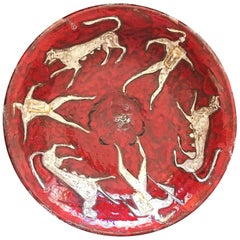
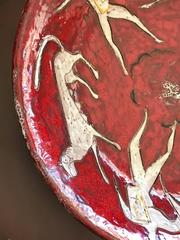
A fantastic and rare ceramic charger by Eugenio Pattarino. Vibrant red color and Classic Italian Mid-Century style is represented very well in this piece. Eugenio Pattarino was born in 1885 and passed away in 1971. He was a master sculptor and model maker and taught in art schools in both Venice and Frankfort, Germany. In the late 1940s he opened his own studio in Florence. His factory used both “EPF” and “CAPEF” (Artistic Ceramics Professor Eugene Pattarino) to mark his pieces. His studio is best known for its large religious statutes, many of which reside in a number of churches in Italy and the U.S. In the 1950s Pattarino had more than fifty artists working for him and some among them were considered the best ceramists in Italy. At this time Eugenio was joined by his son, Ranier, and the company began concentrating on more eclectic themes. These pieces, when new, were quite expensive when they were purchased but almost never garner anywhere near their original cost at today's auctions. The factory claimed that the Vatican used Pattarino’s ceramics as gifts to famous visitors, including President John Kennedy, Andre Gide and Paul Sartre. Unfortunately there is no proof to back these claims. As a matter of fact I have discovered that the Pattarino name is almost generally unknown in Italy and even lesser known in Florence. His name is, however, recognized here in the United States and most of the factory’s output can be found in the U.S. where it was imported. In November 1966 the Arno River flooded its bank and inundated most of Florence. Work to restore damaged art...