By Rockingham
Located in London, GB
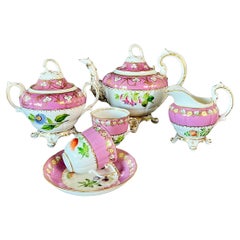
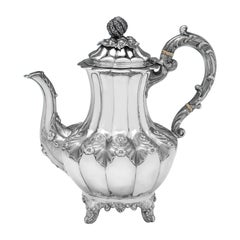
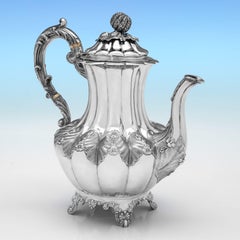
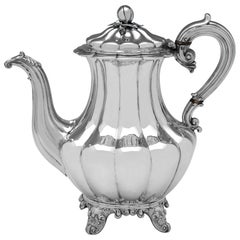
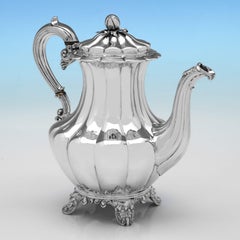
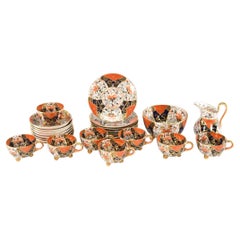
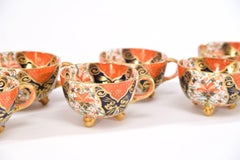
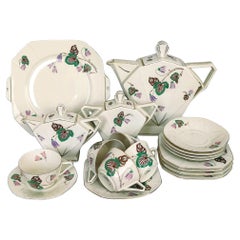
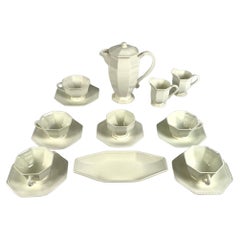
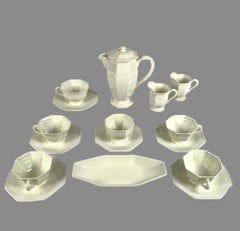
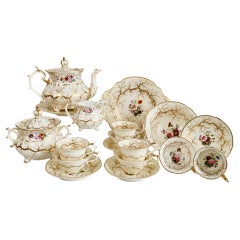
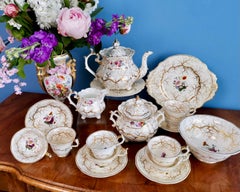
On offer is a rare and stunning full tea service made by Rockingham in about 1832. The service consists of a large teapot with cover and a stand, 4 teacups, 4 coffee cups, 4 saucers, a milk jug, a sucrier with cover, a large slop bowl and a cake plate.
It is rare to come across a tea service this good, and it is fabulous both on display and for use.
Although the Rockingham pottery started some time in the mid-18th Century, when we say "Rockingham" it mostly means the Rockingham pottery as it was run between 1826 and 1842, creating high quality bone china table ware. The pottery rose to fame when King William VI ordered a huge dinner service containing 200 pieces. It took 600 people 7 years to complete this service, and by the time it was finished the King died. It ended up being used for the first time at the subsequent coronation of Queen Victoria in 1837. In the end, the undertaking, although it brought important business from all British aristocracy, had ruined the pottery and it never recovered. It closed it doors in 1842. This story serves to show the status, artistic sophistication and capacity of the Rockingham pottery in the 1830s.
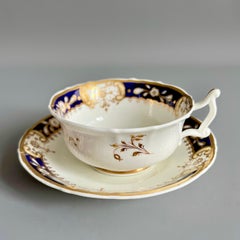
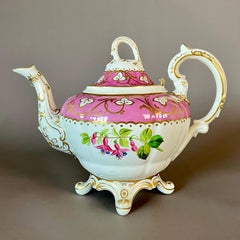
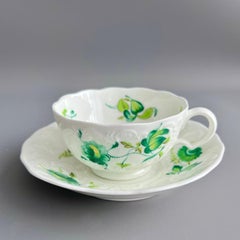
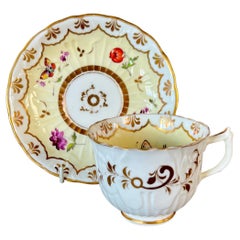
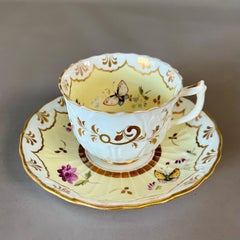
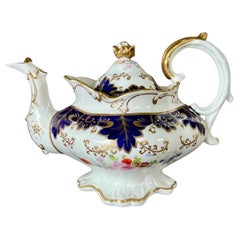
As the pottery only produced between 1826 and 1842, good pieces are relatively rare and to find this service is a treat. It is made of sturdy, thickly potted bone china. The design is cream coloured with gilt seaweed all over and beautiful small hand painted flower bouquets.
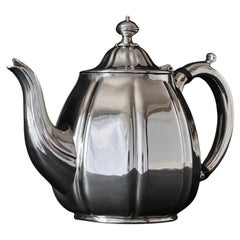
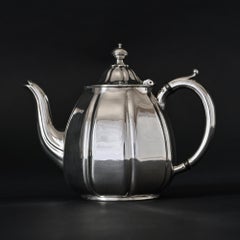
The shapes of the items deserve extra attention. This set is an example of the Rococo Revival, with lavish twists and turns. The teapot spout and handle seem to have little twigs or leaves growing out of them - or are they fish fins? Whatever they are, it is highly charming. The shape of the pot itself is a beautiful pear shape; generous yet sophisticated with perfectly balanced dimensions. The cups are typical Rococo bell-shaped cups with a wide opening. The lids of the teapot and sucrier are in the iconic and striking crown shape, a sign that this set was made after the pottery attracted the King's patronage.
An example of an identically shaped teapot with a similar seaweed pattern can be found in Miller & Berthoud's book "An Anthology of British Teapots...
Category
English Rococo Revival Antique 1830s Tea Sets