By Stône, Coquerel, and Legros d'Anisy
Located in New York, NY
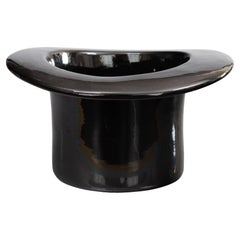
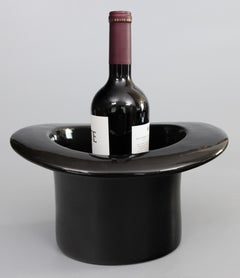
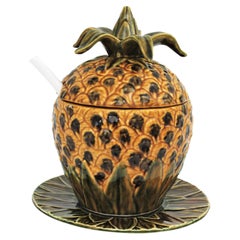
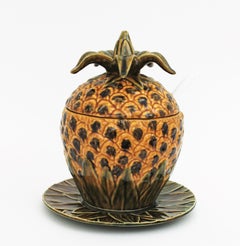
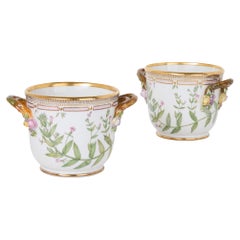
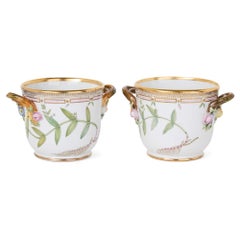
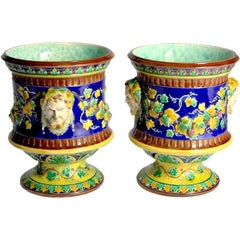
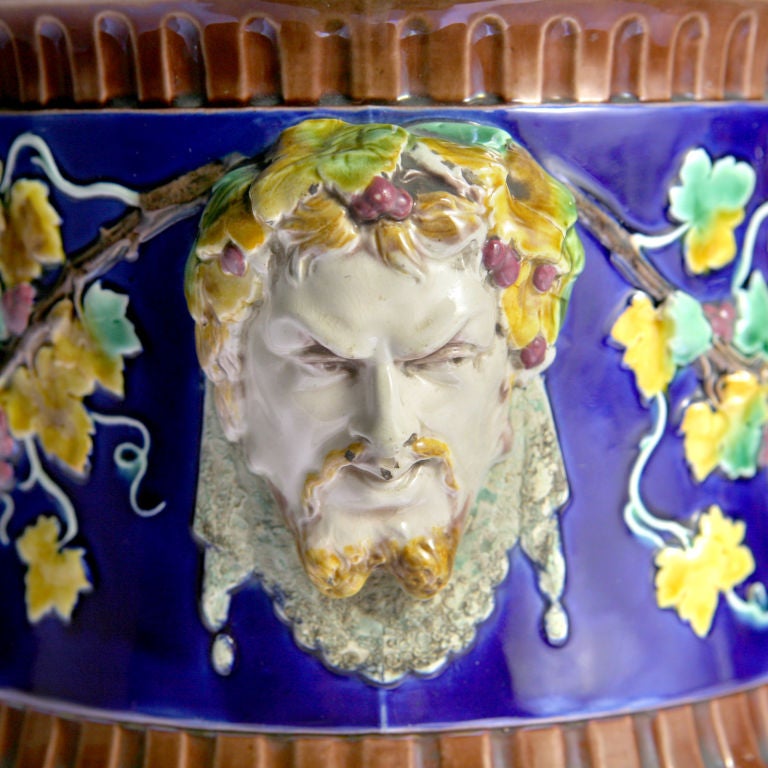
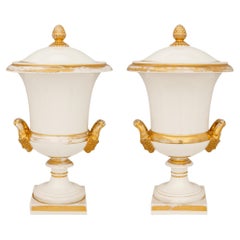
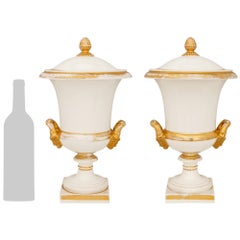
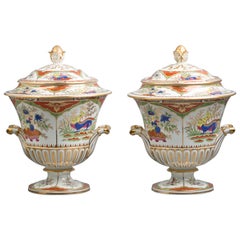
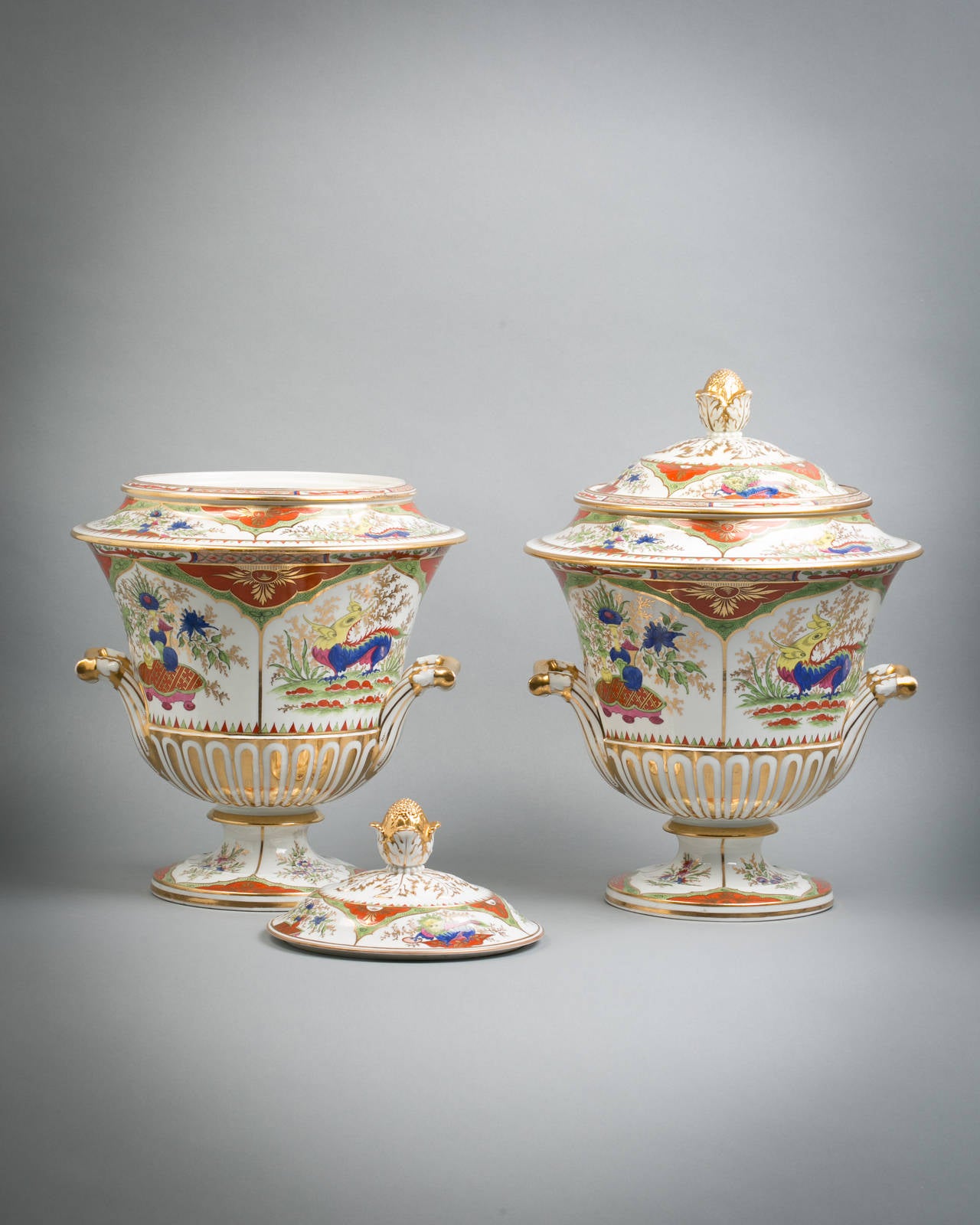
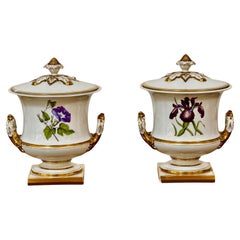
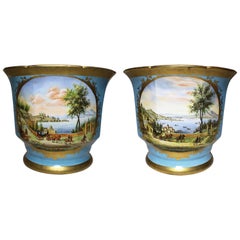
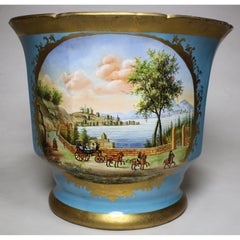
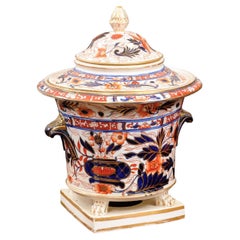
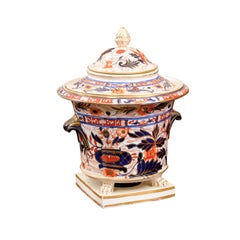
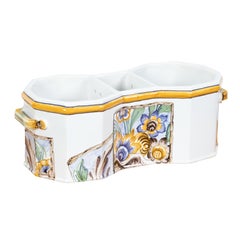
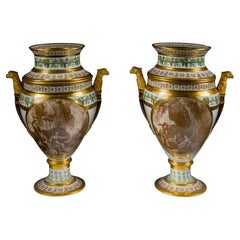
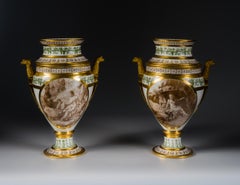
Pair Footed Fruit Coolers, about 1810-20
Stône, Coquerel, and Legros D’Anisy, Paris (active 1808–49)
Porcelain, partially transfer printed in sepia and green and gilded
Each, 13 1/2 in. high x 10 in. wide x 7 1/2 in. deep
Signed and inscribed (on underside of one top and one base, with printed mark): STÔNE /
COQUEREL / ET / LE GROS / PARIS / PAR BREVET D’INVENTION: Manufre de Décors sur
Porcelaine Faience; variously inscribed with decorators’ initial in green and brown (on
underside of one top and one base): M; variously inscribed with incised mark (on underside of one liner and both bottoms): 3; inscribed (in blue script, on the inside of one liner): 615
The Parisian firm of Stône, Coquerel, and Legros d'Anisy is distinguished for the important role that it played in the introduction of transfer-printed decoration on fine china in France. Although the process had been known and used in Great Britain since the eighteenth century, it was, according to Régine de Plinval de Guillebon in her book, Porcelain of Paris 1770–1850 (New York: Walker and Company, 1972), not until 1802 that Potter, Blancheron, Constant, Neppel, Cadet de Vaux & Denuelle took out a patent in France for transfer-printing on earthenware, and it was only on February 26, 1808, that John Hurford Stône, his brother-in-law, Athanase Marie Martin Coquerel, and Francois Antoine Legros d'Anisy not only took out a patent for transfer-printing on china, but also established a Stône, Coquerel, and d'Anisy partnership for the manufacture of transfer-printed ceramics. Their address from 1808 until 1818 was at 9, rue de Cadran, Paris.
Prior to this, Stône and Coquerel had been partners at a creamware factory in Creil, France, and Legros d’Anisy had worked at the Sèvres factory, where he had apparently developed the transfer-printing technique for which his own firm became well known. “The process,” notes de Guillebon, was “based upon removing from the engraving a ‘pull’ made on a specially coated filter-paper, which was pressed onto the object to be decorated; this object itself was covered with a film. Firing took...
Category
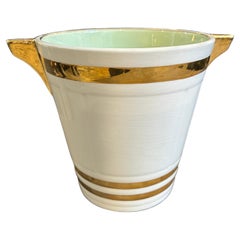
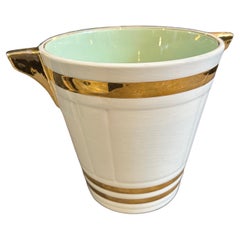
Early 19th Century French Neoclassical Antique Ceramic Wine Coolers