By Pierre Jeanneret
Located in Los Angeles, CA
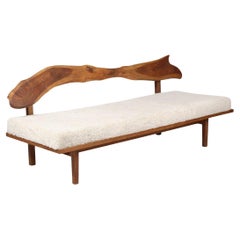
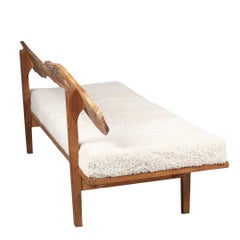
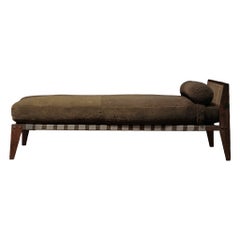
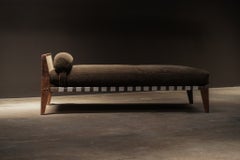
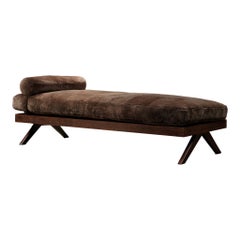
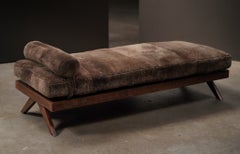
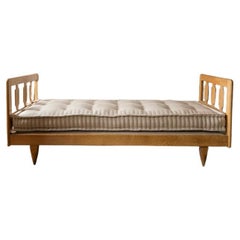
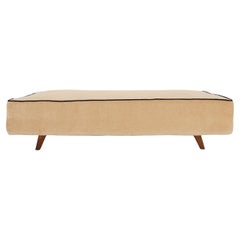
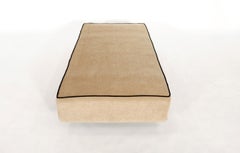
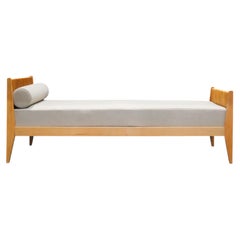
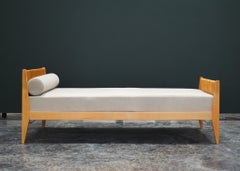
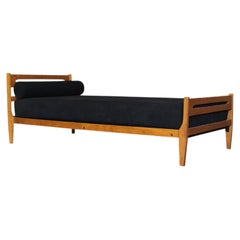
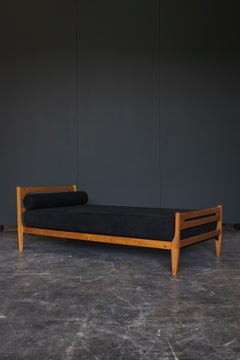
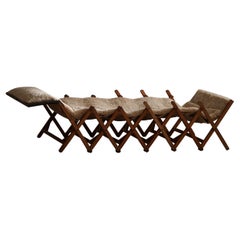
Demountable webbed daybed by Pierre Jeanneret from the Chandigarh furniture program, circa 1955–1956. The vintage teak frame combines a long reclining platform with a cane back at one end and contemporary green shearling padding with a matching bolster.
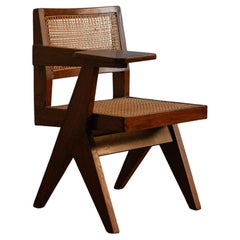
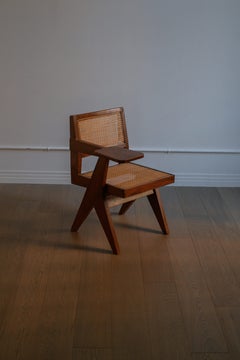
Jeanneret’s furniture formed part of the larger architectural project of Chandigarh, the new city developed in post-independence India. Alongside desks, chairs and storage furniture, his daybeds addressed the quieter activities of rest and informal seating. Their generous horizontal surfaces were supported by a practical timber framework made with local craftsmen. The design gives an everyday furnishing the clarity of a small architectural structure, with its proportions, visible joints and open spaces establishing a close relationship between useful construction and sculptural form.
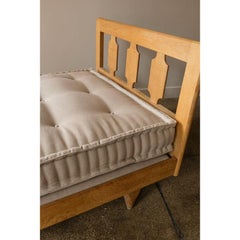
The exposed support webbing runs around the timber rails beneath the removable pad. Broad tapered uprights at the head carry the rectangular cane back, while visible bolts articulate the demountable construction. The open frame allows the webbed support, timber joints and generous space beneath the platform to remain clearly legible.
The cane back forms a light vertical screen above the upholstered plane. Its grid contrasts with the dense texture of the shearling and with the solid wooden members around it. The cylindrical bolster rests against this back, adding a rounded profile to the otherwise rectilinear structure. The sizeable 80-inch length gives the piece the scale of a full reclining daybed.
The broad teak head upright retains a clearly visible painted inventory inscription, “PGI 315”. PGI refers to the Postgraduate Institute of Medical Education and Research in Chandigarh, established in 1962; 315 is the accompanying inventory number. The surviving lettering associates this particular frame with the institute and records its later institutional use, following the circa 1955–1956 design date. Painted directly onto the structural timber beside the cane back, the mark is an integral detail of the daybed’s history, complementing the worn edges, visible bolts and patinated woodwork.
The vintage teak retains variations in grain, color and surface wear, with softened edges and individual traces of use visible in the photographs. These details give the woodwork its material character and preserve the sense of a furnishing made for daily life in institutional or residential interiors. The present upholstery is a later treatment of the vintage structure.
For a related webbed Chandigarh daybed...
Category
1950s Indian Mid-Century Modern Vintage Lambskin Daybeds