Want more images or videos?
Request additional images or videos from the seller
1 of 3

Autopsy #1

$9,900List Price

You May Also Like

More From This Seller

View All
Push Stool by Omar Chakil in Alabaster

Push Stool by Omar Chakil in Alabaster

By Omar Chakil

Located in Pireaus-Athens, Greece

Of Egyptian/Lebanese roots, Omar Chakil developed the series, volutes, made of unvarnished, untreated, raw Egyptian alabaster which he calls Pharaonic alab...

Category

2010s Stools

Materials

Alabaster

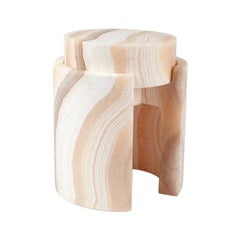
Domus Pompeii Efebo Stool by Roberto Sironi

Domus Pompeii Efebo Stool by Roberto Sironi

By Roberto Sironi

Located in Pireaus-Athens, Greece

Rediscovered in 1748, after being buried for almost two millennia under a blanket of lava and ash following the eruption of Vesuvius, Pompeii redefines our relationship with the past through its generative potential between reality and imagination. Defined by Goethe “An incredible place, worthy of peaceful thoughts”, Pompeii has the power to transform inanimate archaeological material into narrative matter, merging past and present in a relationship of reciprocity and interaction. Exploring the site, today as then, it is possible to admire the interiors decorated with frescoes that reproduce architectural partitions or that tell stories of myths and divinities, in rooms set up with marble elements that the owner used to display his most precious objects. The Pompeian frescoes were made according to different techniques with colors obtained from earth and minerals such as cinnabar (Pompeian red), ochres (Pompeian yellow), by oxidation processes of metals as in the case of cerulean or by the pulverization of roots and animal bones as in case of greens and blacks. DOMUS POMPEII is a capsule collection of five side...

Category

2010s Side Tables
Materials

Marble

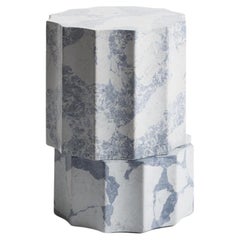
Domus Pompeii Fauno Stool by Roberto Sironi

Domus Pompeii Fauno Stool by Roberto Sironi

By Roberto Sironi

Located in Pireaus-Athens, Greece

Rediscovered in 1748, after being buried for almost two millennia under a blanket of lava and ash following the eruption of Vesuvius, Pompeii redefines our relationship with the past through its generative potential between reality and imagination. Defined by Goethe “An incredible place, worthy of peaceful thoughts”, Pompeii has the power to transform inanimate archaeological material into narrative matter, merging past and present in a relationship of reciprocity and interaction. Exploring the site, today as then, it is possible to admire the interiors decorated with frescoes that reproduce architectural partitions or that tell stories of myths and divinities, in rooms set up with marble elements that the owner used to display his most precious objects. The Pompeian frescoes were made according to different techniques with colors obtained from earth and minerals such as cinnabar (Pompeian red), ochres (Pompeian yellow), by oxidation processes of metals as in the case of cerulean or by the pulverization of roots and animal bones as in case of greens and blacks. DOMUS POMPEII is a capsule collection of five side...

Category

2010s Side Tables
Materials

Marble

Domus Pompeii Vettii Stool by Roberto Sironi

Domus Pompeii Vettii Stool by Roberto Sironi

By Roberto Sironi

Located in Pireaus-Athens, Greece

Rediscovered in 1748, after being buried for almost two millennia under a blanket of lava and ash following the eruption of Vesuvius, Pompeii redefines our relationship with the past through its generative potential between reality and imagination. Defined by Goethe “An incredible place, worthy of peaceful thoughts”, Pompeii has the power to transform inanimate archaeological material into narrative matter, merging past and present in a relationship of reciprocity and interaction. Exploring the site, today as then, it is possible to admire the interiors decorated with frescoes that reproduce architectural partitions or that tell stories of myths and divinities, in rooms set up with marble elements that the owner used to display his most precious objects. The Pompeian frescoes were made according to different techniques with colors obtained from earth and minerals such as cinnabar (Pompeian red), ochres (Pompeian yellow), by oxidation processes of metals as in the case of cerulean or by the pulverization of roots and animal bones as in case of greens and blacks. DOMUS POMPEII is a capsule collection of five side...

Category

2010s Stools

Materials

Marble

Windows of Bo Barbi Side Table by Linde Freya

Windows of Bo Barbi Side Table by Linde Freya

Located in Pireaus-Athens, Greece

Brutalist building SESC Pompeia, by Lina bo Bardi (Sao Paulo) is a guidance within the process for ‘windows of bo bardi’. The interventions Lina bo Bardi, Italian-Brazilian architect...

Category

2010s Stools

Materials

Wood

Stackable Stools by Bram Vanderbeke

Stackable Stools by Bram Vanderbeke

Located in Pireaus-Athens, Greece

These stackable stools or side tables are made out of compressed or pine plywood and are manually coated and coloured. Arranged individually, their el...

Category

2010s Stools

Materials

Pine