By Mayhew & Ince
Located in London, by appointment only
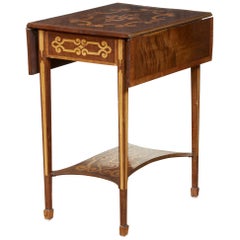
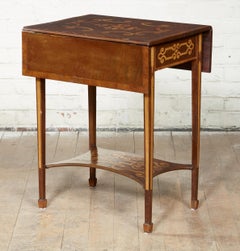
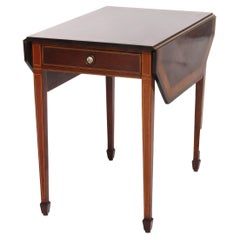
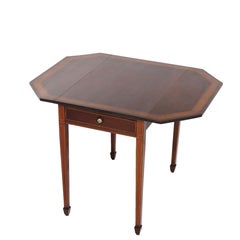
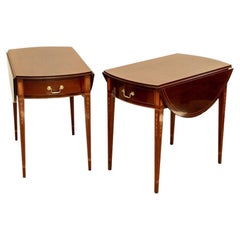
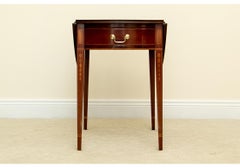
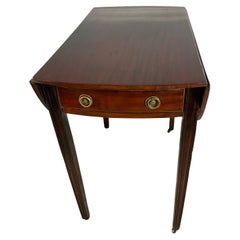
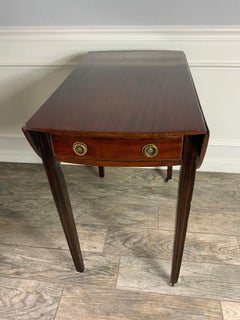
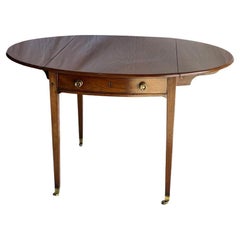
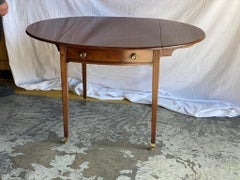
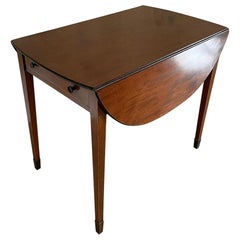
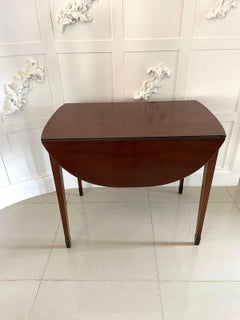
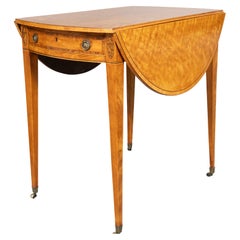
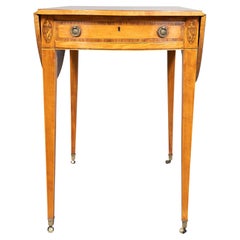
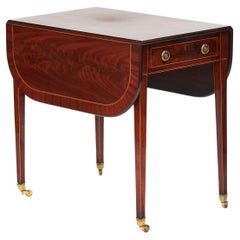
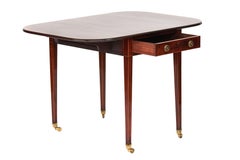
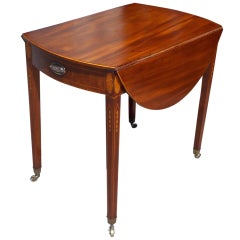
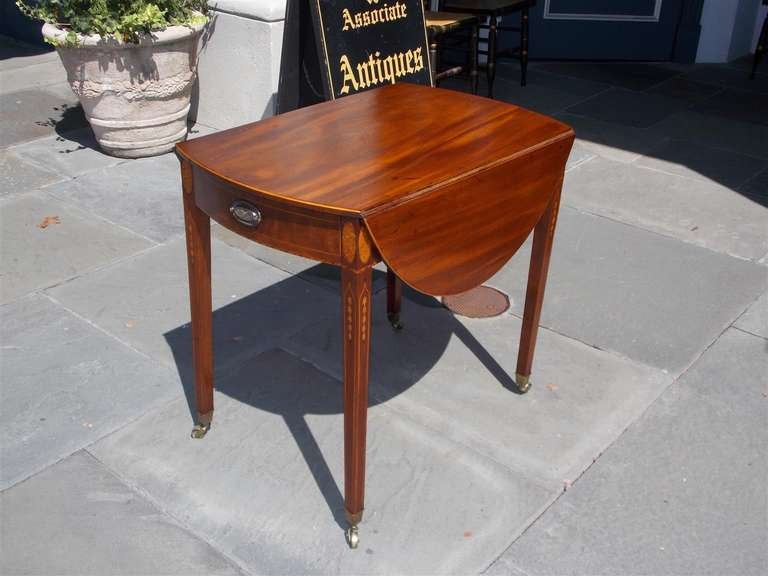
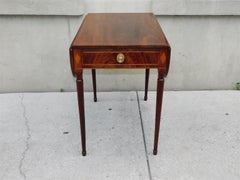
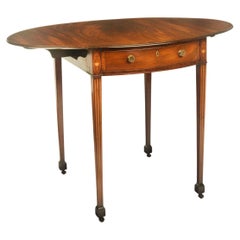
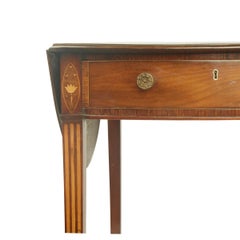
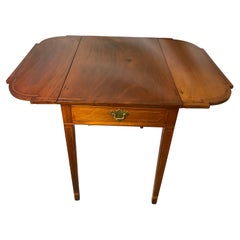
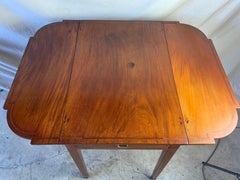
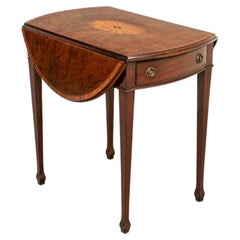
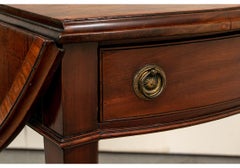
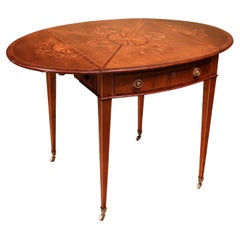
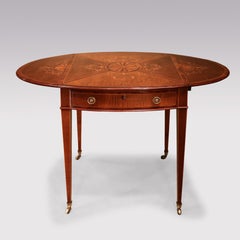
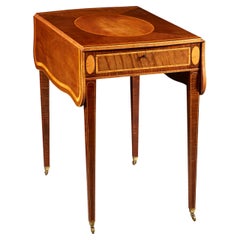
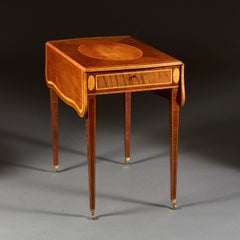
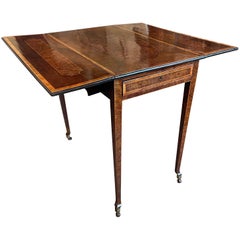
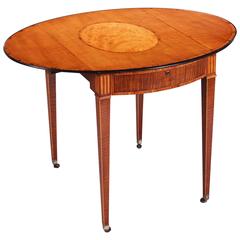
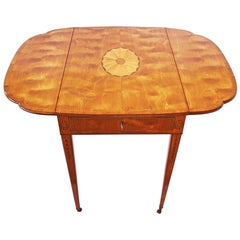
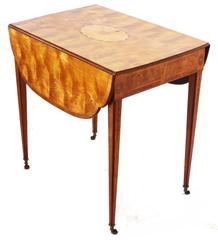
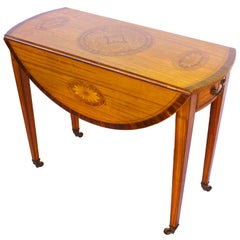
Important and rare George III harewood and satinwood pembroke table attributed to Mayhew & Ince, circa 1780. One of the finest 18th century pembroke tables ever made. The colour, figuration of the veneers & patina on this glorious piece are truly superb, the mahogany lined drawer & leather & brass casters are a beauty to behold. It is a most exceptional table. The amazing quality timber, construction & design of this outstanding piece all highlight the supreme design & craftsmanship of its makers, Mayhew & Ince. The centre is set with a superbly figured West Indian Satinwood oval, crossbanded in well figured Kingwood, which is framed in Boxwood & Mahogany lines, surrounded by the most incredible Harewood veneers, the outer edge again crossbanded in Kingwood & lined with Boxwood & Mahogany with an ebonised moulded edge. To again highlight the superior quality of the piece & the Mayhew & Ince features, the veneers of the top have been laid upon fine Honduras Mahogany, itself a prized timber usually used as the exterior timber. With one bowed drawer & one faux bowed drawer, each with Kingwood crossbanding. The top of each leg inlaid supremely with Holly to simulate fluting, the delightfully tapered legs strung on each corner with boxwood and terminating in their original castors. One of the finest and most elegant of pembroke tables ever made.
It is in excellent condition for its age. A Museum quality masterpiece from two of the most influential designers and makers from the 18th century.
Harewood is a majestic veneer, it has a very uncommon silver grey / green colour that is created by boiling English Sycamore veneer in a solution of ferrous (iron) sulphate. The process of treating this veneer with this chemical was time consuming & expensive so only the most highly-figured quarter sawn veneers were used. It is rare to find 18th century pieces completely veneered from this highly prized veneer. When completed this magnificent table would have been a striking silvery green, with contrasting bright yellow from the Satinwood & a rich purple from the Kingwood crossbanding. It's wonderful mellow colour, glorious figuration and patina have developed over time. A beautiful sign being when you lift the flap you can see the green color around the inlaid flutes where the light has not reached. It is quite simply a masterpiece.
Kingwood is a classic furniture wood, almost exclusively used in the period for inlays on only the finest of furniture. It is exceptional in its appearance.
In 1762 Mayhew and Ince published the “Universal System of Household Furniture” dedicated to the Duke of Marlborough. It was a folio of drawings and descriptions in both English and French that was produced in direct competition to their biggest trade competitor Thomas Chippendale. Chippendale’s “The Gentleman and Cabinet Makers Director” ( which Ince had been a subscriber to ) had first been published in 1754 and circulated around the country to the mainly aristocratic subscribers. Fairly quickly it became the industry standard amongst regional and colonial cabinet makers. It established Chippendale’s name, not only as a manufacturer of furniture but possibly the first interior designer, advising his noble clients on their overall project, from the colour of their walls to their soft furnishings. Ince & Mayhew quickly realised the commercial benefits of producing such a body of work and quickly followed suit. Mayhew and Ince’s style was far more classical than that of Thomas Chippendale with elaborate use of timber, inlaid woods and marquetry.
They worked closely with Robert Adam, most notably for Sir John Whitwell at Audley end in 1767, for the Duchess of Northumberland in 1771, for the Earl of Kerry in 1771 and, most importantly for the Duchess of Manchester in 1775 creating the Kimbolton Cabinet. Ince and Mayhew also provided furnishings for Humphry Sturt at Crichel House, Dorset, where James Wyatt was providing designs for the interiors. Their furniture for Warren Hastings...
Category
18th Century English George III Antique Harewood Drop-leaf and Pembroke Tables
MaterialsKingwood, Satinwood, Harewood