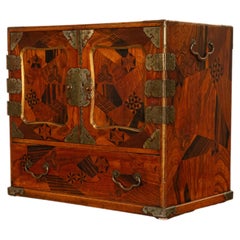
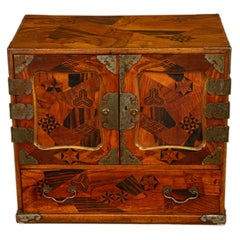
Early 18th/19th C. Spanish Italian Baroque Vargueno Table Cabinet On Stand
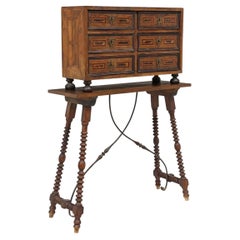
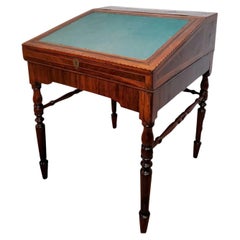
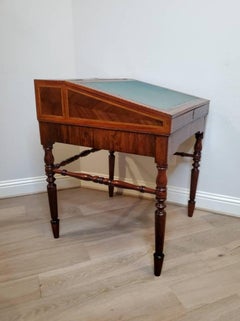
A rare and highly refined European Baroque Period (1600-1750) parquetry inlaid papeleria cabinet - bargueño on later early 19th century stand.
Dating to the early 18th century, Mediterranean Europe, most likely Northern Italy, possibly Spain or Flemish territories, this scarce high-end piece of furniture was typically reserved for only wealthy merchants and nobility, used for storing and traveling with important documents, business papers, writing correspondence, coins and valuables.
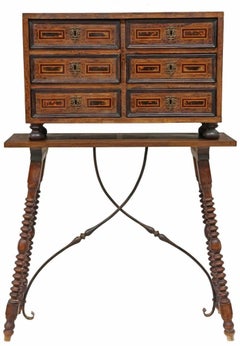
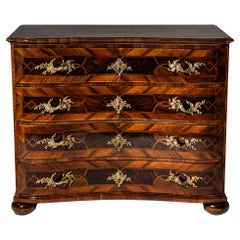
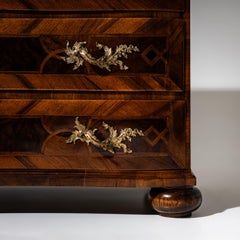
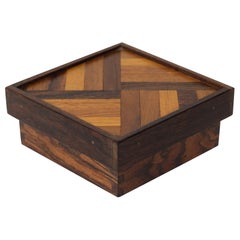
Hand-crafted by a highly skilled master artisan and a reflection of the finest workshops, this tabletop cabinet features a rectangular solid wood case case crafted of quality top choice, elaborately veneered in matched geometric inlays, with intricate finey arranged round string work, precious rosewood banding, and luxurious exotic molted tortoiseshell-effect panels, adding subtle color, warmth and depth with distinct mottled blends of warm rich browns, ambers, orange and red.
The portable open-front cabinet features six drawers arranged in two columns, each with hand cut dovetail joinery and mounted with the original ornate gilt bronze ormolu escutcheons, raised on bulbous feet.
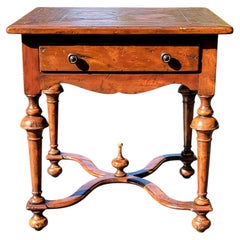
Resting atop a custom-made trestle base stand, executed in Spanish Baroque taste, crafted of solid walnut, having a conforming platform top finished in matching geometric veneering and banding, rising on ring-turned wooden legs, joined by decorative s-shaped black iron stretchers.
Boasting a highly attractive patina, authentic wear, with antique character marks, rustic charm, and rich historical depth that can only be acquired over very long periods of time and use. This elegant, interesting, functional chest on stand is an ideal focal point in a classic old world setting or as a sophisticated contrast in modern spaces.
- Dimensions: (approx)
Overall: 54.25" Tall, 38" Wide, 13.5" Deep;
Cabinet: 21.5"h, 35"w, 10.5"w;
Stand: 33.25"h, 38"w, 13.5"d;
Keywords:
Similar to a coffer cassone collectors cabinet of curiosities specimen exhibition cabinet bargueno Vargueno Taquillon...
Category
18th Century Baroque Antique Parquetry Furniture