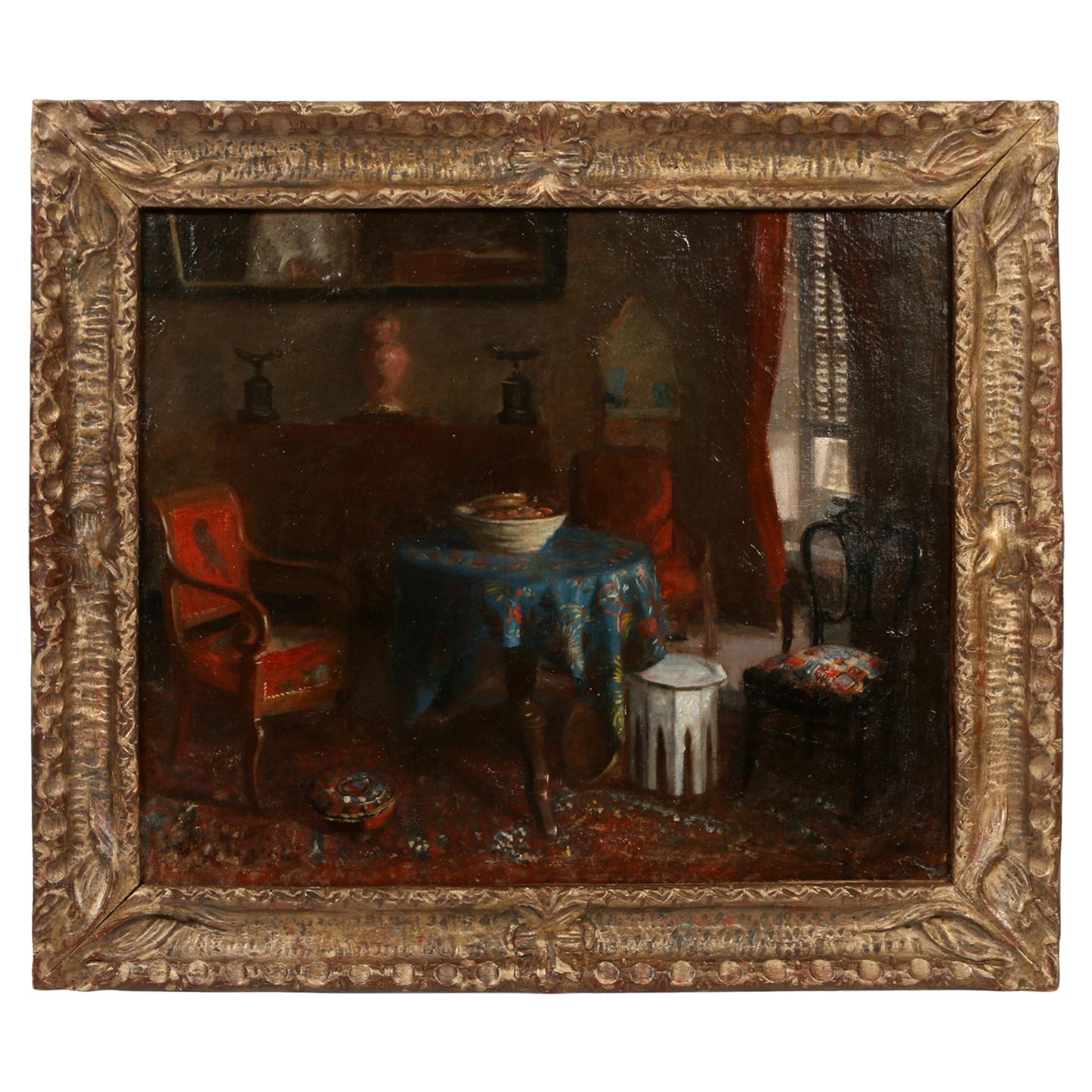
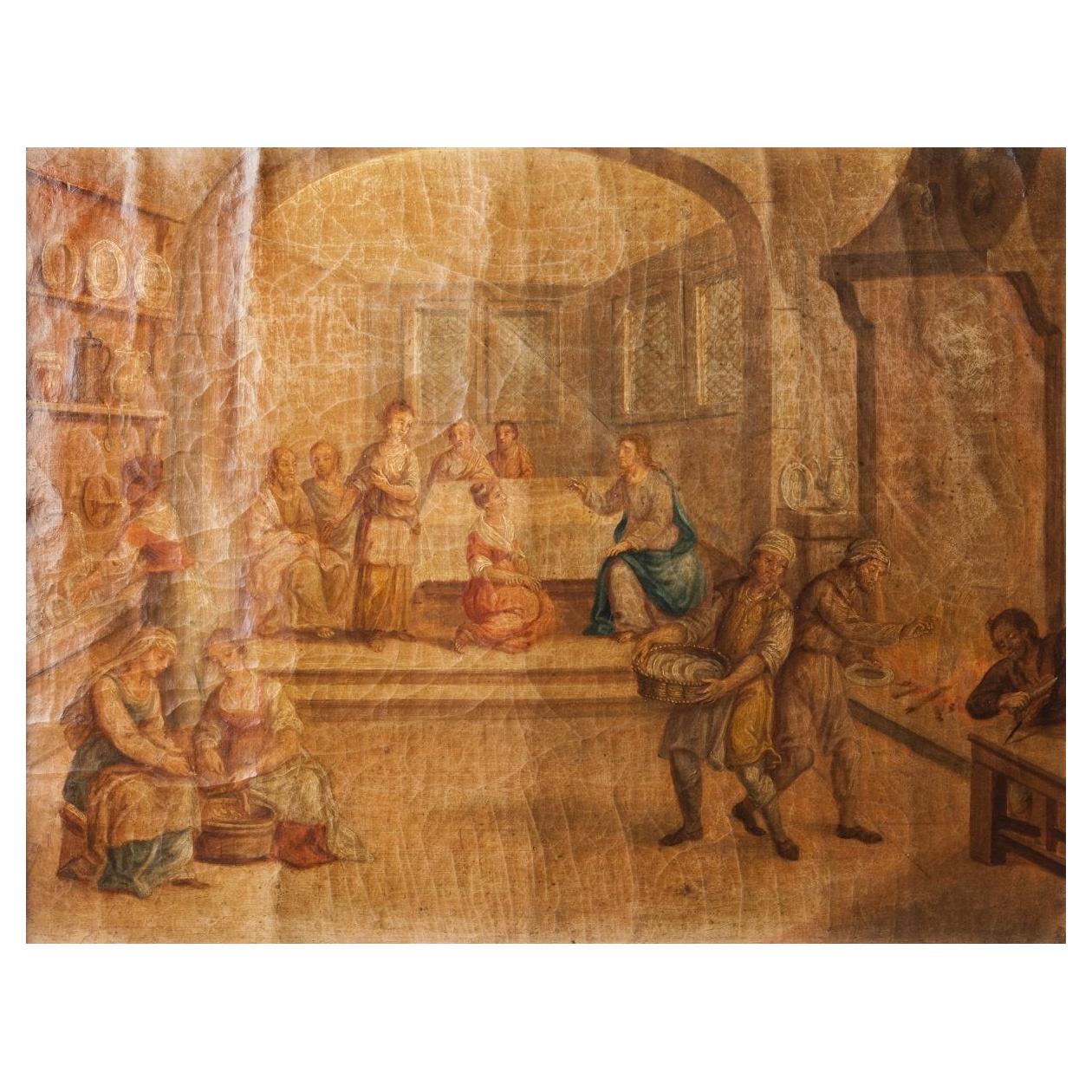
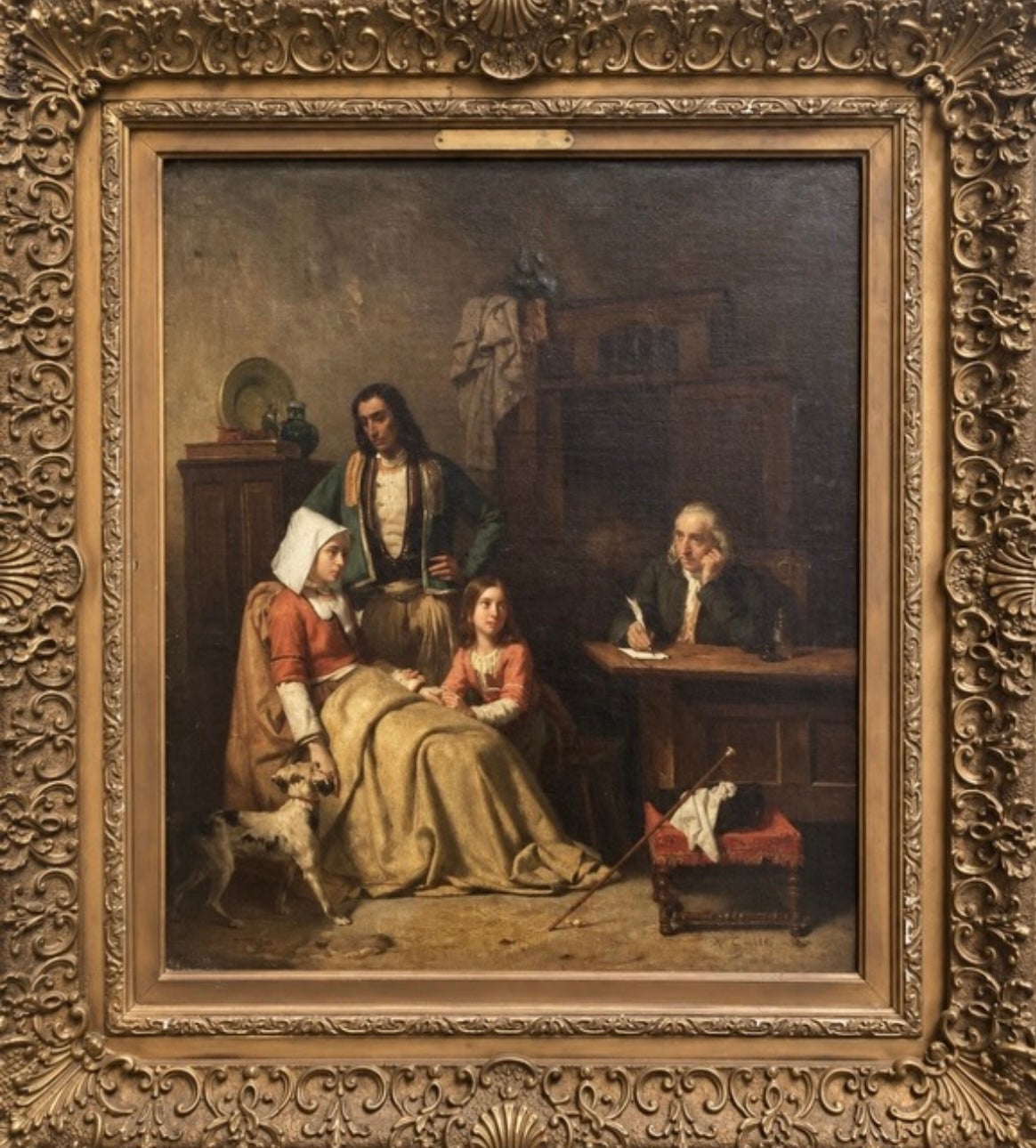
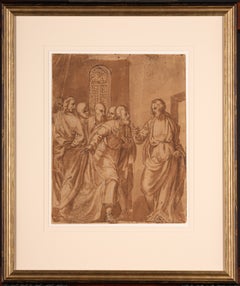
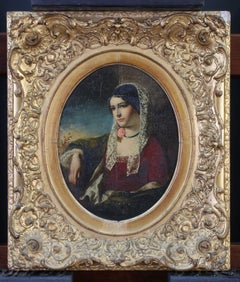
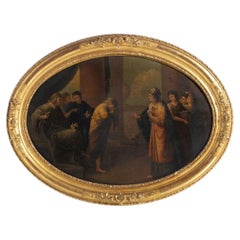
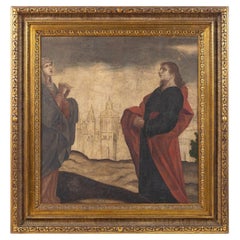
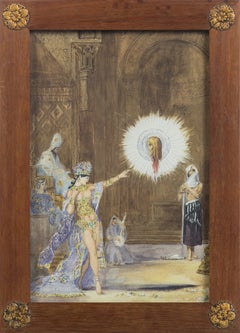
John Baptista Verbruggen was an English actor and painter born of Dutch descent. His date of birth is unknown but his death was recorded in 1708. His historical biography is confusing and somewhat mysterious, he was first recorded as acting in 1690 but the consensus of opinion is that an earlier date may well be found. However he is recorded as marrying a well known actress in 1694, Susan Mountfort, they both were in demand in the late 17th Century at the Drury Lane Theatre. He was later critically acclaimed as a talented and natural actor. This painting of monochrome grisaille looks to be a sketch of a scene from 'St. Paul preaching in Athens' , a roll that Verbruggen along with that of Alexander the Great was thought to have played. I have enclosed a photo of a similar scene painted by Raphael in 1514-1515, also a before and after conservation of this Verbruggen painting. I have included before and after images of the conservation, this picture is signed, lower right, J. Verbruggen pinx, as shown in the images.
I have included a biography of the artist for your information.
John Baptista Verbruggen (also spelled Baptiste; died 1708) was a prominent and highly regarded Restoration era English actor. He spent a significant portion of his career performing at London's celebrated Theatre Royal, Drury Lane. Known for his rugged intensity and raw talent, Verbruggen was a foundational figure in late 17th-century English drama. Note that historical records focus entirely on his theatrical career, and there is no evidence that he worked as a visual artist. Verbruggen’s early origins remain somewhat obscure, but his career began to take shape under the monarchy of King Charles II. He is first officially recorded in a Lord Chamberlain's warrant in 1688 as a member of the United Company. Theatre historians, including Thomas Davies, note that he originally performed under the pseudonym "Mr. Alexander". This alias was allegedly adopted from the titular lead role of Alexander the Great in John Dryden's popular tragedy The Rival Queens, though official cast lists did not credit his true surname until October 1690. In January 1694, Verbruggen married Susanna Mountfort (née Percival) at St Clement Danes. Susanna was one of the most famous and beloved comedic actresses of the Restoration stage, celebrated for her popular "breeches roles" where she cross-dressed as male characters. Susanna was the widow of actor-playwright William Mountfort, who had been murdered in 1692. The marriage was largely viewed by contemporaries as a practical union of necessity to support her young children. Verbruggen possessed a fierce, volatile temper and was notorious for his propensity for violence. Despite reportedly declaring that he "did not much value" his wife, he was fiercely protective of her honor and famously prone to drawing his sword at the slightest perceived insult. While many actors of the 17th century relied heavily on highly stylized, rehearsed manners, Verbruggen was celebrated for his naturalistic and untamed acting style. Prominent prompt-book commentator Anthony Aston famously described Verbruggen as a "rough diamond" who "shone more bright than all the artful polished brilliants that ever sparkled on our stage," praising his freedom of movement and expressive, unforced passion. Standing as a stark contrast to his more traditional contemporary Thomas Betterton, Verbruggen became the definitive casting choice for clever rakes, fine gentlemen, and complex dramatic heroes. In 1700, Verbruggen originated the iconic role of Mirabell in William Congreve's masterpiece, The Way of the World. He earned widespread acclaim for originating the role of Loveless in John Vanbrugh’s masterpiece The Relapse (1696), and for his empathetic performance as the tragic titular character in Thomas Southerne’s stage adaptation of Aphra Behn’s Oroonoko. The late 1690s and early 1700s brought professional turbulence, with Verbruggen moving between competing companies managed by Thomas Betterton and Christopher Rich at Drury Lane and Lincoln's Inn Fields. Tragedy struck his personal life in 1703 when Susanna died from complications following childbirth. Verbruggen continued acting for a few more years, notably finally playing Alexander the Great under his own name in 1703.John Baptista Verbruggen died and was buried on 12 March 1708. Shortly after his death, the actors at the Drury Lane theatre rallied to stage a benefit performance to raise money for his surviving orphaned children.