Want more images or videos?
Request additional images or videos from the seller.

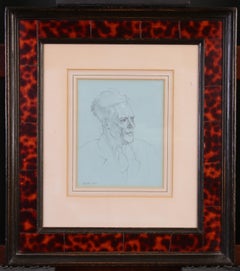
Joseph ( Arnold ) Freeman
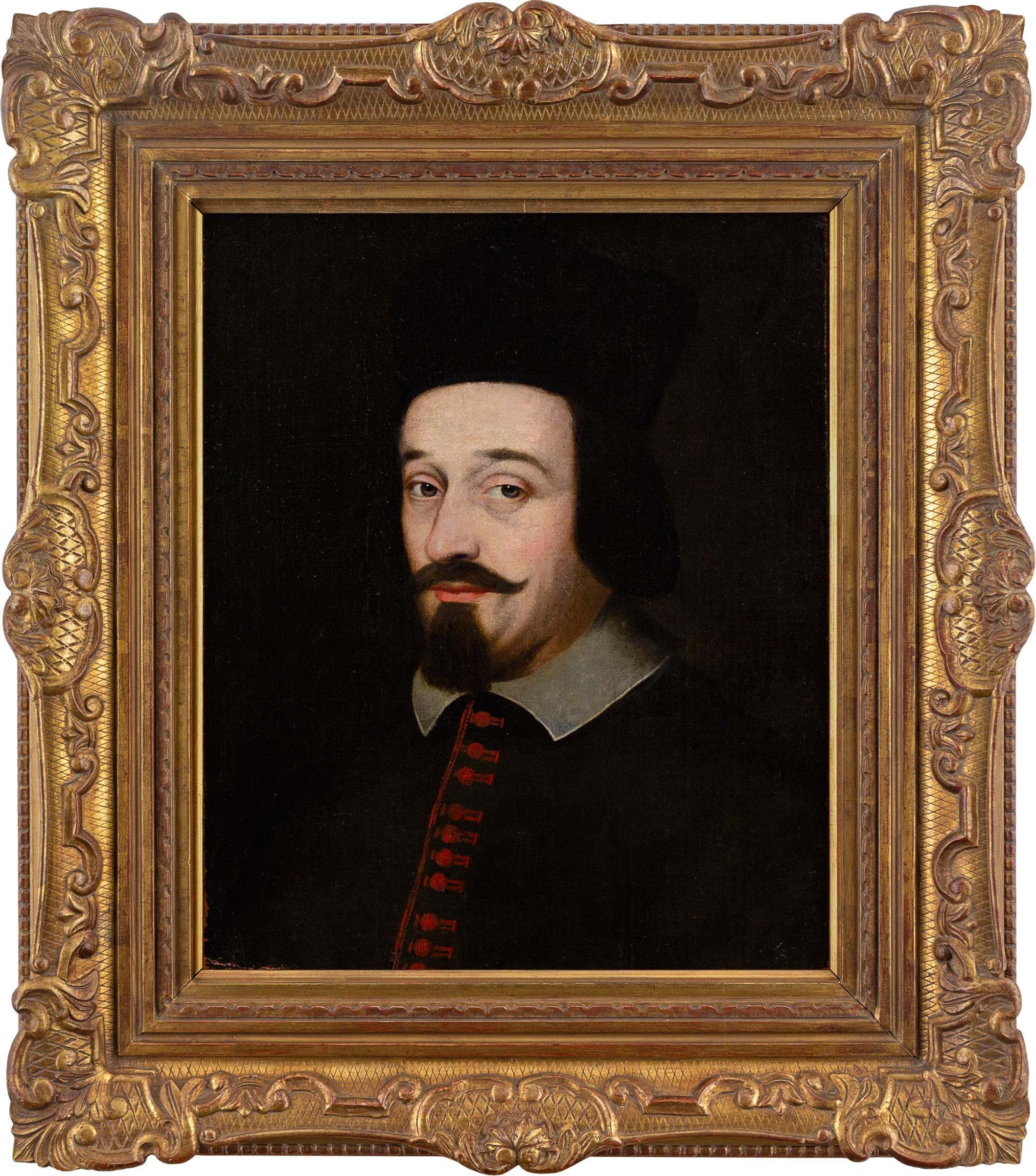
Portrait of Tiziano Vecellio ' Titian '

Late 18th Century

$5,071.95
£3,750
€4,578.50
CA$7,232.58
A$7,415.80
CHF 4,225.25
MX$94,396.76
NOK 48,533.35
SEK 50,637.78
DKK 34,225.28

About the Item

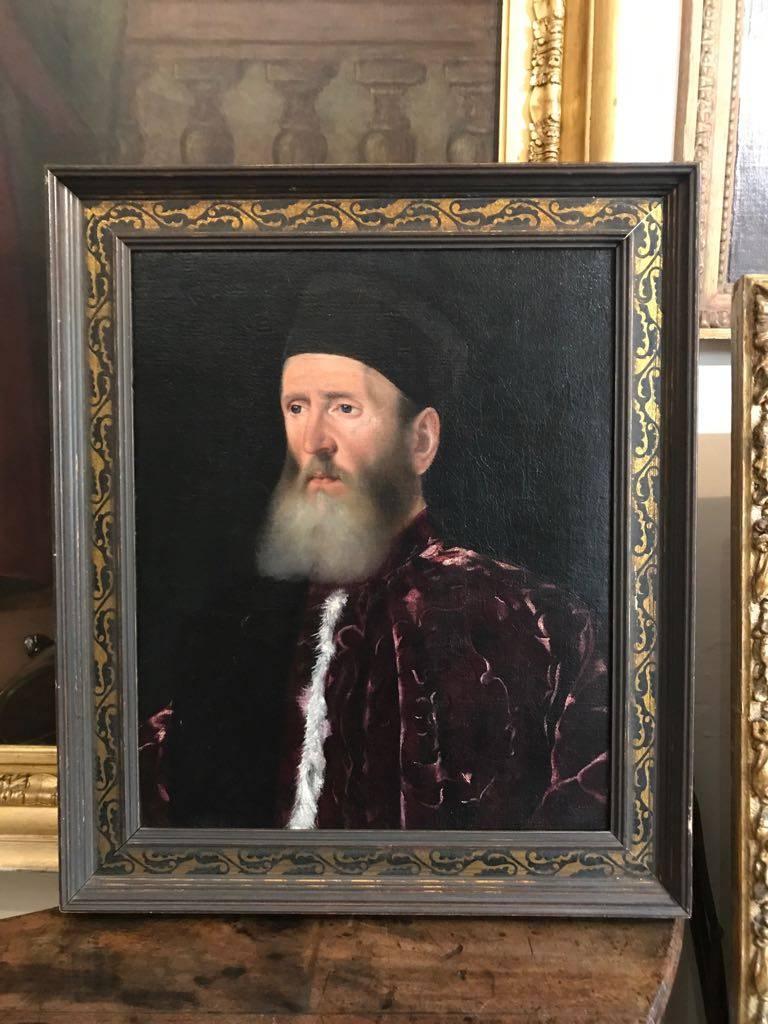
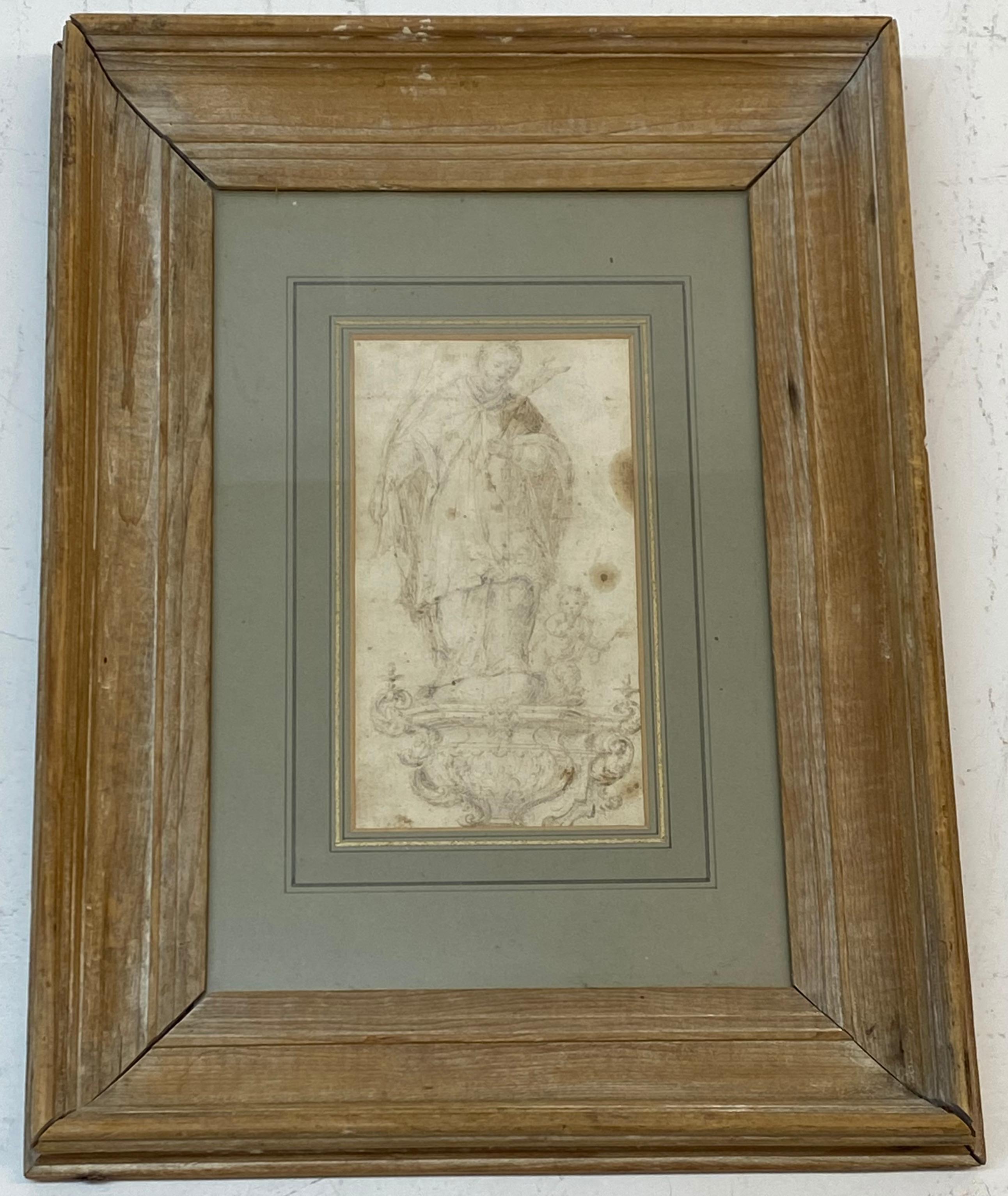
Joseph Arnold Freeman 1729-1799, was an English painter and draftsman. Freeman's middle name has been acquired through knowledge from an elderly now deceased art scholar, this is unrecorded. However, Freeman was an accomplished copyist and this drawing which dates around the third quarter of the 18th Century was commonly used as an introduction to those potential clients that were to engage Freeman for a commission but not knowing of his talents. This drawing was probably produced within the hour and expresses his ability as a draftsman. Freeman has painted a large number of portraits in oil around the various collages of Cambridge, the dining room at Emanuel College contains no less than 11 of his portrait paintings all copies of earlier works from the King's collections, such as Windsor and Hampton Court. University Colleges displayed portraits of the wealthy patrons of their individual Colleges, however these rare and antique pictures were already within various collections and consequently the copyist Freeman was engaged to carry out the task of reproducing the originals. This would have entailed travelling great distances at the time when travel was fraught with danger. Freeman's work is exemplary as a copyist and Titian's portrait here holding a rectangular pallet is typical of a calling card, the portrait being well known of among scholars in the 18th Century, another of these drawings is sitting in a National Gallery collection a photo of which is enclosed along with the photo of the original self portrait painting, which is holding an oval pallet, and one other drawing of an Infrared image which was sent to the Chairman of the Historical Paper Society who confirmed the date by way of the lines in the paper and the chains. The conclusion is that Freeman displayed his talent to the proposed patron and deliberately changed the shape of the pallet so as noy to be accused of using a prepared drawing, and if drawn in the presence of the patron there is no better way to display his ability. This work is unsigned but is known to be by Freeman through scholarly study and a lifetime of experience in art. I have included a biography of the draughtsman of this drawing for your interest. Arnold Freeman (1729–1799) was an 18th-century British painter best remembered for his exceptional technical talent as a copyist. While history left fewer details of his early personal life, his professional career flourished through specialized commissions from academic institutions and discerning patrons who valued historical accuracy over original composition. Freeman’s reputation was built entirely on his profound copyist abilities, which required a rare blend of painterly precision, deep structural analysis, and an innate understanding of historical chemistry. Rather than simply mimicking shapes, Freeman possessed a unique capacity to reverse-engineer the exact brushwork, layering techniques, and color palettes of older masters. His replicates were so structurally faithful that they often captured the subtle aging and textural nuances of the originals, balancing technical rigidity with an elusive artistic vitality. His most notable career milestone occurred through his work for the University of Cambridge. Freeman was frequently employed by influential university figures, most notably Dr Richard Farmer, the Master of Emmanuel College. Tasked with decorating the prestigious dining halls and academic spaces, Freeman was commissioned to copy historical portraits of significant college benefactors, theologians, and historical alumni. To execute these pieces to perfection, Freeman studied the aging portraits in private collections and national archives. His meticulous process ensured that the newly hung paintings in the dining halls projected an immediate aura of historic permanence and institutional prestige. His copy of a portrait thought to depict the theologian Peter Allix senior remains a testament to this period. Freeman’s career perfectly reflects an era when the preservation and replication of historic art were celebrated as virtuosic, essential crafts within British academia.
  • Creator:
    Joseph ( Arnold ) Freeman (1729 - 1799, British)
  • Creation Year:
    Late 18th Century
  • Dimensions:
    Height: 8.5 in (21.59 cm)Width: 8 in (20.32 cm)Depth: 1 in (2.54 cm)
  • Medium:
  • Period:
  • Condition:
  • Gallery Location:
    Douglas, GB
  • Reference Number:
    Seller: No. 1371stDibs: LU2373215500902

More From This Seller

View All
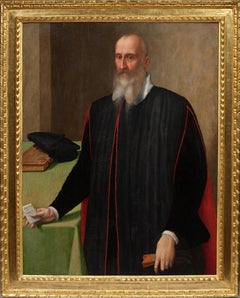
Portrait of a Venetian Nobleman

Portrait of a Venetian Nobleman

Located in Douglas, Isle of Man

Attributed to, Alessandro Longhi 1733-1813, Longhi was a prominent Venetian portrait painter, printmaker, and biographer. The son of the famous genre painter Pietro Longhi, he is known for his detailed oil portraits of the Venetian aristocracy and his valuable book on contemporary Venetian painters. Longhi early life and training : Born: Alessandro Longhi was born on June 12, 1733, in Venice. He received his initial training from his father, Pietro Longhi. He later studied under Giuseppe Nogari, a respected portraitist in Venice during the 18th century, and was elected to the Venetian Academy in 1759. Longhi specialized in portraiture, primarily depicting the nobles and officials of the Republic of Venice. His paintings are a valuable record of the social and political structure of 18th-century Venice. Rococo aesthetic: Working in the Rococo style, he was adept at capturing the elegance and social status of his subjects. He paid meticulous attention to the elaborate robes, wigs, and emblems of office that signified his subjects' power. While his official state portraits could be stiff and formal, his portraits of less noble patrons demonstrated a greater sense of realism and psychological insight. Longhi was also an accomplished printmaker, particularly in etching. His etching technique showed an awareness of Rembrandt's work, and he used this skill to reproduce his and his father's paintings. In 1762, he published Compendio delle vite de' pittori veneziani istorici più rinomati del presente secolo, a biographical dictionary of contemporary Venetian painters that is still an important resource for art historians. Longhi illustrated the book with etched portraits of the artists. The portrait of Carlo Goldoni: One of his most celebrated paintings is his portrait of the Venetian playwright and librettist Carlo Goldoni. For his election to the Venetian Academy, he painted this allegory, which features a personified figure of Painting. His known portraits include Portrait of a Lady (Uffizi Gallery, Florence), Portrait of a Musician, and various portraits of Venetian nobles and officials. I have included further albeit identical biographies of Alessandro Longhi. Alessandro Longhi (born June 12, 1733, Venice—died 1813, Venice) was a painter, etcher, and biographer of Venetian artists, and was the most important Venetian portrait painter of his day. The son of the painter Pietro Longhi, he was given his first training by his father, who quite soon put him to study under the portrait painter Giuseppe Nogari. In 1759 he was elected a member of the Venetian academy, for which he painted one of his rare allegorical pictures, “Painting and Merit.” In 1762 Longhi issued his book Compendio delle Vite de’ Pittori Veneziani Istorici piu rinomati del presente secolo con sui ritratti dal naturale delineati ed indisi, one of the most important source books for the history of Venetian 18th-century painting. Both portraits and text were printed from plates he etched. Longhi’s facilely rendered portraits are largely generalized likenesses lacking any acuity of character observation. He mainly portrayed the leading Venetian luminaries and dignitaries of his day in a style that drew upon his father’s Rococo manner and 16th-century traditions of Venetian Renaissance portraiture. The personal details available for the painter Alessandro Longhi are limited, but his biography is intertwined with that of his family and the city of Venice. He was the son of a successful painter, which set his artistic path, and is known for creating sensitive and realistic portraits that captured the social atmosphere of 18th-century Venice. Alessandro was born in Venice in 1733 to the celebrated genre painter Pietro Longhi. He received his early training from his father before studying under another prominent portraitist, Giuseppe Nogari. A contrast to his father: While his father was known for painting scenes of everyday Venetian life, Alessandro focused almost exclusively on portraiture. His skill enabled him to capture the intimate psychology and character of his subjects, a quality especially evident in his portraits of less noble patrons. Election to the academy: In 1759, Alessandro was elected to the Accademia dei Pittori, the Venetian Academy of Painting. His election solidified his reputation as a master of the Rococo style. Beyond painting, Longhi was an accomplished printmaker, primarily producing etchings that reproduced his own works and those of his father. In 1762, he published the Compendio delle vite de' pittori veneziani, a collection of biographies of contemporary Venetian painters, which is an important historical resource. He became a prominent portraitist for Venice's upper class, including nobles and state officials. His official state portraits featured grand, full-length depictions of his subjects in their elaborate robes and emblems of office. Emphasis on realism: In contrast to the stylized nature of official portraits, Alessandro was praised for the "reality" he captured in works featuring common people. For example, his 1760 portrait of an innkeeper was celebrated for its realistic subject matter and "nuova maniera" (new manner). The art historian Olimpia Theodoli noted that Longhi's etching technique showed he had a firsthand knowledge of Rembrandt's work. Among his more famous works are a sensitive portrait of playwright Carlo Goldoni and the painting Portrait of a Wine Butler. He also produced religious and allegorical works, including paintings of the "Apostles" for the church of San Pantalon in Venice. This painting has been carefully conserved and the frame also, the frame looks to be original to the picture but we have no way of confirming this but we believe it to be so. 18th Century Italian portraits...

Category

Mid-18th Century Portrait Paintings
Materials

Canvas, Oil

Portrait of a Sculptor

Portrait of a Sculptor

By Andrea Del Sarto

Located in Douglas, Isle of Man

After Andrea Del Sarto 1486 - 1530, who was an Italian Renaissance painter and draughtsman. Del Sarto worked in Fresco decorating, portrait painting and as a painter of alter pieces,...

Category

Mid-19th Century Portrait Paintings

Materials

Canvas, Oil

Portrait of John Seymour Lucas

Portrait of John Seymour Lucas

By Alphonse Legros

Located in Douglas, Isle of Man

Alphonse Legros 1837-1911, was a French painter and sculptor, who lived in London from 1863 until his death in 1911. He was a teacher of etching and drawing and became Slade Professo...

Category

1910s Portrait Drawings and Watercolors

Materials

Paper, Charcoal

Lord David Cecil

Lord David Cecil

Located in Douglas, Isle of Man

Albert Daniel Rutherston 1881-1953, was an English artist who painted, portraits, landscapes, illustrated books and designed stage sets. Two of his brothers were Sir William Rothenst...

Category

1940s Portrait Drawings and Watercolors

Materials

Pencil, Paper

Proffesor Nevill Coghill

Proffesor Nevill Coghill

Located in Douglas, Isle of Man

Albert Rutherston 1881-1953, was an English artist, who painted portraits, landscapes, illustrated books and designed stage sets. Two of his brothers were Sir William Rothenstein and...

Category

1940s Portrait Drawings and Watercolors

Materials

Pencil

You May Also Like

16th Century Italian Renaissance Old Master Portrait of a Procuratore

16th Century Italian Renaissance Old Master Portrait of a Procuratore

By Jacopo Bassano

Located in London, GB

Jacopo BASSANO (c. 1510-1592, Italian) Portrait of a Procuratore Oil on canvas 30 ¼ x 26 inches (including frame) Provenance: Lucien Bonaparte’s Collection (as Portrait of Doge Priuli, Tiziano); Rich-mond, Virginia Museum, Portrait of Doge Lorenzo Priuli. The painting is a portrait of a man half-length, on a black background. It is a three-quarter portrait, according to a custom very common in the genre of portraiture in sixteenth century. The man is wearing a decorated...

Category

16th Century Old Masters Portrait Paintings

Materials

Oil

Portrait of Senator Bartolomeo Panciatichi by Santi di Tito (1574)

Portrait of Senator Bartolomeo Panciatichi by Santi di Tito (1574)

Located in PARIS, FR

This recently rediscovered portrait of Santi di Tito depicts a Florentine senator, with a letter in his hand indicating that the painting was executed in 1574 when the sitter was 66 years old. On the basis of these clues, it is tempting to view it as a portrait of Bartolomeo Panciatichi, who was painted some thirty years before by Bronzino (1503 - 1572). While the treatment of the hands recalls the Florentine tradition of Mannerist portraits, the comparison with Bronzino's portrait illustrates Santi di Tito's search for greater realism, despite the stereotyped composition. 1. Santi di Tito, Counter-Reformation painter and portraitist Santi di Tito was the great painter of the Florentine Counter-Reformation. He proposed a new artistic language that broke away from Mannerism. Little is known about his training in Florence (perhaps alongside Bronzino or Baccio Bandinelli), but this period of training enabled him to join the Company of Saint Luke, the guild of Florentine painters, in 1554. Between 1560 and 1564, Santi di Tito spent time in Rome, where he frequented the workshop of Taddeo Zuccari. This stay had a fundamental influence on his work, thanks to the discovery of the late work of Raphael, but also his encounters with the painters Francesco Salviati and Federico Barocci. Around 1565, Santi di Tito returned to Florence, where he remained until the end of his life, dividing his talents between the creation of important religious paintings and countless portraits. He became one of the city's leading painters, distinguishing himself, in particular, in the creation of large religious compositions in which the spirit of the Counter-Reformation was reflected. In 1568, Santi di Tito became a member of the Confraternity of Saint Thomas Aquinas...

Category

16th Century Old Masters Portrait Paintings

Materials

Poplar, Oil

After Moretto - Italian 19th Century Watercolour, Portrait of a Man

After Moretto - Italian 19th Century Watercolour, Portrait of a Man

Located in Corsham, GB

A fine 19th century watercolour copy of Italian Renaissance painter, Moretto's, Portrait of a Man. Dated in Roman numerals to the lower right (1562). Presented in an ornate gilt effe...

Category

19th Century Portrait Drawings and Watercolors

Materials

Watercolor

16th Century by Giovanni Maria Butteri Portrait of Francesco I Oil on Panel

16th Century by Giovanni Maria Butteri Portrait of Francesco I Oil on Panel

Located in Milano, Lombardia

Giovanni Maria Butteri (Florence, Italy, 1540 - 1606) Title: Portrait of Francesco I Medium: Oil on panel Dimensions: without frame cm. 47.7 x 39 - with frame cm. 55.2 x 46.5 Not signed Expertise by Carlo Falciani, art historian Fairs: The International Biennial of Antiques in Florence 2024 (BIAF, Biennale Internazionale dell’Antiquariato di Firenze) Publications: From Sacro to Profano, the Giorgio Baratti art collection from Milan, exhibition catalogue curated by Daiva Mitrulevičiūtė, Giovanni Matteo Guidetti and Ileana Maniscalco, (16 February – 27 September 2020), Vilnius, National Museum - Palace of the Grand Dukes of Lithuania, pp. 566-569. This valuable portrait, by the painter Giovanni Maria Butteri, an exponent of Mannerism and active mainly in Florence, portrays Francesco I de' Medici (1541 - 1587) eldest son of the Grand Duke of Tuscany...

Category

16th Century Old Masters Portrait Paintings

Materials

Oil, Panel

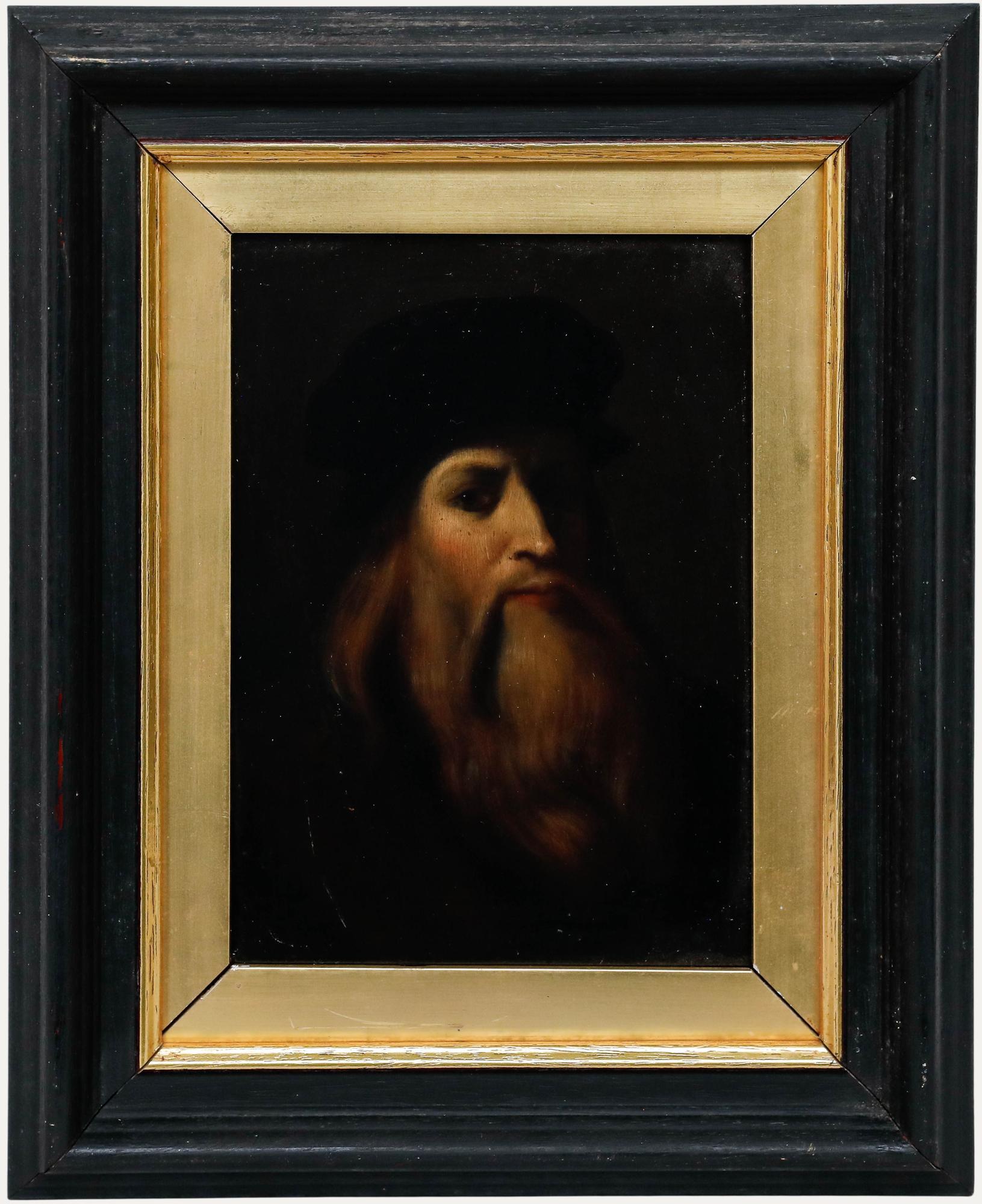
Italian School Early 20th Century Oil - Portrait of Leonardo da Vinci

Italian School Early 20th Century Oil - Portrait of Leonardo da Vinci

Located in Corsham, GB

A fine early 20th century copy of the Lucanian portrait of Leonardo da Vinci. Presented in an ebonised black frame with a gilt inner slip. Unsigned. On panel. Image size: 20.5 x 15cm.

Category

20th Century Portrait Paintings
Materials

Oil