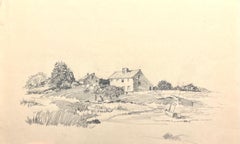
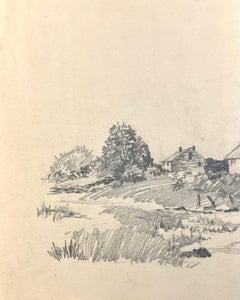
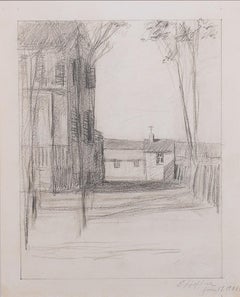
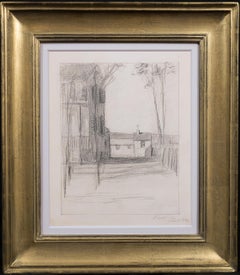
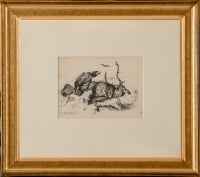
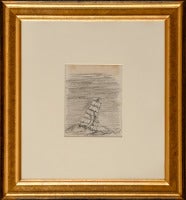
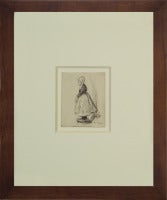
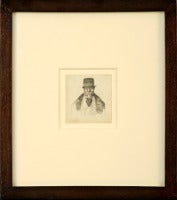
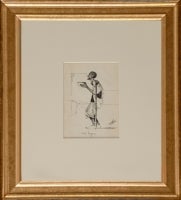
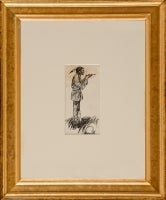
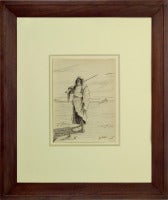
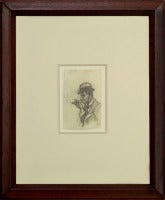
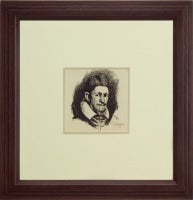
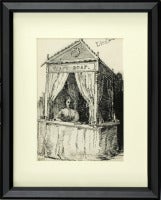
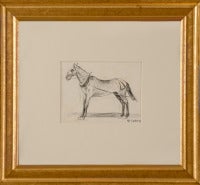
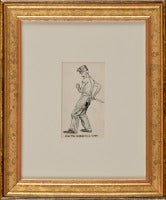
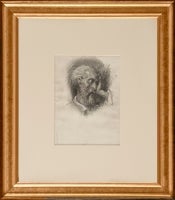
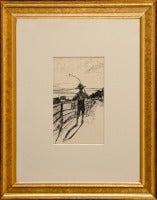
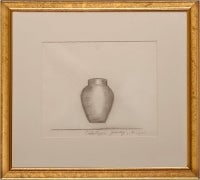
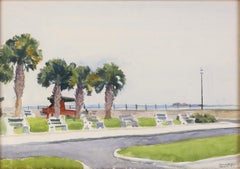
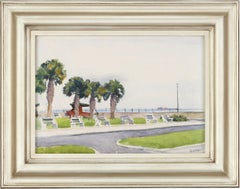
On 1stDibs, you can find the most appropriate edward hopper drawing for your needs in our varied inventory. You can easily find an example made in the
contemporary style, while we also have 41
contemporary versions to choose from as well. You’re likely to find the perfect edward hopper drawing among the distinctive items we have available, which includes versions made as long ago as the 19th Century as well as those made as recently as the 21st Century. If you’re looking to add a edward hopper drawing to create new energy in an otherwise neutral space in your home, you can find a work on 1stDibs that features elements of
black,
gray,
brown,
blue and more. Creating a edward hopper drawing has been a part of the legacy of many artists, but those crafted by
Edward Hopper,
John Duffin,
Sue Bryan,
Catherine Christiano and
Jane Bloodgood-Abrams are consistently popular. Artworks like these — often created in
paint,
paper and
oil paint — can elevate any room of your home.
The price for an artwork of this kind can differ depending upon size, time period and other attributes — a edward hopper drawing in our inventory may begin at $40 and can go as high as $54,500, while the average can fetch as much as $3,023.
Born in Nyack, New York, along the Hudson River, Edward Hopper began to study art in the local schools before seeking instruction in commercial art in New York City in 1899. From 1900 to about 1906 he studied at the New York School of Art under Robert Henri and Kenneth Hayes Miller, both of whom urged their students to concentrate on modern subjects.
Among Hopper's fellow students were George Bellows, Rockwell Kent, and Guy Pene du Bois. Between 1906 and 19l0, Hopper made three European visits of several months each, spending most of his time in Paris. Living quietly with a French family, he did not study in an art school but painted on his own. The artists he looked at and admired were those Henri had suggested — Goya, Manet, Degas, Sisley and Pissarro. The latter two showed up as the first major influences of his street views of Paris.
Back home in these same years, Hopper was painting aspects of the native scene that few artists had attempted. Although the Ashcan group — Henri, John Sloan, William Glackens, George Luks and Everett Shinn — concentrated on the visual aspects of the metropolis, Hopper was the first to capture the inner feelings of the city and suburban dwellers themselves. Railroad Train (Addison Gallery of Art) and The El Station (Whitney Museum of American Art), both of 1908, were transitional works showing Hopper's movement away from Henri's dark tonalities of the period toward outdoor light and color effects. Little recognition came his way at first and Hopper was forced to concentrate on illustration work to make a living.
Hopper stopped painting completely for a time and, around l9l9, took up etching, capturing on the plate his concepts of everyday life in America that contained the essentials of his later paintings: uncompromising realism, absolute simplicity of statement and a sense of mood that raised it above mere naturalism. His etchings were accepted in major exhibitions and won prizes for the artist; this encouragement led him to take up painting again, both in oil and watercolor, a medium in which he proved to be a master.
In 1927, a showing of his oils at the Rehn Gallery in New York definitely established Hopper's reputation. From about 1920 on, a number of younger artists including Thomas Hart Benton, Charles Burchfield, Reginald Marsh, John Steuart Curry, Grant Wood joined Hopper in a nationalist school dedicated to painting the native scene in a more or less naturalistic style. Hopper's masterpieces of the 1920s and 1930s: House by the Railroad (1925, Museum of Modern Art), Automat (1927, Des Moines Art Center) and Lighthouse at Two Lights (1929, Metropolitan Museum of Art) formed the core of this American Scene movement.
Hopper's vision was unique. The people inhabiting his city and suburban scenes are lonely, anonymous, temporary inhabitants of sometimes inhospitable environments. When there is no human element, he transfers these qualities to the architecture or even to the landscape itself, using intense light to infuse human emotion.
Find original Edward Hopper paintings and prints on 1stDibs.
(Biography provided by Lincoln Glenn)
Revitalize your interiors — introduce drawings and watercolor paintings to your home to evoke emotions, stir conversation and show off your personality and elevated taste.
Drawing is often considered one of the world’s oldest art forms, with historians pointing to cave art as evidence. In fact, a cave in South Africa, home to Stone Age–era artists, houses artwork that is believed to be around 73,000 years old. It has indeed been argued that cave walls were the canvases for early watercolorists as well as for landscape painters in general, who endeavor to depict and elevate natural scenery through their works of art. The supplies and methods used by artists and illustrators to create drawings and paintings have evolved over the years, and so too have the intentions. Artists can use their drawing and painting talents to observe and capture a moment, to explore or communicate ideas and convey or evoke emotion. No matter if an artist is working in charcoal or in watercolor and has chosen to portray the marvels of the pure human form, to create realistic depictions of animals in their natural habitats or perhaps to forge a new path that references the long history of abstract visual art, adding a drawing or watercolor painting to your living room or dining room that speaks to you will in turn speak to your guests and conjure stimulating energy in your space.
When you introduce a new piece of art into a common area of your home — a figurative painting by Italian watercolorist Mino Maccari or a colorful still life, such as a detailed botanical work by Deborah Eddy — you’re bringing in textures that can add visual weight to your interior design. You’ll also be creating a much-needed focal point that can instantly guide an eye toward a designated space, particularly in a room that sees a lot of foot traffic.
When you’re shopping for new visual art, whether it’s for your apartment or weekend house, remember to choose something that resonates. It doesn’t always need to make you happy, but you should at least enjoy its energy. On 1stDibs, browse a wide-ranging collection of drawings and watercolor paintings and find out how to arrange wall art when you’re ready to hang your new works.