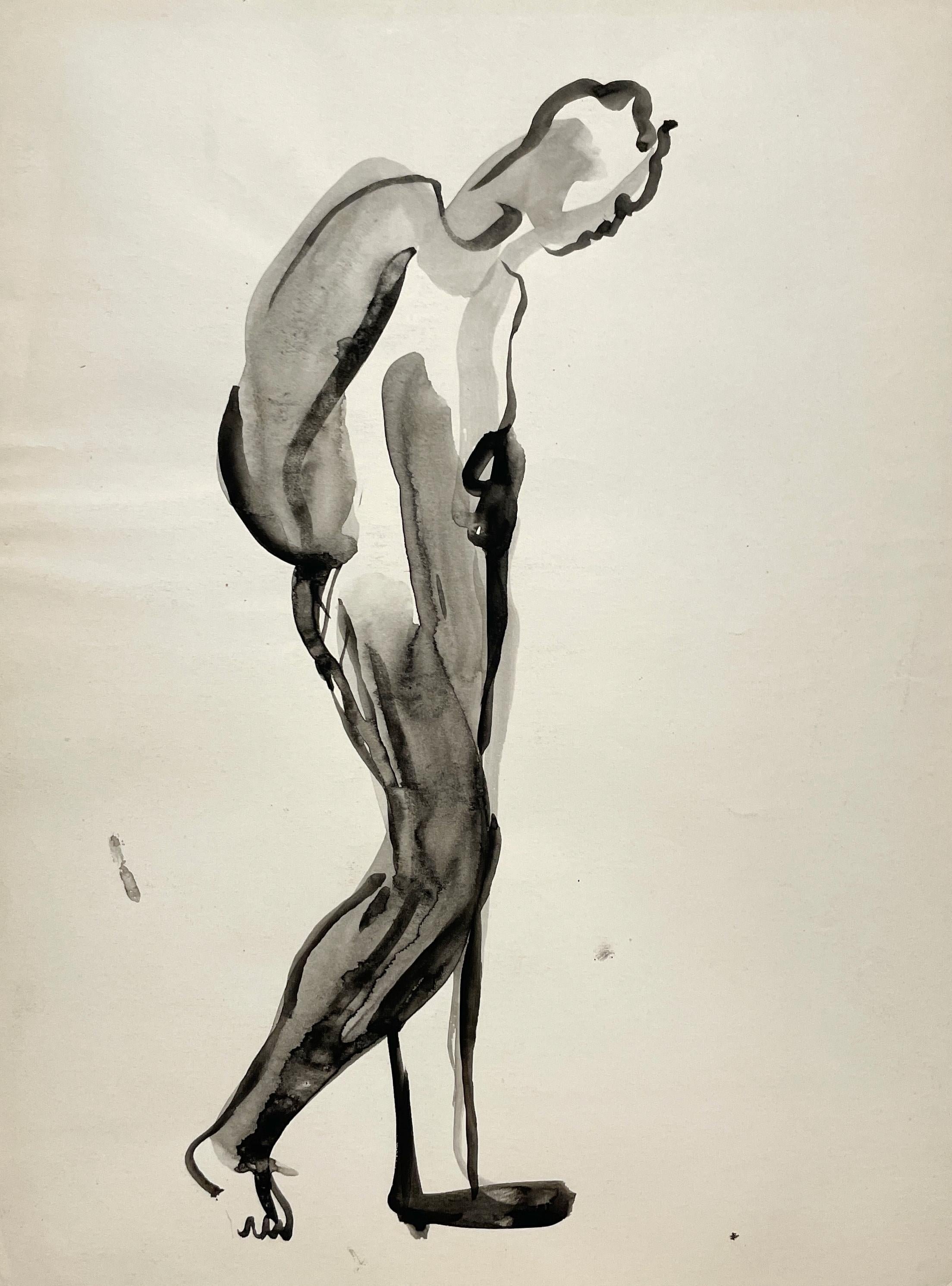
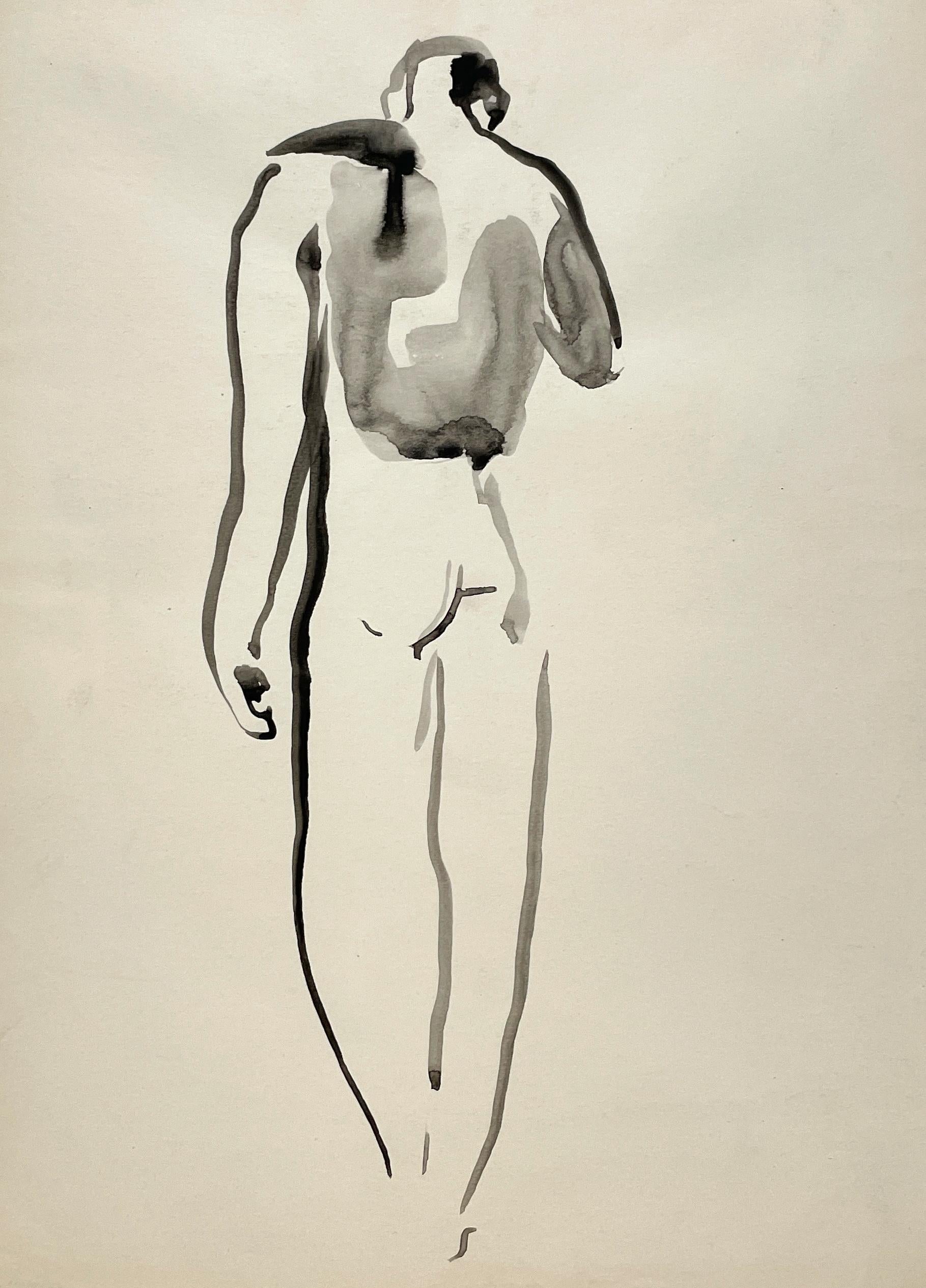
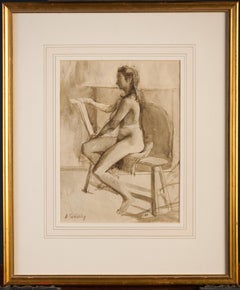
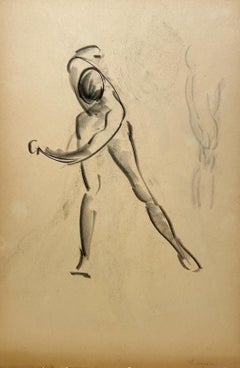
John Keith Vaughan 1912-1977, was an English born British painter, illustrator, teacher and diarist. Vaughan was self taught as an artist his earliest exhibitions were during WWII a time when he became friends with Graham Sutherland and John Minton. Vaughan taught at the Camberwell School, Slade School and the Central School of Art, his works have been collected by wealthy and famous individuals and are held in institutions such as Tate Gallery, National Portrait Gallery London, Victoria & Albert Museum, National Galleries of Scotland and his works are held in the Government Art Collection. His diaries and journals leave a history of a troubled soul and it's from these writings of his that we have a greater understanding of the man. Further information can be obtained from the Keith Vaughan Society. This picture is initialed lower left KV., the picture is only attributed to Vaughan as we have no further information on the work and the authenticity is best left to the KVS.
I have included an alternative brief biography of Keith Vaughan for your
interest.
Keith Vaughan (1912–1977) was a seminal figure in twentieth-century British art, primarily associated with the Neo-Romantic movement. A self-taught painter, draughtsman, and prolific diarist, Vaughan is best known for his lifelong obsession with the male nude, which he utilized as a vehicle for exploring themes of isolation, tension, and the relationship between the human figure and the environment.
Born in Selsey, Sussex, Vaughan initially pursued a career in advertising, working as a layout artist at Lintas Ltd. It was during the late 1930s and through the Second World War—serving as a conscientious objector in the Pioneer Corps—that his artistic identity solidified. During this period, he formed close associations with Graham Sutherland and John Minton, drawing inspiration from the British landscape and the evocative, melancholic atmosphere of the war years.
Vaughan’s aesthetic underwent a significant transformation in the post-war era. Influenced by the structural rigor of European modernists such as Paul Cézanne and Henri Matisse, his work shifted from the descriptive romanticism of his youth toward a more formalised, semi-abstract language. His signature motif, the "Assemblies," emerged during the 1950s and 60s. These large-scale compositions featured groups of male figures integrated into architectural or natural settings, where the boundaries between the body and the background were often blurred through heavy impasto and a restricted, earthy palette.
Beyond his visual output, Vaughan was a writer of considerable psychological depth. His published journals provide a candid, often bleak account of his struggles with his sexuality, his artistic frustrations, and his failing health. This literary legacy provides a vital hermeneutic lens through which his paintings are often interpreted, revealing the profound sense of alienation that underpinned his modernism.
Vaughan’s career was marked by significant institutional recognition, including a major retrospective at the Whitechapel Art Gallery in 1962 and an appointment as a teacher at the Slade School of Fine Art. He took his own life in 1977 while suffering from terminal cancer, recording his final moments in his diary. Today, he is regarded as a master of the figurative tradition, having successfully bridged the gap between traditional British draughtsmanship and the formal innovations of the mid-century avant-garde.