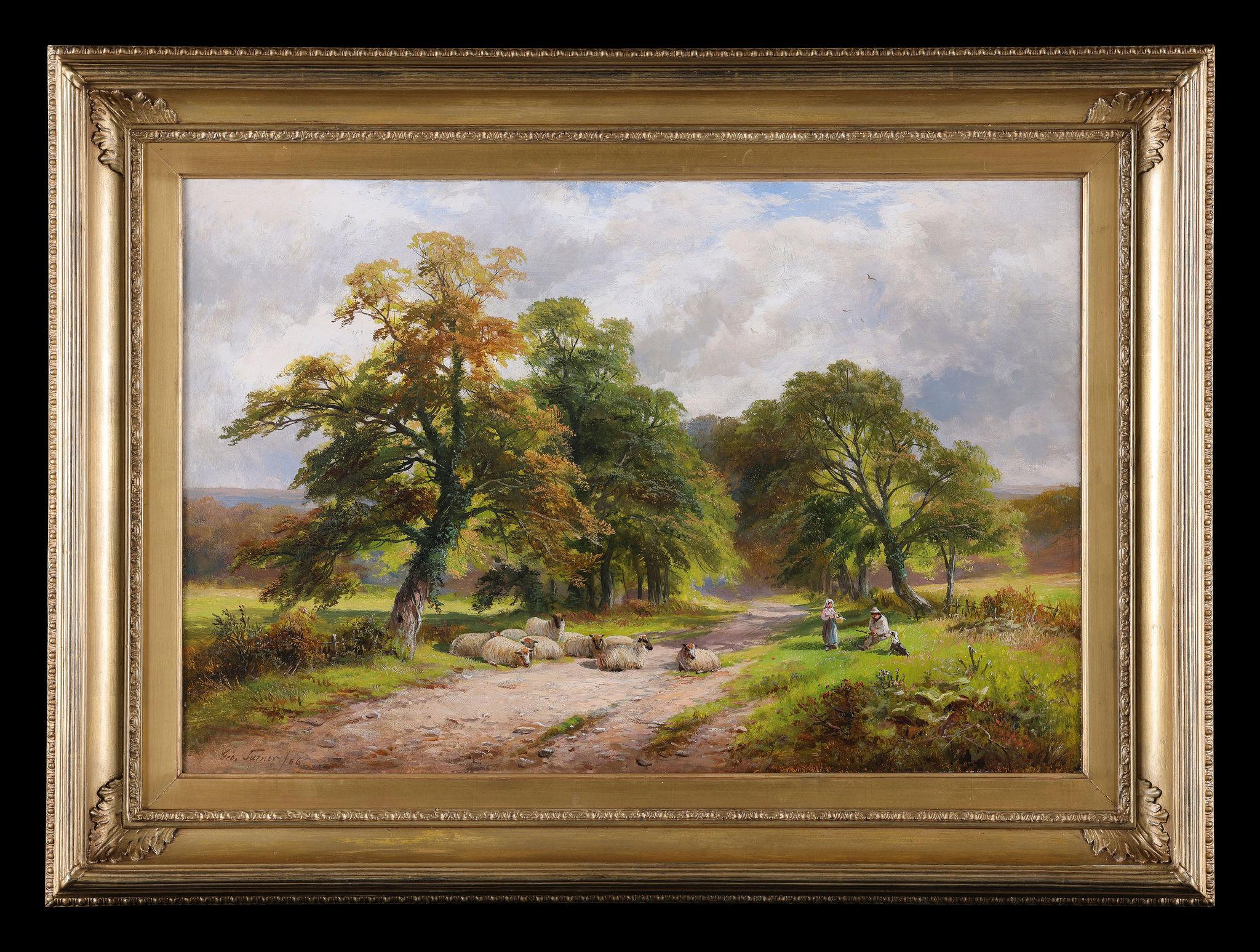
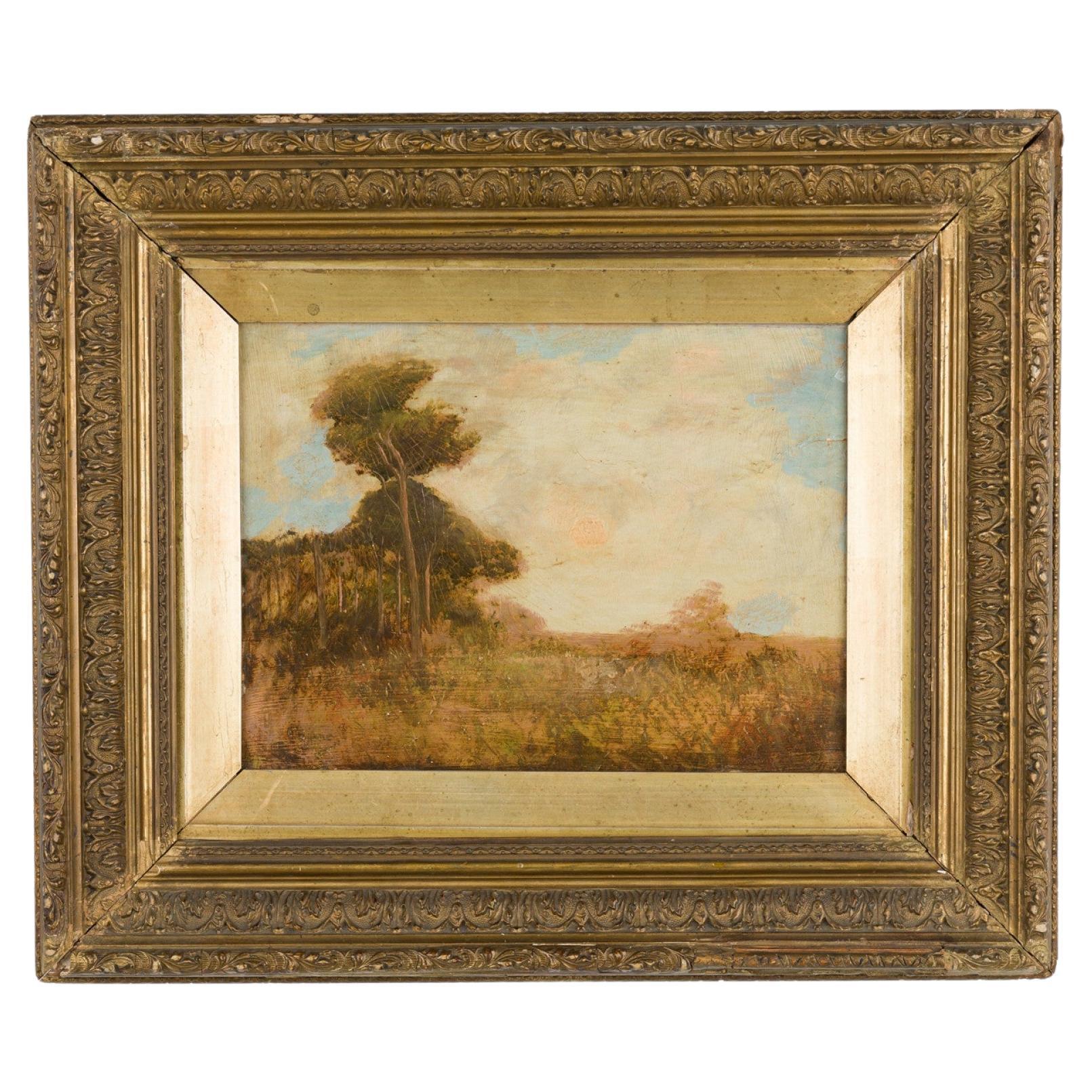
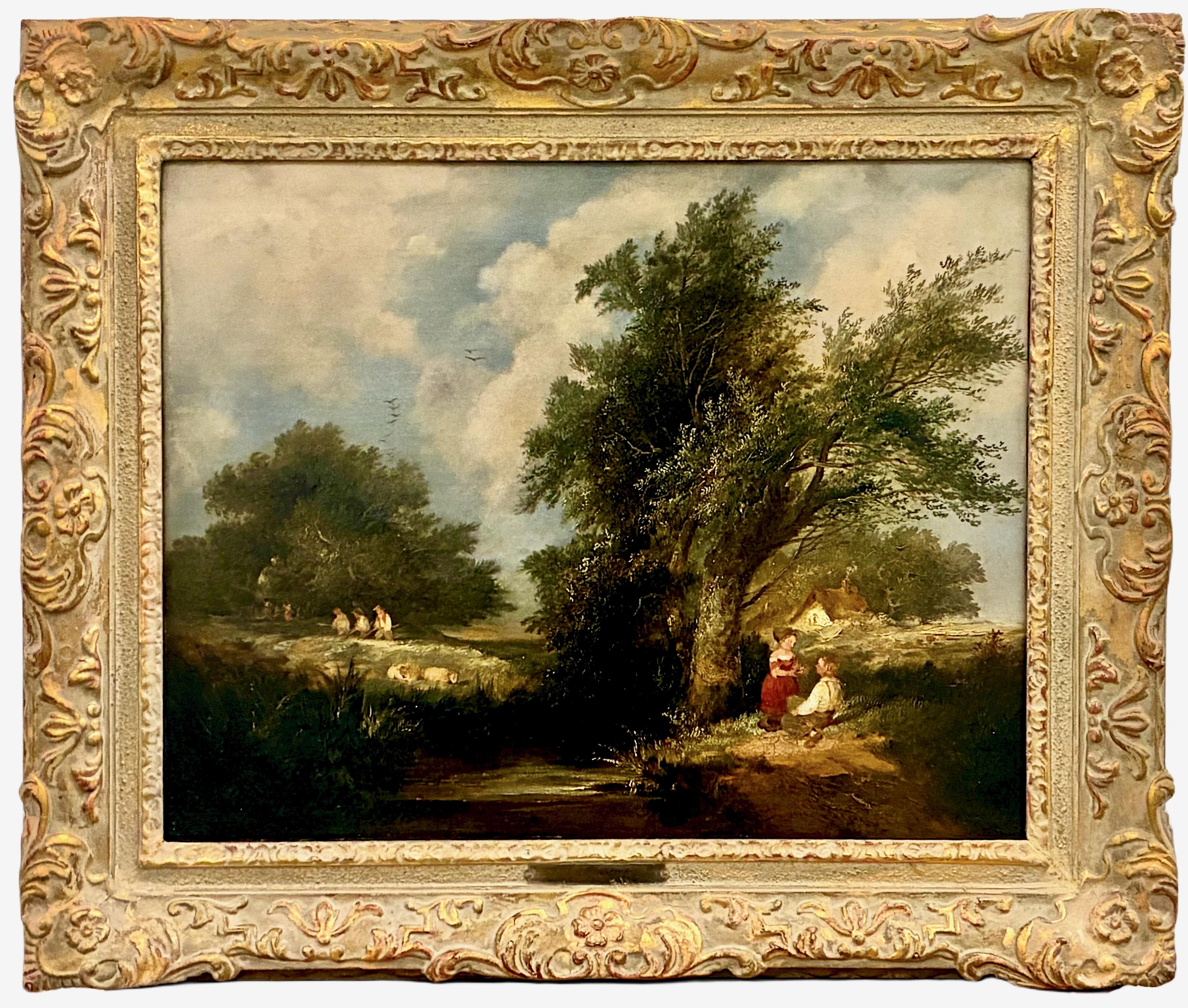
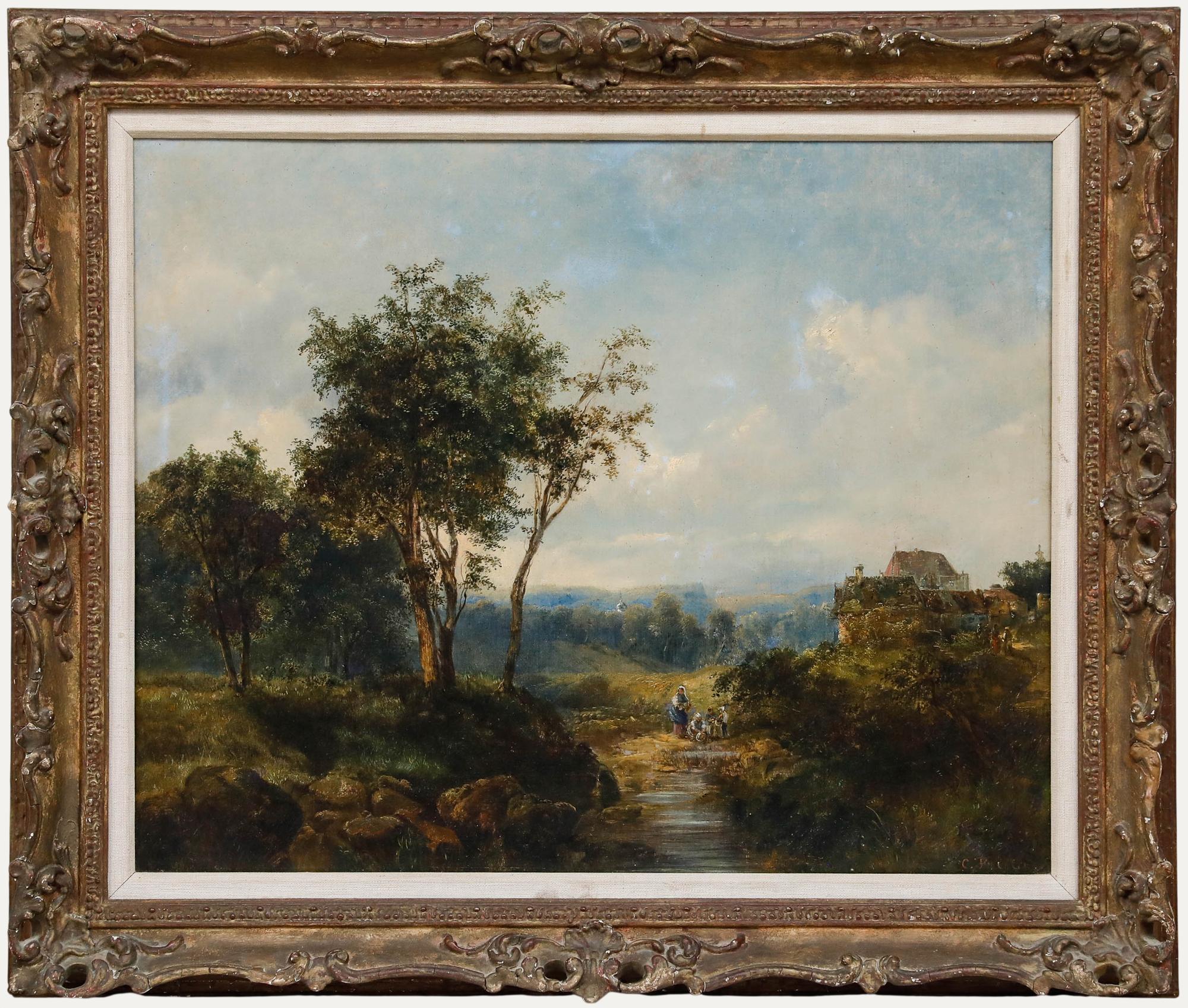
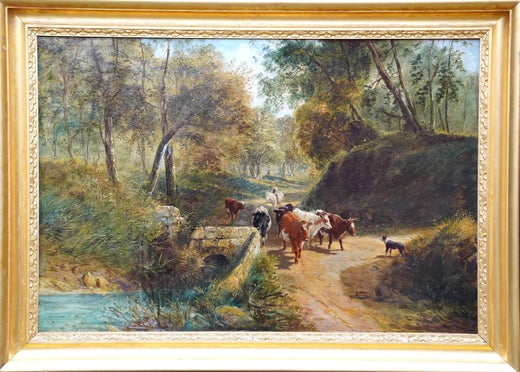
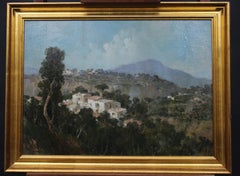
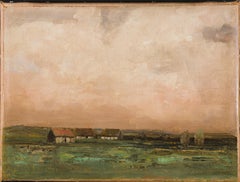
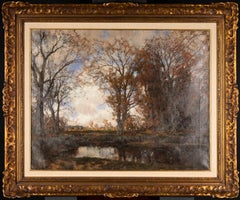
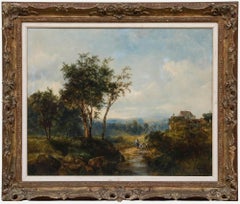
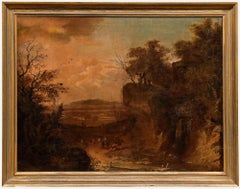
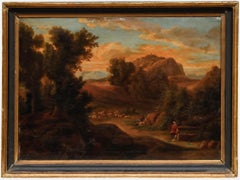
Thomas Creswick R.A. 1811 - 1869, was an English landscape painter and illustrator. Creswick was one of the leading members of the Birmingham School of landscape painters and exhibited as early as 1827 at the Society of British Artists in London, he was just 16 years old. Within the same year he sent pictures to the Royal Academy, he settled in London in 1836 and had a successful and encouraging career as a landscape artist. He was elected as an Associate of the Royal Academy in 1842 and became a full member in 1850, it is worth bearing in mind that John Constable did not enter the Royal Academy until he was 52 years old, Creswick was 39. Creswick set an example of diligent study of nature, painting outdoors and on the spot, where some of his contemporaries continued to take small sketches and build them up over a period of time, in some cases years. Creswick's work inspired little excitement but with consistent regularity he retained the interest and enthusiasm of the viewing public, he is said to have formed his own favourite subjects of cheerful British landscapes calm and pleasurable aspects in daylight, all applied with a great technical accomplishment. This painting is such a masterful application of a distant view of an extensive landscape beyond the immediate scene of a travelling family ensconced for the night with a camp fire and tent. We believe this scene could well be the approach to Sheffield a view that would have been very familiar to Creswick, a pleasing, calm and entertaining subject, and the finished picture to be enjoyed in the privacy of ones own home. The frame is a magnificent example of the period and is in very good untouched condition, however the delicacy of the frame being original to the painting is such that it will require a professional packer and shipper to transport it to a new owner. The work is signed and dated 1840, photo enclosed.
I have enclosed below a further biography of the painter for your interest.
Thomas Creswick (5 February 1811 – 28 December 1869) was a prominent English landscape painter and illustrator, best known for his atmospheric, realistic depictions of British rural scenery and waterways. As a leading figure of the Birmingham School of landscapists, he became celebrated for his strict devotion to painting en plein air (outdoors) long before it was globally popularised. He was born in Sheffield, Yorkshire, to Thomas Creswick and Mary Epworth. He attended a private school in Hazelwood, near Birmingham. He went on to study art under Joseph Vincent Barber in Birmingham. And he developed under the influence of the Birmingham School of Artists. In 1828, Creswick relocated to London to expand his professional network. He immediately found success, debuting his work at both the Society of British Artists and the Royal Academy of Arts. Creswick traveled extensively throughout England, Wales, and Ireland to gather inspiration. He focused heavily on cascading streams, rocky glens, and peaceful woodland paths. He became famous for using a subdued palette, leaning heavily into dark greens, greys, and earth tones. His meticulous honesty and handling of complex foliage earned high praise from the famous 19th-century art critic John Ruskin. Because Creswick preferred scenery over figures, he frequently collaborated with other artists. His friend William Powell Frith often painted people into his landscapes, while Richard Ansdell added animals. Creswick maintained a highly lucrative career in graphic arts. He was a founding member of the Etching Club and generated hundreds of wood engravings for popular books. This allowed his romantic landscape compositions to be mass-produced for the growing Victorian middle class. Over his industrious career, Creswick exhibited 266 paintings in major London venues. His major work details in 1828 Llyn Gwynant, Morning & Carnarvon Castle. His first entries were accepted by the Royal Academy. In 1842 he was elected Associate (ARA) and formal recognition by the Royal Academy in 1847 . He was in 1851 elected Full Academician (RA) and attained full member status at the Royal Academy. In 1859 he worked on The Deserted Village illustrations a Lyrical book and designs for Oliver Goldsmith's famous poetry. Creswick settled down in Bayswater, London, where he was known as a genial, good-natured gentleman. After dealing with a long period of declining health, he passed away at his home on 28 December 1869 at the age of 58.Today, his works are preserved in premier public institutions including the Tate Gallery, the Victoria and Albert Museum, the British Museum and private collections.