By Llewellyn
Located in Miami Beach, FL
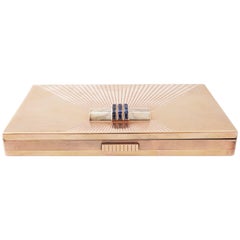
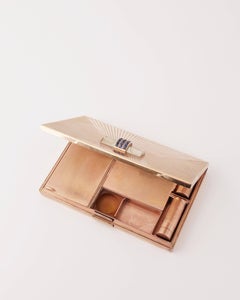
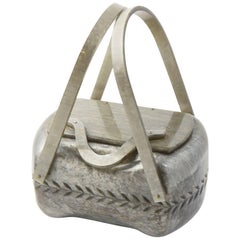
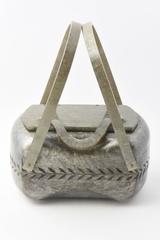
Vintage Llewellyn pearlized Grey Lucite Handbag Early 1950s
Without handle 4" tall
Signed on the interior hinge N.Y.C. Llewellyn Inc. in scripts with a copyright C in circle as seen in the picture.
History from Collector's weekly
Though plastics today are typically associated with cheap, low-integrity products, during the boom years following World War II, recently developed thermoplastics carried the cachet of glitz and glamour. In the worlds of industrial and interior design, modern materials and geometric forms were all the rage. That trend spilled over to fashion, whose designers soon turned to sturdy plastics like Lucite to create fashion-forward handbags and purses.
Created in 1931 by the American chemical company DuPont, Lucite is a durable acrylic material made from polymethyl methacrylate, or PMMA. Lucite became a successful replacement for earlier plastics like Bakelite and Catalin because of its low density and high strength. Though used primarily in military applications during World War II, Lucite was adapted for use in jewelry and fashion accessories during the late 1940s.
In the late 1940s, various New York handbag companies hopped on the plastics bandwagon and released lines of Lucite purses, including Llewelyn, Maxim, Rialto, Shoreham, Tyrolean, Venzer, Charles Foster, Arnold Originals, and Gilli Originals. By 1950, Miami Beach had become the happening spot for wealthy American vacationers; its fun-in-the-sun, holiday appeal made it the perfect spot to sell Lucite bags. Many Florida-based manufacturers sprung up in the early '50s, like Myles Originals, Charles S. Kahn, Bags By Benné, Patricia of Miami, Florida Handbags...
Category
Mid-20th Century American Retro Base Metal Objets d'Art and Vertu