By Maison Martin Margiela
Located in Chicago, IL
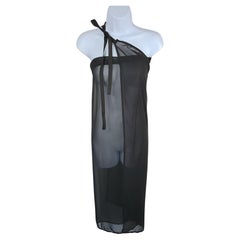
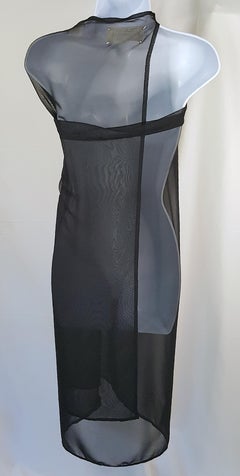
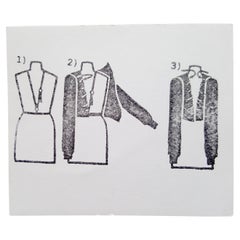
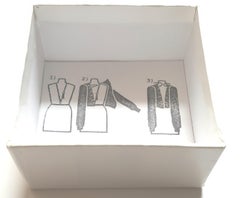
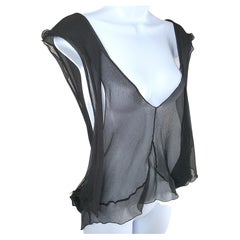
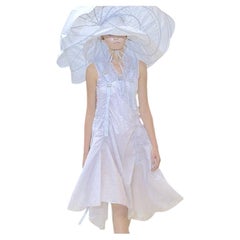
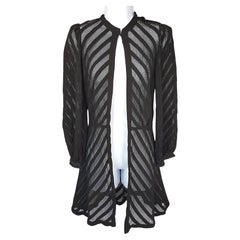
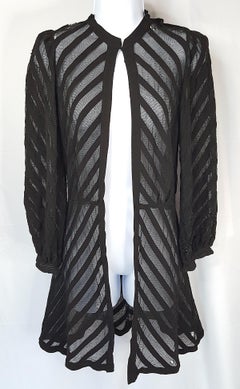
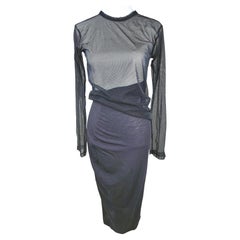
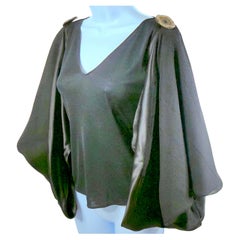
As a variation of the traditional waiter apron that Belgian former fashion designer Martin Margiela reworked with his eponymous Maison Martin Margiela since its first collection for Spring/Summer 1989, this transparent black chiffon rectangular garment, which can be styled as a tied face veil, jabot, wrap skirt or dress, was part of his first retrospective collection in 1994. The iconic corner-stitched textural white cotton brand label is stenciled with seemingly contradictory text, which notes the Fall/Winter 1990 collection in which the original design debuted. Instead of the blank label that had become internationally recognized among progressive fashion buyers during the brand's initial five years, this black print was added in this manner for only one collection during its founder's tenure. This distinct typography identifies the garment as one of his favorites that he reproduced from his first 10 fashion shows.
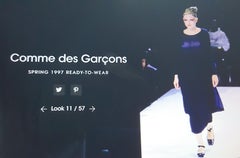
This season-less self-curated retrospective collection without any new designs was unprecedented in the ready-to-wear luxury-fashion industry, which sold only newly-designed clothes typically two to five times annually. In the early 1990s, this old-made-new-again collection was astonishing for a Paris-based high-end brand, for which any lack of fresh designs for Spring had otherwise been attributed to the loss of an artistic director or the outbreak of war.
Nevertheless, there are subtle differences of color, material and draping possibilities that distinguish our garment from the 1990 one and from later "replicas", which was the term that Margiela printed on a different kind of label for his second self-curated retrospective of 10 more collections in Spring 1999.
Aside from the text-printed brand label with four characteristic hand-sewn corner stitches, the only other element that unified Margiela's first collection of favorites was that all the items were overdyed a darker color so that the clothes were various shades of grey, blue or black depending on the original color of the textile and how much dye the thread/yarn absorbed.
More so, the materials of the retrospective garments differed from their debut collections. In a silk-like floaty gossamer fabric suggesting a dress lining, our matte synthetic garment in an extraordinarily fine weave was cut and sewn with hems and topstitched ribbons at two corners on one of the longer sides, which gives the noted women's US-size 6 the most styling possibilities--although it can be worn by virtually anyone in more than one way. The flat stiff woven ribbons may be repurposed tailoring or bias tape.
As we have sold multiple Margiela apron...
Category
1990s Italian Berkshires - Fashion