By Spanish Manufactory
Located in Madrid, ES
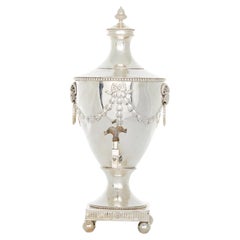
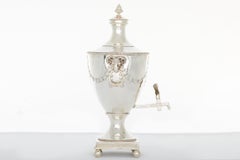
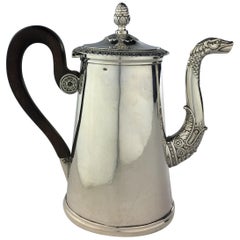
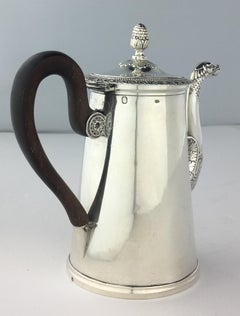
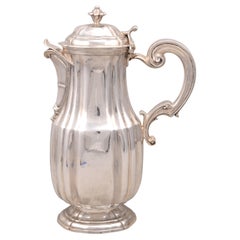
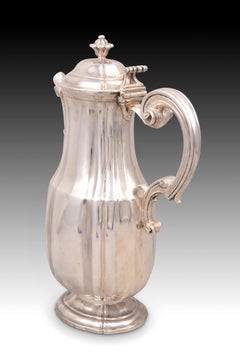
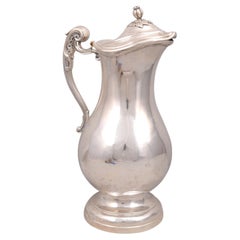
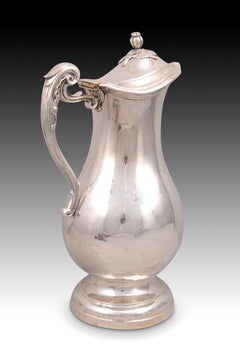
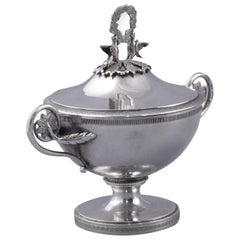
Jug or jug. Silver. DE SAN FAURÍ, Juan (1745-1785). Spain, Madrid, towards the last third of the 18th century.
With contrast and burilada marks, and property name (Ochoa).
The jug has an oval base with slight curves and a body divided into two areas (wider in the lower half, slightly concave in the upper half) with a series of curved “gajos”; the peak shows simple architectural decoration and smooth areas; the handle is of a type known as brace, with classicist architectural elements; the lid follows the lines of the body and is finished off with a vegetable shape creating a knob. On one of the sides, towards the foot, there is the engraved text "Ochoa", referring to a former owner. Contrasting marks place the creation of the piece in Madrid. Another one that appears could be one of those used by the silversmith Juan de San Faurí. With Felipe V, numerous French influences, along with some Italian ones, came to silverware, both from the hand of craftsmen of these origins and from pieces. Little marking continues in the works, except in important centers such as Madrid, and civil typologies acquired great importance. As in the rest of the country, the Baroque, Rococo and Neoclassical tendencies coexisted at the Court, although, being the center that set the standard for the rest, the former soon departed, introducing Rococo before 1740 or on that date, and Neoclassicism around 1770 (gradually imposing itself from 1780). The jug follows the most common prototype since the arrival of the Bourbons, characterized by its European influence and the great difference it shows with the type known as the “spout jug”. Compare with the Francisco García...
Category
Late 18th Century Spanish Neoclassical Antique Madrid - Serving Pieces