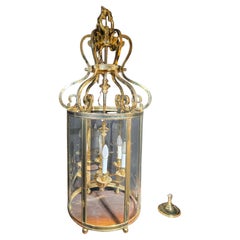
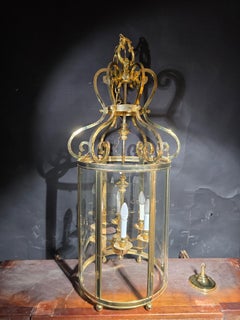
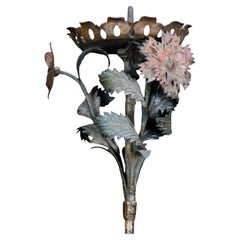
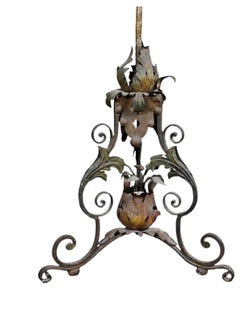
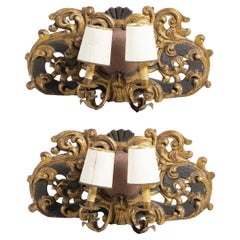
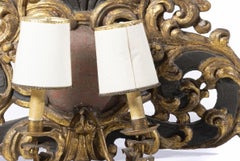
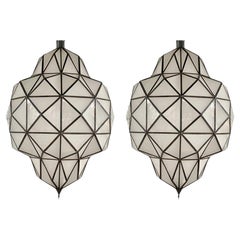
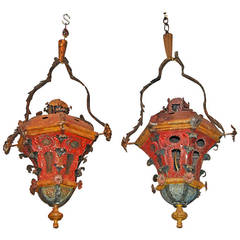
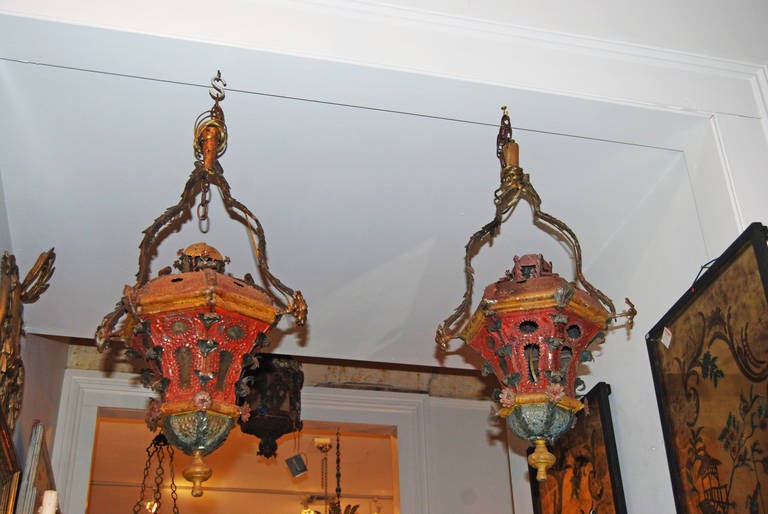
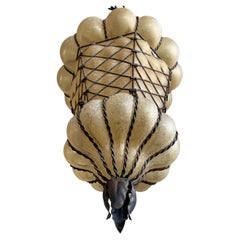
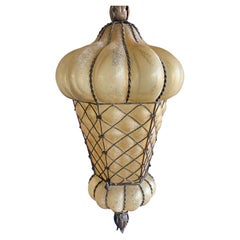
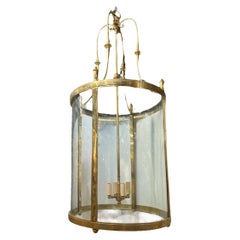
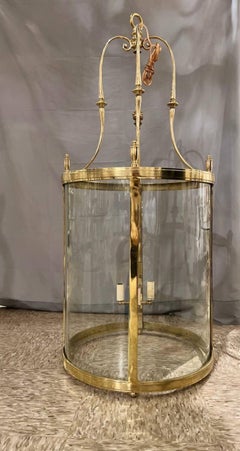
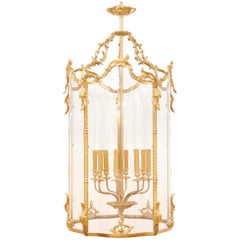
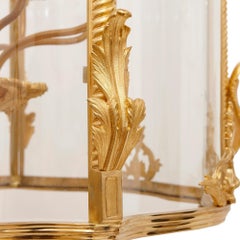
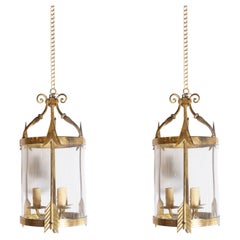
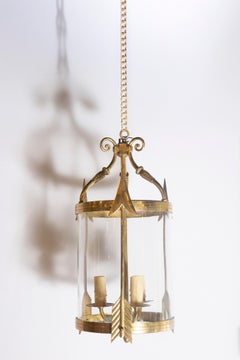
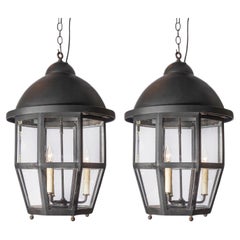
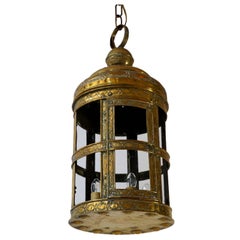
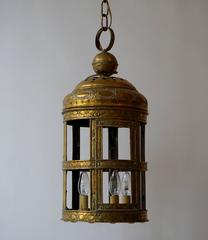
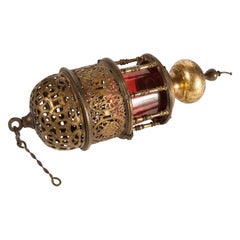
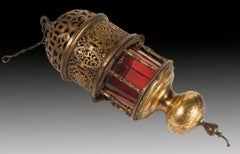
In Spain, little is known of these types of objects because of the lack of examples preserved. It is clear that light elements, especially those that were not too large, tended to be made in silver or, in any case, masking other materials in which they were made, for example by gilding the bronze. The lanterns, normally, are going to tend to the vulgarization to use mainly in exteriors of palaces. Although this work shows the gilded metal, it is clear by the abundance of decorative elements, that it is not a vulgar work, although it does follow the common decorative trend for these elements of decorated base plates of various figuration. It is possible, therefore, to be used to illuminate some entrance hall of a residence of great importance, as is believed to be the case of the polychrome and gilded wood lantern preserved in the Victoria and Albert Museum in London of origin, supposedly, Venetian and dated towards the end of the 16th century (inventory 7225-1860), or in a religious area of great importance. This decorative technique will be very successful, as evidenced by 18th century lanterns (for example, those of the Brotherhood of Our Lady of the Soledad of El Carmen de Écija made in silver by Damián De Castro). Other examples are the one in the Palace of the Marquess of Santa Cruz of El Viso del Marqués (Ciudad Real, Spain), that is a fanal of Turkish galley gained to Mahomet Bey in the Battle of...
Category
17th Century European Baroque Antique Madrid - Lanterns