Manhattan - Art

to
2,574
9,303
6,974
4,649
4,913
7,663
Overall Width
to
Overall Height
to
68
472
10,910
22,470
47
90
187
342
238
1,003
2,067
2,024
1,965
1,554
38
12,408
4,405
3,639
1,742
716
289
216
214
205
204
124
77
50
12
14,276
12,336
4,584
11,375
5,733
4,082
3,474
2,916
2,890
2,385
2,006
1,693
1,514
1,409
1,392
1,372
1,153
982
962
934
911
870
860
10,293
6,796
5,662
5,306
4,900
2,525
919
712
267
237
4,962
7,727
34,313
229,258
155,255
Item Ships From: Manhattan
Global Warning - Global Warming (Andy Warhol museum Edition) - Signed/N politics
By Shepard Fairey
Located in New York, NY
SHEPARD FAIREY Global Warning - Global Warming (Andy Warhol Edition), 2009 Silkscreen on wove paper 24 × 18 inches Pencil signed and numbered 264/450 on the front Unframed Global War...
Category

Early 2000s Pop Art Manhattan - Art
Materials

Screen

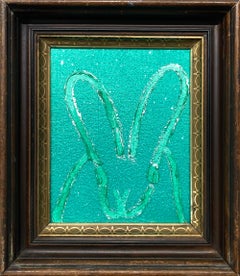
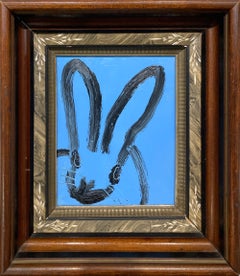
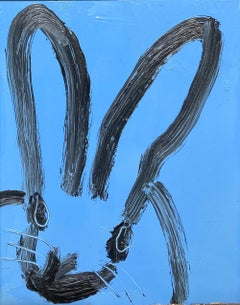
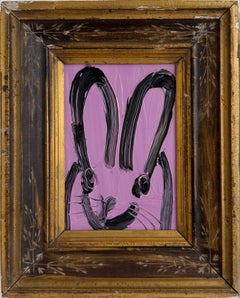
Bunny Painting CS1097
By Hunt Slonem
Located in New York, NY
This whimsical and sophisticated painting was realized by the esteemed contemporary painter, Hunt Slonem in 2013. It presents a stylized rabbit in profile, rendered with loose and ex...
Category

2010s Neo-Expressionist Manhattan - Art
Materials

Canvas, Oil

Untitled
Located in New York, NY
Vintage silver print Western Photography Guild studio stamp in purple ink, verso Numbered "N14-4" in purple ink, verso Also inscribed in pencil, v...
Category

1960s Other Art Style Manhattan - Art
Materials

Black and White

Rare Keith Haring Vinyl Record Art (Keith Haring & Futura)
By Keith Haring
Located in NEW YORK, NY
Keith Haring 'Rap It' record art 1983: A rare vinyl art cover featuring original artwork by Keith Haring and Futura 2000 (reverse side). Truly vibrant colors that make for stand-out ...
Category

1980s Pop Art Manhattan - Art
Materials

Offset

Untitled
Located in New York, NY
Untitled 1983 Signed, titled, dated, and inscribed “A/P” in blue ink, verso Gelatin silver print 16 x 20 inches (40.6 x 50.8 cm) This work is offered by CLAMP in New York City.
Category

1980s Contemporary Manhattan - Art
Materials

Silver Gelatin

Julian Schnabel 'Otono Floral' (Sexual Spring-like Winter)
By Julian Schnabel
Located in New York, NY
Otono Floral 1995 Hand-painted, 15-color silkscreen with poured resin 40 x 30 inches (102 x 76 cm) Edition of 80 "Sexual Spring-like Winter" is a large painterly work, created with ...
Category

1990s Neo-Expressionist Manhattan - Art
Materials

Screen

Tiger-Tiger, 3-D Relief of impact-resistant polystyrene, deep-drawn, silkscreen
By Peter Phillips
Located in New York, NY
Peter Phillips Tiger-Tiger, 1968 3-D Relief made of impact-resistant polystyrene, deep-drawn, silkscreened in 8 colors, rear wall made of styrofoam and vacuum form plastic 28 7/10 × ...
Category

1960s Pop Art Manhattan - Art
Materials

Plastic, Polystyrene, Mixed Media, Screen

"Spider Web" Vija Celmins (Photorealist, Drawing, Spider, Contemporary, Print)
By Vija Celmins
Located in New York, NY
This screen print depicts one of Celmins' signature subjects, the spider web, which she has represented in various media, including charcoal, oil paint, and multiple printmaking tech...
Category

Early 2000s Photorealist Manhattan - Art
Materials

Screen

Bearbrick 400% & 100% figures (Salvador Dali MoMa BE@RBRICK)
By Salvador Dalí­
Located in NEW YORK, NY
Salvador Dali Bearbrick 400% (Salvador Dali MoMa BE@RBRICK): This collaboration between MoMA and BE@RBRICK features the famous bear figure printed with the classic surrealist art of ...
Category

21st Century and Contemporary Surrealist Manhattan - Art
Materials

Resin, Vinyl

WOMAN WITH A STOLE
By Fernando Botero
Located in New York, NY
A striking example of Fernando Botero's iconic style, "Woman with a Stole" captures the Colombian master’s signature exploration of volume, form, and sensuality. Executed in 1972, th...
Category

21st Century and Contemporary Manhattan - Art
Materials

Lithograph

Hongdan Lin Landscape Original Oil On Canvas "Yichun Series I"
Located in New York, NY
Title: Yichun Series I Medium: Oil on canvas Size: 19 x 23 inches Frame: Framing options available! Condition: The painting appears to be in excellent condition. Note: This pai...
Category

21st Century and Contemporary Impressionist Manhattan - Art
Materials

Canvas, Oil

steve - ritual
By Frank Yamrus
Located in New York, NY
Gelatin silver print Signed, dated, and numbered, verso 10 x 8 inches, sheet 7 x 7 inches, image (Edition of 10) 14 x 11 inches, sheet 10 x 10 inches, image (Edition of 10) 20 x 1...
Category

1990s Contemporary Manhattan - Art
Materials

Silver Gelatin

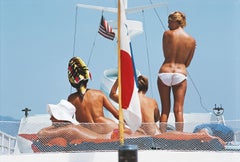
Slim Aarons, Apres Ski, Gstaad (Estate Edition)
By Slim Aarons
Located in New York, NY
Apres Ski 1963 (printed later) Chromogenic Lambda Print Estate edition of 150 A group of women reclining on the snow in Gstaad with rugs covering their knees, 1963. Estate stamped ...
Category

1960s Modern Manhattan - Art
Materials

Lambda

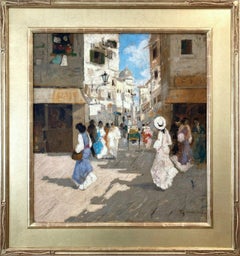
[Bruce Sargeant (1898-1938)] Reclining Male Nude Figurative Queer Oil Painting
By Mark Beard
Located in New York, NY
Contemporary painting of a nude man reclining by Mark Beard. Double-sided oil on panel Signed in red, u.r. “Bruce Sargeant is a mythic figure in...
Category

2010s Contemporary Manhattan - Art
Materials

Oil

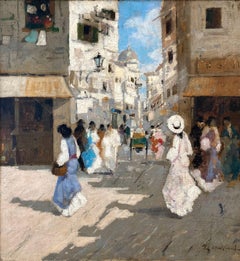
Paris Rooftops
By Ludwig Favre
Located in New York, NY
THIS PIECE IS AVAILABLE FRAMED. Please reach out to the gallery for additional information. ABOUT THIS PIECE: French photographer Ludwig Favre recently road tripped to California....
Category

2010s Manhattan - Art
Materials

Photographic Paper

Keith Haring designed Martin Luther King Day announcement 1988
By Keith Haring
Located in NEW YORK, NY
Invitation for Martin Luther King Day celebration 1988, designed by Keith Haring In 1988, 20 years after the death of Martin Luther King Jr., Keith Haring illustrated this rare invi...
Category

1980s Pop Art Manhattan - Art

Materials

Offset

Hunt Slonem "Marla" Bunny
By Hunt Slonem
Located in Boston, MA
Artist: Slonem, Hunt Title: Marla Date: 2025 Medium: Oil on wood Unframed Dimensions: 10" x 8" Framed Dimensions: approximately 16.5" x 14.5" Signature: Signed by Artist on Ve...
Category

2010s Contemporary Manhattan - Art

Materials

Oil

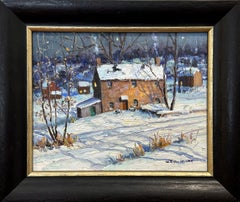
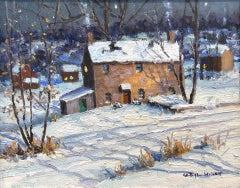
"Early Morning Carversville PA Bucks County" Pastoral Snow Scene Oil Painting
Located in New York, NY
A wonderful Impressionist Snow covered pastoral scene of the colorful and quaint early morning Carversville Pa Bucks County. Willet has portrayed this piece in a most intimate, yet energetic way, and has packed much feeling into this large scale work. It is almost as if we are there in the snow in the early morning, bringing a beautiful feeling of nostalgia. Christopher is known for capturing the beauty and simplicity of an earlier time of the 20th Century; old New York, families working together, villages and farms and friends taking walks together. Many are depicted in recognizable historical settings and this piece is an excellent example of this as he captures a snow-filled historic setting of Bucks County with the calm, endearing charm of a snowy morning. Christopher engages his audience with the quick use of brushwork and great attention to picking up the energy passionately of his subjects. This piece is signed lower right and it comes housed in a wood carved antique gold tone wood frame ready to be displayed with hanging with wire on verso. Art measures 12.5 x 15.5 inches Frame measures 15 x 19 inches Christopher Willett, was born in 1959 in Bucks County Pennsylvania and is mostly known for his landscape paintings. Willett, a painter with a family lineage dating back to ancestors arriving in this country aboard the Mayflower and Victory, settling Plymouth. Some recorded family history finds a Willett ancestor, Augustine Willett whom was a Captain of historic repute under the command of General Washington. Additionally, in more recent history, Willett artisans became renowned for their designs and beautiful works in stained glass that adorn the Bryn Athen Cathedral- for the Pit Cairn estate. Willett, is also a descendant of the renowned painter Edward Hicks...
Category

20th Century American Impressionist Manhattan - Art

Materials

Oil, Board

Venice Beach Surf
By Ludwig Favre
Located in New York, NY
THIS PIECE IS AVAILABLE FRAMED. Please reach out to the gallery for additional information. ABOUT THIS PIECE: French photographer Ludwig Favre recently road tripped to California....
Category

2010s Manhattan - Art

Materials

Photographic Paper

A Book of Silkscreen Prints 1973-76 (2nd Edition)
By Robert Mangold
Located in New York, NY
Associated with the Minimalist art movement of the 1960s, Mangold developed a reductive vocabulary based on geometric forms, monochromatic color, and an emphasis on the flatness of t...
Category

1980s Abstract Geometric Manhattan - Art

Materials

Screen

Rowboat
By Alex Katz
Located in New York, NY
Although best known for his portraits, Katz has depicted landscapes both inside the studio and out of doors since the beginning of his career. This print of a boat on the water feat...
Category

1990s Contemporary Manhattan - Art

Materials

Aquatint

YuXiang Lv Landscape Original Oil On Canvas "Warm Spring Day"
Located in New York, NY
Title: Warm Spring Day Medium: Oil on canvas Size: 23 x 19 inches Frame: Framing options available! Condition: The painting appears to be in excellent condition. Note: This pai...
Category

21st Century and Contemporary Manhattan - Art

Materials

Canvas, Oil

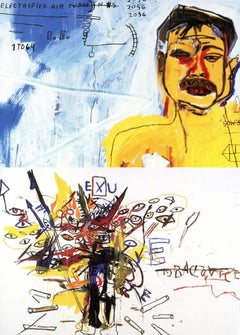
Basquiat Galerie Hans Mayer 1988 (1980s Basquiat exhibition poster)
By Jean-Michel Basquiat
Located in NEW YORK, NY
Basquiat Galerie Hans Mayer Düsseldorf 1988: A rare, exceptional 1980s exhibition poster designed & illustrated by Basquiat during his lifetime; published in 1988 on the occasio...
Category

1980s Pop Art Manhattan - Art

Materials

Lithograph, Offset

"Dior and Croissants" Impressionistic Oil Painting Woman in a Street Cafe Framed
By Cindy Shaoul
Located in New York, NY
This painting depicts an impressionistic cafe scene of a woman in a Dior dress immersed in the Parisian cityscape while sitting at an outdoor café table. She is dressed in a black ou...
Category

2010s American Impressionist Manhattan - Art

Materials

Oil, Canvas

"Tulips on Silver" Pair of Red Tulips on Silver Background Oil Painting Framed
By Hunt Slonem
Located in New York, NY
A wonderful composition of one of Slonem's newest series, Tulips. This piece depicts 2 gestural red Tulips on a silver background with thick use of paint. It is housed in a wonderful...
Category

2010s Neo-Expressionist Manhattan - Art

Materials

Oil, Wood Panel, Mixed Media

Basquiat Bearbrick 1000% (Basquiat Be@rbrick)
By Jean-Michel Basquiat
Located in NEW YORK, NY
Jean-Michel Basquiat 1000% Bearbrick Vinyl Figure: A nicely sized (27 inch), highly collectible Bearbrick Basquiat statue piece, trademarked & licensed by the Estate of Jean-Michel ...
Category

21st Century and Contemporary Contemporary Manhattan - Art

Materials

Resin, Vinyl

"The Kiss -NYC-" Figures in the Snow by New York Taxi Oil Painting on Canvas
By Cindy Shaoul
Located in New York, NY
A lively, impressionistic depiction of a couple embracing a Kiss in the snowy streets of New York City. We are whisked away in this romantic scene with the emotion and dynamic compos...
Category

2010s American Impressionist Manhattan - Art

Materials

Canvas, Oil

Yanru Han Abstract Original Oil On Canvas "Moonlight"
Located in New York, NY
Title: Moonlight Medium: Oil on canvas Size: 11.75 x 11.25 inches Frame: Framing options available! Condition: The painting appears to be in excellent condition. Note: This pai...
Category

21st Century and Contemporary Manhattan - Art

Materials

Canvas, Oil

Frank Stella, Whitney Museum exhibited graphic work with Label, Signed/N, Framed
By Frank Stella
Located in New York, NY
Frank Stella (Whitney Museum Exhibited) Shards IVA (Axsom 151), 1982 Lithograph & Silkscreen on Arches Cover Paper (Whitney Museum exhibition label verso of frame) 45 1/2 × 39 1/...
Category

1980s Abstract Expressionist Manhattan - Art

Materials

Mixed Media, Lithograph, Screen

Original handwritten Letter of thanks, hand signed by Keith Haring on letterhead
By Keith Haring
Located in New York, NY
Keith Haring Original Handwritten, hand signed Letter, ca. 1987 Ink on Haring's Private letterhead Stationery, Hand written and hand signed by Keith...
Category

1980s Pop Art Manhattan - Art

Materials

Paper, Ink, Permanent Marker

Imago Galleries exhibition poster, Palm Desert, CA (Hand Signed by Peter Halley)
By Peter Halley
Located in New York, NY
Peter Halley Peter Halley, Imago Galleries, Palm Desert, CA (Hand Signed), 2006 Offset lithograph poster (hand signed by Peter Halley) 25 1/2 × 18 1/4 inches Provenance; Acquired directly from the artist Unframed Alpha 137 Gallery is honored to offer this offset lithograph, published on the occasion of legendary American artist Peter Halley's 2006 one-man exhibition at Imago Galleries, Palm Desert, California which the artist hand signed in black marker. Scroll images for a photograph of our director Nadine Witkin with the artist. Below is Peter Halley's official biography. What it doesn't mention is that Andy Warhol famously painted his portrait in 1986! Peter Halley is that legendary. According to Halley, he didn't realize until after Warhol's death that the polaroids Warhol took of him with his famous "big shot" camera were made into an original painting. Warhol's painting of Peter Halley was included in the recent Andy Warhol retrospective "Andy Warhol - from A to B and Back Again" at the Whitney. PETER HALLEY BIOGRAPHY Peter Halley, born 1953, New York City, is an American artist who came to prominence as a central figure of the Neo-Conceptualist movement of the 1980s. His paintings redeploy the language of geometric abstraction to explore the organization of social space in the digital era. Since the 1980s, Halley’s lexicon has included three elements: “prisons” and “cells,” connected by “conduits,” which are used in his paintings to explore the technologically determined space and pathways that regulate daily life. Using fluorescent color and Roll-a-Tex, a commercial paint additive that provides readymade texture, Halley embraces materials that are anti-naturalistic and commercially manufactured. In the mid 1990s Halley pioneered the use of wall-sized digital prints in his site-specific installations. He has executed installations at Museo Nivola, Orani, Sardinia (2021); Greene Naftali, New York (2019); Venice Biennale (2019); Lever House, New York (2018); Schirn Kunsthalle, Frankfurt (2016); Disjecta, Portland (2012); the Gallatin School, New York University, (2008, 2017); the Museum of Modern Art, New York (1997); and the Dallas Museum of Art (1995). In 2005, Halley was also commissioned to create a monumental painting for Terminal D at the Dallas/Fort Worth International Airport, Texas. Halley served as professor and director of the MFA painting program at the Yale School of Art from 2002 to 2011. From 1996 to 2005, Halley published INDEX Magazine, which featured interviews with figures working in a variety of creative fields. Halley is also known for his essays on art and culture, written in the 1980s and 1990s, in which he explores themes from French critical theory and the impact of burgeoning digital technology. His Selected Essays, 1981 – 2001, was published by Edgewise Press, New York, in 2013.Halley’s writings have been translated into Spanish, French, and Italian. A catalogue raisonné, PETER HALLEY: Paintings of the 1980s, was published in 2018 by JRP Ringier. Halley’s work can be found in the collections of the Museum of Modern Art, New York; Whitney Museum of American Art, New York; Solomon R. Guggenheim Museum, New York; Broad Art Foundation, Los Angeles; Museum of Contemporary Art, Los Angeles; San Francisco Museum of Modern Art; Boston Museum of Fine Arts; Dallas Museum of Art; Albright-Knox Art Gallery, Buffalo; Tate Modern, London; Stedelijk Museum, Amsterdam; Sammlung Marx, Berlin; Museo Nacional Centro de Arte Reina Sofia, Madrid; Museum of Contemporary Art, Tokyo; Seoul Museum of Art, among others. More about Peter Halley Peter Halley was born in 1953 in New York. He began his formal training at Phillips Academy in Andover, Massachusetts, from which he graduated in 1971. During that time, Halley read Josef Albers’s Interaction of Color (1981), which would influence him throughout his career. From 1973 to 1974 Halley lived in New Orleans, where he absorbed the vibrant cultural influences of the city, began using commercial materials in his art, and first became acquainted with the writings of earthwork artist Robert Smithson. In 1975 the artist graduated from Yale University, New Haven, with a degree in art history. After Yale, Halley returned to New Orleans, where he received an MFA in painting from the University of New Orleans in 1978. He had his first solo exhibition at the Contemporary Art Center, New Orleans, that same year. In 1978 Halley spent a semester teaching art at the University of Louisiana, Lafayette. He has continued to teach throughout his career. In 1980, Halley moved back to New York and had his first solo exhibition in the city at PS122 Gallery. At this time, Halley was drawn to the pop themes and social issues addressed in New Wave music. Inspired by New York’s intense urban environment, Halley set out to use the language of geometric abstraction to describe the actual geometricized space around him. He also began his iconic use of fluorescent Day-Glo paint. In 1984, Halley started to exhibit with the International With Monument gallery, becoming closely associated with the organization and its artists, who exhibited conceptually rigorous work in a market-savvy, coolly presented space that stood in stark contrast to the bohemian, Neo-Expressionist flair of the East Village art scene at the time. In 1986, an exhibition of four artists from International With Monument at the Sonnabend Gallery in New York heralded the group’s growing success. By the late 1980s, Halley was exhibiting with prominent galleries in the United States and Europe. In 1989, an exhibition of his paintings traveled to the Museum Haus Esters, Krefeld, Germany; Maison de la culture et de la communication de Saint-Étienne, France; and Institute of Contemporary Arts, London. From 1991 to 1992, a retrospective toured Europe, with presentations at the CAPC Musée d’art contemporain de Bordeaux, France; Musée d’art contemporain, Lausanne, Switzerland; Museo nacional centro de arte Reina Sofía, Madrid; and Stedelijk Museum, Amsterdam. In 1992, the Des Moines Art Center hosted his first solo exhibition at a U.S. museum. While developing his visual language, Halley became interested in French post-structuralist writers, including Jean Baudrillard, Guy Debord, Michel Foucault, and Paul Virillio, all of whom shared his concern with the character of social spaces in a post-industrial society. In 1981, he published his first essay “Beat, Minimalism, New Wave, and Robert Smithson” in Arts, a New York–based magazine that would publish eight of his essays before the decade’s end. Halley’s writings became the basis for Neo-Geometric Conceptualism (also known as Neo-Geo), the offshoot of Neo-Conceptualism associated with the work of Ashley Bickerton, Halley, and Jeff Koons. In 1988, the artist’s writings were anthologized in Collected Essays, 1981–1987, and again in 1997 in a second anthology, Recent Essays, 1990–1996. In the mid-1990s, Halley began to produce site-specific installations for museums, galleries, and public spaces. These characteristically brought together a range of imagery and mediums, including paintings, wall-size flowcharts, and digitally generated wallpaper prints. Halley has executed permanent installations at the Dallas/Fort Worth International Airport, Texas, and the Gallatin School of Individualized Study at New York University. In 2011, his installation of digital prints Judgment Day...
Category

Early 2000s Abstract Geometric Manhattan - Art

Materials

Offset, Lithograph

Keith Haring Tony Shafrazi gallery 1982 (set of 6 printed works)
By Keith Haring
Located in NEW YORK, NY
Keith Haring Tony Shafrazi 1982: set of 6 printed works: A set of six, individual, double-sided lithographic inserts from the seminal, spiral bound 1982 Keith Haring Tony Shafrazi ca...
Category

1980s Pop Art Manhattan - Art

Materials

Lithograph, Offset

Double Poppies Black
By Donald Sultan
Located in New York, NY
Double Poppies Black 2025 
Color silkscreen with enamel inks, flocking and sand on Rising 4-ply museum board 
Sheet size: 52.5 x 30 inches (133 x 76 cm)
 Image size: 48.5 x 26 inches...
Category

2010s Contemporary Manhattan - Art

Materials

Screen

Jim Dine European museum print on lithographic paper Limited Edition of 300
By Jim Dine
Located in New York, NY
Jim Dine, 1985 Color Lithograph on wove paper with deckled edges 38 1/2 × 27 1/2 inches Edition of 300 Unframed Signed in plate, unnumbered; bears museum copyright on the lower front...
Category

1980s Pop Art Manhattan - Art

Materials

Lithograph, Offset

Mid 1960s abstraction color field silkscreen signed/N Framed famed Indian artist
By Natvar Bhavsar
Located in New York, NY
Natvar Bhavsar Untitled mid 1960s abstraction, 1967 Silkscreen Pencil signed, dated and numbered 10/30 by Natvar Bhavsar on the front Frame included: Elegantly framed in a museum qua...
Category

1960s Color-Field Manhattan - Art

Materials

Screen

Intertwining Vines, 2025
By Marilla Palmer
Located in New York, NY
Marilla Palmer Intertwining Vines, 2025 watercolor, embroidery, pressed flowers, Durabright prints on Arches paper 30 x 22 in. (pal265) Marilla Palmer lives and works in Brooklyn, N...
Category

2010s Contemporary Manhattan - Art

Materials

Paper, Sequins, Watercolor

Street art Pop art figurative animal hand painted acrylic on panel contemporary
By Bustart
Located in New York, NY
Hand painted and stencilled on panel In 1999 BustArt began his artistic career with classic Graffiti. Until 2005, he became familiar with the whole spectrum of Graffiti and reached...
Category

2010s Pop Art Manhattan - Art

Materials

Spray Paint, Acrylic, Wood Panel

Hunt Slonem "Spotted" Bunny
By Hunt Slonem
Located in Boston, MA
Artist: Slonem, Hunt Title: Spotted Date: 2025 Medium: Oil on wood Unframed Dimensions: 10" x 8" Framed Dimensions: 16" x 14" Signature: Signed by Artist on Verso Edition: Un...
Category

2010s Contemporary Manhattan - Art

Materials

Oil

Zhikai Zhou Waterscape Original Oil On Canvas "Jiangnan V"
Located in New York, NY
Title: Jiangnan V Medium: Oil on canvas Size: 12.25 x 16 inches Frame: Framing options available! Condition: The painting appears to be in excellent condition. Note: This paint...
Category

21st Century and Contemporary Manhattan - Art

Materials

Canvas, Oil

Mass Card for Andy Warhol's Funeral issued at St. Patrick's Cathedral Limited
By (after) Andy Warhol
Located in New York, NY
This is a rare, two-sided mass card from Andy Warhol's memorial mass, which was held on April 1, 1987 at St. Patrick's Cathedral in New York. The front of the card depicts Warhol's 1...
Category

1980s Pop Art Manhattan - Art

Materials

Lithograph, Offset

The Sphere of Reason
By Mark Kostabi
Located in New York, NY
Oil on canvas Signed and dated, l.l. This painting is offered by ClampArt, located in New York City. Price includes framing. About the artist: Artist and Composer Mark Kostabi was b...
Category

1990s Contemporary Manhattan - Art

Materials

Canvas, Oil

Unique portrait of Roy Lichtenstein, Authenticated by the Andy Warhol Foundation
By Andy Warhol
Located in New York, NY
Andy Warhol Portrait of Roy Lichtenstein, 1975 Polaroid dye-diffusion print Authenticated by the Andy Warhol Foundation for the Visual Arts, bears the Foundation stamp verso Frame included: Framed in white wood frame with UV plexiglass; with die-cut window in the back to show official Warhol Foundation authentication stamp and text Measurements: 9 9/16 x 8 9/16 x 9/16 inches (frame) 3 1/2 x 2 3/4 inches (window) 4.16 x 3.15 inches (Artwork) Authenticated and stamped by the Estate of Andy Warhol/Warhol Foundation for the Visual Arts An impressive piece of Pop Art history! A must-have for fans and collectors of both Andy Warhol and Roy Lichtenstein: This is a unique, authenticated color Polaroid taken by one Pop Art legend, Andy Warhol, of his most formidable contemporary and, in many respects, rival, Roy Lichtenstein. One of only a few portraits Andy Warhol took of Roy Lichtenstein, during one tense photo shoot. Both iconic artists, colleagues and, perhaps lesser known to the public, rivals, would be represented at the time by the renowned Leo Castelli Gallery. The truth is - they were really more rivals than friends. (the rivalry intensified when Warhol, who was working with Walt Disney, discovered that Lichtenstein painted Mickey Mouse before he did!!) Leo Castelli was committed to Roy Lichtenstein, and, it's easy to forget today, wasn't that interested in Warhol as he considered Lichtenstein the greater talent and he could relate better with Roy on a personal level. However, Ivan Karp, who worked at Castelli, was very interested in Warhol, as were some powerful European dealers, as well as many wealthy and influential American and European collectors. That was the start of Warhol's bypassing the traditional gallery model - so that dealers like Castelli could re-discover him after everybody else had. Warhol is known to have taken hundreds of self-portrait polaroid photographs - shoe boxes full - and he took many dozens of images of celebrities like Blondie and Farrah Fawcett. But only a small number of photographic portraits of fellow Pop Art legend Roy Lichtenstein -- each unique,- are known to have appeared on the market over the past half a century - all from the same photo session. This is one of them. There is another Polaroid - from this same (and only) sitting, in the permanent collection of the Getty Museum in California. There really weren't any other collaborations between these two titans, making the resulting portrait from this photo session extraordinary. It is fascinating to study Roy Lichtenstein's face and demeanor in this photograph, in the context of the great sense of competition, but perhaps even greater, albeit uneasy respect, these two larger than life Pop art titans had for each other: Like Leo Castelli, Roy Lichtenstein was Jewish of European descent; whereas Warhol was Catholic and quintessentially American, though also of European (Polish) descent. They were never going to be good friends, but this portrait, perhaps even arranged by Leo Castelli, represents an uneasy acknowledgement there would be room at the top for both of them. Floated, framed with die cut back revealing authentication details, and ready to hang. Measurements: 9 9/16 x 8 9/16 x 9/16 inches (frame) 3 1/2 x 2 3/4 inches (window) 4.16 x 3.15 inches (sheet) Authenticated by the Estate of Andy Warhol/The Andy Warhol Foundation for the Visual Arts. Estate Stamped: Stamped with the Andy Warhol Estate, Warhol Foundation for the Visual Arts stamp, numbered "B 512536P", with the Estate of Andy Warhol stamp and inscribed UP on the reverse. Bears the Warhol Foundation unique inventory number. Roy Lichtenstein Biography Roy Lichtenstein was one of the most influential and innovative artists of the second half of the twentieth century. He is preeminently identified with Pop Art, a movement he helped originate, and his first fully achieved paintings were based on imagery from comic strips and advertisements and rendered in a style mimicking the crude printing processes of newspaper reproduction. These paintings reinvigorated the American art scene and altered the history of modern art. Lichtenstein’s success was matched by his focus and energy, and after his initial triumph in the early 1960s, he went on to create an oeuvre of more than 5,000 paintings, prints, drawings, sculptures, murals and other objects celebrated for their wit and invention. Roy Fox Lichtenstein was born on October 27, 1923, in New York City, the first of two children born to Milton and Beatrice Werner Lichtenstein. Milton Lichtenstein (1893–1946) was a successful real estate broker, and Beatrice Lichtenstein (1896–1991), a homemaker, had trained as a pianist, and she exposed Roy and his sister Rénee to museums, concerts and other aspects of New York culture. Roy showed artistic and musical ability early on: he drew, painted and sculpted as a teenager, and spent many hours in the American Museum of Natural History and the Museum of Modern Art. He played piano and clarinet, and developed an enduring love of jazz, frequenting the nightspots in Midtown to hear it. Lichtenstein attended the Franklin School for Boys, a private junior high and high school, and was graduated in 1940. That summer he studied painting and drawing from the model at the Art Students League of New York with Reginald Marsh. In September he entered Ohio State University (OSU) in Columbus in the College of Education. His early artistic idols were Rembrandt, Daumier and Picasso, and he often said that Guernica (1937; Museo Reina Sofía, Madrid), then on long-term loan to the Museum of Modern Art, was his favorite painting. Even as an undergraduate, Lichtenstein objected to the notion that one set of lines (one person’s drawings) “was considered brilliant, and somebody’s else’s, that may have looked better to you, was considered nothing by almost everyone.”i Lichtenstein’s questioning of accepted canons of taste was encouraged by Hoyt L. Sherman, a teacher whom he maintained was the person who showed him how to see and whose perception-based approach to art shaped his own. In February 1943, Lichtenstein was drafted, and he was sent to Europe in 1945. As part of the infantry, he saw action in France, Belgium and Germany. He made sketches throughout his time in Europe and, after peace was declared there, he intended to study at the Sorbonne. Lichtenstein arrived in Paris in October 1945 and enrolled in classes in French language and civilization, but soon learned that his father was gravely ill. He returned to New York in January 1946, a few weeks before Milton Lichtenstein died. In the spring of that year, Lichtenstein went back to OSU to complete his BFA and in the fall he was invited to join the faculty as an instructor. In June 1949, he married Isabel Wilson Sarisky (1921–80), who worked in a cooperative art gallery in Cleveland where Lichtenstein had exhibited his work. While he was teaching, Lichtenstein worked on his master’s degree, which he received in 1949. During his second stint at OSU, Lichtenstein became closer to Sherman, and began teaching his method on how to organize and unify a composition. Lichtenstein remained appreciative of Sherman’s impact on him. He gave his first son the middle name of “Hoyt,” and in 1994 he donated funds to endow the Hoyt L. Sherman Studio Art Center at OSU. In the late 1940s and early 1950s, Lichtenstein began working in series and his iconography was drawn from printed images. His first sustained theme, intimate paintings and prints in the vein of Paul Klee that poked lyrical fun at medieval knights, castles and maidens, may well have been inspired by a book about the Bayeux Tapestry. Lichtenstein then took an ironic look at nineteenth-century American genre paintings he saw in history books, creating Cubist interpretations of cowboys and Indians spiked with a faux-primitive whimsy. As with his most celebrated Pop paintings of the 1960s, Lichtenstein gravitated toward what he would characterize as the “dumbest” or “worst” visual item he could find and then went on to alter or improve it. In the 1960s, commercial art was considered beneath contempt by the art world; in the early 1950s, with the rise of Abstract Expressionism, nineteenth-century American narrative and genre paintings were at the nadir of their reputation among critics and collectors. Paraphrasing, particularly the paraphrasing of despised images, became a paramount feature of Lichtenstein’s art. Well before finding his signature mode of expression in 1961, Lichtenstein called attention to the artifice of conventions and taste that permeated art and society. What others dismissed as trivial fascinated him as classic and idealized—in his words, “a purely American mythological subject matter.”ii Lichtenstein’s teaching contract at OSU was not renewed for the 1951–52 academic year, and in the autumn of 1951 he and Isabel moved to Cleveland. Isabel Lichtenstein became an interior decorator specializing in modern design, with a clientele drawn from wealthy Cleveland families. Whereas her career blossomed, Lichtenstein did not continue to teach at the university level. He had a series of part-time jobs, including industrial draftsman, furniture designer, window dresser and rendering mechanical dials for an electrical instrument company. In response to these experiences, he introduced quirkily rendered motors, valves and other mechanical elements into his paintings and prints. In 1954, the Lichtensteins’ first son, David, was born; two years later, their second child, Mitchell, followed. Despite the relative lack of interest in his work in Cleveland, Lichtenstein did place his work with New York dealers, which always mattered immensely to him. He had his first solo show at the Carlebach Gallery in New York in 1951, followed by representation with the John Heller Gallery from 1952 to 1957. To reclaim his academic career and get closer to New York, Lichtenstein accepted a position as an assistant professor at the State University of New York at Oswego, in the northern reaches of the state. He was hired to teach industrial design, beginning in September 1957. Oswego turned out to be more geographically and aesthetically isolated than Cleveland ever was, but the move was propitious, for both his art and his career. Lichtenstein broke away from representation to a fully abstract style, applying broad swaths of pigment to the canvas by dragging the paint across its surface with a rag wrapped around his arm. At the same time, Lichtenstein was embedding comic-book characters figures such as Mickey Mouse and Donald Duck in brushy, expressionistic backgrounds. None of the proto-cartoon paintings from this period survive, but several pencil and pastel studies from that time, which he kept, document his intentions. Finally, when he was in Oswego, Lichtenstein met Reginald Neal, the new head of the art department at Douglass College, the women’s college of Rutgers University, in New Brunswick, New Jersey. The school was strengthening and expanding its studio art program, and when Neal needed to add a faculty member to his department, Lichtenstein was invited to apply for the job. Lichtenstein was offered the position of assistant professor, and he began teaching at Douglass in September 1960. At Douglass, Lichtenstein was thrown into a maelstrom of artistic ferment. With New York museums and galleries an hour away, and colleagues Geoffrey Hendricks and Robert Watts at Douglass and Allan Kaprow and George Segal at Rutgers, the environment could not help but galvanize him. In June 1961, Lichtenstein returned to the idea he had fooled around with in Oswego, which was to combine cartoon characters from comic books with abstract backgrounds. But, as Lichtenstein said, “[I]t occurred to me to do it by mimicking the cartoon style without the paint texture, calligraphic line, modulation—all the things involved in expressionism.”iii Most famously, Lichtenstein appropriated the Benday dots, the minute mechanical patterning used in commercial engraving, to convey texture and gradations of color—a stylistic language synonymous with his subject matter. The dots became a trademark device forever identified with Lichtenstein and Pop Art. Lichtenstein may not have calibrated the depth of his breakthrough immediately but he did realize that the flat affect and deadpan presentation of the comic-strip panel blown up and reorganized in the Sherman-inflected way “was just so much more compelling”iv than the gestural abstraction he had been practicing. Among the first extant paintings in this new mode—based on comic strips and illustrations from advertisements—were Popeye and Look Mickey, which were swiftly followed by The Engagement Ring, Girl with Ball and Step-on Can with Leg. Kaprow recognized the energy and radicalism of these canvases and arranged for Lichtenstein to show them to Ivan Karp, director of the Leo Castelli Gallery. Castelli was New York’s leading dealer in contemporary art, and he had staged landmark exhibitions of Jasper Johns and Robert Rauschenberg in 1958 and Frank Stella in 1960. Karp was immediately attracted to Lichtenstein’s paintings, but Castelli was slower to make a decision, partly on account of the paintings’ plebeian roots in commercial art, but also because, unknown to Lichtenstein, two other artists had recently come to his attention—Andy Warhol and James Rosenquist—and Castelli was only ready for one of them. After some deliberation, Castelli chose to represent Lichtenstein, and the first exhibition of the comic-book paintings was held at the gallery from February 10 to March 3, 1962. The show sold out and made Lichtenstein notorious. By the time of Lichtenstein’s second solo exhibition at Castelli in September 1963, his work had been showcased in museums and galleries around the country. He was usually grouped with Johns, Rauschenberg, Warhol, Rosenquist, Segal, Jim Dine, Claes Oldenburg, Robert Indiana and Tom Wesselmann. Taken together, their work was viewed as a slap in the face to Abstract Expressionism and, indeed, the Pop artists shifted attention away from many members of the New York School. With the advent of critical and commercial success, Lichtenstein made significant changes in his life and continued to investigate new possibilities in his art. After separating from his wife, he moved from New Jersey to Manhattan in 1963; in 1964, he resigned from his teaching position at Douglass to concentrate exclusively on his work. The artist also ventured beyond comic book subjects, essaying paintings based on oils by Cézanne, Mondrian and Picasso, as well as still lifes and landscapes. Lichtenstein became a prolific printmaker and expanded into sculpture, which he had not attempted since the mid-1950s, and in both two- and three-dimensional pieces, he employed a host of industrial or “non-art” materials, and designed mass-produced editioned objects that were less expensive than traditional paintings and sculpture. Participating in one such project—the American Supermarket show in 1964 at the Paul Bianchini Gallery, for which he designed a shopping bag—Lichtenstein met Dorothy Herzka (b. 1939), a gallery employee, whom he married in 1968. The late 1960s also saw Lichtenstein’s first museum surveys: in 1967 the Pasadena Art Museum initiated a traveling retrospective, in 1968 the Stedelijk Musem in Amsterdam presented his first European retrospective, and in 1969 he had his first New York retrospective, at the Solomon R. Guggenheim Museum. Wanting to grow, Lichtenstein turned away from the comic book subjects that had brought him prominence. In the late 1960s his work became less narrative and more abstract, as he continued to meditate on the nature of the art enterprise itself. He began to explore and deconstruct the notion of brushstrokes—the building blocks of Western painting. Brushstrokes are conventionally conceived as vehicles of expression, but Lichtenstein made them into a subject. Modern artists have typically maintained that the subject of a painting is painting itself. Lichtenstein took this idea one imaginative step further: a compositional element could serve as the subject matter of a work and make that bromide ring true. The search for new forms and sources was even more emphatic after 1970, when Roy and Dorothy Lichtenstein bought property in Southampton, New York, and made it their primary residence. During the fertile decade of the 1970s, Lichtenstein probed an aspect of perception that had steadily preoccupied him: how easily the unreal is validated as the real because viewers have accepted so many visual conceptions that they don’t analyze what they see. In the Mirror series, he dealt with light and shadow upon glass, and in the Entablature series, he considered the same phenomena by abstracting such Beaux-Art architectural elements as cornices, dentils, capitals and columns. Similarly, Lichtenstein created pioneering painted bronze sculpture that subverted the medium’s conventional three-dimensionality and permanence. The bronze forms were as flat and thin as possible, more related to line than volume, and they portrayed the most fugitive sensations—curls of steam, rays of light and reflections on glass. The steam, the reflections and the shadow were signs for themselves that would immediately be recognized as such by any viewer. Another entire panoply of works produced during the 1970s were complex encounters with Cubism, Futurism, Purism, Surrealism and Expressionism. Lichtenstein expanded his palette beyond red, blue, yellow, black, white and green, and invented and combined forms. He was not merely isolating found images, but juxtaposing, overlapping, fragmenting and recomposing them. In the words of art historian Jack Cowart, Lichtenstein’s virtuosic compositions were “a rich dialogue of forms—all intuitively modified and released from their nominal sources.”v In the early 1980s, which coincided with re-establishing a studio in New York City, Lichtenstein was also at the apex of a busy mural career. In the 1960s and 1970s, he had completed four murals; between 1983 and 1990, he created five. He also completed major commissions for public sculptures in Miami Beach, Columbus, Minneapolis, Paris, Barcelona and Singapore. Lichtenstein created three major series in the 1990s, each emblematic of his ongoing interest in solving pictorial problems. The Interiors, mural-sized canvases inspired by a miniscule advertisement in an Italian telephone...
Category

1970s Pop Art Manhattan - Art

Materials

Polaroid

Dejun Wang Landscape Original Oil Painting "Spring Series III"
Located in New York, NY
Title: Spring Series III Medium: Oil on canvas Size: 16 x 12 inches Frame: Framing options available! Condition: The painting appears to be in excellent condition. Note: This p...
Category

21st Century and Contemporary Contemporary Manhattan - Art

Materials

Canvas, Oil

Italian Coastal Scene by Giovanni Battista (1860-1925)
Located in New York, NY
Giovanni Battista (Italian, 1860-1925) Untitled (Italian Coast, likely Naples), c. 19th century Watercolor Sight size: 13 1/4 x 20 Framed: 22 1/2 x 29 1/2 in. Signed lower left: G. ...
Category

19th Century Italian School Manhattan - Art

Materials

Watercolor

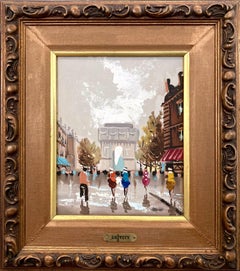
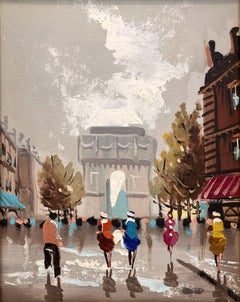
"Carriages at Grands Boulevards" Post-Impressionist Parisian City Street Scene
Located in New York, NY
A beautiful oil on canvas painting by the French artist, Te Pencke. Pencke was a Parisian painter known for his colorful cityscapes depicting the times of his generation. His work is...
Category

20th Century Post-Impressionist Manhattan - Art

Materials

Canvas, Oil

Portraits of the 1970s, Deluxe Monograph + Slipcase Hand Signed/N by Andy Warhol
By Andy Warhol
Located in New York, NY
Andy Warhol Portraits of the 1970s (Deluxe Limited Edition Monograph with Slipcase, Hand Signed and Numbered by Warhol), 1979 Hand Signed and Numbered Hardback Monograph with 120 Bound offset lithographs and text, held in original slipcase (boxed set). Boldly signed by Andy Warhol and numbered 7, from the edition of 200 on the colophon page. 9 1/2 × 8 1/2 × 2 inches Provenance The original (uptown) Whitney Museum An amazing and historic gift! As dazzling as the Warhol show was in 2019 at the new Whitney Museum -- only his show in the late 1970s at the old Whitney Museum, could offer this Deluxe limited edition collectors item - hand signed and numbered by Andy Warhol - because the latter was published during his lifetime. This rare 1979 First (and only) Edition hardback monograph is held in the original slipcase, and is hand signed by Andy Warhol and numbered 108 out of only 200 on the first front end page (see image). This collectors item features text, accompanied by 120 full page color offset lithograph bound, double sided plates on regular pages. (Total pages are: 145) It was published by the Whitney Museum in collaboration with Random House, in conjunction with the exhibition held at the Whitney Museum of American Art, November 20, 1979 to January 27, 1980. Text foreword is by Tom Armstrong, the Whitney's director. Total pages are: 145. The Warhol portraits included are: Giovanni Agnelli, Marella Agnelli, Corice Arman, Marian Block, Irving Blum, Truman Capote, Cristina Caramati, Leo Castelli, Carol Coleman, Norman Fisher, Kay Fortson, Tina Freeman, Diane Von Furstenberg, Henry Geldzahler, Halston, Brooke Hayward...
Category

1970s Pop Art Manhattan - Art

Materials

Offset, Lithograph, Pencil, Board, Mixed Media, Ink, Paper

Basquiat Skateboard Deck 2018 (Basquiat skate deck)
By Jean-Michel Basquiat
Located in NEW YORK, NY
Jean-Michel Basquiat Skateboard Deck: Limited edition Basquiat skateboard deck licensed by the Estate of Jean-Michel Basquiat in conjunction with Artestar in 2018, featuring offset ...
Category

21st Century and Contemporary Pop Art Manhattan - Art

Materials

Wood, Lithograph

Volcano by Michele Zalopany black and white large scale landscape painting
By Michele Zalopany
Located in New York, NY
Executed in black, grey and brown, this monumental charcoal and pastel painting conveys the mythic drama and beauty of an active volcano. Rising in the shape of a wide, low cone, the...
Category

1980s Realist Manhattan - Art

Materials

Charcoal, Pastel

Hunt Slonem "Vanilla" Bunny
By Hunt Slonem
Located in Boston, MA
Artist: Slonem, Hunt Title: Vanilla Date: 2021 Medium: Oil on wood Unframed Dimensions: 10" x 8" Framed Dimensions: 14.5" x 12.5" Signature: Signed by Artist on Verso Edition:...
Category

2010s Contemporary Manhattan - Art

Materials

Oil

Hunt Slonem "Blue Ascension Winter" Butterflies
By Hunt Slonem
Located in Boston, MA
Artist: Slonem, Hunt Title: Blue Ascension Winter Date: 2025 Medium: Oil on canvas Unframed Dimensions: 30" x 40" Signature: Signed by Artist on Verso Edition: Unique Hunt Sl...
Category

2010s Contemporary Manhattan - Art

Materials

Oil

Edwardo
By Bill Costa
Located in New York, NY
This work is offered by CLAMP in New York City. Edwardo 1992 Signed, titled, and dated in ink, recto Gelatin silver print 8.5 x 6 inches (21.6 x 15.2 cm), image 10 x 8 inches (25...
Category

2010s Contemporary Manhattan - Art

Materials

Silver Gelatin

[Bruce Sargeant (1898-1938)] Exercising En Plein Air
By Mark Beard
Located in New York, NY
Oil on canvas Signed in red, u.r. $3250.00 + $200.00 framing This artwork is offered by ClampArt, located in New York City. “Bruce Sargeant is a mythic figure in the modern art mo...
Category

21st Century and Contemporary Realist Manhattan - Art

Materials

Canvas, Oil

UK exhibition poster of Grimms' Fairy Tales (Hand signed by David Hockney)
By David Hockney
Located in New York, NY
David Hockney Grimms' Fairy Tales (Hand Signed), 1996 Offset Lithograph Poster Boldly signed in ink marker on the top front 16 1/2 × 11 1/2 inches Unframed This signed offset lithogr...
Category

1990s Pop Art Manhattan - Art

Materials

Lithograph, Offset

Hero - African American Baseball Player, Boxer, Soldier, and Businessman
By Francks Deceus
Located in New York, NY
Francks Deceus's "Hero" is a 24 x 48 inches mixed media work on canvas with collage. The work is partitioned in two distinct images. On the left side the artist depicted a baseball player...
Category

Early 2000s Contemporary Manhattan - Art

Materials

Canvas, Mixed Media

Darkshines 2
Located in New York, NY
Sila Sehrazat Yucel is a talented artist based in Istanbul. Her background in landscape and interior architecture shapes her creative vision. With ...
Category

2010s Contemporary Manhattan - Art

Materials

Archival Pigment

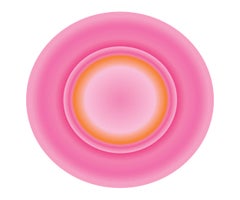
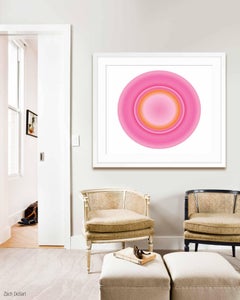
Fuchsia and Orange Circle
By Ruth Adler
Located in New York, NY
ABOUT THIS PIECE: Color is the foundation of my work. My circles start as a mood or idea that eventually evolves into a colored circle. I am curious how different colours interact wh...
Category

2010s Manhattan - Art

Materials

Photographic Paper

Untitled IV by Alex Kuznetsov, Abstract Acrylic Painting on Canvas
By Alex Kuznetsov
Located in New York, NY
Untitled V by Alex Kuznetsov 2024 Acrylic on canvas 51.25" x 43.25" In a time when everything is loud, fast, and endlessly refreshed, Alex Kuznetsov makes paintings that do not w...
Category

2010s Abstract Expressionist Manhattan - Art

Materials

Canvas, Acrylic

Vintage MOMA Francesco Clemente Museum of Modern Art 1986 dream myth poster
By Francesco Clemente
Located in New York, NY
This three-part work spanning 10 feet was printed from the plates of Francesco Clemente’s mythological landscape Untitled A on the occasion of the 1986 MoMA, New York show of Clement...
Category

1980s Surrealist Manhattan - Art

Materials

Lithograph, Offset

"Washington Square Park in Snow" Impressionist Winter Street Scene Oil on Canvas
By Johann Berthelsen, 1883-1972
Located in New York, NY
A truly stunning jewel and pertinent example of Berthelsen's charming New York City winter scenes depicting Washington Square Park in the snow. An iconic scene that so many have come...
Category

Mid-20th Century American Impressionist Manhattan - Art

Materials

Canvas, Oil

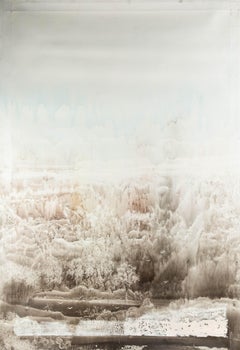
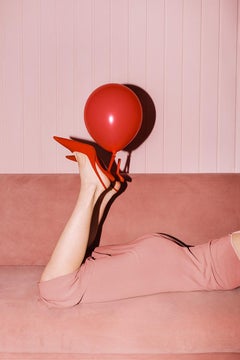
Exercise at Home
By Luke Smalley
Located in New York, NY
Digital C-print Stamped and numbered, verso 20 x 24 inches (Edition of 10) 30 x 40 inches (Edition of 5 + 1 AP) 50 x 60 inches (Edition of 3) This photograph is offered by ClampArt, located in New York City. Please note that prices increase as editions sell. Luke Smalley was an American artist known for his photographic work, which pairs a coolly minimalist aesthetic with a retro nostalgia. Images from his early in his career were inspired by fitness manuals and yearbooks c. 1910. This is not surprising since Smalley graduated with a degree in sports medicine from Pepperdine University and worked for a number of years as a model and personal trainer. Smalley shot the bulk of his photographs in his home state of Pennsylvania, using real high school athletes as models. “Exercise at Home” is Luke Smalley’s second major body of work. Shot in and around the tiny Pennsylvania town the artist called home, Smalley revisits themes of adolescent growing pains acted out under the guise of earnest athleticism. Teenagers engage in simple yet strange competitions meant to establish their standings amongst one another. Two youths practice boating safety...
Category

Early 2000s Contemporary Manhattan - Art

Materials

C Print

Still Thinking About These?

All Recently Viewed