Nice - More Art

to
1
1
1
2
1
Overall Width
to
Overall Height
to
5
1
2
1
1
1
1
3
1
1
1
3
1
9,578
4,629
Item Ships From: Nice
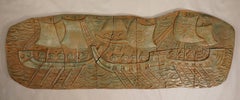
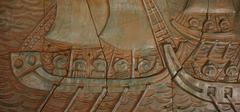
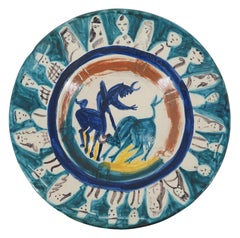
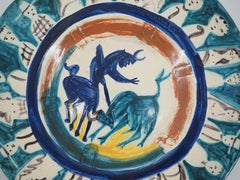
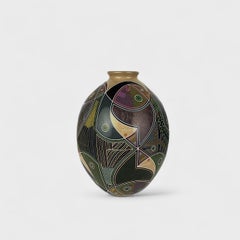
La Galère, 1950 - ceramic, 46x132x5

La Galère, 1950 - ceramic, 46x132x5

By Les Argonautes

Located in Nice, FR

Very Big Ceramic from "Les Argonautes" Vallauris Workshop "Les Argonautes", Vallauris: Isabelle Ferlay (1917-?) And Frédérique Bourguet (1925-1997) Isabelle Ferlay and Frédérique Bourguet founded their ceramic workshop in Vallauris in 1953, which they named "Les Argonautes", in reference to the famous Greek epic. Isabelle studied painting at the Fine Arts school of Lyon in 1940, then she attended the Fine Arts in Marseille. Finally, she finished her artistic training in Montpellier, at the Fontcarade national school, where she learned ceramics. Françoise dit Frédérique Bourguet studied at the Beaux-Arts in Montpellier until 1945 and it was in Sèvres, in Françoise Bizette's studio, that she trained in the art of ceramics. She created her first workshop in Paris in 1945, which she shared with Valentine Schlegel until 1951. The two women ceramicists then practiced modeling technique. It was in 1953 that she met Isabelle Ferlay and together, they decided to set up a workshop in Vallauris. They produce shaped pieces, sometimes molded, made of earthenware, enamelled in bright colors. In the 1970s they made stoneware cooked over a wood fire. Some ceramists frequented their workshop, notably the very talented Jacques Innocenti and François Raty.

Category

Mid-20th Century Modern Nice - More Art

Materials

Ceramic

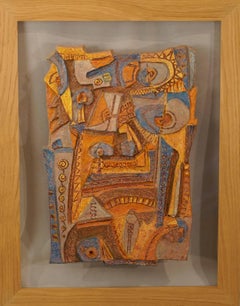
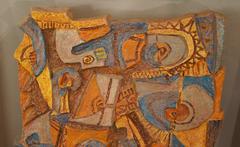
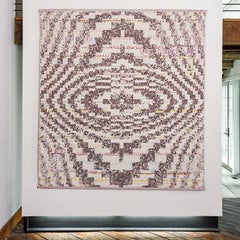
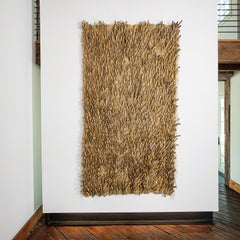
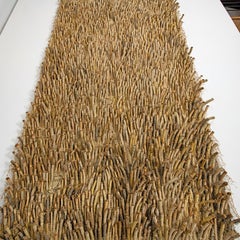
Abstract Papier Mache Composition, 1950-60 - papier mache, 83x65x4 cm., framed

Abstract Papier Mache Composition, 1950-60 - papier mache, 83x65x4 cm., framed

By Les Argonautes

Located in Nice, FR

Paper mache "Les Argonautes" Artist: JS. Ferlay Vallauris Workshop "Les Argonautes", Vallauris: Isabelle Ferlay (1917-?) And Frédérique Bourguet (1925-1997) Isabelle Ferlay and Frédérique Bourguet founded their ceramic workshop in Vallauris in 1953, which they named "Les Argonautes", in reference to the famous Greek epic. Isabelle studied painting at the Fine Arts school of Lyon in 1940, then she attended the Fine Arts in Marseille. Finally, she finished her artistic training in Montpellier, at the Fontcarade national school, where she learned ceramics. Françoise dit Frédérique Bourguet studied at the Beaux-Arts in Montpellier until 1945 and it was in Sèvres, in Françoise Bizette's studio, that she trained in the art of ceramics. She created her first workshop in Paris in 1945, which she shared with Valentine Schlegel until 1951. The two women ceramicists then practiced modeling technique. It was in 1953 that she met Isabelle Ferlay and together, they decided to set up a workshop in Vallauris. They produce shaped pieces, sometimes molded, made of earthenware, enamelled in bright colors. In the 1970s they made stoneware cooked over a wood fire. Some ceramists frequented their workshop, notably the very talented Jacques Innocenti and François Raty.

Category

Mid-20th Century Abstract Nice - More Art

Materials

Papier Mâché

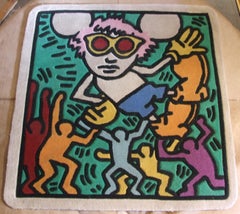
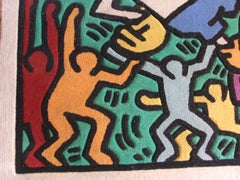
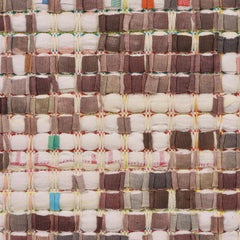
Andy Mouse - carpet, 100x100 cm, limited edition 2/20

Andy Mouse - carpet, 100x100 cm, limited edition 2/20

By (after) Keith Haring

Located in Nice, FR

Beautiful carpet representing Andy Wharol in the shape of Mickey Mouse after a Keith Haring's work. Edited by Editions Studio in 20 pieces, this one carries the number 2/20.

Category

1990s Street Art Nice - More Art

Materials

Cotton

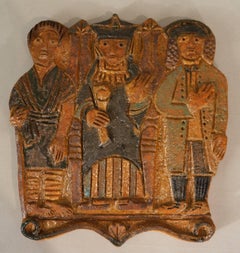
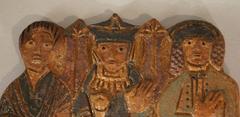
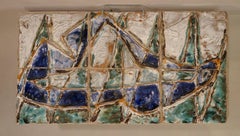
Les 3 Amis, 1950-55 - ceramic, 30x36x5 cm

Les 3 Amis, 1950-55 - ceramic, 30x36x5 cm

By Les Argonautes

Located in Nice, FR

Ceramic from Vallauris Workshop "Les Argonautes", Vallauris: Isabelle Ferlay (1917-?) And Frédérique Bourguet (1925-1997) Isabelle Ferlay and Frédérique Bourguet founded their ceramic workshop in Vallauris in 1953, which they named "Les Argonautes", in reference to the famous Greek epic. Isabelle studied painting at the Fine Arts school of Lyon in 1940, then she attended the Fine Arts in Marseille. Finally, she finished her artistic training in Montpellier, at the Fontcarade national school, where she learned ceramics. Françoise dit Frédérique Bourguet studied at the Beaux-Arts in Montpellier until 1945 and it was in Sèvres, in Françoise Bizette's studio, that she trained in the art of ceramics. She created her first workshop in Paris in 1945, which she shared with Valentine Schlegel until 1951. The two women ceramicists then practiced modeling technique. It was in 1953 that she met Isabelle Ferlay and together, they decided to set up a workshop in Vallauris. They produce shaped pieces, sometimes molded, made of earthenware, enamelled in bright colors. In the 1970s they made stoneware cooked over a wood fire. Some ceramists frequented their workshop, notably the very talented Jacques Innocenti and François Raty.

Category

Mid-20th Century Nice - More Art

Materials

Ceramic

Related Items
“Sylva” Contemporary Porcelain Wall Sculpture Trio

“Sylva” Contemporary Porcelain Wall Sculpture Trio

By Element Clay Studio

Located in Savannah, GA

“Sylva” is a contemporary porcelain wall sculpture installation by Heather Knight, founder of Element Clay Studio, a Savannah-based studio recognized for organic modern ceramic works...

Category

2010s Contemporary Nice - More Art

Materials

Ceramic, Porcelain

Contemporary Porcelain Wall Sculpture Installation “Bloom”

Contemporary Porcelain Wall Sculpture Installation “Bloom”

By Element Clay Studio

Located in Savannah, GA

“Bloom” is a contemporary porcelain wall sculpture installation by Heather Knight, founder of Element Clay Studio, a Savannah-based studio recognized for organic modern ceramic works...

Category

21st Century and Contemporary Contemporary Nice - More Art

Materials

Ceramic, Porcelain

YOSHITOMO NARA - WE ARE PUNKS MUG (Large) Design modern pop art urban Japan

YOSHITOMO NARA - WE ARE PUNKS MUG (Large) Design modern pop art urban Japan

By Yoshitomo Nara

Located in Madrid, Madrid

Yoshitomo Nara - We are punks Mug Large Date of creation: 2011 Medium: Porcelain Edition: Open Size: 95 x Φ85 mm (300ml) Condition: Brand new, inside its custom box Description: The big sibling in Yoshitomo Nara's We Are Punks porcelain series, this 300 cc mug features a vampire-fanged girl peering over a wall on its side with the quiet menace of someone who arrived first and has no intention of leaving. "We Are Punks" is printed on the exterior as both a title and a statement of intent. The image derives from Nara's 2011 colour-pencil drawing of the same name, part of a practice where childhood defiance and subcultural energy merge into a visual language recognisable across a room. Made in Hasami ware from Nagasaki Prefecture, the mug is fired, glazed and finished in Japan. Hasami potters developed their craft supplying everyday tableware to the domestic market, which means the porcelain is built to be used, not merely admired. It is microwave and dishwasher safe. The white ground is clean and unglazed on the outside where the illustration sits, giving the print a tactile, almost paper-like quality that feels closer to a drawing than to a mass-produced transfer. At 300 cc it holds enough coffee to start the morning with the same stubborn composure Nara's children have been modelling for over three decades. Pair it with the small mug: the two stack together and, like any well-conceived double act, gain from being seen as a set. That stacking detail is not accidental. Nara has long been interested in objects that nest inside one another. His room-sized installations are built as huts and cabins that shelter smaller works, creating a mise en abyme of intimacy. Two mugs sitting one inside the other carry a faint echo of that idea, scaled down to the kitchen shelf. ABOUT THE ARTIST Yoshitomo Nara (奈良美智, b. 1959, Hirosaki) is one of the most influential Japanese artists working today. Round-headed children with piercing gazes populate his canvases and sculptures, images that have gone well beyond the art world to become a broader cultural phenomenon. Childhood in Aomori: Solitude, Nature, and Radio Waves Nara grew up in Hirosaki, a small city in Aomori Prefecture at the northern tip of Honshū. Both parents worked long hours, leaving young Yoshitomo to fend for himself after school. The Japanese have a word for children like him, kagikko, latchkey kids who come home to an empty house and learn to keep their own company. That early acquaintance with solitude runs through every painting. Look at any of Nara's figures and you will find a self-contained being who meets your eye with a steadiness that could be courage or could just as easily be vulnerability. During those solitary years, Western music reached him through the Far East Network (FEN), the U.S. Armed Forces radio station. Rock, folk, and later punk gave him a way to feel before painting ever did. As a young boy he bought his first record, Suzie Q, and has often said that album covers were his earliest art gallery. Later, he would design covers for Shonen Knife, R.E.M., and Bloodthirsty Butchers, and every exhibition he puts on is accompanied by a playlist of his own making. Education: Aichi and the Kunstakademie Düsseldorf After earning a BFA (1985) and MFA (1987) at the Aichi Prefectural University of Fine Arts and Music, Nara relocated to Germany to enrol at the Kunstakademie Düsseldorf, the same school that had shaped Joseph Beuys and Gerhard Richter. Under Neo-Expressionist painter A.R. Penck (1991–1993), he received one piece of advice that stuck: "Paint on the canvas as if you are drawing." Bold, pared-back figures, large rounded heads set against bare backgrounds, began to take shape on his canvases. At the Kunstakademie's annual student show in 1992, visitors saw The Girl with the Knife in Her Hand (1991), a painting that crystallised the tension running through all of Nara's work: an apparently innocent girl holding a tiny knife, a gesture he reads not as aggression but as self-defence against a threatening adult world. Once finished with his studies, Nara settled in Cologne in 1994 and set up in a former cotton mill. Cut off by the language barrier, he turned painting into a conversation with himself, and it was in that solitude that the gaze people remember long after leaving the gallery first appeared. Return to Japan and International Acclaim Twelve years later, Nara came back to Japan. I DON'T MIND, IF YOU FORGET ME. opened at the Yokohama Museum of Art in 2001 and toured five Japanese venues, including Hirosaki. MoMA New York acquired 130 of his drawings around the same time, and the travelling retrospective Nothing Ever Happens (2003–2005) cemented his reputation in the United States. Within the Japanese "New Pop" wave, he shared the stage with artists such as Takashi Murakami, Makoto Aida, and Mariko Mori...

Category

2010s Pop Art Nice - More Art

Materials

Porcelain

YOSHITOMO NARA - WE ARE PUNKS MUG (Small) Design modern pop art urban Japan

YOSHITOMO NARA - WE ARE PUNKS MUG (Small) Design modern pop art urban Japan

By Yoshitomo Nara

Located in Madrid, Madrid

Yoshitomo Nara - We are punks Mug Small Date of creation: 2011 Medium: Porcelain Edition: Open Size: 65 x Φ85 mm (200ml) Condition: Brand new, inside its custom box Description: A small porcelain mug based on Yoshitomo Nara's We Are Punks (2011), a colour-pencil drawing of a defiant, round-headed child whose expression falls somewhere between a lullaby and a battle cry. The piece belongs to a body of work where Nara channels the raw energy of the punk and folk records he grew up listening to on U.S. Armed Forces radio in rural Aomori, a thread that runs from his earliest sketchbooks to his large-scale canvases and limited editions. Crafted in Hasami ware from Nagasaki Prefecture, the mug is dishwasher and microwave safe. The clay is fired and glazed in Japan using techniques passed down through four centuries of potters in the hills above Nagasaki. The result is a clean white body, light but solid in the hand, with a matte finish that lets the illustration sit naturally on the surface rather than floating under a layer of gloss. Peek inside once you have finished your espresso and you will find one of Nara's girls staring back at you from the bottom of the cup, as if she got there first and has no intention of leaving. It is a small, private encounter: exactly the kind of moment Nara builds into his work. His figures never perform for a crowd; they address you one-on-one, and finding one at the bottom of a coffee cup is about as intimate as it gets. ABOUT THE ARTIST Yoshitomo Nara (奈良美智, b. 1959, Hirosaki) is one of the most influential Japanese artists working today. Round-headed children with piercing gazes populate his canvases and sculptures, images that have gone well beyond the art world to become a broader cultural phenomenon. Childhood in Aomori: Solitude, Nature, and Radio Waves Nara grew up in Hirosaki, a small city in Aomori Prefecture at the northern tip of Honshū. Both parents worked long hours, leaving young Yoshitomo to fend for himself after school. The Japanese have a word for children like him, kagikko, latchkey kids who come home to an empty house and learn to keep their own company. That early acquaintance with solitude runs through every painting. Look at any of Nara's figures and you will find a self-contained being who meets your eye with a steadiness that could be courage or could just as easily be vulnerability. During those solitary years, Western music reached him through the Far East Network (FEN), the U.S. Armed Forces radio station. Rock, folk, and later punk gave him a way to feel before painting ever did. As a young boy he bought his first record, Suzie Q, and has often said that album covers were his earliest art gallery. Later, he would design covers for Shonen Knife, R.E.M., and Bloodthirsty Butchers, and every exhibition he puts on is accompanied by a playlist of his own making. Education: Aichi and the Kunstakademie Düsseldorf After earning a BFA (1985) and MFA (1987) at the Aichi Prefectural University of Fine Arts and Music, Nara relocated to Germany to enrol at the Kunstakademie Düsseldorf, the same school that had shaped Joseph Beuys and Gerhard Richter. Under Neo-Expressionist painter A.R. Penck (1991–1993), he received one piece of advice that stuck: "Paint on the canvas as if you are drawing." Bold, pared-back figures, large rounded heads set against bare backgrounds, began to take shape on his canvases. At the Kunstakademie's annual student show in 1992, visitors saw The Girl with the Knife in Her Hand (1991), a painting that crystallised the tension running through all of Nara's work: an apparently innocent girl holding a tiny knife, a gesture he reads not as aggression but as self-defence against a threatening adult world. Once finished with his studies, Nara settled in Cologne in 1994 and set up in a former cotton mill. Cut off by the language barrier, he turned painting into a conversation with himself, and it was in that solitude that the gaze people remember long after leaving the gallery first appeared. Return to Japan and International Acclaim Twelve years later, Nara came back to Japan. I DON'T MIND, IF YOU FORGET ME. opened at the Yokohama Museum of Art in 2001 and toured five Japanese venues, including Hirosaki. MoMA New York acquired 130 of his drawings around the same time, and the travelling retrospective Nothing Ever Happens (2003–2005) cemented his reputation in the United States. Within the Japanese "New Pop" wave, he shared the stage with artists such as Takashi Murakami, Makoto Aida, and Mariko Mori...
Category

2010s Pop Art Nice - More Art

Materials

Porcelain

Double Sided Gold Plated Medallion (Limited Edition; Signed and Stamped)

Double Sided Gold Plated Medallion (Limited Edition; Signed and Stamped)

By Arnaldo Pomodoro

Located in New York, NY

ARNALDO POMODORO Double Sided Gold Plated Medallion, 1985 Bronze with Gold Patina 2 7/10 × 2 7/10 × 3/10 inches Limited Edition of 500 Signed by artist with incised signature; Stampe...

Category

1980s Abstract Geometric Nice - More Art

Materials

Gold, Bronze

Taizan Tile Portrait of a Woman Mosaic Panel

Taizan Tile Portrait of a Woman Mosaic Panel

Located in Astoria, NY

Taizan Tile, Portrait of a Woman Mosaic Panel, mid-20th century, signed "Taizan" lower left, giltwood frame. Image: 11.5" H x 9" W; frame: 21.5" H x 18.5" W x 2" D. Provenance: Fro...

Category

Mid-20th Century Modern Nice - More Art

Materials

Ceramic

'O.D. 1' by Brian Bosworth, Ceramic, Underglazes, Lava Glaze

'O.D. 1' by Brian Bosworth, Ceramic, Underglazes, Lava Glaze

Located in Oklahoma City, OK

This 5.5" x 8.5" ceramic wall sculpture was created by Brian Bosworth. This is a contemporary piece that demonstrates sophisticated glazing techniques and compositional balance. The ...

Category

2010s Abstract Geometric Nice - More Art

Materials

Ceramic, Underglaze

Fleurs
Fleurs

Pablo PicassoFleurs, 1952

$536,281

H 60 in W 40 in

Fleurs

By Pablo Picasso

Located in PARIS, FR

• An authenticated work This work is authenticated by Paloma Ruiz Picasso and Diana Widmaier Ruiz Picasso, who issued a certificate of authenticity on October 7, 2024. • A dated wor...

Category

1950s Modern Nice - More Art

Materials

Ceramic

Visage (Nez à Angle Droit)

Visage (Nez à Angle Droit)

By Pablo Picasso

Located in PARIS, FR

An authenticated work Dated June 21, 1963, this unique painted and glazed ceramic comes with a certificate of authenticity from Claude Ruiz Picasso (2019). A dated work Inscribed Ju...

Category

1960s Modern Nice - More Art

Materials

Ceramic

YOSHITOMO NARA - LET'S TALK ABOUT "GLORY" Design modern pop art urban Japan

YOSHITOMO NARA - LET'S TALK ABOUT "GLORY" Design modern pop art urban Japan

By Yoshitomo Nara

Located in Madrid, Madrid

Yoshitomo Nara - Let's talk about "Glory" Date of creation: 2011 Medium: Porcelain Edition: Open Size: Φ22 mm Condition: Brand new, inside its custom box Description: A Hasami ware porcelain plate reproducing Yoshitomo Nara's Let's Talk About "Glory" (2012), an acrylic-on-canvas painting where one of the artist's trademark children stares out with brow slightly furrowed and mouth set in a line that says she has heard what glory is and remains unconvinced. The original work, measuring roughly life-size, belongs to the period following the 2011 Great East Japan Earthquake, when Nara's palette softened, his paint layers multiplied, and the angry scowls of his earlier figures gave way to a different register: heavy-lidded, searching, charged. "I was so depressed that I couldn't help feeling that what I'd been doing was totally meaningless," he later recalled. When the brushes finally came back out, the defiant scowls had gone. What replaced them was a gaze that holds more weight precisely because it asks for less. No raised fist, no bared fangs — just a pair of eyes that have seen something and are still deciding what to make of it. Like the rest of Nara's Hasami porcelain series, this plate is crafted in Nagasaki Prefecture, home to one of Japan's oldest ceramic traditions. Smooth and surprisingly heavy for its size, the body holds a print sharp enough to preserve the layered, almost translucent quality of Nara's post-2011 palette — the soft greens and muted flesh tones that replaced the flat, punchy colours of his earlier work. ABOUT THE ARTIST Yoshitomo Nara (奈良美智, b. 1959, Hirosaki) is one of the most influential Japanese artists working today. Round-headed children with piercing gazes populate his canvases and sculptures, images that have gone well beyond the art world to become a broader cultural phenomenon. Childhood in Aomori: Solitude, Nature, and Radio Waves Nara grew up in Hirosaki, a small city in Aomori Prefecture at the northern tip of Honshū. Both parents worked long hours, leaving young Yoshitomo to fend for himself after school. The Japanese have a word for children like him, kagikko, latchkey kids who come home to an empty house and learn to keep their own company. That early acquaintance with solitude runs through every painting. Look at any of Nara's figures and you will find a self-contained being who meets your eye with a steadiness that could be courage or could just as easily be vulnerability. During those solitary years, Western music reached him through the Far East Network (FEN), the U.S. Armed Forces radio station. Rock, folk, and later punk gave him a way to feel before painting ever did. As a young boy he bought his first record, Suzie Q, and has often said that album covers were his earliest art gallery. Later, he would design covers for Shonen Knife, R.E.M., and Bloodthirsty Butchers, and every exhibition he puts on is accompanied by a playlist of his own making. Education: Aichi and the Kunstakademie Düsseldorf After earning a BFA (1985) and MFA (1987) at the Aichi Prefectural University of Fine Arts and Music, Nara relocated to Germany to enrol at the Kunstakademie Düsseldorf, the same school that had shaped Joseph Beuys and Gerhard Richter. Under Neo-Expressionist painter A.R. Penck (1991–1993), he received one piece of advice that stuck: "Paint on the canvas as if you are drawing." Bold, pared-back figures, large rounded heads set against bare backgrounds, began to take shape on his canvases. At the Kunstakademie's annual student show in 1992, visitors saw The Girl with the Knife in Her Hand (1991), a painting that crystallised the tension running through all of Nara's work: an apparently innocent girl holding a tiny knife, a gesture he reads not as aggression but as self-defence against a threatening adult world. Once finished with his studies, Nara settled in Cologne in 1994 and set up in a former cotton mill. Cut off by the language barrier, he turned painting into a conversation with himself, and it was in that solitude that the gaze people remember long after leaving the gallery first appeared. Return to Japan and International Acclaim Twelve years later, Nara came back to Japan. I DON'T MIND, IF YOU FORGET ME. opened at the Yokohama Museum of Art in 2001 and toured five Japanese venues, including Hirosaki. MoMA New York acquired 130 of his drawings around the same time, and the travelling retrospective Nothing Ever Happens (2003–2005) cemented his reputation in the United States. Within the Japanese "New Pop" wave, he shared the stage with artists such as Takashi Murakami, Makoto Aida, and Mariko Mori...
Category

2010s Pop Art Nice - More Art

Materials

Porcelain

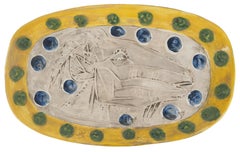
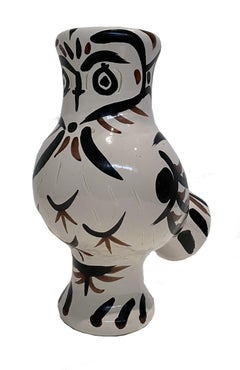
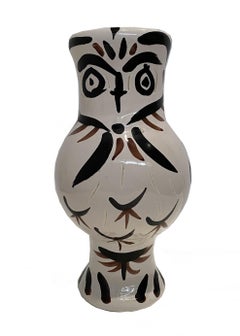
Hibou
Hibou

Pablo PicassoHibou, 1950

$308,944

H 16.15 in W 10.04 in

Hibou

By Pablo Picasso

Located in PARIS, FR

• A unique ceramic by Pablo Picasso This work is a unique ceramic by Pablo Picasso, dated on the reverse, reflecting the artist’s direct and personal intervention in the creation of ...

Category

1950s Modern Nice - More Art

Materials

Ceramic

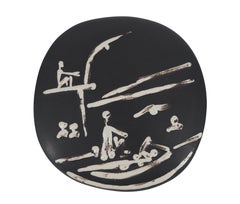
Le Barbu (A.R.217)
Le Barbu (A.R.217)

Pablo PicassoLe Barbu (A.R.217), 1953

$52,462

H 11.82 in W 11.82 in

Le Barbu (A.R.217)

By Pablo Picasso

Located in PARIS, FR

• Picasso began working with ceramics in 1946 at the Madoura workshop in Vallauris, marking the beginning of an important and highly productive chapter in his career. What initially ...

Category

1950s Modern Nice - More Art

Materials

Ceramic

Previously Available Items
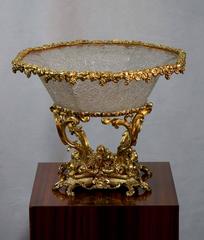
Coupe De Cristal
Coupe De Cristal

Coupe De Cristal, 1870-

Sold

H 11.82 in W 14.57 in D 14.57 in

Coupe De Cristal

Located in Nice, FR

Cristal bol in bronze Napoleon III.

Category

1870s Nice - More Art

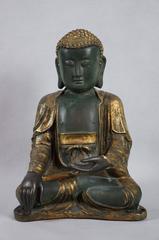
Bouddha
Bouddha

Bouddha, 1920-30

Sold

H 14.97 in W 11.03 in D 7.09 in

Bouddha

Located in Nice, FR

Chinese Bouddha, polychrome terracotta.

Category

Early 20th Century Academic Nice - More Art

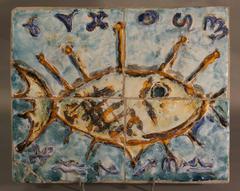
Cosmological Fish
Cosmological Fish

Cosmological Fish, 1960-70

Sold

H 11.82 in W 15.75 in D 2.37 in

Cosmological Fish

Located in Nice, FR

Ceramic, Vallauris circa 1960

Category

Late 20th Century Modern Nice - More Art

Materials

Ceramic

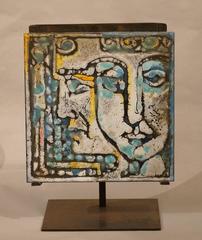
Double Face
Double Face

Manfredo BorsiDouble Face, 1950-60

Sold

H 11.82 in W 11.82 in D 1.19 in

Double Face

By Manfredo Borsi

Located in Nice, FR

Ceramic circa 1950

Category

Mid-20th Century Nice - More Art

Materials

Ceramic