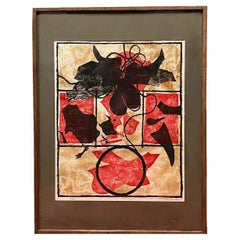
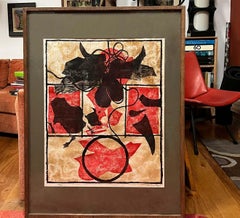
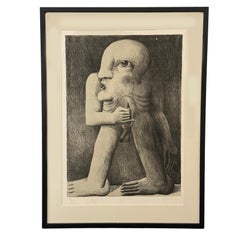
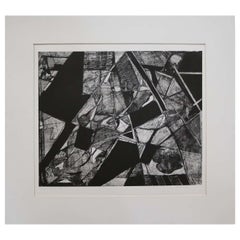
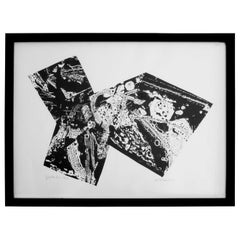
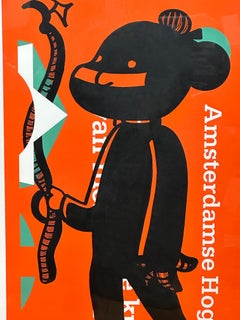
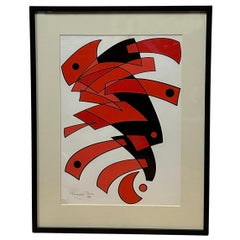
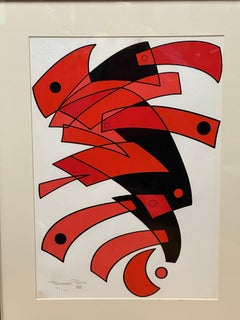
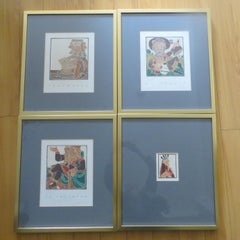
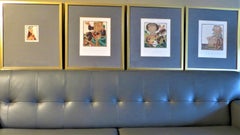
In the infinitely complex world of contemporary art, many works serve as vehicles for thought, postural statements, and emotion. Such is the case with SHAO QI, a renowned Chinese artist who skillfully blends the political, cultural, and aesthetic in her lithographic work entitled "I am a Ninja."
This piece, limited to thirty copies, numbered 21/30 in pencil and dated 2011, is a perfect example of how cross-influences can be integrated and cultural barriers broken down.
Historically, ninjas were inferior warriors in feudal Japan, often recruited by samurai and governments to serve as spies. Their mysteriousness has allowed them to infiltrate contemporary popular culture, so much so that their ubiquity eventually transcends borders, internationalizing the ninja and rendering its Japanese origin a simple detail, among others, in public perception, a component of a character that has become universal.
Pop art, an artistic movement of the second half of the 20th century, is known for its appropriation and subversion of consumer products and cultural icons. By hijacking elements of mass culture, pop artists such as Andy Warhol and Roy Lichtenstein transformed the perception of art and its eligible subjects. The use of a ninja silhouette in "I Am a Ninja" follows this tradition, exploiting a popular symbol to reimagine it.
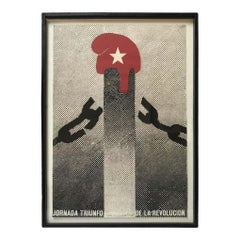
The dynamic interplay of colors, in particular the aesthetic power of red and black, is essential. Red's radiant luminescence contrasts sharply with black's ultimate absorption, framing the work in a colorimetric face-off reminiscent of the propaganda posters of yesteryear. Red, the color of revolution, power, passion, and vitality, blends with black, shadow, and emptiness.
The bold black lines that delineate the figure are reminiscent of Shepard Fairey's work under the OBEY signature. These lines convey a vibrant, primitive force akin to Russian Constructivist posters...
Category
2010s Pop Art Pasadena - Prints and Multiples