South Carolina - Art

to
54
420
164
258
238
496
Overall Width
to
Overall Height
to
10
23
534
1,009
10
15
80
100
86
18
24
42
7
3
6
528
501
185
50
24
24
22
13
8
1
910
606
44
571
417
294
254
232
209
193
171
125
124
109
100
92
88
81
80
65
59
57
54
943
943
103
98
92
832
21
20
16
13
11
855
231,517
156,940
Item Ships From: South Carolina
'The Start of the Race' — 1899 America's Cup, 1930s Color Woodcut

'The Start of the Race' — 1899 America's Cup, 1930s Color Woodcut

By Jacques La Grange

Located in Myrtle Beach, SC

Jacques La Grange, 'The Start of the Race, 1899', color woodcut, edition 500, 1934. Signed and numbered '21/500' in pencil. A fine impression, with fresh colors, on cream wove paper,...

Category

1930s American Modern South Carolina - Art

Materials

Woodcut

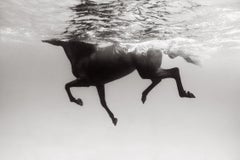
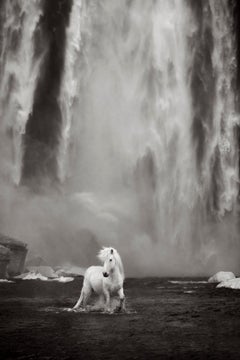
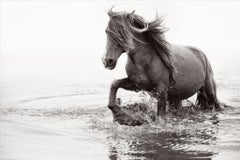
Black and white profile image of a beautiful horse swimming in clear water

Black and white profile image of a beautiful horse swimming in clear water

By Drew Doggett

Located in US

"""Tranquility"" Black and white profile image of a beautiful horse swimming in clear water Profile image of a dark horse swimming in crystal clear water taken, captured underwate...

Category

2010s Minimalist South Carolina - Art

Materials

Archival Pigment

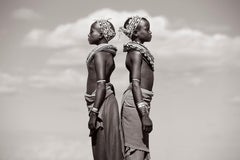
Fashion-inspired portrait of two young women posed in traditional jewelry

Fashion-inspired portrait of two young women posed in traditional jewelry

By Drew Doggett

Located in US

"Youth Reflected Fashion-inspired portrait of two young women posed in traditional jewelry Two young Rendille women proudly standing back to back in the salt flats of the Northern ...

Category

2010s Minimalist South Carolina - Art

Materials

Archival Pigment

'Riders at Sundown' — Mid-Century Southwest Regionalism

'Riders at Sundown' — Mid-Century Southwest Regionalism

By Gene Kloss

Located in Myrtle Beach, SC

'Riders at Sundown', aquatint and drypoint, edition 75, 1953, Kloss 451. Signed, titled, and annotated 'Artist's Proof' in pencil. A superb, richly-inked, atmospheric impression, in ...

Category

1950s American Modern South Carolina - Art

Materials

Drypoint, Aquatint

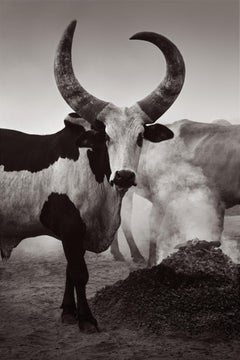
Portrait of a long-horned cow looking toward the camera in South Sudan

Portrait of a long-horned cow looking toward the camera in South Sudan

By Drew Doggett

Located in US

"""Mundari's Pride"" Portrait of a long-horned cow looking toward the camera in South Sudan Long-horned cow looking towards the camera with a black & white coat in the cattle camp...

Category

2010s Minimalist South Carolina - Art

Materials

Archival Pigment

'Racing in a Storm' — 1885 America's Cup, 1930s Color Woodcut

'Racing in a Storm' — 1885 America's Cup, 1930s Color Woodcut

By Jacques La Grange

Located in Myrtle Beach, SC

Jacques La Grange, 'Racing in a Storm, 1885', color woodcut, edition 500, 1934. Signed and numbered '25/500' in pencil. A fine impression, with fresh colors, on cream wove paper, wit...

Category

1930s American Modern South Carolina - Art

Materials

Woodcut

'Partners' — Mid-Century Modernist Regionalism

'Partners' — Mid-Century Modernist Regionalism

By Dale Nichols

Located in Myrtle Beach, SC

Dale Nichols, 'Partners', lithograph, edition 250, 1950. Signed in pencil. A fine, richly-inked impression, on cream wove paper; the full sheet with margins (7/8 to 1 5/8 inches); tw...

Category

1950s American Modern South Carolina - Art

Materials

Lithograph

'Astral Comic' — Modernist Abstraction

'Astral Comic' — Modernist Abstraction

By Edward August Landon

Located in Myrtle Beach, SC

Edward Landon 'Astral Comic', color serigraph, 1978, edition 25, Ryan 12. Signed, titled, and annotated 'Edition 25' in pencil. A superb, painterly impression, with fresh colors, on ...

Category

1970s Abstract South Carolina - Art

Materials

Screen

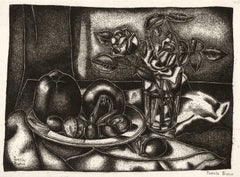
'September Still Life' — Mid-Century Modernism

'September Still Life' — Mid-Century Modernism

By Clinton Adams

Located in Myrtle Beach, SC

Clinton Adams, 'September Still Life', lithograph, 1956, edition 20. A superb impression, on cream wove paper, with full margins (1 1/2 to 3 1/8 inches);...

Category

1950s American Modern South Carolina - Art

Materials

Lithograph

Close up of a wild and free horse on Sable Island with a star on his forehead

Close up of a wild and free horse on Sable Island with a star on his forehead

By Drew Doggett

Located in US

Close up of a wild and free horse on Sable Island with a star on his forehead The strength and resilience of these animals comes through in the intensity of their gaze The print se...

Category

2010s Minimalist South Carolina - Art

Materials

Archival Pigment

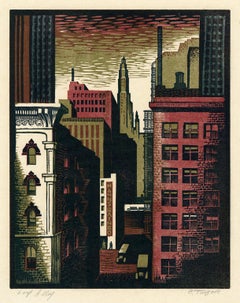
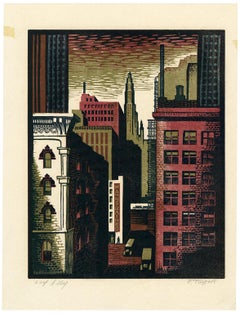
'Loop Alley' — Modernist Chicago Cityscape, WPA

'Loop Alley' — Modernist Chicago Cityscape, WPA

By Charles Turzak

Located in Myrtle Beach, SC

Charles Turzak, 'Loop Alley (Chicago)', color woodcut, edition c. 25, c. 1935. Signed and titled in pencil. A fine, richly-inked impression, with fresh colors, on cream wove Japan pa...

Category

1930s American Modern South Carolina - Art

Materials

Woodcut

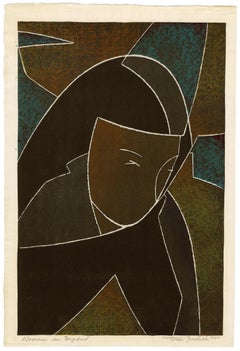
'Woman In Bagdad' — 1950s Japanese Sôsaku-hanga Abstraction

'Woman In Bagdad' — 1950s Japanese Sôsaku-hanga Abstraction

Located in Myrtle Beach, SC

Toshi Yoshida, 'Woman In Bagdad', color woodblock print, 1954, edition not stated. Signed, dated, and titled, in pencil. A fine, richly-inked impression, with fresh colors, on cream-wove Japan paper; the full sheet with margins (1/2 to 7/8 inch); minor toning in the margins, otherwise in excellent condition. Self-carved, self-printed. Archivally sleeved, unmatted. Image size 14 13/16 x 9 7/8 inches; sheet size 16 1/4 x 11 inches (oban tate-e). Exhibited: 'Color in Relief: Wood Block Prints from Origins to Abstraction', Georgetown University Library, 2016. Literature: Oliver Statler, Modern Japanese Prints: An Art Reborn, 1959, pp.168-169; Eugene M. Skibbe, Yoshida Toshi 1911-1999: Diversity, Change, and Continuity in the Yoshida Art Tradition, Andon 53, Society for Japanese Arts, 1996, pp. 5-14; Kendall H. Brown, Yoshida Toshi: The Nature of Tranquility, in, A Japanese Legacy: Four Generations of Yoshida Family Artists, The Minneapolis Institute of Arts, 2002, pp. 72-80; p. 91, no. 55 Exhibition: Japan & Beyond: The Yoshida Family Legacy in Japanese Woodblock Prints, curated by Kendall Brown and Quyen Le, The Ruth and Sherman Lee Institute for Japanese Art, Hanford, CA. February 3, 2004 - March 27, 2004. Collections: Art Institute of Chicago, Clark Center for Japanese Art and Culture, Minneapolis Institute of Art, University of California Merced, University of Oregon (The Lavenberg Collection of Japanese Prints). ABOUT THE ARTIST Yoshida Toshi (1911-1995) began training at the age of 14 under his father, Yoshida Hiroshi, one of the most acclaimed artists of the Japanese 20th-century printmaking revival movement shin-hanga (’new prints’ created in the traditional collaborative system of Japanese printmaking). He studied from 1932 to 1935 at the Taiheiyo-Gakai (Pacific Painting Association), co-founded by his father. Before the Pacific War, Toshi traveled widely with his father in Asia, Europe, Egypt, and the United States. Later he continued his worldwide travels, especially in Mexico, the United States, Canada, and Africa. Following his father’s death in 1950, Toshi began his very personal exploration of abstraction, joining the sôsaku-hanga movement (’creative prints’ wherein the artist is creator, carver, and printer). During this richly creative period (1954 to 1973), Toshi created over three hundred nonobjective designs. In the early 1960s, Toshi returned to large-scale figurative work, concentrating on scenes of African wildlife in its natural habitat, and in 1984 he published the first of many illustrated children's books on African wildlife (Dobutsu Ehon Shirizu), which he continued to produce until the early 1990s. In 1966 he published a book with the artist Yuki Rei...

Category

1960s Abstract South Carolina - Art

Materials

Woodcut

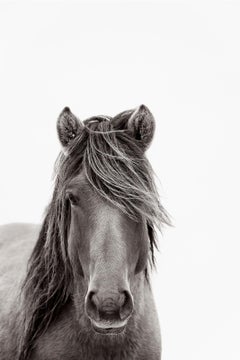
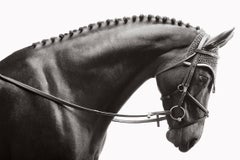
Lone Wild Horse Looks Over Tall Grass, Meditative, Calming, Equestrian

Lone Wild Horse Looks Over Tall Grass, Meditative, Calming, Equestrian

By Drew Doggett

Located in US

"Windy Solitude" This best-selling image features a single horse on Sable Island as he looks back at the camera. " The print series Discovering the Horses of Sable Island documents...

Category

2010s Contemporary South Carolina - Art

Materials

Archival Pigment

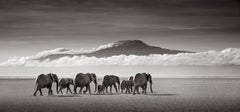
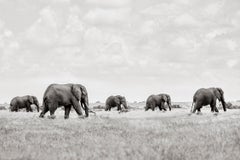
In an iconic scene, elephants of all sizes head towards Kilimanjaro

In an iconic scene, elephants of all sizes head towards Kilimanjaro

By Drew Doggett

Located in US

In an iconic scene, elephants of all sizes head towards Kilimanjaro Elephants of all sizes walking along dry lake bed with Kilimanjaro in distance Exceptional Creatures is a limite...

Category

2010s Minimalist South Carolina - Art

Materials

Archival Pigment

St. George — African American artist

St. George — African American artist

By John Tarrell Scott

Located in Myrtle Beach, SC

John Tarrell Scott, 'St. George', woodcut, edition 20, 1992. Signed, dated, titled, and numbered '18/20' in pencil. A fine, black impression, on off-white, laid Japan paper, with ful...

Category

1990s Contemporary South Carolina - Art

Materials

Woodcut

'Dancers' — 1930s American Modernism

'Dancers' — 1930s American Modernism

By Charles Turzak

Located in Myrtle Beach, SC

Charles Turzak, 'Dancers', 1939, wood engraving, edition 100. Signed, titled, and numbered 72/100 in pencil. A fine, richly-inked impression, on off-white Japan paper, with full marg...

Category

Mid-20th Century Art Deco South Carolina - Art

Materials

Woodcut

Profile Portrait of a Woman in Kenya Wearing Tribal Jewelry, Iconic, Vertical

Profile Portrait of a Woman in Kenya Wearing Tribal Jewelry, Iconic, Vertical

By Drew Doggett

Located in US

"Trimmed in Grace" A young Rendille woman wears the traditional adornments of her culture with honor and pride in this iconic, award-winning portrait. The print series Desert Son...

Category

2010s Contemporary South Carolina - Art

Materials

Archival Pigment

Storm Clouds Over Douarnenez, France — British Impressionism

Storm Clouds Over Douarnenez, France — British Impressionism

By Hayley Lever

Located in Myrtle Beach, SC

Hailey Lever 'Storm Clouds Over Douarnenez, Brittany, France', watercolor, 1904. Signed 'HL' in pencil, lower left. Titled and dated in pencil, on the original mat backing. A fine sp...

Category

Early 1900s Impressionist South Carolina - Art

Materials

Watercolor

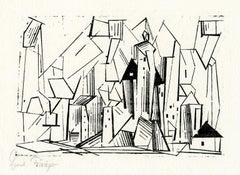
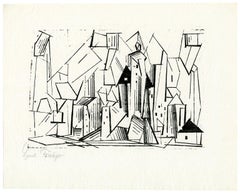
'Die Architektur' (Architecture) — Bauhaus Modernism

'Die Architektur' (Architecture) — Bauhaus Modernism

By Lyonel Feininger

Located in Myrtle Beach, SC

Lyonel Feininger, 'Die Architektur' (Architecture), also 'Stadtbild' (Cityscape), woodcut, edition proofs only in 1920; 50 in 1921. Prasse W 232. Signed in pencil. A fine, black impression, on off-white Japan, with full margins (1 1/4 to 2 1/8 inches), in excellent condition. Matted to museum standards, unframed. Image size 6 x 8 7/8 inches (152 x 229 mm); sheet size 9 1/2 x 11 7/8 inches (241 x 302 mm). No. 11 of the portfolio 'Zwolf Holzschnitte von Lyonel Feininger', 1921. Provenance: Peter Deitsch collection; exhibited Weimar Museum, 1968. Impressions of this work are in the permanent collection of: Busch-Reisinger Museum (Cambridge, Mass.), Bauhaus-Archiv (Germany), Hamburger Kunsthalie (Germany), Pfaizische Landesgewerbeanstalt (Germany), Kaiser Wilhelm Museum (Germany), Staatliche Graphische Sammlung (Germany), Philadelphia Museum of Art. ABOUT THE ARTIST Lyonel Feininger was born in New York City into a musical family—his father was a violinist and composer, his mother was a singer and pianist. He studied violin with his father, and by the age of 12, he was performing in public, but he also drew incessantly, most notably the steamboats and sailing ships on the Hudson and East Rivers, and the landscape around Sharon, Conn., where he spent time on a farm owned by a family friend. At the age of 16 he left New York to study music and art in Germany, from where his parents emigrated. Drawn more to the visual arts, he attended schools in Hamburg, Berlin, and Paris from 1887 to 1892. After completing his studies, Feininger began his artistic career as a cartoonist and illustrator, his originality leading him to great success. In 1906, after working for a dozen years in Germany, he was offered a job as a cartoonist at the Chicago Tribune, the largest circulation newspaper in the Midwest. He worked there for a year, inventing what became the standard design for the comic strip: in the words of John Carlin, “an overall pattern. . . that allowed the page to be read both as a series of elements one after the other, like language and as a group of juxtaposed images, like visual art.” His originality did not end there: he went on to become one of the great abstract painters. Like Kandinsky, music was his model, but Kandinsky only knew music from the outside—as a listener (inspired initially by Wagner, then by Schoenberg)—while Feininger knew it from the inside. He lived in Paris from 1906 to 1908, during which time he met and was influenced by the work of progressive painters Robert Delaunay and Jules Pascin, as well as that of Paul Cezanne and Vincent van Gogh. He began painting full-time, developing his distinctive Iyrical style based on Cubist and Expressionist idioms and a concern for the emotive qualities of light and color. He exhibited with the Der Blaue Reiter group in 1913, and in 1917, he had his first solo exhibition at Galerie Der Sturm in Berlin. One year after his solo exhibition, in 1918, Feininger began making woodcuts. He became enamored with the medium, producing an impressive 117 in his first year of exploring the printmaking medium. In 1919 at the invitation of the architect Walter Gropius, he was appointed the first master at the newly formed Staatliches Bauhaus in Weimar. His woodcut of a cathedral...

Category

1920s Bauhaus South Carolina - Art

Materials

Woodcut

'Hollyhock and Dragonflies' — Showa Woodblock, Lifetime Impression

'Hollyhock and Dragonflies' — Showa Woodblock, Lifetime Impression

By Ohara Koson

Located in Myrtle Beach, SC

Ohara Koson, 'Hollyhock and Dragonflies', color woodblock, 'oban tate-e', 1934. Signed 'Shoson' with the 'Shoson' red seal, lower right. A superb, life-time impression, with fresh, ...

Category

1930s Showa South Carolina - Art

Materials

Woodcut

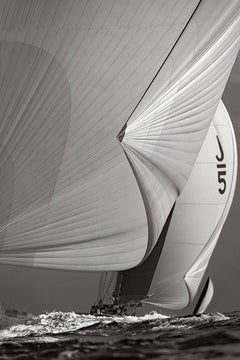
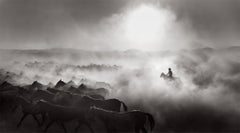
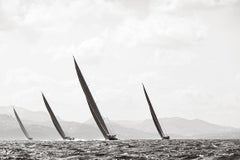
World-Class Yachts in Fog at the Regatta, Iconic Black and White Print

World-Class Yachts in Fog at the Regatta, Iconic Black and White Print

By Drew Doggett

Located in US

"White Out" As a thick fog enveloped the harbor, the yacht Victory and other 12-Meter boats lined up waiting for the regatta to start. The suspense and excitement hung in the air. ...

Category

2010s Contemporary South Carolina - Art

Materials

Archival Pigment

Beautiful Morning Light on the Pacific Coast, Iconic, Classic, Americana

Beautiful Morning Light on the Pacific Coast, Iconic, Classic, Americana

By Drew Doggett

Located in US

"Coastal Rays" In this best-selling print, the mist of the Pacific Northwest lends a textural effect to the air and light. Experience the photographic journey through the cultura...

Category

2010s Contemporary South Carolina - Art

Materials

Archival Pigment

Black and white image of a mare and her foal walking into a slot canyon

Black and white image of a mare and her foal walking into a slot canyon

By Drew Doggett

Located in US

"Black and white image of a mare and her foal walking into a slot canyon An inspiring capture of a mare and her young foal walk into an ethereal slot canyon This powerful global s...

Category

2010s Minimalist South Carolina - Art

Materials

Archival Pigment

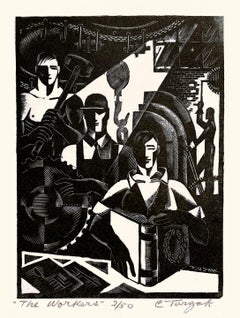
'The Workers (No. 1)' — 1930s WPA Modernist Woodcut

'The Workers (No. 1)' — 1930s WPA Modernist Woodcut

By Charles Turzak

Located in Myrtle Beach, SC

Charles Turzak, 'The Workers (No. 1)', woodcut, edition c. 50, c. 1935. Signed and titled in pencil. Signed in the block, lower right. A fine, richly-inked impression, on cream wove...

Category

1930s American Modern South Carolina - Art

Materials

Woodcut

The House of Shango — African American artist

The House of Shango — African American artist

By Samella Lewis

Located in Myrtle Beach, SC

Samella Sanders Lewis, 'The House of Shango', lithograph, 1992, edition 60. Signed, dated, titled, and numbered '31/60' in pencil. A superb, richly-inked impression, on Arches cream wove paper; the full sheet with margins (1 1/4 to 3 1/2 inches), in excellent condition. Image size 24 x 18 inches (610 x 457 mm); sheet size 30 inches x 22 1/4 inches (762 x 565 mm). Archivally matted to museum standards, unframed. Impressions of this work are held in the collections of the Los Angeles County Museum of Art, and Scripps College. ABOUT THIS WORK “The title of this piece is an unmistakable harkening to African roots. Shango is a religious practice with origins in Yoruba (Nigerian) belief, deifying a god of thunder by the same name. Shango has been adopted in the Caribbean, most notably in Trinidad and Tobago, a fact that underscores the importance of transnationalism to Samella Lewis’s piece. Her work often grapples with issues of race in the U.S., and The House of Shango is no exception. Through a reliance on the gradual transformation of Shango—one that took place across continents and time—Lewis’s piece forms a powerful link between black Americans and their African and Caribbean counterparts. The figure depicted in the piece appears to emerge, quite literally, from the house of Shango. Given the roots and transformative process of the religion, The House of Shango can draw attention to the historical intersections to which black American culture is indebted.” —Laura Woods, Scripps College, Ruth Chander Williamson Gallery, Collection Highlights, 2018 ABOUT THE ARTIST Samella Lewis’ lifelong career as an artist, art historian, critic, curator, collector, and advocate of African American art has helped empower generations of artists in the United States and worldwide, earning her the designation “the Godmother of African American art.” Born and raised in Jim Crow era New Orleans, Lewis began her art education at Dillard University in 1941, transferring to Hampton University in Virginia, where she earned her B. A. and master's degrees. She completed her master's and a doctorate in art history and cultural anthropology at Ohio State University in 1951, becoming the first female African American to earn a doctorate in fine art and art history. Lewis taught art at Morgan State University while completing her doctorate. She became the first Chair of the Fine Arts Department at Florida A&M University in 1953. That same year Lewis also became the first African American to convene the National Conference of African American artists held at Florida A&M University. She was a professor at the State University of New York, California State University, Long Beach, and at Scripps College in Claremont, California. Lewis co-founded, with Bernie Casey, the Contemporary Crafts Gallery in Los Angeles in 1970. In 1973, she served on the selection committee for the exhibition BLACKS: USA: 1973 held at the New York Cultural Center. Samella Lewis's 1969 catalog 'Black Artists on Art', featured accomplished black artists typically overlooked in mainstream art galleries. She said of the book, "I wanted to make a chronology of African American artists, and artists of African descent, to document our history. The historians weren't doing it. It was really about the movement." From the 1960s through the 1970s, her work, which included lithographs, linocuts, and serigraphs, reflected her concerns with the values of human dignity, democracy, and freedom of expression. Between 1969 and 70, Lewis and E.J. Montgomery were consultants for a groundbreaking exhibition at the Oakland Public L designed to create greater awareness of African American history and art. Lewis was the founder of the International Review of African American Art in 1975. In 1976, she founded the Museum of African-American Art with a group of artistic, academic, business, and community leaders in Los Angeles, California. Lewis, the museum’s senior curator, organized exhibitions and developed new ways of educating the public about African American art. She celebrated African American art as an 'art of experience’ inspired by the artists’ lives. And she espoused the concept of African American art as an 'art of tradition', urging museums to explore the African roots of African American art. In 1984, Lewis produced an extensive monograph on Elizabeth Catlett, her beloved mentor at Dillard University. Lewis has been collecting art since 1942, focusing primarily on the WPA era and work created during the Harlem Renaissance. Pieces from her collection were acquired by the Hampton University Museum in Virginia, the world’s earliest collection of African American fine art...

Category

1990s Realist South Carolina - Art

Materials

Lithograph

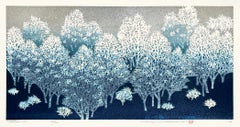
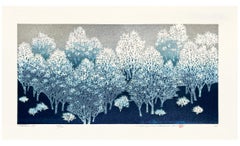
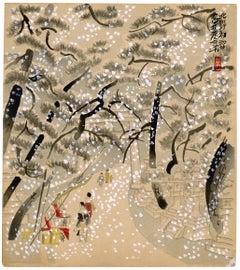
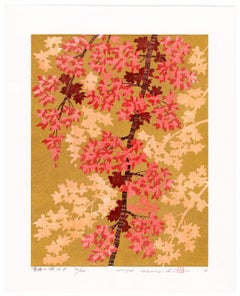
Winter Trees — Sōsaku Hanga Japanese Woodblock Print

Winter Trees — Sōsaku Hanga Japanese Woodblock Print

Located in Myrtle Beach, SC

Hajime Namiki, 'Tree Scene 159', color woodcut, edition 200, 2022. Signed in pencil and with the artist’s red seal. Titled, numbered '37/200' and dated, in pencil. A very fine impres...

Category

21st Century and Contemporary Contemporary South Carolina - Art

Materials

Woodcut

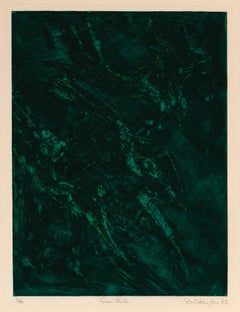
'Diptych' —  Modernist Abstraction, Atelier 17

'Diptych' — Modernist Abstraction, Atelier 17

By Stanley William Hayter

Located in Myrtle Beach, SC

Stanley William Hayter, 'Diptych', color engraving and scorper, 1967, edition 50, Black & Moorhead 314. Signed, titled, dated, and numbered '10/50' in pencil. A superb, richly-inked impression, with fresh, vibrant colors on antique-white wove BFK Rives paper; the full sheet with margins (2 1/2 to 3 1/4 inches). Minor skinning and tape residue on the top and bottom sheet edges, verso, otherwise in excellent condition. Matted to museum standards, unframed. Image size 13 7/8 x 19 1/2 inches (146 x 108 mm); sheet size 19 7/8 x 25 3/8 inches (394 x 292 mm). Hayter created this work using engraving and scorper on 2 plates, printed side by side. He used alkali blue, printed intaglio, and a phthalo green with a hard roller on the surface. The proofing was in three states, the first with engraving (a single proof); the second adding further engraving and scorper (a single proof); the third added further engraving and editioned: color trial proofs, 5 artist's proofs, edition of 50. The edition was completed in three printings: 8 in 1967; then Hector Saunier printed numbers 9 through 18 in 1968, and numbers 19 through 50 in 1969. This impression is from the Saunier 1968 printing. Note: the online image cannot accurately convey the vibrancy of the printed alkali blue/phthalo green. An impression of this work is held in the collection of the National Gallery of Art. ABOUT THE ARTIST Stanley William Hayter (1901-1988) was a British painter and printmaker associated in the 1930s with Surrealism and from 1940 onward with Abstract Expressionism. Regarded as one of the most significant printmakers of the 20th century, Hayter founded the legendary Atelier 17 studio in Paris, now known as Atelier Contrepoint. Among the artists he is credited with influencing are Pablo Picasso, Alberto Giacometti, Joan Miró, Alexander Calder, and Marc Chagall. The hallmark of the workshop was its egalitarian structure, breaking sharply with the traditional French engraving studios by insisting on a cooperative approach to labor and technical discoveries. In 1929 Hayter was introduced to Surrealism by Yves Tanguy and André Masson, who, with other Surrealists, worked with Hayter at Atelier 17. The often violent imagery of Hayter’s Surrealist period was stimulated in part by his passionate response to the Spanish Civil War and the rise of Fascism. He organized portfolios of graphic works to raise funds for the Spanish cause, including Solidarité (Paris, 1938), a portfolio of seven prints, one of them by Picasso. Hayter frequently exhibited with the Surrealists during the 1930s but left the movement when Paul Eluard was expelled. Eluard’s poem Facile Proie (1939) was written in response to a set of Hayter’s engravings. Other writers with whom Hayter collaborated in this way included Samuel Beckett and Georges Hugnet. Hayter joined the exile of the Parisian avant-garde in 1939, moving with his second wife, the American sculptor Helen...

Category

1960s Modern South Carolina - Art

Materials

Engraving

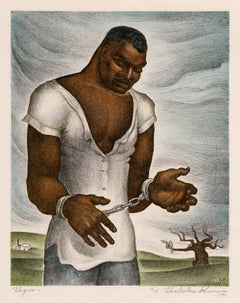
Old Injun
Old Injun

Old Injun

By Charles Banks Wilson

Located in Myrtle Beach, SC

Charles Banks Wilson, 'Old Injun', lithograph, 1948, edition 250, Hunt 39. Signed in pencil. A fine, richly-inked impression, on off-white wove paper, with full margins (1 3/4 to 2 inches), in excellent condition. Published by Associated American Artists. Impressions of this work are in the permanent collections of the following institutions: Ackland Art Museum, Georgetown University...

Category

1940s American Realist South Carolina - Art

Materials

Lithograph

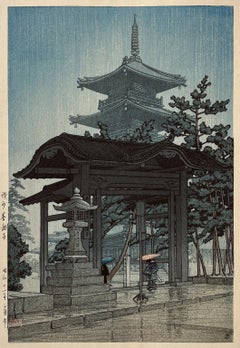
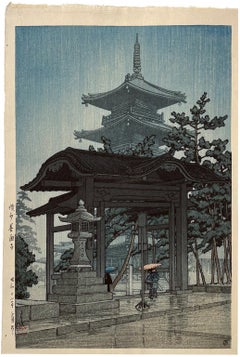
Zentsuji Temple in the Rain —  from the series Collected Views of Japan II

Zentsuji Temple in the Rain — from the series Collected Views of Japan II

By Kawase Hasui

Located in Myrtle Beach, SC

Kawase Hasui, 'Zentsuji Temple in the Rain' from the seres 'Collected Views of Japan II', color woodblock print, 1937. Signed Hasui in black ink, with the artist’s red seal Kawase, ...

Category

1930s Showa South Carolina - Art

Materials

Woodcut

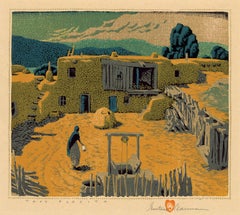
'Taos Placita' — American Southwest Regionalist Masterwork

'Taos Placita' — American Southwest Regionalist Masterwork

By Gustave Baumann

Located in Myrtle Beach, SC

Gustave Baumann, 'Taos Placita', color woodcut, 1947, edition 125. Baumann 132. Signed, titled, and numbered '20-125' in pencil; with the artist’s Hand-in-Heart chop. A superb, richly-inked impression, with fresh colors, on fibrous oatmeal wove paper; the full sheet with margins (2 to 3 1/8 inches); slight rippling at the left sheet edge, in excellent condition. Matted to museum standards, unframed. Image size 9 5/8 x 11 1/4 inches (244 x 286 mm); sheet size 13 1/4 x 17 inches (337 x 432 mm). Collections: Harwood Museum of Art, New Mexico Museum of Art, Phoenix Art Museum, Scottsdale Art Museum, Wichita Art Museum. ABOUT THE ARTIST Gustave Baumann (1881-1971) was a renowned printmaker and a leading figure of the American color woodcut revival whose exquisite craftsmanship and vibrant imagery captured the essence of the Southwest. "A brilliant printmaker, Baumann brought to the medium a full mastery of the craft of woodworking that he acquired from his father, a German cabinetmaker. This craftsmanship was coupled with a strong artistic training that resulted in the handsome objects we see in the exhibition today. After discovering New Mexico in 1918, Baumann began to explore in his woodblock prints of this period the light. color, and architectural forms of that landscape. His prints of this period are among the most beautiful and poetic images of the American West." —Lewis I. Sharp, Director, Denver Art Museum Baumann, the son of a craftsman, immigrated to the United States from Germany with his family when he was ten, settling in Chicago. From 1897 to 1904, he studied in the evenings at the Art Institute of Chicago, working in a commercial printmaking shop during the day. In 1905, he returned to Germany to attend the Kunstwerbe Schule in Munich, where he decided on a career in printmaking. He returned to Chicago in 1906 and worked for a few years as a graphic designer of labels. Baumann made his first prints in 1909 and exhibited them at the Art Institute of Chicago the following year. In 1910, he moved to the artists’ colony in Nashville, Indiana, where he explored the creative and commercial possibilities of a career as a printmaker. In 1915, he exhibited his color woodcuts at the Panama-Pacific International Exposition in San Francisco, winning the gold medal. Among Baumann’s ongoing commercial activities was his work for the Packard Motor Car Company from 1914 to 1920 where he produced designs, illustrations, and color woodcuts until 1923. In 1919, Baumann’s printmaking work dominated the important exhibition of American color woodcuts at the Detroit Institute of Arts. Twenty-six of his prints were included, far more than the works of any other artist. A set of his blocks, a preparatory drawing, and seven progressive proofs complemented the exhibition. That same year, Baumann worked in New York and, over the summer, in Provincetown, Massachusetts. His airy images of Cape Cod employed soft, pastel colors and occasionally showed the influence of the white-line woodcut technique. Many of his Chicago artist friends had traveled to the southwest, and Baumann became intrigued by their paintings, souvenirs, and stories of an exotic place named Taos, New Mexico. In the summer of 1918, he spent the summer in Taos sketching and painting before visiting Santa Fe. Paul Walter, the director of the Museum of New Mexico, offered him a studio in the museum's basement. Inspired by the rugged beauty of the Southwest—the vibrant colors and dramatic landscapes of the region became a central theme in his work, influencing his artistic style and subject matter for the remainder of his career. Later in the decade, he traveled to the West Coast and made prints of California landscape. Baumann's prints became synonymous with the Southwest, capturing the spirit of its place in America's identity with a unique sense of authenticity and reverence. His iconic images of desert vistas, pueblo villages, and indigenous cultures served as visual tributes to the region's rich cultural heritage, earning him a dedicated following among collectors and curators alike. A true craftsman and artist, Baumann completed every step of the printmaking process himself, cutting each block, mixing the inks, and printing every impression on the handmade paper he selected. His dedication to true craftsmanship and his commitment to preserving the integrity of his artistic vision earned him widespread acclaim and recognition within the art world. About the vibrant colors he produced, Baumann stated, “A knowledge of color needs to be acquired since they don’t all behave the same way when ground or mixed...careful chemistry goes into the making of colors, with meticulous testing for permanence. While complicated formulae evolve new colors, those derived from Earth and metal bases are still the most reliable.” In the 1930s, Baumann became interested in puppet theater. He designed and carved his own marionettes and established a little traveling company. From 1943 to 1945, the artist carved an altarpiece for the Episcopal Church of the Holy Faith in Santa Fe. In 1952, a retrospective exhibition of his prints was mounted at the New Mexico Museum of Fine Arts. Throughout his prolific career, Baumann executed nearly four hundred color woodcuts. Baumann’s woodcuts...

Category

1940s American Modern South Carolina - Art

Materials

Woodcut

'Seated Figure' — American Expressionism

'Seated Figure' — American Expressionism

By Max Weber

Located in Myrtle Beach, SC

Max Weber, 'Seated Figure", woodcut, edition not stated, 1919-20, Rubenstein 17. Signed in pencil. A fine impression on cream Japan paper; the full sheet with margins (2 to 3 1/8 in...

Category

1920s Expressionist South Carolina - Art

Materials

Woodcut

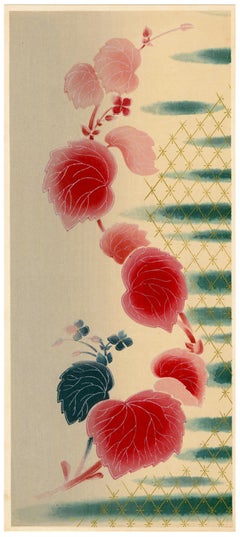
Flowers 2 — Hopei Folk Art, Mid-Century Chinese Cut Paper and Watercolor

Flowers 2 — Hopei Folk Art, Mid-Century Chinese Cut Paper and Watercolor

Located in Myrtle Beach, SC

'Flowers', Chinese Hopei Folk Art, 1956. Paper-cut with watercolor, mounted on cream, wove backing paper, with fresh, vivid colors, in excellent condition. Matted to museum standards...

Category

Mid-20th Century Folk Art South Carolina - Art

Materials

Watercolor

'Sisters' — Renowned Black American, Harlem Renaissance Artist

'Sisters' — Renowned Black American, Harlem Renaissance Artist

Located in Myrtle Beach, SC

James Lesesne Wells, 'Sisters', linocut, edition not stated but small, 1928. Signed, titled, and annotated 'imp' in pencil. A fine impression on off-white wove Japan paper, with wide margins (1 7/8 to 3 3/4 inches), in excellent condition. Printed by the artist. Very scarce. Matted to museum standards, unframed. Image size 8 3/16 x 6 3/4 inches (208 x 171 mm); sheet size 13 1/2 x 10 3/4 inches (343 x 273 mm). Exhibition and Literature: 'Narratives of African American Art and Identity: The David C. Driskell Collection,' The Art Gallery at the University of Maryland, extensive touring exhibition, 1998-2000. Collections: Pennsylvania Academy of the Fine Arts, Smithsonian Institution (Anacostia Community Museum). ABOUT THE ARTIST “Wells is more than an artist with a deep concern for his fellow man. He carries many of his themes a step further into an apocalyptic world, a world of revelation and shifting lights. … He works on large blocks in a bold free style. … His work has a vigor, therefore, that is not often used in the medium today.” —Jacob Kainen (painter, critic, and collector) from Richard J. Powell’s 1986 essay Phoenix Ascending: The Art of James Lesesne Wells. James Lesesne Wells was an American painter, printmaker, educator, and pioneering figure of the Harlem Renaissance, whose work established a vital connection between African heritage, modernist form, and African American cultural identity. Known for his innovative use of linoleum and woodblock printing, Wells played a key role in shaping 20th-century African American art and inspired countless students throughout his lengthy career as a teacher at Howard University. Born in Atlanta, Georgia, Wells' early exposure to the arts came through church and community, where African American cultural traditions were central. He pursued formal artistic training at Lincoln University in Pennsylvania (earning a B.A. in 1924), followed by studies at the Pennsylvania Academy of the Fine Arts and the Barnes Foundation, where he encountered European modernists as well as traditional African sculpture, which profoundly influenced his style. Wells moved to New York in the late 1920s, swiftly immersing himself in the lively artistic and intellectual scene of Harlem. There, he became associated with artists, writers, and thinkers of the Harlem Renaissance, contributing to the growth of Black cultural identity. Considered a mentor to many famed artists of the Harlem Renaissance, Wells served as director of a summer art workshop in Harlem where his assistants included Charles Alston, Jacob Lawrence, and Palmer Hayden...

Category

1920s American Modern South Carolina - Art
Materials

Linocut

Geometric Abstraction

Geometric Abstraction

Located in Myrtle Beach, SC

A unique, beautifully composed, large-scale geometric abstraction encaustic, with fresh colors, on fibrous buff, wove paper; the image extending ...

Category

Mid-20th Century Abstract Geometric South Carolina - Art

Materials

Encaustic

'The Deluge' from 'The Temple of the Muses' — 18th Century Engraving

'The Deluge' from 'The Temple of the Muses' — 18th Century Engraving

By Bernard Picart

Located in Myrtle Beach, SC

Bernard Picart, 'The Deluge' from 'The Temple of the Muses', engraving, 1730. Signed in the plate and dated '1730' lower left. Titled in French, English, German, and Dutch. A superb...

Category

1730s Baroque South Carolina - Art

Materials

Engraving

'Plowing It Under' — WPA Era American Regionalism

'Plowing It Under' — WPA Era American Regionalism

By Thomas Hart Benton

Located in Myrtle Beach, SC

Thomas Hart Benton, 'Goin' Home', lithograph, 1937, edition 250, Fath 14. Signed in pencil. Signed in the stone, lower right. A fine, richly-inked impression, on off-white, wove pape...

Category

1930s American Realist South Carolina - Art

Materials

Lithograph

The delicate curves and soft textures of this slotted canyon are ethereal

The delicate curves and soft textures of this slotted canyon are ethereal

By Drew Doggett

Located in US

"Whispers Inscribed" The delicate curves and soft textures of this slotted canyon are ethereal A slotted canyon in Arizona highlighted by the sun's light Explore the National Park...

Category

2010s Minimalist South Carolina - Art

Materials

Archival Pigment

Boy In Tree Looking Over Land, Ethiopia, Africa, Iconic, Horizontal

Boy In Tree Looking Over Land, Ethiopia, Africa, Iconic, Horizontal

By Drew Doggett

Located in US

"Untitled 20" In this best-selling, award-winning black and white photograph, a Suri boy elegantly perched in a tree looks over his livestock. The distinctly preserved cultures of...

Category

2010s Contemporary South Carolina - Art

Materials

Archival Pigment

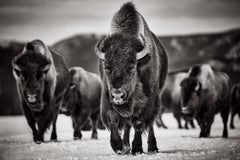
Herd of American Bison Walking Across the Plains of Yellowstone National Park

Herd of American Bison Walking Across the Plains of Yellowstone National Park

By Drew Doggett

Located in US

"On the Move" From the story of their survival to their hulking, unmistakable physiques, the American bison is one of the rarified animals that has become larger than life in cultu...

Category

2010s Minimalist South Carolina - Art

Materials

Archival Pigment

Flowers 1 — Hopei Folk Art, Mid-Century Chinese Cut Paper and Watercolor

Flowers 1 — Hopei Folk Art, Mid-Century Chinese Cut Paper and Watercolor

Located in Myrtle Beach, SC

'Flowers', Chinese Hopei Folk Art, 1956. Paper-cut with watercolor, mounted on cream, wove backing paper, with fresh, vivid colors, in excellent condition. Matted to museum standards...

Category

Mid-20th Century Folk Art South Carolina - Art

Materials

Watercolor

'Chicago Harbor' — Urban Realism

'Chicago Harbor' — Urban Realism

By Anton Schutz

Located in Myrtle Beach, SC

Anton Schutz, 'Chicago Harbor', etching, edition 100, c. 1927. Signed and numbered '87/100' in pencil. Annotated '580 Chicago Harbor', in another hand, in the bottom left margin. A f...

Category

1920s American Realist South Carolina - Art

Materials

Etching

'Encircled' — Mid-Century Surrealism, Atelier 17

'Encircled' — Mid-Century Surrealism, Atelier 17

Located in Myrtle Beach, SC

Ian Hugo, 'Encircled', engraving, 1946, edition 50. Signed, dated, titled, and numbered '5/50' in pencil. With the blind stamp 'madeleine-claude jobrack EDIT...

Category

1940s Surrealist South Carolina - Art

Materials

Engraving

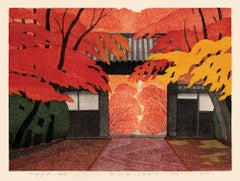
Autumn Landscape — 1940s Post-Impressionism

Autumn Landscape — 1940s Post-Impressionism

Located in Myrtle Beach, SC

Henri Pierre Fortier, Untitled (Autumn Landscape), gouache, c. 1940s. Signed in ink. Inscribed 'To my Friend CLINTON R. MULFORD'. A fine, painterly watercolor, with rich, layered colors, on heavy dark brown drawing paper with approximately 1/4 inch margins; an unfinished figurative sketch...

Category

1940s Impressionist South Carolina - Art

Materials

Gouache

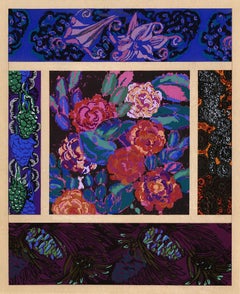
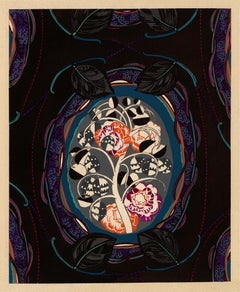
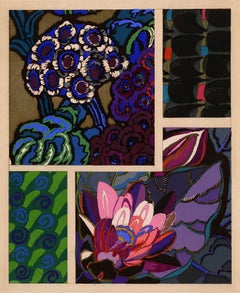
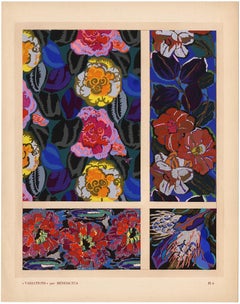
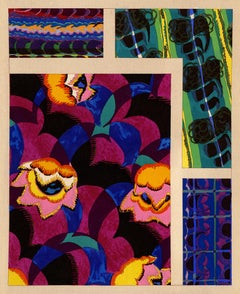
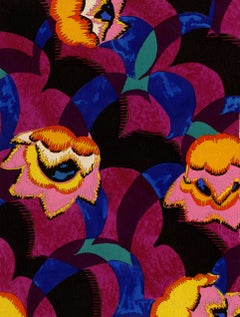
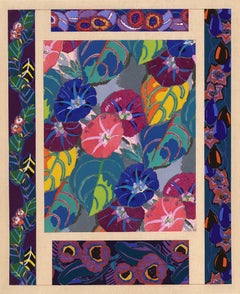
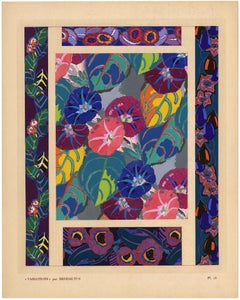
'Poppy' — Art Deco Pochoir from the acclaimed portfolio 'RELAIS'

'Poppy' — Art Deco Pochoir from the acclaimed portfolio 'RELAIS'

By Edouard Benedictus

Located in Myrtle Beach, SC

Edouard Benedictus, 'Poppy' from the portfolio 'Relais', plate 14, color pochoir, 1930. Signed in the matrix, in the center bottom margin. A superb, richly-inked impression, with fresh, vibrant colors, including metallic gold and silver inks, on heavy, cream wove paper; the full sheet with margins (1 3/8 inches), in excellent condition. Published by Éditions Vincent, Fréal et Cie, Paris. The pochoir production is by Jean Saudé, the French printmaker known for his mastery of the technique and the author of the first how-to book on the pochoir process. Matted to museum standards, unframed. Image size 14 3/8 x 11 inches (365 x 279 mm); sheet size 17 1/4 x 13 7/8 inches (438 x 352 mm). Impressions of this work are held in the following museum collections: Cooper-Hewitt National Design Museum Library (Smithsonian), Metropolitan Museum of Art, Minneapolis Institute of Art, New York Public Library, Toledo Museum of Art, Victoria and Albert Museum (London), Virginia Museum of Fine Arts. ABOUT THIS WORK The Pochoir process is a refined stencil-based technique employed to create multiples or to add color to prints produced in other mediums. Characterized by its crisp lines and rich color, the print-making process was most popular from the late 19th century through the 1930s, with its center of activity in Paris. The pochoir process began with the analysis of an image’s composition, including color tones and densities. The numerous stencils (made of aluminum, copper, or zinc) necessary to create a complete image were then designed and hand-cut by the 'découpeur.' The 'coloristes' applied watercolor or gouache pigments through the stencils, skillfully employing a variety of different brushes and methods of paint application to achieve the desired depth of color and textural and tonal nuance. The pochoir process, by virtue of its handcrafted methodology, resulted in the finished work producing the effect of an original painting, and in fact, each print was unique. ABOUT THE ARTIST Edouard Benedictus (1878 -1930), artist, designer, composer, and chemist, was born and died in Paris. A highly-regarded designer and art critic of the Art Nouveau era, Benedictus gained renown as a colorist and creator of Art Deco-inspired geometric and floral motifs. His work had a significant influence on international fashions in clothing, home furnishings, graphic design, and decorative objects of the period, earning him commissions from leading European design firms. In 1925 he was invited to represent Art Deco textile design...

Category

1930s Art Nouveau South Carolina - Art

Materials

Stencil

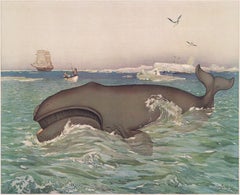
Whaling – Vintage Monumental Zoology Lithograph

Whaling – Vintage Monumental Zoology Lithograph

Located in Myrtle Beach, SC

Joseph Fleischmann, 'Whaling' (Hartingers Wandtafeln: Zoologie T. XXXII), monumental vintage color lithograph, 1900. Signed in the matrix, lower right. A superb, beautifully nuanced impression, on cream wove paper, the full sheet with margins (1 1/2 to 2 3/16 inches), in very good condition. Sheet size 28 x 38 1/2 inches (711 x 978 mm). The full sheet, unmounted and unmatted—shipped carefully rolled and protected. Rendering by A. Berger after Joseph Fleischmann. Published by Carl Gerold’s Son, Vienna, 1900. This Artic whaling scene depicts a Greenland whale in the foreground pursued by whalers. A whaling ship is seen in the background and at right, another whale among icebergs with seagulls overhead. The print by Albert Berger...

Category

Early 1900s Naturalistic South Carolina - Art

Materials

Lithograph

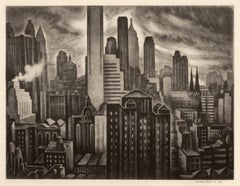
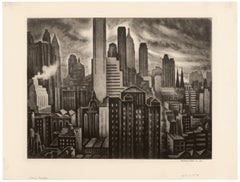
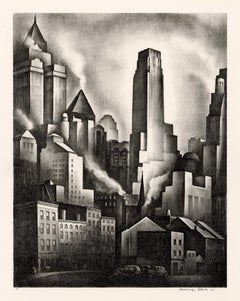
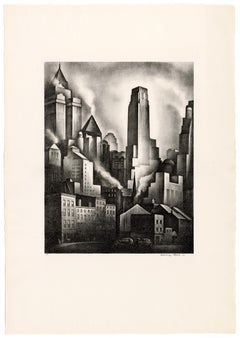
'Soaring New York' — 1930s American Modernism, New York City

'Soaring New York' — 1930s American Modernism, New York City

By Howard Norton Cook

Located in Myrtle Beach, SC

Howard Cook, 'Soaring New York', aquatint, soft-ground etching, roulette, 1931-32, edition 25, Duffy 165. Signed, dated, and annotated 'imp' in pencil. A superb, richly-inked, atmosp...

Category

1930s American Modern South Carolina - Art
Materials

Etching, Aquatint

'Brooklyn Bridge' — Iconic New York City Landmark

'Brooklyn Bridge' — Iconic New York City Landmark

By Luigi Kasimir

Located in Myrtle Beach, SC

Luigi Kasimir, 'Brooklyn Bridge', color etching with aquatint, 1927, edition 100. Signed in pencil. A superb impression, with fresh colors, on heavy, cream wove paper; with margins...

Category

1920s American Modern South Carolina - Art
Materials

Etching, Aquatint

Bird Abstraction Gouache Painting, Mid-Century Modern, Signed, 1953

Bird Abstraction Gouache Painting, Mid-Century Modern, Signed, 1953

Located in Myrtle Beach, SC

Stephen Harty, Untitled (Bird Abstraction), gouache, 1953. Signed and dated lower left. A fine, meticulously rendered, mid-century, modernist gouache painting, with fresh colors on 1...

Category

1950s American Modern South Carolina - Art
Materials

Gouache

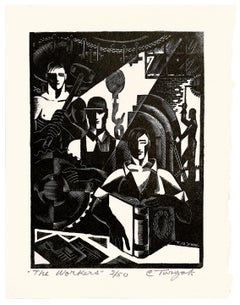
'The Workers (No. 2)' — 1930s WPA Modernist Woodcut

'The Workers (No. 2)' — 1930s WPA Modernist Woodcut

By Charles Turzak

Located in Myrtle Beach, SC

Charles Turzak, 'The Workers (No. 2)', woodcut, edition 50, c. 1935. Signed and numbered 2/50 in pencil. A fine, richly-inked impression, on cream wove Japan paper, with full margin...

Category

1930s American Modern South Carolina - Art
Materials

Woodcut