South Carolina

3,872 Results
to
258
993,139
761,713
1,222
1,089
997
908
770
639
456
332
299
258
213
198
184
179
153
115
96
95
90
84
83
78
76
69
68
67
67
54
51
44
40
34
30
25
25
23
21
18
18
15
14
11
10
9
7
5
3
2
2
1
1
1
832
374
48
39
32
'Wading Egret' — Japanese Woodblock Kacho-e, Pre-WW II Edition

'Wading Egret' — Japanese Woodblock Kacho-e, Pre-WW II Edition

By Ohara Koson

Located in Myrtle Beach, SC

Ohara Koson, 'Wading Egret', color woodblock, c. 1900 - 1910. Signed 'Koson' in black ink with the artist’s red seal beneath, lower left. A superb, skillfully-inked impression, with ...

Category

Early 1900s Naturalistic South Carolina

Materials

Woodcut

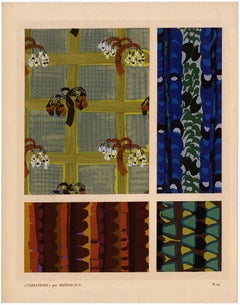
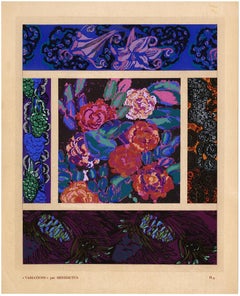
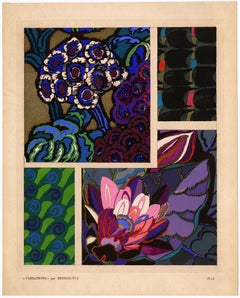
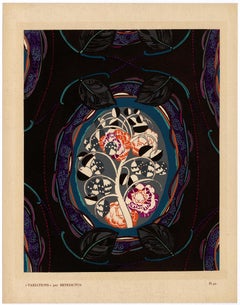
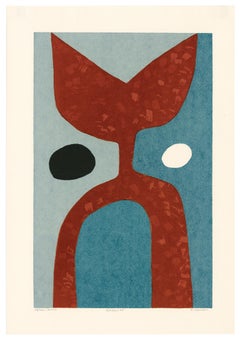
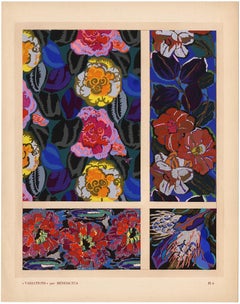
'Variations 9' — French Art Deco, 1923 Hand-Applied Pochoir Original

'Variations 9' — French Art Deco, 1923 Hand-Applied Pochoir Original

By Edouard Benedictus

Located in Myrtle Beach, SC

Edouard Benedictus, 'Variations, plate 9' from the portfolio 'Variations Quatre-Vingt-Six Motifs Décoratifs en Vingt Planches', color pochoir, edition not stated, 1923. Signed in the...

Category

1920s Art Deco South Carolina

Materials

Stencil

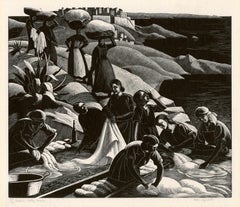
'Washing Clothes, Corsica' — 1st Edition, Modernist Signed Wood Engraving

'Washing Clothes, Corsica' — 1st Edition, Modernist Signed Wood Engraving

By Clare Leighton

Located in Myrtle Beach, SC

Clare Leighton, 'Washing Clothes, Corsica, 1934, wood engraving, edition 60, Boston Public Library 258. Signed, titled, and numbered '20/60' in pencil. A superb, richly-inked impress...

Category

1930s American Modern South Carolina

Materials

Woodcut

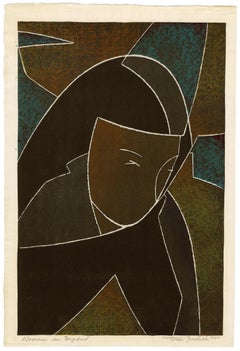
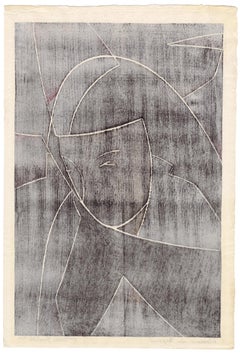
'Woman In Bagdad' — 1950s Japanese Sôsaku-hanga Signed Woodblock Print

'Woman In Bagdad' — 1950s Japanese Sôsaku-hanga Signed Woodblock Print

Located in Myrtle Beach, SC

Toshi Yoshida, 'Woman In Bagdad', color woodblock print, 1954, edition not stated. Signed, dated, and titled, in pencil. A fine, richly-inked impression, with fresh colors, on cream-wove Japan paper; the full sheet with margins (1/2 to 7/8 inch); minor toning in the margins, otherwise in excellent condition. Self-carved and self-printed by the artist. Archivally sleeved, unmatted. Image size 14 13/16 x 9 7/8 inches; sheet size 16 1/4 x 11 inches (oban tate-e). Literature: Oliver Statler, Modern Japanese Prints: An Art Reborn, 1959, pp. 168–69. Eugene M. Skibbe, “Yoshida Toshi 1911–1999: Diversity, Change, and Continuity in the Yoshida Art Tradition,” Andon, no. 53, Society for Japanese Arts, 1996, pp. 5–14. Kendall H. Brown, “Yoshida Toshi: The Nature of Tranquility,” in A Japanese Legacy: Four Generations of Yoshida Family Artists, Minneapolis Institute of Arts, 2002, pp. 72–80; Woman in Bagdad catalogued p. 91, no. 55. Exhibitions: 'Japan & Beyond: The Yoshida Family Legacy in Japanese Woodblock Prints', curated by Kendall Brown and Quyen Le, The Ruth and Sherman Lee Institute for Japanese Art, Hanford, CA. February 3, 2004 - March 27, 2004. 'Color in Relief: Wood Block Prints from Origins to Abstraction', Georgetown University Library, 2016. Collections: Art Institute of Chicago, Clark Center for Japanese Art and Culture, Minneapolis Institute of Art, University of California Merced, University of Oregon (The Lavenberg Collection of Japanese Prints). ABOUT THIS WORK Woman in Bagdad belongs to an important group of figure studies Yoshida created in 1954 as he moved beyond the naturalistic landscape tradition associated with his father, Hiroshi Yoshida. The veiled figure is reduced to broad, interlocking shapes of deep brown, ochre, and blue-green, separated by narrow carved white lines. Yoshida appears to have printed the composition from a single block, applying individual colors to separately defined areas—a technique closely related to the white-line color woodcut developed by B. J. O. Nordfeldt and the Provincetown Printers and refined by Blanche Lazzell. The continuous white channels serve as both boundaries between colors and an active linear structure, transforming the figure into a near-abstract arrangement of flattened forms while retaining its human presence. Created at a pivotal moment in Yoshida's development, the print anticipates the increasingly nonobjective woodcuts that occupied him during the following two decades. ABOUT THE ARTIST Yoshida Toshi (1911–1995) began training at the age of fourteen under his father, Yoshida Hiroshi, a leading artist of the twentieth-century Japanese printmaking revival known as shin-hanga (“new prints”), which continued the traditional collaborative system of Japanese woodblock printing. From 1932 to 1935, Toshi studied at the Taiheiyo-Gakai (Pacific Painting Association), which his father had helped establish. Before the Pacific War, Toshi traveled extensively with his father in Asia, Europe, Egypt, and the United States. He later continued his international travels, particularly in Mexico, the United States, Canada, and Africa. His early prints remained strongly influenced by Hiroshi's work and the highly refined techniques practiced in the Yoshida studio. Following his father's death in 1950, Toshi assumed responsibility for the studio while increasingly pursuing an independent artistic direction. Beginning in the early 1950s, he undertook a highly personal exploration of abstraction, creating and printing his own works in the sōsaku-hanga (“creative print”) manner, in which the artist assumes direct responsibility for the design, carving, and printing. During this exceptionally productive period, Toshi produced a large body of nonobjective woodcuts characterized by complex geometric structures, richly layered color, and experimentation with the expressive possibilities of the woodblock medium. His abstract work placed him among the more adventurous Japanese printmakers of the postwar period. The British Museum holds a substantial group of these works, including Misty Dance (1957), Frontier (1962), Mystery (1964), Isotope (1968), and Where (1972). In the early 1960s, Toshi also returned to representational subjects, eventually concentrating on large-scale scenes of African wildlife in its natural habitat. In 1984 he published the first of a series of illustrated children's books devoted to African animals (Dōbutsu Ehon Shirīzu), which he continued into the early 1990s. In 1966, with artist Yuki Rei...

Category

1950s Abstract South Carolina

Materials

Woodcut

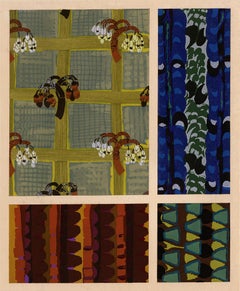
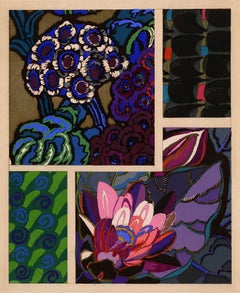
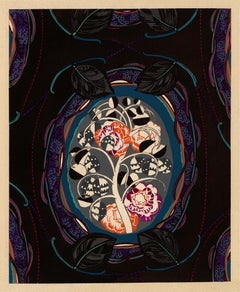
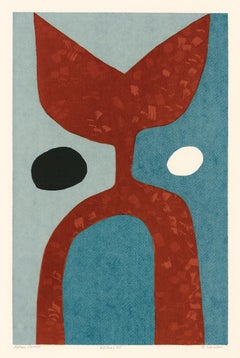
'Variations 8' — French Art Deco, 1923 Hand-Applied Pochoir Original

'Variations 8' — French Art Deco, 1923 Hand-Applied Pochoir Original

By Edouard Benedictus

Located in Myrtle Beach, SC

Edouard Benedictus, 'Variations, plate 8' from the portfolio 'Variations Quatre-Vingt-Six Motifs Décoratifs en Vingt Planches', color pochoir, edition not stated, 1923. Signed in the...

Category

1920s Art Deco South Carolina

Materials

Stencil

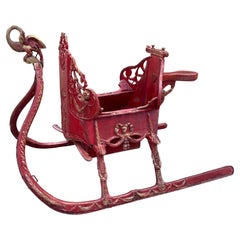
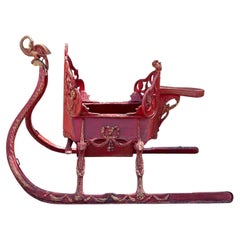
A Late 19th c. Russian / Baltic Child's Sleigh c.1890

A Late 19th c. Russian / Baltic Child's Sleigh c.1890

Located in Charleston, SC

A Late 19th c. Russian/Baltic Child's Sleigh c.1890, with a Painted Red Finish and Gold Accents. Adorned with Hand Carved Ribbons & Swags, Garlands & Flowers and a Phoenix Bird Perc...

Category

Late 19th Century Baltic Victorian Antique South Carolina

Materials

Hardwood

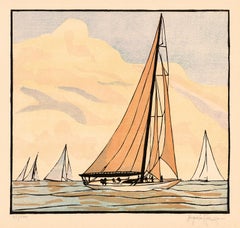
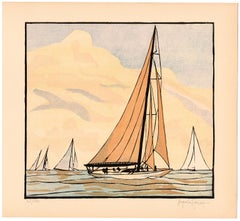
'The Yankee' — America's Cup, 1934

'The Yankee' — America's Cup, 1934

By Jacques La Grange

Located in Myrtle Beach, SC

Jacques La Grange, 'The Yankee', color woodcut, edition 500, 1934. Signed and numbered '25/500' in pencil. A fine impression, with fresh colors, on cream wove paper, with margins (1 1/8 to 1 1/4 inches), in excellent condition. A work from La Grange’s celebrated series of woodcuts 'Drama and Color in the America's Cup Races'. Image size 10 x 10 11/16 inches (254 x 271 mm); sheet size 12 1/4 x 13 1/4 inches (311 x 337 mm). Archivally matted to museum standards, unframed. When the artist created this print in 1934, the 'Yankee' was one of the most promising yachts eligible for the America's Cup but ultimately 'Rainbow' was chosen to defend against England's 'Endeavor' in that year's race. The 'Endeavor' was built for Thomas Sopwith who used his aviation design expertise to ensure the yacht was the most advanced of its day with a steel hull and mast. She was launched in 1934 and won many races in her first season but the Cup challenge was blighted by a strike of Sopwith's professional crew prior to departing for America. Forced to rely mainly on keen amateurs, who lacked the necessary experience, the campaign failed. 'Rainbow' won the series 4–2. This was one of the most contentious of the America's Cup battles and prompted the headline "Britannia rules the waves and America waives the rules." ABOUT THE ARTIST Jacques La Grange was born in Clanwilliam (near Cape Town) in South Africa in 1895. He studied at London University and later immigrated to the United States. La Grange established himself as a painter, illustrator, and printmaker specializing in nautical subjects. He and his wife, Helen La Grange, published 'Drama and Color in the America's Cup Races' in 1934 and 'Clipper Ships of America and Great Britain 1833-1869', in 1936. Both were deluxe hardcover limited edition volumes with signed original color woodblock prints. La Grange had solo exhibitions at the Buchanan Gallery in 1929; the Babcock Gallery and the 56th Street Gallery, New York, in 1930; and at the Nicholas Roerich...

Category

1930s American Modern South Carolina

Materials

Woodcut

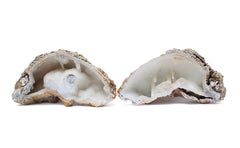
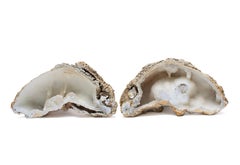
Pair of Large Natural Agate Coral with Baroque Pearls by Interi

Pair of Large Natural Agate Coral with Baroque Pearls by Interi

By Interi

Located in Columbia, SC

A pair of fossil agate coral with a coordinating baroque pearls. Fossil agate coral is Florida's state stone and is known for its unique formation that can take place over 20 millio...

Category

15th Century and Earlier American Prehistoric Antique South Carolina

Materials

Coral, Rock Crystal

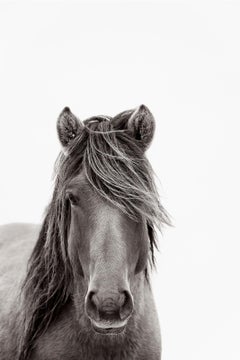
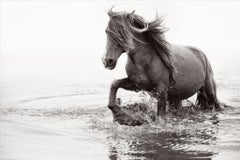
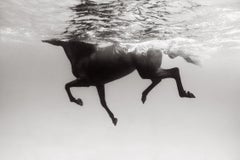
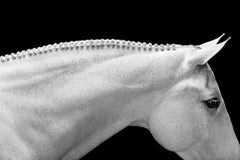
Black and white profile image of a beautiful horse swimming in clear water

Black and white profile image of a beautiful horse swimming in clear water

By Drew Doggett

Located in US

"""Tranquility"" Black and white profile image of a beautiful horse swimming in clear water Profile image of a dark horse swimming in crystal clear water taken, captured underwate...

Category

2010s Minimalist South Carolina

Materials

Archival Pigment

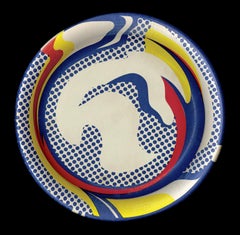
Lichtenstein Paper Plate — Pop Art Icon, 1969 Original Serigraph

Lichtenstein Paper Plate — Pop Art Icon, 1969 Original Serigraph

By Roy Lichtenstein

Located in Myrtle Beach, SC

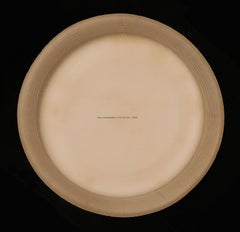
Roy Lichtenstein, 'Paper Plate', serigraph, 1969, edition unknown, Corlett III.45. Printed in dark blue ink verso, 'Roy Lichtenstein © On 1st Inc. 1969'. A fine impression, on white paperboard pressure formed into a 3-dimensional plate; age toning verso, otherwise in very good condition. Published by Bert Stern, New York. Image size 10 1/4 inch diameter, 1-inch depth. Archivally sleeved, unmounted, unframed. Carefully protected for shipping. Literature: John Russell. 'Art: Time for Old-Master Prints', New York Times (July 27, 1979), p. C16. Jan Howard. 'Reflections on 'The Prints of Roy Lichtenstein', Print Collector's Newsletter 26 (July–August 1995), p. 82. Mark M. Johnson. 'The Great American Pop Art Store: Multiples of the '60s', Art & Activities 123 (June–Summer 1998), ill. p. 37 (color). Mary Lee Corlett. 'The Prints of Roy Lichtenstein: A Catalogue Raisonné', New York, 2002, p. 286, no. III.45. Susan Dackerman, ed., 'Corita Kent and the Language of Pop', exhibition catalog, Harvard Art...

Category

1960s Pop Art South Carolina

Materials

Screen

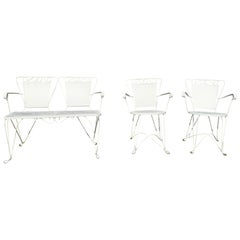
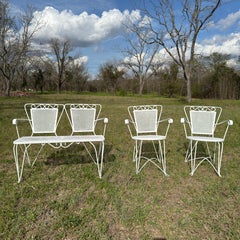
Mid Century Modern Outdoor Furniture Set by Salterini, Metal, 3 Pieces

Mid Century Modern Outdoor Furniture Set by Salterini, Metal, 3 Pieces

By Salterini

Located in Cordova, SC

This three piece outdoor furniture set is a timeless piece of furniture. Composed of durable metal that has been primed and painted and ready to be used on your porch or in your gard...

Category

1950s Unknown Mid-Century Modern Vintage South Carolina

Materials

Iron

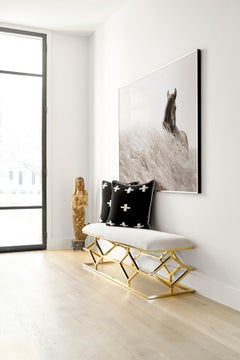
Equestrian Portrait of a Speckled Horse, Fashion-Inspired, Horizontal

Equestrian Portrait of a Speckled Horse, Fashion-Inspired, Horizontal

By Drew Doggett

Located in US

"Speckled Crest" This iconic portrait draws the eye towards this speckled horse's exquisite features. This image has received several awards, including the highest honor of Gold at ...

Category

2010s Contemporary South Carolina

Materials

Archival Pigment

19th Century French Painted Shop Counter With Zinc Top

19th Century French Painted Shop Counter With Zinc Top

Located in Charleston, SC

19th century French shop counter with original zinc top over time patinated, painted pine base. While the counter has raised panels on three sides of the case- the back is open compa...

Category

Late 19th Century French Antique South Carolina

Materials

Zinc

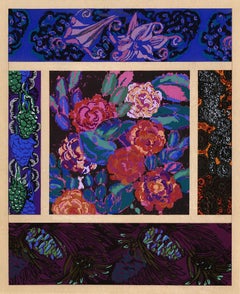
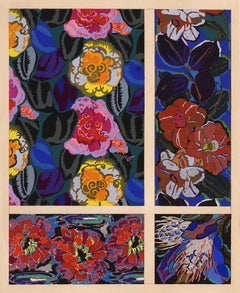
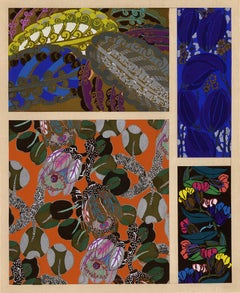
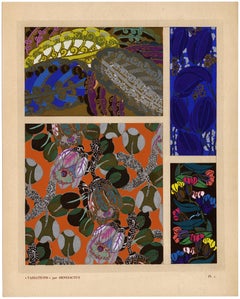
'Variations 1' — French Art Deco, 1923 Hand-Applied Pochoir Original

'Variations 1' — French Art Deco, 1923 Hand-Applied Pochoir Original

By Edouard Benedictus

Located in Myrtle Beach, SC

Edouard Benedictus, 'Variations, plate 1' from the portfolio 'Variations Quatre-Vingt-Six Motifs Décoratifs en Vingt Planches', color pochoir, edition not stated, 1923. Signed in the...

Category

1920s Art Deco South Carolina

Materials

Stencil

'Set Pieces: Vanity of Trust' — Mid-Century American Modernism

'Set Pieces: Vanity of Trust' — Mid-Century American Modernism

By Benton Murdoch Spruance

Located in Myrtle Beach, SC

'Set Pieces: Vanity of Trust', color lithograph, 1949, edition 40, Fine and Looney 279. Signed, titled, dated and numbered '23/40' in pencil. A fine, impression with fresh colors, on...

Category

1940s American Modern South Carolina

Materials

Lithograph

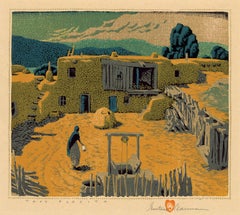
'Taos Placita' — American Southwest Masterwork, Signed Color Woodcut

'Taos Placita' — American Southwest Masterwork, Signed Color Woodcut

By Gustave Baumann

Located in Myrtle Beach, SC

Gustave Baumann, 'Taos Placita', color woodcut, 1947, edition 125. Baumann 132. Signed, titled, and numbered '20-125' in pencil; with the artist’s Hand-in-Heart chop. A superb, richly-inked impression, with fresh colors, on fibrous oatmeal wove paper; the full sheet with margins (2 to 3 1/8 inches); slight rippling at the left sheet edge, in excellent condition. Matted to museum standards, unframed. Image size 9 5/8 x 11 1/4 inches (244 x 286 mm); sheet size 13 1/4 x 17 inches (337 x 432 mm). Collections: Harwood Museum of Art, New Mexico Museum of Art, Phoenix Art Museum, Scottsdale Art Museum, Wichita Art Museum. ABOUT THE ARTIST Gustave Baumann (1881-1971) was a renowned printmaker and a leading figure of the American color woodcut revival whose exquisite craftsmanship and vibrant imagery captured the essence of the Southwest. "A brilliant printmaker, Baumann brought to the medium a full mastery of the craft of woodworking that he acquired from his father, a German cabinetmaker. This craftsmanship was coupled with a strong artistic training that resulted in the handsome objects we see in the exhibition today. After discovering New Mexico in 1918, Baumann began to explore in his woodblock prints of this period the light. color, and architectural forms of that landscape. His prints of this period are among the most beautiful and poetic images of the American West." —Lewis I. Sharp, Director, Denver Art Museum Baumann, the son of a craftsman, immigrated to the United States from Germany with his family when he was ten, settling in Chicago. From 1897 to 1904, he studied in the evenings at the Art Institute of Chicago, working in a commercial printmaking shop during the day. In 1905, he returned to Germany to attend the Kunstwerbe Schule in Munich, where he decided on a career in printmaking. He returned to Chicago in 1906 and worked for a few years as a graphic designer of labels. Baumann made his first prints in 1909 and exhibited them at the Art Institute of Chicago the following year. In 1910, he moved to the artists’ colony in Nashville, Indiana, where he explored the creative and commercial possibilities of a career as a printmaker. In 1915, he exhibited his color woodcuts at the Panama-Pacific International Exposition in San Francisco, winning the gold medal. Among Baumann’s ongoing commercial activities was his work for the Packard Motor Car Company from 1914 to 1920 where he produced designs, illustrations, and color woodcuts until 1923. In 1919, Baumann’s printmaking work dominated the important exhibition of American color woodcuts at the Detroit Institute of Arts. Twenty-six of his prints were included, far more than the works of any other artist. A set of his blocks, a preparatory drawing, and seven progressive proofs complemented the exhibition. That same year, Baumann worked in New York and, over the summer, in Provincetown, Massachusetts. His airy images of Cape Cod employed soft, pastel colors and occasionally showed the influence of the white-line woodcut technique. Many of his Chicago artist friends had traveled to the southwest, and Baumann became intrigued by their paintings, souvenirs, and stories of an exotic place named Taos, New Mexico. In the summer of 1918, he spent the summer in Taos sketching and painting before visiting Santa Fe. Paul Walter, the director of the Museum of New Mexico, offered him a studio in the museum's basement. Inspired by the rugged beauty of the Southwest—the vibrant colors and dramatic landscapes of the region became a central theme in his work, influencing his artistic style and subject matter for the remainder of his career. Later in the decade, he traveled to the West Coast and made prints of California landscape. Baumann's prints became synonymous with the Southwest, capturing the spirit of its place in America's identity with a unique sense of authenticity and reverence. His iconic images of desert vistas, pueblo villages, and indigenous cultures served as visual tributes to the region's rich cultural heritage, earning him a dedicated following among collectors and curators alike. A true craftsman and artist, Baumann completed every step of the printmaking process himself, cutting each block, mixing the inks, and printing every impression on the handmade paper he selected. His dedication to true craftsmanship and his commitment to preserving the integrity of his artistic vision earned him widespread acclaim and recognition within the art world. About the vibrant colors he produced, Baumann stated, “A knowledge of color needs to be acquired since they don’t all behave the same way when ground or mixed...careful chemistry goes into the making of colors, with meticulous testing for permanence. While complicated formulae evolve new colors, those derived from Earth and metal bases are still the most reliable.” In the 1930s, Baumann became interested in puppet theater. He designed and carved his own marionettes and established a little traveling company. From 1943 to 1945, the artist carved an altarpiece for the Episcopal Church of the Holy Faith in Santa Fe. In 1952, a retrospective exhibition of his prints was mounted at the New Mexico Museum of Fine Arts. Throughout his prolific career, Baumann executed nearly four hundred color woodcuts. Baumann’s woodcuts...

Category

1940s American Modern South Carolina

Materials

Woodcut

Aerial image of a surfer on a yellow board

Aerial image of a surfer on a yellow board

By Drew Doggett

Located in US

Aerial image of a surfer on a yellow board The aerial perspective lets you appreciate the immense expanse and incredible compositions created by the union of surfer and sea The pri...

Category

2010s Minimalist South Carolina

Materials

Archival Pigment

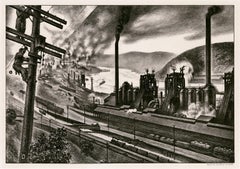
'Steel Valley' — Mid-Century Modernist Signed Lithograph, Pittsburg

'Steel Valley' — Mid-Century Modernist Signed Lithograph, Pittsburg

By Louis Lozowick

Located in Myrtle Beach, SC

Louis Lozowick, 'Steel Valley', lithograph, 1936; edition 15; edition 250 AAA (1942); Flint 141. Signed in pencil, with the artist's monogram in the stone, lower left. A fine, richly...

Category

1930s American Modern South Carolina

Materials

Lithograph

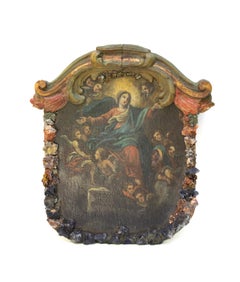
17th Century Italian 'Madonna and Angels' Painting Framed with Gems and Minerals

17th Century Italian 'Madonna and Angels' Painting Framed with Gems and Minerals

By Interi

Located in Columbia, SC

17th century Italian oil painting of Mary surrounded by cherub angels framed with a 17th century Italian pediment and fluorite, pyrite, chalcedony, jasper, and barite natural specime...

Category

17th Century Italian Baroque Antique South Carolina

Materials

Rock Crystal, Quartz, Pyrite

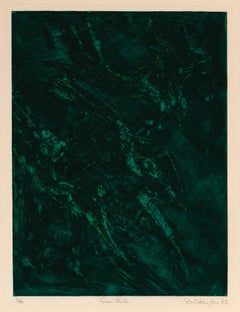
'Green Shade' — Mid-century Modernism, Abstract Expressionism, Atelier 17

'Green Shade' — Mid-century Modernism, Abstract Expressionism, Atelier 17

By Stanley William Hayter

Located in Myrtle Beach, SC

Stanley William Hayter, 'Green Shade', color etching and scraper, 1963, edition 50, (only 39 printed), B&M 278. Signed, titled, dated, and numbered '1/50' in pencil. A superb, richly-inked, luminous impression, with fresh, vivid colors, on Barcham Green textured cream wove paper; the full sheet with margins (2 3/16 to 3 1/4 inches), in excellent condition. Printed: intaglio black-green, contact lumogen yellow, soft roller phthalo green. Scarce. Image size 15 7/16 x 11 5/8 inches (392 x 295 mm); sheet size 21 1/8 x 16 inches (537 x 406 mm). Matted to museum standards (unframed). Collection: The British Museum ABOUT THE ARTIST Stanley William Hayter (1901-1988) was a British painter and printmaker associated in the 1930s with Surrealism and from 1940 onward with Abstract Expressionism. Regarded as one of the most significant printmakers of the 20th century, Hayter founded the legendary Atelier 17...

Category

1960s Abstract Expressionist South Carolina

Materials

Etching

'Astral Comic' — Modernist Abstraction

'Astral Comic' — Modernist Abstraction

By Edward August Landon

Located in Myrtle Beach, SC

Edward Landon 'Astral Comic', color serigraph, 1978, edition 25, Ryan 12. Signed, titled, and annotated 'Edition 25' in pencil. A superb, painterly impression, with fresh colors, on ...

Category

1970s Abstract South Carolina
Materials

Screen

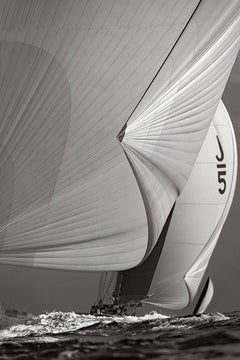
World-Class Yachts in Motion, Black and White, Vertical, Design-Inspired

World-Class Yachts in Motion, Black and White, Vertical, Design-Inspired

By Drew Doggett

Located in US

"Velsheda in Pursuit" As the J-Class racing yacht Velsheda chased Ranger across the sea, the billowing sails created a stark contrast with the water below. This image is in the p...

Category

2010s Contemporary South Carolina

Materials

Archival Pigment

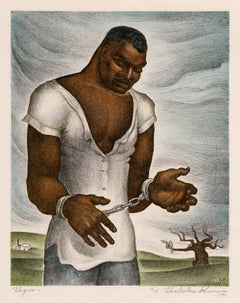
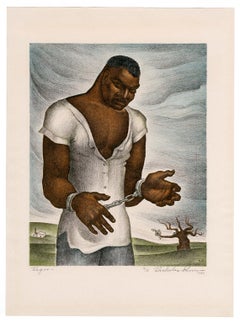
'Negro' — California WPA Social Realism–Slavery, Signed Color Lithograph

'Negro' — California WPA Social Realism–Slavery, Signed Color Lithograph

Located in Myrtle Beach, SC

Nicholas Panesis, 'Negro', 1934, color lithograph, edition 18. Signed, dated, titled, and numbered 8/28 in pencil. Initialed in the stone, lower right. A fine impression, with fresh colors, on buff wove paper, with margins (1 1/8 to 2 3/8 inches). Minor glue staining at the extreme sheet edges verso, where previously taped (not visible recto), otherwise in excellent condition. Matted to museum standards, unframed. Very scarce. Image size 10 5/8 x 8 1/2 inches; (270 x 216 mm); sheet size 14 13/16 x 10 15/16 inches (376 x 278 mm). Created for the California Works Progress Administration, Federal Art Project (WPA). Impressions of this work are held in the public collections of La Salle University Art Museum (Philadelphia), U.S. General Services Administration, and the Weisman Art Museum (University of Minnesota). ABOUT THE ARTIST Nicholas Panesis (1913–1967) was an American painter, printmaker, ceramicist, and illustrator whose lithographs of the 1930s rank among the most compelling examples of California WPA printmaking. Working within the traditions of Social Realism and the American Scene movement, he combined expressive draftsmanship with a modernist sense of design to create images of remarkable graphic power that address themes of labor, race, industry, and everyday American life. Born in Massachusetts in 1913, Panesis studied art at Syracuse University before joining the faculty of Alfred University, where he taught ceramics. In the early 1930s he relocated to California, first settling in San Francisco before moving to Los Angeles. There he worked for several animation studios...

Category

1930s American Realist South Carolina
Materials

Lithograph

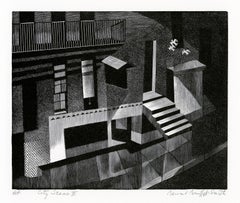
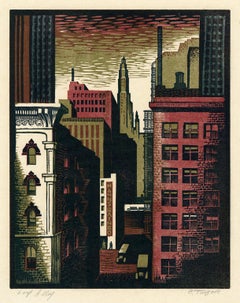
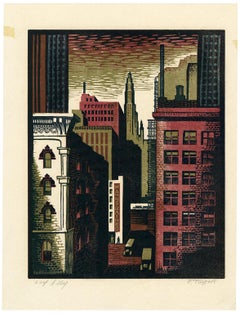
'Loop Alley' — Modernist Chicago Cityscape, WPA

'Loop Alley' — Modernist Chicago Cityscape, WPA

By Charles Turzak

Located in Myrtle Beach, SC

Charles Turzak, 'Loop Alley (Chicago)', color woodcut, edition c. 25, c. 1935. Signed and titled in pencil. A fine, richly-inked impression, with fresh colors, on cream wove Japan pa...

Category

1930s American Modern South Carolina
Materials

Woodcut

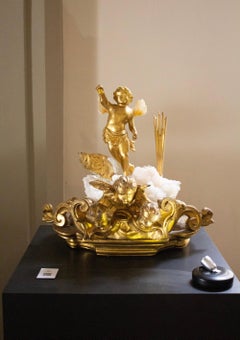
Sculptural 18th Century Italian Crown with Gilded Angel Fragments and Aragonite

Sculptural 18th Century Italian Crown with Gilded Angel Fragments and Aragonite

By Interi

Located in Columbia, SC

Sculptural 18th century Italian gilded crown base with hand-carved angels and an 18th century gilded angel, angel wing, and sunray with aragonite crystals. The crown was originally p...

Category

18th Century Italian Rococo Antique South Carolina
Materials

Quartz, Rock Crystal, Agate, Gold Leaf

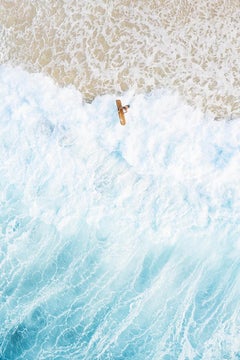
Bestseller, Aerial, Hawaii, Surfer Approaching the Ocean

Bestseller, Aerial, Hawaii, Surfer Approaching the Ocean

By Drew Doggett

Located in US

"Into the Blue" A surfer excitedly runs into the whitewater lapping the shores on Oahu in search of the perfect wave. The print series Swell: Endless Blue takes you on a sweeping y...

Category

2010s Contemporary South Carolina
Materials

Archival Pigment

In an iconic scene, elephants of all sizes head towards Kilimanjaro

In an iconic scene, elephants of all sizes head towards Kilimanjaro

By Drew Doggett

Located in US

In an iconic scene, elephants of all sizes head towards Kilimanjaro Elephants of all sizes walking along dry lake bed with Kilimanjaro in distance Exceptional Creatures is a limite...

Category

2010s Minimalist South Carolina
Materials

Archival Pigment

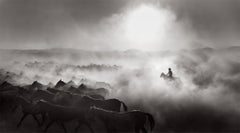
Iconic print of a cowboy among a herd of wild horses in black and white

Iconic print of a cowboy among a herd of wild horses in black and white

By Drew Doggett

Located in US

"A Fabled Journey" Iconic print of a cowboy among a herd of wild horses in black and white Black and white image of a single cowboy riding across a dusty landscape among a herd of...

Category

2010s Minimalist South Carolina
Materials

Archival Pigment

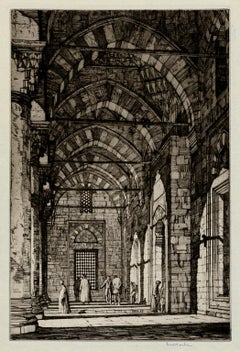
Mosque of the Sultan Bayazid, Constantinople — Vintage Realism

Mosque of the Sultan Bayazid, Constantinople — Vintage Realism

By Louis Conrad Rosenberg

Located in Myrtle Beach, SC

Louis Conrad Rosenberg, 'Mosque of the Sultan Bayazid, Constantinople', etching, 1927. Signed in pencil. Initialed and dated in the plate, lower left. A fine, richly-inked impression...

Category

1920s American Realist South Carolina
Materials

Drypoint

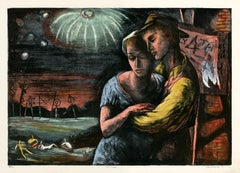
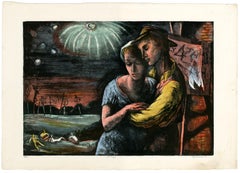
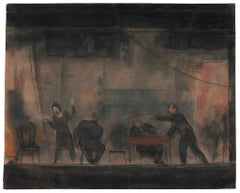
Rehearsal, "Long Day's Journey Into Night" — Mid-Century American Impressionism

Rehearsal, "Long Day's Journey Into Night" — Mid-Century American Impressionism

By Robert Philipp

Located in Myrtle Beach, SC

Robert Philipp, 'Rehearsal, "Long Day's Journey Into Night" ', color pastel, c. 1957. Unsigned. A fine, atmospheric rendering, on warm gray charcoal paper; a reinforced crease (1/2 inch) across the bottom left sheet corner; otherwise in very good condition. Image and sheet size 17 1/2 x 21 3/4 inches. Matted to museum standards, unframed. Provenance: Art Students League, from the artist’s personal portfolio. ABOUT THE ARTIST Robert Philipp (1895–1981) was a celebrated American Post-Impressionist painter known for his nudes, still lifes, and portraits. Noted art critic Henry McBride named Philipp one of America's top six painters of his generation. Philipp was an instructor of painting at the Art Students League, New York, for 33 years. Philipp was Secretary of the National Academy of Design, a National Academician, and a Benjamin Franklin Fellow at the Royal Society of Arts in London. His composition and painting style has been compared to the art of Edgar Degas and Pierre Auguste Renoir. In 1940, Philipp was invited to Los Angeles by Hollywood producer Louis B. Mayer to paint portraits of Metro-Goldwyn-Mayer movie stars. The same year, Walter Wanger, producer of ‘The Long Voyage Home’, directed by John Ford and based on plays by Eugene O'Neill, contracted with Reeves Lewenthal, head of the Associated American Artists gallery in Manhattan, to bring nine well-known artists to the set and paint scenes from the movie and portraits of the actors in character. The artists included Robert Philipp, Thomas Hart Benton, Grant Wood, Ernest Fiene, George Schreiber, Luis Quintanilla...

Category

1950s American Impressionist South Carolina
Materials

Pastel

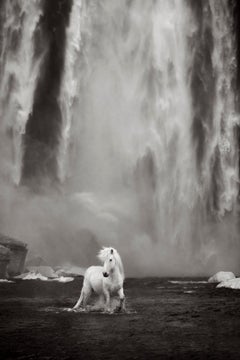
A lone white horse plays beneath a might Icelandic waterfall

A lone white horse plays beneath a might Icelandic waterfall

By Drew Doggett

Located in US

A lone white horse plays beneath a might Icelandic waterfall A lone white horse enjoys a moment to himself below a mighty waterfall. He appears to be playing, almost invigorated by ...

Category

2010s Minimalist South Carolina
Materials

Archival Pigment

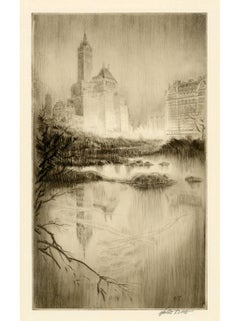
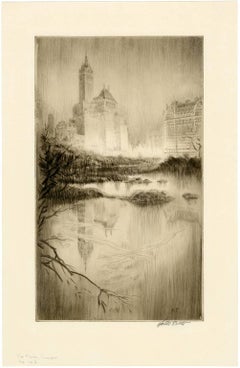
'The Plaza, Sunset Glow' — 1920s Signed Drypoint, Central Park, NYC

'The Plaza, Sunset Glow' — 1920s Signed Drypoint, Central Park, NYC

By Walter Tittle

Located in Myrtle Beach, SC

Walter Tittle, 'The Plaza, Sunset Glow', drypoint, c. 1920s, edition not stated. Signed in pencil and initialed in the plate, lower right. Titled 'The Plaza, Sunset' and annotated 'no. 165' in ink, in the bottom left sheet corner. A superb, luminous impression in dark brown ink, with selectively wiped plate tone; on cream wove paper; the full sheet with margins (1 to 2 1/4 inches). Pale tape stains on the top sheet edge, recto, well away from the image, otherwise in excellent condition. Matted to museum standards, unframed. Image size 11 3/4 x 6 15/16 inches (299 x 176 mm); sheet size 15 11/16 x 9 inches (399 x 229 mm). A view across 'The Pond' in New York City's Central Park, toward Grand Army Plaza...

Category

1920s American Impressionist South Carolina
Materials

Drypoint

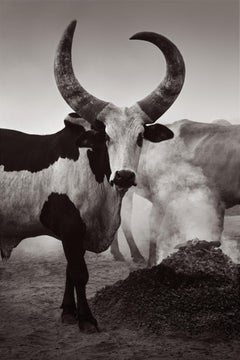
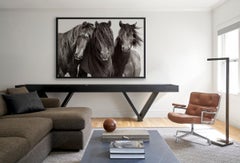
Portrait of a long-horned cow looking toward the camera in South Sudan

Portrait of a long-horned cow looking toward the camera in South Sudan

By Drew Doggett

Located in US

"""Mundari's Pride"" Portrait of a long-horned cow looking toward the camera in South Sudan Long-horned cow looking towards the camera with a black & white coat in the cattle camp...

Category

2010s Minimalist South Carolina
Materials

Archival Pigment

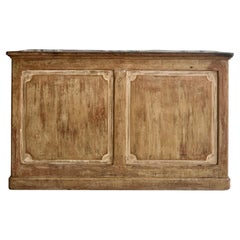
A surreal scene of elephants crossing the plains in Amboseli National Park

A surreal scene of elephants crossing the plains in Amboseli National Park

By Drew Doggett

Located in US

A surreal scene of elephants crossing the plains in Amboseli National Park Watching a herd of elephants, typically led by the matriarch, is an incredible and exhilarating sight Co...

Category

2010s Minimalist South Carolina
Materials

Archival Pigment

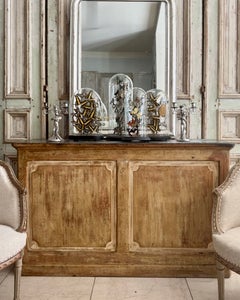
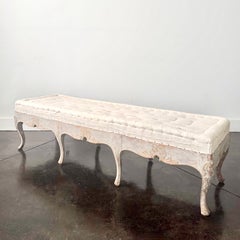
Rare 18th century Swedish Rococo Period Long Bench 1760

Rare 18th century Swedish Rococo Period Long Bench 1760

Located in Charleston, SC

An exquisite, large and rare 18th century period Rococo sofa bench with hand-carved and richly decorated in scrolling carvings to three sides, Scraped to original cream white finish and upholstered in traditional way in antique hand stitched linen. Stockholm, Sweden, circa 1760. History of Swedish Rococo Benches...

Category

1760s Swedish Rococo Antique South Carolina
Materials

Linen, Wood, Paint

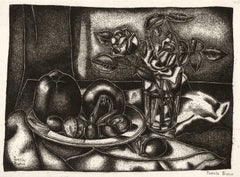
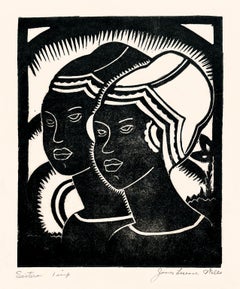
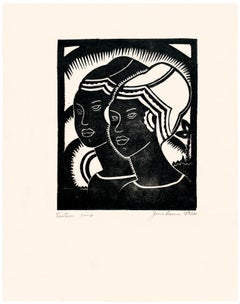
'Sisters' — Renowned Black, Harlem Renaissance Artist, Rare Signed Woodcut

'Sisters' — Renowned Black, Harlem Renaissance Artist, Rare Signed Woodcut

Located in Myrtle Beach, SC

James Lesesne Wells, 'Sisters', linocut, edition not stated but small, 1928. Signed, titled, and annotated 'imp' in pencil. A fine impression on off-white wove Japan paper, with wide margins (1 7/8 to 3 3/4 inches), in excellent condition. Printed by the artist. Very scarce. Matted to museum standards, unframed. Image size 8 3/16 x 6 3/4 inches (208 x 171 mm); sheet size 13 1/2 x 10 3/4 inches (343 x 273 mm). Exhibition and Literature: 'Narratives of African American Art and Identity: The David C. Driskell Collection,' The Art Gallery at the University of Maryland, extensive touring exhibition, 1998-2000. Collections: Pennsylvania Academy of the Fine Arts, Smithsonian Institution (Anacostia Community Museum). ABOUT THE ARTIST “Wells is more than an artist with a deep concern for his fellow man. He carries many of his themes a step further into an apocalyptic world, a world of revelation and shifting lights. … He works on large blocks in a bold free style. … His work has a vigor, therefore, that is not often used in the medium today.” —Jacob Kainen (painter, critic, and collector) from Richard J. Powell’s 1986 essay Phoenix Ascending: The Art of James Lesesne Wells. James Lesesne Wells was an American painter, printmaker, educator, and pioneering figure of the Harlem Renaissance, whose work established a vital connection between African heritage, modernist form, and African American cultural identity. Known for his innovative use of linoleum and woodblock printing, Wells played a key role in shaping 20th-century African American art and inspired countless students throughout his lengthy career as a teacher at Howard University. Born in Atlanta, Georgia, Wells' early exposure to the arts came through church and community, where African American cultural traditions were central. He pursued formal artistic training at Lincoln University in Pennsylvania (earning a B.A. in 1924), followed by studies at the Pennsylvania Academy of the Fine Arts and the Barnes Foundation, where he encountered European modernists as well as traditional African sculpture, which profoundly influenced his style. Wells moved to New York in the late 1920s, swiftly immersing himself in the lively artistic and intellectual scene of Harlem. There, he became associated with artists, writers, and thinkers of the Harlem Renaissance, contributing to the growth of Black cultural identity. Considered a mentor to many famed artists of the Harlem Renaissance, Wells served as director of a summer art workshop in Harlem where his assistants included Charles Alston, Jacob Lawrence, and Palmer Hayden...

Category

1920s American Modern South Carolina
Materials

Linocut

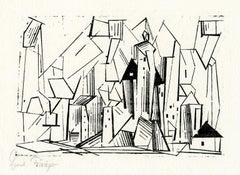
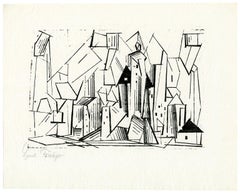
'Die Architektur' (Architecture) — Bauhaus Modernism, Signed Woodcut

'Die Architektur' (Architecture) — Bauhaus Modernism, Signed Woodcut

By Lyonel Feininger

Located in Myrtle Beach, SC

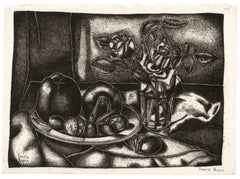
Lyonel Feininger, 'Die Architektur' (Architecture), also 'Stadtbild' (Cityscape), woodcut, edition – proofs only in 1920; 50 in 1921. Prasse W 232. Signed in pencil. A fine, richly-inked impression, on off-white Japan paper, with full margins (1 1/4 to 2 1/8 inches), in excellent condition. Matted to museum standards, unframed. Image size 6 x 8 7/8 inches (152 x 229 mm); sheet size 9 1/2 x 11 7/8 inches (241 x 302 mm). No. 11 of the portfolio 'Zwolf Holzschnitte von Lyonel Feininger', 1921. Provenance: Peter Deitsch collection; exhibited Weimar Museum, 1968. Impressions of this work are in the permanent collections of: the Busch-Reisinger Museum (Cambridge, Mass.), Bauhaus-Archiv (Germany), Hamburger Kunsthalie (Germany), Pfaizische Landesgewerbeanstalt (Germany), Kaiser Wilhelm Museum (Germany), Staatliche Graphische Sammlung (Germany), and the Philadelphia Museum of Art. ABOUT THE ARTIST Lyonel Feininger was born in New York City into a musical family—his father was a violinist and composer, his mother was a singer and pianist. He studied violin with his father, and by the age of 12, he was performing in public, but he also drew incessantly, most notably the steamboats and sailing ships on the Hudson and East Rivers, and the landscape around Sharon, Conn., where he spent time on a farm owned by a family friend. At the age of 16 he left New York to study music and art in Germany, from where his parents emigrated. Drawn more to the visual arts, he attended schools in Hamburg, Berlin, and Paris from 1887 to 1892. After completing his studies, Feininger began his artistic career as a cartoonist and illustrator, his originality leading him to great success. In 1906, after working for a dozen years in Germany, he was offered a job as a cartoonist at the Chicago Tribune, the largest circulation newspaper in the Midwest. He worked there for a year, inventing what became the standard design for the comic strip: in the words of John Carlin, “an overall pattern. . . that allowed the page to be read both as a series of elements one after the other, like language and as a group of juxtaposed images, like visual art.” His originality did not end there: he went on to become one of the great abstract painters. Like Kandinsky, music was his model, but Kandinsky only knew music from the outside—as a listener (inspired initially by Wagner, then by Schoenberg)—while Feininger knew it from the inside. He lived in Paris from 1906 to 1908, during which time he met and was influenced by the work of progressive painters Robert Delaunay and Jules Pascin, as well as that of Paul Cezanne and Vincent van Gogh. He began painting full-time, developing his distinctive Iyrical style based on Cubist and Expressionist idioms and a concern for the emotive qualities of light and color. He exhibited with the Der Blaue Reiter group in 1913, and in 1917, he had his first solo exhibition at Galerie Der Sturm in Berlin. One year after his solo exhibition, in 1918, Feininger began making woodcuts. He became enamored with the medium, producing an impressive 117 in his first year of exploring the printmaking medium. In 1919 at the invitation of the architect Walter Gropius, he was appointed the first master at the newly formed Staatliches Bauhaus in Weimar. His woodcut of a cathedral...

Category

1920s Bauhaus South Carolina
Materials

Woodcut

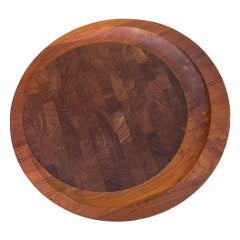
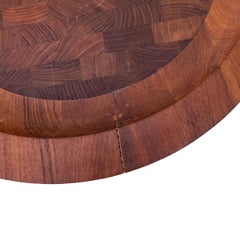
Vintage Danish Dansk Teak Cutting Board Tray Platter by Jens H. Quistgaard

Vintage Danish Dansk Teak Cutting Board Tray Platter by Jens H. Quistgaard

By Dansk, Jens Quistgaard

Located in Cordova, SC

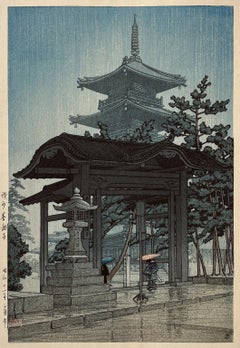
Mid-Century Modern footed cutting board tray in teak designed by Jens H. Quistgaard for Dansk, Denmark. This versatile piece is the perfect tool for carving and serving featuring a h...
Category

Mid-20th Century Danish Mid-Century Modern South Carolina

Materials

Teak

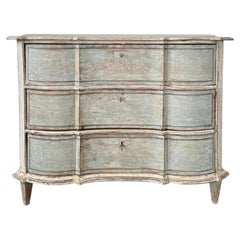
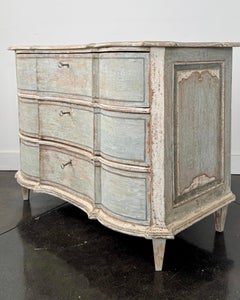
18th Century Period Baroque Serpentine Front Chest Of Drawers

18th Century Period Baroque Serpentine Front Chest Of Drawers

Located in Charleston, SC

18th century Large chest of three drawers from late Baroque period in richly carved curvaceous serpentine drawer fronts, shaped top and on bun feet in super later patinated paint. La...

Category

Late 18th Century German Baroque Antique South Carolina

Materials

Oak, Paint

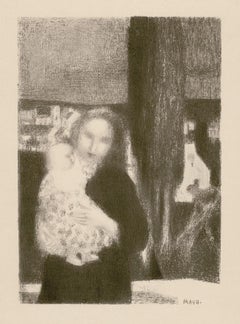
Untitled (Mother and Child)

Untitled (Mother and Child)

By Maurice Denis

Located in Myrtle Beach, SC

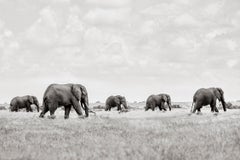
Maurice Denis, Untitled (Mother and Child), lithograph, 1897, edition not stated. Signed in the stone, lower right. Annotated in linotype 'MAURICE DENIS, ORIGINAL LITHOGRAPHIE PAN III' in the lower left sheet corner. A fine, atmospheric impression, in warm, dark gray ink, on buff wove paper, with full margins (2 1/2 to 1 3/4 inches); a small discoloration in the bottom left sheet corner, otherwise in good condition. Image size 8 5/8 x 6 7/8 inches; sheet size 13 7/8 x 10 5/8 inches. As published in 'Pan', the leading German magazine of the period devoted to art and literature. Matted to museum standards, unframed. Collection: Los Angeles County Museum of Art. Reproduced: German Expressionist Prints...

Category

1890s Symbolist South Carolina
Materials

Lithograph

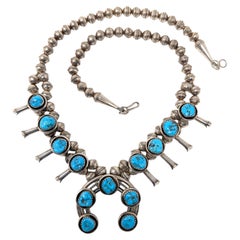
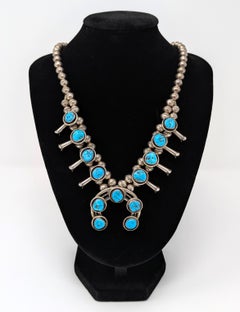
Vintage 925 Sterling Silver Turquoise Squash Blossom Necklace Petite 18.75"

Vintage 925 Sterling Silver Turquoise Squash Blossom Necklace Petite 18.75"

Located in Greer, SC

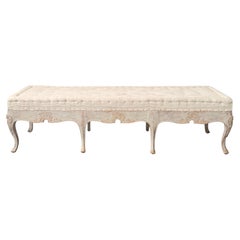
Petite squash blossom necklace created in 925 sterling silver and features vibrant blue turquoise with pyrite inclusions. We believe this turquoise to be either Morenci or Kingman tu...

Category

20th Century American Native American South Carolina
Materials

Turquoise, Sterling Silver

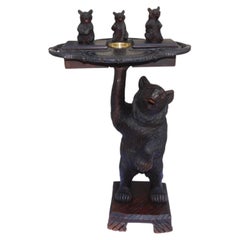
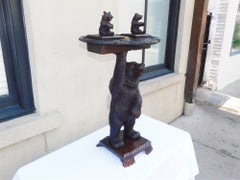
German Black Forrest Walnut Bear Smoking Stand with Bear Cub Finials, 20th Cent.

German Black Forrest Walnut Bear Smoking Stand with Bear Cub Finials, 20th Cent.

Located in Charleston, SC

German Black Forrest carved walnut glass eye bear smoking stand supporting an intricately carved scrolled foliage tray with two hinged lidded compartments, brass insert ashtray, wind...

Category

Early 20th Century German Black Forest South Carolina
Materials

Brass

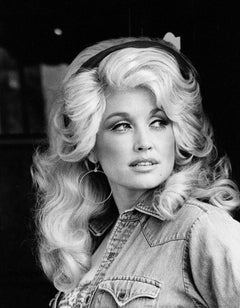
Dolly Parton

Dolly Parton

Located in Mount Pleasant, SC

Dolly Parton photographed in New York City in September, 1976. Estate Stamped by photographer David Gahr. Limited Edition photograph of 100 Comes with Certificate of Authenticity.

Category

20th Century Contemporary South Carolina
Materials

Archival Pigment

Dolly Parton

Dolly Parton

By David McClister

Located in Mount Pleasant, SC

Dolly Parton photographed in Nashville. 2014. Limited Edition photograph. Signed by photographer Comes with Certificate of Authenticity.

Category

20th Century Contemporary South Carolina
Materials

Archival Pigment

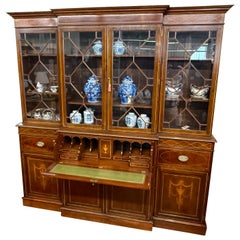
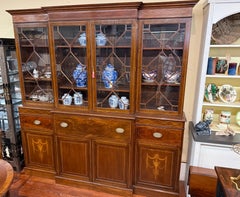
Extraordinary Old English  Inlaid Mahogany Adam style Breakfront w/Secretaire

Extraordinary Old English Inlaid Mahogany Adam style Breakfront w/Secretaire

Located in CHARLESTON, SC

Most 20th century reproduction Breakfront Bookcases are mass-manufactured from veneer over particle board. This one was made by our own proprietary British staff in the 1960's in Sus...

Category

1960s English Adam Style Vintage South Carolina
Materials

Brass

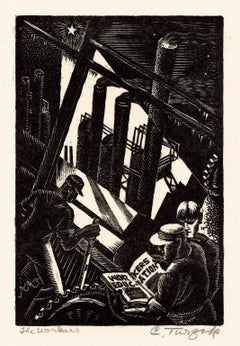
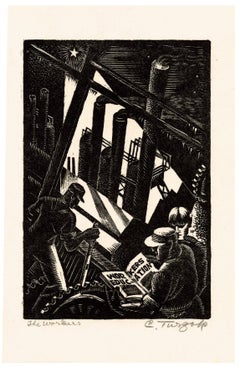
'The Workers (No. 1)' — 1930s WPA Signed Modernist Woodcut

'The Workers (No. 1)' — 1930s WPA Signed Modernist Woodcut

By Charles Turzak

Located in Myrtle Beach, SC

Charles Turzak, 'The Workers (No. 1)', woodcut, edition c. 50, c. 1935. Signed and titled in pencil. Signed in the block, lower right. A fine, richly-inked impression, on cream wove...

Category

1930s American Modern South Carolina
Materials

Woodcut