301 results for "azulejos"

to
61
229
66
116
78
77
72
30
30
27
25
24
16
16
14
6
5
4
4
4
4
3
3
3
3
2
2
2
1
1
1
1
1
1
15
3
2
2
2
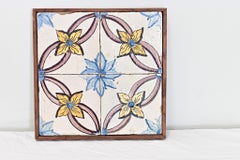
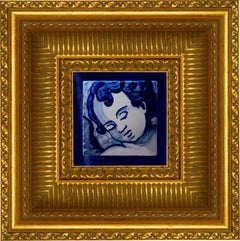
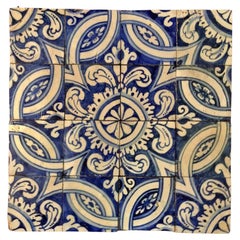
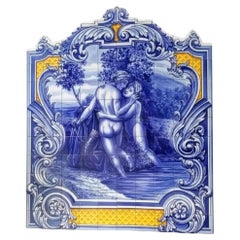
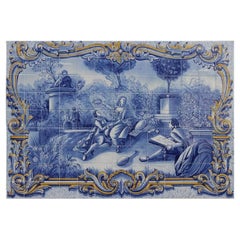
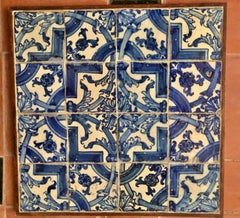
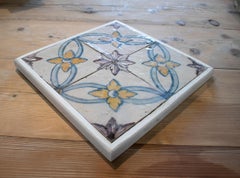
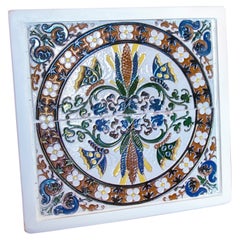
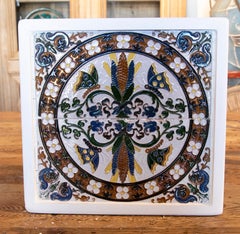
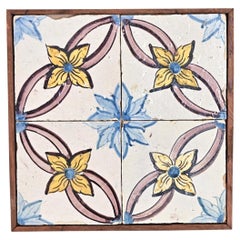
Framed Set of 18th Century Portuguese Painted Ceramic Tiles

Framed Set of 18th Century Portuguese Painted Ceramic Tiles

Located in Baton Rouge, LA

The artistry and industry of Portuguese azulejos tiles is a tradition that dates back many centuries; as a practical, architectural surface to cover both interior and exterior walls ...

Category

Antique 18th Century Portuguese Other Decorative Art

Materials

Ceramic, Clay, Wood

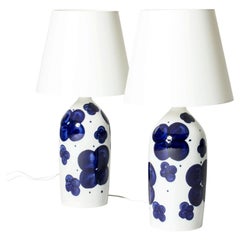
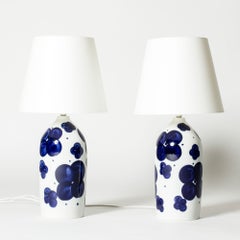
Midcentury Porcelain Table Lamps by Sylvia Leuchovius, Rörstrand, Sweden, 1960s

Midcentury Porcelain Table Lamps by Sylvia Leuchovius, Rörstrand, Sweden, 1960s

By Sylvia Leuchovius, Rörstrand

Located in Östermalm, Stockholms län

Pair of charming table lamps by Sylvia Leuchovius, made from porcelain with a joyful ultramarine blue painted decoration of flowers.

Category

Vintage 1960s Swedish Scandinavian Modern Table Lamps

Materials

Glass

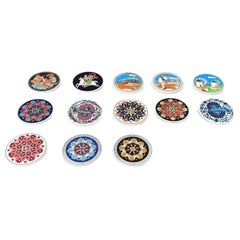
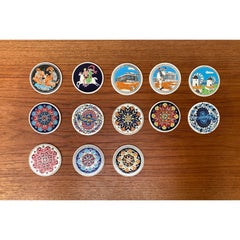
Set of 13 Vintage Greek Ceramic Handmade Coaster from Lito Niarchos

Set of 13 Vintage Greek Ceramic Handmade Coaster from Lito Niarchos

Located in Hamburg, DE

Vintage Greek Ceramic Handmade Coaster from Lito Niarchos, Set of 13, in Very Good conditions. Designed 1970 to 1979 This piece has an attribution mark. Additional information: Mate...

Category

20th Century Greek Decorative Dishes and Vide-Poche

Materials

Ceramic

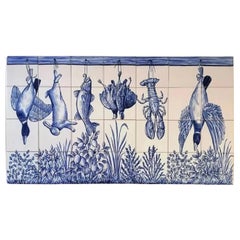
Kitchen Tile Backsplash "Hanging Foods" Hand Painted & Signed by Artist

Kitchen Tile Backsplash "Hanging Foods" Hand Painted & Signed by Artist

Located in Baldock, England

Beautiful tile mural with the "HANGING FOODS" motif finely painted. Quantity: 28 tiles Tile mural size: 23.6"H X 41.3"W (60cm X 105cm) Tile size: 5.9"H X 5.9"W (15cm X 15cm) Origin...

Category

21st Century and Contemporary Portuguese Modern Contemporary Art

Materials

Ceramic, Paint

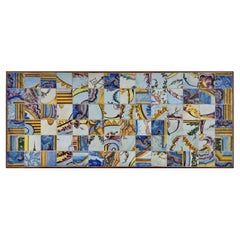
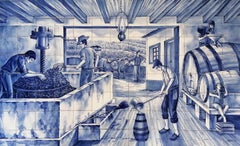
Large Portuguese Tile Mural "Wine Press" Hand Painted & Signed by Artist

Large Portuguese Tile Mural "Wine Press" Hand Painted & Signed by Artist

Located in Baldock, England

Beautiful tile mural with the "WINE PRESS" motif finely painted. Quantity: 104 tiles Tile mural size: 47.2"H X 76.7"W (120cm X 195cm) Tile size: 5.9"W X 5.9"H (15cm X 15cm) Origin:...

Category

21st Century and Contemporary Portuguese Modern Contemporary Art

Materials

Ceramic, Clay, Paint

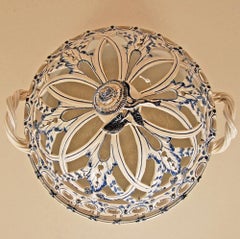
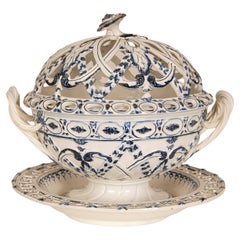
18th C.  Wedgwood Tableware Creamware Pearlware Chestnut Basket Mared Pierced

18th C. Wedgwood Tableware Creamware Pearlware Chestnut Basket Mared Pierced

By AK Dutch Delftware, Josiah Wedgwood, Royal Delft, Wedgewood, Delft

Located in Wommelgem, VAN

Pearlware Wedgwood Creamware pottery Orange or Chestnut basket ,cover and stand. Very wall decorated in a underglaze blue Mared design. The basket and stand impressed under base "we...

Category

Antique 1770s English Neoclassical Ceramics

Materials

Creamware

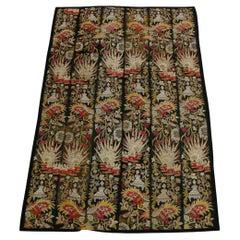
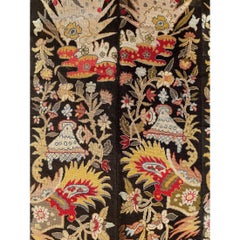
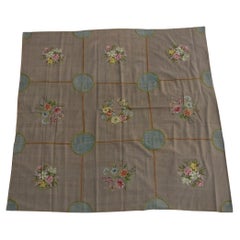
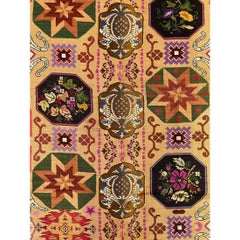
1920s Antique Floral Design Part Silk Needlework Rug

1920s Antique Floral Design Part Silk Needlework Rug

Located in Los Angeles, US

Needlepoint rugs were created using the traditional needlework weaving technique that is used to make everyday items from furniture to carpets and artwork. However, it has a fascinating history both as a hobby and as an industry. When many people think of carpets, they think of pile carpets or flat weave kilims, but needlepoint has also been used to create beautiful carpets. These carpets are durable and an important part of carpet history. Archaeologists and scholars consider the roots of needlepoint to have been around 1500 BC. They consider the first needlepoint to include the fine diagonal stitches that were used to sew tents together by the ancient Egyptians. The art eventually evolved into tapestry weaving. However, a tapestry weaving differs significantly from needlepoint in that it uses a loom and vertical warp. Tapestry weaving is closer to the weaving of kilims and pile rugs than canvas work. However, some still include tapestry weaving in the category of needlepoint because of the fine work that appeared during the late Renaissance. It can have a similar appearance to the untrained eye. Technically, tapestry weaving and needlepoint are not the same, and they do not use the same technique. The first actual needlepoint rugs and needle-points began to appear in the late Renaissance. Needlepoint is worked by creating stitches on a stiff canvas. The canvas is typically made from jute or linen and is quite durable. Pieces from the Renaissance were used to cover footstools, chairs, pillows, bed headboards, and other furnishings. They were also used as table coverings and wall coverings. You could also find them on many small items such as purses, shoes, and various adornments for clothing. During the Renaissance, the craft reached a high level of skill, and the designs became incredibly detailed and realistic. They mimicked many of the subjects and styles of famous paintings of the time. They created florals, still life designs, scenes, and geometric tiled pieces. Some of them mimicked the designs found in Persian Carpets. Needlepoint reached its peak popularity in the 19th century when it was considered a proper occupation for a lady. Needlepoint and embroidery held a similar place in societal status at the time. During this time, the work became finer, with some of the canvas reaching a high level of detail. The level of detail is determined by counting the number of mesh in an inch. During this time petit point by French needlewomen could have a mesh count as high as 45 mesh. This allowed women to create highly intricate designs with incredible levels of detail. It is possible to find many antique pieces of needlepoint besides rugs. Needlepoint rugs were popular in France and Spain, where the technique was adapted to create highly intricate designs that mimicked the designs in architecture and fashion. They were popular because they were durable, and it could be fashioned into a variety of items. The canvases themselves were durable, and the wool that they used was also strong, which means that many of the pieces were able to withstand daily use. We have many artifacts that have survived from this time period. Needlepoint rugs are important collectibles because they are different from the pile rugs and kilims that are typically found on the market. Needlepoint carpets are special because they take many hours to create, especially larger works. Needlepoint pieces of any type became popular throughout Europe during the 19th century. It is still a popular hobby today, but perhaps one of the most interesting stories is that of the Portuguese needlewomen of Arraiolos. The story of these women and their beautiful carpets begins in 1492. Needlepoint was a popular occupation in Spain, which had a large population of Moors and Jews. They were an integral part of Spanish culture. However, in 1492, Queen Isabella of Spain issued a proclamation that gave these ethnic groups the order to pack their bags and board ships headed...

Category

Vintage 1920s Renaissance Revival Russian and Scandinavian Rugs
Materials

Wool, Silk

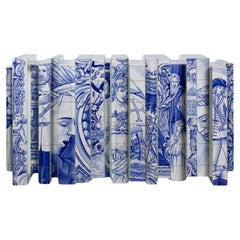
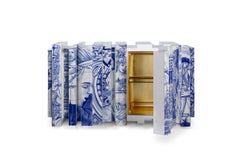
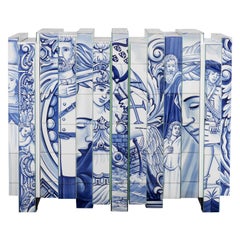
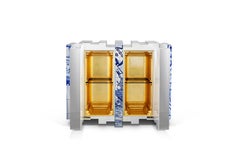
Heritage Sideboard - Hand-Painted Tiles - Gold Plated & Brass - Boca do Lobo

Heritage Sideboard - Hand-Painted Tiles - Gold Plated & Brass - Boca do Lobo

Located in Rio Tinto, PT

The Heritage Sideboard is a magnificent journey through Portuguese legacy. Covered in Azulejos, traditional hand painted tiles and one of the most representative art forms of Portugu...

Category

2010s Portuguese Sideboards

Materials

Gold Leaf

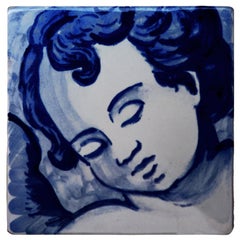
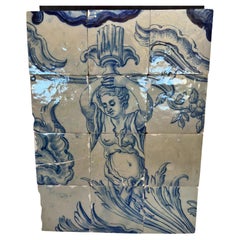
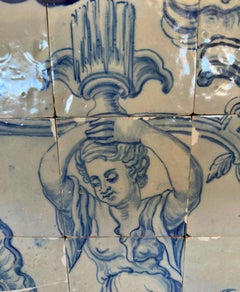
Hand Painted Baroque Cherub or Angel Portuguese Ceramic Tile

Hand Painted Baroque Cherub or Angel Portuguese Ceramic Tile

Located in Coimbra, PT

Gorgeous blue hand painted Baroque cherub or angel 18th century style Portuguese ceramic tile/azulejo The tile painted in cobalt blue over white in typ...

Category

Late 20th Century Portuguese Baroque Decorative Art

Materials

Delft, Faience, Terracotta

Albarrada Cherubs and Flowers Tile Mural - Hand Painted Portuguese Ceramic Tiles

Albarrada Cherubs and Flowers Tile Mural - Hand Painted Portuguese Ceramic Tiles

Located in Baldock, England

Beautiful tile mural with the "ALBARRADA CHERUBS AND FLOWERS" motif finely painted. Quantity: 48 tiles Tile mural size: 47.2"H X 35.4"W (120cm X 90cm) Tile size: 5.9"H X 5.9"W (15...

Category

21st Century and Contemporary Portuguese Modern Contemporary Art

Materials

Ceramic, Paint

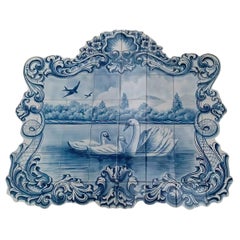
Portuguese Tile Mural "Swans" Hand Painted & Signed by Artist

Portuguese Tile Mural "Swans" Hand Painted & Signed by Artist

Located in Baldock, England

Beautiful tile mural with the "SWANS" motif finely painted. Tile mural size: 41.3"H X 47.2"W (105cm X 120cm) Tile size: 5.9"H X 5.9"W (15cm X 15cm) Origin: Portugal Production met...

Category

21st Century and Contemporary Portuguese Modern Contemporary Art

Materials

Ceramic, Paint

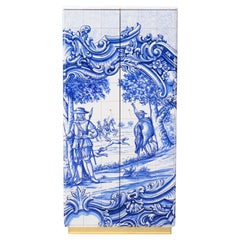
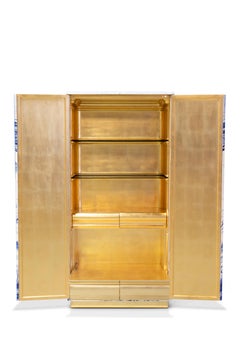
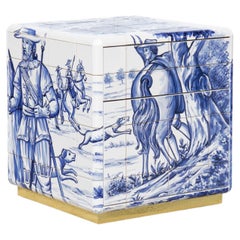
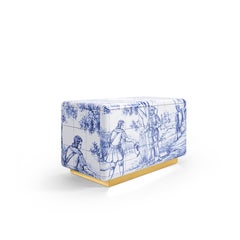
Heritage Cabinet - Hand-Painted Tiles - Gold Plated & Brass - Boca do Lobo

Heritage Cabinet - Hand-Painted Tiles - Gold Plated & Brass - Boca do Lobo

Located in Rio Tinto, PT

The Heritage Cabinet is a magnificent journey through Portuguese legacy. Covered in Azulejos, traditional hand painted tiles and one of the most representative art forms of Portugues...

Category

2010s Portuguese Cabinets

Materials

Brass, Gold Leaf

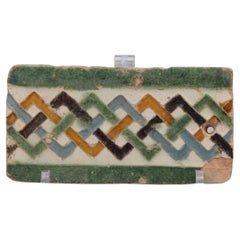
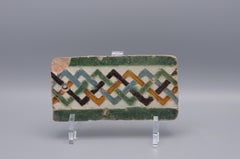
Spanish Moorish Mudejar Tile, Arista y Cuenca - Sevilla 16th century

Spanish Moorish Mudejar Tile, Arista y Cuenca - Sevilla 16th century

By Estadio of Spain

Located in DELFT, NL

Rare late 15th or early 16th century Mudejar tile of the so-called ‘Arista’ technique with intricate geometric decoration. Good condition; some chipping to the edges, some wear to ...

Category

Antique 16th Century Spanish Renaissance Ceramics

Materials

Earthenware, Clay, Maiolica

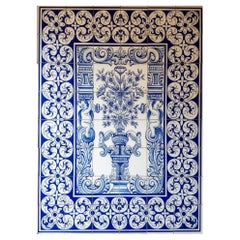
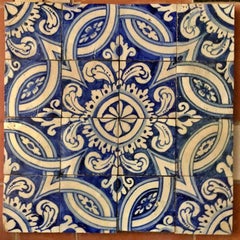
17th Century Portuguese Tile Panel

17th Century Portuguese Tile Panel

Located in Madrid, ES

Largest collection of Portuguese tiles in the world 17th Century Portuguese Tile Panel Restored 56cm x 56cm 14cm x 14cm tiles With certificate of authenticity and export issued by ...

Category

Antique 17th Century Portuguese Baroque Decorative Art

Materials

Porcelain

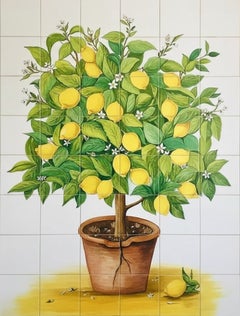
Outdoor Portuguese Tile Mural "Lemon Tree" Hand Painted and Signed by Artist

Outdoor Portuguese Tile Mural "Lemon Tree" Hand Painted and Signed by Artist

Located in Baldock, England

Beautiful tile mural with the "Lemon Tree" motif finely painted. Quantity: 48 tiles Tile mural size: 35.4"W X 47.2"H (90cm X 120cm) Tile size: 5.9"W X 5.9"H (15cm X 15cm) Origin...

Category

21st Century and Contemporary Portuguese Modern Contemporary Art

Materials

Ceramic, Paint

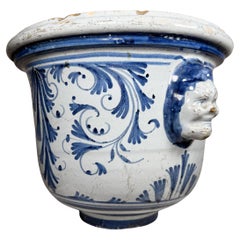
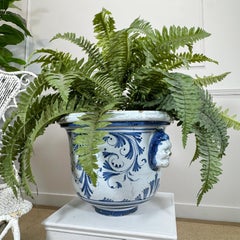
18th Century Blue and White French Cachepot probably Nevers

18th Century Blue and White French Cachepot probably Nevers

By Nevers

Located in Hastings, GB

A striking late 18th century pottery cachepot in blue and white, flanked to each side by a face, (on one side the features of the face are completely gone) wonderful shape and size o...

Category

Antique Mid-18th Century French Baroque Planters, Cachepots and Jardinières

Materials

Earthenware

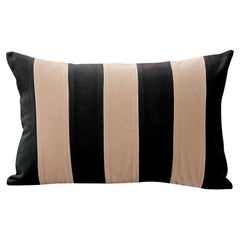
Ametista II Black and Beige Velvet Deluxe Handmade Decorative Pillow

Ametista II Black and Beige Velvet Deluxe Handmade Decorative Pillow

Located in Viseu, PT

Ametyst, the gem of calm and clarity, has long been admired for its soothing hues and its ability to inspire inner peace and criativity. Like so, our AMETISTA striped cushions are a ...

Category

2010s Modern Pillows and Throws

Materials

Cotton, Velvet

Large Portuguese Tile Mural "Romantic Motif" Hand Painted & Signed by Artist

Large Portuguese Tile Mural "Romantic Motif" Hand Painted & Signed by Artist

Located in Baldock, England

Beautiful cutout tile mural with the "ROMANTIC" motif finely painted. Tile mural size: 70.8"H X 59"W (180cm X 150cm) Tile size: 5.9"H X 5.9"W (15cm X 15cm) Origin: Portu...

Category

21st Century and Contemporary Portuguese Modern Contemporary Art

Materials

Ceramic, Paint

Large Portuguese Tile Mural "Portrait" Hand Painted & Signed by Artist

Large Portuguese Tile Mural "Portrait" Hand Painted & Signed by Artist

Located in Baldock, England

Beautiful tile mural with the "PORTRAIT" motif finely painted. Quantity: 117 tiles Tile mural size: 53.1"H X 76.7"W (135cm X 195cm) Tile size: 5.9"H X 5.9"W (15cm X 15cm) Origin: P...

Category

21st Century and Contemporary Portuguese Modern Contemporary Art

Materials

Ceramic, Paint

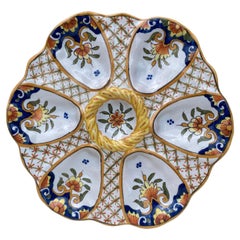
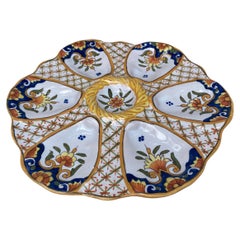
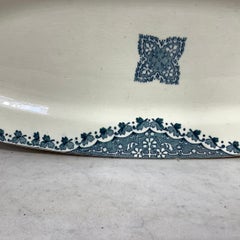
19th Century French Faience Oyster Plate Desvres

19th Century French Faience Oyster Plate Desvres

By Desvres

Located in Austin, TX

19th Century French Faience Oyster Plate. Decorated with flowers , marked Bordeaux.

Category

Antique 1890s French French Provincial Dinner Plates

Materials

Faience

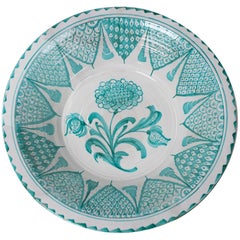
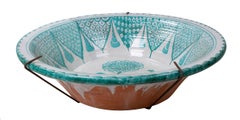
Large 19th Century Nazari-Style Spanish Ceramic Plate

Large 19th Century Nazari-Style Spanish Ceramic Plate

Located in Madrid, ES

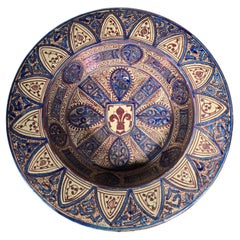
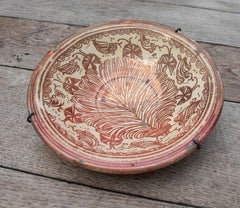
A magnificent ceramic plate measuring 47 cm in diameter and 10 cm in height, crafted in 19th-century Spain in the Nazari-Arabic style influenced by Al-Andalus culture. The piece show...

Category

Antique 1880s Serving Bowls

Materials

Ceramic

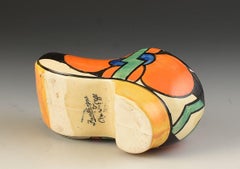
Clarice Cliff PICASSO FLOWER SABOT/CLOG C.1930

Clarice Cliff PICASSO FLOWER SABOT/CLOG C.1930

By Clarice Cliff

Located in Stourbridge, West Midlands

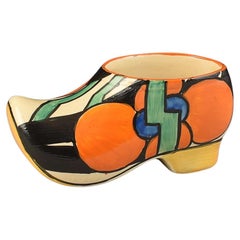
A really boldly decorated large size Sabot or Clog in Picasso flower. This will date to 1930 and shows a full version of the pattern in crisp, clean colours. Decorated beautifully to...

Category

Vintage 1930s British Art Deco Pottery

Materials

Pottery

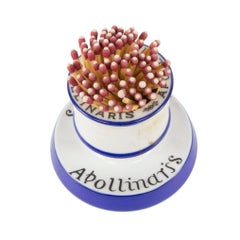
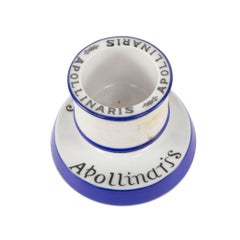
Antique French Ceramic Advertising Apollinaris Match Holder Striker

Antique French Ceramic Advertising Apollinaris Match Holder Striker

Located in Montreal, QC

Antique Hand crafted Ceramic Advertising Apollinaris Match Holder. They were necessary both to light a stove and a kerosene lamp. Decorative and Collectible object to display in a ba...

Category

Antique Late 19th Century Victorian Garniture

Materials

Ceramic

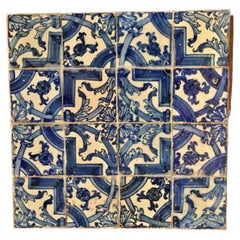
17th Century Portuguese Tile Panel

17th Century Portuguese Tile Panel

Located in Madrid, ES

Largest collection of Portuguese tiles in the world 17th Century Portuguese Tile Panel Restored 56cm x 56cm 14cm x 14cm tiles With certificate of authenticity and export issued by ...

Category

Antique 17th Century Portuguese Baroque Decorative Art

Materials

Porcelain

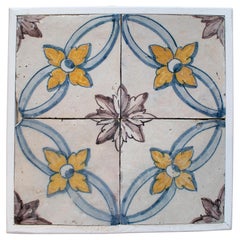
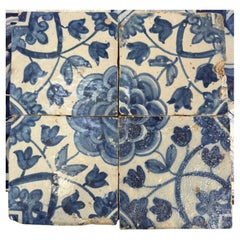
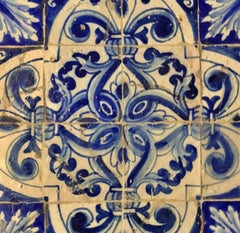
Beautiful 18th century Panel Loose Pieces Portuguese Tiles

Beautiful 18th century Panel Loose Pieces Portuguese Tiles

Located in Madrid, ES

Beautiful 18th century Panel Loose Pieces Portuguese Tiles 1.93 x 0.83m 84 tiles good conditions

Category

Antique 18th Century Portuguese Baroque Ceramics

Materials

Ceramic

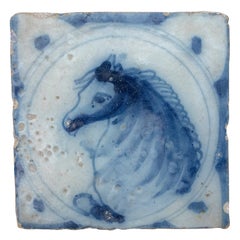
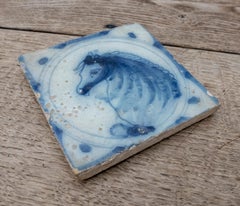
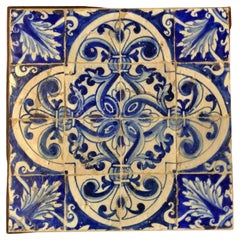
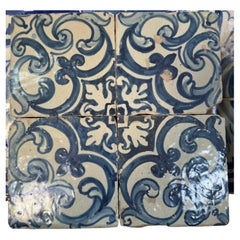
(4) Four Portuguese Tiles 17th Century (1630/1680) Very Rare Collectible

(4) Four Portuguese Tiles 17th Century (1630/1680) Very Rare Collectible

Located in Madrid, ES

(4) Four Portuguese Tiles 17th Century (1630/1680) Very Rare Collectible each tile 14cm x 14cm total: 28cm x 28cm Original, unrestored Ready to hang on the wall The old Portugue...

Category

Antique 17th Century Portuguese Baroque Ceramics

Materials

Ceramic

17th Century Portuguese Tile Panel

17th Century Portuguese Tile Panel

Located in Madrid, ES

Largest collection of Portuguese tiles in the world 17th Century Portuguese tile panel. Restored 56cm x 56cm 14cm x 14cm tiles 17th Century Shortly afterwards, these plain white ti...

Category

Antique 17th Century Portuguese Baroque Decorative Art

Materials

Porcelain

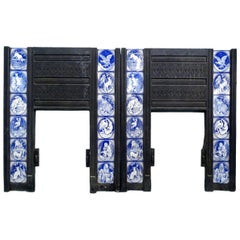
Pair of Aesthetic Movement Cast Fire Inserts with Mintons Aesop's Fables Tiles

Pair of Aesthetic Movement Cast Fire Inserts with Mintons Aesop's Fables Tiles

By Thomas Jeckyll, John Moyr Smith, Minton

Located in London, GB

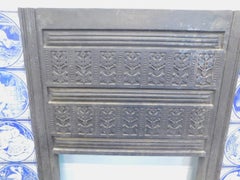
Thomas Jeckyll in the style of. A rare pair of Aesthetic Movement cast iron fire inserts, each with twelve Minton tiles, printed in blue and white with comical designs by John Moyr-Smith from Aesop's Fables. The designs Moyr Smith drew on these tiles are known as:- The Dog and his shadow. The Fox & the Goat. The Hare and the Tortoise. The Frogs Who Wished for a King. The Wolf and the Lamb...

Category

Antique 1880s English Aesthetic Movement Fireplaces and Mantels

Materials

Iron

18th Century Spanish Valencian Manises Lusterware Ceramic Plate

18th Century Spanish Valencian Manises Lusterware Ceramic Plate

Located in Marbella, ES

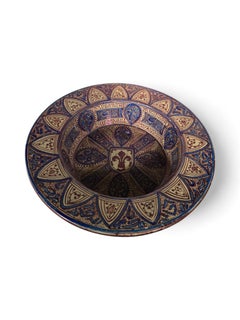
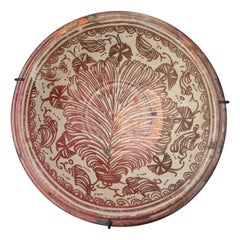
Glazed ceramics with lustre-painted decoration This is glazed ware, i.e. it is glazed with a white enamel bath, very pure in the best examples, which is f...

Category

Antique Mid-18th Century Spanish Ceramics

Materials

Ceramic

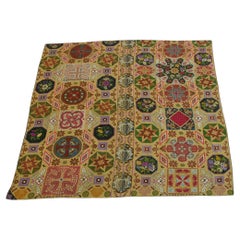
1920s Antique Needlepoint Rug - 6'7'' X 6'5''

1920s Antique Needlepoint Rug - 6'7'' X 6'5''

Located in Los Angeles, US

Needlepoint rugs were created using the traditional needlework weaving technique that is used to make everyday items from furniture to carpets and artwork. However, it has a fascinating history both as a hobby and as an industry. When many people think of carpets, they think of pile carpets or flat weave kilims, but needlepoint has also been used to create beautiful carpets. These carpets are durable and an important part of carpet history. Archaeologists and scholars consider the roots of needlepoint to have been around 1500 BC. They consider the first needlepoint to include the fine diagonal stitches that were used to sew tents together by the ancient Egyptians. The art eventually evolved into tapestry weaving. However, a tapestry weaving differs significantly from needlepoint in that it uses a loom and vertical warp. Tapestry weaving is closer to the weaving of kilims and pile rugs than canvas work. However, some still include tapestry weaving in the category of needlepoint because of the fine work that appeared during the late Renaissance. It can have a similar appearance to the untrained eye. Technically, tapestry weaving and needlepoint are not the same, and they do not use the same technique. The first actual needlepoint rugs and needle-points began to appear in the late Renaissance. Needlepoint is worked by creating stitches on a stiff canvas. The canvas is typically made from jute or linen and is quite durable. Pieces from the Renaissance were used to cover footstools, chairs, pillows, bed headboards, and other furnishings. They were also used as table coverings and wall coverings. You could also find them on many small items such as purses, shoes, and various adornments for clothing. During the Renaissance, the craft reached a high level of skill, and the designs became incredibly detailed and realistic. They mimicked many of the subjects and styles of famous paintings of the time. They created florals, still life designs, scenes, and geometric tiled pieces. Some of them mimicked the designs found in Persian Carpets. Needlepoint reached its peak popularity in the 19th century when it was considered a proper occupation for a lady. Needlepoint and embroidery held a similar place in societal status at the time. During this time, the work became finer, with some of the canvas reaching a high level of detail. The level of detail is determined by counting the number of mesh in an inch. During this time petit point by French needlewomen could have a mesh count as high as 45 mesh. This allowed women to create highly intricate designs with incredible levels of detail. It is possible to find many antique pieces of needlepoint besides rugs. Needlepoint rugs were popular in France and Spain, where the technique was adapted to create highly intricate designs that mimicked the designs in architecture and fashion. They were popular because they were durable, and it could be fashioned into a variety of items. The canvases themselves were durable, and the wool that they used was also strong, which means that many of the pieces were able to withstand daily use. We have many artifacts that have survived from this time period. Needlepoint rugs are important collectibles because they are different from the pile rugs and kilims that are typically found on the market. Needlepoint carpets are special because they take many hours to create, especially larger works. Needlepoint pieces of any type became popular throughout Europe during the 19th century. It is still a popular hobby today, but perhaps one of the most interesting stories is that of the Portuguese needlewomen of Arraiolos. The story of these women and their beautiful carpets begins in 1492. Needlepoint was a popular occupation in Spain, which had a large population of Moors and Jews. They were an integral part of Spanish culture. However, in 1492, Queen Isabella of Spain issued a proclamation that gave these ethnic groups the order to pack their bags and board ships headed...

Category

Vintage 1920s Other Russian and Scandinavian Rugs
Materials

Wool

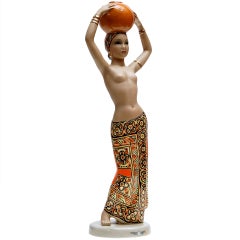
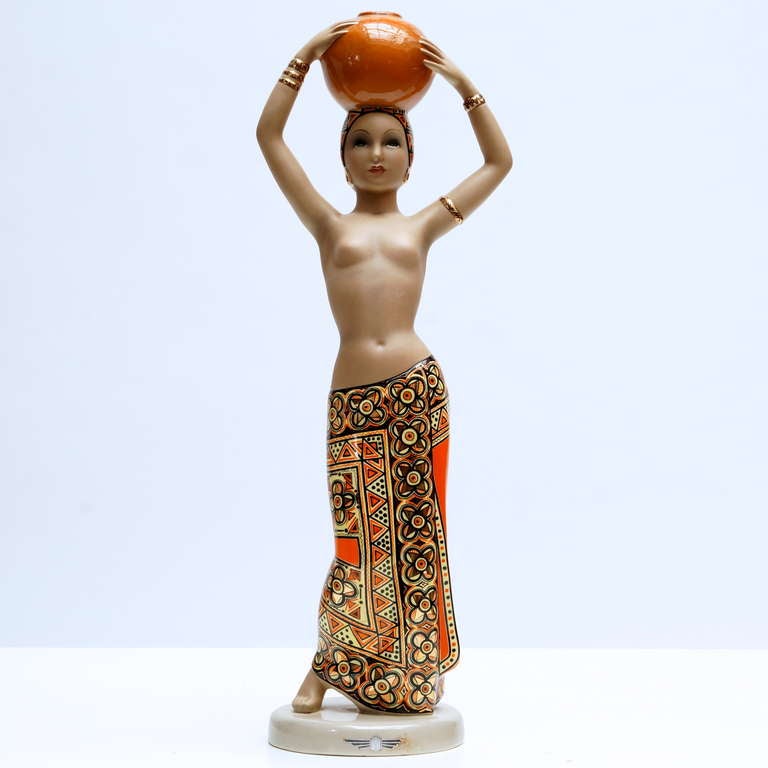
Large Art Deco Statue by Cia Manna, Torino Italy

Large Art Deco Statue by Cia Manna, Torino Italy

By C.I.A. Manna

Located in Antwerp, BE

Very stunning large Art Deco Statue by Cia Manna, Torino, Italy. C.I.A. Manna Torino Lenci Nel Palmeto ceramic sculpture. Semi nude form of young woman. Work...

Category

Mid-20th Century Italian Mid-Century Modern Figurative Sculptures

Materials

Ceramic

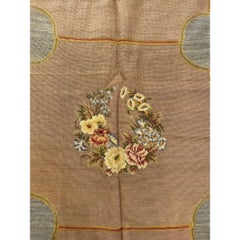
Antique Collectible Woolen Needlework

Antique Collectible Woolen Needlework

Located in Los Angeles, US

Needlepoint rugs were created using the traditional needlework weaving technique that is used to make everyday items from furniture to carpets and artwork. However, it has a fascinating history both as a hobby and as an industry. When many people think of carpets, they think of pile carpets or flat weave kilims, but needlepoint has also been used to create beautiful carpets. These carpets are durable and an important part of carpet history. Archaeologists and scholars consider the roots of needlepoint to have been around 1500 BC. They consider the first needlepoint to include the fine diagonal stitches that were used to sew tents together by the ancient Egyptians. The art eventually evolved into tapestry weaving. However, a tapestry weaving differs significantly from needlepoint in that it uses a loom and vertical warp. Tapestry weaving is closer to the weaving of kilims and pile rugs than canvas work. However, some still include tapestry weaving in the category of needlepoint because of the fine work that appeared during the late Renaissance. It can have a similar appearance to the untrained eye. Technically, tapestry weaving and needlepoint are not the same, and they do not use the same technique. The first actual needlepoint rugs and needle-points began to appear in the late Renaissance. Needlepoint is worked by creating stitches on a stiff canvas. The canvas is typically made from jute or linen and is quite durable. Pieces from the Renaissance were used to cover footstools, chairs, pillows, bed headboards, and other furnishings. They were also used as table coverings and wall coverings. You could also find them on many small items such as purses, shoes, and various adornments for clothing. During the Renaissance, the craft reached a high level of skill, and the designs became incredibly detailed and realistic. They mimicked many of the subjects and styles of famous paintings of the time. They created florals, still life designs, scenes, and geometric tiled pieces. Some of them mimicked the designs found in Persian Carpets. Needlepoint reached its peak popularity in the 19th century when it was considered a proper occupation for a lady. Needlepoint and embroidery held a similar place in societal status at the time. During this time, the work became finer, with some of the canvas reaching a high level of detail. The level of detail is determined by counting the number of mesh in an inch. During this time petit point by French needlewomen could have a mesh count as high as 45 mesh. This allowed women to create highly intricate designs with incredible levels of detail. It is possible to find many antique pieces of needlepoint besides rugs. Needlepoint rugs were popular in France and Spain, where the technique was adapted to create highly intricate designs that mimicked the designs in architecture and fashion. They were popular because they were durable, and it could be fashioned into a variety of items. The canvases themselves were durable, and the wool that they used was also strong, which means that many of the pieces were able to withstand daily use. We have many artifacts that have survived from this time period. Needlepoint rugs are important collectibles because they are different from the pile rugs and kilims that are typically found on the market. Needlepoint carpets are special because they take many hours to create, especially larger works. Needlepoint pieces of any type became popular throughout Europe during the 19th century. It is still a popular hobby today, but perhaps one of the most interesting stories is that of the Portuguese needlewomen of Arraiolos. The story of these women and their beautiful carpets begins in 1492. Needlepoint was a popular occupation in Spain, which had a large population of Moors and Jews. They were an integral part of Spanish culture. However, in 1492, Queen Isabella of Spain issued a proclamation that gave these ethnic groups the order to pack their bags and board ships headed...

Category

Antique Early 1900s Other Russian and Scandinavian Rugs
Materials

Wool

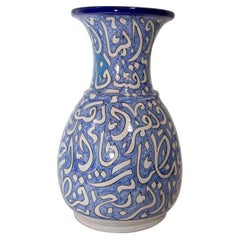
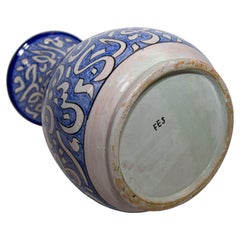
Moroccan Glazed Ceramic Vase with Arabic Blue Writing from Fez Morocco

Moroccan Glazed Ceramic Vase with Arabic Blue Writing from Fez Morocco

Located in Moreno Valley, CA

Large Moroccan glazed ceramic vase from Fez. Moroccan Glazed Ceramic Vase with Arabic Blue Writing from Fez Morocco. Moorish Granada style ceramic handcrafted and hand painted with A...

Category

Mid-20th Century Moroccan Islamic Vases

Materials

Ceramic

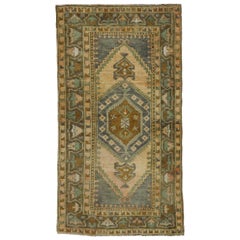
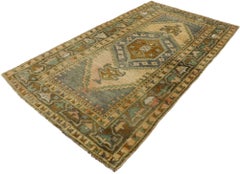
The Gilded Earth: A Vintage Turkish Oushak Masterpiece of Anatolian Grace

The Gilded Earth: A Vintage Turkish Oushak Masterpiece of Anatolian Grace

Located in Dallas, TX

53184 Vintage Turkish Oushak Rug, 03'05 x 06'03. Infused with timeless beauty and storied artistry, this hand-knotted wool vintage Turkish Oushak rug embodies the quiet grandeur of A...

Category

Mid-20th Century Turkish Oushak Turkish Rugs
Materials

Wool

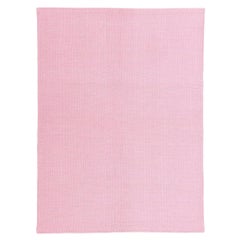
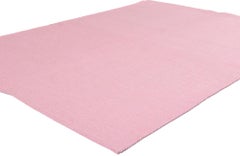
New Swedish Inspired Pink Kilim Rug with Scandinavian Modern Style

New Swedish Inspired Pink Kilim Rug with Scandinavian Modern Style

Located in Dallas, TX

30688 Scandinavian Modern Swedish Inspired Pink Kilim Rug, 05'00 x 06'10. Swedish-style kilim rugs, meticulously crafted in India, seamlessly marry the ...

Category

21st Century and Contemporary Indian Scandinavian Modern Russian and Sca...

Materials

Wool

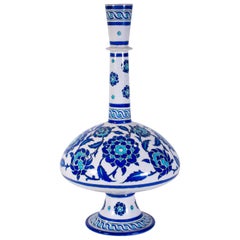
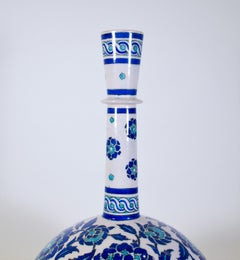
Large Theodore Deck Earthenware Bottle Form Vase in the Islamic/Iznik Taste

Large Theodore Deck Earthenware Bottle Form Vase in the Islamic/Iznik Taste

By Theodore Deck

Located in New York, NY

A large and impressive Theodore Deck Earthenware bottle form vase in the Islamic/Iznik Taste, Impressed "TD" 1870 on the bottom. The narrow circular neck is decorated with dark blue,...

Category

Antique 1870s French Islamic Vases

Materials

Porcelain

(4) Four Portuguese Tiles 17th Century (1630/1680) Very Rare Collectible

(4) Four Portuguese Tiles 17th Century (1630/1680) Very Rare Collectible

Located in Madrid, ES

(4) Four Portuguese Tiles 17th Century (1630/1680) Very Rare Collectible each tile 14cm x 14cm total: 28cm x 28cm Original, unrestored Ready to hang on the wall The old Portugue...

Category

Antique 17th Century Portuguese Baroque Ceramics

Materials

Ceramic

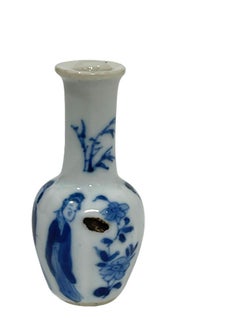
Fine Japanese Ceramic Satsuma Vase by Kinkozan

Fine Japanese Ceramic Satsuma Vase by Kinkozan

By Kinkozan

Located in Atlanta, GA

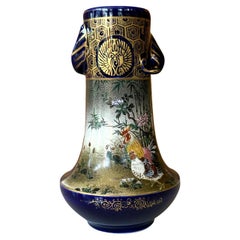
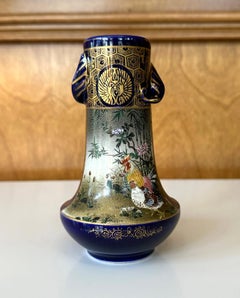
A miniature Japanese ceramic vase from the end of Meiji period circa 1880s- 1910s by Kinkozan (1645-1927). One of the largest studio manufacturers of the export ceramics at the time ...

Category

Early 20th Century Japanese Meiji Ceramics

Materials

Ceramic

Krishna's Rasa Leela, Chitrasala, Bundi, 2017

Krishna's Rasa Leela, Chitrasala, Bundi, 2017

By Karen Knorr

Located in New York, NY

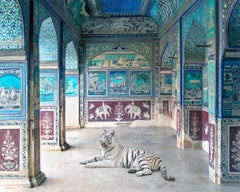
Listing includes framing with UV Plexi, free shipping to the continental US, and a 14-day return policy. This is also available for local pick up at our New York City location. Kr...

Category

2010s Color Photography

Materials

Photographic Paper, Color, Pigment, Archival Pigment, Digital Pigment

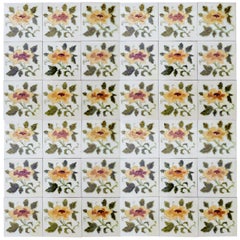
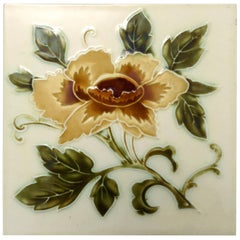
1 of the 86 Authentic Glazed Art Nouveau Relief Tiles Rose, Belga, circa 1930s

1 of the 86 Authentic Glazed Art Nouveau Relief Tiles Rose, Belga, circa 1930s

Located in Rijssen, NL

This is an amazing set of antique Art Nouveau handmade tiles with an image of yellow rose in relief on a soft yellow background. These tiles would be charming displayed on easels, fr...

Category

Vintage 1930s Belgian Art Nouveau Architectural Elements

Materials

Ceramic

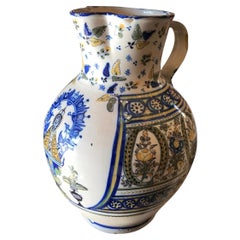
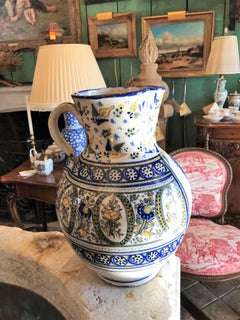
18th C Spanish Talavera De La Reina Pitcher Jar Bucaro Botijo Centerpiece Rustic

18th C Spanish Talavera De La Reina Pitcher Jar Bucaro Botijo Centerpiece Rustic

Located in West Hollywood, CA

18th C Spanish Talavera De La Reina Pitcher Jar Bucaro Botijo Centerpiece Rustic . A large late 18th-early 19th century glazed ceramic pitcher jar made in Talavera de la Reina , Spai...

Category

Antique Late 18th Century Spanish Pitchers

Materials

Ceramic, Faience, Paint

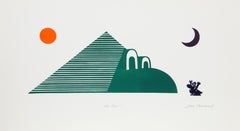
Who Caire, Pop Art Intaglio Etching by Jean Sariano

Who Caire, Pop Art Intaglio Etching by Jean Sariano

By Jean Sariano

Located in Long Island City, NY

Who Caire Jean Sariano, Algerian/American (1943) Date: 1979 Intaglio Etching, signed and numbered in pencil Edition of 300 Size: 16 x 29 in. (40.64 x 73.66 cm)

Category

1970s Animal Prints

Materials

Etching, Intaglio

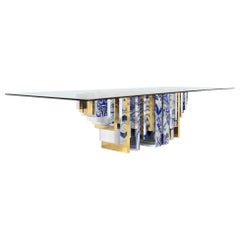
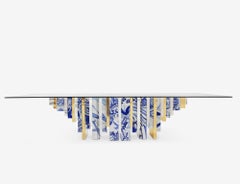
Heritage Dining Table - Hand-Painted Tiles - Glass & Brass - Boca do Lobo

Heritage Dining Table - Hand-Painted Tiles - Glass & Brass - Boca do Lobo

Located in Rio Tinto, PT

The Heritage Dining Table, much like its sibling Heritage Sideboard and Cabinet, is a highly sophisticated piece inspired by Portuguese history through the use of traditional hand pa...

Category

2010s Portuguese Dining Room Tables

Materials

Metal, Brass, Gold Leaf

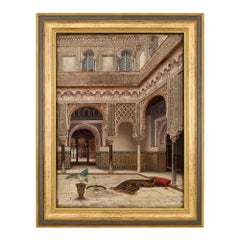
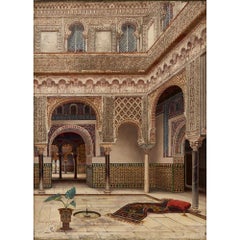
Orientalist Oil Painting of the Alcázar of Seville by Enrique Roldán

Orientalist Oil Painting of the Alcázar of Seville by Enrique Roldán

Located in London, GB

Orientalist Oil Painting of the Alcázar of Seville by Enrique Roldán Spanish, late 19th century Canvas: Height 44cm, width 32cm, depth 2cm Frame: Height 55cm, width 43cm, depth 3cm ...

Category

Late 19th Century Other Art Style Landscape Paintings
Materials
Oil

(12) Four Portuguese Tiles 17th Century (1630/1680) Very Rare Collectible

(12) Four Portuguese Tiles 17th Century (1630/1680) Very Rare Collectible

Located in Madrid, ES

(4) Four Portuguese Tiles 17th Century (1630/1680) Very Rare Collectible each tile 14cm x 14cm total: 28cm x 28cm Original, unrestored Ready to hang on the wall The old Portugue...

Category

Antique 17th Century Portuguese Baroque Ceramics

Materials

Ceramic

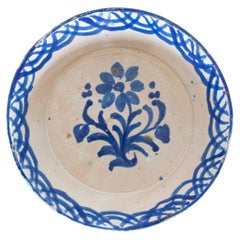
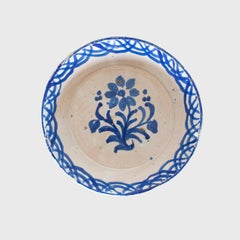
19th c. Spanish Blue Fajalauza Lebrillo Bowl

19th c. Spanish Blue Fajalauza Lebrillo Bowl

Located in Los Angeles, CA

Incredible Spanish 19th century Fajalauza Lebrillo bowl in blue and white from Granada. Beautiful handcrafted original terracotta bowl with mil...

Category

Antique 19th Century Spanish Ceramics

Materials

Pottery

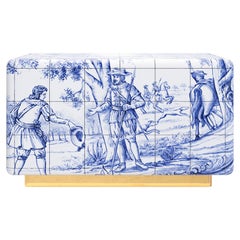
Heritage Small Sideboard  - Hand-Painted Tiles - Gold & Brass - Boca do Lobo

Heritage Small Sideboard - Hand-Painted Tiles - Gold & Brass - Boca do Lobo

Located in Rio Tinto, PT

The Heritage sideboard is a magnificent journey through Portuguese legacy. Covered in Azulejos, traditional hand-painted tiles and one of the most representative art forms of Portugu...

Category

2010s Portuguese Sideboards

Materials

Gold Leaf