124 results for "kakiemon"

to
11
81
34
74
49
27
25
17
12
10
6
6
6
6
5
4
4
3
2
2
1
1
1
1
1
1
1
1
6
4
4
4
3
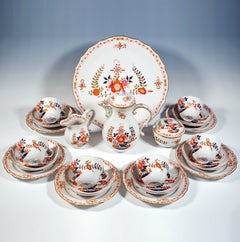
Meissen Coffee Set For 6 People, Tischchen Or Small Table Pattern, 20th Century

Meissen Coffee Set For 6 People, Tischchen Or Small Table Pattern, 20th Century

By Meissen Porcelain

Located in Vienna, AT

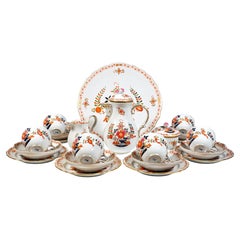
Meissen coffee and tea service, consisting of 22 parts: 1 coffee pot, 1 milk jug, 1 lidded sugar bowl, six cups, six saucers, six dessert plates, 1 large round serving platter. Shap...

Category

20th Century German Baroque Porcelain

Materials

Porcelain

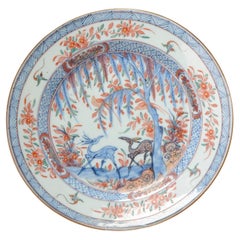
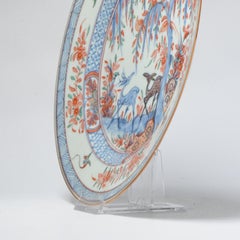
Antique Qianlong Bont Porcelain Deer Bird Chinese Plates, 18th Century

Antique Qianlong Bont Porcelain Deer Bird Chinese Plates, 18th Century

Located in Amsterdam, Noord Holland

A very nicely made piece of 18th century Qianlong Amsterdam Bont porcelain decorated with deer, birds, flowers and trees. Underglaze blue and overglaze other enamels. The small birds...

Category

Antique 18th Century Chinese Decorative Bowls

Materials

Porcelain

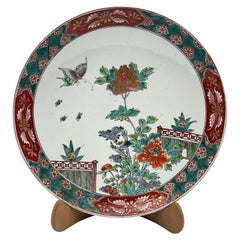
Japanese Meiji Period Imari Porcelain Charger with Flowers and Bees, ca. 1900

Japanese Meiji Period Imari Porcelain Charger with Flowers and Bees, ca. 1900

Located in New York, NY

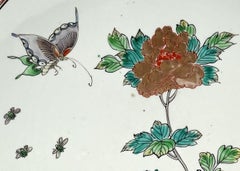
Japanese Meiji Period Imari Porcelain Charger with Flower and Bees, ca. 1900 DIMENSIONS: Diameter: 16 inches DETAILS Meiji Period: 1868-1912 ABOUT IMARI PORCELAIN Japanese Imari porcelain refers to a type of porcelain ware that was produced in the town of Arita, in Saga Prefecture on Japan’s Kyushu island, and exported primarily from the nearby port of Imari—hence the name. Origins & History: • Early 17th century (Edo period): Porcelain production began in Arita after Korean potters, brought to Japan during the Japanese invasions of Korea (1592–1598), discovered kaolin (porcelain clay) in the area. • Mid-17th century to 18th century: Imari ware became a major export to Europe via the Dutch East India Company. • Declined in export after 1750s as Chinese porcelain re-entered European markets. Characteristics: • Base: Made from fine white porcelain. • Decoration: Richly colored and ornate, featuring: o Underglaze blue painting (Arita blue-and-white style). o Overglaze enamels, especially in red, gold, green, and blue (the classic “Kinrande” Imari style). • Designs: Often feature floral motifs, birds, mythical creatures, and geometric patterns in bold symmetrical compositions. Types of Imari: 1. Early Imari / Shoki...

Category

Antique Late 19th Century Japanese Japonisme Porcelain
Materials

Porcelain

A pair of Edo period ‘Scheveningen’ design Arita export dishes

A pair of Edo period ‘Scheveningen’ design Arita export dishes

Located in Lymington, Hampshire

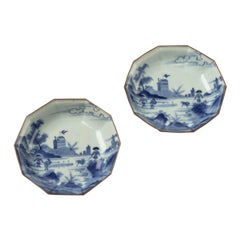
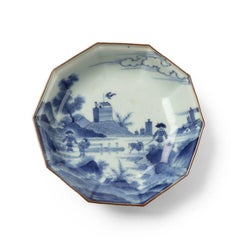
Each of these decagonal saucer-dishes is painted in underglaze-blue with a landscape of two Dutchmen and a boy warmly wrapped up and wearing large hats, two appear to be skating and ...

Category

Antique Early 1700s Japanese Edo Ceramics

Materials

Ceramic