677 results for "jeep"

to
16
461
214
29
88
426
181
70
420
196
25
6
30
Overall Height
to
Overall Width
to
654
5
3
2
1
1
1
282
147
146
98
97
93
73
62
55
55
52
46
30
29
28
26
26
24
22
19
18
659
5
1
4
2
1
614
22
4
1
1
614
608
596
572
502
Yermo's Hummer, 2018

Yermo's Hummer, 2018

By Priscilla Rattazzi

Located in New York, NY

Signed by the photographer. A portion of the proceeds from the exhibition sales will be donated to the Grand Staircase Escalante Partners, a non-profit 501(c)(3) organization founde...

Category

2010s Black and White Photography

Materials

Archival Pigment
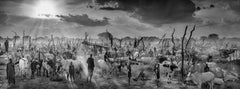
The Walk of Life
The Walk of Life

The Walk of Life

By David Yarrow

Located in Chicago, IL

Amboseli, Kenya 2018 Archival Pigment Print on 315gsm Hahnemühle Photo Rag Baryta Paper Each is signed, dated and numbered on the front. Edition Size: 12 Available sizes: 48 x ...
Category

21st Century and Contemporary Contemporary Black and White Photography

Materials

Archival Pigment

And The Party Never Ends

And The Party Never Ends

By David Yarrow

Located in Chicago, IL

And The Party Never Ends Monument Valley, Utah, USA - 2022 Archival Pigment Print on 315gsm Hahnemühle Photo Rag Baryta Paper Each is signed, dated and numbered on the front. Edition Size: 12 Available sizes: 48 x 64 inches 67 x 91 inches All prints are on 315gsm Hahnemühle photo rag Baryta paper and varnished after processing to give both endurance and sheen. Each is signed, dated and numbered on the front. Price includes David Yarrow's custom black ash frame, white archival matting and protective UV acrylic. For unframed, $1,500 will be deducted from the price. David Yarrow has built an unrivaled reputation for capturing the beauty of the planet’s remote landscapes, cultures and endangered animals. Born in Glasgow, Scotland in 1966, he is now an internationally acclaimed fine art photographer and Europe’s best selling wildlife photographer. "Such is the grandeur and scale of Monument Valley that at almost every corner there is something of a sensory overload. The amphitheatre, for all its majesty, also has a sense of incompleteness, as if God the creator got a little bored of building the city and moved on to other projects. The result is an architectural canvas unlike any other in the world. I knew one angle where I could compress distance and fill one of the gaps in this city of monoliths with foreground detail. We had an old VW camper van...

Category

21st Century and Contemporary Contemporary Color Photography

Materials

Archival Pigment

Parallel Lines
Parallel Lines

Parallel Lines

By David Yarrow

Located in Chicago, IL

Lewa, Kenya 2018 Archival Pigment Print on 315gsm Hahnemühle Photo Rag Baryta Paper Each is signed, dated and numbered on the front. Edition Size: 12 Available sizes: 29 x 80 in...

Category

21st Century and Contemporary Contemporary Black and White Photography

Materials

Archival Pigment

Hell's Kitchen, Yukon, Canada by David Yarrow - Contemporary Photography

Hell's Kitchen, Yukon, Canada by David Yarrow - Contemporary Photography

By David Yarrow

Located in Chicago, IL

Hell's Kitchen Yukon, Canada - 2022 Archival Pigment Print on 315gsm Hahnemühle Photo Rag Baryta Paper Edition Size: 12 Available sizes: Standard Image Size: 37" x 58" Framed S...

Category

21st Century and Contemporary Contemporary Color Photography

Materials

Archival Pigment

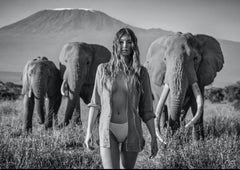
Nobody's Trophy, Amboseli, Kenya by David Yarrow - Contemporary Photography

Nobody's Trophy, Amboseli, Kenya by David Yarrow - Contemporary Photography

By David Yarrow

Located in Chicago, IL

Nobody's Trophy Amboseli, Kenya - 2020 Available sizes: Standard: 48 x 64 inches Large: 67 x 90 inches All prints are on 315gsm Hahnemühle photo rag Baryta paper and varnished after processing to give both endurance and sheen. Each is signed, dated and numbered on the front. Price includes David Yarrow's custom black ash frame, white archival matting and protective UV acrylic. For unframed, $1,500 will be deducted from the price. Artist Statement: "David Yarrow has built an unrivaled reputation for capturing the beauty of the planet’s remote landscapes, cultures and endangered animals. Born in Glasgow, Scotland in 1966, he is now an internationally acclaimed fine art photographer and Europe’s best selling wildlife photographer. "I asked the team in London to find me all post 1945 photographs of elephants together with beautiful women. We knew of course where to start - the celebrated 1955 Richard Avedon shot of Dovima taken in Paris with circus elephants, but then we also found Kate Moss, Christy Turlington with Indian elephants and Doutzen with an African elephant for a Vogue editorial story. Gregory...

Category

21st Century and Contemporary Contemporary Black and White Photography

Materials

Archival Pigment

Palm Beach Girls (Colour)

Palm Beach Girls (Colour)

By David Yarrow

Located in Chicago, IL

Palm Beach Girls (Colour) Palm Beach, Florida (2025) Edition of 12 Standard Image size: 48" x 37" Framed size: 63" x 52" Large Image size: 73" x 56" Framed size: 88" x 71" David ...

Category

21st Century and Contemporary Photography

Materials

Archival Pigment

Follow the Leader by David Yarrow - Wildlife Photography - Ready to Ship

Follow the Leader by David Yarrow - Wildlife Photography - Ready to Ship

By David Yarrow

Located in Chicago, IL

Follow the Leader Serengeti, Tanzania - 2020 Available Sizes: Standard Edition of 12 Image Size: 37" x 67" Framed Size (with a 3" mat): 48" x 78" Framed Size (with a 5" mat): 52" x...

Category

21st Century and Contemporary Contemporary Black and White Photography

Materials

Archival Pigment

White Lines, Kenya by David Yarrow - Contemporary Wildlife Photography

White Lines, Kenya by David Yarrow - Contemporary Wildlife Photography

By David Yarrow

Located in Chicago, IL

Sizes: Large - Edition of 12 Unframed 56” x 80” Framed 71” x 95” Standard - Edition of 12 Unframed 37” x 53” Framed 52” x 68” Artist Statement: "This photograph - taken a few day...

Category

21st Century and Contemporary Contemporary Black and White Photography

Materials

Archival Pigment

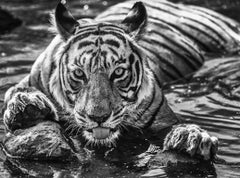
The Queen of Ranthambore

The Queen of Ranthambore

By David Yarrow

Located in Chicago, IL

India, 2018 Archival Pigment Print on 315gsm Hahnemühle Photo Rag Baryta Paper Each is signed, dated and numbered on the front. Edition Size: 12 Available sizes: 48 x 61 inches ...

Category

21st Century and Contemporary Contemporary Black and White Photography

Materials

Archival Pigment

Heaven Can Wait II
Heaven Can Wait II

Heaven Can Wait II

By David Yarrow

Located in Chicago, IL

Archival Pigment Print on 315gsm Hahnemühle Photo Rag Baryta Paper Each is signed, dated and numbered on the front. Edition size: 12 Available sizes: 48 x 76 inches 67 x 109 inches All prints are on 315gsm Hahnemühle photo rag Baryta paper and varnished after processing to give both endurance and sheen. Each is signed, dated and numbered on the front. Price includes David Yarrow's custom black ash frame, white archival matting and protective UV acrylic. For unframed, $1,500 will be deducted from the price. David Yarrow has built an unrivaled reputation for capturing the beauty of the planet’s remote landscapes, cultures and endangered animals. Born in Glasgow, Scotland in 1966, he is an internationally acclaimed fine art photographer and Europe’s best selling wildlife photographer. "This is a hard-earned and timeless photograph – It has soul and a sense of place to it and I am proud to be responsible for its creation. There are many quiet days or weeks in the field, where there is nothing magical to capture and no transcending images with which to return. In my own crusade, this single image makes up for a great many of such days. ‘Heaven Can Wait...

Category

21st Century and Contemporary Contemporary Black and White Photography

Materials

Archival Pigment

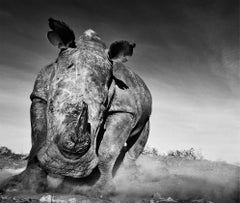
Charge, Kenya by David Yarrow - Contemporary Wildlife Photography - Rhino

Charge, Kenya by David Yarrow - Contemporary Wildlife Photography - Rhino

By David Yarrow

Located in Chicago, IL

Charge Kenya, 2013 Edition of 20 Large Unframed 56" x 66" Framed 71" x 82" Standard Unframed 37" x 44" Framed 52" x 59" Artist Statement: "In my time at the Lewa Conservancy in...

Category

21st Century and Contemporary Contemporary Black and White Photography

Materials

Archival Pigment

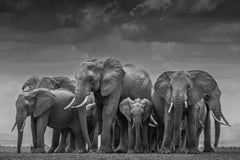
Circle Of Life II by David Yarrow - Elephants - Contemporary Wildlife Photograph

Circle Of Life II by David Yarrow - Elephants - Contemporary Wildlife Photograph

By David Yarrow

Located in Chicago, IL

Archival Pigment Print on 315gsm Hahnemühle Photo Rag Baryta Paper Edition Size: 12 Framed Size: 67 x 94 inches Price includes David Yarrow's custom black ash frame, white archiv...

Category

21st Century and Contemporary Contemporary Black and White Photography

Materials

Archival Pigment

New Testament (Monochrome)

New Testament (Monochrome)

By David Yarrow

Located in Chicago, IL

NEW TESTAMENT South Sudan, 2022 Archival Pigment Print on 315gsm Hahnemühle Photo Rag Baryta Paper Each is signed, dated and numbered on the front. Edition Size: 12 Available sizes: 37 x 80 inches 49 x 114 inches "All prints are on 315gsm Hahnemühle photo rag Baryta paper and varnished after processing to give both endurance and sheen. Each is signed, dated and numbered on the front. Price includes David Yarrow's custom black ash frame, white archival matting and protective UV acrylic. For unframed, $1,500 will be deducted from the price. David Yarrow has built an unrivaled reputation for capturing the beauty of the planet’s remote landscapes, cultures and endangered animals. Born in Glasgow, Scotland in 1966, he is now an internationally acclaimed fine art photographer and Europe’s best selling wildlife photographer. In retrospect, my photograph Mankind, taken in South Sudan in 2014, was a stepping stone in my career. It was authentic, it had a biblical scale to it and could be looked at for a long time. Haunting and hellish one minute and serene and ethereal the next. Mankind elicited an emotional reaction despite how foreign the subject matter was. The editions of the picture sold out quickly and the hammer price at Sotheby’s of $78,000 was then a record for my work. Since 2014, awareness of my art has grown materially, and I am sure this powerful image has played a role. It was taken at a dangerous time in South Sudan’s short history and recently, during 2019 and 2020, the violence got worse. It simply was not safe for foreigners as many areas were loosely governed and guns were round every corner. It was sketchy at best and downright toxic at worst. But since 2021, some calm has returned and tribal skirmishes in the cattle camps are now less common. I thought it was time to return. After all, I’d had eight years to think about what I could do differently. Cameras have certainly improved, and I have a further eight years of experience under my belt. I also had maintained contacts in South Sudan, in particular with those in charge of the large cattle camps to the south of Rumbek. This is no place to go without inside help, security protection and best in class field logistics. There must be a plan and there must be attention to detail. But I knew it would be a mistake to go back and try to copy what I did eight years ago; it would hint at a lack of creative progression and courage. I needed to do better and offer a new story, to go backwards would be damaging at many levels. I had been preoccupied by that fear for some time and I knew that I had to be bold. The Lakes areas of South Sudan are just about on a map, but way off the grid for most. It is the most basic of existences and the only material source of employment is the cattle camps. In 2014, I filmed near the town of Yirol in a camp on a Nile tributary, but this time I wanted to travel further into the interior and find an even bigger camp on the way to Rumbek. My premise was to play on scale and my leaning was always to go bigger not smaller. I am always greedy in the field. The Dinka tribe are the world’s tallest people, their cattle camps are the biggest of their kind and the cattle horns are Jurassic. This is a place to play on the word “big”. My picture, Mankind, had novelty factor because it delivered such an emphatic sense of scale and place. Whilst I was nervous of treading old ground, familiarity is a friend not a foe, that’s why we often use the same talent in our storytelling. I needed to go one step further than I had in 2014, without losing any small individual stories within the image. My sense was that there needed to be even more of a visual overload in the frame and I found it difficult in my preconceptions to escape from the word “panoramic”. The local chiefs and the head of police knew where to take me and my security detail knew how to keep me safe. I would go into largely unchartered land where the Dinka had established a camp of over 10,000 cattle. I have often thought that a photographer in the last eight years would go and try and take their own version of Mankind, but I haven’t seen any. Every week I see monochrome photographs of the big elephants...

Category

21st Century and Contemporary Contemporary Black and White Photography

Materials

Archival Pigment

New Testament (B&W)
New Testament (B&W)

New Testament (B&W)

By David Yarrow

Located in Chicago, IL

NEW TESTAMENT South Sudan, 2022 Archival Pigment Print on 315gsm Hahnemühle Photo Rag Baryta Paper Each is signed, dated and numbered on the front. Edition Size: 12 Available sizes: 37 x 80 inches 49 x 114 inches "All prints are on 315gsm Hahnemühle photo rag Baryta paper and varnished after processing to give both endurance and sheen. Each is signed, dated and numbered on the front. Price includes David Yarrow's custom black ash frame, white archival matting and protective UV acrylic. For unframed, $1,500 will be deducted from the price. David Yarrow has built an unrivaled reputation for capturing the beauty of the planet’s remote landscapes, cultures and endangered animals. Born in Glasgow, Scotland in 1966, he is now an internationally acclaimed fine art photographer and Europe’s best selling wildlife photographer. "In retrospect, my photograph Mankind, taken in South Sudan in 2014, was a stepping stone in my career. It was authentic, it had a biblical scale to it and could be looked at for a long time. Haunting and hellish one minute and serene and ethereal the next. Mankind elicited an emotional reaction despite how foreign the subject matter was. The editions of the picture sold out quickly and the hammer price at Sotheby’s of $78,000 was then a record for my work. Since 2014, awareness of my art has grown materially, and I am sure this powerful image has played a role. It was taken at a dangerous time in South Sudan’s short history and recently, during 2019 and 2020, the violence got worse. It simply was not safe for foreigners as many areas were loosely governed and guns were round every corner. It was sketchy at best and downright toxic at worst. But since 2021, some calm has returned and tribal skirmishes in the cattle camps are now less common. I thought it was time to return. After all, I’d had eight years to think about what I could do differently. Cameras have certainly improved, and I have a further eight years of experience under my belt. I also had maintained contacts in South Sudan, in particular with those in charge of the large cattle camps to the south of Rumbek. This is no place to go without inside help, security protection and best in class field logistics. There must be a plan and there must be attention to detail. But I knew it would be a mistake to go back and try to copy what I did eight years ago; it would hint at a lack of creative progression and courage. I needed to do better and offer a new story, to go backwards would be damaging at many levels. I had been preoccupied by that fear for some time and I knew that I had to be bold. The Lakes areas of South Sudan are just about on a map, but way off the grid for most. It is the most basic of existences and the only material source of employment is the cattle camps. In 2014, I filmed near the town of Yirol in a camp on a Nile tributary, but this time I wanted to travel further into the interior and find an even bigger camp on the way to Rumbek. My premise was to play on scale and my leaning was always to go bigger not smaller. I am always greedy in the field. The Dinka tribe are the world’s tallest people, their cattle camps are the biggest of their kind and the cattle horns are Jurassic. This is a place to play on the word “big”. My picture, Mankind, had novelty factor because it delivered such an emphatic sense of scale and place. Whilst I was nervous of treading old ground, familiarity is a friend not a foe, that’s why we often use the same talent in our storytelling. I needed to go one step further than I had in 2014, without losing any small individual stories within the image. My sense was that there needed to be even more of a visual overload in the frame and I found it difficult in my preconceptions to escape from the word “panoramic”. The local chiefs and the head of police knew where to take me and my security detail knew how to keep me safe. I would go into largely unchartered land where the Dinka had established a camp of over 10,000 cattle. I have often thought that a photographer in the last eight years would go and try and take their own version of Mankind, but I haven’t seen any. Every week I see monochrome photographs of the big elephants of Kenya, many embracing a ground up approach and then the prints are framed in black wood with a white mount, edition number on left, signature on right. All come with a nice little narrative. Some of this work is excellent, but I think the market may be a little saturated. I am reminded of Warren Buffett’s wonderful prompt, “if you see a bandwagon, you have missed it”. But no work is coming from South Sudan and I think I know why. The simple question is where on earth does a first-time visitor start on the logistics? With East African wildlife, all a photographer needs are a jeep, a guide and some nice camera gear and away they go. Sundowners in their $400 a night camp at 6.30pm and then 1000 photos to download. I am not sure Anthony Bourdain...

Category

21st Century and Contemporary Contemporary Black and White Photography

Materials

Archival Pigment

New Testament (Monochrome)

New Testament (Monochrome)

By David Yarrow

Located in Chicago, IL

NEW TESTAMENT South Sudan, 2022 Archival Pigment Print on 315gsm Hahnemühle Photo Rag Baryta Paper Each is signed, dated and numbered on the front. Edition Size: 12 Available sizes: 37 x 80 inches 49 x 114 inches "All prints are on 315gsm Hahnemühle photo rag Baryta paper and varnished after processing to give both endurance and sheen. Each is signed, dated and numbered on the front. Price includes David Yarrow's custom black ash frame, white archival matting and protective UV acrylic. For unframed, $1,500 will be deducted from the price. David Yarrow has built an unrivaled reputation for capturing the beauty of the planet’s remote landscapes, cultures and endangered animals. Born in Glasgow, Scotland in 1966, he is now an internationally acclaimed fine art photographer and Europe’s best selling wildlife photographer. In retrospect, my photograph Mankind, taken in South Sudan in 2014, was a stepping stone in my career. It was authentic, it had a biblical scale to it and could be looked at for a long time. Haunting and hellish one minute and serene and ethereal the next. Mankind elicited an emotional reaction despite how foreign the subject matter was. The editions of the picture sold out quickly and the hammer price at Sotheby’s of $78,000 was then a record for my work. Since 2014, awareness of my art has grown materially, and I am sure this powerful image has played a role. It was taken at a dangerous time in South Sudan’s short history and recently, during 2019 and 2020, the violence got worse. It simply was not safe for foreigners as many areas were loosely governed and guns were round every corner. It was sketchy at best and downright toxic at worst. But since 2021, some calm has returned and tribal skirmishes in the cattle camps are now less common. I thought it was time to return. After all, I’d had eight years to think about what I could do differently. Cameras have certainly improved, and I have a further eight years of experience under my belt. I also had maintained contacts in South Sudan, in particular with those in charge of the large cattle camps to the south of Rumbek. This is no place to go without inside help, security protection and best in class field logistics. There must be a plan and there must be attention to detail. But I knew it would be a mistake to go back and try to copy what I did eight years ago; it would hint at a lack of creative progression and courage. I needed to do better and offer a new story, to go backwards would be damaging at many levels. I had been preoccupied by that fear for some time and I knew that I had to be bold. The Lakes areas of South Sudan are just about on a map, but way off the grid for most. It is the most basic of existences and the only material source of employment is the cattle camps. In 2014, I filmed near the town of Yirol in a camp on a Nile tributary, but this time I wanted to travel further into the interior and find an even bigger camp on the way to Rumbek. My premise was to play on scale and my leaning was always to go bigger not smaller. I am always greedy in the field. The Dinka tribe are the world’s tallest people, their cattle camps are the biggest of their kind and the cattle horns are Jurassic. This is a place to play on the word “big”. My picture, Mankind, had novelty factor because it delivered such an emphatic sense of scale and place. Whilst I was nervous of treading old ground, familiarity is a friend not a foe, that’s why we often use the same talent in our storytelling. I needed to go one step further than I had in 2014, without losing any small individual stories within the image. My sense was that there needed to be even more of a visual overload in the frame and I found it difficult in my preconceptions to escape from the word “panoramic”. The local chiefs and the head of police knew where to take me and my security detail knew how to keep me safe. I would go into largely unchartered land where the Dinka had established a camp of over 10,000 cattle. I have often thought that a photographer in the last eight years would go and try and take their own version of Mankind, but I haven’t seen any. Every week I see monochrome photographs of the big elephants...

Category

21st Century and Contemporary Contemporary Black and White Photography

Materials

Archival Pigment

New Testament (B&W)
New Testament (B&W)

New Testament (B&W)

By David Yarrow

Located in Chicago, IL

NEW TESTAMENT South Sudan, 2022 Archival Pigment Print on 315gsm Hahnemühle Photo Rag Baryta Paper Each is signed, dated and numbered on the front. Edition Size: 12 Available sizes: 37 x 80 inches 49 x 114 inches "All prints are on 315gsm Hahnemühle photo rag Baryta paper and varnished after processing to give both endurance and sheen. Each is signed, dated and numbered on the front. Price includes David Yarrow's custom black ash frame, white archival matting and protective UV acrylic. For unframed, $1,500 will be deducted from the price. David Yarrow has built an unrivaled reputation for capturing the beauty of the planet’s remote landscapes, cultures and endangered animals. Born in Glasgow, Scotland in 1966, he is now an internationally acclaimed fine art photographer and Europe’s best selling wildlife photographer. "In retrospect, my photograph Mankind, taken in South Sudan in 2014, was a stepping stone in my career. It was authentic, it had a biblical scale to it and could be looked at for a long time. Haunting and hellish one minute and serene and ethereal the next. Mankind elicited an emotional reaction despite how foreign the subject matter was. The editions of the picture sold out quickly and the hammer price at Sotheby’s of $78,000 was then a record for my work. Since 2014, awareness of my art has grown materially, and I am sure this powerful image has played a role. It was taken at a dangerous time in South Sudan’s short history and recently, during 2019 and 2020, the violence got worse. It simply was not safe for foreigners as many areas were loosely governed and guns were round every corner. It was sketchy at best and downright toxic at worst. But since 2021, some calm has returned and tribal skirmishes in the cattle camps are now less common. I thought it was time to return. After all, I’d had eight years to think about what I could do differently. Cameras have certainly improved, and I have a further eight years of experience under my belt. I also had maintained contacts in South Sudan, in particular with those in charge of the large cattle camps to the south of Rumbek. This is no place to go without inside help, security protection and best in class field logistics. There must be a plan and there must be attention to detail. But I knew it would be a mistake to go back and try to copy what I did eight years ago; it would hint at a lack of creative progression and courage. I needed to do better and offer a new story, to go backwards would be damaging at many levels. I had been preoccupied by that fear for some time and I knew that I had to be bold. The Lakes areas of South Sudan are just about on a map, but way off the grid for most. It is the most basic of existences and the only material source of employment is the cattle camps. In 2014, I filmed near the town of Yirol in a camp on a Nile tributary, but this time I wanted to travel further into the interior and find an even bigger camp on the way to Rumbek. My premise was to play on scale and my leaning was always to go bigger not smaller. I am always greedy in the field. The Dinka tribe are the world’s tallest people, their cattle camps are the biggest of their kind and the cattle horns are Jurassic. This is a place to play on the word “big”. My picture, Mankind, had novelty factor because it delivered such an emphatic sense of scale and place. Whilst I was nervous of treading old ground, familiarity is a friend not a foe, that’s why we often use the same talent in our storytelling. I needed to go one step further than I had in 2014, without losing any small individual stories within the image. My sense was that there needed to be even more of a visual overload in the frame and I found it difficult in my preconceptions to escape from the word “panoramic”. The local chiefs and the head of police knew where to take me and my security detail knew how to keep me safe. I would go into largely unchartered land where the Dinka had established a camp of over 10,000 cattle. I have often thought that a photographer in the last eight years would go and try and take their own version of Mankind, but I haven’t seen any. Every week I see monochrome photographs of the big elephants...

Category

21st Century and Contemporary Contemporary Black and White Photography

Materials

Archival Pigment