184 results for ""albert einstein""

to
13
131
30
91
90
58
37
33
18
12
10
9
7
6
6
5
3
2
2
2
1
1
1
15
9
8
7
5
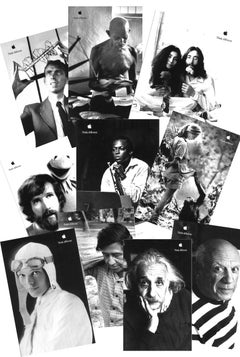
Apple Think Different Set of 10 Educator Series Posters 2000

Apple Think Different Set of 10 Educator Series Posters 2000

Located in Boca Raton, FL

Steve Jobs had just returned to the struggling company, Apple Computer in 1997. Jobs and Lee Clow had collaborated back in 1984 to launch the MacIntosh. Now was the time to recover t...

Category

Early 2000s Prints and Multiples

Materials

Lithograph

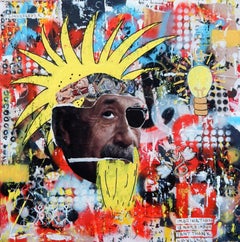
Think Punk, Mixed Media on Wood Panel

Think Punk, Mixed Media on Wood Panel

By Greg Beebe

Located in Yardley, PA

Multi layer image of Albert Einstein with base layer representing the crazy, out of the box thinker and the top layer, the plain black and white personality. Collage materials inclu...

Category

2010s Pop Art Mixed Media

Materials

Mixed Media

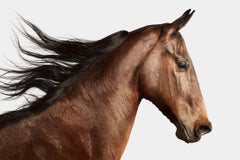
Randal Ford - American Saddlebred Horse No. 3, Photography 2024, Printed After

Randal Ford - American Saddlebred Horse No. 3, Photography 2024, Printed After

By Randal Ford

Located in Greenwich, CT

"Albert Einstein once said that mystery is the source of all true art and science. As I found myself looking into the eyes of this incredible animal, I realized I was seeing both. My...

Category

2010s Contemporary Color Photography

Materials

Archival Paper, C Print

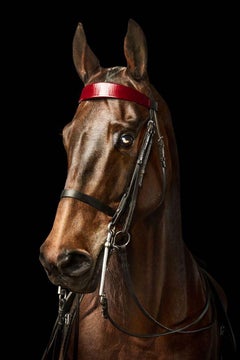
Randal Ford - American Saddlebred Horse No. 5, Photography 2024, Printed After

Randal Ford - American Saddlebred Horse No. 5, Photography 2024, Printed After

By Randal Ford

Located in Greenwich, CT

"Albert Einstein once said that mystery is the source of all true art and science. As I found myself looking into the eyes of this incredible animal, I realized I was seeing both. My...

Category

2010s Contemporary Color Photography

Materials

Archival Paper, C Print

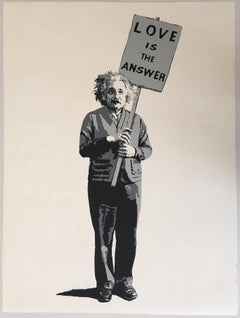
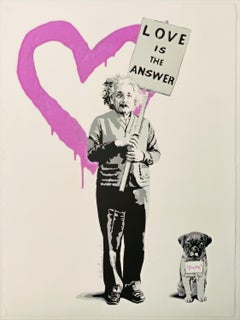
Love is the Answer
Love is the Answer

Love is the Answer

By Mr. Brainwash

Located in New York, NY

Lithograph on BFK Rives papers Edition 12 of 50 Signed and numbered in pencil and with artist's fingerprint

Category

21st Century and Contemporary Street Art Figurative Prints

Materials

Lithograph

Diamond Star of David Round 0.12 Carat Pendant 18 Karat Gold Chain Necklace

Diamond Star of David Round 0.12 Carat Pendant 18 Karat Gold Chain Necklace

By Hasbani Diamonds

Located in London, GB

This classic elegant and beautiful historical symbol born of the Seal of Solomon, or Ring of Solomon worn by millions at the darkest times in history, ...

Category

2010s British Modern Pendant Necklaces

Materials

Diamond, White Diamond, Gold, 18k Gold, White Gold

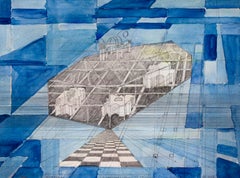
Places (Horreum) Contemporary Graphite Drawing on Archival Paper

Places (Horreum) Contemporary Graphite Drawing on Archival Paper

By Robbie Cornelissen

Located in Montreal, Quebec

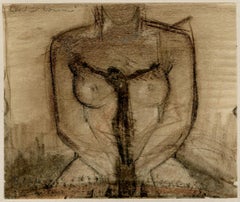
“I know not with what weapons World War III will be fought, but World War IV will be fought with sticks and stones.” ― Albert Einstein. Always working with graphite and charcoal, Robbie Cornelissen’s limited palette emphasises the stark sombre nature of his metaphysical drawings, The Undertow is his sixth solo exhibition at Art Mûr. At the centre of the exhibition hovers Terra Nova, a dark and desolate world parallel to our own. Robbie Cornelissen’s drawings, such as The Space of Absence and Thriller, seem to pull from the stop motion’s frames. Other images, made especially for The Undertow isolate key fragments; the cloud, mounds and timeless dwellings, Cornelissen’s signature technical interest. In addition to his methodical approach, Cornelissen uses the written word, scrawling and erasing terms repeatedly, in English, French, and German, these fastidious markings and exact translations leave a trace and a glitch on paper and screen. Much of his existing work includes words and phrases like “tribunal,” “myself when I am real” and “the need to disappear.” Do they identify what forms, systems and sentiments that are, or could be present? Or do they warn of what is to come? Suspended in the atmosphere of a planetary body, Cornelissen’s clouds extend down to the surface, looming over Earth and Terra Nova. But are they harmless clouds, or associated with nuclear explosions? And is that the ash, dust, pollution and detritus of these invented places, the remnants of an unsustainable society, a dream factory? Or the promise of life anew? In weather forecasting, or aeromancy, the presence of clouds can promise darkness and gloom, but they can also bring cleansing. The ominous aura of the grid, an applied system and structure used by many, including draughtsmen, architects, urban planners, designers and artists to organise and sometimes classify information, is a recurring element in his work. The grid can be observed from a distant bird’s eye view, or close up, allowing Cornelissen’s large format drawings...

Category

2010s Contemporary Figurative Drawings and Watercolors

Materials

Archival Paper, Pencil, Graphite

Diamond Star of David Round 0.30 Carat Pendant 18 Karat Gold Chain Necklace

Diamond Star of David Round 0.30 Carat Pendant 18 Karat Gold Chain Necklace

By Tresor Paris

Located in London, GB

This classic elegant and beautiful historical symbol born of the Seal of Solomon, or Ring of Solomon worn by millions at the darkest times in history, ...

Category

2010s British Modern Pendant Necklaces

Materials

Diamond, White Diamond, Gold, 18k Gold, White Gold

Diamond Star of David 18K Yellow Gold Bespoke British Made Hallmarked Faith Ring

Diamond Star of David 18K Yellow Gold Bespoke British Made Hallmarked Faith Ring

By Hasbani Diamonds

Located in London, GB

Crafted in radiant 18 karat yellow gold, this elegant open-style ring showcases a beautifully detailed Star of David on one side and a brilliant bezel-set round brilliant cut natural...

Category

2010s British Modern Rings

Materials

Diamond, White Diamond, Gold, 18k Gold, Yellow Gold

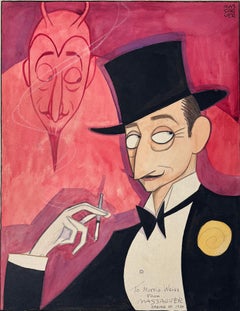
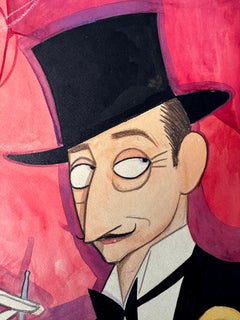
Cuban Artist  - Caricature of Adolphe Menjou Debonair Devil

Cuban Artist - Caricature of Adolphe Menjou Debonair Devil

Located in Miami, FL

Framed Cuban Artist/Caricaturist Conrado Walter Massaguer presents Hollywood star Adolphe Menjou in a satirical dual portrait. In the foreground, the subject is seen in a dapper top hat, tux, fashionable cigarette and boutonnière, and is shown as being the epitome of being stylishly debonair. To make a larger point about this subject, Massaguer paints a cast shadow of Menjou as a burning red devil who studies his alter ego from above. Keeping with the artist's sarcasm, we see the good and bad in one image. Works by Massaguer are rare and this work is in keeping with his signature style. This work was most likely done on assignment for Life Magazine, Cosmopolitan, The New Yorker or Vanity Fair. Signed upper right. Inscribe lower right. Titled on verso. Unframed, Slight bend to board; toning to board; scattered faint foxing; pin point abrasions to margins, not affecting image. 19-1/2 x 15-1/8 inches board size. Conrado Walter Massaguer y Diaz was a Cuban artist, political satirist, and magazine publisher. He is considered a student of the Art Nouveau. He was the first caricaturist in the world to broadcast his art on television.He was first caricaturist to exhibit on Fifth Avenue. He was the first caricaturist in the world to exhibit his caricatures on wood. He, and his brother Oscar, were the first magazine publishers in the world to use photolithographic printing. Self portrait of Conrado Walter Massaguer, depicted on a carrousel ride, with the devil over his left shoulder and an angel over his right. (1945) He created the magazine Social with his brother Oscar to showcase Cuban artistic talent. The duo later created the magazine Carteles, which became for a period the most popular magazine in Cuba, which was purchased by Miguel Ángel Quevedo in 1953. In his life, he met and drew caricatures of Franklin D. Roosevelt, Walt Disney, Albert Einstein, the King of Spain, and many others.[ In sum total, he was the author of more than 28 thousand caricatures and drawings.Ernest Hemingway once had to refrain himself from punching Massaguer in the face after the artist drew an unflattering caricature of him. The dictator Gerardo Machado, however, did not punch Massaguer for his own unflattering caricature - he had the artist deported. He was one of the most internationally renowned Cuban artists of his day, and his art is still regularly featured in galleries across the Western Hemisphere and Europe. Early life Massaguer was born on October 18, 1889, in Cárdenas, Cuba.[In 1892, his family moved to Havana. When the Cuban War of Independence broke out, Massaguer's family escaped the country. From 1896 to 1908, he lived in Mérida, Mexico. However, during this time, his parents enrolled him in the New York Military Academy, where he stayed during school years. In 1905, after graduating the military academy, he briefly attended the San Fernando school in Havana, where he was tutored by Ricardo de la Torriente and Leopoldo Romañach. In 1906, less than a year later, he returned to the family home in Mexico. Career as artist Early career While living in Yucatán, Mexico, Massaguer published his first caricatures in local newspapers and magazines. These included La Campana, La Arcadia, and the Diario Yucateco. In 1908, he moved back to Havana. After returning to the island in 1908, Massaguer began mingling with Havana's aristocratic circles, forming close friendships with some of the city's most powerful and influential men, as well as winning the favor of many women who were quickly charmed by him. Massaguer, largely self-taught, honed his style using the avant-garde techniques he studied from the European and American magazines that were widely available in Cuba at the time. Cover of the immensely popular Cuban magazine El Figaro, drawn by Massaguer in 1909. This cover depicts two bumbling, incompetent American tourists to the island. He started drawing for El Fígaro, and was featured prominently on the cover in 1909. After two years of refining his craft, Havana announced a poster contest aimed at attracting North American tourists to stay in the city during the winter months. Notable figures like Leopoldo Romañach, Armando Menocal, Rodríguez Morey, Jaime Valls, and others also entered the competition. The jury was particularly impressed by the modern execution and creative solution of one piece, signed by Massaguer, who was relatively unknown at the time. The jury deliberations caused a great controversy.[5] The prize was ultimately awarded to the Galician painter Mariano Miguel, who had recently married the daughter of Nicolás Rivero, the wealthy owner of the conservative newspaper Diario de la Marina. Although Massaguer received only an honorable mention, the fraud scandal caused such an uproar that his name quickly entered the public spotlight, and he became an overnight sensation. In 1910, he became co-owner of the advertising agency Mercurio, with Laureano Rodríguez Castells. At Mercurio, he led the Susini cigar campaign, and earned substantial wealth. Massaguer has been described as a restless man, in both mind and body.After earning enough money from his art to begin traveling, he was almost always doing so. He constantly traveled between New York City and Havana, Mexico and France, Europe and the Americas. In 1911, his reputation among the Havana socialites solidified when he organized his own first public caricature exhibit, and also the first Caricature Salon ever held in the Americas, hosted at Athenaeum of Havana (the Ateneo), and the Círculo de La Habana. Other exhibitors here included Maribona, Riverón, Portell Vilá, Valer, Botet, Barsó, García Cabrera, Carlos Fernández, Rafael Blanco, and Hamilton de Grau. "Messaguer Visits Broadway." Caricatures of theatrical and literary figures. Elsie Janis, Raymond Hitchcock, S. Jay Kaufman (columnist), Ibanez, author of The Four Horsemen, and Frances White In 1912, in the New York American Journal, he published his first Broadway drawings. From 1913 to 1918, he was an editor for Gráfico. Social Main article: Social (magazine) Cover of the magazine Social, July 7, 1923 In 1916, he created the magazine Social with his brother, Oscar H. Massaguer. Social's contributors included Guillén Carpentier, Chacón y Calvo, Enrique José Varona and others.Social has been described as Massaguer's great love in the magazine industry, and was the property that historians say he cared the most about. Social was an innovative magazine, being the first magazine in the world to use a modern printing process called photolithographic printing. Social set cultural trends, not only in the fashion of Cuba, but in art, politics, and Cuban identity.[11] Social catered to a certain aesthetic in Cuba - that of the sophisticated elite socialite - but Massaguer would also use this magazine to ridicule and jibe against that same class of society when he found their personalities worthy of his contempt. In Social, readers could find a variety of content, including short stories, avant-garde poetry, art reviews, philosophical essays, and serialized novels, as well as articles on interior design, haute couture, and fashion. Occasionally, the magazine also featured reports on sports such as motor racing, rowing, tennis, and horse riding.The cultural promotion efforts of both Massaguer and Emilio Roig de Leuchsenring are evident in the magazine. Notably, this period overlaps with their involvement in the Minorista Group, which was then at the forefront of the country's intellectual life.[5] Many contributors were devoted members of the group, leading some experts to consider Social as the cultural voice of the Minoristas. One of the features of Social magazine was its section called "Massa Girls," which was a play on his own name, and pronounced with a glottal 'g' in a similar fashion to the letter in Massaguer.[12] Massaguer drew women as independent and free-thinking, and never drew the woman celebrity as a caricature of herself, but as a free agent surrounded by caricatures.[11] However, Massaguer himself has been described as a womanizer in his personal life, and hesitant to fully embrace every facet of women's liberation. In 1916, he also established la Unión de Artes Gráficas and the advertising agency Kesevén Anuncios.[9] The art critic Bernardo González Barroa wrote: “Massaguer has solved the problem of working hard, living comfortably off what his art produces and not missing any artistic, sporting or social event. His broad, childish laugh, of a carefree individual who carries his luck hidden in a pocket, appears everywhere for the moment, disguising the pranks of pupils that lurk, mock and, finally, flash with satisfaction at finding the characteristic point after having analyzed a soul... Massaguer's personality is beginning to solidify now. He has been the best-known and most popular caricaturist for a long time, but his technique had not reached the security, the mastery of values that he presents in his latest works, which is very natural and explainable”[5] Carteles Main article: Carteles Cover of the magazine Carteles, November 29, 1931 In 1919, Massaguer and his brother created the magazine Carteles.[9] Carteles gained the widest circulation of any magazine in Latin America, and the most popular magazine in Cuba for a time, until that title was claimed by Revista Bohemia. Carteles remained in print until July 1960.This magazine showcased Cuban commerce, art, sports, and social life before the revolution. In 1924, Carteles took a more political turn, with articles criticizing Gerardo Machado's government. it became a prime example of the humor and graphic design employed by artists like Horacio Rodríguez Suria and Andrés García...

Category

1930s Art Nouveau Portrait Drawings and Watercolors

Materials

Ink, Watercolor, Illustration Board
Mr Brainwash -- Love Is The Answer - MC2 (Pink), Hand Signed

Mr Brainwash -- Love Is The Answer - MC2 (Pink), Hand Signed

By Mr. Brainwash

Located in BRUCE, ACT

Mr Brainwash Love Is The Answer - MC2 (Pink), 2012 Screenprint on BFK Rives wove paper, 2012 Hand signed in pencil, dated in red crayon and signed with the artist's inky fingerprint...

Category

2010s Prints and Multiples

Materials

Screen

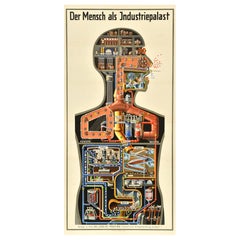
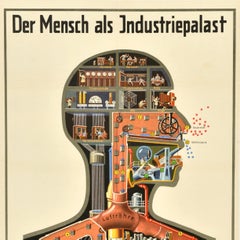
Original Vintage Poster Man As Industrial Palace Body Steampunk Fritz Kahn

Original Vintage Poster Man As Industrial Palace Body Steampunk Fritz Kahn

By Fritz Kahn

Located in London, GB

Original vintage poster for the graphic analogy - Der Mensch Als Industriepalast / Man As Industrial Palace - by the German physician, scientist and illustrator Fritz Kahn (1888-1968...

Category

Vintage 1920s German Posters

Materials

Paper

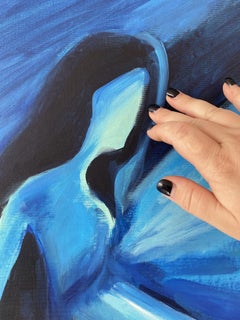
Trusting My Depths
Trusting My Depths

Trusting My Depths

Located in Zofingen, AG

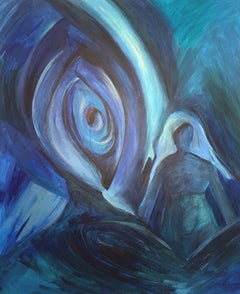
shipped in roll The journey inward lasts a lifetime. It leads us through years of living, through loss and joy, fear and love, mistakes and discoveries. Every experience leaves its ...

Category

2010s Abstract Expressionist Abstract Paintings

Materials

Canvas, Acrylic

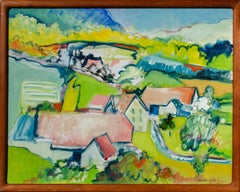
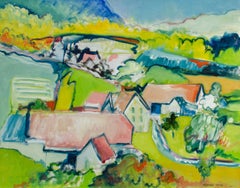
Modernist Hillside Painting by Marion Maas

Modernist Hillside Painting by Marion Maas

By Marion Maas

Located in New York, NY

Marion Maas (American, b. 1930) Untitled, c. 1980s Oil on canvas 21 7/8 x 27 1/2 in. Framed: 23 1/2 x 29 1/4 x 1 in. Signed lower right Landscape, figurat...

Category

1980s Contemporary Figurative Paintings

Materials

Canvas, Oil

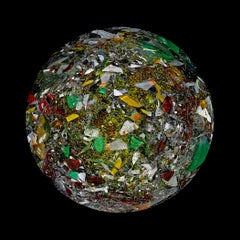
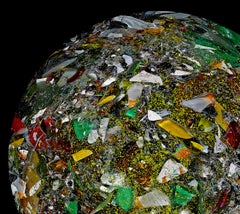
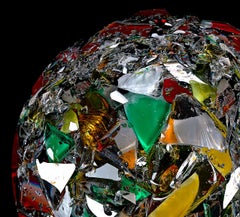
The Greedy Planet. The Broken Planet Series. Abstract Digital Collage Photograph

The Greedy Planet. The Broken Planet Series. Abstract Digital Collage Photograph

By Zoltan Gerliczki

Located in Miami Beach, FL

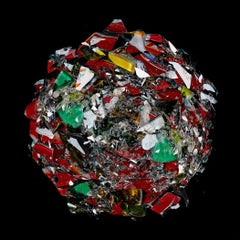
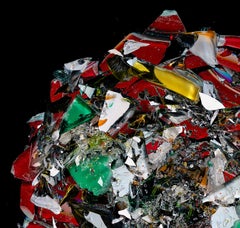
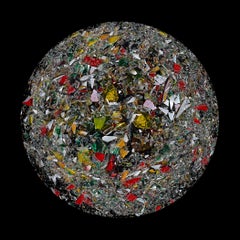
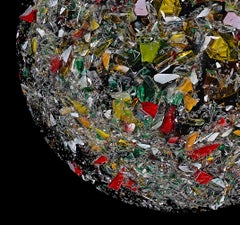
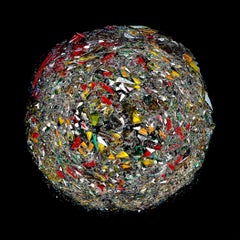
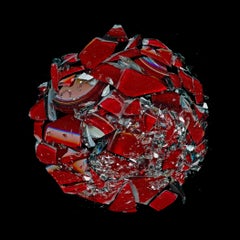
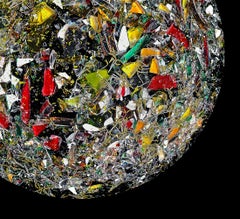
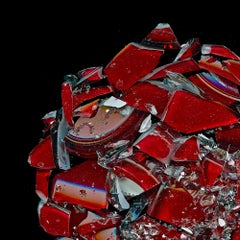
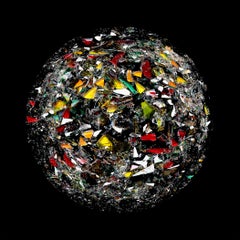
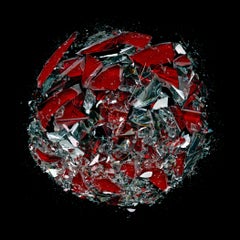
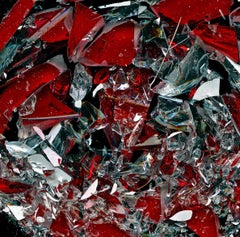
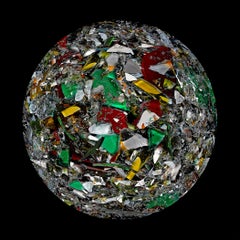
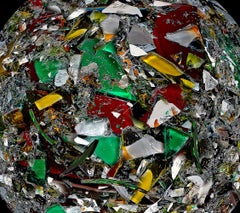
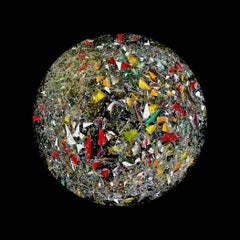
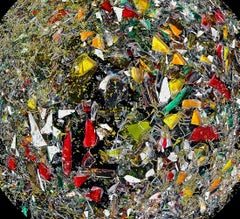
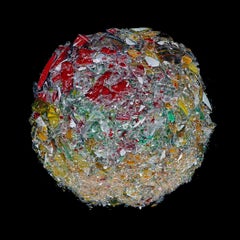
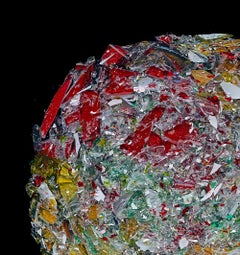
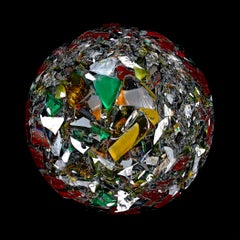
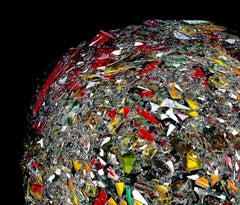
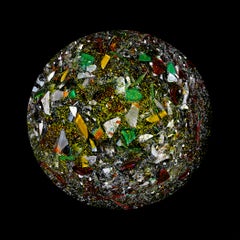
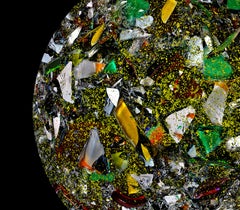
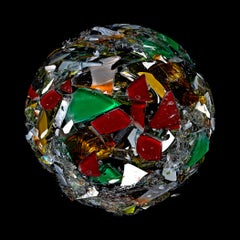
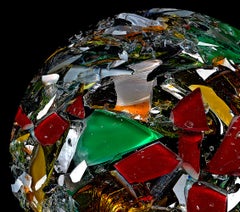
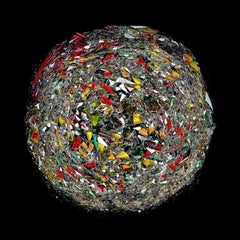
In his series entitled “Broken Planet,” Zoltan depicts a broken planet alongside 13 other “planets” based on the most common human feelings or behaviors, such as happiness, sadness, anger, anticipation, fear, loneliness, jealousy, disgust, trust, greed, joy, racism, and shame. In these images, the artist works with various fragments of colored glass and other debris that he collected from the streets near his home in Atlanta during the COVID-19 quarantine and political protests. Zoltan assembles these pieces in his studio and re-photographs them to symbolize the current crisis of political and environmental problems. At this moment, the most pressing issues of our time concern ourselves and the future of our culture and our planet. In a sense, the artist takes the pieces and puts them back together to reconstruct a fragmented world. “The world is a dangerous place to live, not because of the people who are evil, but because of the people who do nothing about it.” -Albert Einstein Zoltan Gerliczki...

Category

21st Century and Contemporary Modern Color Photography

Materials

Color, Pigment, Archival Pigment

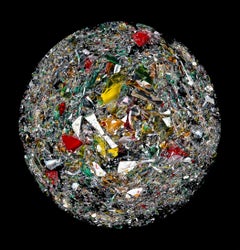
The Surprise Planet. Broken Planet Series. Abstract Digital Collage Color Photo

The Surprise Planet. Broken Planet Series. Abstract Digital Collage Color Photo

By Zoltan Gerliczki

Located in Miami Beach, FL

In his series entitled “Broken Planet,” Zoltan depicts a broken planet alongside 13 other “planets” based on the most common human feelings or behaviors, such as happiness, sadness, ...

Category

21st Century and Contemporary Modern Color Photography

Materials

Color, Pigment, Archival Pigment

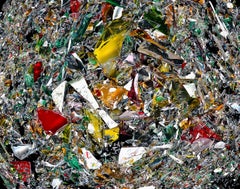
The Disgust Planet. The Broken Planet Series. Abstract Digital Collage Photo

The Disgust Planet. The Broken Planet Series. Abstract Digital Collage Photo

By Zoltan Gerliczki

Located in Miami Beach, FL

In his series entitled “Broken Planet,” Zoltan depicts a broken planet alongside 13 other “planets” based on the most common human feelings or behaviors, such as happiness, sadness, ...

Category

21st Century and Contemporary Modern Color Photography

Materials

Color, Pigment, Archival Pigment

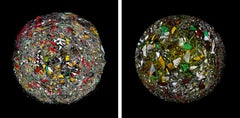
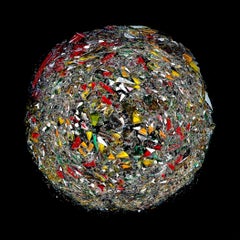
The Broken Planet andThe Excitement Planet Diptych. Color Photographs

The Broken Planet andThe Excitement Planet Diptych. Color Photographs

By Zoltan Gerliczki

Located in Miami Beach, FL

In his series entitled “Broken Planet,” Zoltan depicts a broken planet alongside 13 other “planets” based on the most common human feelings or behaviors, such as happiness, sadness, ...

Category

21st Century and Contemporary Modern Color Photography

Materials

Color, Pigment, Archival Pigment

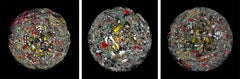
The Broken Planet, The Anger Planet, The Disgust Planet Triptych Photographs

The Broken Planet, The Anger Planet, The Disgust Planet Triptych Photographs

By Zoltan Gerliczki

Located in Miami Beach, FL

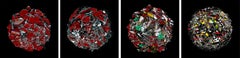
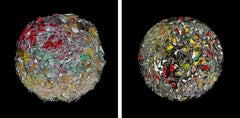
In his series entitled “Broken Planet,” Zoltan depicts a broken planet alongside 13 other “planets” based on the most common human feelings or behaviors, such as happiness, sadness, anger, anticipation, fear, loneliness, jealousy, disgust, trust, greed, joy, racism, and shame. In these images, the artist works with various fragments of colored glass and other debris that he collected from the streets near his home in Atlanta during the COVID-19 quarantine and political protests. Zoltan assembles these pieces in his studio and re-photographs them to symbolize the current crisis of political and environmental problems. At this moment, the most pressing issues of our time concern ourselves and the future of our culture and our planet. In a sense, the artist takes the pieces and puts them back together to reconstruct a fragmented world. “The world is a dangerous place to live, not because of the people who are evil, but because of the people who do nothing about it.” -Albert Einstein Zoltan Gerliczki...

Category

21st Century and Contemporary Modern Color Photography

Materials

Color, Pigment, Archival Pigment

The Broken Planet Series. Set of 4 Photographs. Abstract Digital Collage

The Broken Planet Series. Set of 4 Photographs. Abstract Digital Collage

By Zoltan Gerliczki

Located in Miami Beach, FL

In his series entitled “Broken Planet,” Zoltan depicts a broken planet alongside 13 other “planets” based on the most common human feelings or behaviors, such as happiness, sadness, ...

Category

21st Century and Contemporary Modern Color Photography

Materials

Color, Pigment, Archival Pigment

The Broken Mind Olanet & The Racist planet Diptych photographs

The Broken Mind Olanet & The Racist planet Diptych photographs

By Zoltan Gerliczki

Located in Miami Beach, FL

In his series entitled “Broken Planet,” Zoltan depicts a broken planet alongside 13 other “planets” based on the most common human feelings or behaviors, such as happiness, sadness, anger, anticipation, fear, loneliness, jealousy, disgust, trust, greed, joy, racism, and shame. In these images, the artist works with various fragments of colored glass and other debris that he collected from the streets near his home in Atlanta during the COVID-19 quarantine and political protests. Zoltan assembles these pieces in his studio and re-photographs them to symbolize the current crisis of political and environmental problems. At this moment, the most pressing issues of our time concern ourselves and the future of our culture and our planet. In a sense, the artist takes the pieces and puts them back together to reconstruct a fragmented world. “The world is a dangerous place to live, not because of the people who are evil, but because of the people who do nothing about it.” -Albert Einstein Zoltan Gerliczki...

Category

21st Century and Contemporary Modern Color Photography

Materials

Color, Pigment, Archival Pigment

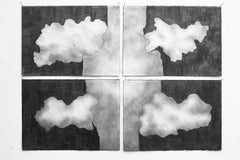
Four Clouds Drawing, Graphite on Archival Paper, Contemporary, 2010+

Four Clouds Drawing, Graphite on Archival Paper, Contemporary, 2010+

By Robbie Cornelissen

Located in Montreal, Quebec

“I know not with what weapons World War III will be fought, but World War IV will be fought with sticks and stones.” ― Albert Einstein. Always working with graphite and charcoal, Ro...

Category

2010s Contemporary Figurative Drawings and Watercolors

Materials

Archival Paper, Pencil, Graphite

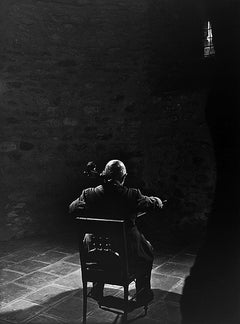
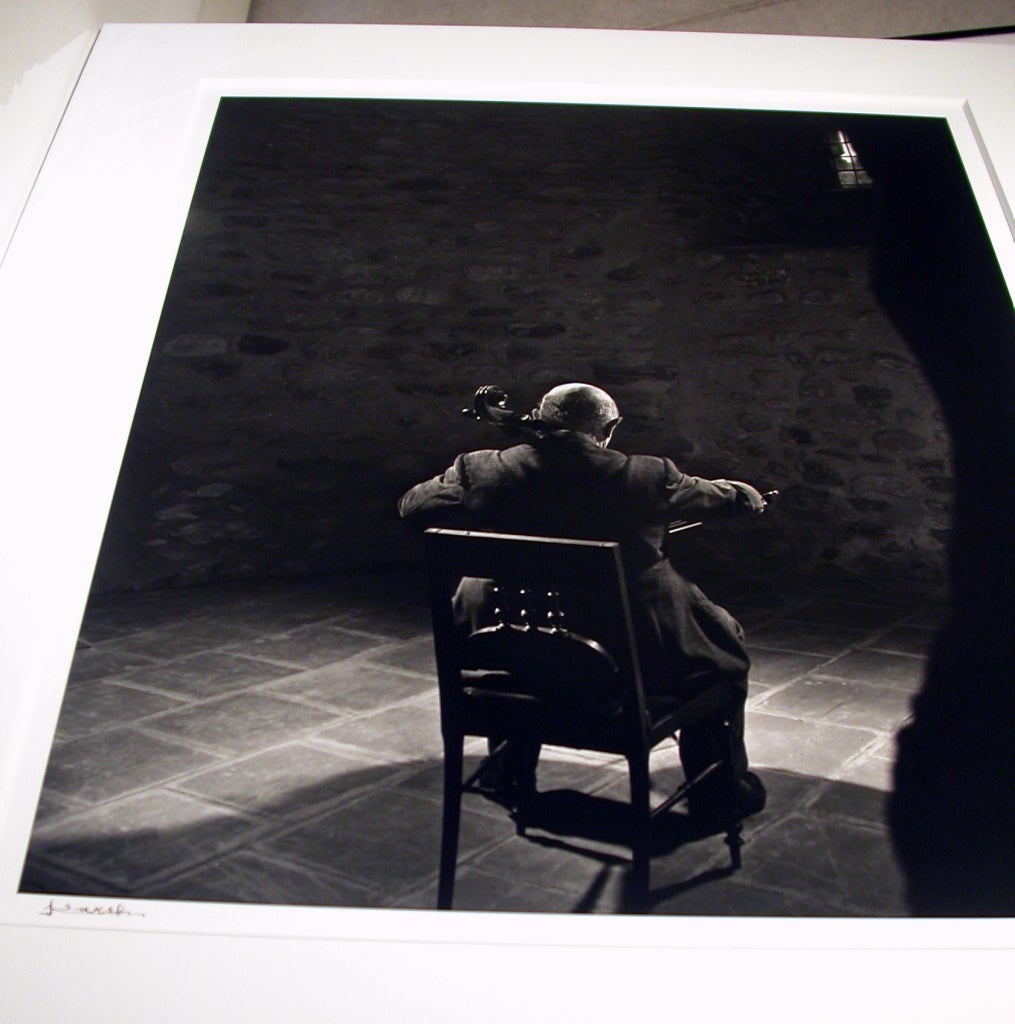
Pablo Casals
Pablo Casals

Pablo Casals

By Yousuf Karsh

Located in Carmel-by-the-Sea, CA

Original gelatin silver print made later in the artist's career from the original negative and signed by the artist on the front of the mount. Yousuf Karsh was a Canadian photographe...

Category

20th Century Portrait Photography

Materials

Silver Gelatin

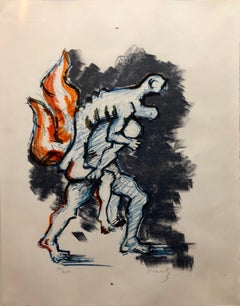
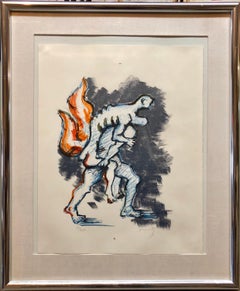
Lithuanian French Cubist Modernist Lithograph "Flight" Refugees

Lithuanian French Cubist Modernist Lithograph "Flight" Refugees

By Jacques Lipchitz

Located in Surfside, FL

Actual sheet is 25 X 20 size includes frame. Hand signed and numbered. The Flight exhibition comes from a portfolio of prints organized by Varian Fry in 1964 and completed in 1971. B...

Category

1960s Modern Figurative Prints

Materials

Lithograph

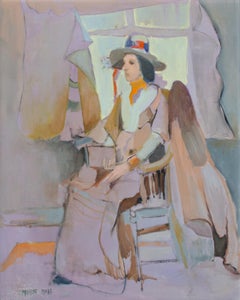
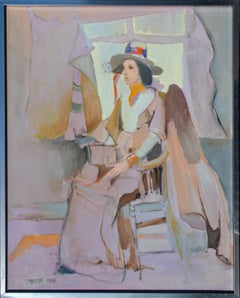
Portrait Of A Lady by NY Artist Marion Maas

Portrait Of A Lady by NY Artist Marion Maas

By Marion Maas

Located in New York, NY

Marion Maas (American, b. 1930) In The Attic, c. 1970s Oil on canvas Framed: 30 1/2 x 24 1/2 x 1 1/2 in. Signed lower left Titled verso on stretcher bar 19...

Category

Late 20th Century Contemporary Figurative Paintings

Materials

Canvas, Oil

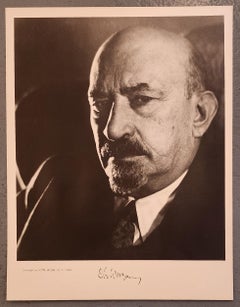
Chaim Weizmann

Lotte JacobiChaim Weizmann, 1948

$977Sale Price|34% Off

Chaim Weizmann

By Lotte Jacobi

Located in Kansas City, MO

Lotte Jacobi Chaim Weizmann Photograph Year: 1948 Size: 13.9x10.8in Signed in the print Lotte Jacobi Copyright Annotation lower left, recto Ref.: 924802-1355 Lotte Jacobi (August 17, 1896 – May 6, 1990) was a leading American portrait photographer and photojournalist, known for her high-contrast black-and-white portrait photography, characterized by intimate, sometimes dramatic, sometimes idiosyncratic and often definitive humanist depictions of both ordinary people in the United States and Europe and some of the most important artists, thinkers and activists of the 20th century. Jacobi's photographic style stressed informality, and sought to delve deeper into the traits of her subjects than traditional portraiture. She made a point of photographing subjects in their own environments, and talking to them while she worked. She explained the reasoning behind her approach this way: "I just try and get people to talk, to relax, to be themselves. I don't like a passive, bored subject. I do portraits because I like people, and I want to bring out their personalities. Many photographers today, I think, are bringing out the worst part of people. I try and bring out the best." Jacobi is perhaps best known for her "portrait of Albert Einstein (Princeton, 1938), whom she photographed candidly, seated at his desk, dishevelled and dressed in a leather jacket, a work that was refused by Life magazine for its simplicity." Other personality-driven portraits include "Eleanor Roosevelt sitting back, gesturing, and obviously speaking in midsentence; Marc Chagall depicted as a jovial family man; Thomas Mann appearing as thoughtful as his work; and more candid, gentle portraits of Einstein." Other celebrated subjects included poets W. H. Auden, Robert Frost, and May Sarton; philosopher Martin Buber; writer J.D. Salinger; writer and activist W. E. B. Du Bois; scientist Max Planck; artist Käthe Kollwitz; the actress and singer Lotte Lenya; the singer and activist Paul Robeson...

Category

1940s Modern Portrait Photography

Materials

Photographic Paper

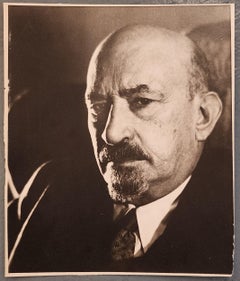
Chaim Weizmann

Lotte JacobiChaim Weizmann, 1948

$966Sale Price|35% Off

Chaim Weizmann

By Lotte Jacobi

Located in Kansas City, MO

Lotte Jacobi Chaim Weizmann Photograph Year: 1948 Size: 8.75x7.25in Annotated by hand on verso in pencil Ref.: 924802-1353 Lotte Jacobi (August 17, 1896 – May 6, 1990) was a leading American portrait photographer and photojournalist, known for her high-contrast black-and-white portrait photography, characterized by intimate, sometimes dramatic, sometimes idiosyncratic and often definitive humanist depictions of both ordinary people in the United States and Europe and some of the most important artists, thinkers and activists of the 20th century. Jacobi's photographic style stressed informality, and sought to delve deeper into the traits of her subjects than traditional portraiture. She made a point of photographing subjects in their own environments, and talking to them while she worked. She explained the reasoning behind her approach this way: "I just try and get people to talk, to relax, to be themselves. I don't like a passive, bored subject. I do portraits because I like people, and I want to bring out their personalities. Many photographers today, I think, are bringing out the worst part of people. I try and bring out the best." Jacobi is perhaps best known for her "portrait of Albert Einstein (Princeton, 1938), whom she photographed candidly, seated at his desk, dishevelled and dressed in a leather jacket, a work that was refused by Life magazine for its simplicity." Other personality-driven portraits include "Eleanor Roosevelt sitting back, gesturing, and obviously speaking in midsentence; Marc Chagall depicted as a jovial family man; Thomas Mann appearing as thoughtful as his work; and more candid, gentle portraits of Einstein." Other celebrated subjects included poets W. H. Auden, Robert Frost...

Category

1940s Modern Portrait Photography

Materials

Photographic Paper

Mixed Media Outsider Visionary Art Polaroid Photo Collage Painting 2 sided

Mixed Media Outsider Visionary Art Polaroid Photo Collage Painting 2 sided

By Tom Carapic

Located in Surfside, FL

This one includes Albert Einstein amongst other drawing. Tom Carapic (born 1939), full name Tomislav Sava Čarapić, is an artist who specialises in found object artwork. He also does...

Category

20th Century Outsider Art Mixed Media

Materials

Mixed Media, Polaroid

"Hey Did We Scratch?" - Abstract Expressionist Composition

"Hey Did We Scratch?" - Abstract Expressionist Composition

Located in Soquel, CA

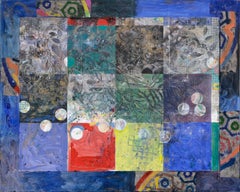
"Hey Did We Scratch?" - Abstract Expressionist Composition Detailed and layered composition by Leroy W. Parker (American, 1941). This piece is divided into a checkerboard, with a variety of overlaid patterns and textures. There are several types of handmade paper applied to the canvas, likely made by Parker himself. Signed "Leroy Wheeler Parker" in the lower right corner. "#1" and an up arrow are written on verso. Tag on verso with artist info, title, media, and date. No frame, but the edges of the canvas are painted for a frame-less display. Leroy W. Parker (American, b. 1941) is an artist from Oklahoma who now resides in Lafayette, California. Parker earned his BFA in painting from the California College of Arts and Crafts in 1966, and then went on to earn his MFA in 1968 from the same institution. He is a Professor of Art at San Jose State University. He has taught classes in fine arts, life drawing, ceramics, paper making (which he instituted in 1984), and sculpture since 1969. Parker has also served on the State Art Commission for sculptural grants. One of his pieces is held in the San Jose Museum of Art. Selected Exhibitions: Drawings and Paintings - ACCI Gallery, Berkeley, CA - 1974 “Artistry in Clay” - Forge Patio Art Gallery, Lafayette, CA - 1980 “A Most Elegant Show” - Sunshine Art Gallery, Fair Oaks, CA - 1982 “Flora” - Harcourts Contemporary, San Francisco, CA - 1983 Idea Gallery, Sacramento, CA - 1985 “Multi-Media Man” - Sacramento Center for Textile Arts, Sacramento, CA - 1994 “The Art of the Family” - Works Gallery, San Jose, CA - 1999 Artist’s Statement: I was born in Eagletown, Oklahoma to Southern Baptist parents, and my father was a preacher. We were two boys and six girls in the family. The most mundane things were magical and special to me. I liked to draw, color, make things, and plant things. I loved the woods and the earth, and watching storms with thunder and lightning. We moved from Oklahoma when I was 11. In the late 1950s, I attended Oakland Technical High School where I met artist Sam Richardson...

Category

1990s Post-Minimalist Abstract Paintings

Materials

Canvas, Acrylic, Color Pencil, Handmade Paper, Stretcher Bars

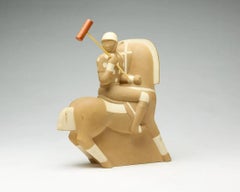
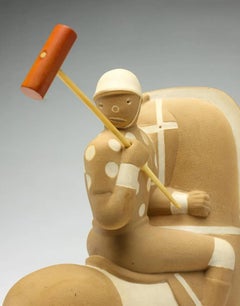
Early 20th Century Ceramic Sculpture of a Polo Player and Horse

Early 20th Century Ceramic Sculpture of a Polo Player and Horse

By Waylande Gregory

Located in Beachwood, OH

Waylande Gregory (American, 1905-1971) Polo Player, c. 1930s Ceramic Inscribed signature on bottom 11 x 8.5 inches Waylande Gregory was considered a major American sculptor during the 1930's, although he worked in ceramics, rather than in the more traditional bronze or marble. Exhibiting his ceramic works at such significant American venues for sculpture as the Whitney Museum of American Art in New York City and at the venerable Pennsylvania Academy of the Fine Arts in Philadelphia, he also showed his ceramic sculptures at leading New York City galleries. Gregory was the first modern ceramist to create large scale ceramic sculptures, some measuring more than 70 inches in height. Similar to the technique developed by the ancient Etruscans, he fired his monumental ceramic sculptures only once. Gregory was born in 1905 in Baxter Springs, Kansas and was something of a prodigy. Growing up on a ranch near a Cherokee reservation, Gregory first became interested in ceramics as a child during a native American burial that he had witnessed. He was also musically inclined. In fact, his mother had been a concert pianist and had given her son lessons. At eleven, he was enrolled as a student at the Kansas State Teacher's College, where he studied carpentry and crafts, including ceramics. Gregory's early development as a sculptor was shaped by the encouragement and instruction of Lorado Taft, who was considered both a major American sculptor as well as a leading American sculpture instructor. In fact, Taft's earlier students included such significant sculptors as Bessie Potter Vonnoh and Janet Scudder. But, Taft and his students had primarily worked in bronze or stone, not in clay; and, Gregory's earliest sculptural works were also not in ceramics. In 1924, Gregory moved to Chicago where he caught the attention of Taft. Gregory was invited by Taft to study with him privately for 18 months and to live and work with him at his famed "Midway Studios." The elegant studio was a complex of 13 rooms that overlooked a courtyard. Taft may have been responsible for getting the young man interested in creating large scale sculpture. However, by the 1920's, Taft's brand of academic sculpture was no longer considered progressive. Instead, Gregory was attracted to the latest trends appearing in the United States and Europe. In 1928 he visited Europe with Taft and other students. "Kid Gregory," as he was called, was soon hired by Guy Cowan, the founder of the Cowan Pottery in Cleveland, Ohio, to become the company's only full time employee. From 1928 to 1932, Gregory served as the chief designer and sculptor at the Cowan Pottery. Just as Gregory learned about the process of creating sculpture from Taft, he literally learned about ceramics from Cowan. Cowan was one of the first graduates of Alfred, the New York School of Clayworking and Ceramics. Alfred had one of the first programs in production pottery. Cowan may have known about pottery production, but he had limited sculptural skills, as he was lacking training in sculpture. The focus of the Cowan Pottery would be on limited edition, table top or mantle sculptures. Two of the most successful of these were Gregory's "Nautch Dancer," (fig. 1) and his "Burlesque Dancer," (fig. 2). He based both sculptures on the dancing of Gilda Gray, a Ziegfield Follies girl. Gilda Gray was of Polish origin and came to the United States as a child. By 1922, she would become one of the most popular stars in the Follies. After losing her assets in the stock market crash of 1929, she accepted other bookings outside of New York, including Cleveland, which was where Gregory first saw her onstage. She allowed Gregory to make sketches of her performances from the wings of the theatre. She explained to Gregory, "I'm too restless to pose." Gray became noted for her nautch dance, an East Indian folk dance. A nautch is a tight, fitted dress that would curl at the bottom and act like a hoop. This sculpture does not focus on Gray's face at all, but is more of a portrait of her nautch dance. It is very curvilinear, really made of a series of arches that connect in a most feminine way. Gregory created his "Burlesque Dancer" at about the same time as "Nautch Dancer." As with the "Nautch Dancer," he focused on the movements of the body rather than on a facial portrait of Gray. Although Gregory never revealed the identity of his model for "Burlesque Dancer," a clue to her identity is revealed in the sculpture's earlier title, "Shimmy Dance." The dancer who was credited for creating the shimmy dance was also Gilda Gray. According to dance legend, Gray introduced the shimmy when she sang the "Star Spangled Banner" and forgot some of the lyrics, so, in her embarrassment, started shaking her shoulders and hips but she did not move her legs. Such movement seems to relate to the "Burlesque Dancer" sculpture, where repeated triangular forms extend from the upper torso and hips. This rapid movement suggests the influence of Italian Futurism, as well as the planar motion of Alexander Archipenko, a sculptor whom Gregory much admired. The Cowan Pottery was a victim of the great depression, and in 1932, Gregory changed careers as a sculptor in the ceramics industry to that of an instructor at the Cranbrook Academy in Bloomfield Hills, Michigan. Cranbrook was perhaps the most prestigious place to study modern design in America. Its faculty included the architect Eliel Saarinen and sculptor Carl Milles. Although Gregory was only at Cranbrook for one and one half years, he created some of his finest works there, including his "Kansas Madonna" (fig. 3). But, after arriving at Cranbrook, the Gregory's had to face emerging financial pressures. Although Gregory and his wife were provided with complimentary lodgings, all other income had to stem from the sale of artworks and tuition from students that he, himself, had to solicit. Gregory had many people assisting him with production methods at the Cowan Pottery, but now worked largely by himself. And although he still used molds, especially in creating porcelain works, many of his major new sculptures would be unique and sculpted by hand, as is true of "Kansas Madonna." The scale of Gregory's works were getting notably larger at Cranbrook than at Cowan. Gregory left the surface of "Kansas Madonna" totally unglazed. Although some might object to using a religious title to depict a horse nursing its colt, it was considered one of Gregory's most successful works. In fact, it had a whole color page illustration in an article about ceramic sculpture titled, "The Art with the Inferiority Complex," Fortune Magazine, December, 1937. The article notes the sculpture was romantic and expressive and the sculpture was priced at $1,500.00; the most expensive sculpture in the article. Gregory was from Kansas, and "Kansas Madonna" should be considered a major sculptural document of Regionalism. Gregory and his wife Yolande moved to New Jersey in the summer of 1933. And the artist began construction on his new home in the Watchung Mountains of Bound Brook (Warren today) in 1938. His enormous, custom kiln was probably constructed at the start of 1938. Gregory's new sculptures were the largest ceramic sculptures in western art, in modern times. To create these works of ceramic virtuosity, the artist developed a "honeycomb" technique, in which an infrastructure of compartments was covered by a ceramic "skin." Science and atomic energy were a theme in Gregory's most significant work, the "Fountain of the Atom" (fig. 4), at the 1939 New York's World Fair. This major work included twelve monumental ceramic figures at the fairground entrance from the newly constructed railway entrance, giving the work great visibility and prominence. The framework of the fountain itself was of steel and glass bricks. It consisted of a bluish green pool which was sixty five feet in diameter. Above it were two concentric circular tiers, or terraces, as Gregory called them; the first wider than the second. On the first terrace were eight "Electrons," comprised of four male and four female terra cotta figures, each approximately 48 inches high. These relate to the valance shell of the atom. Above them on a narrower terrace, were the much larger and heavier terra cotta figures depicting the four elements, each averaging about 78 inches in height and weighing about a ton and a half. Of the four, "Water" and "Air" were male, while "Earth" and "Fire" were female. This terrace represents the nucleus of the atom. In the center of the fountain, above the "Elements," was a central shaft comprised of sixteen glass tubes from which water tumbled down from tier to tier. At the top, a colorful flame burned constantly. The glass block tiers were lit from within, the whole creating a glowing and gurgling effect. Since the fair was temporary, the figures could be removed after its closing. But the credit for the design of the structure of the fountain belongs to collaborator Nembhard Culin, who was responsible for several other structures on the fair grounds as well. Although Gregory created a figure of "Fire" for the "Fountain of the Atom," he also executed a second, slightly smaller but more defined version which he exhibited at various locations (including Cranbrook, Baltimore Museum, etc.) in 1940-1941, during the second year of the fair (fig.5). Measuring 61 inches in height, "Fire" may be a metaphor for sexual energy, as well as atomic energy. Gregory stated, "Fire is represented by an aquiline female figure being consumed in endless arabesques of flame." Portraiture was also a significant focus of Gregory's sculpture. Gregory produced many commissioned portraits of local people as well as celebrities. He created Albert Einstein's portrait from life (fig. 6, ca. 1940) after Einstein had seen Gregory's "Fountain of the Atom." He also sculpted some of the leading figures in entertainment, including 2 sculptures of Henry Fonda, who became a personal friend. Gregory also sculpted a series of idealized female heads, both in terra cotta and in porcelain. These include "Girl with Olive" (ca. 1932) and "Cretan Girl;"(ca. 1937) both are very reductive and almost abstract works that call to mind Constantine Brancusi's "Mademoiselle Pogany" (1912, Philadelphia Museum of Art). But perhaps one of his most original female heads is "Head of a Child" (fig. 7, ca. 1933), a sensitive white glazed terra cotta portrayal with elaborately crafted braded hair, was originally created as one of a pair. Gregory also produced sculptural works for the Works Progress Administration. The WPA was a work relief project that greatly helped artists during the great depression. Founded by the Federal Government in 1935, an estimated 2500 murals were produced. Among these public works were the iconic post office murals. But, among the painted murals were also sculptural relief murals including Gregory's "R.F.D.," 1938, for the Columbus, Kansas Post Office. But, Gregory's largest WPA relief...

Category

1930s Figurative Sculptures

Materials

Ceramic

I Know My Power
I Know My Power

I Know My Power

Located in Zofingen, AG

shipped in roll The journey inward lasts a lifetime. It leads us through years of living, through loss and joy, fear and love, mistakes and discoveries. Every experience leaves its ...

Category

2010s Abstract Expressionist Abstract Paintings

Materials

Canvas, Acrylic

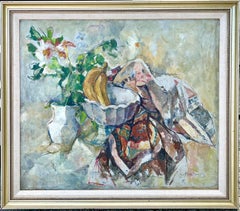
Post Impressionist Oil Painting Still Life with Fruit William Meyerowitz WPA Art

Post Impressionist Oil Painting Still Life with Fruit William Meyerowitz WPA Art

By William Meyerowitz

Located in Surfside, FL

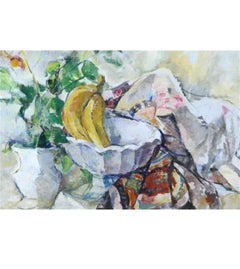
William Meyerowitz (1887 - 1981) Oil painting on canvas Depicting a still life scene with fruit bowl, bananas, flowers and quilt. Post Impressionist oil painting. Hand signed low...

Category

1930s American Modern Figurative Paintings

Materials

Canvas, Oil

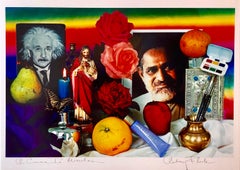
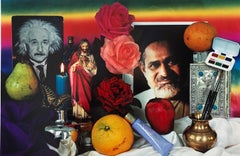
A Course in Miracles iconic limited edition Signed print photorealist art legend

A Course in Miracles iconic limited edition Signed print photorealist art legend

By Audrey Flack

Located in New York, NY

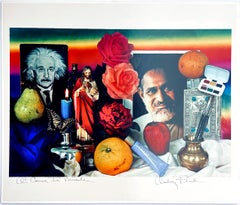
Audrey Flack A Course in Miracles, 1984 Kodachrome 35mm Color Dye Transfer Print Dry mounted to 4 ply 100% cotton fiber board Hand signed and titled by Audrey Flack on the front 20 ×...

Category

1980s Photorealist Figurative Prints

Materials

Dye Transfer, Board
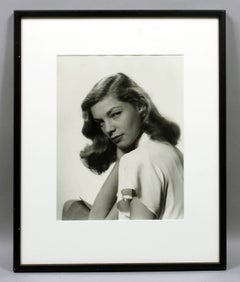
Phillipe Halsman Portrait Photography Lauren Bacall Black and White Framed 1944

Phillipe Halsman Portrait Photography Lauren Bacall Black and White Framed 1944

By Philippe Halsman

Located in Buffalo, NY

The work offered for sale here is an original vintage silver gelatin print hand created by Halsman in 1944 and exhibited at the International Center for Photography. Philippe Halsman was at one point considered the best photo-portraitist in France. He had an incessant interest in faces: “Every face I see seems to hide—and sometimes fleetingly reveal—the mystery of another human being.” Halsman’s photographs of politicians, celebrities, and intellectuals were featured widely in magazines like LIFE and Vogue. His more famous subjects included the likes of Marc Chagall, Le Corbusier, Audrey Hepburn, and Albert Einstein. He also had a 37-year collaboration with Salvador Dalí, which resulted in several famous surrealist series including the “Dalí’s Mustache” portraits...

Category

1940s Modern Figurative Photography

Materials

Photographic Paper, Silver Gelatin, Wood

1871 The Works of George Berkeley

1871 The Works of George Berkeley

By George Berkeley

Located in Bath, GB

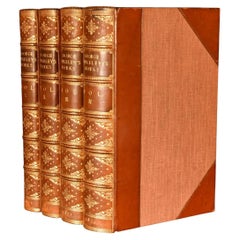
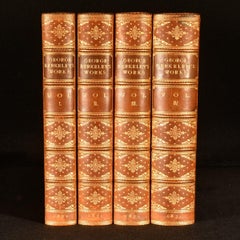
A smart Morrell bound set of the collected works of Bishop George Berkeley, alongside a life of the Bishop, and a selection of his letters. Complete in four volumes. Bound by Morrell. The collected works of George Berkeley, alongside a short biographical account of his life, and a selection of his letters. George Berkeley was an Anglo-Irish philosopher and Bishop, who advanced the theory of immaterialism through his writings, and also critiqued abstraction. These volumes include the most important writings of Berkeley, such as 'A Treatise Concerning the Principles of Human Knowledge', 'Three Dialogues Between Hylas and Philonous', 'An Essay Towards a New Theory of Vision', and 'De Motu', in which he argues against Isaac Newton's theories on absolute space, time, and motion. The views expressed in 'De Motu' were a precursor to the views of Albert Einstein. This edition was collected and edited, with prefaces and annotations, by Alexander Campbell...

Category

Antique 1870s British Books

Materials

Paper

Marion Maas Modernist Painting of Two Women

Marion Maas Modernist Painting of Two Women

By Marion Maas

Located in New York, NY

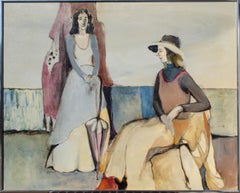
Marion Maas (American, b. 1930) Peggy - Brown + Gray, c. 1980s Oil on canvas Framed: 24 1/8 x 30 1/8 x 1 1/2 in. Signed lower right Titled verso on stretch...

Category

Late 20th Century Contemporary Figurative Paintings

Materials

Canvas, Oil

Portrait of Margaret Webster

Portrait of Margaret Webster

By Trude Fleischmann

Located in New York, NY

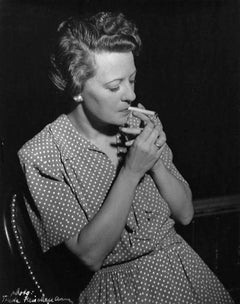
Vintage ferrotyped silver print Signed in ink, recto Artist credit stamp, verso 10 x 8 inches, sheet This photograph is offered by ClampArt, located in New York City. Born in Vienna in 1895, Trude Fleischmann became a prominent society photographer in the 1920s. Her Vienna studio...

Category

1930s Other Art Style Portrait Photography

Materials

Black and White

Dali Cyclops

Dali Cyclops

By Philippe Halsman

Located in Buffalo, NY

The work offered for sale here is an original vintage silver gelatin print hand created by Halsman and used as the cover proof for the "Dali Mustache Book". Philippe Halsman was at one point considered the best photo-portraitist in France. He had an incessant interest in faces: “Every face I see seems to hide—and sometimes fleetingly reveal—the mystery of another human being.” Halsman’s photographs of politicians, celebrities, and intellectuals were featured widely in magazines like LIFE and Vogue. His more famous subjects included the likes of Marc Chagall, Le Corbusier, Audrey Hepburn, and Albert Einstein. He also had a 37-year collaboration with Salvador Dalí, which resulted in several famous surrealist series including the “Dalí’s Mustache” portraits...

Category

1950s Surrealist Portrait Photography

Materials

Silver Gelatin

Countryside - Lithograph by Hans Erni - 1960s

Countryside - Lithograph by Hans Erni - 1960s

By Hans Erni

Located in Roma, IT

Countryside is a lithograph realized by Hans Erni, in the 1960s. Two men, seated side by side, probably refresh themselves in a moment of rest from work in the fields. 32x24 cm, no frame. Good conditions. Hans Erni (1909-2015) . He Undertook technical studies, but after his first encounter with art literature in 1927, he set out to study art in Lucerne. He studied in Berlin and Paris, where he had the opportunity to associate with artists who would mark his artistic evolution: Kandinsky, Mondrian, Brancusi, Calder and, in particular, Georges Braque and Picasso. The influence of the latter on his graphic trait was such as to earn him the nickname of Swiss Picasso. He followed a period of travel to Belgium, Italy and, in the late 1930s, London where he encountered abstract art. Here he frequented the painter Ben Nicholson and the sculptors Henry Moore and Barbara Hepworth, among the leading exponents of English abstract art. From 1930 to 1934 he worked under the pseudonym François Grèque. He was one of the founders of the abstract art group Allianz. In 1950 he made his first pottery. In the 1950s he worked for UNESCO and the World Health Organization. For the Principality of Liechtenstein he designed two series of stamps: "Winter Olympics" and "Summer Olympics". He also produced other sets of stamps for the United Nations and the Swiss Post, as well as numerous portraits of celebrities, such as Albert Einstein. On December 23, 1976, the Hans Erni Foundation was established which promotes exhibitions, conferences and other cultural events. since 1981 the foundation has supported the "Panta rei...

Category

1960s Modern Figurative Prints

Materials

Lithograph

Preliminary Study for a Sculpture Project

Preliminary Study for a Sculpture Project

By Boris Lovet-Lorski

Located in Fairlawn, OH

Preliminary Study for a Sculpture Project Graphite, charcoal and wash on tracing paper, c. 1930-1940 Signed upper left and lower left (see both photos) Created while the artist was l...

Category

1930s American Modern Figurative Drawings and Watercolors

Materials

Charcoal

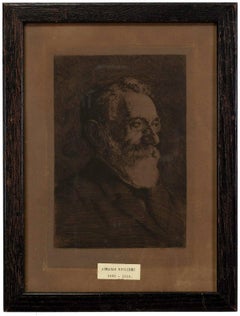
Portrait of Professor Rabbi Abraham Berliner

Portrait of Professor Rabbi Abraham Berliner

By Hermann Struck

Located in Surfside, FL

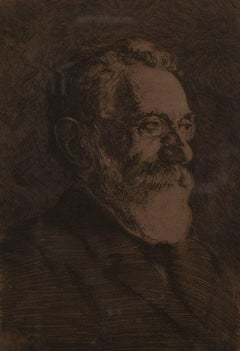
Genre: Judaica Subject: People Medium: Print Surface: Paper Dimensions w/Frame: 15" x 11" Hermann Struck (6 March 1876 – 11 January 1944) was a German Jewish artist known for his e...

Category

Early 20th Century Modern Figurative Prints

Materials

Etching

The Broken Hearts Planet. Abstract Digital Color Collage Photograph

The Broken Hearts Planet. Abstract Digital Color Collage Photograph

By Zoltan Gerliczki

Located in Miami Beach, FL

In his series entitled “Broken Planet,” Zoltan depicts a broken planet alongside 13 other “planets” based on the most common human feelings or behaviors, such as happiness, sadness, ...

Category

21st Century and Contemporary Modern Color Photography

Materials

Color, Pigment, Archival Pigment

The Sadness Planet. Broken Planet Series. Abstract Digital Collage Color Photo

The Sadness Planet. Broken Planet Series. Abstract Digital Collage Color Photo

By Zoltan Gerliczki

Located in Miami Beach, FL

In his series entitled “Broken Planet,” Zoltan depicts a broken planet alongside 13 other “planets” based on the most common human feelings or behaviors, such as happiness, sadness, ...

Category

21st Century and Contemporary Modern Color Photography

Materials

Color, Pigment, Archival Pigment

The Racist Planet. Broken Planet Series. Abstract Digital Collage Color Photo

The Racist Planet. Broken Planet Series. Abstract Digital Collage Color Photo

By Zoltan Gerliczki

Located in Miami Beach, FL

In his series entitled “Broken Planet,” Zoltan depicts a broken planet alongside 13 other “planets” based on the most common human feelings or behaviors, such as happiness, sadness, ...

Category

21st Century and Contemporary Modern Color Photography

Materials

Color, Pigment, Archival Pigment

The Broken Mind Planet. Abstract Digital Color Collage Photograph

The Broken Mind Planet. Abstract Digital Color Collage Photograph

By Zoltan Gerliczki

Located in Miami Beach, FL

In his series entitled “Broken Planet,” Zoltan depicts a broken planet alongside 13 other “planets” based on the most common human feelings or behaviors, such as happiness, sadness, ...

Category

21st Century and Contemporary Modern Color Photography

Materials

Color, Pigment, Archival Pigment

The Joy Planet. The Broken Planet series. Abstract Digital Collage Color Photo

The Joy Planet. The Broken Planet series. Abstract Digital Collage Color Photo

By Zoltan Gerliczki

Located in Miami Beach, FL

In his series entitled “Broken Planet,” Zoltan depicts a broken planet alongside 13 other “planets” based on the most common human feelings or behaviors, such as happiness, sadness, ...

Category

21st Century and Contemporary Modern Color Photography

Materials

Color, Pigment, Archival Pigment

The Shame Planet. The Broken Planet Series. Abstract Digital Collage Color Photo

The Shame Planet. The Broken Planet Series. Abstract Digital Collage Color Photo

By Zoltan Gerliczki

Located in Miami Beach, FL

In his series entitled “Broken Planet,” Zoltan depicts a broken planet alongside 13 other “planets” based on the most common human feelings or behaviors, such as happiness, sadness, ...

Category

21st Century and Contemporary Modern Color Photography

Materials

Color, Pigment, Archival Pigment

The Trust Planet. Broken Planet Series. Abstract Digital Collage Color Photo

The Trust Planet. Broken Planet Series. Abstract Digital Collage Color Photo

By Zoltan Gerliczki

Located in Miami Beach, FL

In his series entitled “Broken Planet,” Zoltan depicts a broken planet alongside 13 other “planets” based on the most common human feelings or behaviors, such as happiness, sadness, ...

Category

21st Century and Contemporary Modern Color Photography

Materials

Color, Pigment, Archival Pigment

The Excitement Planet. The Broken Planet Series. Abstract Digital Collage Photo

The Excitement Planet. The Broken Planet Series. Abstract Digital Collage Photo

By Zoltan Gerliczki

Located in Miami Beach, FL

In his series entitled “Broken Planet,” Zoltan depicts a broken planet alongside 13 other “planets” based on the most common human feelings or behaviors, such as happiness, sadness, anger, anticipation, fear, loneliness, jealousy, disgust, trust, greed, joy, racism, and shame. In these images, the artist works with various fragments of colored glass and other debris that he collected from the streets near his home in Atlanta during the COVID-19 quarantine and political protests. Zoltan assembles these pieces in his studio and re-photographs them to symbolize the current crisis of political and environmental problems. At this moment, the most pressing issues of our time concern ourselves and the future of our culture and our planet. In a sense, the artist takes the pieces and puts them back together to reconstruct a fragmented world. “The world is a dangerous place to live, not because of the people who are evil, but because of the people who do nothing about it.” -Albert Einstein Zoltan Gerliczki...

Category

21st Century and Contemporary Modern Color Photography

Materials

Color, Pigment, Archival Pigment

The Fear Planet. The Broken Planet Series. Abstract Digital Collage Photograph

The Fear Planet. The Broken Planet Series. Abstract Digital Collage Photograph

By Zoltan Gerliczki

Located in Miami Beach, FL

In his series entitled “Broken Planet,” Zoltan depicts a broken planet alongside 13 other “planets” based on the most common human feelings or behaviors, such as happiness, sadness, ...

Category

21st Century and Contemporary Modern Color Photography

Materials

Color, Pigment, Archival Pigment

The Anger Planet. The Broken Planet Series. Abstract Digital Collage Photograph

The Anger Planet. The Broken Planet Series. Abstract Digital Collage Photograph

By Zoltan Gerliczki

Located in Miami Beach, FL

In his series entitled “Broken Planet,” Zoltan depicts a broken planet alongside 13 other “planets” based on the most common human feelings or behaviors, such as happiness, sadness, ...

Category

21st Century and Contemporary Modern Color Photography

Materials

Color, Pigment, Archival Pigment

The Broken Planet. Abstract Digital Color Collage Photograph

The Broken Planet. Abstract Digital Color Collage Photograph

By Zoltan Gerliczki

Located in Miami Beach, FL

In his series entitled “Broken Planet,” Zoltan depicts a broken planet alongside 13 other “planets” based on the most common human feelings or behaviors, such as happiness, sadness, ...

Category

21st Century and Contemporary Modern Color Photography

Materials

Pigment, Archival Pigment, Color

Love Scene Under a Tree / - At the breast of Mother Nature -

Love Scene Under a Tree / - At the breast of Mother Nature -

By Emil Orlik

Located in Berlin, DE

Emil Orlik (1870 Prague - 1932 Berlin), Love Scene Under a Tree, 1912. Mixed media on paper, 14.5 cm x 25 cm (sheet size), 35.5 cm x 46 cm (frame), signed “ORLIK.” lower right and da...

Category

1910s Modern Nude Drawings and Watercolors

Materials

Watercolor

Denny Dent Jim Morrison Large 4' Yellow and Orange Portrait

Denny Dent Jim Morrison Large 4' Yellow and Orange Portrait

By Denny Dent

Located in Minneapolis, MN

Artist: Denny Dent Title: Jim Morrison Medium: Original Oil Painting on Paper Size: 48" x 36" Inscription: Stamped with Denny Dent insignia Year: ca. 1990 Condition: Several small te...

Category

1990s Portrait Paintings

Materials

Oil, Paper

The True Marilyn (1956)

The True Marilyn (1956)

By Philippe Halsman

Located in Buffalo, NY

The work offered for sale here is an original vintage silver gelatin print hand created by Halsman in 1956. This work comes in an archival frame presentation. The image alone is approximately 9 x 13. The work was acquired directly from the artist and comes with a COA and lifetime guarantee. Philippe Halsman was at one point considered the best photo-portraitist in France. He had an incessant interest in faces: “Every face I see seems to hide—and sometimes fleetingly reveal—the mystery of another human being.” Halsman’s photographs of politicians, celebrities, and intellectuals were featured widely in magazines like LIFE and Vogue. His more famous subjects included the likes of Marc Chagall, Le Corbusier, Audrey Hepburn, and Albert Einstein. He also had a 37-year collaboration with Salvador Dalí, which resulted in several famous surrealist series including the “Dalí’s Mustache” portraits...

Category

1950s Modern Portrait Photography

Materials

Photographic Paper, Silver Gelatin

Preliminary Study for Cretan Dancer Bronze

Preliminary Study for Cretan Dancer Bronze

By Boris Lovet-Lorski

Located in Fairlawn, OH

Preliminary Study for Cretan Dancer Bronze Graphite on tracing paper, 1930 Unsigned Note: The bronze sculpture measures 24 1/2 x 33 5/8 inches and is signed and dated 1930 on the bas...

Category

1930s Art Deco Nude Drawings and Watercolors

Materials

Graphite

Juan Carlos Iramain (1900-1973), Bronze relief of bearded man

Juan Carlos Iramain (1900-1973), Bronze relief of bearded man

Located in Sleepy Hollow, NY

A striking bronze relief featuring a bearded man, reminiscent of Antiquity's 'death masks', signed Juan Carlos Iramain (1900-1973). Set onto an ebonized square base. Also inscribed w...

Category

Vintage 1940s Argentine Busts

Materials

Bronze

TIME (8) – Plant-Dyed Botanical Art on Cotton Canvas with Iron Sulphate

TIME (8) – Plant-Dyed Botanical Art on Cotton Canvas with Iron Sulphate

Located in Spring Valley, NY

“Time (8)” is one of the most explicitly conceptual works in the series, referencing Albert Einstein’s Block Spacetime Theory, in which past, present, and future coexist simultaneous...

Category

2010s Turkish Modern Paintings

Materials

Paint