194 results for "maki-e lacquer"

to
5
87
37
106
51
40
34
27
20
12
10
9
8
7
6
5
5
5
3
2
2
2
2
1
1
1
1
1
1
1
1
1
2
1
1
1
1
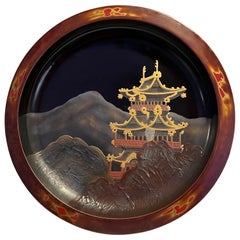
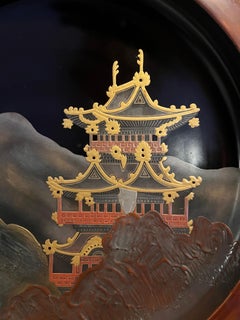
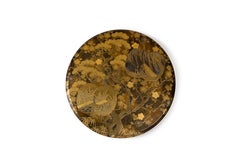
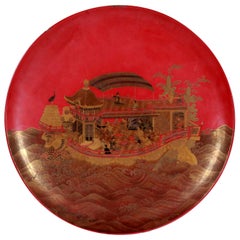
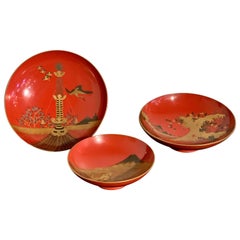
Japanese Export Lacquer Tray Maki-e & Mnt Fuji Pagoda Decoration Taisho Period

Japanese Export Lacquer Tray Maki-e & Mnt Fuji Pagoda Decoration Taisho Period

Located in Atlanta, GA

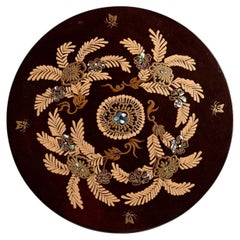
Japanese, Taisho period. A very fine quality Japanese lacquer tray. The tray is heavily decorated with a traditional Maki-e gold, black & red surface. Done by an expert craftsman - this round tray appears to depict a pagoda atop Mount. Fuji. The verso is adorned with 3 iron mounts and hand woven cloth...

Category

Early 20th Century Japanese Chinese Export Lacquer

Materials

Lacquer

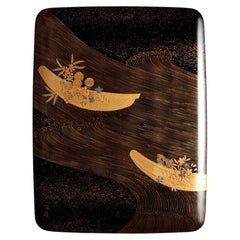
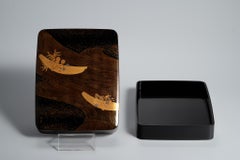
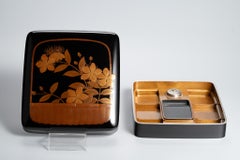
Showa Period Wajimaya Zenni Gold Maki-e Flower Boat Suzuribako

Showa Period Wajimaya Zenni Gold Maki-e Flower Boat Suzuribako

Located in Taichung, TW

The Design & Impact: This highly refined writing box (suzuribako) beautifully captures a lyrical Japanese aesthetic. The cover features a flowing, rhythmic composition of finely...

Category

20th Century Japanese Lacquer

Materials

Wood, Lacquer

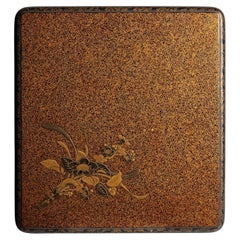
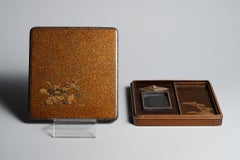
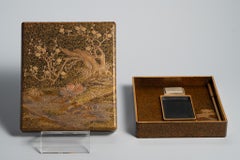
Edo Gold Nashiji Maki-e Suzuribako, Camellia & Plum

Edo Gold Nashiji Maki-e Suzuribako, Camellia & Plum

Located in Taichung, TW

The Design & Impact: This exquisite antique writing box (suzuribako) beautifully illustrates an elegant, highly decorative floral composition. The exterior and the interior lid (...

Category

Antique Late 18th Century Japanese Lacquer

Materials

Lacquer

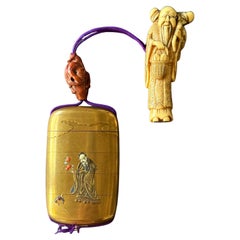
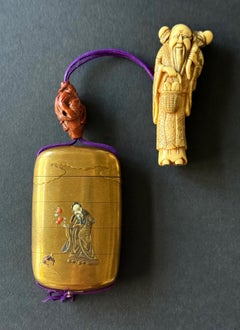
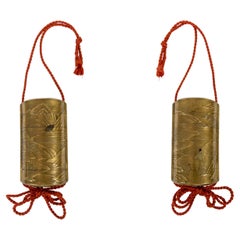
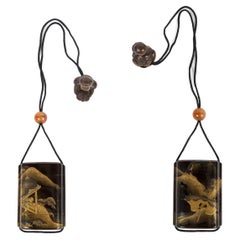
Fine Japanese Inro with Maki-e and Inlay by Shokasai and Shibayama

Fine Japanese Inro with Maki-e and Inlay by Shokasai and Shibayama

By Shibayama Factory

Located in Atlanta, GA

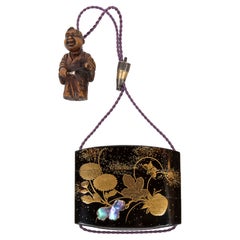
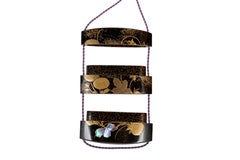
A Japanese four-case inro stringed together with a silk cord of a carved wood Ojime and a carved ivory netsuke circa 19th century of Edo period. This fine piece was made in collabora...

Category

Antique 19th Century Japanese Edo Lacquer

Materials

Wood, Lacquer

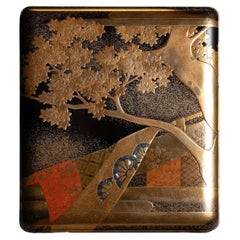
Edo Period Gold Maki-e Momijigari Suzuribako

Edo Period Gold Maki-e Momijigari Suzuribako

Located in Taichung, TW

The Design & Impact: This exceptional writing box, known as a suzuribako, captures the elegant spirit of traditional Japanese court culture. The cover features a stunning "Momiji...

Category

Antique 18th Century Japanese Lacquer

Materials

Lacquer

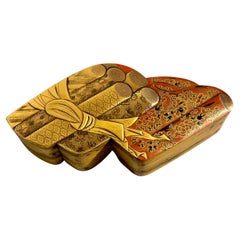
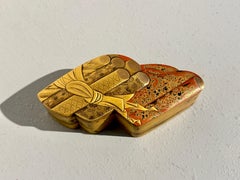
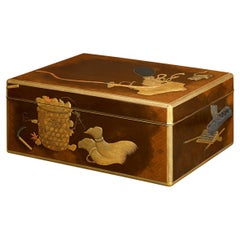
Japanese Lacquer Accessories Box, Tebako, Brocade Design, Meiji Period, Japan

Japanese Lacquer Accessories Box, Tebako, Brocade Design, Meiji Period, Japan

Located in Austin, TX

A very fine Japanese lacquer tebako, box for personal accessories, in the form of rolled bolts of brocade fabric, Meiji Period, late 19th century, Japan. The box is whimsically shap...

Category

Antique Late 19th Century Japanese Meiji Lacquer

Materials

Softwood, Lacquer

Edo Period Kajikawa Gold Maki-e & Raden Bird Suzuribako

Edo Period Kajikawa Gold Maki-e & Raden Bird Suzuribako

Located in Taichung, TW

The Design & Impact: This elegant writing box (suzuribako) beautifully captures a tranquil, naturalistic scene of water birds resting among delicate reeds and blooming flowers. T...

Category

Antique 18th Century Japanese Lacquer

Materials

Wood, Lacquer

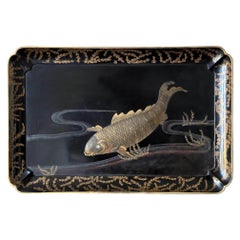
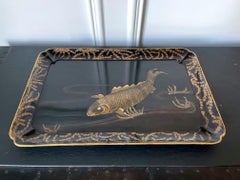
Large Japanese Lacquer Tray with Maki-e Carp Design Meiji Period

Large Japanese Lacquer Tray with Maki-e Carp Design Meiji Period

Located in Atlanta, GA

A large rectangular tray with scalloped corners and slightly raised gallery rim circa late 19th century to early 20th century (end of Meiji period). The center image showcases a live...

Category

Early 20th Century Japanese Japonisme Lacquer

Materials

Lacquer

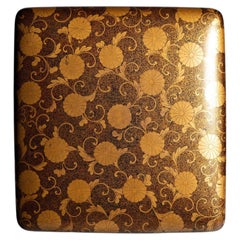
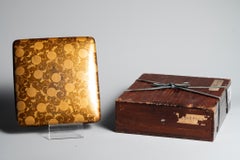
Meiji Gold Nashiji Maki-e Suzuribako, Chrysanthemum & Karakusa

Meiji Gold Nashiji Maki-e Suzuribako, Chrysanthemum & Karakusa

Located in Taichung, TW

The Design & Impact: This majestic writing box (suzuribako) showcases a breathtaking, classical Yamato-e style composition. The design features elegant chrysanthemums and flowing...

Category

Antique Late 19th Century Japanese Lacquer

Materials

Lacquer

Meiji Pure Gold Maki-e Suzuribako, Wild Cherry Blossoms

Meiji Pure Gold Maki-e Suzuribako, Wild Cherry Blossoms

Located in Taichung, TW

The Design & Impact: This exquisite writing box (suzuribako) captures the breathtaking beauty of wild cherry blossoms (sakura) blooming across a mountainous landscape. The lid fe...

Category

Antique 19th Century Japanese Lacquer

Materials

Lacquer

Meiji Imperial Gold Maki-e Suzuribako, Mandarin Ducks

Meiji Imperial Gold Maki-e Suzuribako, Mandarin Ducks

Located in Taichung, TW

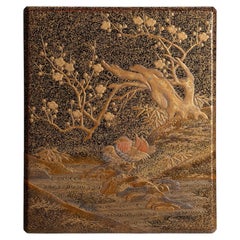
The Design & Impact:This magnificent antique writing box (suzuribako) beautifully illustrates an auspicious scene of mandarin ducks resting by a stream beneath an ancient plum tr...

Category

Antique Late 19th Century Japanese Lacquer

Materials

Wood, Lacquer

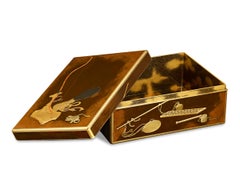
Japanese Lacquer Box

Japanese Lacquer Box

Located in New Orleans, LA

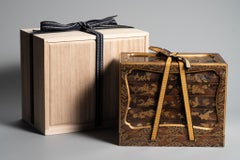
This exquisite Meiji-period lacquer document box known as a ryoshibako showcases the meticulous artistry of maki-e, a technique of raised lacquer decoration. Adorned with gold and vi...

Category

Antique 19th Century Asian Meiji Lacquer

Materials

Gold

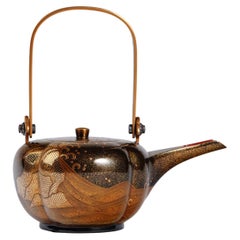
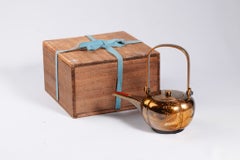
Japanese Wajima Lacquer Chōshi with Crashing Waves and Rocks in Gold Maki-e

Japanese Wajima Lacquer Chōshi with Crashing Waves and Rocks in Gold Maki-e

Located in Taichung, TW

The Design & Impact: This elegant Wajima lacquer chōshi features a dramatic composition of crashing waves striking against rocky forms, rendered in raised maki-e. The sweeping curve...

Category

Late 20th Century Japanese Lacquer

Materials

Lacquer, Urushi lacquer

Edo Period Daimyo Gold Maki-e Suzuribako, Pine & Wagtail

Edo Period Daimyo Gold Maki-e Suzuribako, Pine & Wagtail

Located in Taichung, TW

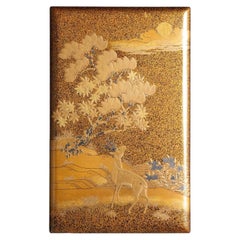
The Design & Impact: This extraordinary mid Edo period writing box (suzuribako) represents the absolute pinnacle of aristocratic samurai aesthetics. The cover is masterfully deco...

Category

Antique 18th Century Japanese Lacquer

Materials

Wood, Lacquer

Edo Period Gold Nashiji Maki-e Suzuribako, Hen & Chicks

Edo Period Gold Nashiji Maki-e Suzuribako, Hen & Chicks

Located in Taichung, TW

The Design & Impact: This exquisite Edo-period writing box (suzuribako) beautifully illustrates a lively and heartwarming natural scene. The cover features a dynamic composition ...

Category

Antique 18th Century Japanese Lacquer

Materials

Lacquer

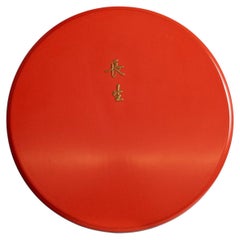
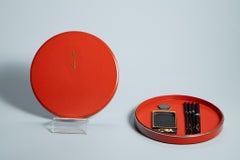
Showa Period Red Lacquer Gold Maki-e Round Suzuribako by Jusui

Showa Period Red Lacquer Gold Maki-e Round Suzuribako by Jusui

Located in Taichung, TW

The Design & Impact: This striking round writing box (suzuribako) immediately commands attention with its vibrant red lacquer canvas. The exterior and interior are beautifully de...

Category

Early 20th Century Japanese Lacquer

Materials

Wood, Lacquer

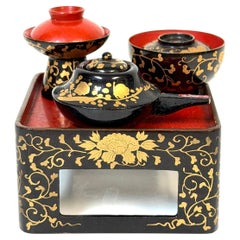
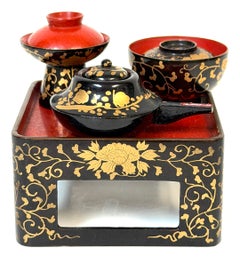
Japanese Meiji Miniature Gold Maki-e Ceremonial Sake and Dining Set

Japanese Meiji Miniature Gold Maki-e Ceremonial Sake and Dining Set

Located in West Palm Beach, FL

Japanese Meiji Miniature Gold Maki-e Ceremonial Sake and Dining Set An unusually detailed miniature Japanese ceremonial sake and dining service from the Meiji period, circa 1880–190...

Category

Antique Early 1900s Japanese Meiji Lacquer

Materials

Lacquer

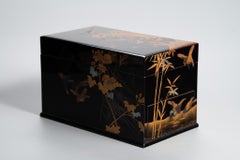
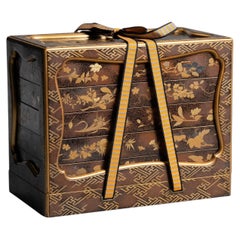
Antique Gold Nashiji Maki-e Tiered Writing Box, 19th century

Antique Gold Nashiji Maki-e Tiered Writing Box, 19th century

Located in Taichung, TW

The Design & Impact: This incredibly rare, multi-layered writing box (kasane suzuribako) perfectly encapsulates the deep sense of ceremony and refined aestheticism of the tradit...

Category

Antique 19th Century Japanese Lacquer

Materials

Wood, Lacquer

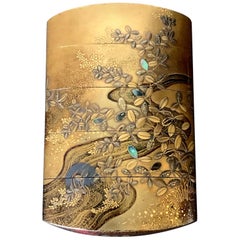
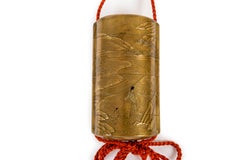
Fine Japanese Lacquered Inro with Inlays by Kajikawa

Fine Japanese Lacquered Inro with Inlays by Kajikawa

Located in Atlanta, GA

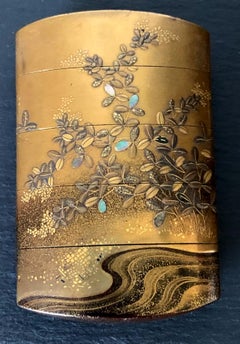
A Japanese four-case lacquer inro by a member of Kajikawa family circa 19th century (late Edo to early Meiji period). It depicts a nocturnal scenery of a meandering stream surrounded by bush clovers, where a full moon is reflected on the water. It was masterfully decorated in gold and silver maki-e using a combination of techniques including takamakie, togidashi and kirigane as well as aogai (abalone shell) inlays. The stream was set between the slightly elevated banks, adding to this piece a already strong three-dimensional composition. The interior was decorated in gold nashiji. It was signed on the bottom "Kajikawa Zou" (made by Kajikawa and a pot seal centered with "Ei" in Kanji. In one of the compartment, there is a katakana mark, appears to be a name, possibly the owner. Kajikawa clan was one of the most famous lacquer artisanal family established in the 17th century. Many well known members over the generations produced lacquer art in a wide range of formats, but two third were signed only with the family name such as this one. It is therefore not possible to pinpoint the exact author of this piece. Provenance: This inro was purchased as lot 349 in Christie's New York sale Japanese...

Category

Antique 19th Century Japanese Japonisme Lacquer

Materials

Shell, Wood, Lacquer

Showa Period Kyoto Zohiko Maki-e Floral Crest Document & Writing Box Set

Showa Period Kyoto Zohiko Maki-e Floral Crest Document & Writing Box Set

Located in Taichung, TW

The Design & Impact: This extraordinary matched set of a document box (ryoshi-bako) and a writing box (suzuribako) exemplifies the restrained, aristocratic elegance of Kyoto lacq...

Category

Mid-20th Century Japanese Lacquer

Materials

Wood, Lacquer

MEIJI PERIOD 1890 Maki-e Presentation Tray In Lacquer & Gold With Kanji Wood Box

MEIJI PERIOD 1890 Maki-e Presentation Tray In Lacquer & Gold With Kanji Wood Box

Located in Miami, FL

A large maki-e presentation tray from the Meiji period. This is an extraordinary presentation rectangular tray created in the Imperial Japan period during the pinnacle of the Meiji ...

Category

Antique 1890s Japanese Meiji Lacquer

Materials

Gold, Silver

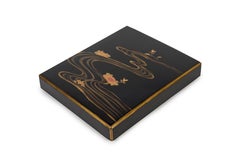
Suzuribako or writting box circular shape in nashiji and gold lacquer

Suzuribako or writting box circular shape in nashiji and gold lacquer

Located in PARIS, FR

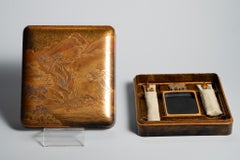
Suzuribako (writing box) in black lacquer, rectangular in shape, with a gold lacquer (maki-e) decoration of a pavilion by the edge of a waterfall and a mountain river surrounded by v...

Category

Antique Late 18th Century Japanese Edo Lacquer

Materials

Gold Leaf

Meiji Period Paulownia Crest Maki-e Kashiki Candy Dish with Cover

Meiji Period Paulownia Crest Maki-e Kashiki Candy Dish with Cover

Located in Taichung, TW

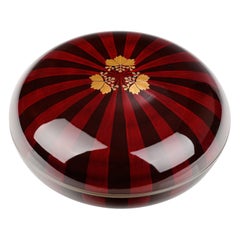
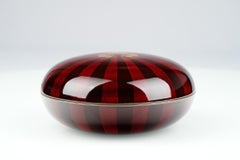
This Meiji period kashiki candy dish presents a graceful and dignified presence. The rounded form is finished in two deep red lacquers arranged in a radiant pattern, accented with el...

Category

Antique Late 19th Century Japanese Meiji Lacquer

Materials

Wood, Lacquer

Taisho Imperial Gold Maki-e Flower Basket Suzuribako by Tozan

Taisho Imperial Gold Maki-e Flower Basket Suzuribako by Tozan

Located in Taichung, TW

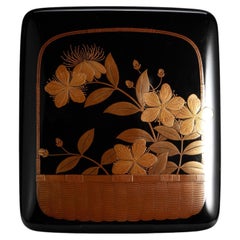
The Design & Impact: This extraordinary writing box (suzuribako) exudes the dignified elegance of classical Imperial commissions. The cover features a highly refined, classical c...

Category

20th Century Japanese Lacquer

Materials

Wood, Lacquer

Gold Maki-e & Abalone Round Butterflies Suzuribako by Shunko

Gold Maki-e & Abalone Round Butterflies Suzuribako by Shunko

Located in Taichung, TW

The Design & Impact: This elegant round writing box (suzuribako) presents a breathtaking vision of Horai, the mythological utopian realm of eternal joy. The cover features a highly complex, balanced circular composition of intertwining hosoge (imaginary auspicious Buddhist flowers...

Category

Antique Late 19th Century Japanese Lacquer

Materials

Lacquer

Showa Period Gold Maki-e Landscape & Crane Document Box by Kakuzan

Showa Period Gold Maki-e Landscape & Crane Document Box by Kakuzan

Located in Taichung, TW

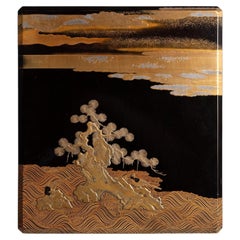
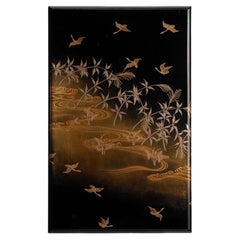
The Design & Impact: This elegant document box (fubako) beautifully captures a dynamic and poetic natural landscape. The cover features a sophisticated diagonal composition depi...

Category

20th Century Japanese Lacquer

Materials

Wood, Lacquer

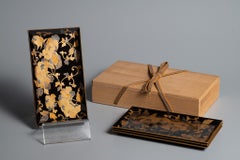
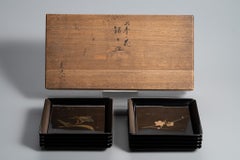
Antique Gold Maki-e Peony & Arabesque Rectangular Plates, Set of 4

Antique Gold Maki-e Peony & Arabesque Rectangular Plates, Set of 4

Located in Taichung, TW

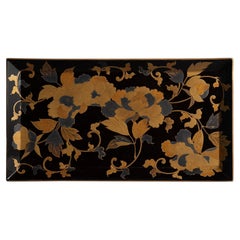
The Design & Impact: This exquisite set of four antique rectangular plates (meimeizara) features an elegant, elongated silhouette and a beautifully cohesive composition. The desi...

Category

20th Century Japanese Lacquer

Materials

Wood, Lacquer

Japanese Sagemono Inro box with a maki-e decor of a Samuari in a lake landscape

Japanese Sagemono Inro box with a maki-e decor of a Samuari in a lake landscape

Located in PARIS, FR

Inrô in gilded lacquer according to the takamaki-e, hiramaki-e and kirigane techniques, with five squares of a mountain lake landscape. On the first side, there is a man on horsebac...

Category

Antique 18th Century Japanese Edo Lacquer

Materials

Gold

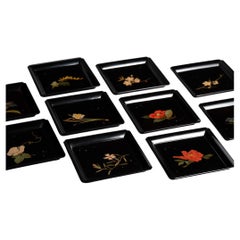
Living National Treasure Terai Naoji Maki-e Plates, Set of 10

Living National Treasure Terai Naoji Maki-e Plates, Set of 10

Located in Taichung, TW

The Design & Impact: This extraordinary set of ten plates (meimeizara) presents a breathtaking journey through the traditional Japanese seasons. Each plate features a unique, hig...

Category

20th Century Japanese Lacquer

Materials

Wood, Lacquer

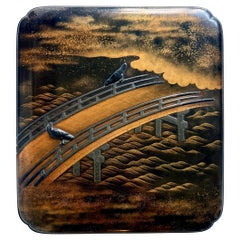
Exquisite Japanese Lacquer Maki-e Suzuribako by Koma Kyūhaku Edo Period

Exquisite Japanese Lacquer Maki-e Suzuribako by Koma Kyūhaku Edo Period

Located in Atlanta, GA

One of the finest Japanese Maki-e Suzuribakos (ink box) we have on offer, the roiro color box showcases an ambient nocturnal scene in which two shakudo inlaid crows perched on the ha...

Category

Antique Early 19th Century Japanese Edo Lacquer

Materials

Stone, Metal

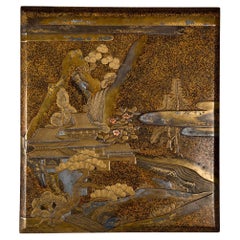
Suzuribako or writing box made of nashiji lacquer and adorned with a landscape

Suzuribako or writing box made of nashiji lacquer and adorned with a landscape

Located in PARIS, FR

Suzuribako, or writing box, of rectangular shape, decorated with an imposing architecture realized in hira maki-e lacquer, probably a palatial structure, situated beside a waterfall...

Category

Antique Late 18th Century Japanese Edo Lacquer

Materials

Gold Leaf

Wakasa-Nuri Lacquer Bundai, Ryoshobako, Fubako Set

Wakasa-Nuri Lacquer Bundai, Ryoshobako, Fubako Set

Located in PARIS, FR

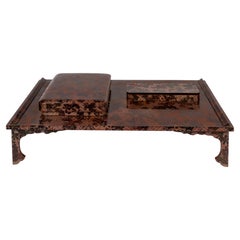
Set of bundai, ryoshibako and fudebako in wakasa lacquer with an old rose background and black traditional Japanese patterns. The saya pattern (or sayagata) is composed by Chinese svastikas. This symbol linked to Buddhism, mean intelligence, power and peace. It is a good omen sign. The kanoko pattern reminds stains on fawn back. The sakura (cherry blossom) pattern is emblematic of Japan. The blossoming in a short time marks spring beginning and is a symbol of renewal and ephemeral beauty. There are also traces of calligraphy brush, in reference to the function of the objects. Bundai is a low table used to put books or scrolls and, later, to write. Rectangular ryoshibako (letter and document box) with a slightly domed Fudebako (pencil case) of rectangular format very narrow in its length with two rounded corners, flat cover. Wakasa lacquerware...

Category

Early 20th Century Japanese Lacquer

Materials

Lacquer

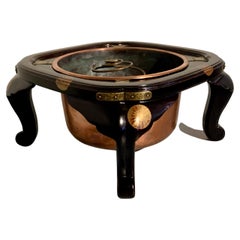
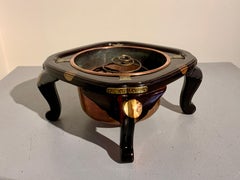
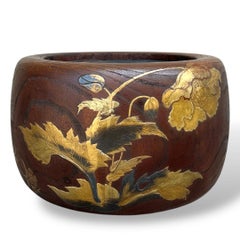
Exceptional Japanese Lacquered Hibachi with Poppy Flowers in Gold and Silver Mak

Exceptional Japanese Lacquered Hibachi with Poppy Flowers in Gold and Silver Mak

Located in Fukuoka, JP

This magnificent hibachi (charcoal brazier), likely custom-made to order, exemplifies the pinnacle of Japanese lacquer artistry of the 19th century. Carved from solid wood with a ric...

Category

Antique 19th Century Japanese Edo Lacquer

Materials

Copper

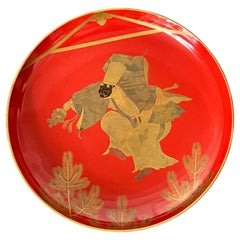
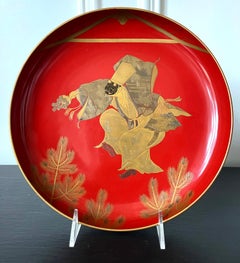
Japanese Lacquer Maki-e Plate of Masked Dancer

Japanese Lacquer Maki-e Plate of Masked Dancer

Located in Atlanta, GA

A large circular plate with a short stem base in Vermillion lacquer color from Late Meiji Period circa end of 19th century to early 20th century. ...

Category

Antique 19th Century Japanese Meiji Lacquer

Materials

Lacquer

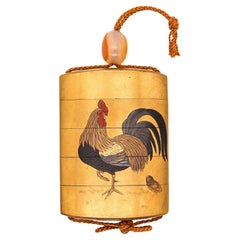
Japan 1810 Kajikawa Edo Period Five Drawer Inro Lacquered Gilt Wood With Rooster

Japan 1810 Kajikawa Edo Period Five Drawer Inro Lacquered Gilt Wood With Rooster

Located in Miami, FL

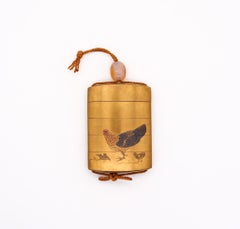
Japanese Inro from the Edo period (1615-1868) created by Kajikawa. Beautiful Inro, created in Japan by one of the Kajikawa family during the Edo period (1615-1868), circa 1810. Has been carefully crafted in carved precious wood with applications of gilding maki-e and decorated with Japonism patterns. All dan trays are attached together with a himo cord. The detailed craftsmanship was a true pleasure to behold. Period: Edo period (1615-1868). Shogunate. Approximate Date: 1790-1810 Motif: A family of birds consisting of a cockerel, the hen and three chicks. Drawers: Five. Shape: Rectangular navette. Technique: Carved wood, lacquer and decorated in iroe-hiramaki-e on a gold ground. Ojime: 15mm 20mm, oval carved from natural translucent agate. Netsuke: None Weight: 47.70 Grams. Measurements: Inro is 78 mm by 55 mm by 18 mm (3.07 x 2.17 x 0.71 Inches). Signatures: Kajikawa Saku, in the underside with the signature KAJIKAWA. By a member of the Kajikawa family, signed Kajikawa 梶川 Japan, late 18th century to early 19th century, Edo period (1615-1868). The Kajikawa family Kajikawa family, flourished in the 19th century, they was Japanese lacquerware artists whose school in Edo (now Tokyo) flourished for more than 200 years. This family is perhaps the most famous of all the dynasties of Japanese lacquer artists, and certainly the name most often found on inro. The family is said to have been founded by Hikobei at Edo in the early 17th century, although some claim that the family’s great reputation really stemmed from his son and pupil Kyujiro. In any event, Hikobei worked for the shogunate, as did his successors until well into the 19th century. Kijirō excelled in designing particularly delicate lacquer inrō, portable medicine cases...

Category

Antique 1810s Japanese Edo Lacquer

Materials

Agate, Gold

19th century Japanese Lacquer Zataku (low table) with Scattered fan Motif

19th century Japanese Lacquer Zataku (low table) with Scattered fan Motif

Located in New York, NY

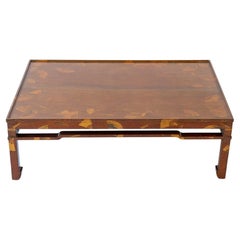
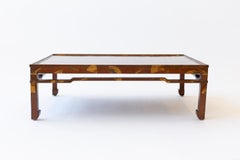
This Japanese antique low table features a scattered fan motif and is a type of zataku (low table), historically used for meals, tea ceremonies, and other seated activities. Lacque...

Category

Antique Late 19th Century Japanese Lacquer

Materials

Gold Leaf

Japanese writting set in waqasa lacquer including bundai ryoshibako and fudebako

Japanese writting set in waqasa lacquer including bundai ryoshibako and fudebako

Located in PARIS, FR

Set of bundai, ryōshibako and fudebako in wakasa lacquer with an old rose background and black traditional Japanese patterns. The saya pattern (or sayagata) is composed by Chinese svastikas. This symbol linked to Buddhism, mean intelligence, power and peace. It is a good omen sign. The kanoko pattern reminds stains on fawn back. The sakura (cherry blossom) pattern is emblematic of Japan. The blossoming in a short time marks spring beginning and is a symbol of renewal and ephemeral beauty. There are also traces of calligraphy brush, in reference to the function of the objects. Bundai is a low table used to put books or scrolls and, later, to write. Rectangular ryōshibako (letter and document box) with a slightly domed Fudebako (pencil case) of rectangular format very narrow in its length with two rounded corners, flat cover. Wakasa lacquerware...

Category

Early 20th Century Japanese Taisho Lacquer

Materials

Lacquer

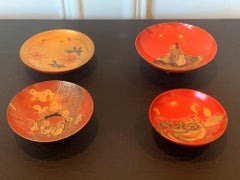
Four Japanese Lacquered Sake Cups Meiji Period

Four Japanese Lacquered Sake Cups Meiji Period

Located in Atlanta, GA

An assemble of four lacquerware sake cups from Meiji period Japan circa late 19th century. The shadow cups on an elevated stem were used by the nobles during ...

Category

Antique Late 19th Century Japanese Meiji Lacquer

Materials

Wood, Lacquer

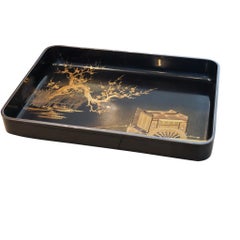
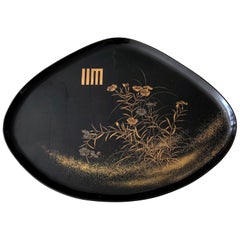
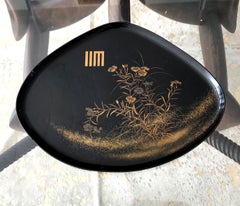
An Antique Japanese Lacquer Maki-e Tray

An Antique Japanese Lacquer Maki-e Tray

Located in Atlanta, GA

A fan shape black lacquer tray from Japan circa 1910-30s, late Meiji to early Showa era. Elaborated decorated with a bundle of yomogi blossom in a very fine Maki-e technique using both gold and silver powders. There is a Japanese symbol on the top left, which represents yomogiu, stemming from yomogi (蓬), a wild plant that belongs to the chrysanthemum family and widely grown in Japan. This name yomogui is from a scene in the Tale of Genji...

Category

Early 20th Century Japanese Japonisme Lacquer

Materials

Lacquer

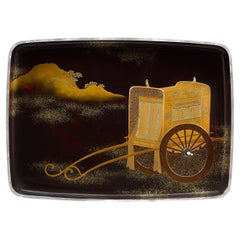
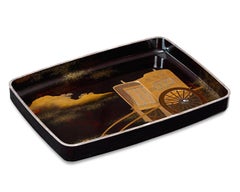
Japanese Lacquer and Gold Tray

Japanese Lacquer and Gold Tray

Located in New Orleans, LA

This Meiji-period lacquer tray represents the mastery of Japanese craftsmen in the art of lacquer work. Precious materials are precisely inlaid in the lacquer base, creating a highly...

Category

Antique Late 19th Century Asian Meiji Lacquer

Materials

Gold

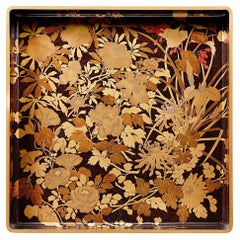
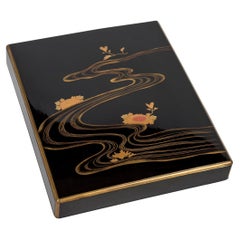
Japanese suzuribako lacquered box peony river

Japanese suzuribako lacquered box peony river

Located in PARIS, FR

Suzuribako box (empty) in black lacquer. Gold maki-e decoration of a river bordered by peonies, one with red highlights. The edges of the lid are in gold lacquer. Nashi-ji interior.

Category

Antique Late 19th Century Japanese Lacquer

Materials

Gold

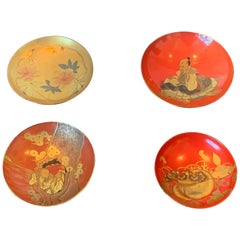
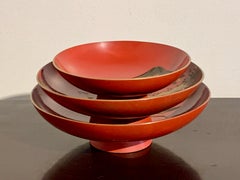
Japanese Lacquer Sake Cups, Set of 3, Meiji Period, Early 20th Century, Japan

Japanese Lacquer Sake Cups, Set of 3, Meiji Period, Early 20th Century, Japan

Located in Austin, TX

A finely decorated set of 3 red lacquer sake cups, sakazuki, featuring views of Mt. Fuji, Meiji period, circa 1900, Japan. The lacquer sake cups, called sakazuki, of traditional p...

Category

Antique Early 1900s Japanese Meiji Lacquer

Materials

Lacquer

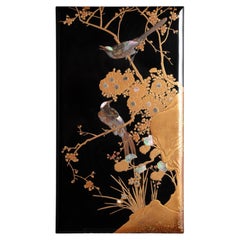
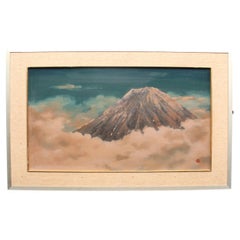
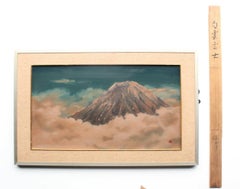
Japanese Antiques Kokukokai Senzan lacquer painting “White Clouds Fuji” framed

Japanese Antiques Kokukokai Senzan lacquer painting “White Clouds Fuji” framed

Located in Niiza, JP

material: lacquer pain, metal frame with wood box The Kokkokai is a group of maki-e artists formed in 1931 around Matsuda Gonroku, a Living National Treasure and Japan's proud maste...

Category

Antique 19th Century Lacquer

Materials

Lacquer

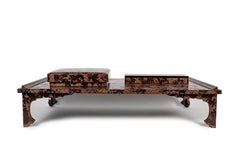
Mid-19th Century Mother-Of-Pearl Inlaid Altar Table, Japan, Edo Period

Mid-19th Century Mother-Of-Pearl Inlaid Altar Table, Japan, Edo Period

Located in New York, NY

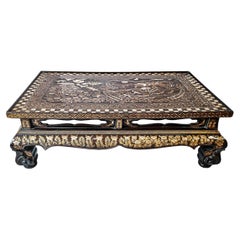
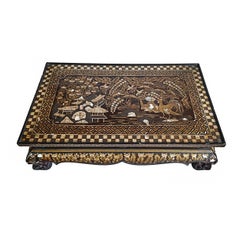
An antique Japanese table with inlaid mother-of-pearl (Raden) and gold maki-e over brown lacquer. Japan, late Edo period, possibly earlier. Raden (螺鈿) is a traditional Japanese dec...

Category

Antique 1850s Japanese Edo Lacquer

Materials

Gold

Inro in black and gold lacquer with a proeminent chrysantemum flower motive

Inro in black and gold lacquer with a proeminent chrysantemum flower motive

Located in PARIS, FR

Two compartments inrô in black lacquer, hira maki-e and mother-of-pearl inlay on a hirameiji background, decorated with a bouquet of chrysanthemums in a small purse, a hoe on the other side, and a fluttering butterfly which can be found on both sides. The interior is in hirameiji lacquer. The ojime is a drum made out of black lacquer and ivory with a mother-of-pearl inlay. The Manjû netsuke...

Category

Antique Mid-18th Century Japanese Edo Lacquer

Materials

Gold

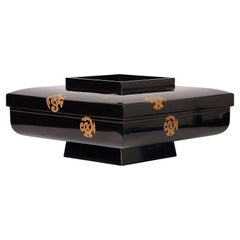
Uniquely Shaped Lacquer Box with Tachibana Clan Crests – 19th Century

Uniquely Shaped Lacquer Box with Tachibana Clan Crests – 19th Century

Located in Fukuoka, JP

An impressive and unusually shaped Japanese lacquered box, bearing the gold crests of the prestigious Tachibana samurai clan. This elegant piece dates to the late Edo to early Meiji ...

Category

Antique 19th Century Japanese Edo Lacquer

Materials

Wood, Lacquer

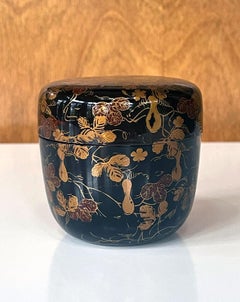
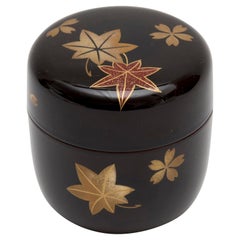
Japanese Lacquered Natsume 'Tea Box'

Japanese Lacquered Natsume 'Tea Box'

Located in PARIS, FR

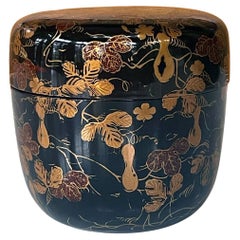
Natsume in dark red lacquer, decorated with autumn leaves and cherry blossoms in hiramaki-e and nashiji. Interior in black lacquer. Maple leaves (Momiji) are celebrated in literatur...

Category

Mid-20th Century Japanese Lacquer

Materials

Lacquer

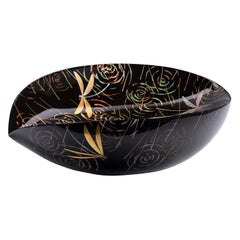
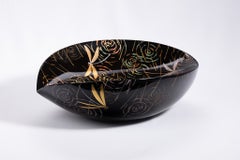
Kikuji Nakao Wajima Lacquer Vessel with Dragonflies, Maki-e and Raden

Kikuji Nakao Wajima Lacquer Vessel with Dragonflies, Maki-e and Raden

Located in Taichung, TW

The Design & Impact: This refined Wajima lacquer vessel by Kikuji Nakao combines a bold, contemporary composition with the elegance of traditional Japanese lacquer decoration. Across...

Category

Late 20th Century Japanese Lacquer

Materials

Wood, Lacquer, Urushi lacquer

Japanese Lacquer Maki-E Tiered Suzuribako and Ryoshibako

Japanese Lacquer Maki-E Tiered Suzuribako and Ryoshibako

Located in Atlanta, GA

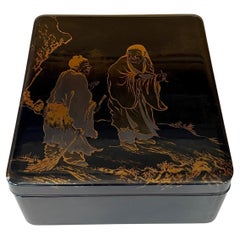
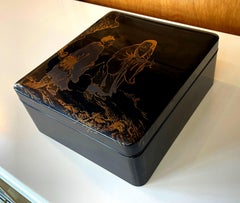
A Japanese roiro lacquer scholar combo box with an upper tier of inkstone box (Suzuribako) and a lower document box (Ryoshibako) circa 1910-30s (end of Meiji to Showa period). The high glossy box was beautifully decorated with an image of the famously eccentric Buddhist monks Hanshan and Shide (known in Japan as Kanzan and Jittoku). Often as a pair, they have been a popular motif in Japanese Zen painting...

Category

Vintage 1920s Japanese Meiji Lacquer

Materials

Stone, Metal

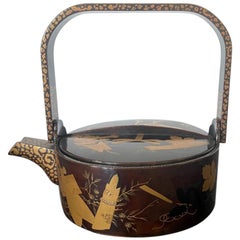
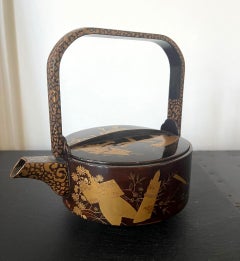
Japanese Lacquer Maki-e Sake Ewer Meiji Period

Japanese Lacquer Maki-e Sake Ewer Meiji Period

Located in Atlanta, GA

A Japanese lacquered wood sake ewer with maki-e design, circa late 19th century, Meiji period. The nicely decorated lacquerware is of a Classic sake ewer for...

Category

Antique 1890s Japanese Japonisme Lacquer

Materials

Lacquer

Japanese inro box in black and gold lacquer with a decor of snowy landscape

Japanese inro box in black and gold lacquer with a decor of snowy landscape

Located in PARIS, FR

Inrō with four boxes in black and gold lacquer, representing a person in a pavilion in a snowy landscape with mountain on the background. Realised in maki-e on black lacquer with sma...

Category

Antique Late 18th Century Japanese Edo Lacquer

Materials

Gold

Japanese Lacquer Tray

Japanese Lacquer Tray

Located in New Orleans, LA

Hailing from illustrious Meiji-period Japan, this lacquer tray showcases the mastery of Japanese craftsmen. Precious materials are precisely inlaid in the lacquer base, creating an a...

Category

Antique Late 19th Century Japanese Meiji Lacquer

Materials

Silver

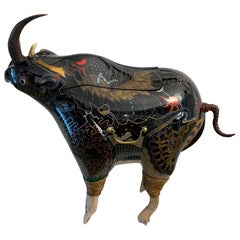
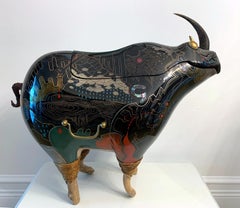
Rhino Contemporary Japanese Lacquer Art by Someya Satoshi

Rhino Contemporary Japanese Lacquer Art by Someya Satoshi

Located in Atlanta, GA

Japanese Lacquer Rhino Sculpture by Someya Satoshi (1983-). A hand-molded lacquer sculpture that depicts a fantasy beast "Rhino". The artist uses century-old traditional techniques and symbols but with an innovative contemporary energy that borders mysticism, shamanism and surrealism. Found objects were equally treated as part of the meticulous designs as the elaborate Maki-e and shell inlays. According to the press of Honolulu Museum of Art: "Someya Satoshi has been described as “one of the most significant contemporary lacquer artists working in Japan today.” (Japan Times, 12 Dec. 2013) His work combines objects of daily use, such as bathing buckets, serving trays, and soup bowls, with a wide array of natural materials, including animal bones, horns and antlers, sand, stones, leaves and branches. In the process, he implements a range of traditional lacquer methods passed down from pre-modern eras, such as the kanshitsu or “dry lacquer” technique, the origins of which date to Japan’s Nara period (710–784). After creating his forms, he embellishes them with designs inspired by calligraphy, traditional Japanese textile patterns, and even contemporary manga or comic books. His work defies ordinary definitions of lacquer art and successfully challenges the perceived limits of this extremely difficult and, in some ways, most conservative of traditional Japanese art forms". His work was exhibited in US such as Honolulu Museum of Art, Minneapolis Institute of Art, Morikami Museum etc. For a complete resume of the artist, see the artist's page in Imura Art Gallery. Reference: For a very similar Bull Sculpture see Hard Bodies Contemporary Japanese Lacquer...

Category

Early 2000s Japanese Japonisme Lacquer

Materials

Rope, Wood, Lacquer
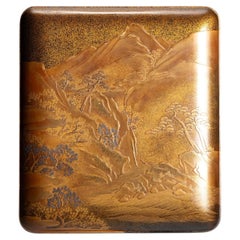
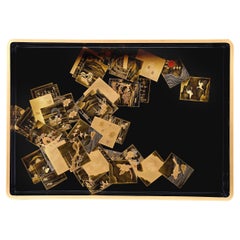
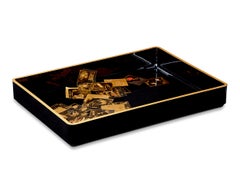
Japanese Lacquer Tray With Cards
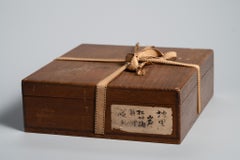
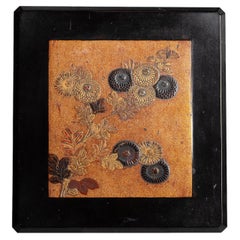
Japanese Lacquer Tray With Cards
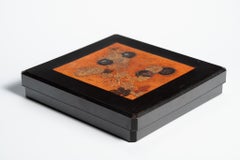
Located in New Orleans, LA

This Meiji-period lacquer tray represents the mastery of Japanese craftsmen in the art of lacquer work. Precious materials are precisely inlaid in the lacquer base, creating a highly...
Category

Antique Late 19th Century Japanese Meiji Lacquer
Materials

Gold

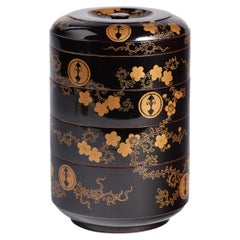
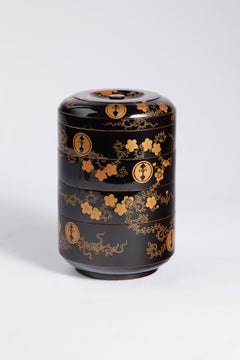
Edo Period Japanese Lacquer Four-Tier Jubako with Crane Crests and Gold Maki-e
Edo Period Japanese Lacquer Four-Tier Jubako with Crane Crests and Gold Maki-e
Located in Taichung, TW

The Design & Impact: This refined four-tier round jubako from the Edo period is compact in scale yet exceptionally elegant in detail. Repeated crane crests are carefully arranged acr...

Category

Antique 17th Century Japanese Lacquer
Materials

Wood, Lacquer, Urushi lacquer