182 results for "maki-e lacquer"

to
8
85
31
102
44
36
32
25
20
10
10
8
6
6
5
5
5
4
2
2
2
2
1
1
1
1
1
1
1
1
1
2
1
1
1
1
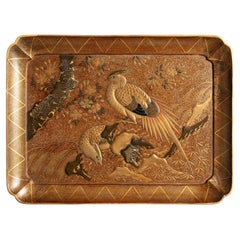
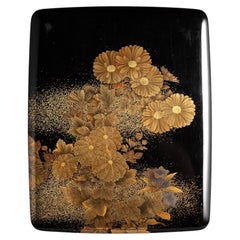
An Antique Japanese Lacquer Maki-e Tray

An Antique Japanese Lacquer Maki-e Tray

Located in Atlanta, GA

A fan shape black lacquer tray from Japan circa 1910-30s, late Meiji to early Showa era. Elaborated decorated with a bundle of yomogi blossom in a very fine Maki-e technique using both gold and silver powders. There is a Japanese symbol on the top left, which represents yomogiu, stemming from yomogi (蓬), a wild plant that belongs to the chrysanthemum family and widely grown in Japan. This name yomogui is from a scene in the Tale of Genji...

Category

Early 20th Century Japanese Japonisme Lacquer

Materials

Lacquer

Wakasa-Nuri Lacquer Bundai, Ryoshobako, Fubako Set

Wakasa-Nuri Lacquer Bundai, Ryoshobako, Fubako Set

Located in PARIS, FR

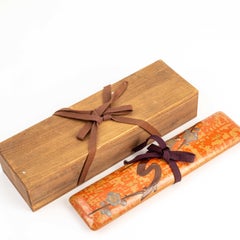
Set of bundai, ryoshibako and fudebako in wakasa lacquer with an old rose background and black traditional Japanese patterns. The saya pattern (or sayagata) is composed by Chinese svastikas. This symbol linked to Buddhism, mean intelligence, power and peace. It is a good omen sign. The kanoko pattern reminds stains on fawn back. The sakura (cherry blossom) pattern is emblematic of Japan. The blossoming in a short time marks spring beginning and is a symbol of renewal and ephemeral beauty. There are also traces of calligraphy brush, in reference to the function of the objects. Bundai is a low table used to put books or scrolls and, later, to write. Rectangular ryoshibako (letter and document box) with a slightly domed Fudebako (pencil case) of rectangular format very narrow in its length with two rounded corners, flat cover. Wakasa lacquerware...

Category

Early 20th Century Japanese Lacquer

Materials

Lacquer

Mid-19th Century Mother-Of-Pearl Inlaid Altar Table, Japan, Edo Period

Mid-19th Century Mother-Of-Pearl Inlaid Altar Table, Japan, Edo Period

Located in New York, NY

An antique Japanese table with inlaid mother-of-pearl (Raden) and gold maki-e over brown lacquer. Japan, late Edo period, possibly earlier. Raden (螺鈿) is a traditional Japanese dec...

Category

Antique 1850s Japanese Edo Lacquer

Materials

Gold

Japanese Lacquer Tray With Cards

Japanese Lacquer Tray With Cards

Located in New Orleans, LA

This Meiji-period lacquer tray represents the mastery of Japanese craftsmen in the art of lacquer work. Precious materials are precisely inlaid in the lacquer base, creating a highly...

Category

Antique Late 19th Century Japanese Meiji Lacquer

Materials

Gold

Japanese Lacquer Maki-e Plate of Masked Dancer

Japanese Lacquer Maki-e Plate of Masked Dancer

Located in Atlanta, GA

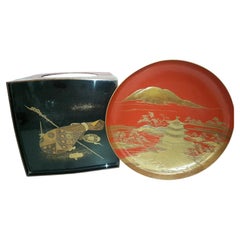
A large circular plate with a short stem base in Vermillion lacquer color from Late Meiji Period circa end of 19th century to early 20th century. ...

Category

Antique 19th Century Japanese Meiji Lacquer

Materials

Lacquer

Japanese Lacquered Furoshiki Kobako 'Box'

Japanese Lacquered Furoshiki Kobako 'Box'

Located in PARIS, FR

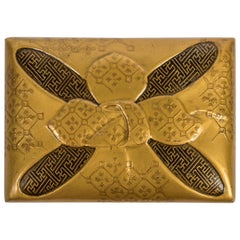
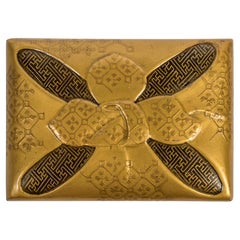
Rectangular and flat lacquer Kobako (small box) representing a furoshiki knot seen from above. Fundame background, furoshiki in takamaki-e with floral pattern, inside the folds of the fabric with black and gold sayagata pattern with togidashi maki-e technique. The saya (or sayagata) pattern is composed of Chinese swastikas...

Category

Antique Late 19th Century Japanese Lacquer

Materials

Lacquer

Four Japanese Lacquered Sake Cups Meiji Period

Four Japanese Lacquered Sake Cups Meiji Period

Located in Atlanta, GA

An assemble of four lacquerware sake cups from Meiji period Japan circa late 19th century. The shadow cups on an elevated stem were used by the nobles during ...

Category

Antique Late 19th Century Japanese Meiji Lacquer

Materials

Wood, Lacquer

Japanese Lacquered Natsume 'Tea Box'

Japanese Lacquered Natsume 'Tea Box'

Located in PARIS, FR

Natsume in dark red lacquer, decorated with autumn leaves and cherry blossoms in hiramaki-e and nashiji. Interior in black lacquer. Maple leaves (Momiji) are celebrated in literatur...

Category

Mid-20th Century Japanese Lacquer

Materials

Lacquer

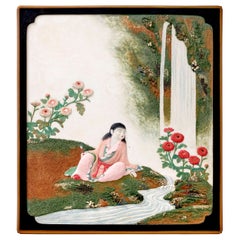
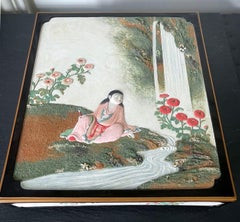
Japanese Antiques Kokukokai Senzan lacquer painting “White Clouds Fuji” framed

Japanese Antiques Kokukokai Senzan lacquer painting “White Clouds Fuji” framed

Located in Niiza, JP

material: lacquer pain, metal frame with wood box The Kokkokai is a group of maki-e artists formed in 1931 around Matsuda Gonroku, a Living National Treasure and Japan's proud maste...

Category

Antique 19th Century Lacquer

Materials

Lacquer

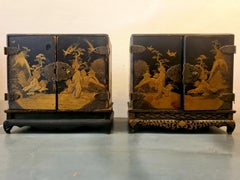
Pair Japanese Lacquered Maki-e Meiji Period Cabinets 漆器 蒔絵 塗物 漆塗

Pair Japanese Lacquered Maki-e Meiji Period Cabinets 漆器 蒔絵 塗物 漆塗

Located in Cotignac, FR

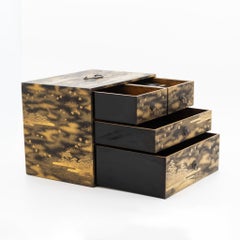
A pair of Meiji period, late 19th Century Lacquerware (漆器, shikki) miniature cabinets on stands. The decorative panels are of very fine quality. The cabinets are a 'true pair' that i...

Category

Late 19th Century Edo More Art

Materials

Wood, Lacquer

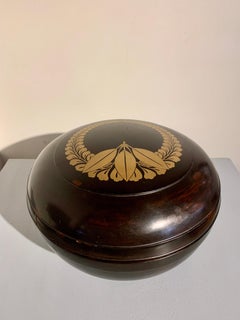
Uniquely Shaped Lacquer Box with Tachibana Clan Crests – 19th Century

Uniquely Shaped Lacquer Box with Tachibana Clan Crests – 19th Century

Located in Fukuoka, JP

An impressive and unusually shaped Japanese lacquered box, bearing the gold crests of the prestigious Tachibana samurai clan. This elegant piece dates to the late Edo to early Meiji ...

Category

Antique 19th Century Japanese Edo Lacquer

Materials

Wood, Lacquer

Rhino Contemporary Japanese Lacquer Art by Someya Satoshi

Rhino Contemporary Japanese Lacquer Art by Someya Satoshi

Located in Atlanta, GA

Japanese Lacquer Rhino Sculpture by Someya Satoshi (1983-). A hand-molded lacquer sculpture that depicts a fantasy beast "Rhino". The artist uses century-old traditional techniques and symbols but with an innovative contemporary energy that borders mysticism, shamanism and surrealism. Found objects were equally treated as part of the meticulous designs as the elaborate Maki-e and shell inlays. According to the press of Honolulu Museum of Art: "Someya Satoshi has been described as “one of the most significant contemporary lacquer artists working in Japan today.” (Japan Times, 12 Dec. 2013) His work combines objects of daily use, such as bathing buckets, serving trays, and soup bowls, with a wide array of natural materials, including animal bones, horns and antlers, sand, stones, leaves and branches. In the process, he implements a range of traditional lacquer methods passed down from pre-modern eras, such as the kanshitsu or “dry lacquer” technique, the origins of which date to Japan’s Nara period (710–784). After creating his forms, he embellishes them with designs inspired by calligraphy, traditional Japanese textile patterns, and even contemporary manga or comic books. His work defies ordinary definitions of lacquer art and successfully challenges the perceived limits of this extremely difficult and, in some ways, most conservative of traditional Japanese art forms". His work was exhibited in US such as Honolulu Museum of Art, Minneapolis Institute of Art, Morikami Museum etc. For a complete resume of the artist, see the artist's page in Imura Art Gallery. Reference: For a very similar Bull Sculpture see Hard Bodies Contemporary Japanese Lacquer...

Category

Early 2000s Japanese Japonisme Lacquer

Materials

Rope, Wood, Lacquer

Japanese Export Lacquer and Abalone Inlaid Tilt-Top Stand, Nagasaki, circa 1840

Japanese Export Lacquer and Abalone Inlaid Tilt-Top Stand, Nagasaki, circa 1840

Located in Kinderhook, NY

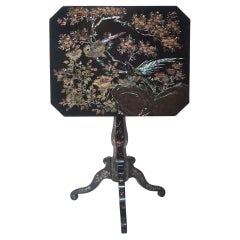
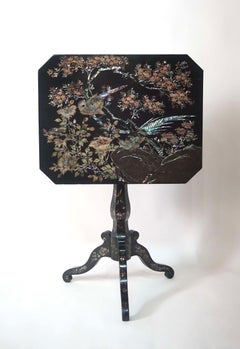
An exquisite circa 1840 Japanese export tilt-top table or stand of Nagasaki manufacture having allover abalone inlay in black lacquer, the top with with male and female 'Japanese gre...

Category

Antique Mid-19th Century Japanese Edo Dessert Tables and Tilt-top Tables

Materials

Brass

Japanese writting set in waqasa lacquer including bundai ryoshibako and fudebako

Japanese writting set in waqasa lacquer including bundai ryoshibako and fudebako

Located in PARIS, FR

Set of bundai, ryōshibako and fudebako in wakasa lacquer with an old rose background and black traditional Japanese patterns. The saya pattern (or sayagata) is composed by Chinese svastikas. This symbol linked to Buddhism, mean intelligence, power and peace. It is a good omen sign. The kanoko pattern reminds stains on fawn back. The sakura (cherry blossom) pattern is emblematic of Japan. The blossoming in a short time marks spring beginning and is a symbol of renewal and ephemeral beauty. There are also traces of calligraphy brush, in reference to the function of the objects. Bundai is a low table used to put books or scrolls and, later, to write. Rectangular ryōshibako (letter and document box) with a slightly domed Fudebako (pencil case) of rectangular format very narrow in its length with two rounded corners, flat cover. Wakasa lacquerware...

Category

Early 20th Century Japanese Taisho Lacquer

Materials

Lacquer

Japanese Lacquer Maki-E Tiered Suzuribako and Ryoshibako

Japanese Lacquer Maki-E Tiered Suzuribako and Ryoshibako

Located in Atlanta, GA

A Japanese roiro lacquer scholar combo box with an upper tier of inkstone box (Suzuribako) and a lower document box (Ryoshibako) circa 1910-30s (end of Meiji to Showa period). The high glossy box was beautifully decorated with an image of the famously eccentric Buddhist monks Hanshan and Shide (known in Japan as Kanzan and Jittoku). Often as a pair, they have been a popular motif in Japanese Zen painting...

Category

Vintage 1920s Japanese Meiji Lacquer

Materials

Stone, Metal

Japan 1800 Edo Period Six Drawer Inro In Lacquered Gilt Wood With Utensils

Japan 1800 Edo Period Six Drawer Inro In Lacquered Gilt Wood With Utensils

Located in Miami, FL

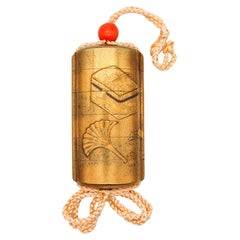
Japanese Inro from the Edo Period (1603-1867). Beautiful Inro, created in Japan during the Edo period (Shogunate), circa 1800. It was carefully crafted in carved precious wood with ...

Category

Antique Early 1800s Japanese Edo Lacquer

Materials

Coral

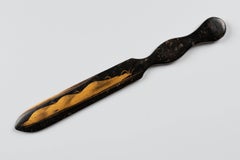
Antique Japanese Meiji Period Lacquer Gold Maki-e Wood Letter Opener

Antique Japanese Meiji Period Lacquer Gold Maki-e Wood Letter Opener

Located in Greven, DE

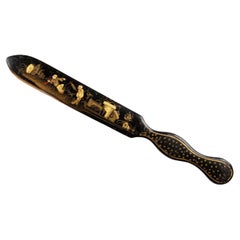
Antique Japanese Meiji Period Lacquer Gold Maki-e Wood Letter Opener Japan Wood, lacquer, paint c. 1900 Dimensions: Length 28cm Dating to the Meiji period, this superb letter...

Category

Early 20th Century Japanese Japonisme Letter Openers

Materials

Gold

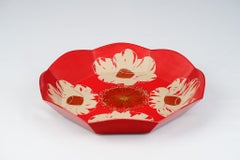
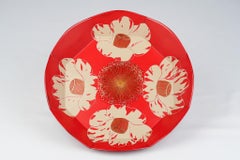
“Flower and Flower” Lacquer Serving Dish by Kobayashi Miyako

“Flower and Flower” Lacquer Serving Dish by Kobayashi Miyako

Located in Taichung, TW

“Flower and Flower” by Kobayashi Miyako is a radiant lacquer serving dish shaped like a blossoming flower. The vivid red palette and lively form immediately convey energy and joy. In...

Category

21st Century and Contemporary Japanese Lacquer

Materials

Wood, Lacquer

Japanese Lacquer Tray

Japanese Lacquer Tray

Located in New Orleans, LA

Hailing from illustrious Meiji-period Japan, this lacquer tray showcases the mastery of Japanese craftsmen. Precious materials are precisely inlaid in the lacquer base, creating an a...

Category

Antique Late 19th Century Japanese Meiji Lacquer

Materials

Silver

Japanese Kobako box in the form of a furoshiki present in gold and black lacquer

Japanese Kobako box in the form of a furoshiki present in gold and black lacquer

Located in PARIS, FR

Rectangular and flat lacquer Kobako (small box) representing a furoshiki knot seen from above. Fundame background, furoshiki in takamaki-e with floral pattern, inside the folds of th...

Category

Antique Late 18th Century Japanese Edo Lacquer

Materials

Gold

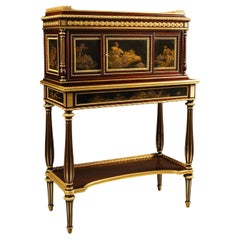
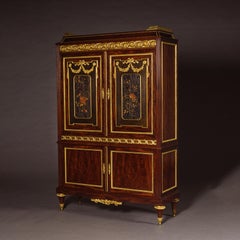
Japanese Lacquer Mounted Bonheur du Jour, By Henry Dasson

Japanese Lacquer Mounted Bonheur du Jour, By Henry Dasson

By Henry Dasson

Located in Brighton, West Sussex

A Fine Louis XVI Style Gilt-Bronze and Black and Gilt Japanese Lacquer Mounted Mahogany and Bois Satiné Bonheur du Jour, By Henry Dasson. The upper structure faced with three lacqu...

Category

Antique 19th Century French Louis XVI Cabinets

Materials

Ormolu

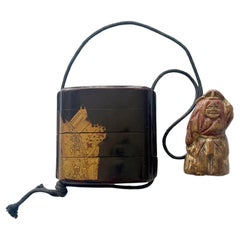
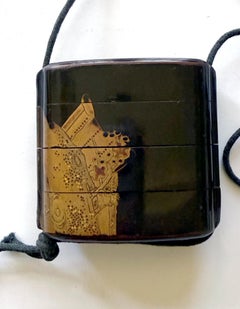
Japanese Lacquer Inro with Gold Maki-e and Carved Wood Netsuke Meiji Period

Japanese Lacquer Inro with Gold Maki-e and Carved Wood Netsuke Meiji Period

Located in Atlanta, GA

A Japanese four-case inro with a stringed carved wood netsuke circa 19th century. The inro has a near square form with rounded corners, The surface is decorated with gold hiramaki-e ...

Category

Antique 19th Century Japanese Meiji Lacquer

Materials

Wood, Lacquer

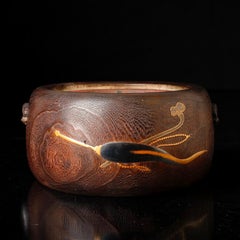
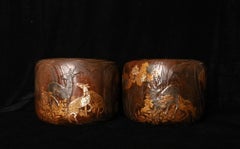
Exceptional Japanese Lacquered Hibachi with Poppy Flowers in Gold and Silver Mak

Exceptional Japanese Lacquered Hibachi with Poppy Flowers in Gold and Silver Mak

Located in Fukuoka, JP

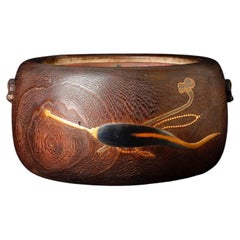
This magnificent hibachi (charcoal brazier), likely custom-made to order, exemplifies the pinnacle of Japanese lacquer artistry of the 19th century. Carved from solid wood with a ric...

Category

Antique 19th Century Japanese Edo Lacquer

Materials

Copper

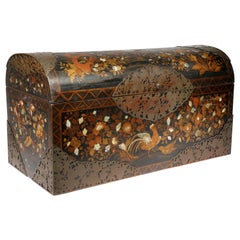
Momoyama Namban Chest

Momoyama Namban Chest

Located in PARIS, FR

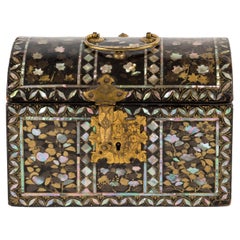
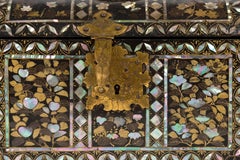
Namban chest with a semi-cylindrical lid made of black lacquered wood (urushi) with gold lacquer (maki-e) and inlaid with mother-of-pearl (raden). Decorated with three main bands o...

Category

Antique 17th Century Japanese Antiquities

Materials

Lacquer

Antique Edo Shibayama Inlay Crest Suzuribako

Antique Edo Shibayama Inlay Crest Suzuribako

Located in Taichung, TW

The Design & Impact: This mid Edo period writing box (suzuribako) is an absolute masterpiece of daimyo (feudal lord) aesthetics, renowned for its dramatic dual nature. The exterior p...

Category

Antique 19th Century Japanese Lacquer

Materials

Wood, Urushi lacquer

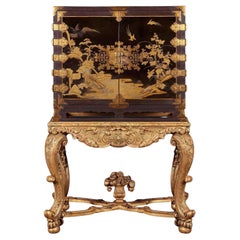
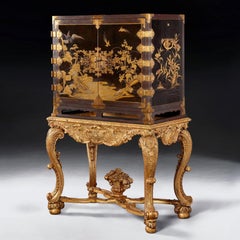
17th Century Japanese Lacquer Cabinet On French Giltwood Regence Stand

17th Century Japanese Lacquer Cabinet On French Giltwood Regence Stand

Located in Benington, Herts

An Extremely Fine and Very Important 17th Century Japanese Lacquer Cabinet on French Giltwood Stand of Regence Period circa 1680-1690 Provenance Likely acquired by Herman Willem ...

Category

Antique 17th Century Japanese Edo Cabinets

Materials

Giltwood, Lacquer

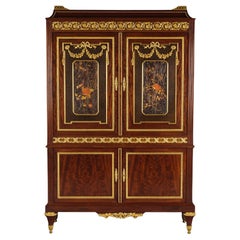
A Louis XVI Style Lacquer Mounted Mahogany Cabinet by Paul Sormani

A Louis XVI Style Lacquer Mounted Mahogany Cabinet by Paul Sormani

By Paul Sormani

Located in Brighton, West Sussex

A Louis XVI Style Gilt-Bronze and Lacquer Mounted Mahogany Cabinet by Paul Sormani. Signed to the lockplate ‘P. SORMANI’, 10 rue Charlot à Paris’. The recta...

Category

Antique 19th Century French Louis XVI Cabinets

Materials

Bronze

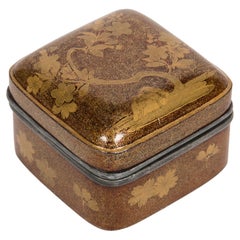
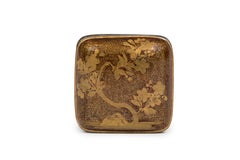
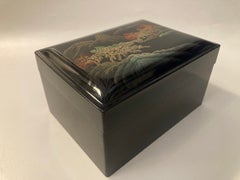
Japanese Rinpa Style Lacquer Box Meiji Period

Japanese Rinpa Style Lacquer Box Meiji Period

Located in Atlanta, GA

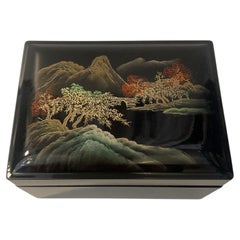
A black lacquer tebako (hand box) with maki-e decoration and silver trim, circa late 19th century, Meiji period. The surface of the lid features a Rinpa style maki-e paint depicting ...

Category

Antique 1890s Japanese Japonisme Lacquer

Materials

Wood, Lacquer

Japan 1870 Meiji Period Round Five Drawer Inro Lacquered Wood With Flying Cranes

Japan 1870 Meiji Period Round Five Drawer Inro Lacquered Wood With Flying Cranes

Located in Miami, FL

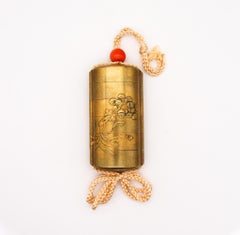
Japanese Inro from the Meiji Period (1868-1912). Beautiful Inro, created in Japan during the Meiji imperial period, circa 1870. It was carefully crafted in carved precious wood with applications of lacquer and decorated with orientalism patterns. All dan trays are attached together with a himo cord. The detailed craftsmanship was a true pleasure to behold. Period: Meiji 1868-1912, Period of Emperor Mutsuhito. Approximate Date: 1870. Motif: Organic design with cascade landscape scene and five flying cranes. Drawers: Five. Shape: Cylinder. Very unusual and rare shape. Technique: Carved wood, Lacquer, hiramaki-e, takamaki-e, Gilding. Ojime: 17mm, round with Ebony wood. Netsuke: Carved dressed...

Category

Antique 1870s Japanese Meiji Lacquer

Materials

Wood, Ebony, Giltwood, Lacquer

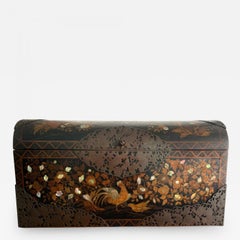
Japanese Namban Lacquer and Inlay Coffer Momoyama Period

Japanese Namban Lacquer and Inlay Coffer Momoyama Period

Located in Atlanta, GA

A rare Japanese Namban (or Nanban) Lacquer domed coffer circa 1570-1610s of Azuchi-Momoyama to early Edo period. These types of lacquer ware were made for export to European Market a...

Category

Antique 16th Century Japanese Japonisme Lacquer

Materials

Wood, Lacquer

Japanese Rinpa Style Lacquer Ink Stone Box Suzuribako

Japanese Rinpa Style Lacquer Ink Stone Box Suzuribako

Located in Atlanta, GA

A Japanese writing box with ink stone (known as Suzuribako) with exquisite maki-e decoration circa late Meiji to early Taisho period (1890s-1930s)...

Category

Early 20th Century Japanese Japonisme Lacquer

Materials

Wood, Lacquer

Rare Movado Early Maki-E Ermeto Manual Wind Purse Watch, circa 1929

Rare Movado Early Maki-E Ermeto Manual Wind Purse Watch, circa 1929

By Movado

Located in Mayfair, London, London

Movado. A Rare and Early Maki-E Ermeto Manual Wind Purse or pocket Watch C1929 Dial: The original silvered dial fully signed Movado Chronometre Emerto with Breguet style numerals and Cathederal hands. Case: The case is made from silver which is fully numbered, Swiss Hallmarked and also having British import marks for 1929. The case is laquered with a special Japernese style called Make-E. Featured on this watch is a traditional Pagoda and a flowering cherry tree called Sakura. The back of the case has the initials JDS presented in 1932. Movement: The fully signed and jewelled manual wind movement with fast slow regulation. The movemnt is wound by opening and shutting the...

Category

Vintage 1920s American Pocket Watches

Materials

Silver

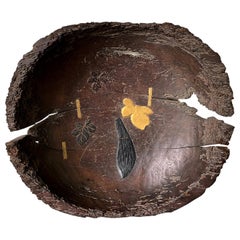
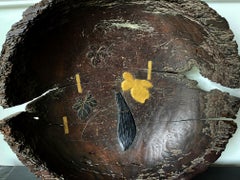
Antique Japanese Lacquered Wood Wabi-Sabi Bowl

Antique Japanese Lacquered Wood Wabi-Sabi Bowl

Located in Atlanta, GA

What can we say about this bowl? Perhaps we can start by describing the unique Japanese aesthetic concept of "Wabi-Sabi". In contrast to the western concept of beauty that is centere...

Category

Antique 19th Century Japanese Japonisme Lacquer

Materials

Wood

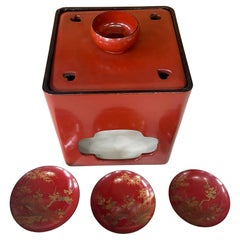
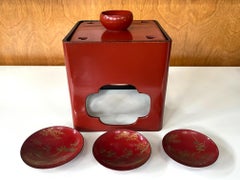
Japanese Lacquered Sake Drinking Set Meiji Period

Japanese Lacquered Sake Drinking Set Meiji Period

Located in Atlanta, GA

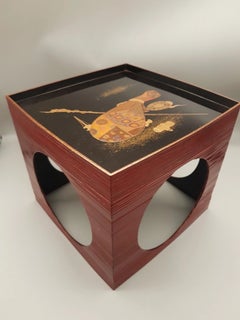
A Japanese lacquered Sake Drinking set circa late 19th century (end of Meiji period), The assemble consists of a red lacquer stand open frame support and a lid that encloses a storage space with black lacquered interior. The lid features a and a cup holder in the center and four heart shape cutouts on the corners. There are three maki-e decorated sake cups with gradual sizes. The cups showcase on the red background elaborate gold hiramaki-e paintings...

Category

Antique Late 19th Century Japanese Meiji Lacquer

Materials

Wood, Lacquer

Japanese inro box in black and gold lacquer with a decor of snowy landscape

Japanese inro box in black and gold lacquer with a decor of snowy landscape

Located in PARIS, FR

Inrō with four boxes in black and gold lacquer, representing a person in a pavilion in a snowy landscape with mountain on the background. Realised in maki-e on black lacquer with sma...

Category

Antique Late 18th Century Japanese Edo Lacquer

Materials

Gold

Inro in black and gold lacquer with a proeminent chrysantemum flower motive

Inro in black and gold lacquer with a proeminent chrysantemum flower motive

Located in PARIS, FR

Two compartments inrô in black lacquer, hira maki-e and mother-of-pearl inlay on a hirameiji background, decorated with a bouquet of chrysanthemums in a small purse, a hoe on the other side, and a fluttering butterfly which can be found on both sides. The interior is in hirameiji lacquer. The ojime is a drum made out of black lacquer and ivory with a mother-of-pearl inlay. The Manjû netsuke...

Category

Antique Mid-18th Century Japanese Edo Lacquer

Materials

Gold

Rare Japanese Lacquer Writing Box Suzuribako Meiji Period

Rare Japanese Lacquer Writing Box Suzuribako Meiji Period

Located in Atlanta, GA

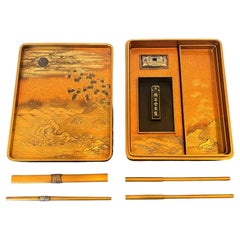
A Japanese Lacquer writing box Suzuribako Meiji Period (1868-1912), likely circa late 19th century. This suzuribako is one of the most unusual boxe...

Category

Antique 19th Century Japanese Japonisme Lacquer

Materials

Lacquer

Fine Miniature Japanese Kodansu with Lacquer Inlays

Fine Miniature Japanese Kodansu with Lacquer Inlays

Located in Atlanta, GA

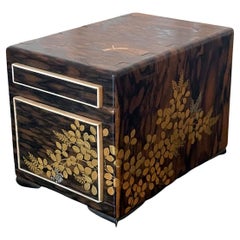
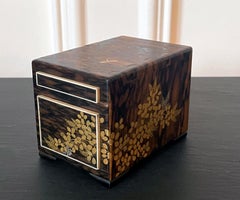
A fine Japanese miniature kodansu constructed from Kaki wood (Persimmon) circa 19th century, late Meiji period. With its expressive exotic wood grains and exposed tenon construction,...

Category

Antique Late 19th Century Japanese Meiji Lacquer

Materials

Wood

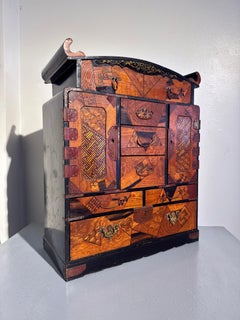
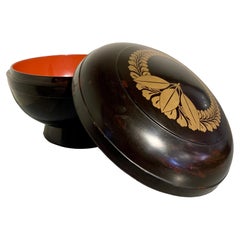
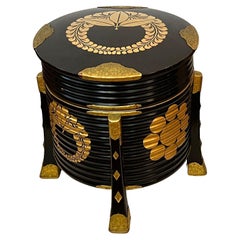
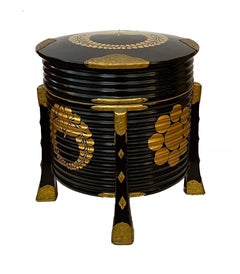
A Japanese Meiji Period Black Lacquer Hokai Lidded Box with Brass Mounts

A Japanese Meiji Period Black Lacquer Hokai Lidded Box with Brass Mounts

Located in San Francisco, CA

this large ribbed and cylindrical Japanese shell-game box with domed lid decorated overall with Maki-e (gold lacquered) foliate wreaths and stylized flower heads and incised brass mounts; raised on four splayed supports. Hokai boxes...

Category

Antique Late 19th Century Japanese Meiji Decorative Boxes

Materials

Lacquer

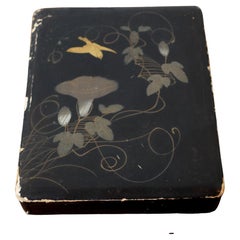
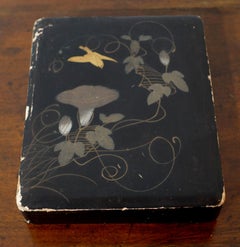
Japanese Maki-e Black Lacquered Box, Ric.051

Japanese Maki-e Black Lacquered Box, Ric.051

Located in Norton, MA

Japan, Edo to Meiji period, decorated with morning glory and a bird in hiramaki-e.

Category

Antique 19th Century Japanese Decorative Boxes

Materials

Lacquer

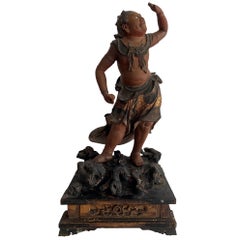
Japanese Lacquered and Gilt Wood Buddhism Statue from Edo Period

Japanese Lacquered and Gilt Wood Buddhism Statue from Edo Period

Located in Atlanta, GA

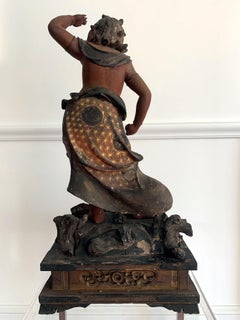
An exceptional and wood statue of Buddhism Guardian Seitaka Doji from Japan circa Edo period (1603-1868), likely the earlier part of 17th century. One of two chief attendants of Fudou Myouou (the other being Kongara Doji), the name of Seitaka Doji is a transliteration of Sanskrit "Cetaka", meaning servant, slave, and he is said to personify expedient action. He is most commonly found on the right side of Fudou, together with Kongara Doji on the left, forming the Immovable triad, Fudou Sanzon, the terror of evil doers. Seitaka largely adheres to the iconography of a wrathful youth with fleshy body and face, skin in the color of a red lotus, has his hair tied in five knots, and holds a vajra in his left hand and a vajra-club in his right hand, but the actual artistic representations of him in Japan do...

Category

Antique 17th Century Japanese Japonisme Sculptures and Carvings

Materials

Metal

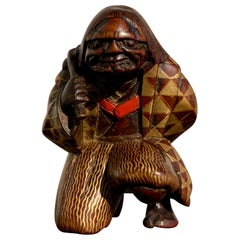
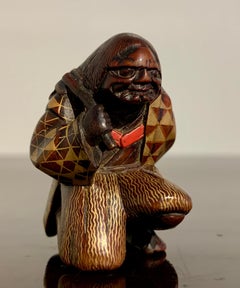
Carved Boxwood and Lacquer Netsuke of a Noh Dancer, Meiji Period, Japan

Carved Boxwood and Lacquer Netsuke of a Noh Dancer, Meiji Period, Japan

Located in Austin, TX

A fine lacquer decorated carved boxwood netsuke of a Noh dancer in a Hannya role, unsigned, Meiji period, late 19th century, Japan. The boxwood netsuke finely carved as a kneeling Noh dancer dressed in striking geometric patterned robes. The actor holds an opened war fan behind their back in one hand, a Shinto wand slung over the shoulder in the other. The war fan, tessen, decorated in red lacquer with a golden rising sun at the center. Tessen were sturdy fans used by samurai as protective devices, and sometimes as weapons. The wand, called an onusa, is a traditional Shinto ritual implement comprised of folded paper streamers, shide, attached to a wooden wand, often used in purification rituals. Here, the shide are crafted from silver maki-e, with the handle of the natural boxwood. The actor wears a fierce and unearthly hannya mask...

Category

Antique 1890s Japanese Meiji Sculptures and Carvings

Materials

Boxwood, Lacquer
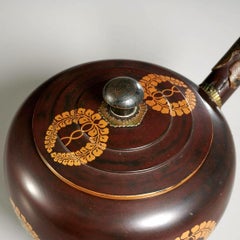
Japanese Antique Ewer Lacquer with Bronze Edo to Meiji Period
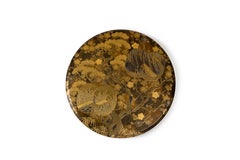
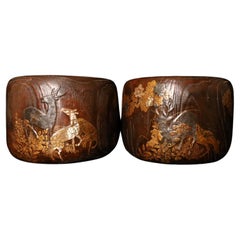
Japanese Antique Ewer Lacquer with Bronze Edo to Meiji Period
Located in Atlanta, GA

A Japanese lacquer water ewer without handle (known as hazo in Japanese) that was used to carry water, traditionally together with a large basin (known as tsunodarai) for domestic us...
Category

Antique 19th Century Japanese Japonisme Lacquer
Materials

Bronze

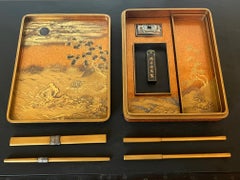
Suzuribak or writting box decorated with a moonrise landscape

Suzuribak or writting box decorated with a moonrise landscape

Located in PARIS, FR

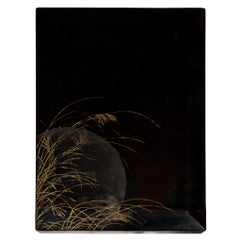
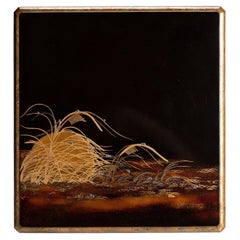
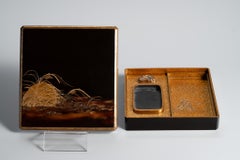
An old suzuribako, or writing box, in black lacquer with a faceted lid and featuring, as its sole decoration in the lower left section, a moonlight scene emerging from tall grasses. ...
Category

Antique Late 17th Century Japanese Edo Lacquer
Materials

Gold Leaf, Silver Leaf

Rare Dunhill Salaam Namiki Cigarette Lighter With Arc de Triomphe Motif

Rare Dunhill Salaam Namiki Cigarette Lighter With Arc de Triomphe Motif

By Alfred Dunhill

Located in Reading, Berkshire

Rare Dunhill Salaam Namiki Cigarette Lighter With Arc de Triomphe Motif A Collaboration between Jaeger LeCoultre and Dunhill in the 1940's described as t...

Category

Early 20th Century Swiss Art Deco Tobacco Accessories

Materials

Brass

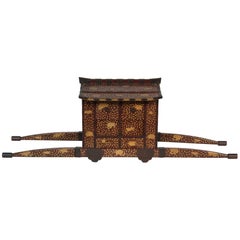
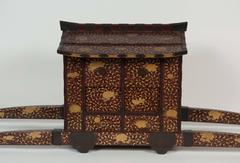
Japanese Edo-Meiji Period Lacquered Palanquin

Japanese Edo-Meiji Period Lacquered Palanquin

Located in Stamford, CT

A Japanese Edo-Meiji period Palanquin chair for the childrens festival. The form with sliding and hinged doors, decorated in gold hiramaki-e with peonies ...

Category

Antique 1890s Japanese Edo More Asian Art, Objects and Furniture

Materials

Lacquer
A comb and hairpin in gold lacquer decorated with two swimming turtles

A comb and hairpin in gold lacquer decorated with two swimming turtles

Located in PARIS, FR

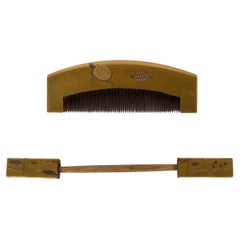
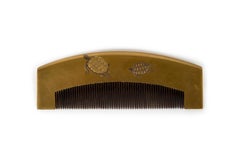
Elegant gold-lacquered wooden comb and hairpin decorated in maki-e with landscapes and animals. The comb is decorated on one side with pavilions in a landscape and on the other side ...

Category

Antique Late 19th Century Japanese Meiji Furniture

Materials

Gold Leaf

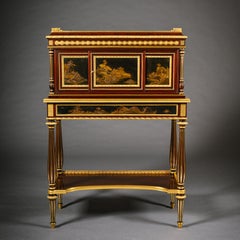
Pair of Bonheur Du Jours With Lacquer Panels, by Henry Dasson
Pair of Bonheur Du Jours With Lacquer Panels, by Henry Dasson
By Henry Dasson

Located in Brighton, West Sussex

A Very Rare Pair of Louis XVI Style Exhibition Gilt-Bronze Mounted Bonheur Du Jours With Lacquer Panels, by Henry Dasson. One cabinet signed 'Henry Dasson / 1880' to the gilt-bron...
Category

Antique 19th Century French Louis XVI Cabinets

Materials

Marble, Ormolu

Edo-Period Lacquerware Chest

Edo-Period Lacquerware Chest

Located in New Orleans, LA

Edo-Period Lacquerware Chest 19th-century This exquisite chest, inspired by Hasami-Bako travel trunks, is a striking example of Japanese lacquerware. The hiramaki-e technique—applie...

Category

Antique 19th Century Japanese Edo Decorative Boxes

Materials

Gold

Gold Lacquer Incense Box
Gold Lacquer Incense Box
Located in New Orleans, LA

A Gold Lacquer Kōbako (Incense Box) Edo Period (1615–1868), Circa 1850 This exquisite gold lacquer kōbako (incense box) exemplifies the refined craftsmans...

Category

Antique 19th Century Japanese Edo Decorative Boxes

Materials

Gold, Silver, Gold Leaf

Louis XVI Style Gilt-Bronze Mounted Mahogany And Lacquer Commode à Vantaux

Louis XVI Style Gilt-Bronze Mounted Mahogany And Lacquer Commode à Vantaux

By Hubert-Joseph Heubès

Located in Brighton, West Sussex

A Fine Louis XVI Style Gilt-Bronze Mounted Mahogany And Lacquer Commode à Vantaux After The Model by Weisweiler, by Hubert-Joseph Heubès. The carcass stamped 'HEUBES' and bearing ...

Category

Antique 19th Century French Louis XVI Cabinets

Materials

Marble, Ormolu

Japanese Lacquer Tray by Zohiko, Meiji/Taisho Period, Early 20th Century, Japan

Japanese Lacquer Tray by Zohiko, Meiji/Taisho Period, Early 20th Century, Japan

By Zōhiko Studio

Located in Austin, TX

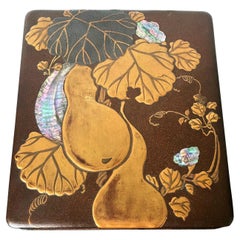
A lovely Japanese lacquer decorated tray with images of hemp leaves, maple leaves, and cherry blossoms by Zohiko, Meiji or Taisho Period, early 20th century, Japan. The graceful tra...

Category

Early 20th Century Japanese Taisho Lacquer

Materials

Lacquer, Wood, Urushi lacquer

Elegant Lacquer Ikebana Vase with Maki-e and Raden “Waterwheel” Motif, Showa Per

Elegant Lacquer Ikebana Vase with Maki-e and Raden “Waterwheel” Motif, Showa Per

Located in Fukuoka, JP

This refined Japanese lacquer ikebana vase dates to the Showa period and exemplifies the sophisticated decorative arts of mid-20th-century Japan. The surface is richly adorned with a...

Category

Mid-20th Century Japanese Showa Vases

Materials

Gold

5 Items of Japanese Lacquer Art

5 Items of Japanese Lacquer Art

Located in Norton, MA

This lot presents 5 beautiful Japanese lacquer works all hand-painted including: 1. a lidded rice bowl, 4.5 diameter x 4" height 2. a gilt, and metal jewelry box, 3" x 2" x 2.25" 3. a thick plate, 13" diameter x 0.75" Thickness 4. chopstick box...

Category

Mid-20th Century Japanese Decorative Bowls

Materials

Lacquer

A Pair of Large Japanese Lacquer Kaioke Boxes

A Pair of Large Japanese Lacquer Kaioke Boxes

Located in Norton, MA

Japan, late Edo, two big octagonal covered shell game boxes resting on footed stands, with makie-e decorations depicting flowering vines on a black lacquer ground, They are still in ...

Category

Antique 19th Century Japanese Decorative Boxes

Materials

Lacquer

A Wooden Carved and Lacquered Nestuke in the form of traditionnal drum

A Wooden Carved and Lacquered Nestuke in the form of traditionnal drum

Located in PARIS, FR

Manju netsuke in lacquer and maki-e on a grey-blue ground, shaped as a traditional taiko drum and decorated with foliage. Himotoshi pierced beneath the ...

Category

Antique Early 19th Century Japanese Edo Sculptures and Carvings

Materials

Boxwood