424 results for "gobelins"

to
113
225
189
234
108
74
71
67
52
38
38
37
27
24
23
21
15
14
12
12
12
12
11
11
10
9
8
6
6
5
5
5
4
3
2
2
2
2
2
2
1
1
1
1
17
10
10
9
9
Apocalypse de Saint Jean - Lithographs on Chine collé by Odilon Redon - 1899

Apocalypse de Saint Jean - Lithographs on Chine collé by Odilon Redon - 1899

By Odilon Redon

Located in Roma, IT

Apocalypse de Saint Jean is a complete suite of 13 b/w lithographs (cover + 12 lithographs) on Chine collé , realized by Odilon Redon. All the lithographs are unsigned, as issued. P...

Category

1890s Symbolist Figurative Prints
Materials

Lithograph

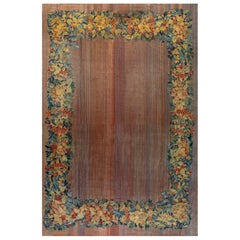
Late 19th Century Antique French Burgundy Aubusson Carpet, 09'03 X 11'03

Late 19th Century Antique French Burgundy Aubusson Carpet, 09'03 X 11'03

Located in Dallas, TX

73151 Antique French Aubusson Rug with Louis XV Savonnerie Rococo Style. Flourishing in technique and trend from the middle of the 17th century for nearly two hundred years, until th...

Category

Antique Late 19th Century French Aubusson Western European Rugs

Materials

Wool

Jean Lurcat, The Taurus, from The Signs of the Zodiac, 1959

Jean Lurcat, The Taurus, from The Signs of the Zodiac, 1959

By Jean Lurçat

Located in Southampton, NY

This exquisite lithograph and pochoir by Jean Lurcat (1892–1966), titled Le Taureau (The Taurus), from the folio Les Signes du Zodiaque (The Signs of the Zodiac), originates from the...

Category

1950s Modern Landscape Prints

Materials

Lithograph

[ Bird of Paradise] La Pie de paradise, vue par derriere, No.21

[ Bird of Paradise] La Pie de paradise, vue par derriere, No.21

By Jacques Barraband

Located in Paonia, CO

[ Bird of Paradise] La Pie de paradise, vue par derriere , No.21, Paris 1801-1806 [Astrapia nigra]. Color-printed engraving with hand-coloring. French botanical and zoological illustrator Jacques Barraband (1767-1809) was known as one of the finest ornithological artists of his time .He is best known for his watercolors and engravings that were commissioned by François LeVaillant, French explorer, naturalist, zoological collector , noted ornithologist and author. Levaillant’s Histoire naturelle des perroquets (1801-05) and his Histoire naturelle des oiseaux de paradis (Birds of Paradise, 1801-06), both of which Barraband contributed to, are still considered some of the most beautiful bird books of all times because of their exceptional scientific accuracy, rich color and detail. The Astrapia nigra is a Bird of Paradise that inhabits the Vogelkop Peninsula of West Papua...
Category

Early 18th Century Other Art Style Animal Prints

Materials

Engraving

Jean Lurcat, Homage to Dufy, from Letter to My Painter Raoul Dufy, 1965

Jean Lurcat, Homage to Dufy, from Letter to My Painter Raoul Dufy, 1965

By Jean Lurçat

Located in Southampton, NY

This exquisite lithograph by Jean Lurcat (1892–1966), titled Hommage a Dufy (Homage to Dufy), from the folio Lettre a mon peintre Raoul Dufy (Letter to My Painter Raoul Dufy), origin...

Category

1960s Cubist Figurative Prints

Materials

Lithograph

"LICHTUNG" (clearing) Tapestry hand-woven in Germany by FGM late 1980s.

"LICHTUNG" (clearing) Tapestry hand-woven in Germany by FGM late 1980s.

Located in Firenze, FI

This large tapestry, measuring 315 cm. x 228 cm, was commissioned for a conference room and is the result of the work of three masters. It was commissioned in 1988 at FGM (Fränkische...

Category

Vintage 1980s German Tapestries

Materials

Wool, Cotton, Linen, Silk

1900s Antique European Rug 13′ × 16′3″

1900s Antique European Rug 13′ × 16′3″

Located in Los Angeles, US

Savonnerie Carpets – During the early seventeenth century, a weaver named Pierre DuPont traveled to the Levant. Upon his return, he claimed to have discovered the technique of creati...

Category

Antique Early 1900s Unknown Empire Western European Rugs

Materials

Wool, Cotton

Antique Silk Kayseri Pictorial Rug, Silk Landscape Wall Hanging Tapestry

Antique Silk Kayseri Pictorial Rug, Silk Landscape Wall Hanging Tapestry

Located in Dallas, TX

77091 distressed Turkish antique Kayseri Pictorial rug, silk tapestry wall hanging. This hand knotted silk antique Kayseri Pictorial rug features a central cusped medallion showcasing two Dervish with their master wearing traditional Persian garb. The medallion is surrounded by men or horses. The field is covered with a garden pictorial scene composed of blossoming trees, doves, birds of peace...

Category

Early 20th Century Turkish Islamic Turkish Rugs

Materials

Silk

Vintage Persian Tabriz Chinese Silk Rug with Art Nouveau Rococo Style

Vintage Persian Tabriz Chinese Silk Rug with Art Nouveau Rococo Style

Located in Dallas, TX

77376, vintage Persian Tabriz Chinese silk rug with Art Nouveau Rococo style. With ornate details and well-balanced symmetry combined with a dreamy color palette, this hand knotted wool vintage Persian Tabriz Chinese silk rug beautifully embodies both Art Nouveau and Rococo style. A cusped oval medallion anchored with palmette pendants flank either side surrounded by an all-over floral pattern composed of blooming palmettes, curled sickle leaves, leafy tendrils arabesque vines with peony, carnation, and lotus flowers. Enclosing the floral medallion are dramatic, deep and elaborate corner spandrels boasting Baroque elements as it sets the stage for a bounty of flower garlands and organic leafy mounds. It is framed with a variation of a millefleur palmette border flanked with a series of floral Meander guard bands. Decadent beauty in a dreamy color palette this vintage floral area rug...

Category

Late 20th Century Chinese Tabriz Chinese and East Asian Rugs

Materials

Silk

Jean Lurcat, The Aquarius, from The Signs of the Zodiac, 1959

Jean Lurcat, The Aquarius, from The Signs of the Zodiac, 1959

By Jean Lurçat

Located in Southampton, NY

This exquisite lithograph and pochoir by Jean Lurcat (1892–1966), titled Le Verseau (The Aquarius), from the folio Les Signes du Zodiaque (The Signs of the Zodiac), originates from t...

Category

1950s Modern Landscape Prints

Materials

Lithograph

Circa 1860 French Toile Peinte, The Children Gardeners, after Charles Le Brun

Circa 1860 French Toile Peinte, The Children Gardeners, after Charles Le Brun

Located in Dallas, TX

After a series of art produced by Charles Le Brun in the 17th century, this painted canvas is entitled Les Enfants Jardiniers, (The Gardening Children). Our fantastic French toile pe...

Category

Antique Mid-19th Century French Paintings

Materials

Textile, Paint

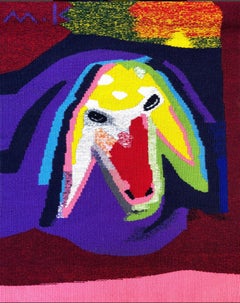
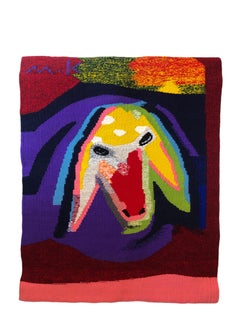
Israeli Hand Woven Colorful Wool Tapestry Weaving Menashe Kadishman Sheep Head

Israeli Hand Woven Colorful Wool Tapestry Weaving Menashe Kadishman Sheep Head

By Menashe Kadishman

Located in Surfside, FL

Beautiful hand woven tapestry by renowned Israeli sculptor Menashe Kadishman. Super quality, and visually stunning. It measures about 32.5 X 27.5 inches It is signed with initials. This is similar to an Aubusson style flat weave hand woven wool tapestry. This is most probably from the George Goldstein Atelier in Jerusalem. (Originally known as Nazareth Tapestries) They produced genuine handmade Gobelin tapestries in Israel). This does not bear a label. In 1964 the first French style weaving studio was inaugurated in Israel, in the new city of Nazareth Ilit. With the encouragement of master Jean Lurcat, woven upon several contemporary masters’ original sketches, such as Jean Lurcat, Hans Hartung, Adolph Gottlieb, Karel Appel, Yaacov Agam, Mordecai Ardon, Reuven Rubin, Danny Caravan, and more. Some of these tapestries encountered their moments of glory during the international exhibitions, such as in the Museum of Modern Art (NY), “Expo Montreal” (Canada), Biennale of Lausanne (Switzerland), and others. In 1967, after the Six-Day War, Nazareth’s workshop closed its doors and returned to Jerusalem where he opened a new studio with a young team made up of eighteen artisans, dedicating their work more specifically towards Israeli artists. The tapestries are woven upon the original sketches of Yohanan Simon, Naftali Bezem. They can be seen hanging on the wall of the Israeli President’s residence, the Yeshiva University of New York, the University of Haifa, New York Bank Discount, as 60-square meter tapestries for the Shaare Zedek Medical Center, Jerusalem, and in ceremonial art. Tapestries for Parochet and Torah mantles are seen in Washington, Bet-El Springfield, Babson College, Boston, Bet-El Univ. Andover, Bet-El Highland Park and the Strasbourg Great Synagogue in France. Along with Itche Mambush in EIn Hod these were the fine, Gobelin style modern art tapestry...

Category

20th Century Modern Mixed Media

Materials

Wool

Vintage Persian Tabriz Chinese Floral Rug with Art Nouveau Rococo Style

Vintage Persian Tabriz Chinese Floral Rug with Art Nouveau Rococo Style

Located in Dallas, TX

77570, vintage Persian Tabriz Chinese Floral rug with Art Nouveau Rococo style. Ornate details and effortless beauty with romantic connotations, this hand knotted wool and silk vintage Persian Tabriz Chinese rug beautifully embodies both Art Nouveau and Rococo style. A cusped oval medallion anchored with palmette pendants is surrounded by an all-over floral bouquet pattern. Enclosing the floral medallion are dramatic, deep and elaborate corner spandrels boasting baroque elements as it sets the stage for a bounty of flower garlands and organic leafy mounds. It is framed with a floral bouquet border flanked with an inner and outer floral acanthus guard band. Decadent beauty in a dreamy color palette this vintage floral area rug...

Category

Late 20th Century Chinese Tabriz Chinese and East Asian Rugs

Materials

Wool, Silk

New Contemporary Persian Mahal Indian Rug with Modern Arts & Crafts Style

New Contemporary Persian Mahal Indian Rug with Modern Arts & Crafts Style

By William Morris (English)

Located in Dallas, TX

30307, new contemporary Persian Mahal Indian rug with modern transitional Arts & Crafts style. The architectural elements of naturalistic forms combined with Arts & Crafts style, thi...

Category

21st Century and Contemporary Indian Arts and Crafts Indian Rugs

Materials

Wool

Jean Lurcat, Bumblebee of Malaysia, from Animal Geography, 1975 (after)

Jean Lurcat, Bumblebee of Malaysia, from Animal Geography, 1975 (after)

By Jean Lurçat

Located in Southampton, NY

This exquisite lithograph after Jean Lurcat (1892–1966), titled Bourdon de Malaisie (Bumblebee of Malaysia), from Geographie animale (Animal Geography), originates from the January 22, 1975 issue published by Production Edito-Service S.A., Geneve in collaboration with Andre Gonin, Lausanne, and M. Jean Graven, Paris, and printed by Edito-Service S.A., Italy, 1975. This visionary composition reflects Lurcats mastery of the lithographic medium, embodying his poetic imagination through fluid line, expressive form, and a luminous sense of movement. The work conveys the artists unique ability to merge symbolism, nature, and emotion into a cohesive visual language, transforming even the simplest subject into a deeply evocative and dreamlike image. Infused with lyricism and spiritual resonance, the composition exemplifies Lurcats enduring exploration of mythology, cosmic order, and the transcendent power of art. The piece forms part of Geographie animale (Animal Geography), a landmark publication that documents and celebrates one of the most significant aspects of his graphic oeuvre. Executed as a lithograph on bouffant des Papeteries de Hauteville paper, this work measures 12.4 x 9.37 inches (31.5 x 23.8 cm). Unsigned and unnumbered as issued. The edition exemplifies the superb craftsmanship of the Edito-Service atelier, renowned for its refined European printing collaborations. Artwork Details: Artist: After Jean Lurcat (1892–1966) Title: Bourdon de Malaisie (Bumblebee of Malaysia), from Geographie animale (Animal Geography), January 22, 1975 Medium: Lithograph on bouffant des Papeteries de Hauteville paper Dimensions: 12.4 x 9.37 inches (31.5 x 23.8 cm) Inscription: Unsigned and unnumbered as issued Date: 1975 Publisher: Production Edito-Service S.A., Geneve in collaboration with Andre Gonin, Lausanne, and M. Jean Graven, Paris Printer: Edito-Service S.A., Italy Condition: Well preserved, consistent with age and medium Provenance: From Geographie animale (Animal Geography), published by Production Edito-Service S.A., Geneve, 1975 Notes: Excerpted from the folio (translated from French), This edition of the Animal Geography by Jean Lurcat was established by publisher Andre Gonin in Lausanne, with the collaboration of Mr. Jean Graven. The lithographs were taken in the workshops of the Graphic Arts J.- E. Wolfensberger in Zurich, under the personal direction of the artist. The stones were sanded after the draw. The text, in Caslon character, body twenty, was composed and printed in Geneva, on velin pur fil a la forme des papeteries du Marais, by the master printer Andre Kundig with the help of Marc Barraud and Auguste Griess. The final to shot was given the iron June 1948. This second edition, 23.8 x 31.5 cm, was drawn with the authorization of Andre Gonin on Velin bouffant des Papeteries de Hauteville. About the Publication: Geographie animale (Animal Geography) stands as one of the most imaginative printed projects associated with Jean Lurcat, uniting visual invention, literary wit, and refined European craftsmanship in a richly conceived publication devoted to the symbolic world of animals. Originally conceived under the guidance of publisher Andre Gonin and later issued in this authorized 1975 edition by Production Edito-Service S.A. of Geneve in collaboration with partners in Lausanne and Paris, the publication reflects the enduring appeal of Lurcats bestiary imagery and philosophical approach to nature. The lithographs were prepared in the workshops of J.- E. Wolfensberger in Zurich under the artists personal supervision, demonstrating the close relationship between artist and printer that characterized the finest twentieth century illustrated editions. More than a portfolio of images, Geographie animale (Animal Geography) is a meditation on the animal kingdom as metaphor, presenting creatures as emblems of instinct, wisdom, humor, vigilance, and cosmic order. Through its union of image, typography, and material elegance, the publication remains an important testament to the vitality of postwar European graphic art and to Lurcats singular ability to merge intellect, decoration, and poetic symbolism. About the Artist: Jean Lurcat (1892–1966) was a pioneering French painter, ceramicist, and tapestry master who transformed the ancient art of tapestry into a modern, intellectual, and spiritual medium, establishing himself as one of the most original and influential artists of the 20th century. Born in Bruyeres, France, Lurcat studied in Nancy and Paris, where he became part of the avant-garde circle that included Pablo Picasso, Alexander Calder, Alberto Giacometti, Salvador Dali, Joan Miro, Wassily Kandinsky, Marcel Duchamp, and Man Ray. His early paintings reflected the influence of Post-Impressionism, Cubism, and Symbolism, but his true innovation came when he reimagined tapestry as a form of monumental art rather than decorative craft. Profoundly inspired by the medieval Apocalypse of Angers tapestry, he sought to revive the grandeur of weaving by fusing ancient techniques with modernist abstraction and symbolism. In the 1930s, working with the Aubusson and Gobelins workshops, Lurcat revolutionized the process of tapestry-making by introducing a precise color notation system and standardizing thread palettes, allowing artists to maintain creative control from conception to completion. His bold compositions radiant with color, geometric rhythm, and allegorical imagery embodied a philosophy of cosmic balance and human resilience. After World War II, Lurcats work deepened in moral and spiritual scope, culminating in his monumental cycle Le Chant du Monde (The Song of the World, 1957–1965), a humanist response to the destruction of war and one of the greatest artistic achievements of the postwar era. His art, characterized by suns, moons, mythic creatures, and symbolic geometry, reflected his belief that art should harmonize intellect, craft, and emotion while reconnecting humanity to the natural and divine order. A contemporary and peer of Pablo Picasso, Alexander Calder, Alberto Giacometti, Salvador Dali, Joan Miro, Wassily Kandinsky, Marcel Duchamp, and Man Ray, Lurcat shared their passion for abstraction and innovation while extending it into the tactile, enduring world of textile art. His influence resonated with later artists and designers such as Fernand Leger, Sonia Delaunay, Le Corbusier, and Victor Vasarely, whose integration of color and geometry echoed his ideas. His work is preserved in major collections including the Musee Jean Lurcat et de la Tapisserie Contemporaine in Angers, the Musee d’Art Moderne de Paris, and the Centre Pompidou. The highest auction record for Jean Lurcat was achieved by Apocalypse Tapestry, which sold for $290,500 USD at Sotheby’s, Paris, on May 29, 2014, underscoring his enduring legacy as the visionary who redefined tapestry as a cornerstone of modern art. Jean Lurcat Bourdon de Malaisie, Lurcat Geographie animale, Jean Lurcat lithograph...

Category

1970s Modern Abstract Prints

Materials

Lithograph

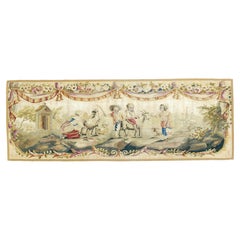
Antique French Aubusson Tapestry 1'8" x 4'8"

Antique French Aubusson Tapestry 1'8" x 4'8"

Located in New York, NY

The Aubusson tapestry manufacture of the 17th and 18th centuries managed to compete with the royal manufacture of Gobelins tapestry and the privileged position of Beauvais tapestry. Tapestry manufacture at Aubusson, in the upper valley of the Creuse in central France, may have developed from looms in isolated family workshops established by Flemings that are noted in documents from the 16th century. Typically, Aubusson tapestries depended on engravings as a design source or the full-scale cartoons from which the low-warp tapestry-weavers worked. As with Flemish and Parisian tapestries...

Category

Antique 19th Century French Aubusson Tapestries

Materials

Wool, Silk

Jean Lurcat, The Leo, from The Signs of the Zodiac, 1959

Jean Lurcat, The Leo, from The Signs of the Zodiac, 1959

By Jean Lurçat

Located in Southampton, NY

This exquisite lithograph and pochoir by Jean Lurcat (1892–1966), titled Le Lion (The Leo), from the folio Les Signes du Zodiaque (The Signs of the Zodiac), originates from the 1959 ...

Category

1950s Modern Landscape Prints

Materials

Lithograph

New Southwest Modern Kilim Rug with Contemporary Santa Fe Style

New Southwest Modern Kilim Rug with Contemporary Santa Fe Style

Located in Dallas, TX

81028 New Southwest Modern Kilim Rug with Contemporary Santa Fe Style, 08'11 x 12'02. Steeped in the prestige of Southwest Modern design, this handwov...

Category

21st Century and Contemporary South Asian Modern Indian Rugs

Materials

Wool

Don Quixote Reading
Don Quixote Reading

Don Quixote Reading

By Jean-Honoré Fragonard

Located in Middletown, NY

Etching on a large sheet of light cream wove paper, Baron Dominique Vivant Denon (after Jean-Honoré Fragonard); Paris: c 1900; 4 3/4 x 3 1/2 inc...

Category

Early 20th Century French School Figurative Prints

Materials

Handmade Paper, Etching

Marcel Gromaire, Nude Woman, from Verve, Revue Artistique, 1953

Marcel Gromaire, Nude Woman, from Verve, Revue Artistique, 1953

By Marcel Gromaire

Located in Southampton, NY

This exquisite lithograph by Marcel Gromaire (1892–1971), titled Femme nu (Nude Woman), from Verve, Revue Artistique et Litteraire, Vol. VII, No. 27–28, originates from the 1953 issu...

Category

1950s Modern Landscape Prints

Materials

Lithograph

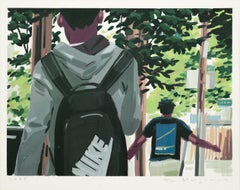
"After the Bell" City Scene with Young Students in Acrylic Painting

"After the Bell" City Scene with Young Students in Acrylic Painting

By Tom Haugomat

Located in Philadelphia, PA

"After the Bell" is an original painting by Tom Haugomat, made as part of his traveling artist residency with The Jaunt. Traveling from France to Philadelphia, Haugomat was inspired ...

Category

21st Century and Contemporary Contemporary Figurative Paintings

Materials

Paper, Acrylic

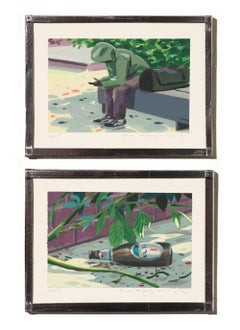
"Trolley Trail" Illustrative Landscape in Three Parts by Tom Haugomat

"Trolley Trail" Illustrative Landscape in Three Parts by Tom Haugomat

By Tom Haugomat

Located in Philadelphia, PA

"Trolley Trail" is an original painting by Tom Haugomat, made as part of his traveling artist residency with The Jaunt. Traveling from France to Philadelphia, Haugomat was inspired b...

Category

21st Century and Contemporary Contemporary Landscape Paintings

Materials

Paper, Acrylic

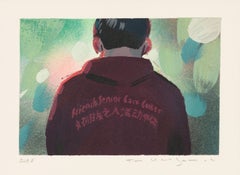
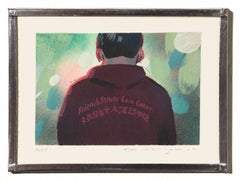
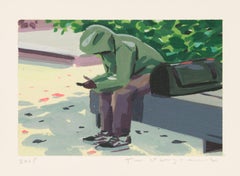
"Chinatown I" Illustrative Miniature Painting of Lone Figure

"Chinatown I" Illustrative Miniature Painting of Lone Figure

By Tom Haugomat

Located in Philadelphia, PA

"Chinatown I" is an original painting by Tom Haugomat, made as part of his traveling artist residency with The Jaunt. Traveling from France to Philadelphia, Haugomat was inspired by ...

Category

21st Century and Contemporary Contemporary Figurative Paintings

Materials

Paper, Acrylic

"The Stone" Acrylic Painting Diptych of Cemetery and Flag by Tom Haugomat

"The Stone" Acrylic Painting Diptych of Cemetery and Flag by Tom Haugomat

By Tom Haugomat

Located in Philadelphia, PA

"The Stone" is an original painting by Tom Haugomat, made as part of his traveling artist residency with The Jaunt. Traveling from France to Philadelphia, Haugomat was inspired by hi...

Category

21st Century and Contemporary Contemporary Landscape Paintings

Materials

Paper, Acrylic

Jean Lurcat, Andalusian Monkey, from Animal Geography, 1975 (after)

Jean Lurcat, Andalusian Monkey, from Animal Geography, 1975 (after)

By Jean Lurçat

Located in Southampton, NY

This exquisite lithograph after Jean Lurcat (1892–1966), titled Singe Andalou (Andalusian Monkey), from Geographie animale (Animal Geography), originates from the January 22, 1975 is...

Category

1970s Modern Abstract Prints

Materials

Lithograph

Jean Lurcat, S.O.S., from Eight Drawings, 1933 (after)

Jean Lurcat, S.O.S., from Eight Drawings, 1933 (after)

By Jean Lurçat

Located in Southampton, NY

This exquisite heliogravure after Jean Lurcat (1892–1966), titled S.O.S., from the folio Jean Lurcat Huit Dessins (Jean Lurcat Eight Drawings), originates from the 1933 edition publi...

Category

1930s Surrealist Figurative Prints

Materials

Lithograph

French 1961  "Clown a la Colerette" Figurative Expressionist Oil Painting

French 1961 "Clown a la Colerette" Figurative Expressionist Oil Painting

By Claude Weisbuch

Located in Surfside, FL

WEISBUCH, Claude. Oil on Canvas "Clown a la Colerette" 1961. Signed lower right, further signed, titled and dated verso. Dimensions: 18.25" high x 24" wide. Claude Weisbuch, 1927-20...

Category

1960s Modern Figurative Paintings

Materials

Canvas, Oil

Jean Lurcat, The Sagittarius, from The Signs of the Zodiac, 1959

Jean Lurcat, The Sagittarius, from The Signs of the Zodiac, 1959

By Jean Lurçat

Located in Southampton, NY

This exquisite lithograph and pochoir by Jean Lurcat (1892–1966), titled Le Sagitaire (The Sagittarius), from the folio Les Signes du Zodiaque (The Signs of the Zodiac), originates f...

Category

1950s Modern Landscape Prints

Materials

Lithograph

Rare Israeli Modernist Judaica Watercolor Painting on Lithograph Naftali Bezem

Rare Israeli Modernist Judaica Watercolor Painting on Lithograph Naftali Bezem

By Naftali Bezem

Located in Surfside, FL

Naftali Bezem (Hebrew: נפתלי בזם‎‎; born November 27, 1924) is an Israeli painter, muralist, and sculptor. Bezem was born in Essen, Germany, in 1924. His early adolescence was spent ...

Category

1970s Modern Figurative Drawings and Watercolors

Materials

Watercolor, Lithograph

"Tendrils, Sleepy Orange", Abstract Anatomical Heart with Botanical Elements

"Tendrils, Sleepy Orange", Abstract Anatomical Heart with Botanical Elements

By Roche Cruchon

Located in Philadelphia, PA

"Tendrils, Sleepy Orange" is an original piece by Roche Cruchon made from pastel on paper. This piece measures 15.5”h x 12.5”w framed and is signed en recto. Tendrils is a recent ex...

Category

21st Century and Contemporary Contemporary Abstract Drawings and Waterco...

Materials

Paper, Oil Pastel

Odchodzacy (Departure II), Figurative Abstract Tapestry, Textile Sculpture

Odchodzacy (Departure II), Figurative Abstract Tapestry, Textile Sculpture

By Lilla Kulka

Located in Wilton, CT

Odchodzacy (Departure II), wool, cotton & stilon, 92" x 36", 1993. This large figurative, abstract tapestry was done by textile artist, Lilla Kulka (b. 1946, Krakow, Poland). Arti...

Category

1990s Abstract Abstract Sculptures

Materials

Fabric, Textile, Tapestry, Wool, Cotton

Jean Lurcat, Final Monuments to the Victims, from Eight Drawings, 1933 (after)

Jean Lurcat, Final Monuments to the Victims, from Eight Drawings, 1933 (after)

By Jean Lurçat

Located in Southampton, NY

This exquisite heliogravure after Jean Lurcat (1892–1966), titled Derniers Monuments aux Victimes (Final Monuments to the Victims), from the folio Jean Lurcat Huit Dessins (Jean Lurc...

Category

1930s Surrealist Figurative Prints

Materials

Lithograph

Jean Lurcat, The Cancer, from The Signs of the Zodiac, 1959

Jean Lurcat, The Cancer, from The Signs of the Zodiac, 1959

By Jean Lurçat

Located in Southampton, NY

This exquisite lithograph and pochoir by Jean Lurcat (1892–1966), titled Le Cancer (The Cancer), from the folio Les Signes du Zodiaque (The Signs of the Zodiac), originates from the ...

Category

1950s Modern Landscape Prints

Materials

Lithograph

Vintage French Modernist Jean Lurcat Watercolor Painting Mod Blue and Orange Owl

Vintage French Modernist Jean Lurcat Watercolor Painting Mod Blue and Orange Owl

By Jean Lurçat

Located in Surfside, FL

Jean Lurcat,New York, France, 1892-1966 Depicts a highly stylized, expressionist owl bird figure hidden in leaves surrounded by bright, vibrant, vivid blue, yellow, and orange colors...

Category

Mid-20th Century Modern Animal Paintings

Materials

Watercolor, Lithograph

Jean Lurcat, A Star Without a Stable, from Eight Drawings, 1933 (after)

Jean Lurcat, A Star Without a Stable, from Eight Drawings, 1933 (after)

By Jean Lurçat

Located in Southampton, NY

This exquisite heliogravure after Jean Lurcat (1892–1966), titled Une Etoile Sans Etable (A Star Without a Stable), from the folio Jean Lurcat Huit Dessins (Jean Lurcat Eight Drawing...

Category

1930s Surrealist Figurative Prints

Materials

Lithograph

Jean Lurcat, The Gemini, from The Signs of the Zodiac, 1959

Jean Lurcat, The Gemini, from The Signs of the Zodiac, 1959

By Jean Lurçat

Located in Southampton, NY

This exquisite lithograph and pochoir by Jean Lurcat (1892–1966), titled Les Gemeaux (The Gemini), from the folio Les Signes du Zodiaque (The Signs of the Zodiac), originates from th...

Category

1950s Modern Landscape Prints

Materials

Lithograph

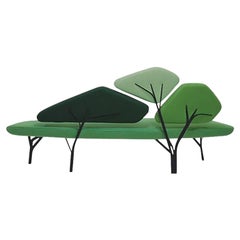
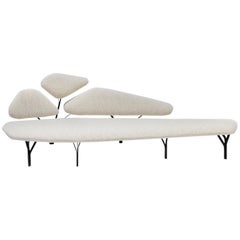
PEBBLE sofa
PEBBLE sofa

PEBBLE sofa

$27,300 / item

PEBBLE sofa

By WKND Lab

Located in Miami Beach, FL

A modular sofa system that merges Korean design sensibilities with Japanese craftsmanship. The textile, inspired by Eastern ink wash painting and Western pointillism, is woven on a r...

Category

2010s Korean Minimalist Stools

Materials

Textile, Cotton, Thread

Jean Lurcat, Anteater of the Capucines, from Animal Geography, 1975 (after)

Jean Lurcat, Anteater of the Capucines, from Animal Geography, 1975 (after)

By Jean Lurçat

Located in Southampton, NY

This exquisite lithograph after Jean Lurcat (1892–1966), titled Fourmilier des Capucines (Anteater of the Capucines), from Geographie animale (Animal Geography), originates from the January 22, 1975 issue published by Production Edito-Service S.A., Geneve in collaboration with Andre Gonin, Lausanne, and M. Jean Graven, Paris, and printed by Edito-Service S.A., Italy, 1975. This visionary composition reflects Lurcats mastery of the lithographic medium, embodying his poetic imagination through fluid line, expressive form, and a luminous sense of movement. The work conveys the artists unique ability to merge symbolism, nature, and emotion into a cohesive visual language, transforming even the simplest subject into a deeply evocative and dreamlike image. Infused with lyricism and spiritual resonance, the composition exemplifies Lurcats enduring exploration of mythology, cosmic order, and the transcendent power of art. The piece forms part of Geographie animale (Animal Geography), a landmark publication that documents and celebrates one of the most significant aspects of his graphic oeuvre. Executed as a lithograph on bouffant des Papeteries de Hauteville paper, this work measures 12.4 x 9.37 inches (31.5 x 23.8 cm). Unsigned and unnumbered as issued. The edition exemplifies the superb craftsmanship of the Edito-Service atelier, renowned for its refined European printing collaborations. Artwork Details: Artist: After Jean Lurcat (1892–1966) Title: Fourmilier des Capucines (Anteater of the Capucines), from Geographie animale (Animal Geography), January 22, 1975 Medium: Lithograph on bouffant des Papeteries de Hauteville paper Dimensions: 12.4 x 9.37 inches (31.5 x 23.8 cm) Inscription: Unsigned and unnumbered as issued Date: 1975 Publisher: Production Edito-Service S.A., Geneve in collaboration with Andre Gonin, Lausanne, and M. Jean Graven, Paris Printer: Edito-Service S.A., Italy Condition: Well preserved, consistent with age and medium Provenance: From Geographie animale (Animal Geography), published by Production Edito-Service S.A., Geneve, 1975 Notes: Excerpted from the folio (translated from French), This edition of the Animal Geography by Jean Lurcat was established by publisher Andre Gonin in Lausanne, with the collaboration of Mr. Jean Graven. The lithographs were taken in the workshops of the Graphic Arts J.- E. Wolfensberger in Zurich, under the personal direction of the artist. The stones were sanded after the draw. The text, in Caslon character, body twenty, was composed and printed in Geneva, on velin pur fil a la forme des papeteries du Marais, by the master printer Andre Kundig with the help of Marc Barraud and Auguste Griess. The final to shot was given the iron June 1948. This second edition, 23.8 x 31.5 cm, was drawn with the authorization of Andre Gonin on Velin bouffant des Papeteries de Hauteville. About the Publication: Geographie animale (Animal Geography) stands as one of the most imaginative printed projects associated with Jean Lurcat, uniting visual invention, literary wit, and refined European craftsmanship in a richly conceived publication devoted to the symbolic world of animals. Originally conceived under the guidance of publisher Andre Gonin and later issued in this authorized 1975 edition by Production Edito-Service S.A. of Geneve in collaboration with partners in Lausanne and Paris, the publication reflects the enduring appeal of Lurcats bestiary imagery and philosophical approach to nature. The lithographs were prepared in the workshops of J.- E. Wolfensberger in Zurich under the artists personal supervision, demonstrating the close relationship between artist and printer that characterized the finest twentieth century illustrated editions. More than a portfolio of images, Geographie animale (Animal Geography) is a meditation on the animal kingdom as metaphor, presenting creatures as emblems of instinct, wisdom, humor, vigilance, and cosmic order. Through its union of image, typography, and material elegance, the publication remains an important testament to the vitality of postwar European graphic art and to Lurcats singular ability to merge intellect, decoration, and poetic symbolism. About the Artist: Jean Lurcat (1892–1966) was a pioneering French painter, ceramicist, and tapestry master who transformed the ancient art of tapestry into a modern, intellectual, and spiritual medium, establishing himself as one of the most original and influential artists of the 20th century. Born in Bruyeres, France, Lurcat studied in Nancy and Paris, where he became part of the avant-garde circle that included Pablo Picasso, Alexander Calder, Alberto Giacometti, Salvador Dali, Joan Miro, Wassily Kandinsky, Marcel Duchamp, and Man Ray. His early paintings reflected the influence of Post-Impressionism, Cubism, and Symbolism, but his true innovation came when he reimagined tapestry as a form of monumental art rather than decorative craft. Profoundly inspired by the medieval Apocalypse of Angers tapestry, he sought to revive the grandeur of weaving by fusing ancient techniques with modernist abstraction and symbolism. In the 1930s, working with the Aubusson and Gobelins workshops, Lurcat revolutionized the process of tapestry-making by introducing a precise color notation system and standardizing thread palettes, allowing artists to maintain creative control from conception to completion. His bold compositions radiant with color, geometric rhythm, and allegorical imagery embodied a philosophy of cosmic balance and human resilience. After World War II, Lurcats work deepened in moral and spiritual scope, culminating in his monumental cycle Le Chant du Monde (The Song of the World, 1957–1965), a humanist response to the destruction of war and one of the greatest artistic achievements of the postwar era. His art, characterized by suns, moons, mythic creatures, and symbolic geometry, reflected his belief that art should harmonize intellect, craft, and emotion while reconnecting humanity to the natural and divine order. A contemporary and peer of Pablo Picasso, Alexander Calder, Alberto Giacometti, Salvador Dali, Joan Miro, Wassily Kandinsky, Marcel Duchamp, and Man Ray, Lurcat shared their passion for abstraction and innovation while extending it into the tactile, enduring world of textile art. His influence resonated with later artists and designers such as Fernand Leger, Sonia Delaunay, Le Corbusier, and Victor Vasarely, whose integration of color and geometry echoed his ideas. His work is preserved in major collections including the Musee Jean Lurcat et de la Tapisserie Contemporaine in Angers, the Musee d’Art Moderne de Paris, and the Centre Pompidou. The highest auction record for Jean Lurcat was achieved by Apocalypse Tapestry, which sold for $290,500 USD at Sotheby’s, Paris, on May 29, 2014, underscoring his enduring legacy as the visionary who redefined tapestry as a cornerstone of modern art. Jean Lurcat Fourmilier des Capucines, Lurcat Geographie animale, Jean Lurcat lithograph...

Category

1970s Modern Abstract Prints

Materials

Lithograph

Jean Lurcat, Caterpillar of Korea, from Animal Geography, 1975 (after)

Jean Lurcat, Caterpillar of Korea, from Animal Geography, 1975 (after)

By Jean Lurçat

Located in Southampton, NY

This exquisite lithograph after Jean Lurcat (1892–1966), titled Chenille de Coree (Caterpillar of Korea), from Geographie animale (Animal Geography), originates from the January 22, 1975 issue published by Production Edito-Service S.A., Geneve in collaboration with Andre Gonin, Lausanne, and M. Jean Graven, Paris, and printed by Edito-Service S.A., Italy, 1975. This visionary composition reflects Lurcats mastery of the lithographic medium, embodying his poetic imagination through fluid line, expressive form, and a luminous sense of movement. The work conveys the artists unique ability to merge symbolism, nature, and emotion into a cohesive visual language, transforming even the simplest subject into a deeply evocative and dreamlike image. Infused with lyricism and spiritual resonance, the composition exemplifies Lurcats enduring exploration of mythology, cosmic order, and the transcendent power of art. The piece forms part of Geographie animale (Animal Geography), a landmark publication that documents and celebrates one of the most significant aspects of his graphic oeuvre. Executed as a lithograph on bouffant des Papeteries de Hauteville paper, this work measures 12.4 x 9.37 inches (31.5 x 23.8 cm). Unsigned and unnumbered as issued. The edition exemplifies the superb craftsmanship of the Edito-Service atelier, renowned for its refined European printing collaborations. Artwork Details: Artist: After Jean Lurcat (1892–1966) Title: Chenille de Coree (Caterpillar of Korea), from Geographie animale (Animal Geography), January 22, 1975 Medium: Lithograph on bouffant des Papeteries de Hauteville paper Dimensions: 12.4 x 9.37 inches (31.5 x 23.8 cm) Inscription: Unsigned and unnumbered as issued Date: 1975 Publisher: Production Edito-Service S.A., Geneve in collaboration with Andre Gonin, Lausanne, and M. Jean Graven, Paris Printer: Edito-Service S.A., Italy Condition: Well preserved, consistent with age and medium Provenance: From Geographie animale (Animal Geography), published by Production Edito-Service S.A., Geneve, 1975 Notes: Excerpted from the folio (translated from French), This edition of the Animal Geography by Jean Lurcat was established by publisher Andre Gonin in Lausanne, with the collaboration of Mr. Jean Graven. The lithographs were taken in the workshops of the Graphic Arts J.- E. Wolfensberger in Zurich, under the personal direction of the artist. The stones were sanded after the draw. The text, in Caslon character, body twenty, was composed and printed in Geneva, on velin pur fil a la forme des papeteries du Marais, by the master printer Andre Kundig with the help of Marc Barraud and Auguste Griess. The final to shot was given the iron June 1948. This second edition, 23.8 x 31.5 cm, was drawn with the authorization of Andre Gonin on Velin bouffant des Papeteries de Hauteville. About the Publication: Geographie animale (Animal Geography) stands as one of the most imaginative printed projects associated with Jean Lurcat, uniting visual invention, literary wit, and refined European craftsmanship in a richly conceived publication devoted to the symbolic world of animals. Originally conceived under the guidance of publisher Andre Gonin and later issued in this authorized 1975 edition by Production Edito-Service S.A. of Geneve in collaboration with partners in Lausanne and Paris, the publication reflects the enduring appeal of Lurcats bestiary imagery and philosophical approach to nature. The lithographs were prepared in the workshops of J.- E. Wolfensberger in Zurich under the artists personal supervision, demonstrating the close relationship between artist and printer that characterized the finest twentieth century illustrated editions. More than a portfolio of images, Geographie animale (Animal Geography) is a meditation on the animal kingdom as metaphor, presenting creatures as emblems of instinct, wisdom, humor, vigilance, and cosmic order. Through its union of image, typography, and material elegance, the publication remains an important testament to the vitality of postwar European graphic art and to Lurcats singular ability to merge intellect, decoration, and poetic symbolism. About the Artist: Jean Lurcat (1892–1966) was a pioneering French painter, ceramicist, and tapestry master who transformed the ancient art of tapestry into a modern, intellectual, and spiritual medium, establishing himself as one of the most original and influential artists of the 20th century. Born in Bruyeres, France, Lurcat studied in Nancy and Paris, where he became part of the avant-garde circle that included Pablo Picasso, Alexander Calder, Alberto Giacometti, Salvador Dali, Joan Miro, Wassily Kandinsky, Marcel Duchamp, and Man Ray. His early paintings reflected the influence of Post-Impressionism, Cubism, and Symbolism, but his true innovation came when he reimagined tapestry as a form of monumental art rather than decorative craft. Profoundly inspired by the medieval Apocalypse of Angers tapestry, he sought to revive the grandeur of weaving by fusing ancient techniques with modernist abstraction and symbolism. In the 1930s, working with the Aubusson and Gobelins workshops, Lurcat revolutionized the process of tapestry-making by introducing a precise color notation system and standardizing thread palettes, allowing artists to maintain creative control from conception to completion. His bold compositions radiant with color, geometric rhythm, and allegorical imagery embodied a philosophy of cosmic balance and human resilience. After World War II, Lurcats work deepened in moral and spiritual scope, culminating in his monumental cycle Le Chant du Monde (The Song of the World, 1957–1965), a humanist response to the destruction of war and one of the greatest artistic achievements of the postwar era. His art, characterized by suns, moons, mythic creatures, and symbolic geometry, reflected his belief that art should harmonize intellect, craft, and emotion while reconnecting humanity to the natural and divine order. A contemporary and peer of Pablo Picasso, Alexander Calder, Alberto Giacometti, Salvador Dali, Joan Miro, Wassily Kandinsky, Marcel Duchamp, and Man Ray, Lurcat shared their passion for abstraction and innovation while extending it into the tactile, enduring world of textile art. His influence resonated with later artists and designers such as Fernand Leger, Sonia Delaunay, Le Corbusier, and Victor Vasarely, whose integration of color and geometry echoed his ideas. His work is preserved in major collections including the Musee Jean Lurcat et de la Tapisserie Contemporaine in Angers, the Musee d’Art Moderne de Paris, and the Centre Pompidou. The highest auction record for Jean Lurcat was achieved by Apocalypse Tapestry, which sold for $290,500 USD at Sotheby’s, Paris, on May 29, 2014, underscoring his enduring legacy as the visionary who redefined tapestry as a cornerstone of modern art. Jean Lurcat Chenille de Coree, Lurcat Geographie animale, Jean Lurcat lithograph...

Category

1970s Modern Abstract Prints

Materials

Lithograph

Jean Lurcat, Marmot of Anzeindaz, from Animal Geography, 1975 (after)

Jean Lurcat, Marmot of Anzeindaz, from Animal Geography, 1975 (after)

By Jean Lurçat

Located in Southampton, NY

This exquisite lithograph after Jean Lurcat (1892–1966), titled Marmotte d'Anzeindaz (Marmot of Anzeindaz), from Geographie animale (Animal Geography), originates from the January 22...

Category

1970s Modern Abstract Prints

Materials

Lithograph

Large Pair of Louis XV Ormolu Five-Light Wall Lights in the Style of Caffieri

Large Pair of Louis XV Ormolu Five-Light Wall Lights in the Style of Caffieri

By Jacques Caffieri

Located in Kittery Point, ME

Each sconce of asymmetrical rocaille design with foliate-cast backplate issuing five foliate S and C- scrolling candle arms mounted throughout with stylized leaf-tip motifs. Drilled ...

Category

Antique Mid-18th Century French Louis XV Wall Lights and Sconces

Materials

Bronze

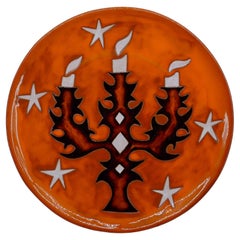
Jean Picart Le Doux, Wall Ceramic Bowl, 12/100, 1950s

Jean Picart Le Doux, Wall Ceramic Bowl, 12/100, 1950s

By Jean Picart Le Doux

Located in Saint-Amans-des-Cots, FR

French Mid-Century Ceramic Bowl by Jean Picart Le Doux — Sant Vicens, France, 1950s. A striking French mid-century ceramic bowl by Jean Picart Le Doux, created in France during the ...

Category

Vintage 1950s French Mid-Century Modern Ceramics

Materials

Ceramic

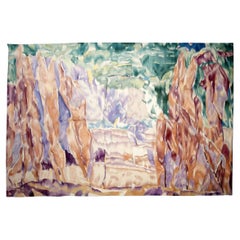
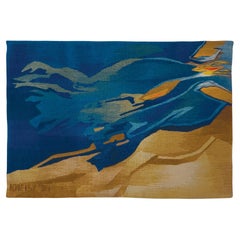
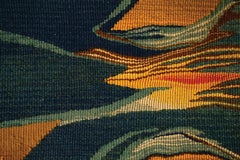
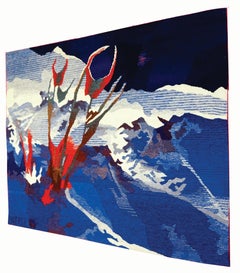
Spectacular tapestry by Michel Degand

Spectacular tapestry by Michel Degand

Located in NEUILLY-SUR-SEINE, FR

Michel Degand (1934–2021) Tapestry Mixed media, wool and silk Circa 1970–1980 Dimensions: H. 220 × W. 350 cm Biographical Information A major artist of the second half of the 20th ...

Category

Vintage 1970s French Beaux Arts Tapestries

Materials

Tapestry

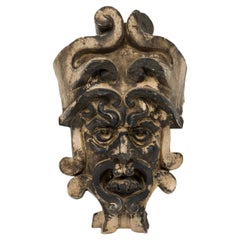
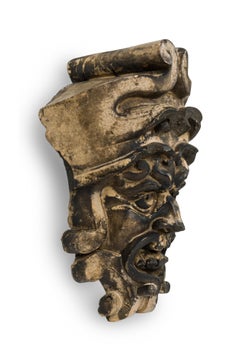
Pre-Columbian Style Terra Cotta Mask

Pre-Columbian Style Terra Cotta Mask

Located in Queens, NY

Mid-Century Pre-Columbian Style Terra Cotta Mask Wall Scupture

Category

20th Century Mid-Century Modern Decorative Art

Materials

Brass

Vintola Studio Heart Bar Stool, White Métro Beaubourg Jacquard by Dedar, Europe.

Vintola Studio Heart Bar Stool, White Métro Beaubourg Jacquard by Dedar, Europe.

Located in 05-080 Hornowek, PL

Introducing the latest creation from Vintola Studio, the stunning chair designed by Ola Szewczul in 2024. This chair is a masterpiece of modern design, combining elegance with except...

Category

2010s Polish Chairs

Materials

Beech

1820 Green Antique Pink French Empire Period Savonnerie Carpet 8'x13'6" Wool Rug

1820 Green Antique Pink French Empire Period Savonnerie Carpet 8'x13'6" Wool Rug

Located in New York, NY

Early 19th Century French Savonnerie Carpet from Empire Period (8' x 13' 6" - 243 x 412 cm) This outstanding antique French Empire period Savonnerie carpet, likely from the 1820s, is a luxurious example of early 19th-century court weaving, renowned for its dense pile and formal design aesthetic. Originating from the state-sponsored manufactories in France, such as those that eventually merged with the Gobelins workshops, these carpets were the pinnacle of European textile production, often commissioned for palaces and used as diplomatic gifts. The carpet features a field filled with an array of naturalistic floral bouquets and stylized garlands. This "all-over" botanical pattern, in contrast to the single large central medallions of earlier or stricter Neoclassical styles, creates an abundant, almost garden-like feel. The design maintains a balanced, formal symmetry that is a hallmark of French court style. The rug's palette is defined by a deep, rich olive green ground color, which provides a striking backdrop for the soft, muted tones of the flowers in shades of ivory, pink, and subtle gold or rust accents. The dyes have likely softened over decades, achieving a desirable patina characteristic of genuine antiques. It is a hand-knotted pile carpet, typically woven with the durable Ghiordes (Turkish) knot using high-quality wool on a strong foundation. This technique results in a plush, velvety surface and substantial feel underfoot, differentiating it from flat-woven Aubusson rugs...

Category

Antique 1820s French Empire Western European Rugs

Materials

Wool

Rolleboise le Remorqueur, Oil on Canvas, Signed, French Impressionist, Framed

Rolleboise le Remorqueur, Oil on Canvas, Signed, French Impressionist, Framed

By Maximilien Luce

Located in New York, NY

Oil on canvas 14 3/4 x 21 1/2 inches (37.5 x 54.6 cm.) Framed: 20 x 26 inches (50.8 x 66 cm) Signed: Luce Provenance: Private West Coast collection Literature: This painting will b...

Category

20th Century Post-Impressionist Landscape Paintings

Materials

Canvas, Oil

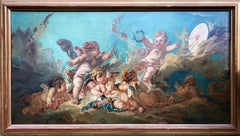
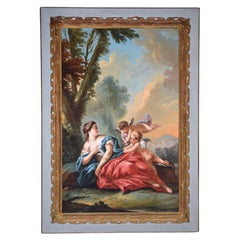
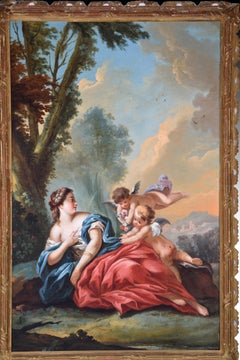
Allegory of Venus with Cupids. Oil on canvas. Enthroned by BOUCHER, François

Allegory of Venus with Cupids. Oil on canvas. Enthroned by BOUCHER, François

Located in Madrid, ES

Allegory of Venus with Cupids. Oil on canvas. Enthroned by BOUCHER, François (Paris, 1703- 1770). The scene presents, in the background, an idyllic natural landscape, with trees to ...

Category

Antique 18th Century European Rococo Paintings

Materials

Other

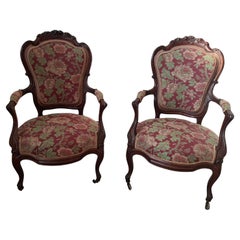
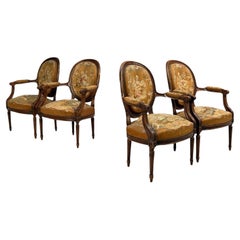
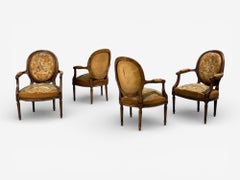
Pair of Period Armchairs - Louis XV Style (1960s) in Fine Cherrywood

Pair of Period Armchairs - Louis XV Style (1960s) in Fine Cherrywood

Located in Manzano, IT

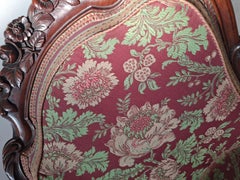
Gorgeous pair of vintage armchairs, authentic production of the 1960s, made of fine carved cherry wood. This set combines the timeless elegance of the Louis XV style with the solidit...

Category

20th Century Italian Louis XV Armchairs

Materials

Cherry

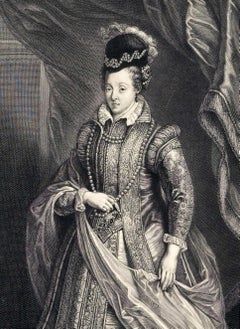
Joan of Austria / - The luminosity of the print -

Joan of Austria / - The luminosity of the print -

By Gerard Edelinck

Located in Berlin, DE

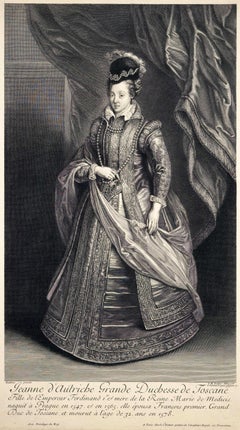
Gérard Edelinck (1640 Antwerp - 1707 Paris), Joan of Austria, 1707. Copperplate engraving, 51.2 cm x 29.8 cm, inscribed below the image: "Jeanne d'Autriche Grande Duchesse de Toscane...

Category

Early 1700s Realist Portrait Prints

Materials

Paper

Turkish Oushak Rug 3'9" x 5'8" #16571

Turkish Oushak Rug 3'9" x 5'8" #16571

Located in Houston, TX

Turkish Oushak Rug 3'9" x 5'8" #16571 Explore a curated collection of hallway runners, wool rugs, and handmade masterpieces at , where elegance meets functionality. Elevate your spac...

Category

21st Century and Contemporary Turkish Turkish Rugs

Materials

Wool

Handmade Wool Tulu Rug in Geometric Design 9'3" x 12'9"

Handmade Wool Tulu Rug in Geometric Design 9'3" x 12'9"

By Asian Modern

Located in Houston, TX

A stunning modern Turkish Tulu rug that is sure to add a touch of warmth and luxury to any space. This rug has been meticulously handwoven using traditional techniques, ensuring its ...

Category

2010s Turkish Modern Turkish Rugs

Materials

Wool

21st C. Pale French Savonnerie Style Wool Carpet with Foliate Vine Pattern

21st C. Pale French Savonnerie Style Wool Carpet with Foliate Vine Pattern

By Savonnerie

Located in Morristown, NJ

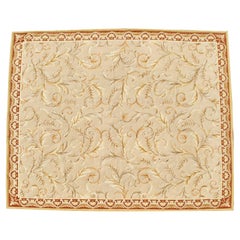
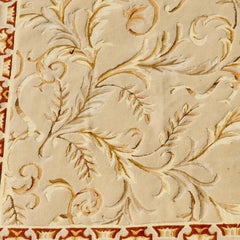
21st C. French Savonnerie style wool carpet. The design is a foliate vine pattern in gold, light green and brown tones on a cream ground. The border has a rust ground with a geometric pattern of alternating stylized wheatsheaf and leaf design. Unmarked. About Savonnerie Carpets: French pile floor covering, usually large, whether made at the Savonnerie workshop or made in that manner and style. The Savonnerie factory (on the site of a former soap factory, hence the name) was established in Paris in 1627 at the Hospice de la Savonnerie at Chaillot by royal order, to provide pile carpets for use in the king’s palaces and as royal gifts. Subject to interruptions from time to time, this shop has provided carpets, seat covers, and similar weavings ever since, at first for the French court and then for government buildings. The patterns are floral and architectural Renaissance conceptions, many based upon paintings and cartoons by the same artists who designed the Gobelins tapestries. In 1826, the enterprises having been combined, the Savonnerie production was moved into the Gobelins workshops, near Paris. The styles of ornamentation have varied with the tastes of the passing reigns and regimes until in recent years the abstract or surrealist creations of modern painters have, in their turn, been reflected in the Savonnerie rugs. The various Savonnerie fashions have exercised a powerful influence upon the patterns of other Western carpet workshops. Dimensions: Approx. 105"l x 87"w Condition: Good, minor fading and discoloration. Shows well. Note: All rugs and carpets...

Category

Early 2000s Unknown Modern Western European Rugs

Materials

Wool, Cotton

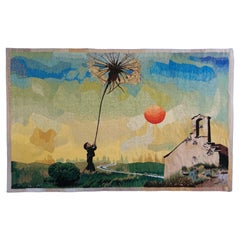
2x3 m Childhood Woven Tapestry Huge Textile Art by Artist Eszter Kneisz

2x3 m Childhood Woven Tapestry Huge Textile Art by Artist Eszter Kneisz

By VUUV Works

Located in Székesfehérvár, HU

Haute-Lisse by Eszter Kneisz Noémi Ferenczy Award winner tapestry artist. In the large, romantic tapestry landscape entitled Childhood, we see a child clinging to a helium balloon r...

Category

1990s Hungarian Other Tapestries

Materials

Wool

1780s Green Scene Antique French Verdure Tapestry 9'8"x10'4" Flatweave Rug

1780s Green Scene Antique French Verdure Tapestry 9'8"x10'4" Flatweave Rug

Located in New York, NY

18th Century French Verdure Tapestry ( 9'8" x 10'4" - 295 x 315 ) French Verdure Tapestry, Probably Beauvais Linen warps, wool pattern wefts, tapestry weave, Width 9.8 by Length 10.4...

Category

Antique 1780s French Rustic Western European Rugs

Materials

Wool