399 results for "gobelins"

to
76
204
185
209
82
73
71
67
52
40
38
37
26
24
15
13
12
12
12
12
12
12
11
10
9
8
8
6
6
5
5
5
4
3
3
2
2
2
2
2
1
1
1
1
11
10
9
8
6
21st C. Pale French Savonnerie Style Wool Carpet with Foliate Vine Pattern

21st C. Pale French Savonnerie Style Wool Carpet with Foliate Vine Pattern

By Savonnerie

Located in Morristown, NJ

21st C. French Savonnerie style wool carpet. The design is a foliate vine pattern in gold, light green and brown tones on a cream ground. The border has a rust ground with a geometric pattern of alternating stylized wheatsheaf and leaf design. Unmarked. About Savonnerie Carpets: French pile floor covering, usually large, whether made at the Savonnerie workshop or made in that manner and style. The Savonnerie factory (on the site of a former soap factory, hence the name) was established in Paris in 1627 at the Hospice de la Savonnerie at Chaillot by royal order, to provide pile carpets for use in the king’s palaces and as royal gifts. Subject to interruptions from time to time, this shop has provided carpets, seat covers, and similar weavings ever since, at first for the French court and then for government buildings. The patterns are floral and architectural Renaissance conceptions, many based upon paintings and cartoons by the same artists who designed the Gobelins tapestries. In 1826, the enterprises having been combined, the Savonnerie production was moved into the Gobelins workshops, near Paris. The styles of ornamentation have varied with the tastes of the passing reigns and regimes until in recent years the abstract or surrealist creations of modern painters have, in their turn, been reflected in the Savonnerie rugs. The various Savonnerie fashions have exercised a powerful influence upon the patterns of other Western carpet workshops. Dimensions: Approx. 105"l x 87"w Condition: Good, minor fading and discoloration. Shows well. Note: All rugs and carpets...

Category

Early 2000s Unknown Modern Western European Rugs

Materials

Wool, Cotton

Anglers

Anglers

By Jane DeDecker

Located in Greenwich, CT

Edition of 50 American, b. 1961 Jane DeDecker’s energetic and dynamic bronze sculptures serve as a reflection of her own life experiences and those of her closely-knit family. Her t...

Category

1990s Contemporary Figurative Sculptures

Materials

Bronze

Borghese Sofa Noé Duchaufour Lawrance

Borghese Sofa Noé Duchaufour Lawrance

By Noé Duchaufour-Lawrance

Located in Geneve, CH

Borghese is a light sofa inspired by the stone pines of the Villa Borghese gardens in Roma. The metal structure reproduces the network of branches and supports the back cushions; the whole draws a comfortable landscape. Color scale: Borghese is available in a selection of colors chosen by the designer, used either in a single colour version, or as a combination of four colors Dimensions, volume and weight Height: 33,5 inches. Length: 74 inches. Width: 32,7 inches. Weight: 143 lbs. Materials and construction: Black grained mat lacquered steel structure. High density polyurethane foam. Upolstery 100% Wool. BIOGRAPHY Not wishing to simply produce or be rational about a product… Noé Duchaufour-Lawrance prefers that each of his projects has its own unique scenario, nourished without distinction between uses, forms, materials or aesthetics. For him, curves and straight lines, sensuality and strictness interact in confrontations that are conducive to create meaning and awaken our senses. Through his desire to breath life into both the objects and spaces he designs, Noé Duchaufour-Lawrance views each project as an organic form that will grow over time with its user, almost like a natural element that can Challenge human order or disorder. Originally, Noé Duchaufour-Lawrance was a sculptor, preoccupied with each work he created by a story and intimate link with nature that he felt the need to retranscribe by using his hands. But soon the IDEA of stirring emotions in others by creating useful forms became an evident path for someone who loves the beautiful as much as the functional and harmony as much as social responsibility. So he turned to design… Noé Duchaufour-Lawrance often compares his approach to tsubo niwa, the tiny garden at the center of a traditional Japanese house. Like an organic pulse in a profession dedicated to meeting the demands of an industry, a market or a specific client, he is as ready to design objects with inspired lines for manufacturers (Bernhardt Design, Ceccotti Collezioni, Cinna, Ligne Roset, La Chance, Petite Friture, Tacchini, Zanotta…) as he is to imagine harmonious living areas (Senderens, Air France Lounges, Ciel de Paris, Meurice Oenotheque, Transumance Chalet, #Cloud.paris Lounge…) or even to define a product image or showcase for a famous brand (Paco Rabanne, YSL Beauty, Perrier-Jouët,). Thus in 2015 Montblanc associated its name with Noé Duchaufour-Lawrance, entrusting him with the architectural plans of the company’s 500 boutiques worldwide. His unique approach has led him to conceive exceptional objects that have been presented in the Pierre bergere gallery in Brussels and the BSL gallery in Paris. He has participated in prestigious events like the AD Interiors exhibition at Paris’ Musée des Arts Decoratifs in 2013 and, more recently, the AD collections exhibition, also in Paris. His creative meanderings have led him to initiate a collaboration with the Neal Feay workshop in the United States and also to work with two royal factories in France: Mobilier National (National Furniture) and the Manufacture de Sevres (ceramics). The latter two endeavors combine his contemporary vision of design with the finely-honed skills of master craftsmen that were used in the 18th century. His approach has been acclaimed by the French and international press and he has received many prizes including NeoCon Silver 2016 for his Modern Family collection for Bernhardt Design, the 2015 Via Label, the 2014 Janus business prize for the Air France Salons, the GQ Best Designer prize in 2012, the prestigious Red Dot prize for Best Product in 2011 and both the Elle Decoration International Design Prize and Wallpaper Design Award in 2009. With his innate fondness for Art Nouveau, he relies not only on the universal character of nature to impose shapes that make sense but believes that the IDEA of a total, multidisciplinary art is vital for contemporary creation. Education 1992-97 École nationale supérieure des arts décoratifs, Furniture Department - Paris École nationale supérieure des arts appliqués, Metal Sculpture DMA - Paris Interior Design Currently Lobby and amenity spaces areas for two 50 story apartment buildings in Jersey City / New York for Ironstate development, delivery 2018 Private appartment in Soho NYC, in collaboration with Selldorf Architects, delivery may 2017 Study for a site layout of a 13 ha private space in the Hamptons. Project's direction, land art, landscape design in collaboration with Bas Smets Architecture of 4 residential units, delivery 2018/2019 2016 An e-lounge space located in a building of high standing offices (Paris) New retail concept for Montblanc stores including Hamburg's flagship 2014 "Le Cabinet Onirique", AD INTÉRIEURS exhibition - Musée des Arts Décoratifs, Galerie Nef (Paris) 2012 A private dining room for Château d’Yquem in the Parisian hotel “Le Meurice“ The “Megu” Japanese restaurant in the Alpina Grand Hotel (Gstaad -Switzerland) “Le Ciel de Paris” restaurant on the 56th floor of the Montparnasse Tower (Paris) Air France Lounge business class, Paris-Charles de Gaulle Airport, Terminal S4 (in partnership with Brandimage) 2011 Interior design of a chalet, St Martin de Belleville (French Alps) 2010 BSL Gallery, Paris 3rd district 2009 - 2010 Conception of the visual identity of the Yves Saint Laurent Beauté store Stand 2008 Hotel W, Marrakech –project cancelled – up to the Design Development Phase 2007 Air France Lounge business class, Tokyo Airport Maya Bar, Monaco Brasserie Sénequier, Saint-Tropez 2006 Déli-cieux, the terrace restaurant of the ‘Printemps maison’ department store, Paris 2005 TAD concept Store – Via statuto Milan - Italy Senderens, Restaurant, ex- Lucas Carton for Alain Senderens – 9, place de la madeleine, Paris 2004 Layout design for a 11,000 sq. ft. private home 3rd Culture, fashion and accessory store, Imperial Hotel Guinza –Tokyo 2003 Libresens, Cognac Bar for the Bertrand Group and Remy Martin, Paris 2002 Sketch, Restaurant, Design and Interior Layout for the ‘West Bar -Gallery – East Bar - Eggs Toilets,’ London 2000 Maoh, restaurant- ‘noodles’ Bar for the Bertrand Group, Neuilly-sur-Seine Scenography Currently Scenography for Café Scène and Scènes d'Intérieur Gallery, Maison & Objet, Halls 7 and 8, Paris-Nord Villepinte, january 2017 2016 Scenography l'Eden for Perrier-Jouët during London Design Festival, Londres Scenography for Café Elle Déco and Scènes d'Intérieur Gallery, Maison & Objet, Hall 7, Paris-Nord Villepinte, january and september 2015 Scenography for Scènes d'Intérieur et éditeurs, Maison & Objet, Hall 7, Paris-Nord Villepinte, january and september 2014 Scenography Les Miroirs d'Eau, Scènes d'Intérieur, Maison & Objet, Hall 7, Paris-Nord Villepinte 2012 Scenography for the DESIGNERS DAYS, theme ‘Identité(s)’ Showroom Poltrona Frau, Paris 2008 Scenography for the CRYSTALLIZED™ Stand – Swarovski Elements during the Maison et Objet fair, Paris-Nord Villepinte Layout and scenography of Hall 5B, Scènes d’Intérieur, Paris-Nord Villepinte 2007 Scenography for the DESIGNERS DAYS, theme ‘desire,’ Showroom Cassina, Paris 2006 Stand for L’Oréal International Professional Hairdressing Products, Paris 2003 Scenography for Designers Days, Galerie Moderno for Zanotta, 2003, Paris Scenography of the exhibition "Evanescence", Showroom Zanotta, Milan Design Currently Creation of a table lamp for Kundalini (launch Euroluce Milan, april 2017) Creation of a rechargeable lamp for DIOR MAISON Creation of furnitures and lights for ZAOZUO editor 2017 Collection transversale "Folia" for the crystal manufacture Saint-Louis 2016 "My Mia" Chair for Habitat "Modern Family" collection for Bernhardt Design "Cupidon" Side Table for Cinna "Sellier" Sofa for HERMES Maison, presented at Milan Salon "Mediterranea" Lamps for PETITE FRITURE "Transmissions" collection made with l'ARC of Mobilier National 2015 "Colors" collection for Bernhardt Design "Market" collection for PETITE FRITURE 2014 "Market" Chair for PETITE FRITURE "Estampe" collection for Cinna "Harper" rocking Chair for Bernhardt Design "Cinema" Sofa for Bernhardt Design "Shelter" parlour Side Chair for TACCHINI "Arom" Armchair for Zanotta "Le Noé" Knife for PERCEVAL "Ciel" Armchair for TABISSO " Kiji" Side Table for Cinna "Calanques" Low Tables for Cinna "Inside World" Desk for Cinna 2013 “Torii” armchair for Cinna “Hybride” table for Cinna “Aoyama” table for Cinna “Market” chair for PETITE FRITURE “Fluid” lamp for FORESTIER 2012 'Catherine’ armchair for Bernhardt Design 'Ammonite' shelf for Meta 'Naturoscopie' collection for GALERIE BSL: a shelf, four wall lamps, three ceiling fixtures, two coffee tables, a mirror, a table light “Borghese” sofa for La Chance, new French editor “Hybride” sofa for Cinna “Bamby” chair for MARCEL BY “Monk” coffee table for PLEYEL “Nuvola” armchair for Zanotta “Baladeuse,” “East,” “Gloriette” lighting for FORESTIER 2011 “Duales” tables for ST LUC “Plis” rug for CHEVALIER Editions “Omaggio” desk, “Niwa” coffee table and “Deriva” table for Ceccotti Collezioni “Air Lux” chairs, “Mut” chair, “Benz” chairs, “Sign” table for Fasem Participation in the Guzzini Food Design France event 2010 ‘Otto’ chair and ‘Quadro’ table for Ceccotti Collezioni Armchair “Calla” for Zanotta “Corvo” chair for Bernhardt Design “Ottoman” sofa and armchair collection for Cinna “Salam”, “Meida” and “Interstice” tables for Cinna “Suite 207” rug for CHEVALIER Editions Creation of the new women’s fragrance...

Category

2010s French Organic Modern Sofas

Materials

Steel

Rolleboise le Remorqueur, Oil on Canvas, Signed, French Impressionist, Framed

Rolleboise le Remorqueur, Oil on Canvas, Signed, French Impressionist, Framed

By Maximilien Luce

Located in New York, NY

Oil on canvas 14 3/4 x 21 1/2 inches (37.5 x 54.6 cm.) Framed: 20 x 26 inches (50.8 x 66 cm) Signed: Luce Provenance: Private West Coast collection Literature: This painting will b...

Category

20th Century Post-Impressionist Landscape Paintings

Materials

Canvas, Oil

Table Lamp, 1930, Material: Bronze, France, Attributed to Jean-Charles Moreau

Table Lamp, 1930, Material: Bronze, France, Attributed to Jean-Charles Moreau

By Jean-Charles Moreux

Located in Ciudad Autónoma Buenos Aires, C

Logistics and International Shipping We provide a comprehensive export service so that your only concern is enjoying your acquisition. • Door-to-Door Service: Pieces located in our Argentina galleries are shipped directly to your address via air freight. • Simplified Customs Management: We handle the processing of export permits and the payment of customs duties. You will receive your purchase without additional paperwork or surprise costs. • High-Security Packaging: Following FedEx international standards, each piece is protected in custom-made wooden crates, designed to withstand 1-meter impacts and ensure the integrity of the object during transit. • Note for shipments to the USA: To comply with shipping company regulations and ensure delivery at the destination, a valid tax ID (EIN, SSN, or ITIN) is required. • Domestic US Shipping: For those pieces available in our United States storage, logistics are managed through 1stdibs. Personalized Restorations Our team of expert artisans offers restoration services tailored to your aesthetic preferences and design needs: • Cabinetry and Polishing: We perform polishing work on woods, allowing for transitions from light to dark tones (including deep black finishes). • Upholstery: We reupholster chairs and armchairs with fabrics or leathers of your choice, guaranteeing a high-quality finish. • Lighting: We adapt ceiling lamps by shortening smooth rods to adjust them to the height of your rooms. • Metal Treatment: * Restoration of chromed or silver-plated bronze pieces to their original state. o Chroming or silver-plating services for bronze objects. Personalized Quotes: We would be delighted to advise you and provide a quote for any intervention according to your personal taste. Table lamp Materia: bronze and glass Country: France To take care of your property and the lives of our customers, the new wiring has been done. We have specialized in the sale of Art Deco and Art Nouveau and Vintage styles since 1982. If you have any questions we are at your disposal. Pushing the button that reads 'View All From Seller'. And you can see more objects to the style for sale. Why are there so many antiques in Argentina? In the 1880 – 1940 there was a grate wave of immigration encouraged by the periods of war that were taking place. 1st World War took place between 1914 and 1918 2nd World War took place between 1939 and 1945 The immigrants options were New York or Buenos Aires. Tickets were cheap and in Buenos Aires they were welcomed with open arms, as it was a country where everything was still to be done. Argentina was the country of new opportunities, labour was needed and religious freedom was assured, in many cases the of the family travel first until they were settled and then the rest of the family members join them. In the immigrant museum “Ellis Island Immigrant Building” in New York you can se the promotional posters of the boats that would take them to a new life. Between the years 1895 and 1896, Argentina had the highest DGP (gross domestic product) per capita in the world according to the Maddison Historical Statistics index, this situation arose due to the large amount of food being exported to European countries, which were at war. The Argentinean ships left the port of Buenos Aires with food, but they returned with furniture, clothes and construction elements, (it´s common to see this the old buildings of the historic neighbourhood of San Telmo, the beams with the inscription “Made in England)”, as well as many markets that were built in Buenos Aires, such us the San Telmo Market, whose structure was brought by ship and afterwards assembled in 900 Defensa Street. With the great influence of European immigrants living in the country, the children of the upper classes travelled to study in France, resulting in the inauguration of “La Maison Argentinienne”, on 27th of June 1928, in the international city of Paris, which hosted many Argentinians that were studying in Frace. It´s the fourth house to be built after France, Canada and Belgium, being the first Spanish-speaking one. Still in place today (17 Bd Jourdan, 75014, Paris, France). Many of the children of these wealthy families who attended international art exhibitions, museums and art courses abroad, took a keen interest in the European style. This is why Buenos Aires was at the time referred as “The Paris of South America”. Between the years 1890 and 1920 more than a hundred Palaces were built on Alvear Avenue the most exclusive avenue in Buenos Aires. Today some of these palaces have been transformed into museums, hotels and embassies. In the year 1936, the Kavanagh building was inaugurated, it was the tallest reinforced concrete building in South America. During 1994 the American Society of Civil Engineers distinguished it as an “international engineering milestone”, and it´s now considered a World Heritage of Modern Architecture. At the time was common to hire foreign architects such as Le Corbusier, who visited Buenos Aires/Argentina in 1929 and in 1948 he drew up the blueprints for a house built in La Plata City (which was declared a World Heritage Site). In 1947, the Hungarian architect Marcelo Breuer designed “Parador Ariston” in the seaside city of Mar del Plata. After an Argentinean student at Harvard University convinced him to come to Argentina. He worked on an urban development project in the Casa Amarilla, area of La Boca. The Ukrainian architect, Vladimiro Acosta, arrives in Argentina in 1928 and worked as an architect until que moved to Brazil. Antonio Bonet, a Spanish architect who worked with Le Corbusier in Paris, arrives in Argentina in 1937, where he carried out several architectural works and in 1938 designs the well-known BFK chair. Andres Kálnay, of Hungarian origin, made around 120 architectural masterpieces, among which the former Munich brewery stands out, he even made the furniture’s design. The German architect, Walter Gropius, director of the Bauhaus, lived in Argentina, where he wrote articles for “Sur” magazine and founded in Buenos Aires, an architectural firm with Franz Möller, who was also an architect, where he built two houses. At the same time several famous designers decided to immigrate to Argentina, among them we can find the well-known French designer, Jean-Michel Frank, who arrived in the country in 1940 and also worked for the Rockefeller family. Special pieces were made, which were sold exclusively in the country, such as the well-known German company “WMF”, who sold their products by catalogue, which were chosen by the ladies of high society in the list of wedding gifts, as well as the pieces designed by Christofle. The Swiss sculptor Alberto Giacometti, made special pieces for Argentinean mansions. In 1904 the first Jansen branch outside Paris was established in Buenos Aires, as the Argentinean clientele demanded a large amount of furniture, from the end of the 19th century to the mid-20th century. In 1970, the brand Rigolleau Argentina made pieces authorised by Lalique. The brands Maple and Thompson also set up shop in the country. The French plastic artist, Marcel Duchamp moved to Argentina in 1918-1919. Glass signed Gallé, Charder, Leverre, Schneider, Muller and other French firms. They were bought in flower shops and were given to ladies with beautiful floral arrangements. Some furniture manufacturers travelled to international fairs and bough the patterns to produce the furniture in Argentina, such as the furniture firm Englander and Bonta, who bought the patterns ins Italy. It is worth mentioning that in Argentina we have the largest community of Italians outside of Italy, as it is estimated that 70 percent of the inhabitants have at least one Italian descendant, followed by Spanish immigrants. The most Important furniture stores in Argentina: Comte is founded in 1934 (under the direct management of Jean Michel Frank in 1940). Nordiska (Swedish company established in 1934). Churba in 1960, a company that brought foreign designers to present their furniture in the country: Denmark: (Arne Jacobsen, Finn Juhl, Bender Madsen, Ejner Larsen, Poul Kjaerholm, Hans Wegner) Sweden: (Hans Agne Jakobsson, Gustavsberg) United States: (Herman Miller) Finland: (Lisa Johansson, Folke Arstrom, Tapio Wirkkala, Alvar Aalto, Timo Sarpaneva) Swedish Factory: (Orrefors) Italy: (Littala, Vico Magistretti, Emma Gismondi, Gae Aulenti, Angelo Mangiarotti, Elio Martinelli, Gianna Celada, Angelo Mangiarotti, Mario Bellini, Carlo Scarpa) Finland: (Olivia Toikka) Plata Lappas (Lappas Silver): a goldsmith shop founded in 1887 in Argentina by Alcibiades Lappas of Greek origin. In 2019, in Argentina took place “the Art Deco world congress”, in which we participated as hosts invited by Geo Darder, founder of the Copperbridge – Foundation, in which prominent people from all over the world attended to learn about Art Deco in Argentina. Argentina currently has more than 100 Art Deco buildings and another 90 Art Nouveau buildings throughout the city of Buenos Aires. Argentina is a country that has not been involved in many wars, which is why it has been a refuge for works of art and antiques from different periods of time, unlike European countries. That is way many collectors, museums and antique dealers from all over the world visit it, you should not miss the opportunity to visit this great country. Laura Guevara Kjuder, architect. JEAN-CHARLES MOREUX (1889-1956) French architect and designer Jean-Charles Moreux was born in 1889 at the Chateau de Joncy in Saone-et-Loire. He studied at l’Ecole de Beaux-Arts in Paris (1914-22) where he spent the period during World War I working on the preservation of works of art. While attending l’Ecole he became friends with the architect Jean Lurcat and his brothers, Andre and Paul Vera. In 1924 he exhibited his first pieces of furniture at the Salon d’Automne. He had a preference for poetic living spaces and felt that people deserved better than Corbusier’s “machines for living in”. He was anxious to introduce aspects of the marvelous into architecture and living spaces. His creations drew upon the classical, baroque, and rococo styles. Moreux’s well-known clients included the Baron Robert de Rothschild and Bolette Natanson...

Category

Vintage 1930s French Art Deco Table Lamps

Materials

Bronze

Yakisugi Table Basse by Noé Duchaufour Lawrance

Yakisugi Table Basse by Noé Duchaufour Lawrance

By Noé Duchaufour-Lawrance

Located in Geneve, CH

Yakisugi table basse by Noé Duchaufour Lawrance Dimensions: Ø45 x H 50 cm Materials: Solid Canaletto walnut and ash wood top, solid Canaletto walnut and ash outer structure, solid Canaletto walnut and ash. Inner structure Biography: Not wishing to simply produce or be rational about a product, Noé Duchaufour-Lawrance prefers that each of his projects has its own unique scenario, nourished without distinction between uses, forms, materials or aesthetics. For him, curves and straight lines, sensuality and strictness interact in confrontations that are conducive to create meaning and awaken our senses. Through his desire to breath life into both the objects and spaces he designs, Noé Duchaufour-Lawrance views each project as an organic form that will grow over time with its user, almost like a natural element that can Challenge human order or disorder. Originally, Noé Duchaufour-Lawrance was a sculptor, preoccupied with each work he created by a story and intimate link with nature that he felt the need to retranscribe by using his hands. But soon the IDEA of stirring emotions in others by creating useful forms became an evident path for someone who loves the beautiful as much as the functional and harmony as much as social responsibility. So he turned to design. Noé Duchaufour-Lawrance often compares his approach to tsubo niwa, the tiny garden at the centre of a traditional Japanese house. Like an organic pulse in a profession dedicated to meeting the demands of an industry, a market or a specific client, he is as ready to design objects with inspired lines for manufacturers (Bernhardt Design, Ceccotti Collezioni, Cinna, Ligne Roset, La Chance, Petite Friture, Tacchini, Zanotta.) as he is to imagine harmonious living areas (Senderens, Air France Lounges, Ciel de Paris, Meurice Oenotheque, Transumance Chalet, #Cloud Paris lounge) or even to define a product image or showcase for a famous brand (Paco Rabanne, YSL Beauty, Perrier-Jouët,). Thus in 2015 Montblanc associated its name with Noé Duchaufour-Lawrance, entrusting him with the architectural plans of the company’s 500 boutiques worldwide. His unique approach has led him to conceive exceptional objects that have been presented in the Pierre bergere gallery in Brussels and the BSL gallery in Paris. He has participated in prestigious events like the AD Interiors exhibition at Paris’ Musée des Arts Decoratifs in 2013 and more recently, the AD collections exhibition, also in Paris. His creative meanderings have led him to initiate a collaboration with the Neal Feay workshop in the United States and also to work with two royal factories in France: Mobilier National (National Furniture) and the Manufacture de Sevres (ceramics). The latter two endeavors combine his contemporary vision of design with the finely-honed skills of master craftsmen that were used in the 18th century. His approach has been acclaimed by the French and international press and he has received many prizes including NeoCon Silver 2016 for his Modern Family collection for Bernhardt Design, the 2015 Via Label, the 2014 Janus business prize for the Air France Salons, the GQ Best Designer prize in 2012, the prestigious Red Dot prize for Best Product in 2011 and both the Elle Decoration International Design Prize and Wallpaper Design Award in 2009. With his innate fondness for Art Nouveau, he relies not only on the universal character of nature to impose shapes that make sense but believes that the IDEA of a total, multidisciplinary art is vital for contemporary creation. Education: 1992-1997 École nationale supérieure des arts décoratifs, Furniture Department, Paris École nationale supérieure des arts appliqués, Metal Sculpture DMA, Paris Interior design Currently Lobby and amenity spaces areas for two 50 story apartment buildings in Jersey City / New York for Ironstate development, delivery 2018 Private appartment in Soho NYC, in collaboration with Selldorf Architects, delivery may 2017 Study for a site layout of a 13 ha private space in the Hamptons. Project's direction, land art, landscape design in collaboration with Bas Smets Architecture of 4 residential units, delivery 2018/2019 2016 An e-lounge space located in a building of high standing offices (Paris) New retail concept for Montblanc stores including Hamburg's flagship 2014 "Le Cabinet Onirique", AD Intérieurs exhibition, Musée des Arts Décoratifs, Galerie Nef (Paris) 2012 A private dining room for Château d’Yquem in the Parisian hotel “Le Meurice“ The “Megu” Japanese restaurant in the Alpina Grand Hotel (Gstaad, Switzerland) “Le Ciel de Paris” restaurant on the 56th floor of the Montparnasse Tower (Paris) Air France Lounge business class, Paris-Charles de Gaulle Airport, Terminal S4 (in partnership with Brandimage) 2011 Interior design of a chalet, St Martin de Belleville (French Alps) 2010 BSL Gallery, Paris 3rd district 2009-2010 Conception of the visual identity of the Yves Saint Laurent Beauté store Stand 2008 Hotel W, Marrakech, project cancelled, up to the Design Development Phase 2007 Air France Lounge business class, Tokyo Airport Maya Bar, Monaco Brasserie Sénequier, Saint-Tropez 2006 Déli-cieux, the terrace restaurant of the ‘Printemps maison’ department store, Paris 2005 TAD concept Store, Via statuto Milan, Italy Senderens, Restaurant, ex-Lucas Carton for Alain Senderens, 9, place de la madeleine, Paris 2004 Layout design for a 11,000 sq. ft. private home 3rd Culture, fashion and accessory store, Imperial Hotel Guinza, Tokyo 2003 Libresens, Cognac Bar for the Bertrand Group and Remy Martin, Paris 2002 Sketch, Restaurant, Design and Interior Layout for the ‘West Bar -Gallery – East Bar - Eggs Toilets,’ London 2000 Maoh, restaurant- ‘noodles’ Bar for the Bertrand Group, Neuilly-sur-Seine Scenography Currently Scenography for Café Scène and Scènes d'Intérieur Gallery, Maison & Objet, Halls 7 and 8, Paris-Nord Villepinte, january 2017 2016 Scenography l'Eden for Perrier-Jouët during London Design Festival, Londres Scenography for Café Elle Déco and Scènes d'Intérieur Gallery, Maison & Objet, Hall 7, Paris-Nord Villepinte, january and september 2015 Scenography for Scènes d'Intérieur et éditeurs, Maison & Objet, Hall 7, Paris-Nord Villepinte, january and september 2014 Scenography Les Miroirs d'Eau, Scènes d'Intérieur, Maison & Objet, Hall 7, Paris-Nord Villepinte 2012 Scenography for the Designers Days, theme ‘Identité(s)’ Showroom Poltrona Frau, Paris 2008 Scenography for the Crystallized Stand – Swarovski Elements during the Maison et Objet fair, Paris-Nord Villepinte Layout and scenography of Hall 5B, Scènes d’Intérieur, Paris-Nord Villepinte 2007 Scenography for the Designers Days, theme ‘desire,’ Showroom Cassina, Paris 2006 Stand for L’Oréal International Professional Hairdressing Products, Paris 2003 Scenography for Designers Days, Galerie Moderno for Zanotta, 2003, Paris Scenography of the exhibition "Evanescence", Showroom Zanotta, Milan Design Currently Creation of a table lamp for Kundalini (launch Euroluce Milan, april 2017) Creation of a rechargeable lamp for Dior Maison Creation of furnitures and lights for Zaozuo editor 2017 Collection transversale "Folia" for the crystal manufacture Saint-Louis 2016 "My Mia" Chair for Habitat "Modern Family" collection for Bernhardt Design "Cupidon" Side Table for Cinna "Sellier" Sofa for Hermes Maison, presented at Milan Salon "Mediterranea" Lamps for Petite Friture "Transmissions" collection made with l'ARC of Mobilier National 2015 "Colors" collection for Bernhardt Design "Market" collection for Petite Friture 2014 "Market" Chair for Petite Friture "Estampe" collection for Cinna "Harper" rocking Chair for Bernhardt Design "Cinema" Sofa for Bernhardt Design "Shelter" parlour Side Chair for Tacchini "Arom" Armchair for Zanotta "Le Noé" Knife for Perceval "Ciel" Armchair for Tabisso " Kiji" Side Table for Cinna "Calanques" Low Tables for Cinna "Inside World" Desk for Cinna 2013 “Torii” armchair for Cinna “Hybride” table for Cinna “Aoyama” table for Cinna “Market” chair for Petite Friture “Fluid” lamp for Forestier 2012 'Catherine’ armchair for Bernhardt Design 'Ammonite' shelf for Meta 'Naturoscopie' collection for Galerie Bsl: a shelf, four wall lamps, three ceiling fixtures, two coffee tables, a mirror, a table light “Borghese” sofa for La Chance, new French editor “Hybride” sofa for Cinna “Bamby” chair for Marcel by “Monk” coffee table for PleyeL “Nuvola” armchair for Zanotta “Baladeuse,” “East,” “Gloriette” lighting for Forestier 2011 “Duales” tables for ST LUC “Plis” rug for Chevalier Editions “Omaggio” desk, “Niwa” coffee table and “Deriva” table for Ceccotti Collezioni “Air Lux” chairs, “Mut” chair, “Benz” chairs, “Sign” table for Fasem Participation in the Guzzini Food Design France event 2010 ‘Otto’ chair and ‘Quadro’ table for Ceccotti Collezioni Armchair “Calla” for Zanotta “Corvo” chair for Bernhardt Design “Ottoman” sofa and armchair collection for Cinna “Salam”, “Meida” and “Interstice” tables for Cinna “Suite 207” rug for Chevalier Editions Creation of the new women’s fragrance...

Category

2010s French Organic Modern Tables

Materials

Fabric

Daphne II Twins

Daphne II Twins

By Jane DeDecker

Located in Greenwich, CT

American, b. 1961 Jane DeDecker’s energetic and dynamic bronze sculptures serve as a reflection of her own life experiences and those of her closely-knit family. Her twelve nieces a...

Category

2010s Contemporary Figurative Sculptures

Materials

Bronze

Vintage Aubusson Design Panel 4'5 x 8'10"

Vintage Aubusson Design Panel 4'5 x 8'10"

Located in New York, NY

Probably from Beauvais, a tapestry-weaving centre second only to the Royal Gobelins workshop in Paris in regards to its artistic and technical level. The old ivory ground displays a quasi-Rococo asymmetric pattern based below on a vase overflowing with grape bunches, plums, roses and other fruits and flowers. Swags has ng across and along each side near the top, And a narrow bar...

Category

Vintage 1930s French More Carpets

Materials

Wool, Cotton

Bringing in the Day (Man)

Bringing in the Day (Man)

By Jane DeDecker

Located in Greenwich, CT

Edition of 21 Jane DeDecker, American, b. 1961 Jane DeDecker’s energetic and dynamic bronze sculptures serve as a reflection of her own life experiences and those of her closely-knit family. Her twelve nieces and nephews are the primary source of her inspiration, though DeDecker’s sculptures are not portraits. In fact, her loose style leaves her viewers with room for interpretation, so as to see their own lives within her sculptures. This imprecision, combined with her unique ability to capture specific moments to which each viewer can relate on a personal level, regardless of age, give DeDecker’s work a timeless quality that spans generations. DeDecker began her artistic training as a painter at the University of Northern Colorado, until a professor, noticing her joy in the portrayal of shapes and forms, suggested she try her hand at sculpture...

Category

1990s American Impressionist Figurative Sculptures

Materials

Bronze

Dawn

Dawn

By Jane DeDecker

Located in Greenwich, CT

Edition of 17 Jane DeDecker’s energetic and dynamic bronze sculptures serve as a reflection of her own life experiences and those of her closely-knit family. Her twelve nieces and nephews are the primary source of her inspiration, though DeDecker’s sculptures are not portraits. In fact, her loose style leaves her viewers with room for interpretation, so as to see their own lives within her sculptures. This imprecision, combined with her unique ability to capture specific moments to which each viewer can relate on a personal level, regardless of age, give DeDecker’s work a timeless quality that spans generations. DeDecker began her artistic training as a painter at the University of Northern Colorado, until a professor, noticing her joy in the portrayal of shapes and forms, suggested she try her hand at sculpture. Taking his advice, DeDecker went on to study at Gobelins School of Tapestry in...

Category

Early 2000s Impressionist Figurative Sculptures

Materials

Bronze

Corsican Shore
Corsican Shore

Corsican Shore

By Emile Marie Beaume

Located in Sheffield, MA

Émile Marie Beaume French, 1888-1967 Corsican Shore Oil on Canvas 18 ⅛ by 21 ⅝ in, w/ frame 25 ½ by 29 ¼ in Signed lower right French painter, lithographer, engraver and fresco art...

Category

Mid-20th Century Expressionist Landscape Paintings

Materials

Oil

Aubusson Tapestry Depicting a Pastoral Scene, French, circa 1900

Aubusson Tapestry Depicting a Pastoral Scene, French, circa 1900

By Aubusson Manufacture

Located in Brighton, West Sussex

An Aubusson tapestry depicting a pastoral scene. The tapestry depicts a pastoral scene of a young couple fishing by the side of a stream with a bridge and rural buildings in the m...

Category

Early 20th Century French Louis XV Tapestries

Materials

Tapestry

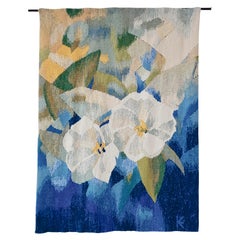
98x70 cm Jasmines Woven Tapestry Huge Textile Art by Artist Eszter Kneisz

98x70 cm Jasmines Woven Tapestry Huge Textile Art by Artist Eszter Kneisz

By VUUV Works

Located in Székesfehérvár, HU

The piece ”Jasmine” (1999) is a flower positioned in the foreground and is a softer statement of the flower when we compare it to the "Primrose". One of a kind. Eszter Kneisz is a ...

Category

1990s Hungarian Other Tapestries

Materials

Wool

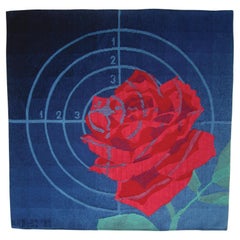
93x95 cm Target Woven Tapestry Huge Textile Art by Artist Eszter Kneisz

93x95 cm Target Woven Tapestry Huge Textile Art by Artist Eszter Kneisz

By VUUV Works

Located in Székesfehérvár, HU

The work entitled Hit (1983) is logo- and poster-like, created for the 1983 Peace competition, evoking the sexual revolution of the 1960s and the slogan "make love not war" of young ...

Category

Vintage 1980s Hungarian Other Tapestries

Materials

Wool

Across the Divide

Across the Divide

By Jane DeDecker

Located in Greenwich, CT

American, b. 1961 Jane DeDecker’s energetic and dynamic bronze sculptures serve as a reflection of her own life experiences and those of her closely-knit family. Her twelve nieces and nephews are the primary source of her inspiration, though DeDecker’s sculptures are not portraits. In fact, her loose style leaves her viewers with room for interpretation, so as to see their own lives within her sculptures. This imprecision, combined with her unique ability to capture specific moments to which each viewer can relate on a personal level, regardless of age, give DeDecker’s work a timeless quality that spans generations. DeDecker began her artistic training as a painter at the University of Northern Colorado, until a professor, noticing her joy in the portrayal of shapes and forms, suggested she try her hand at sculpture. Taking his advice, DeDecker went on to study at Gobelins School of Tapestry in...

Category

2010s American Impressionist Abstract Sculptures

Materials

Bronze

Marcel Gromaire, Flemish Interior, from Verve, Revue Artistique, 1953

Marcel Gromaire, Flemish Interior, from Verve, Revue Artistique, 1953

By Marcel Gromaire

Located in Southampton, NY

This exquisite lithograph by Marcel Gromaire (1892–1971), titled Interieur Flamand (Flemish Interior), from Verve, Revue Artistique et Litteraire, Vol. VII, No. 27–28, originates fro...

Category

1950s Modern Landscape Prints

Materials

Lithograph

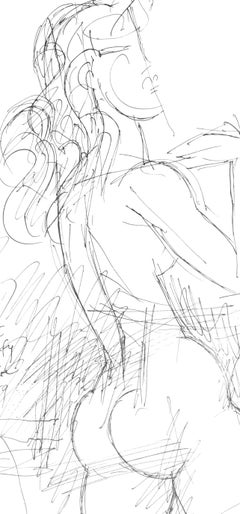
Marcel Gromaire, Nude Woman, from Verve, Revue Artistique, 1953

Marcel Gromaire, Nude Woman, from Verve, Revue Artistique, 1953

By Marcel Gromaire

Located in Southampton, NY

This exquisite lithograph by Marcel Gromaire (1892–1971), titled Femme nu (Nude Woman), from Verve, Revue Artistique et Litteraire, Vol. VII, No. 27–28, originates from the 1953 issu...

Category

1950s Modern Landscape Prints

Materials

Lithograph

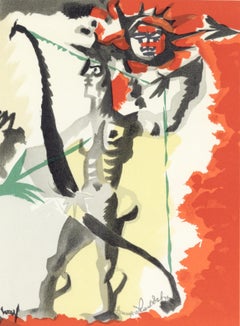
Marcel Gromaire, Homage to Dufy, from Letter to My Painter Raoul Dufy, 1965

Marcel Gromaire, Homage to Dufy, from Letter to My Painter Raoul Dufy, 1965

By Marcel Gromaire

Located in Southampton, NY

This exquisite lithograph by Marcel Gromaire (1892–1971), titled Hommage a Dufy (Homage to Dufy), from the folio Lettre a mon peintre Raoul Dufy (Letter to My Painter Raoul Dufy), or...

Category

1960s Cubist Figurative Prints

Materials

Lithograph

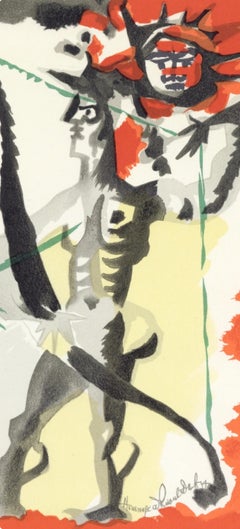
Jean Lurcat, Homage to Dufy, from Letter to My Painter Raoul Dufy, 1965

Jean Lurcat, Homage to Dufy, from Letter to My Painter Raoul Dufy, 1965

By Jean Lurçat

Located in Southampton, NY

This exquisite lithograph by Jean Lurcat (1892–1966), titled Hommage a Dufy (Homage to Dufy), from the folio Lettre a mon peintre Raoul Dufy (Letter to My Painter Raoul Dufy), origin...

Category

1960s Cubist Figurative Prints

Materials

Lithograph

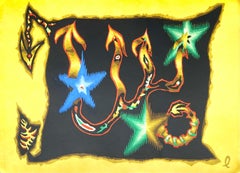
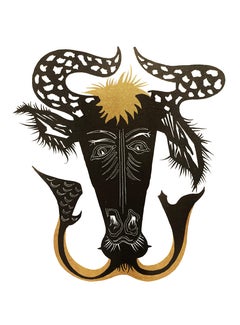
Jean Lurcat, The Scorpio, from The Signs of the Zodiac, 1959

Jean Lurcat, The Scorpio, from The Signs of the Zodiac, 1959

By Jean Lurçat

Located in Southampton, NY

This exquisite lithograph and pochoir by Jean Lurcat (1892–1966), titled Le Scorpion (The Scorpio), from the folio Les Signes du Zodiaque (The Signs of the Zodiac), originates from t...

Category

1950s Modern Landscape Prints

Materials

Lithograph

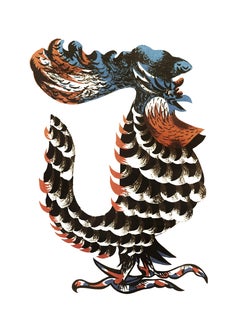
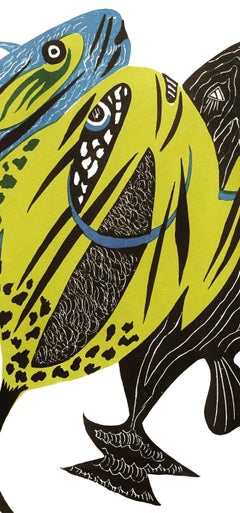
Jean Lurcat, Rooster of Gresivaudan, from Animal Geography, 1975 (after)

Jean Lurcat, Rooster of Gresivaudan, from Animal Geography, 1975 (after)

By Jean Lurçat

Located in Southampton, NY

This exquisite lithograph after Jean Lurcat (1892–1966), titled Coq de Gresivaudan (Rooster of Gresivaudan), from Geographie animale (Animal Geography), originates from the January 2...

Category

1970s Modern Abstract Prints

Materials

Lithograph

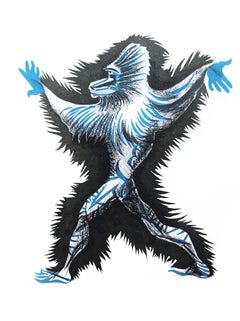
Jean Lurcat, Andalusian Monkey, from Animal Geography, 1975 (after)

Jean Lurcat, Andalusian Monkey, from Animal Geography, 1975 (after)

By Jean Lurçat

Located in Southampton, NY

This exquisite lithograph after Jean Lurcat (1892–1966), titled Singe Andalou (Andalusian Monkey), from Geographie animale (Animal Geography), originates from the January 22, 1975 is...

Category

1970s Modern Abstract Prints

Materials

Lithograph

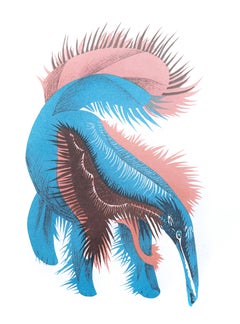
Jean Lurcat, Anteater of the Capucines, from Animal Geography, 1975 (after)

Jean Lurcat, Anteater of the Capucines, from Animal Geography, 1975 (after)

By Jean Lurçat

Located in Southampton, NY

This exquisite lithograph after Jean Lurcat (1892–1966), titled Fourmilier des Capucines (Anteater of the Capucines), from Geographie animale (Animal Geography), originates from the January 22, 1975 issue published by Production Edito-Service S.A., Geneve in collaboration with Andre Gonin, Lausanne, and M. Jean Graven, Paris, and printed by Edito-Service S.A., Italy, 1975. This visionary composition reflects Lurcats mastery of the lithographic medium, embodying his poetic imagination through fluid line, expressive form, and a luminous sense of movement. The work conveys the artists unique ability to merge symbolism, nature, and emotion into a cohesive visual language, transforming even the simplest subject into a deeply evocative and dreamlike image. Infused with lyricism and spiritual resonance, the composition exemplifies Lurcats enduring exploration of mythology, cosmic order, and the transcendent power of art. The piece forms part of Geographie animale (Animal Geography), a landmark publication that documents and celebrates one of the most significant aspects of his graphic oeuvre. Executed as a lithograph on bouffant des Papeteries de Hauteville paper, this work measures 12.4 x 9.37 inches (31.5 x 23.8 cm). Unsigned and unnumbered as issued. The edition exemplifies the superb craftsmanship of the Edito-Service atelier, renowned for its refined European printing collaborations. Artwork Details: Artist: After Jean Lurcat (1892–1966) Title: Fourmilier des Capucines (Anteater of the Capucines), from Geographie animale (Animal Geography), January 22, 1975 Medium: Lithograph on bouffant des Papeteries de Hauteville paper Dimensions: 12.4 x 9.37 inches (31.5 x 23.8 cm) Inscription: Unsigned and unnumbered as issued Date: 1975 Publisher: Production Edito-Service S.A., Geneve in collaboration with Andre Gonin, Lausanne, and M. Jean Graven, Paris Printer: Edito-Service S.A., Italy Condition: Well preserved, consistent with age and medium Provenance: From Geographie animale (Animal Geography), published by Production Edito-Service S.A., Geneve, 1975 Notes: Excerpted from the folio (translated from French), This edition of the Animal Geography by Jean Lurcat was established by publisher Andre Gonin in Lausanne, with the collaboration of Mr. Jean Graven. The lithographs were taken in the workshops of the Graphic Arts J.- E. Wolfensberger in Zurich, under the personal direction of the artist. The stones were sanded after the draw. The text, in Caslon character, body twenty, was composed and printed in Geneva, on velin pur fil a la forme des papeteries du Marais, by the master printer Andre Kundig with the help of Marc Barraud and Auguste Griess. The final to shot was given the iron June 1948. This second edition, 23.8 x 31.5 cm, was drawn with the authorization of Andre Gonin on Velin bouffant des Papeteries de Hauteville. About the Publication: Geographie animale (Animal Geography) stands as one of the most imaginative printed projects associated with Jean Lurcat, uniting visual invention, literary wit, and refined European craftsmanship in a richly conceived publication devoted to the symbolic world of animals. Originally conceived under the guidance of publisher Andre Gonin and later issued in this authorized 1975 edition by Production Edito-Service S.A. of Geneve in collaboration with partners in Lausanne and Paris, the publication reflects the enduring appeal of Lurcats bestiary imagery and philosophical approach to nature. The lithographs were prepared in the workshops of J.- E. Wolfensberger in Zurich under the artists personal supervision, demonstrating the close relationship between artist and printer that characterized the finest twentieth century illustrated editions. More than a portfolio of images, Geographie animale (Animal Geography) is a meditation on the animal kingdom as metaphor, presenting creatures as emblems of instinct, wisdom, humor, vigilance, and cosmic order. Through its union of image, typography, and material elegance, the publication remains an important testament to the vitality of postwar European graphic art and to Lurcats singular ability to merge intellect, decoration, and poetic symbolism. About the Artist: Jean Lurcat (1892–1966) was a pioneering French painter, ceramicist, and tapestry master who transformed the ancient art of tapestry into a modern, intellectual, and spiritual medium, establishing himself as one of the most original and influential artists of the 20th century. Born in Bruyeres, France, Lurcat studied in Nancy and Paris, where he became part of the avant-garde circle that included Pablo Picasso, Alexander Calder, Alberto Giacometti, Salvador Dali, Joan Miro, Wassily Kandinsky, Marcel Duchamp, and Man Ray. His early paintings reflected the influence of Post-Impressionism, Cubism, and Symbolism, but his true innovation came when he reimagined tapestry as a form of monumental art rather than decorative craft. Profoundly inspired by the medieval Apocalypse of Angers tapestry, he sought to revive the grandeur of weaving by fusing ancient techniques with modernist abstraction and symbolism. In the 1930s, working with the Aubusson and Gobelins workshops, Lurcat revolutionized the process of tapestry-making by introducing a precise color notation system and standardizing thread palettes, allowing artists to maintain creative control from conception to completion. His bold compositions radiant with color, geometric rhythm, and allegorical imagery embodied a philosophy of cosmic balance and human resilience. After World War II, Lurcats work deepened in moral and spiritual scope, culminating in his monumental cycle Le Chant du Monde (The Song of the World, 1957–1965), a humanist response to the destruction of war and one of the greatest artistic achievements of the postwar era. His art, characterized by suns, moons, mythic creatures, and symbolic geometry, reflected his belief that art should harmonize intellect, craft, and emotion while reconnecting humanity to the natural and divine order. A contemporary and peer of Pablo Picasso, Alexander Calder, Alberto Giacometti, Salvador Dali, Joan Miro, Wassily Kandinsky, Marcel Duchamp, and Man Ray, Lurcat shared their passion for abstraction and innovation while extending it into the tactile, enduring world of textile art. His influence resonated with later artists and designers such as Fernand Leger, Sonia Delaunay, Le Corbusier, and Victor Vasarely, whose integration of color and geometry echoed his ideas. His work is preserved in major collections including the Musee Jean Lurcat et de la Tapisserie Contemporaine in Angers, the Musee d’Art Moderne de Paris, and the Centre Pompidou. The highest auction record for Jean Lurcat was achieved by Apocalypse Tapestry, which sold for $290,500 USD at Sotheby’s, Paris, on May 29, 2014, underscoring his enduring legacy as the visionary who redefined tapestry as a cornerstone of modern art. Jean Lurcat Fourmilier des Capucines, Lurcat Geographie animale, Jean Lurcat lithograph...

Category

1970s Modern Abstract Prints
Materials

Lithograph

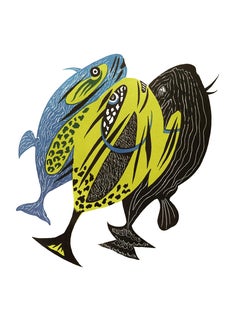
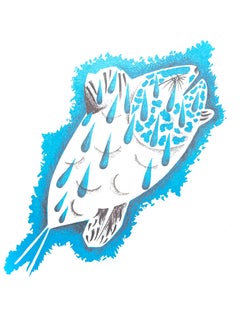
Jean Lurcat, Carp of the Moon, from Animal Geography, 1975 (after)

Jean Lurcat, Carp of the Moon, from Animal Geography, 1975 (after)

By Jean Lurçat

Located in Southampton, NY

This exquisite lithograph after Jean Lurcat (1892–1966), titled Carpe de Lune (Carp of the Moon), from Geographie animale (Animal Geography), originates from the January 22, 1975 issue published by Production Edito-Service S.A., Geneve in collaboration with Andre Gonin, Lausanne, and M. Jean Graven, Paris, and printed by Edito-Service S.A., Italy, 1975. This visionary composition reflects Lurcats mastery of the lithographic medium, embodying his poetic imagination through fluid line, expressive form, and a luminous sense of movement. The work conveys the artists unique ability to merge symbolism, nature, and emotion into a cohesive visual language, transforming even the simplest subject into a deeply evocative and dreamlike image. Infused with lyricism and spiritual resonance, the composition exemplifies Lurcats enduring exploration of mythology, cosmic order, and the transcendent power of art. The piece forms part of Geographie animale (Animal Geography), a landmark publication that documents and celebrates one of the most significant aspects of his graphic oeuvre. Executed as a lithograph on bouffant des Papeteries de Hauteville paper, this work measures 12.4 x 9.37 inches (31.5 x 23.8 cm). Unsigned and unnumbered as issued. The edition exemplifies the superb craftsmanship of the Edito-Service atelier, renowned for its refined European printing collaborations. Artwork Details: Artist: After Jean Lurcat (1892–1966) Title: Carpe de Lune (Carp of the Moon), from Geographie animale (Animal Geography), January 22, 1975 Medium: Lithograph on bouffant des Papeteries de Hauteville paper Dimensions: 12.4 x 9.37 inches (31.5 x 23.8 cm) Inscription: Unsigned and unnumbered as issued Date: 1975 Publisher: Production Edito-Service S.A., Geneve in collaboration with Andre Gonin, Lausanne, and M. Jean Graven, Paris Printer: Edito-Service S.A., Italy Condition: Well preserved, consistent with age and medium Provenance: From Geographie animale (Animal Geography), published by Production Edito-Service S.A., Geneve, 1975 Notes: Excerpted from the folio (translated from French), This edition of the Animal Geography by Jean Lurcat was established by publisher Andre Gonin in Lausanne, with the collaboration of Mr. Jean Graven. The lithographs were taken in the workshops of the Graphic Arts J.- E. Wolfensberger in Zurich, under the personal direction of the artist. The stones were sanded after the draw. The text, in Caslon character, body twenty, was composed and printed in Geneva, on velin pur fil a la forme des papeteries du Marais, by the master printer Andre Kundig with the help of Marc Barraud and Auguste Griess. The final to shot was given the iron June 1948. This second edition, 23.8 x 31.5 cm, was drawn with the authorization of Andre Gonin on Velin bouffant des Papeteries de Hauteville. About the Publication: Geographie animale (Animal Geography) stands as one of the most imaginative printed projects associated with Jean Lurcat, uniting visual invention, literary wit, and refined European craftsmanship in a richly conceived publication devoted to the symbolic world of animals. Originally conceived under the guidance of publisher Andre Gonin and later issued in this authorized 1975 edition by Production Edito-Service S.A. of Geneve in collaboration with partners in Lausanne and Paris, the publication reflects the enduring appeal of Lurcats bestiary imagery and philosophical approach to nature. The lithographs were prepared in the workshops of J.- E. Wolfensberger in Zurich under the artists personal supervision, demonstrating the close relationship between artist and printer that characterized the finest twentieth century illustrated editions. More than a portfolio of images, Geographie animale (Animal Geography) is a meditation on the animal kingdom as metaphor, presenting creatures as emblems of instinct, wisdom, humor, vigilance, and cosmic order. Through its union of image, typography, and material elegance, the publication remains an important testament to the vitality of postwar European graphic art and to Lurcats singular ability to merge intellect, decoration, and poetic symbolism. About the Artist: Jean Lurcat (1892–1966) was a pioneering French painter, ceramicist, and tapestry master who transformed the ancient art of tapestry into a modern, intellectual, and spiritual medium, establishing himself as one of the most original and influential artists of the 20th century. Born in Bruyeres, France, Lurcat studied in Nancy and Paris, where he became part of the avant-garde circle that included Pablo Picasso, Alexander Calder, Alberto Giacometti, Salvador Dali, Joan Miro, Wassily Kandinsky, Marcel Duchamp, and Man Ray. His early paintings reflected the influence of Post-Impressionism, Cubism, and Symbolism, but his true innovation came when he reimagined tapestry as a form of monumental art rather than decorative craft. Profoundly inspired by the medieval Apocalypse of Angers tapestry, he sought to revive the grandeur of weaving by fusing ancient techniques with modernist abstraction and symbolism. In the 1930s, working with the Aubusson and Gobelins workshops, Lurcat revolutionized the process of tapestry-making by introducing a precise color notation system and standardizing thread palettes, allowing artists to maintain creative control from conception to completion. His bold compositions radiant with color, geometric rhythm, and allegorical imagery embodied a philosophy of cosmic balance and human resilience. After World War II, Lurcats work deepened in moral and spiritual scope, culminating in his monumental cycle Le Chant du Monde (The Song of the World, 1957–1965), a humanist response to the destruction of war and one of the greatest artistic achievements of the postwar era. His art, characterized by suns, moons, mythic creatures, and symbolic geometry, reflected his belief that art should harmonize intellect, craft, and emotion while reconnecting humanity to the natural and divine order. A contemporary and peer of Pablo Picasso, Alexander Calder, Alberto Giacometti, Salvador Dali, Joan Miro, Wassily Kandinsky, Marcel Duchamp, and Man Ray, Lurcat shared their passion for abstraction and innovation while extending it into the tactile, enduring world of textile art. His influence resonated with later artists and designers such as Fernand Leger, Sonia Delaunay, Le Corbusier, and Victor Vasarely, whose integration of color and geometry echoed his ideas. His work is preserved in major collections including the Musee Jean Lurcat et de la Tapisserie Contemporaine in Angers, the Musee d’Art Moderne de Paris, and the Centre Pompidou. The highest auction record for Jean Lurcat was achieved by Apocalypse Tapestry, which sold for $290,500 USD at Sotheby’s, Paris, on May 29, 2014, underscoring his enduring legacy as the visionary who redefined tapestry as a cornerstone of modern art. Jean Lurcat Carpe de Lune, Lurcat Geographie animale, Jean Lurcat lithograph...

Category

1970s Modern Abstract Prints
Materials

Lithograph

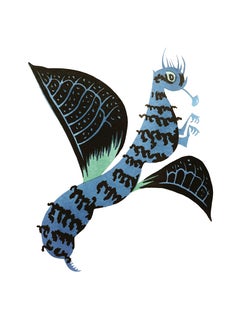
Jean Lurcat, Caterpillar of Korea, from Animal Geography, 1975 (after)

Jean Lurcat, Caterpillar of Korea, from Animal Geography, 1975 (after)

By Jean Lurçat

Located in Southampton, NY

This exquisite lithograph after Jean Lurcat (1892–1966), titled Chenille de Coree (Caterpillar of Korea), from Geographie animale (Animal Geography), originates from the January 22, 1975 issue published by Production Edito-Service S.A., Geneve in collaboration with Andre Gonin, Lausanne, and M. Jean Graven, Paris, and printed by Edito-Service S.A., Italy, 1975. This visionary composition reflects Lurcats mastery of the lithographic medium, embodying his poetic imagination through fluid line, expressive form, and a luminous sense of movement. The work conveys the artists unique ability to merge symbolism, nature, and emotion into a cohesive visual language, transforming even the simplest subject into a deeply evocative and dreamlike image. Infused with lyricism and spiritual resonance, the composition exemplifies Lurcats enduring exploration of mythology, cosmic order, and the transcendent power of art. The piece forms part of Geographie animale (Animal Geography), a landmark publication that documents and celebrates one of the most significant aspects of his graphic oeuvre. Executed as a lithograph on bouffant des Papeteries de Hauteville paper, this work measures 12.4 x 9.37 inches (31.5 x 23.8 cm). Unsigned and unnumbered as issued. The edition exemplifies the superb craftsmanship of the Edito-Service atelier, renowned for its refined European printing collaborations. Artwork Details: Artist: After Jean Lurcat (1892–1966) Title: Chenille de Coree (Caterpillar of Korea), from Geographie animale (Animal Geography), January 22, 1975 Medium: Lithograph on bouffant des Papeteries de Hauteville paper Dimensions: 12.4 x 9.37 inches (31.5 x 23.8 cm) Inscription: Unsigned and unnumbered as issued Date: 1975 Publisher: Production Edito-Service S.A., Geneve in collaboration with Andre Gonin, Lausanne, and M. Jean Graven, Paris Printer: Edito-Service S.A., Italy Condition: Well preserved, consistent with age and medium Provenance: From Geographie animale (Animal Geography), published by Production Edito-Service S.A., Geneve, 1975 Notes: Excerpted from the folio (translated from French), This edition of the Animal Geography by Jean Lurcat was established by publisher Andre Gonin in Lausanne, with the collaboration of Mr. Jean Graven. The lithographs were taken in the workshops of the Graphic Arts J.- E. Wolfensberger in Zurich, under the personal direction of the artist. The stones were sanded after the draw. The text, in Caslon character, body twenty, was composed and printed in Geneva, on velin pur fil a la forme des papeteries du Marais, by the master printer Andre Kundig with the help of Marc Barraud and Auguste Griess. The final to shot was given the iron June 1948. This second edition, 23.8 x 31.5 cm, was drawn with the authorization of Andre Gonin on Velin bouffant des Papeteries de Hauteville. About the Publication: Geographie animale (Animal Geography) stands as one of the most imaginative printed projects associated with Jean Lurcat, uniting visual invention, literary wit, and refined European craftsmanship in a richly conceived publication devoted to the symbolic world of animals. Originally conceived under the guidance of publisher Andre Gonin and later issued in this authorized 1975 edition by Production Edito-Service S.A. of Geneve in collaboration with partners in Lausanne and Paris, the publication reflects the enduring appeal of Lurcats bestiary imagery and philosophical approach to nature. The lithographs were prepared in the workshops of J.- E. Wolfensberger in Zurich under the artists personal supervision, demonstrating the close relationship between artist and printer that characterized the finest twentieth century illustrated editions. More than a portfolio of images, Geographie animale (Animal Geography) is a meditation on the animal kingdom as metaphor, presenting creatures as emblems of instinct, wisdom, humor, vigilance, and cosmic order. Through its union of image, typography, and material elegance, the publication remains an important testament to the vitality of postwar European graphic art and to Lurcats singular ability to merge intellect, decoration, and poetic symbolism. About the Artist: Jean Lurcat (1892–1966) was a pioneering French painter, ceramicist, and tapestry master who transformed the ancient art of tapestry into a modern, intellectual, and spiritual medium, establishing himself as one of the most original and influential artists of the 20th century. Born in Bruyeres, France, Lurcat studied in Nancy and Paris, where he became part of the avant-garde circle that included Pablo Picasso, Alexander Calder, Alberto Giacometti, Salvador Dali, Joan Miro, Wassily Kandinsky, Marcel Duchamp, and Man Ray. His early paintings reflected the influence of Post-Impressionism, Cubism, and Symbolism, but his true innovation came when he reimagined tapestry as a form of monumental art rather than decorative craft. Profoundly inspired by the medieval Apocalypse of Angers tapestry, he sought to revive the grandeur of weaving by fusing ancient techniques with modernist abstraction and symbolism. In the 1930s, working with the Aubusson and Gobelins workshops, Lurcat revolutionized the process of tapestry-making by introducing a precise color notation system and standardizing thread palettes, allowing artists to maintain creative control from conception to completion. His bold compositions radiant with color, geometric rhythm, and allegorical imagery embodied a philosophy of cosmic balance and human resilience. After World War II, Lurcats work deepened in moral and spiritual scope, culminating in his monumental cycle Le Chant du Monde (The Song of the World, 1957–1965), a humanist response to the destruction of war and one of the greatest artistic achievements of the postwar era. His art, characterized by suns, moons, mythic creatures, and symbolic geometry, reflected his belief that art should harmonize intellect, craft, and emotion while reconnecting humanity to the natural and divine order. A contemporary and peer of Pablo Picasso, Alexander Calder, Alberto Giacometti, Salvador Dali, Joan Miro, Wassily Kandinsky, Marcel Duchamp, and Man Ray, Lurcat shared their passion for abstraction and innovation while extending it into the tactile, enduring world of textile art. His influence resonated with later artists and designers such as Fernand Leger, Sonia Delaunay, Le Corbusier, and Victor Vasarely, whose integration of color and geometry echoed his ideas. His work is preserved in major collections including the Musee Jean Lurcat et de la Tapisserie Contemporaine in Angers, the Musee d’Art Moderne de Paris, and the Centre Pompidou. The highest auction record for Jean Lurcat was achieved by Apocalypse Tapestry, which sold for $290,500 USD at Sotheby’s, Paris, on May 29, 2014, underscoring his enduring legacy as the visionary who redefined tapestry as a cornerstone of modern art. Jean Lurcat Chenille de Coree, Lurcat Geographie animale, Jean Lurcat lithograph...

Category

1970s Modern Abstract Prints
Materials

Lithograph

Jean Lurcat, Persian Octopus, from Animal Geography, 1975 (after)

Jean Lurcat, Persian Octopus, from Animal Geography, 1975 (after)

By Jean Lurçat

Located in Southampton, NY

This exquisite lithograph after Jean Lurcat (1892–1966), titled Pieuvre Persique (Persian Octopus), from Geographie animale (Animal Geography), originates from the January 22, 1975 issue published by Production Edito-Service S.A., Geneve in collaboration with Andre Gonin, Lausanne, and M. Jean Graven, Paris, and printed by Edito-Service S.A., Italy, 1975. This visionary composition reflects Lurcats mastery of the lithographic medium, embodying his poetic imagination through fluid line, expressive form, and a luminous sense of movement. The work conveys the artists unique ability to merge symbolism, nature, and emotion into a cohesive visual language, transforming even the simplest subject into a deeply evocative and dreamlike image. Infused with lyricism and spiritual resonance, the composition exemplifies Lurcats enduring exploration of mythology, cosmic order, and the transcendent power of art. The piece forms part of Geographie animale (Animal Geography), a landmark publication that documents and celebrates one of the most significant aspects of his graphic oeuvre. Executed as a lithograph on bouffant des Papeteries de Hauteville paper, this work measures 12.4 x 9.37 inches (31.5 x 23.8 cm). Unsigned and unnumbered as issued. The edition exemplifies the superb craftsmanship of the Edito-Service atelier, renowned for its refined European printing collaborations. Artwork Details: Artist: After Jean Lurcat (1892–1966) Title: Pieuvre Persique (Persian Octopus), from Geographie animale (Animal Geography), January 22, 1975 Medium: Lithograph on bouffant des Papeteries de Hauteville paper Dimensions: 12.4 x 9.37 inches (31.5 x 23.8 cm) Inscription: Unsigned and unnumbered as issued Date: 1975 Publisher: Production Edito-Service S.A., Geneve in collaboration with Andre Gonin, Lausanne, and M. Jean Graven, Paris Printer: Edito-Service S.A., Italy Condition: Well preserved, consistent with age and medium Provenance: From Geographie animale (Animal Geography), published by Production Edito-Service S.A., Geneve, 1975 Notes: Excerpted from the folio (translated from French), This edition of the Animal Geography by Jean Lurcat was established by publisher Andre Gonin in Lausanne, with the collaboration of Mr. Jean Graven. The lithographs were taken in the workshops of the Graphic Arts J.- E. Wolfensberger in Zurich, under the personal direction of the artist. The stones were sanded after the draw. The text, in Caslon character, body twenty, was composed and printed in Geneva, on velin pur fil a la forme des papeteries du Marais, by the master printer Andre Kundig with the help of Marc Barraud and Auguste Griess. The final to shot was given the iron June 1948. This second edition, 23.8 x 31.5 cm, was drawn with the authorization of Andre Gonin on Velin bouffant des Papeteries de Hauteville. About the Publication: Geographie animale (Animal Geography) stands as one of the most imaginative printed projects associated with Jean Lurcat, uniting visual invention, literary wit, and refined European craftsmanship in a richly conceived publication devoted to the symbolic world of animals. Originally conceived under the guidance of publisher Andre Gonin and later issued in this authorized 1975 edition by Production Edito-Service S.A. of Geneve in collaboration with partners in Lausanne and Paris, the publication reflects the enduring appeal of Lurcats bestiary imagery and philosophical approach to nature. The lithographs were prepared in the workshops of J.- E. Wolfensberger in Zurich under the artists personal supervision, demonstrating the close relationship between artist and printer that characterized the finest twentieth century illustrated editions. More than a portfolio of images, Geographie animale (Animal Geography) is a meditation on the animal kingdom as metaphor, presenting creatures as emblems of instinct, wisdom, humor, vigilance, and cosmic order. Through its union of image, typography, and material elegance, the publication remains an important testament to the vitality of postwar European graphic art and to Lurcats singular ability to merge intellect, decoration, and poetic symbolism. About the Artist: Jean Lurcat (1892–1966) was a pioneering French painter, ceramicist, and tapestry master who transformed the ancient art of tapestry into a modern, intellectual, and spiritual medium, establishing himself as one of the most original and influential artists of the 20th century. Born in Bruyeres, France, Lurcat studied in Nancy and Paris, where he became part of the avant-garde circle that included Pablo Picasso, Alexander Calder, Alberto Giacometti, Salvador Dali, Joan Miro, Wassily Kandinsky, Marcel Duchamp, and Man Ray. His early paintings reflected the influence of Post-Impressionism, Cubism, and Symbolism, but his true innovation came when he reimagined tapestry as a form of monumental art rather than decorative craft. Profoundly inspired by the medieval Apocalypse of Angers tapestry, he sought to revive the grandeur of weaving by fusing ancient techniques with modernist abstraction and symbolism. In the 1930s, working with the Aubusson and Gobelins workshops, Lurcat revolutionized the process of tapestry-making by introducing a precise color notation system and standardizing thread palettes, allowing artists to maintain creative control from conception to completion. His bold compositions radiant with color, geometric rhythm, and allegorical imagery embodied a philosophy of cosmic balance and human resilience. After World War II, Lurcats work deepened in moral and spiritual scope, culminating in his monumental cycle Le Chant du Monde (The Song of the World, 1957–1965), a humanist response to the destruction of war and one of the greatest artistic achievements of the postwar era. His art, characterized by suns, moons, mythic creatures, and symbolic geometry, reflected his belief that art should harmonize intellect, craft, and emotion while reconnecting humanity to the natural and divine order. A contemporary and peer of Pablo Picasso, Alexander Calder, Alberto Giacometti, Salvador Dali, Joan Miro, Wassily Kandinsky, Marcel Duchamp, and Man Ray, Lurcat shared their passion for abstraction and innovation while extending it into the tactile, enduring world of textile art. His influence resonated with later artists and designers such as Fernand Leger, Sonia Delaunay, Le Corbusier, and Victor Vasarely, whose integration of color and geometry echoed his ideas. His work is preserved in major collections including the Musee Jean Lurcat et de la Tapisserie Contemporaine in Angers, the Musee d’Art Moderne de Paris, and the Centre Pompidou. The highest auction record for Jean Lurcat was achieved by Apocalypse Tapestry, which sold for $290,500 USD at Sotheby’s, Paris, on May 29, 2014, underscoring his enduring legacy as the visionary who redefined tapestry as a cornerstone of modern art. Jean Lurcat Pieuvre Persique, Lurcat Geographie animale, Jean Lurcat lithograph...

Category

1970s Modern Abstract Prints
Materials

Lithograph

Jean Lurcat, Manchurian Sphinx, from Animal Geography, 1975 (after)

Jean Lurcat, Manchurian Sphinx, from Animal Geography, 1975 (after)

By Jean Lurçat

Located in Southampton, NY

This exquisite lithograph after Jean Lurcat (1892–1966), titled Sphynx Mandchou (Manchurian Sphinx), from Geographie animale (Animal Geography), originates from the January 22, 1975 issue published by Production Edito-Service S.A., Geneve in collaboration with Andre Gonin, Lausanne, and M. Jean Graven, Paris, and printed by Edito-Service S.A., Italy, 1975. This visionary composition reflects Lurcats mastery of the lithographic medium, embodying his poetic imagination through fluid line, expressive form, and a luminous sense of movement. The work conveys the artists unique ability to merge symbolism, nature, and emotion into a cohesive visual language, transforming even the simplest subject into a deeply evocative and dreamlike image. Infused with lyricism and spiritual resonance, the composition exemplifies Lurcats enduring exploration of mythology, cosmic order, and the transcendent power of art. The piece forms part of Geographie animale (Animal Geography), a landmark publication that documents and celebrates one of the most significant aspects of his graphic oeuvre. Executed as a lithograph on bouffant des Papeteries de Hauteville paper, this work measures 12.4 x 9.37 inches (31.5 x 23.8 cm). Unsigned and unnumbered as issued. The edition exemplifies the superb craftsmanship of the Edito-Service atelier, renowned for its refined European printing collaborations. Artwork Details: Artist: After Jean Lurcat (1892–1966) Title: Sphynx Mandchou (Manchurian Sphinx), from Geographie animale (Animal Geography), January 22, 1975 Medium: Lithograph on bouffant des Papeteries de Hauteville paper Dimensions: 12.4 x 9.37 inches (31.5 x 23.8 cm) Inscription: Unsigned and unnumbered as issued Date: 1975 Publisher: Production Edito-Service S.A., Geneve in collaboration with Andre Gonin, Lausanne, and M. Jean Graven, Paris Printer: Edito-Service S.A., Italy Condition: Well preserved, consistent with age and medium Provenance: From Geographie animale (Animal Geography), published by Production Edito-Service S.A., Geneve, 1975 Notes: Excerpted from the folio (translated from French), This edition of the Animal Geography by Jean Lurcat was established by publisher Andre Gonin in Lausanne, with the collaboration of Mr. Jean Graven. The lithographs were taken in the workshops of the Graphic Arts J.- E. Wolfensberger in Zurich, under the personal direction of the artist. The stones were sanded after the draw. The text, in Caslon character, body twenty, was composed and printed in Geneva, on velin pur fil a la forme des papeteries du Marais, by the master printer Andre Kundig with the help of Marc Barraud and Auguste Griess. The final to shot was given the iron June 1948. This second edition, 23.8 x 31.5 cm, was drawn with the authorization of Andre Gonin on Velin bouffant des Papeteries de Hauteville. About the Publication: Geographie animale (Animal Geography) stands as one of the most imaginative printed projects associated with Jean Lurcat, uniting visual invention, literary wit, and refined European craftsmanship in a richly conceived publication devoted to the symbolic world of animals. Originally conceived under the guidance of publisher Andre Gonin and later issued in this authorized 1975 edition by Production Edito-Service S.A. of Geneve in collaboration with partners in Lausanne and Paris, the publication reflects the enduring appeal of Lurcats bestiary imagery and philosophical approach to nature. The lithographs were prepared in the workshops of J.- E. Wolfensberger in Zurich under the artists personal supervision, demonstrating the close relationship between artist and printer that characterized the finest twentieth century illustrated editions. More than a portfolio of images, Geographie animale (Animal Geography) is a meditation on the animal kingdom as metaphor, presenting creatures as emblems of instinct, wisdom, humor, vigilance, and cosmic order. Through its union of image, typography, and material elegance, the publication remains an important testament to the vitality of postwar European graphic art and to Lurcats singular ability to merge intellect, decoration, and poetic symbolism. About the Artist: Jean Lurcat (1892–1966) was a pioneering French painter, ceramicist, and tapestry master who transformed the ancient art of tapestry into a modern, intellectual, and spiritual medium, establishing himself as one of the most original and influential artists of the 20th century. Born in Bruyeres, France, Lurcat studied in Nancy and Paris, where he became part of the avant-garde circle that included Pablo Picasso, Alexander Calder, Alberto Giacometti, Salvador Dali, Joan Miro, Wassily Kandinsky, Marcel Duchamp, and Man Ray. His early paintings reflected the influence of Post-Impressionism, Cubism, and Symbolism, but his true innovation came when he reimagined tapestry as a form of monumental art rather than decorative craft. Profoundly inspired by the medieval Apocalypse of Angers tapestry, he sought to revive the grandeur of weaving by fusing ancient techniques with modernist abstraction and symbolism. In the 1930s, working with the Aubusson and Gobelins workshops, Lurcat revolutionized the process of tapestry-making by introducing a precise color notation system and standardizing thread palettes, allowing artists to maintain creative control from conception to completion. His bold compositions radiant with color, geometric rhythm, and allegorical imagery embodied a philosophy of cosmic balance and human resilience. After World War II, Lurcats work deepened in moral and spiritual scope, culminating in his monumental cycle Le Chant du Monde (The Song of the World, 1957–1965), a humanist response to the destruction of war and one of the greatest artistic achievements of the postwar era. His art, characterized by suns, moons, mythic creatures, and symbolic geometry, reflected his belief that art should harmonize intellect, craft, and emotion while reconnecting humanity to the natural and divine order. A contemporary and peer of Pablo Picasso, Alexander Calder, Alberto Giacometti, Salvador Dali, Joan Miro, Wassily Kandinsky, Marcel Duchamp, and Man Ray, Lurcat shared their passion for abstraction and innovation while extending it into the tactile, enduring world of textile art. His influence resonated with later artists and designers such as Fernand Leger, Sonia Delaunay, Le Corbusier, and Victor Vasarely, whose integration of color and geometry echoed his ideas. His work is preserved in major collections including the Musee Jean Lurcat et de la Tapisserie Contemporaine in Angers, the Musee d’Art Moderne de Paris, and the Centre Pompidou. The highest auction record for Jean Lurcat was achieved by Apocalypse Tapestry, which sold for $290,500 USD at Sotheby’s, Paris, on May 29, 2014, underscoring his enduring legacy as the visionary who redefined tapestry as a cornerstone of modern art. Jean Lurcat Sphynx Mandchou, Lurcat Geographie animale, Jean Lurcat lithograph...

Category

1970s Modern Abstract Prints

Materials

Lithograph

Jean Lurcat, Crayfish of Guam, from Animal Geography, 1975 (after)

Jean Lurcat, Crayfish of Guam, from Animal Geography, 1975 (after)

By Jean Lurçat

Located in Southampton, NY

This exquisite lithograph after Jean Lurcat (1892–1966), titled Ecrevisse de Guam (Crayfish of Guam), from Geographie animale (Animal Geography), originates from the January 22, 1975...

Category

1970s Modern Abstract Prints

Materials

Lithograph

Jean Lurcat, Marmot of Anzeindaz, from Animal Geography, 1975 (after)

Jean Lurcat, Marmot of Anzeindaz, from Animal Geography, 1975 (after)

By Jean Lurçat

Located in Southampton, NY

This exquisite lithograph after Jean Lurcat (1892–1966), titled Marmotte d'Anzeindaz (Marmot of Anzeindaz), from Geographie animale (Animal Geography), originates from the January 22...

Category

1970s Modern Abstract Prints

Materials

Lithograph

Jean Lurcat, Dragonfly of Castile, from Animal Geography, 1975 (after)

Jean Lurcat, Dragonfly of Castile, from Animal Geography, 1975 (after)

By Jean Lurçat

Located in Southampton, NY

This exquisite lithograph after Jean Lurcat (1892–1966), titled Libellule de Castille (Dragonfly of Castile), from Geographie animale (Animal Geography), originates from the January ...

Category

1970s Modern Abstract Prints

Materials

Lithograph

Jean Lurcat, Spider of Nuremberg, from Animal Geography, 1975 (after)

Jean Lurcat, Spider of Nuremberg, from Animal Geography, 1975 (after)

By Jean Lurçat

Located in Southampton, NY

This exquisite lithograph after Jean Lurcat (1892–1966), titled Araignee de Nuremberg (Spider of Nuremberg), from Geographie animale (Animal Geography), originates from the January 2...

Category

1970s Modern Abstract Prints

Materials

Lithograph

Jean Lurcat, Bumblebee of Malaysia, from Animal Geography, 1975 (after)

Jean Lurcat, Bumblebee of Malaysia, from Animal Geography, 1975 (after)

By Jean Lurçat

Located in Southampton, NY

This exquisite lithograph after Jean Lurcat (1892–1966), titled Bourdon de Malaisie (Bumblebee of Malaysia), from Geographie animale (Animal Geography), originates from the January 22, 1975 issue published by Production Edito-Service S.A., Geneve in collaboration with Andre Gonin, Lausanne, and M. Jean Graven, Paris, and printed by Edito-Service S.A., Italy, 1975. This visionary composition reflects Lurcats mastery of the lithographic medium, embodying his poetic imagination through fluid line, expressive form, and a luminous sense of movement. The work conveys the artists unique ability to merge symbolism, nature, and emotion into a cohesive visual language, transforming even the simplest subject into a deeply evocative and dreamlike image. Infused with lyricism and spiritual resonance, the composition exemplifies Lurcats enduring exploration of mythology, cosmic order, and the transcendent power of art. The piece forms part of Geographie animale (Animal Geography), a landmark publication that documents and celebrates one of the most significant aspects of his graphic oeuvre. Executed as a lithograph on bouffant des Papeteries de Hauteville paper, this work measures 12.4 x 9.37 inches (31.5 x 23.8 cm). Unsigned and unnumbered as issued. The edition exemplifies the superb craftsmanship of the Edito-Service atelier, renowned for its refined European printing collaborations. Artwork Details: Artist: After Jean Lurcat (1892–1966) Title: Bourdon de Malaisie (Bumblebee of Malaysia), from Geographie animale (Animal Geography), January 22, 1975 Medium: Lithograph on bouffant des Papeteries de Hauteville paper Dimensions: 12.4 x 9.37 inches (31.5 x 23.8 cm) Inscription: Unsigned and unnumbered as issued Date: 1975 Publisher: Production Edito-Service S.A., Geneve in collaboration with Andre Gonin, Lausanne, and M. Jean Graven, Paris Printer: Edito-Service S.A., Italy Condition: Well preserved, consistent with age and medium Provenance: From Geographie animale (Animal Geography), published by Production Edito-Service S.A., Geneve, 1975 Notes: Excerpted from the folio (translated from French), This edition of the Animal Geography by Jean Lurcat was established by publisher Andre Gonin in Lausanne, with the collaboration of Mr. Jean Graven. The lithographs were taken in the workshops of the Graphic Arts J.- E. Wolfensberger in Zurich, under the personal direction of the artist. The stones were sanded after the draw. The text, in Caslon character, body twenty, was composed and printed in Geneva, on velin pur fil a la forme des papeteries du Marais, by the master printer Andre Kundig with the help of Marc Barraud and Auguste Griess. The final to shot was given the iron June 1948. This second edition, 23.8 x 31.5 cm, was drawn with the authorization of Andre Gonin on Velin bouffant des Papeteries de Hauteville. About the Publication: Geographie animale (Animal Geography) stands as one of the most imaginative printed projects associated with Jean Lurcat, uniting visual invention, literary wit, and refined European craftsmanship in a richly conceived publication devoted to the symbolic world of animals. Originally conceived under the guidance of publisher Andre Gonin and later issued in this authorized 1975 edition by Production Edito-Service S.A. of Geneve in collaboration with partners in Lausanne and Paris, the publication reflects the enduring appeal of Lurcats bestiary imagery and philosophical approach to nature. The lithographs were prepared in the workshops of J.- E. Wolfensberger in Zurich under the artists personal supervision, demonstrating the close relationship between artist and printer that characterized the finest twentieth century illustrated editions. More than a portfolio of images, Geographie animale (Animal Geography) is a meditation on the animal kingdom as metaphor, presenting creatures as emblems of instinct, wisdom, humor, vigilance, and cosmic order. Through its union of image, typography, and material elegance, the publication remains an important testament to the vitality of postwar European graphic art and to Lurcats singular ability to merge intellect, decoration, and poetic symbolism. About the Artist: Jean Lurcat (1892–1966) was a pioneering French painter, ceramicist, and tapestry master who transformed the ancient art of tapestry into a modern, intellectual, and spiritual medium, establishing himself as one of the most original and influential artists of the 20th century. Born in Bruyeres, France, Lurcat studied in Nancy and Paris, where he became part of the avant-garde circle that included Pablo Picasso, Alexander Calder, Alberto Giacometti, Salvador Dali, Joan Miro, Wassily Kandinsky, Marcel Duchamp, and Man Ray. His early paintings reflected the influence of Post-Impressionism, Cubism, and Symbolism, but his true innovation came when he reimagined tapestry as a form of monumental art rather than decorative craft. Profoundly inspired by the medieval Apocalypse of Angers tapestry, he sought to revive the grandeur of weaving by fusing ancient techniques with modernist abstraction and symbolism. In the 1930s, working with the Aubusson and Gobelins workshops, Lurcat revolutionized the process of tapestry-making by introducing a precise color notation system and standardizing thread palettes, allowing artists to maintain creative control from conception to completion. His bold compositions radiant with color, geometric rhythm, and allegorical imagery embodied a philosophy of cosmic balance and human resilience. After World War II, Lurcats work deepened in moral and spiritual scope, culminating in his monumental cycle Le Chant du Monde (The Song of the World, 1957–1965), a humanist response to the destruction of war and one of the greatest artistic achievements of the postwar era. His art, characterized by suns, moons, mythic creatures, and symbolic geometry, reflected his belief that art should harmonize intellect, craft, and emotion while reconnecting humanity to the natural and divine order. A contemporary and peer of Pablo Picasso, Alexander Calder, Alberto Giacometti, Salvador Dali, Joan Miro, Wassily Kandinsky, Marcel Duchamp, and Man Ray, Lurcat shared their passion for abstraction and innovation while extending it into the tactile, enduring world of textile art. His influence resonated with later artists and designers such as Fernand Leger, Sonia Delaunay, Le Corbusier, and Victor Vasarely, whose integration of color and geometry echoed his ideas. His work is preserved in major collections including the Musee Jean Lurcat et de la Tapisserie Contemporaine in Angers, the Musee d’Art Moderne de Paris, and the Centre Pompidou. The highest auction record for Jean Lurcat was achieved by Apocalypse Tapestry, which sold for $290,500 USD at Sotheby’s, Paris, on May 29, 2014, underscoring his enduring legacy as the visionary who redefined tapestry as a cornerstone of modern art. Jean Lurcat Bourdon de Malaisie, Lurcat Geographie animale, Jean Lurcat lithograph...

Category

1970s Modern Abstract Prints

Materials

Lithograph

Jean Lurcat, Hippo-Mosquito of the Amazon, from Animal Geography, 1975 (after)

Jean Lurcat, Hippo-Mosquito of the Amazon, from Animal Geography, 1975 (after)

By Jean Lurçat

Located in Southampton, NY

This exquisite lithograph after Jean Lurcat (1892–1966), titled Hippomoustique de l'Amazone (Hippo-Mosquito of the Amazon), from Geographie animale (Animal Geography), originates fro...

Category

1970s Modern Abstract Prints

Materials

Lithograph

Jean Lurcat, Turtle of the Ardennes, from Animal Geography, 1975 (after)

Jean Lurcat, Turtle of the Ardennes, from Animal Geography, 1975 (after)

By Jean Lurçat

Located in Southampton, NY

This exquisite lithograph after Jean Lurcat (1892–1966), titled Tortue des Ardennes (Turtle of the Ardennes), from Geographie animale (Animal Geography), originates from the January 22, 1975 issue published by Production Edito-Service S.A., Geneve in collaboration with Andre Gonin, Lausanne, and M. Jean Graven, Paris, and printed by Edito-Service S.A., Italy, 1975. This visionary composition reflects Lurcats mastery of the lithographic medium, embodying his poetic imagination through fluid line, expressive form, and a luminous sense of movement. The work conveys the artists unique ability to merge symbolism, nature, and emotion into a cohesive visual language, transforming even the simplest subject into a deeply evocative and dreamlike image. Infused with lyricism and spiritual resonance, the composition exemplifies Lurcats enduring exploration of mythology, cosmic order, and the transcendent power of art. The piece forms part of Geographie animale (Animal Geography), a landmark publication that documents and celebrates one of the most significant aspects of his graphic oeuvre. Executed as a lithograph on bouffant des Papeteries de Hauteville paper, this work measures 12.4 x 9.37 inches (31.5 x 23.8 cm). Unsigned and unnumbered as issued. The edition exemplifies the superb craftsmanship of the Edito-Service atelier, renowned for its refined European printing collaborations. Artwork Details: Artist: After Jean Lurcat (1892–1966) Title: Tortue des Ardennes (Turtle of the Ardennes), from Geographie animale (Animal Geography), January 22, 1975 Medium: Lithograph on bouffant des Papeteries de Hauteville paper Dimensions: 12.4 x 9.37 inches (31.5 x 23.8 cm) Inscription: Unsigned and unnumbered as issued Date: 1975 Publisher: Production Edito-Service S.A., Geneve in collaboration with Andre Gonin, Lausanne, and M. Jean Graven, Paris Printer: Edito-Service S.A., Italy Condition: Well preserved, consistent with age and medium Provenance: From Geographie animale (Animal Geography), published by Production Edito-Service S.A., Geneve, 1975 Notes: Excerpted from the folio (translated from French), This edition of the Animal Geography by Jean Lurcat was established by publisher Andre Gonin in Lausanne, with the collaboration of Mr. Jean Graven. The lithographs were taken in the workshops of the Graphic Arts J.- E. Wolfensberger in Zurich, under the personal direction of the artist. The stones were sanded after the draw. The text, in Caslon character, body twenty, was composed and printed in Geneva, on velin pur fil a la forme des papeteries du Marais, by the master printer Andre Kundig with the help of Marc Barraud and Auguste Griess. The final to shot was given the iron June 1948. This second edition, 23.8 x 31.5 cm, was drawn with the authorization of Andre Gonin on Velin bouffant des Papeteries de Hauteville. About the Publication: Geographie animale (Animal Geography) stands as one of the most imaginative printed projects associated with Jean Lurcat, uniting visual invention, literary wit, and refined European craftsmanship in a richly conceived publication devoted to the symbolic world of animals. Originally conceived under the guidance of publisher Andre Gonin and later issued in this authorized 1975 edition by Production Edito-Service S.A. of Geneve in collaboration with partners in Lausanne and Paris, the publication reflects the enduring appeal of Lurcats bestiary imagery and philosophical approach to nature. The lithographs were prepared in the workshops of J.- E. Wolfensberger in Zurich under the artists personal supervision, demonstrating the close relationship between artist and printer that characterized the finest twentieth century illustrated editions. More than a portfolio of images, Geographie animale (Animal Geography) is a meditation on the animal kingdom as metaphor, presenting creatures as emblems of instinct, wisdom, humor, vigilance, and cosmic order. Through its union of image, typography, and material elegance, the publication remains an important testament to the vitality of postwar European graphic art and to Lurcats singular ability to merge intellect, decoration, and poetic symbolism. About the Artist: Jean Lurcat (1892–1966) was a pioneering French painter, ceramicist, and tapestry master who transformed the ancient art of tapestry into a modern, intellectual, and spiritual medium, establishing himself as one of the most original and influential artists of the 20th century. Born in Bruyeres, France, Lurcat studied in Nancy and Paris, where he became part of the avant-garde circle that included Pablo Picasso, Alexander Calder, Alberto Giacometti, Salvador Dali, Joan Miro, Wassily Kandinsky, Marcel Duchamp, and Man Ray. His early paintings reflected the influence of Post-Impressionism, Cubism, and Symbolism, but his true innovation came when he reimagined tapestry as a form of monumental art rather than decorative craft. Profoundly inspired by the medieval Apocalypse of Angers tapestry, he sought to revive the grandeur of weaving by fusing ancient techniques with modernist abstraction and symbolism. In the 1930s, working with the Aubusson and Gobelins workshops, Lurcat revolutionized the process of tapestry-making by introducing a precise color notation system and standardizing thread palettes, allowing artists to maintain creative control from conception to completion. His bold compositions radiant with color, geometric rhythm, and allegorical imagery embodied a philosophy of cosmic balance and human resilience. After World War II, Lurcats work deepened in moral and spiritual scope, culminating in his monumental cycle Le Chant du Monde (The Song of the World, 1957–1965), a humanist response to the destruction of war and one of the greatest artistic achievements of the postwar era. His art, characterized by suns, moons, mythic creatures, and symbolic geometry, reflected his belief that art should harmonize intellect, craft, and emotion while reconnecting humanity to the natural and divine order. A contemporary and peer of Pablo Picasso, Alexander Calder, Alberto Giacometti, Salvador Dali, Joan Miro, Wassily Kandinsky, Marcel Duchamp, and Man Ray, Lurcat shared their passion for abstraction and innovation while extending it into the tactile, enduring world of textile art. His influence resonated with later artists and designers such as Fernand Leger, Sonia Delaunay, Le Corbusier, and Victor Vasarely, whose integration of color and geometry echoed his ideas. His work is preserved in major collections including the Musee Jean Lurcat et de la Tapisserie Contemporaine in Angers, the Musee d’Art Moderne de Paris, and the Centre Pompidou. The highest auction record for Jean Lurcat was achieved by Apocalypse Tapestry, which sold for $290,500 USD at Sotheby’s, Paris, on May 29, 2014, underscoring his enduring legacy as the visionary who redefined tapestry as a cornerstone of modern art. Jean Lurcat Tortue des Ardennes, Lurcat Geographie animale, Jean Lurcat lithograph...

Category

1970s Modern Abstract Prints
Materials

Lithograph

Jean Lurcat, Monagesque Butterfly, from Animal Geography, 1975 (after)

Jean Lurcat, Monagesque Butterfly, from Animal Geography, 1975 (after)

By Jean Lurçat

Located in Southampton, NY

This exquisite lithograph after Jean Lurcat (1892–1966), titled Papillon Monegasque (Monagesque Butterfly), from Geographie animale (Animal Geography), originates from the January 22, 1975 issue published by Production Edito-Service S.A., Geneve in collaboration with Andre Gonin, Lausanne, and M. Jean Graven, Paris, and printed by Edito-Service S.A., Italy, 1975. This visionary composition reflects Lurcats mastery of the lithographic medium, embodying his poetic imagination through fluid line, expressive form, and a luminous sense of movement. The work conveys the artists unique ability to merge symbolism, nature, and emotion into a cohesive visual language, transforming even the simplest subject into a deeply evocative and dreamlike image. Infused with lyricism and spiritual resonance, the composition exemplifies Lurcats enduring exploration of mythology, cosmic order, and the transcendent power of art. The piece forms part of Geographie animale (Animal Geography), a landmark publication that documents and celebrates one of the most significant aspects of his graphic oeuvre. Executed as a lithograph on bouffant des Papeteries de Hauteville paper, this work measures 12.4 x 9.37 inches (31.5 x 23.8 cm). Unsigned and unnumbered as issued. The edition exemplifies the superb craftsmanship of the Edito-Service atelier, renowned for its refined European printing collaborations. Artwork Details: Artist: After Jean Lurcat (1892–1966) Title: Papillon Monegasque (Monagesque Butterfly), from Geographie animale (Animal Geography), January 22, 1975 Medium: Lithograph on bouffant des Papeteries de Hauteville paper Dimensions: 12.4 x 9.37 inches (31.5 x 23.8 cm) Inscription: Unsigned and unnumbered as issued Date: 1975 Publisher: Production Edito-Service S.A., Geneve in collaboration with Andre Gonin, Lausanne, and M. Jean Graven, Paris Printer: Edito-Service S.A., Italy Condition: Well preserved, consistent with age and medium Provenance: From Geographie animale (Animal Geography), published by Production Edito-Service S.A., Geneve, 1975 Notes: Excerpted from the folio (translated from French), This edition of the Animal Geography by Jean Lurcat was established by publisher Andre Gonin in Lausanne, with the collaboration of Mr. Jean Graven. The lithographs were taken in the workshops of the Graphic Arts J.- E. Wolfensberger in Zurich, under the personal direction of the artist. The stones were sanded after the draw. The text, in Caslon character, body twenty, was composed and printed in Geneva, on velin pur fil a la forme des papeteries du Marais, by the master printer Andre Kundig with the help of Marc Barraud and Auguste Griess. The final to shot was given the iron June 1948. This second edition, 23.8 x 31.5 cm, was drawn with the authorization of Andre Gonin on Velin bouffant des Papeteries de Hauteville. About the Publication: Geographie animale (Animal Geography) stands as one of the most imaginative printed projects associated with Jean Lurcat, uniting visual invention, literary wit, and refined European craftsmanship in a richly conceived publication devoted to the symbolic world of animals. Originally conceived under the guidance of publisher Andre Gonin and later issued in this authorized 1975 edition by Production Edito-Service S.A. of Geneve in collaboration with partners in Lausanne and Paris, the publication reflects the enduring appeal of Lurcats bestiary imagery and philosophical approach to nature. The lithographs were prepared in the workshops of J.- E. Wolfensberger in Zurich under the artists personal supervision, demonstrating the close relationship between artist and printer that characterized the finest twentieth century illustrated editions. More than a portfolio of images, Geographie animale (Animal Geography) is a meditation on the animal kingdom as metaphor, presenting creatures as emblems of instinct, wisdom, humor, vigilance, and cosmic order. Through its union of image, typography, and material elegance, the publication remains an important testament to the vitality of postwar European graphic art and to Lurcats singular ability to merge intellect, decoration, and poetic symbolism. About the Artist: Jean Lurcat (1892–1966) was a pioneering French painter, ceramicist, and tapestry master who transformed the ancient art of tapestry into a modern, intellectual, and spiritual medium, establishing himself as one of the most original and influential artists of the 20th century. Born in Bruyeres, France, Lurcat studied in Nancy and Paris, where he became part of the avant-garde circle that included Pablo Picasso, Alexander Calder, Alberto Giacometti, Salvador Dali, Joan Miro, Wassily Kandinsky, Marcel Duchamp, and Man Ray. His early paintings reflected the influence of Post-Impressionism, Cubism, and Symbolism, but his true innovation came when he reimagined tapestry as a form of monumental art rather than decorative craft. Profoundly inspired by the medieval Apocalypse of Angers tapestry, he sought to revive the grandeur of weaving by fusing ancient techniques with modernist abstraction and symbolism. In the 1930s, working with the Aubusson and Gobelins workshops, Lurcat revolutionized the process of tapestry-making by introducing a precise color notation system and standardizing thread palettes, allowing artists to maintain creative control from conception to completion. His bold compositions radiant with color, geometric rhythm, and allegorical imagery embodied a philosophy of cosmic balance and human resilience. After World War II, Lurcats work deepened in moral and spiritual scope, culminating in his monumental cycle Le Chant du Monde (The Song of the World, 1957–1965), a humanist response to the destruction of war and one of the greatest artistic achievements of the postwar era. His art, characterized by suns, moons, mythic creatures, and symbolic geometry, reflected his belief that art should harmonize intellect, craft, and emotion while reconnecting humanity to the natural and divine order. A contemporary and peer of Pablo Picasso, Alexander Calder, Alberto Giacometti, Salvador Dali, Joan Miro, Wassily Kandinsky, Marcel Duchamp, and Man Ray, Lurcat shared their passion for abstraction and innovation while extending it into the tactile, enduring world of textile art. His influence resonated with later artists and designers such as Fernand Leger, Sonia Delaunay, Le Corbusier, and Victor Vasarely, whose integration of color and geometry echoed his ideas. His work is preserved in major collections including the Musee Jean Lurcat et de la Tapisserie Contemporaine in Angers, the Musee d’Art Moderne de Paris, and the Centre Pompidou. The highest auction record for Jean Lurcat was achieved by Apocalypse Tapestry, which sold for $290,500 USD at Sotheby’s, Paris, on May 29, 2014, underscoring his enduring legacy as the visionary who redefined tapestry as a cornerstone of modern art. Jean Lurcat Papillon Monegasque, Lurcat Geographie animale, Jean Lurcat lithograph...

Category

1970s Modern Abstract Prints
Materials

Lithograph

Jean Lurcat, Owl of Good Hope, from Animal Geography, 1975 (after)

Jean Lurcat, Owl of Good Hope, from Animal Geography, 1975 (after)

By Jean Lurçat

Located in Southampton, NY

This exquisite lithograph after Jean Lurcat (1892–1966), titled Chouette de Bonne Esperance (Owl of Good Hope), from Geographie animale (Animal Geography), originates from the Januar...

Category

1970s Modern Abstract Prints
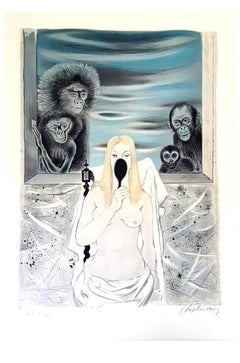
Materials
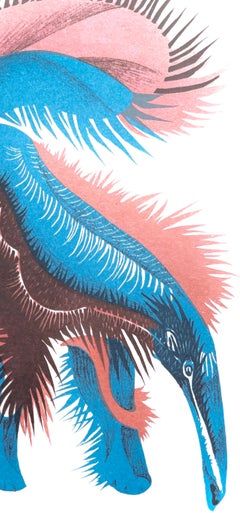
Lithograph