636 results for "ellsworth kelly"

to
282
581
45
60
53
387
146
81
337
134
55
46
64
Overall Height
to
Overall Width
to
124
110
104
84
67
29
11
4
57
38
29
19
15
15
13
12
10
9
9
9
8
8
8
7
7
6
6
5
464
172
8
8
2
74
179
96
55
17
67
63
46
26
19
363
149
118
118
95
Untitled (2008)

Untitled (2008)

Located in London, GB

William Sellers Untitled (2008), 2008 Acrylic on canvas 63cm. diameter William Sellers (1929-2019), a sculptor and painter whose career spanned six decades, created a diverse body o...

Category

Early 2000s Contemporary Figurative Paintings

Materials

Canvas, Acrylic

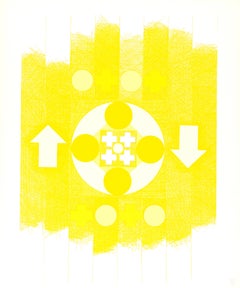
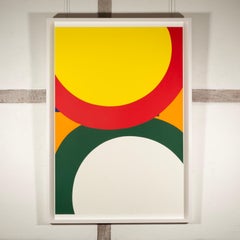
Untitled - 20th Century Brightly Colored Print, Yellow, Red, Green + Grey Circle

Untitled - 20th Century Brightly Colored Print, Yellow, Red, Green + Grey Circle

By Al Held

Located in Kingsclere, GB

Born in Brooklyn in 1928 to Polish immigrants, Al Held claims to have been expelled from high school in the Bronx in 1944. After serving in the U.S. Navy from 1945 to 1947, Held asso...

Category

20th Century Abstract Expressionist Abstract Prints

Materials

Screen

While the Earth Revolves at Night

While the Earth Revolves at Night

By James Rosenquist

Located in Miami, FL

Technical Information: James Rosenquist While the Earth Revolves at Night 1982 Pastel and pencil on paper 36 1/2 x 72 1/4 in. Unique Signed, dated, and titled Additional Technical ...

Category

1980s Pop Art Still-life Prints

Materials

Mixed Media

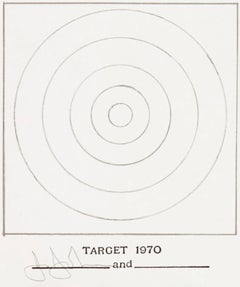
Jasper Johns, Target, from Technics and Creativity, Gemini G.E.L., 1971 (after)

Jasper Johns, Target, from Technics and Creativity, Gemini G.E.L., 1971 (after)

By Jasper Johns

Located in Southampton, NY

This exquisite offset lithograph with collage additions after Jasper Johns (born 1930), titled Target, from the album Technics and Creativity, Gemini G.E.L., 1971, originates from th...

Category

1970s Abstract Expressionist Abstract Prints

Materials

Found Objects, Lithograph

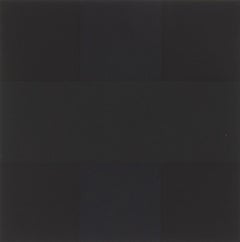
Ad Reinhardt, Untitled, from Ten Works by Ten Painters, 1964

Ad Reinhardt, Untitled, from Ten Works by Ten Painters, 1964

By Ad Reinhardt

Located in Southampton, NY

This exquisite silkscreen by Ad Reinhardt (1913–1967), titled Untitled, originates from the landmark 1964 folio X + X (Ten Works by Ten Painters). Published by the Wadsworth Atheneum...

Category

1960s Abstract Expressionist Landscape Prints

Materials

Screen

George Earl Ortman, Untitled, from Ten Works by Ten Painters, 1964

George Earl Ortman, Untitled, from Ten Works by Ten Painters, 1964

By George Earl Ortman

Located in Southampton, NY

This exquisite silkscreen by George Earl Ortman (1926–2015), titled Untitled, originates from the landmark 1964 folio X + X (Ten Works by Ten Painters). Published by the Wadsworth At...

Category

1960s Pop Art Landscape Prints

Materials

Screen

Frank Stella, Rabat, from Ten Works by Ten Painters, 1964

Frank Stella, Rabat, from Ten Works by Ten Painters, 1964

By Frank Stella

Located in Southampton, NY

This exquisite silkscreen by Frank Stella (1936–2024), titled Rabat, originates from the landmark 1964 folio X + X (Ten Works by Ten Painters). Published by the Wadsworth Atheneum Mu...

Category

1960s Minimalist Landscape Prints

Materials

Screen

Robert Motherwell, Untitled, from Ten Works by Ten Painters, 1964

Robert Motherwell, Untitled, from Ten Works by Ten Painters, 1964

By Robert Motherwell

Located in Southampton, NY

This exquisite silkscreen by Robert Motherwell (1915–1991), titled Untitled, originates from the landmark 1964 folio X + X (Ten Works by Ten Painters). Published by the Wadsworth Ath...

Category

1960s Abstract Expressionist Landscape Prints

Materials

Screen

Alexander Calder, Untitled, from Calder autobiographie, 1972

Alexander Calder, Untitled, from Calder autobiographie, 1972

By Alexander Calder

Located in Southampton, NY

This exquisite lithograph by Alexander Calder (1898–1976), titled Sans titre (Untitled), originates from the 1972 album Calder autobiographie. Published by Maeght Editeur, Paris, and...

Category

1970s Surrealist Abstract Prints

Materials

Lithograph

Alexander Calder, Untitled, from Calder autobiographie, 1972

Alexander Calder, Untitled, from Calder autobiographie, 1972

By Alexander Calder

Located in Southampton, NY

This exquisite lithograph by Alexander Calder (1898–1976), titled Sans titre (Untitled), originates from the 1972 album Calder autobiographie. Published by Maeght Editeur, Paris, and...

Category

1970s Surrealist Abstract Prints

Materials

Lithograph

Alexander Calder, Untitled, from Calder autobiographie, 1972

Alexander Calder, Untitled, from Calder autobiographie, 1972

By Alexander Calder

Located in Southampton, NY

This exquisite lithograph by Alexander Calder (1898–1976), titled Sans titre (Untitled), originates from the 1972 album Calder autobiographie. Published by Maeght Editeur, Paris, and...

Category

1970s Surrealist Abstract Prints

Materials

Lithograph

Stuart Davis, Untitled, from Ten Works by Ten Painters, 1964

Stuart Davis, Untitled, from Ten Works by Ten Painters, 1964

By Stuart Davis

Located in Southampton, NY

This exquisite silkscreen by Stuart Davis (1892–1964), titled Untitled, originates from the landmark 1964 folio X + X (Ten Works by Ten Painters). Published by the Wadsworth Atheneum...

Category

1960s American Modern Landscape Prints

Materials

Screen

Alexander Calder, Untitled, from L'Atelier Mourlot, 1965

Alexander Calder, Untitled, from L'Atelier Mourlot, 1965

By Alexander Calder

Located in Southampton, NY

This exquisite lithograph by Alexander Calder (1898–1976), titled Sans titre (Untitled), from the album Les Lithographies de L'Atelier Mourlot, Paris (The Lithographs of the Mourlot ...

Category

1960s Surrealist Abstract Prints

Materials

Lithograph

Joan Miro, The Huntress, from Derriere le Miroir, 1965

Joan Miro, The Huntress, from Derriere le Miroir, 1965

By Joan Miró

Located in Southampton, NY

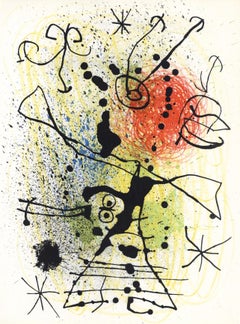
This exquisite lithograph by Joan Miro (1893–1983), titled La chasseresse (The Huntress), originates from the December 1965 folio Derriere le Miroir, No. 155, published by Maeght Edi...

Category

1960s Surrealist Figurative Prints

Materials

Lithograph

Fernand Leger, Still Life, from Derriere le miroir, 1955 (after)

Fernand Leger, Still Life, from Derriere le miroir, 1955 (after)

By Fernand Léger

Located in Southampton, NY

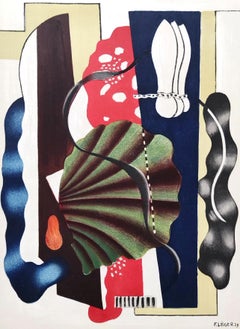
This exquisite lithograph after Fernand Leger (1881–1955), titled Nature morte (Still Life), from the folio Derriere le miroir, No. 79-81, originates from the 1955 edition published by Maeght Editeur, Paris, and printed by Mourlot Freres, Paris, 1955. This composition exemplifies Leger’s rhythmic balance of color, form, and movement, translating the mechanical vitality of modern life into a harmonious, humanized geometry. Executed as a lithograph on velin paper, this work measures 15 x 11 inches. Signed in the plate and unnumbered as issued. The edition exemplifies the superb craftsmanship of Mourlot Freres, Paris. Artwork Details: Artist: After Fernand Leger (1881–1955) Title: Nature morte (Still Life), from the folio Derriere le miroir, No. 79-81 Medium: Lithograph on velin paper Dimensions: 15 x 11 inches (38.1 x 27.94 cm) Inscription: Signed in the plate and unnumbered as issued Date: 1955 Publisher: Maeght Editeur, Paris Printer: Mourlot Freres, Paris Condition: Well preserved, consistent with age and medium Provenance: From the folio Derriere le miroir, No. 79-81, published by Maeght Editeur, Paris; printed by Mourlot Freres, Paris, 1955 About the Publication: Derriere le miroir (Behind the Mirror) was one of the most important art publications of the 20th century, created and published by Maeght Editeur in Paris from 1946 to 1982. Founded by the visionary art dealer and publisher Aime Maeght, the series served as both an exhibition catalogue and a work of art in its own right, uniting original lithographs by leading modern and contemporary artists with critical essays, poetry, and design of the highest quality. Printed by master lithographers such as Mourlot Freres and Arte, Derriere le miroir became synonymous with the artistic vanguard of postwar Europe. Each issue was devoted to a single artist or theme and published to accompany exhibitions at the Galerie Maeght in Paris, featuring works by Pablo Picasso, Henri Matisse, Georges Braque, Joan Miro, Marc Chagall, Alexander Calder, Fernand Leger, and Alberto Giacometti, among others. The publication reflected Maeght's belief that art should be both accessible and elevated—an ideal realized through its luxurious production values, meticulous printing, and collaboration with the greatest creative minds of its time. About the Artist: Fernand Leger (1881–1955) was a visionary French painter, sculptor, designer, and filmmaker whose groundbreaking fusion of modern industry, vivid color, and geometric form transformed the course of 20th-century art. Born in Argentan, Normandy, Leger began as an architectural draftsman before studying at the Academie Julian and the Ecole des Beaux-Arts in Paris, where he absorbed the lessons of Paul Cezanne’s structural rigor and the revolutionary ideas of Cubism. Alongside Pablo Picasso and Georges Braque, he became one of the leading innovators of the avant-garde, yet his work stood apart through its embrace of mechanical rhythm, bold contrasts, and industrial modernity—earning him the title “the painter of the machine age.” His art celebrated the beauty of technology, urban life, and the human form rendered in dynamic, interlocking cylinders and planes, evoking the pulse of the modern world. Immersed in the vibrant Parisian art scene, Leger worked in dialogue with peers and contemporaries such as Alexander Calder, Alberto Giacometti, Salvador Dali, Joan Miro, Wassily Kandinsky, Marcel Duchamp, and Man Ray, all of whom shared his commitment to innovation and the reimagining of artistic expression. Beyond painting, Leger’s creative reach extended into film, design, and monumental public art—his 1924 collaboration on Ballet Mecanique with Dudley Murphy and Man Ray remains a landmark of avant-garde cinema. His later works evolved toward greater clarity and monumentality, celebrating the unity of form, color, and humanity through large-scale murals and mosaics that bridged fine art and architecture. Leger’s synthesis of Cubism, Futurism, and abstraction paved the way for movements such as Pop Art and influenced generations of artists including Roy Lichtenstein, Ellsworth Kelly, Robert Indiana, and Alexander Calder, who admired his fusion of structure, energy, and optimism. Today, his works are prized by major museums and collectors worldwide for their bold visual power and enduring modernity. His highest auction record was achieved by La femme en rouge et vert (1914), which sold for 39,241,000 USD at Sotheby’s, New York, on May 7, 2008. After Fernand Leger Nature morte 1955, Leger Derriere le miroir No. 79-81, Leger Mourlot...

Category

1950s Cubist Still-life Prints

Materials

Lithograph

Fernand Leger, The Two Figures, from Derriere le miroir, 1955 (after)

Fernand Leger, The Two Figures, from Derriere le miroir, 1955 (after)

By Fernand Léger

Located in Southampton, NY

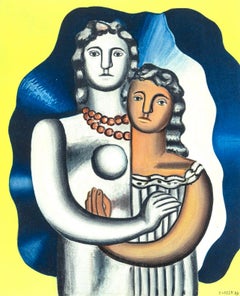
This exquisite lithograph after Fernand Leger (1881–1955), titled Le deux figures (The Two Figures), from the folio Derriere le miroir, No. 79-81, originates from the 1955 edition published by Maeght Editeur, Paris, and printed by Mourlot Freres, Paris, 1955. This composition exemplifies Leger’s rhythmic balance of color, form, and movement, translating the mechanical vitality of modern life into a harmonious, humanized geometry. Executed as a lithograph on velin paper, this work measures 15 x 11 inches. Signed in the plate and unnumbered as issued. The edition exemplifies the superb craftsmanship of Mourlot Freres, Paris. Artwork Details: Artist: After Fernand Leger (1881–1955) Title: Le deux figures (The Two Figures), from the folio Derriere le miroir, No. 79-81 Medium: Lithograph on velin paper Dimensions: 15 x 11 inches (38.1 x 27.94 cm) Inscription: Signed in the plate and unnumbered as issued Date: 1955 Publisher: Maeght Editeur, Paris Printer: Mourlot Freres, Paris Condition: Well preserved, consistent with age and medium Provenance: From the folio Derriere le miroir, No. 79-81, published by Maeght Editeur, Paris; printed by Mourlot Freres, Paris, 1955 About the Publication: Derriere le miroir (Behind the Mirror) was one of the most important art publications of the 20th century, created and published by Maeght Editeur in Paris from 1946 to 1982. Founded by the visionary art dealer and publisher Aime Maeght, the series served as both an exhibition catalogue and a work of art in its own right, uniting original lithographs by leading modern and contemporary artists with critical essays, poetry, and design of the highest quality. Printed by master lithographers such as Mourlot Freres and Arte, Derriere le miroir became synonymous with the artistic vanguard of postwar Europe. Each issue was devoted to a single artist or theme and published to accompany exhibitions at the Galerie Maeght in Paris, featuring works by Pablo Picasso, Henri Matisse, Georges Braque, Joan Miro, Marc Chagall, Alexander Calder, Fernand Leger, and Alberto Giacometti, among others. The publication reflected Maeght's belief that art should be both accessible and elevated—an ideal realized through its luxurious production values, meticulous printing, and collaboration with the greatest creative minds of its time. About the Artist: Fernand Leger (1881–1955) was a visionary French painter, sculptor, designer, and filmmaker whose groundbreaking fusion of modern industry, vivid color, and geometric form transformed the course of 20th-century art. Born in Argentan, Normandy, Leger began as an architectural draftsman before studying at the Academie Julian and the Ecole des Beaux-Arts in Paris, where he absorbed the lessons of Paul Cezanne’s structural rigor and the revolutionary ideas of Cubism. Alongside Pablo Picasso and Georges Braque, he became one of the leading innovators of the avant-garde, yet his work stood apart through its embrace of mechanical rhythm, bold contrasts, and industrial modernity—earning him the title “the painter of the machine age.” His art celebrated the beauty of technology, urban life, and the human form rendered in dynamic, interlocking cylinders and planes, evoking the pulse of the modern world. Immersed in the vibrant Parisian art scene, Leger worked in dialogue with peers and contemporaries such as Alexander Calder, Alberto Giacometti, Salvador Dali, Joan Miro, Wassily Kandinsky, Marcel Duchamp, and Man Ray, all of whom shared his commitment to innovation and the reimagining of artistic expression. Beyond painting, Leger’s creative reach extended into film, design, and monumental public art—his 1924 collaboration on Ballet Mecanique with Dudley Murphy and Man Ray remains a landmark of avant-garde cinema. His later works evolved toward greater clarity and monumentality, celebrating the unity of form, color, and humanity through large-scale murals and mosaics that bridged fine art and architecture. Leger’s synthesis of Cubism, Futurism, and abstraction paved the way for movements such as Pop Art and influenced generations of artists including Roy Lichtenstein, Ellsworth Kelly, Robert Indiana, and Alexander Calder, who admired his fusion of structure, energy, and optimism. Today, his works are prized by major museums and collectors worldwide for their bold visual power and enduring modernity. His highest auction record was achieved by La femme en rouge et vert (1914), which sold for 39,241,000 USD at Sotheby’s, New York, on May 7, 2008. After Fernand Leger Le deux figures 1955, Leger Derriere le miroir No. 79-81, Leger Mourlot...

Category

1950s Cubist Still-life Prints

Materials

Lithograph

Fernand Leger, Woman Holding a Flower, from Derriere le miroir, 1955 (after)

Fernand Leger, Woman Holding a Flower, from Derriere le miroir, 1955 (after)

By Fernand Léger

Located in Southampton, NY

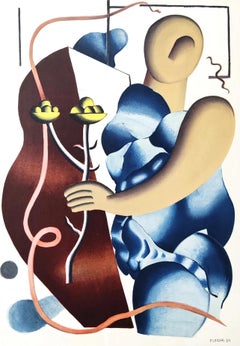
This exquisite lithograph after Fernand Leger (1881–1955), titled Femme tenant une fleur (Woman Holding a Flower), from the folio Derriere le miroir, No. 79-81, originates from the 1955 edition published by Maeght Editeur, Paris, and printed by Mourlot Freres, Paris, 1955. This composition exemplifies Leger’s rhythmic balance of color, form, and movement, translating the mechanical vitality of modern life into a harmonious, humanized geometry. Executed as a lithograph on velin paper, this work measures 15 x 11 inches. Signed in the plate and unnumbered as issued. The edition exemplifies the superb craftsmanship of Mourlot Freres, Paris. Artwork Details: Artist: After Fernand Leger (1881–1955) Title: Femme tenant une fleur (Woman Holding a Flower), from the folio Derriere le miroir, No. 79-81 Medium: Lithograph on velin paper Dimensions: 15 x 11 inches (38.1 x 27.94 cm) Inscription: Signed in the plate and unnumbered as issued Date: 1955 Publisher: Maeght Editeur, Paris Printer: Mourlot Freres, Paris Condition: Well preserved, consistent with age and medium Provenance: From the folio Derriere le miroir, No. 79-81, published by Maeght Editeur, Paris; printed by Mourlot Freres, Paris, 1955 About the Publication: Derriere le miroir (Behind the Mirror) was one of the most important art publications of the 20th century, created and published by Maeght Editeur in Paris from 1946 to 1982. Founded by the visionary art dealer and publisher Aime Maeght, the series served as both an exhibition catalogue and a work of art in its own right, uniting original lithographs by leading modern and contemporary artists with critical essays, poetry, and design of the highest quality. Printed by master lithographers such as Mourlot Freres and Arte, Derriere le miroir became synonymous with the artistic vanguard of postwar Europe. Each issue was devoted to a single artist or theme and published to accompany exhibitions at the Galerie Maeght in Paris, featuring works by Pablo Picasso, Henri Matisse, Georges Braque, Joan Miro, Marc Chagall, Alexander Calder, Fernand Leger, and Alberto Giacometti, among others. The publication reflected Maeght's belief that art should be both accessible and elevated—an ideal realized through its luxurious production values, meticulous printing, and collaboration with the greatest creative minds of its time. About the Artist: Fernand Leger (1881–1955) was a visionary French painter, sculptor, designer, and filmmaker whose groundbreaking fusion of modern industry, vivid color, and geometric form transformed the course of 20th-century art. Born in Argentan, Normandy, Leger began as an architectural draftsman before studying at the Academie Julian and the Ecole des Beaux-Arts in Paris, where he absorbed the lessons of Paul Cezanne’s structural rigor and the revolutionary ideas of Cubism. Alongside Pablo Picasso and Georges Braque, he became one of the leading innovators of the avant-garde, yet his work stood apart through its embrace of mechanical rhythm, bold contrasts, and industrial modernity—earning him the title “the painter of the machine age.” His art celebrated the beauty of technology, urban life, and the human form rendered in dynamic, interlocking cylinders and planes, evoking the pulse of the modern world. Immersed in the vibrant Parisian art scene, Leger worked in dialogue with peers and contemporaries such as Alexander Calder, Alberto Giacometti, Salvador Dali, Joan Miro, Wassily Kandinsky, Marcel Duchamp, and Man Ray, all of whom shared his commitment to innovation and the reimagining of artistic expression. Beyond painting, Leger’s creative reach extended into film, design, and monumental public art—his 1924 collaboration on Ballet Mecanique with Dudley Murphy and Man Ray remains a landmark of avant-garde cinema. His later works evolved toward greater clarity and monumentality, celebrating the unity of form, color, and humanity through large-scale murals and mosaics that bridged fine art and architecture. Leger’s synthesis of Cubism, Futurism, and abstraction paved the way for movements such as Pop Art and influenced generations of artists including Roy Lichtenstein, Ellsworth Kelly, Robert Indiana, and Alexander Calder, who admired his fusion of structure, energy, and optimism. Today, his works are prized by major museums and collectors worldwide for their bold visual power and enduring modernity. His highest auction record was achieved by La femme en rouge et vert (1914), which sold for 39,241,000 USD at Sotheby’s, New York, on May 7, 2008. After Fernand Leger Femme tenant une fleur 1955, Leger Derriere le miroir No. 79-81, Leger Mourlot...

Category

1950s Cubist Still-life Prints

Materials

Lithograph

Wassily Kandinsky, Untitled, from Derriere le Miroir, 1953 (after)

Wassily Kandinsky, Untitled, from Derriere le Miroir, 1953 (after)

By Wassily Kandinsky

Located in Southampton, NY

This exquisite lithograph after Wassily Kandinsky (1866–1944), titled Sans Titre (Untitled), originates from the 1953 folio Derriere le Miroir, Nos. 60–61, published by Maeght Editeu...

Category

1950s Modern Abstract Prints

Materials

Lithograph

Pablo Palazuelo, Untitled, from Derriere le Miroir, 1963

Pablo Palazuelo, Untitled, from Derriere le Miroir, 1963

By Pablo Palazuelo

Located in Southampton, NY

This exquisite lithograph by Pablo Palazuelo (1915–2007), titled Sans titre (Untitled), originates from the 1963 folio Derriere le Miroir, No. 137, published by Maeght Editeur, Paris...

Category

1960s Abstract Geometric Abstract Prints

Materials

Lithograph

Pablo Palazuelo, Untitled, from Derriere le Miroir, 1963

Pablo Palazuelo, Untitled, from Derriere le Miroir, 1963

By Pablo Palazuelo

Located in Southampton, NY

This exquisite lithograph by Pablo Palazuelo (1915–2007), titled Sans titre (Untitled), originates from the 1963 folio Derriere le Miroir, No. 137, published by Maeght Editeur, Paris...

Category

1960s Abstract Geometric Abstract Prints

Materials

Lithograph

Pablo Palazuelo, Untitled, from Derriere le Miroir, 1963

Pablo Palazuelo, Untitled, from Derriere le Miroir, 1963

By Pablo Palazuelo

Located in Southampton, NY

This exquisite lithograph by Pablo Palazuelo (1915–2007), titled Sans titre (Untitled), originates from the 1963 folio Derriere le Miroir, No. 137, published by Maeght Editeur, Paris...

Category

1960s Abstract Geometric Abstract Prints

Materials

Lithograph

Pablo Palazuelo, Untitled, from Derriere le Miroir, 1963

Pablo Palazuelo, Untitled, from Derriere le Miroir, 1963

By Pablo Palazuelo

Located in Southampton, NY

This exquisite lithograph by Pablo Palazuelo (1915–2007), titled Sans titre (Untitled), originates from the 1963 folio Derriere le Miroir, No. 137, published by Maeght Editeur, Paris...

Category

1960s Abstract Geometric Abstract Prints

Materials

Lithograph

Pablo Palazuelo, Untitled, from Derriere le Miroir, 1963

Pablo Palazuelo, Untitled, from Derriere le Miroir, 1963

By Pablo Palazuelo

Located in Southampton, NY

This exquisite lithograph by Pablo Palazuelo (1915–2007), titled Sans titre (Untitled), originates from the 1963 folio Derriere le Miroir, No. 137, published by Maeght Editeur, Paris...

Category

1960s Abstract Geometric Abstract Prints

Materials

Lithograph

Pablo Palazuelo, Untitled, from Derriere le Miroir, 1963

Pablo Palazuelo, Untitled, from Derriere le Miroir, 1963

By Pablo Palazuelo

Located in Southampton, NY

This exquisite lithograph by Pablo Palazuelo (1915–2007), titled Sans titre (Untitled), originates from the 1963 folio Derriere le Miroir, No. 137, published by Maeght Editeur, Paris...

Category

1960s Abstract Geometric Abstract Prints

Materials

Lithograph

Pablo Palazuelo, Untitled, from Derriere le Miroir, 1963

Pablo Palazuelo, Untitled, from Derriere le Miroir, 1963

By Pablo Palazuelo

Located in Southampton, NY

This exquisite lithograph by Pablo Palazuelo (1915–2007), titled Sans titre (Untitled), originates from the 1963 folio Derriere le Miroir, No. 137, published by Maeght Editeur, Paris...

Category

1960s Abstract Geometric Abstract Prints

Materials

Lithograph

Pablo Palazuelo, Untitled, from Derriere le Miroir, 1963

Pablo Palazuelo, Untitled, from Derriere le Miroir, 1963

By Pablo Palazuelo

Located in Southampton, NY

This exquisite lithograph by Pablo Palazuelo (1915–2007), titled Sans titre (Untitled), originates from the 1963 folio Derriere le Miroir, No. 137, published by Maeght Editeur, Paris...

Category

1960s Abstract Geometric Abstract Prints

Materials

Lithograph

Pablo Palazuelo, Untitled, from Derriere le Miroir, 1963

Pablo Palazuelo, Untitled, from Derriere le Miroir, 1963

By Pablo Palazuelo

Located in Southampton, NY

This exquisite lithograph by Pablo Palazuelo (1915–2007), titled Sans titre (Untitled), originates from the 1963 folio Derriere le Miroir, No. 137, published by Maeght Editeur, Paris...

Category

1960s Abstract Geometric Abstract Prints

Materials

Lithograph

Pablo Palazuelo, Untitled, from Derriere le Miroir, 1970

Pablo Palazuelo, Untitled, from Derriere le Miroir, 1970

By Pablo Palazuelo

Located in Southampton, NY

This exquisite lithograph by Pablo Palazuelo (1915–2007), titled Sans titre (Untitled), originates from the 1970 folio Derriere le Miroir, No. 180, published by Maeght Editeur, Paris...

Category

1970s Abstract Geometric Abstract Prints

Materials

Lithograph

Pablo Palazuelo, Untitled, from Derriere le Miroir, 1970

Pablo Palazuelo, Untitled, from Derriere le Miroir, 1970

By Pablo Palazuelo

Located in Southampton, NY

This exquisite lithograph by Pablo Palazuelo (1915–2007), titled Sans titre (Untitled), originates from the 1970 folio Derriere le Miroir, No. 180, published by Maeght Editeur, Paris...

Category

1970s Abstract Geometric Abstract Prints

Materials

Lithograph

Pablo Palazuelo, Untitled, from Derriere le Miroir, 1970

Pablo Palazuelo, Untitled, from Derriere le Miroir, 1970

By Pablo Palazuelo

Located in Southampton, NY

This exquisite lithograph by Pablo Palazuelo (1915–2007), titled Sans titre (Untitled), originates from the 1970 folio Derriere le Miroir, No. 180, published by Maeght Editeur, Paris...

Category

1970s Abstract Geometric Abstract Prints

Materials

Lithograph

Pablo Palazuelo, Untitled, from Derriere le Miroir, 1970

Pablo Palazuelo, Untitled, from Derriere le Miroir, 1970

By Pablo Palazuelo

Located in Southampton, NY

This exquisite lithograph by Pablo Palazuelo (1915–2007), titled Sans titre (Untitled), originates from the 1970 folio Derriere le Miroir, No. 180, published by Maeght Editeur, Paris...

Category

1970s Abstract Geometric Abstract Prints

Materials

Lithograph

Pablo Palazuelo, Untitled, from Derriere le Miroir, 1970

Pablo Palazuelo, Untitled, from Derriere le Miroir, 1970

By Pablo Palazuelo

Located in Southampton, NY

This exquisite lithograph by Pablo Palazuelo (1915–2007), titled Sans titre (Untitled), originates from the 1970 folio Derriere le Miroir, No. 180, published by Maeght Editeur, Paris...

Category

1970s Abstract Geometric Abstract Prints

Materials

Lithograph

Pablo Palazuelo, Untitled, from Derriere le Miroir, 1970

Pablo Palazuelo, Untitled, from Derriere le Miroir, 1970

By Pablo Palazuelo

Located in Southampton, NY

This exquisite lithograph by Pablo Palazuelo (1915–2007), titled Sans titre (Untitled), originates from the 1970 folio Derriere le Miroir, No. 180, published by Maeght Editeur, Paris...

Category

1970s Abstract Geometric Abstract Prints

Materials

Lithograph

Pablo Palazuelo, Untitled, from Derriere le Miroir, 1970

Pablo Palazuelo, Untitled, from Derriere le Miroir, 1970

By Pablo Palazuelo

Located in Southampton, NY

This exquisite lithograph by Pablo Palazuelo (1915–2007), titled Sans titre (Untitled), originates from the 1970 folio Derriere le Miroir, No. 180, published by Maeght Editeur, Paris...

Category

1970s Abstract Geometric Abstract Prints

Materials

Lithograph

Pablo Palazuelo, Untitled, from Derriere le Miroir, 1970

Pablo Palazuelo, Untitled, from Derriere le Miroir, 1970

By Pablo Palazuelo

Located in Southampton, NY

This exquisite lithograph by Pablo Palazuelo (1915–2007), titled Sans titre (Untitled), originates from the 1970 folio Derriere le Miroir, No. 180, published by Maeght Editeur, Paris...

Category

1970s Abstract Geometric Abstract Prints

Materials

Lithograph

Pablo Palazuelo, Wave, from Derriere le Miroir, 1960

Pablo Palazuelo, Wave, from Derriere le Miroir, 1960

By Pablo Palazuelo

Located in Southampton, NY

This exquisite lithograph by Pablo Palazuelo (1915–2007), titled Onde (Wave), originates from the 1960 folio Derriere le Miroir, No. 119, Poetes, peintres, sculpteurs (Poets, Painter...

Category

1960s Modern Abstract Prints

Materials

Lithograph

Robert Motherwell, Tricolor, from XXe Siecle, 1973

Robert Motherwell, Tricolor, from XXe Siecle, 1973

By Robert Motherwell

Located in Southampton, NY

This exquisite lithograph by Robert Motherwell (1915–1991), titled Tricolor, from the album XXe Siecle, Annee No. 40, Juin 1973, originates from the 1973 edition published by Societe...

Category

1970s Abstract Expressionist Abstract Prints

Materials

Lithograph

Alfred Manessier, The Nest, Small Black Spot No. 1, from XXe Siecle, 1960

Alfred Manessier, The Nest, Small Black Spot No. 1, from XXe Siecle, 1960

By Alfred Manessier

Located in Southampton, NY

This exquisite lithograph by Alfred Manessier (1911–1993), titled Le Nid, Petite tache noire n°1 (The Nest, Small Black Spot No. 1), from the album XXe Siecle, Nouvelle serie, XXIIe ...

Category

1960s Modern Abstract Prints

Materials

Lithograph

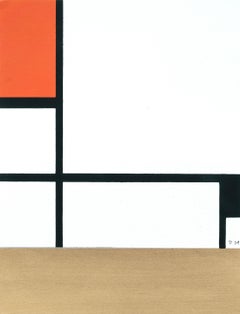
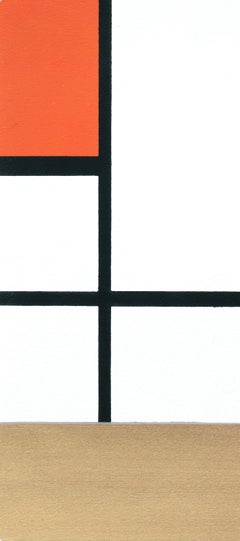
Piet Mondrian, Sans titre, from XXe Siecle, 1957 (after)

Piet Mondrian, Sans titre, from XXe Siecle, 1957 (after)

By Piet Mondrian

Located in Southampton, NY

This exquisite lithograph and pochoir after Piet Mondrian (1872–1944), titled Sans titre (Untitled), from the album XXe Siecle, Nouvelle serie N°9 (double), Juin 1957, originates fro...

Category

1950s Abstract Geometric Abstract Prints

Materials

Lithograph

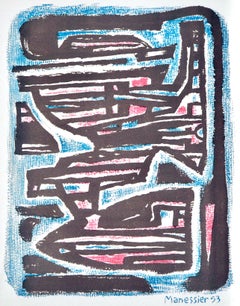
Alfred Manessier, Forms and Transparency, from XXe Siecle, 1954

Alfred Manessier, Forms and Transparency, from XXe Siecle, 1954

By Alfred Manessier

Located in Southampton, NY

This exquisite lithograph by Alfred Manessier (1911–1993), titled Formes et transparence (Forms and Transparency), from the album XXe Siecle, Nouvelle serie N°4 (double) Janvier 1954...

Category

1950s Modern Abstract Prints

Materials

Lithograph

Wassily Kandinsky, Untitled, from Derriere le Miroir, 1960 (after)

Wassily Kandinsky, Untitled, from Derriere le Miroir, 1960 (after)

By Wassily Kandinsky

Located in Southampton, NY

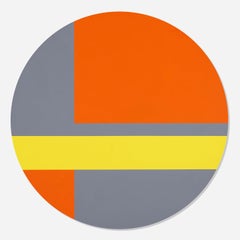
This exquisite lithograph after Wassily Kandinsky (1866–1944), titled Sans Titre (Untitled), originates from the 1960 folio Derriere le Miroir, No. 119, Poetes, peintres, sculpteurs (Poets, Painters, Sculptors), published by Maeght Editeur, Paris, under the direction of Aime Maeght, and printed by Mourlot Freres, Paris. This plate pays homage to the artist’s groundbreaking geometric abstraction and his profound influence on postwar modernism. Through precise form and rhythmic structure, Sans Titre captures the musicality and spiritual dynamism that defined Kandinsky’s mature visual language, balancing intuitive movement with mathematical harmony. Executed on velin paper, this lithograph measures 15 x 11 inches (38.1 x 27.9 cm), as issued. Signed in the plate and unnumbered, as issued. The edition reflects the exceptional quality and craftsmanship of the Maeght and Mourlot collaborations, honoring Kandinsky’s legacy in fine art printing. Artwork Details: Artist: After Wassily Kandinsky (1866–1944) Title: Sans Titre (Untitled), from Derriere le Miroir, No. 119, Poetes, peintres, sculpteurs (Poets, Painters, Sculptors), 1960 Medium: Lithograph on velin paper Dimensions: 15 x 11 inches (38.1 x 27.9 cm), as issued Inscription: Signed in the plate and unnumbered, as issued Date: 1960 Publisher: Maeght Editeur, Paris Printer: Mourlot Freres, Paris Condition: Well preserved, consistent with age and medium Provenance: From the 1960 folio Derriere le Miroir, No. 119, Poetes, peintres, sculpteurs (Poets, Painters, Sculptors), published by Maeght Editeur, Paris About the Publication: Derriere le Miroir (translated as "Behind the Mirror") was an iconic French art periodical published from 1946 to 1982 by Maeght Editeur, one of the most influential art publishers of the 20th century. Founded by Aime Maeght in Paris, the publication was conceived as a visual and literary collaboration between leading modern artists, poets, and critics. Each issue functioned as both an exhibition catalogue and a work of art in itself—featuring original lithographs printed directly from the artists' stones or plates, alongside essays, poems, and critical commentary. Over the course of 36 years, Derriere le Miroir produced more than 250 issues and showcased an extraordinary roster of artists including Henri Matisse, Marc Chagall, Joan Miro, Georges Braque, Alexander Calder, Fernand Leger, Pierre Bonnard, Alberto Giacometti, Eduardo Chillida, Ellsworth Kelly, Francis Bacon, Paul Rebeyrolle, Claude Garache, Antoni Tapies, Bram van Velde, Pierre Alechinsky, Pol Bury, Shusaku Arakawa, and Gerard Titus-Carmel. Printed in the ateliers of Mourlot, Arte, and Imprimerie Moderne du Lion, the periodical set new standards for quality in color lithography, combining fine art printing with elegant typography and poetic text. Beyond its visual brilliance, Derriere le Miroir also became a cultural chronicle of postwar European modernism. Each issue coincided with exhibitions held at Galerie Maeght, providing a collectible and widely accessible record of groundbreaking shows. Its integration of image, text, and philosophy created a dialogue between art and literature that elevated the modern art book to new aesthetic heights. Today, Derriere le Miroir remains one of the most sought-after and historically significant art publications, prized by collectors and scholars alike for its craftsmanship, influence, and its role in defining the visual language of 20th-century modernism. The Maeght Foundation in Saint-Paul-de-Vence continues to honor this legacy through exhibitions and archival preservation of the series, affirming Derriere le Miroir's enduring place in the history of modern art and fine art publishing. About the Artist: Wassily Kandinsky (1866–1944) was a Russian-born painter, theorist, and pioneer of abstract art whose revolutionary vision transformed 20th-century modernism. Regarded as one of the first artists to create purely nonobjective paintings, Kandinsky sought to express inner emotion and spirituality through color, rhythm, and form, believing that art could evoke the same universal harmony as music. His groundbreaking theories on abstraction and the “spiritual in art” shaped the foundation of modern aesthetics and influenced generations of artists worldwide. Closely associated with the Bauhaus movement, he developed a dynamic visual language that combined geometry and lyricism, bridging intuition and intellect. Kandinsky’s legacy resonates alongside the innovations of Pablo Picasso, Henri Matisse, Alexander Calder, Georges Braque, Marc Chagall, Alberto Giacometti, Salvador Dali, Joan Miro, Marcel Duchamp, and Man Ray—artists who, like him, redefined the possibilities of modern art. His works are represented in the world’s leading museums, including MoMA, the Guggenheim, the Centre Pompidou, and the Tate, and remain among the most coveted by collectors globally. The highest price ever paid for a Wassily Kandinsky artwork is approximately $45.6 million USD, achieved in 2017 at Christie’s London for Bild mit weissen Linien (Painting with White Lines) (1913). Wassily Kandinsky Sans Titre, Kandinsky Derriere le Miroir, Kandinsky Maeght Editeur Paris, Kandinsky Mourlot Freres, Kandinsky 1960 edition, Kandinsky lithograph...

Category

1960s Modern Abstract Prints
Materials

Lithograph

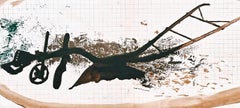
Georges Braque, The Plow, from Derriere le Miroir, 1960

Georges Braque, The Plow, from Derriere le Miroir, 1960

By Georges Braque

Located in Southampton, NY

This exquisite lithograph by Georges Braque (1882–1963), titled La Charrue (The Plow), originates from the 1960 folio Derriere le Miroir, No. 119, Poetes, peintres, sculpteurs (Poets...

Category

1960s Cubist Abstract Prints

Materials

Lithograph

Jean Bazaine, Mountain Landscape, from Derriere le Miroir, 1960

Jean Bazaine, Mountain Landscape, from Derriere le Miroir, 1960

By Jean Bazaine

Located in Southampton, NY

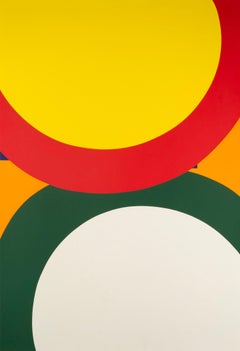
This exquisite lithograph by Jean Bazaine (1904–2001), titled Paysage de Montagne (Mountain Landscape), originates from the 1960 folio Derriere le Miroir, No. 119, Poetes, peintres, ...

Category

1960s Modern Abstract Prints
Materials

Lithograph

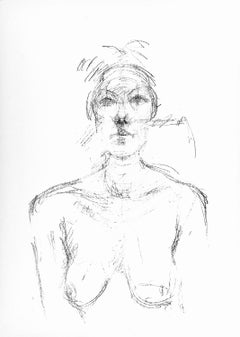
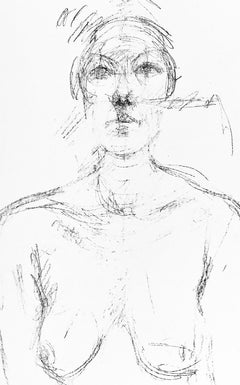
Alberto Giacometti, Bust II, from Derriere le Miroir, 1960

Alberto Giacometti, Bust II, from Derriere le Miroir, 1960

By Alberto Giacometti

Located in Southampton, NY

This exquisite lithograph by Alberto Giacometti (1901–1966), titled Buste II (Bust II), originates from the 1960 folio Derriere le Miroir, No. 119, Poetes, peintres, sculpteurs (Poet...

Category

1960s Modern Abstract Prints
Materials

Lithograph

Eduardo Chillida, Correlation, from Derriere le Miroir, 1960

Eduardo Chillida, Correlation, from Derriere le Miroir, 1960

By Eduardo Chillida

Located in Southampton, NY

This exquisite lithograph by Eduardo Chillida (1924–2002), titled Correlation, originates from the 1960 folio Derriere le Miroir, No. 119, Poetes, peintres, sculpteurs (Poets, Painters, Sculptors), published by Maeght Editeur, Paris, under the direction of Aime Maeght, and printed by Mourlot Freres, Paris. Correlation exemplifies Chillida’s masterful exploration of form, space, and equilibrium, transforming abstract geometry into a meditative dialogue between line and void. The work reflects the artist’s enduring search for spiritual and structural balance within the material world. Executed on velin paper, this lithograph measures 15 x 11 inches (38.1 x 27.9 cm). Unsigned and unnumbered, as issued. The edition reflects the exceptional quality and craftsmanship of the Maeght and Mourlot collaborations, embodying Chillida’s refined aesthetic of sculptural abstraction translated into graphic form. Artwork Details: Artist: Eduardo Chillida (1924–2002) Title: Correlation, from Derriere le Miroir, No. 119, Poetes, peintres, sculpteurs (Poets, Painters, Sculptors), 1960 Medium: Lithograph on velin paper Dimensions: 15 x 11 inches (38.1 x 27.9 cm) Inscription: Unsigned and unnumbered, as issued Date: 1960 Publisher: Maeght Editeur, Paris Printer: Mourlot Freres, Paris Condition: Well preserved, consistent with age and medium Provenance: From the 1960 folio Derriere le Miroir, No. 119, Poetes, peintres, sculpteurs (Poets, Painters, Sculptors), published by Maeght Editeur, Paris About the Publication: Derriere le Miroir (translated as "Behind the Mirror") was an iconic French art periodical published from 1946 to 1982 by Maeght Editeur, one of the most influential art publishers of the 20th century. Founded by Aime Maeght in Paris, the publication was conceived as a visual and literary collaboration between leading modern artists, poets, and critics. Each issue functioned as both an exhibition catalogue and a work of art in itself—featuring original lithographs printed directly from the artists' stones or plates, alongside essays, poems, and critical commentary. Over the course of 36 years, Derriere le Miroir produced more than 250 issues and showcased an extraordinary roster of artists including Henri Matisse, Marc Chagall, Joan Miro, Georges Braque, Alexander Calder, Fernand Leger, Pierre Bonnard, Alberto Giacometti, Eduardo Chillida, Ellsworth Kelly, Francis Bacon, Paul Rebeyrolle, Claude Garache, Antoni Tapies, Bram van Velde, Pierre Alechinsky, Pol Bury, Shusaku Arakawa, and Gerard Titus-Carmel. Printed in the ateliers of Mourlot, Arte, and Imprimerie Moderne de Lion, the periodical set new standards for quality in color lithography, combining fine art printing with elegant typography and poetic text. Beyond its visual brilliance, Derriere le Miroir also became a cultural chronicle of postwar European modernism. Each issue coincided with exhibitions held at Galerie Maeght, providing a collectible and widely accessible record of groundbreaking shows. Its integration of image, text, and philosophy created a dialogue between art and literature that elevated the modern art book to new aesthetic heights. Today, Derriere le Miroir remains one of the most sought-after and historically significant art publications, prized by collectors and scholars alike for its craftsmanship, influence, and its role in defining the visual language of 20th-century modernism. The Maeght Foundation in Saint-Paul-de-Vence continues to honor this legacy through exhibitions and archival preservation of the series, affirming Derriere le Miroir's enduring place in the history of modern art and fine art publishing. About the Artist: Eduardo Chillida (1924–2002) was a Spanish Basque sculptor and printmaker internationally celebrated for his monumental abstract works that explore the interplay between form, space, and material. Renowned for his mastery of iron, steel, stone, and concrete, Chillida created sculptural compositions that evoke both architectural strength and poetic balance, reflecting his lifelong dialogue between the physical and the spiritual. Emerging in postwar Europe, his art stands alongside that of the great modern masters—Pablo Picasso, Henri Matisse, Alexander Calder, Marc Chagall, Salvador Dali, Joan Miro, Georges Braque, Wassily Kandinsky, Marcel Duchamp, and Man Ray—whose revolutionary approaches to form and perception shaped 20th-century art. Chillida’s work embodies a profound sense of harmony, rooted in the landscapes and philosophies of his native Basque Country, while maintaining a universal resonance. Exhibited internationally and collected by major institutions including MoMA, the Guggenheim, the Tate, and the Centre Pompidou, his sculptures and works on paper continue to command global acclaim. The highest price ever paid for an Eduardo Chillida artwork is approximately $4.1 million USD, achieved in 2022 at Christie’s Paris for Buscando la Luz IV (2001). Eduardo Chillida Correlation, Chillida Derriere le Miroir, Chillida Maeght...

Category

1960s Modern Abstract Prints
Materials

Lithograph

Raoul Ubac, Summer Landscape, from Derriere le Miroir, 1960

Raoul Ubac, Summer Landscape, from Derriere le Miroir, 1960

By Raoul Ubac

Located in Southampton, NY

This exquisite lithograph by Raoul Ubac (1910–1985), titled Paysage d'Ete (Summer Landscape), originates from the 1960 folio Derriere le Miroir, No. 119, Poetes, peintres, sculpteurs...

Category

1960s Modern Abstract Prints

Materials

Lithograph

Francois Fiedler, Peinture, from Derriere le Miroir, 1960

Francois Fiedler, Peinture, from Derriere le Miroir, 1960

By François Fiedler

Located in Southampton, NY

This exquisite lithograph by Francois Fiedler (1921–2001), titled Peinture (Painting), originates from the 1960 folio Derriere le Miroir, No. 119, Poetes, peintres, sculpteurs (Poets...

Category

1960s Modern Abstract Prints
Materials

Lithograph

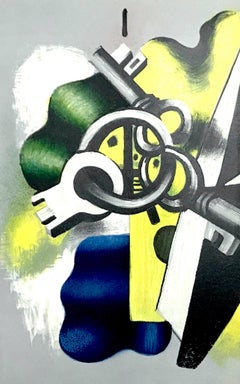
Fernand Leger, Composition with Three Keys, Derriere le miroir, 1955 (after)

Fernand Leger, Composition with Three Keys, Derriere le miroir, 1955 (after)

By Fernand Léger

Located in Southampton, NY

This exquisite lithograph after Fernand Leger (1881–1955), titled Composition aux trois cles (Composition with Three Keys), from the folio Derriere le miroir, No. 79-81, originates from the 1955 edition published by Maeght Editeur, Paris, and printed by Mourlot Freres, Paris, 1955. This composition exemplifies Leger’s rhythmic balance of color, form, and movement, translating the mechanical vitality of modern life into a harmonious, humanized geometry. Executed as a lithograph on velin paper, this work measures 15 x 22 inches, with centerfold as issued. Signed in the plate and unnumbered as issued. The edition exemplifies the superb craftsmanship of Mourlot Freres, Paris. Artwork Details: Artist: After Fernand Leger (1881–1955) Title: Composition aux trois cles (Composition with Three Keys), from the folio Derriere le miroir, No. 79-81 Medium: Lithograph on velin paper Dimensions: 15 x 22 inches (38.1 x 55.88 cm), with centerfold as issued Inscription: Signed in the plate and unnumbered as issued Date: 1955 Publisher: Maeght Editeur, Paris Printer: Mourlot Freres, Paris Condition: Well preserved, consistent with age and medium Provenance: From the folio Derriere le miroir, No. 79-81, published by Maeght Editeur, Paris; printed by Mourlot Freres, Paris, 1955 About the Publication: Derriere le miroir (Behind the Mirror) was one of the most important art publications of the 20th century, created and published by Maeght Editeur in Paris from 1946 to 1982. Founded by the visionary art dealer and publisher Aime Maeght, the series served as both an exhibition catalogue and a work of art in its own right, uniting original lithographs by leading modern and contemporary artists with critical essays, poetry, and design of the highest quality. Printed by master lithographers such as Mourlot Freres and Arte, Derriere le miroir became synonymous with the artistic vanguard of postwar Europe. Each issue was devoted to a single artist or theme and published to accompany exhibitions at the Galerie Maeght in Paris, featuring works by Pablo Picasso, Henri Matisse, Georges Braque, Joan Miro, Marc Chagall, Alexander Calder, Fernand Leger, and Alberto Giacometti, among others. The publication reflected Maeght's belief that art should be both accessible and elevated—an ideal realized through its luxurious production values, meticulous printing, and collaboration with the greatest creative minds of its time. About the Artist: Fernand Leger (1881–1955) was a visionary French painter, sculptor, designer, and filmmaker whose groundbreaking fusion of modern industry, vivid color, and geometric form transformed the course of 20th-century art. Born in Argentan, Normandy, Leger began as an architectural draftsman before studying at the Academie Julian and the Ecole des Beaux-Arts in Paris, where he absorbed the lessons of Paul Cezanne’s structural rigor and the revolutionary ideas of Cubism. Alongside Pablo Picasso and Georges Braque, he became one of the leading innovators of the avant-garde, yet his work stood apart through its embrace of mechanical rhythm, bold contrasts, and industrial modernity—earning him the title “the painter of the machine age.” His art celebrated the beauty of technology, urban life, and the human form rendered in dynamic, interlocking cylinders and planes, evoking the pulse of the modern world. Immersed in the vibrant Parisian art scene, Leger worked in dialogue with peers and contemporaries such as Alexander Calder, Alberto Giacometti, Salvador Dali, Joan Miro, Wassily Kandinsky, Marcel Duchamp, and Man Ray, all of whom shared his commitment to innovation and the reimagining of artistic expression. Beyond painting, Leger’s creative reach extended into film, design, and monumental public art—his 1924 collaboration on Ballet Mecanique with Dudley Murphy and Man Ray remains a landmark of avant-garde cinema. His later works evolved toward greater clarity and monumentality, celebrating the unity of form, color, and humanity through large-scale murals and mosaics that bridged fine art and architecture. Leger’s synthesis of Cubism, Futurism, and abstraction paved the way for movements such as Pop Art and influenced generations of artists including Roy Lichtenstein, Ellsworth Kelly, Robert Indiana, and Alexander Calder, who admired his fusion of structure, energy, and optimism. Today, his works are prized by major museums and collectors worldwide for their bold visual power and enduring modernity. His highest auction record was achieved by La femme en rouge et vert (1914), which sold for 39,241,000 USD at Sotheby’s, New York, on May 7, 2008. After Fernand Leger Composition aux trois cles 1955, Leger Derriere le miroir No. 79-81, Leger Mourlot...

Category

1950s Cubist Still-life Prints

Materials

Lithograph

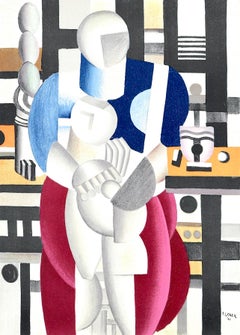
Fernand Leger, The Woman and the Child, from Derriere le miroir, 1955 (after)

Fernand Leger, The Woman and the Child, from Derriere le miroir, 1955 (after)

By Fernand Léger

Located in Southampton, NY

This exquisite lithograph after Fernand Leger (1881–1955), titled La Femme et l’Enfant (The Woman and the Child), from the folio Derriere le miroir, No. 79-81, originates from the 1955 edition published by Maeght Editeur, Paris, and printed by Mourlot Freres, Paris, 1955. This composition exemplifies Leger’s rhythmic balance of color, form, and movement, translating the mechanical vitality of modern life into a harmonious, humanized geometry. Executed as a lithograph on velin paper, this work measures 15 x 11 inches. Signed in the plate and unnumbered as issued. The edition exemplifies the superb craftsmanship of Mourlot Freres, Paris. Artwork Details: Artist: After Fernand Leger (1881–1955) Title: La Femme et l’Enfant (The Woman and the Child), from the folio Derriere le miroir, No. 79-81 Medium: Lithograph on velin paper Dimensions: 15 x 11 inches (38.1 x 27.94 cm) Inscription: Signed in the plate and unnumbered as issued Date: 1955 Publisher: Maeght Editeur, Paris Printer: Mourlot Freres, Paris Condition: Well preserved, consistent with age and medium Provenance: From the folio Derriere le miroir, No. 79-81, published by Maeght Editeur, Paris; printed by Mourlot Freres, Paris, 1955 About the Publication: Derriere le miroir (Behind the Mirror) was one of the most important art publications of the 20th century, created and published by Maeght Editeur in Paris from 1946 to 1982. Founded by the visionary art dealer and publisher Aime Maeght, the series served as both an exhibition catalogue and a work of art in its own right, uniting original lithographs by leading modern and contemporary artists with critical essays, poetry, and design of the highest quality. Printed by master lithographers such as Mourlot Freres and Arte, Derriere le miroir became synonymous with the artistic vanguard of postwar Europe. Each issue was devoted to a single artist or theme and published to accompany exhibitions at the Galerie Maeght in Paris, featuring works by Pablo Picasso, Henri Matisse, Georges Braque, Joan Miro, Marc Chagall, Alexander Calder, Fernand Leger, and Alberto Giacometti, among others. The publication reflected Maeght's belief that art should be both accessible and elevated—an ideal realized through its luxurious production values, meticulous printing, and collaboration with the greatest creative minds of its time. About the Artist: Fernand Leger (1881–1955) was a visionary French painter, sculptor, designer, and filmmaker whose groundbreaking fusion of modern industry, vivid color, and geometric form transformed the course of 20th-century art. Born in Argentan, Normandy, Leger began as an architectural draftsman before studying at the Academie Julian and the Ecole des Beaux-Arts in Paris, where he absorbed the lessons of Paul Cezanne’s structural rigor and the revolutionary ideas of Cubism. Alongside Pablo Picasso and Georges Braque, he became one of the leading innovators of the avant-garde, yet his work stood apart through its embrace of mechanical rhythm, bold contrasts, and industrial modernity—earning him the title “the painter of the machine age.” His art celebrated the beauty of technology, urban life, and the human form rendered in dynamic, interlocking cylinders and planes, evoking the pulse of the modern world. Immersed in the vibrant Parisian art scene, Leger worked in dialogue with peers and contemporaries such as Alexander Calder, Alberto Giacometti, Salvador Dali, Joan Miro, Wassily Kandinsky, Marcel Duchamp, and Man Ray, all of whom shared his commitment to innovation and the reimagining of artistic expression. Beyond painting, Leger’s creative reach extended into film, design, and monumental public art—his 1924 collaboration on Ballet Mecanique with Dudley Murphy and Man Ray remains a landmark of avant-garde cinema. His later works evolved toward greater clarity and monumentality, celebrating the unity of form, color, and humanity through large-scale murals and mosaics that bridged fine art and architecture. Leger’s synthesis of Cubism, Futurism, and abstraction paved the way for movements such as Pop Art and influenced generations of artists including Roy Lichtenstein, Ellsworth Kelly, Robert Indiana, and Alexander Calder, who admired his fusion of structure, energy, and optimism. Today, his works are prized by major museums and collectors worldwide for their bold visual power and enduring modernity. His highest auction record was achieved by La femme en rouge et vert (1914), which sold for 39,241,000 USD at Sotheby’s, New York, on May 7, 2008. After Fernand Leger La Femme et l’Enfant 1955, Leger Derriere le miroir No. 79-81, Leger Mourlot...

Category

1950s Cubist Still-life Prints

Materials

Lithograph

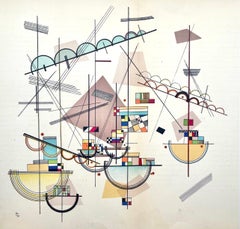
Wassily Kandinsky, Untitled, from Derriere le Miroir, 1953 (after)

Wassily Kandinsky, Untitled, from Derriere le Miroir, 1953 (after)

By Wassily Kandinsky

Located in Southampton, NY

This exquisite lithograph after Wassily Kandinsky (1866–1944), titled Sans Titre (Untitled), originates from the 1953 folio Derriere le Miroir, Nos. 60–61, published by Maeght Editeur, Paris, under the direction of Aime Maeght, and printed by Mourlot Freres, Paris. This plate pays homage to the artist’s groundbreaking geometric abstraction and his profound influence on postwar modernism. Through precise form and rhythmic structure, Sans Titre captures the musicality and spiritual dynamism that defined Kandinsky’s mature visual language, balancing intuitive movement with mathematical harmony. Executed on velin paper, this lithograph measures 15 x 22 inches (38.1 x 55.9 cm), with centerfold, as issued. Signed in the plate and unnumbered, as issued. The edition reflects the exceptional quality and craftsmanship of the Maeght and Mourlot collaborations, honoring Kandinsky’s legacy in fine art printing. Artwork Details: Artist: After Wassily Kandinsky (1866–1944) Title: Sans Titre (Untitled), from Derriere le Miroir, Nos. 60–61, 1953 Medium: Lithograph on velin paper Dimensions: 15 x 22 inches (38.1 x 55.9 cm), with centerfold, as issued Inscription: Signed in the plate and unnumbered, as issued Date: 1953 Publisher: Maeght Editeur, Paris Printer: Mourlot Freres, Paris Condition: Well preserved, consistent with age and medium Provenance: From the 1953 folio Derriere le Miroir, Nos. 60–61, published by Maeght Editeur, Paris About the Publication: Derriere le Miroir (translated as "Behind the Mirror") was an iconic French art periodical published from 1946 to 1982 by Maeght Editeur, one of the most influential art publishers of the 20th century. Founded by Aime Maeght in Paris, the publication was conceived as a visual and literary collaboration between leading modern artists, poets, and critics. Each issue functioned as both an exhibition catalogue and a work of art in itself—featuring original lithographs printed directly from the artists' stones or plates, alongside essays, poems, and critical commentary. Over the course of 36 years, Derriere le Miroir produced more than 250 issues and showcased an extraordinary roster of artists including Henri Matisse, Marc Chagall, Joan Miro, Georges Braque, Alexander Calder, Fernand Leger, Pierre Bonnard, Alberto Giacometti, Eduardo Chillida, Ellsworth Kelly, Francis Bacon, Paul Rebeyrolle, Claude Garache, Antoni Tapies, Bram van Velde, Pierre Alechinsky, Pol Bury, Shusaku Arakawa, and Gerard Titus-Carmel. Printed in the ateliers of Mourlot, Arte, and Imprimerie Moderne du Lion, the periodical set new standards for quality in color lithography, combining fine art printing with elegant typography and poetic text. Beyond its visual brilliance, Derriere le Miroir also became a cultural chronicle of postwar European modernism. Each issue coincided with exhibitions held at Galerie Maeght, providing a collectible and widely accessible record of groundbreaking shows. Its integration of image, text, and philosophy created a dialogue between art and literature that elevated the modern art book to new aesthetic heights. Today, Derriere le Miroir remains one of the most sought-after and historically significant art publications, prized by collectors and scholars alike for its craftsmanship, influence, and its role in defining the visual language of 20th-century modernism. The Maeght Foundation in Saint-Paul-de-Vence continues to honor this legacy through exhibitions and archival preservation of the series, affirming Derriere le Miroir's enduring place in the history of modern art and fine art publishing. About the Artist: Wassily Kandinsky (1866–1944) was a Russian-born painter, theorist, and pioneer of abstract art whose revolutionary vision transformed 20th-century modernism. Regarded as one of the first artists to create purely nonobjective paintings, Kandinsky sought to express inner emotion and spirituality through color, rhythm, and form, believing that art could evoke the same universal harmony as music. His groundbreaking theories on abstraction and the “spiritual in art” shaped the foundation of modern aesthetics and influenced generations of artists worldwide. Closely associated with the Bauhaus movement, he developed a dynamic visual language that combined geometry and lyricism, bridging intuition and intellect. Kandinsky’s legacy resonates alongside the innovations of Pablo Picasso, Henri Matisse, Alexander Calder, Georges Braque, Marc Chagall, Alberto Giacometti, Salvador Dali, Joan Miro, Marcel Duchamp, and Man Ray—artists who, like him, redefined the possibilities of modern art. His works are represented in the world’s leading museums, including MoMA, the Guggenheim, the Centre Pompidou, and the Tate, and remain among the most coveted by collectors globally. The highest price ever paid for a Wassily Kandinsky artwork is approximately $45.6 million USD, achieved in 2017 at Christie’s London for Bild mit weissen Linien (Painting with White Lines) (1913). Wassily Kandinsky Sans Titre, Kandinsky Derriere le Miroir, Kandinsky Maeght Editeur Paris, Kandinsky Mourlot Freres, Kandinsky 1953 edition, Kandinsky lithograph...

Category

1950s Modern Abstract Prints

Materials

Lithograph

Wassily Kandinsky, Untitled, from Derriere le Miroir, 1953 (after)

Wassily Kandinsky, Untitled, from Derriere le Miroir, 1953 (after)

By Wassily Kandinsky

Located in Southampton, NY

This exquisite lithograph after Wassily Kandinsky (1866–1944), titled Sans Titre (Untitled), originates from the 1953 folio Derriere le Miroir, Nos. 60–61, published by Maeght Editeur, Paris, under the direction of Aime Maeght, and printed by Mourlot Freres, Paris. This plate pays homage to the artist’s groundbreaking geometric abstraction and his profound influence on postwar modernism. Through precise form and rhythmic structure, Sans Titre captures the musicality and spiritual dynamism that defined Kandinsky’s mature visual language, balancing intuitive movement with mathematical harmony. Executed on velin paper, this lithograph measures 15 x 11 inches (38.1 x 27.9 cm), as issued. Signed in the plate and unnumbered, as issued. The edition reflects the exceptional quality and craftsmanship of the Maeght and Mourlot collaborations, honoring Kandinsky’s legacy in fine art printing. Artwork Details: Artist: After Wassily Kandinsky (1866–1944) Title: Sans Titre (Untitled), from Derriere le Miroir, Nos. 60–61, 1953 Medium: Lithograph on velin paper Dimensions: 15 x 11 inches (38.1 x 27.9 cm), as issued Inscription: Signed in the plate and unnumbered, as issued Date: 1953 Publisher: Maeght Editeur, Paris Printer: Mourlot Freres, Paris Condition: Well preserved, consistent with age and medium Provenance: From the 1953 folio Derriere le Miroir, Nos. 60–61, published by Maeght Editeur, Paris About the Publication: Derriere le Miroir (translated as "Behind the Mirror") was an iconic French art periodical published from 1946 to 1982 by Maeght Editeur, one of the most influential art publishers of the 20th century. Founded by Aime Maeght in Paris, the publication was conceived as a visual and literary collaboration between leading modern artists, poets, and critics. Each issue functioned as both an exhibition catalogue and a work of art in itself—featuring original lithographs printed directly from the artists' stones or plates, alongside essays, poems, and critical commentary. Over the course of 36 years, Derriere le Miroir produced more than 250 issues and showcased an extraordinary roster of artists including Henri Matisse, Marc Chagall, Joan Miro, Georges Braque, Alexander Calder, Fernand Leger, Pierre Bonnard, Alberto Giacometti, Eduardo Chillida, Ellsworth Kelly, Francis Bacon, Paul Rebeyrolle, Claude Garache, Antoni Tapies, Bram van Velde, Pierre Alechinsky, Pol Bury, Shusaku Arakawa, and Gerard Titus-Carmel. Printed in the ateliers of Mourlot, Arte, and Imprimerie Moderne du Lion, the periodical set new standards for quality in color lithography, combining fine art printing with elegant typography and poetic text. Beyond its visual brilliance, Derriere le Miroir also became a cultural chronicle of postwar European modernism. Each issue coincided with exhibitions held at Galerie Maeght, providing a collectible and widely accessible record of groundbreaking shows. Its integration of image, text, and philosophy created a dialogue between art and literature that elevated the modern art book to new aesthetic heights. Today, Derriere le Miroir remains one of the most sought-after and historically significant art publications, prized by collectors and scholars alike for its craftsmanship, influence, and its role in defining the visual language of 20th-century modernism. The Maeght Foundation in Saint-Paul-de-Vence continues to honor this legacy through exhibitions and archival preservation of the series, affirming Derriere le Miroir's enduring place in the history of modern art and fine art publishing. About the Artist: Wassily Kandinsky (1866–1944) was a Russian-born painter, theorist, and pioneer of abstract art whose revolutionary vision transformed 20th-century modernism. Regarded as one of the first artists to create purely nonobjective paintings, Kandinsky sought to express inner emotion and spirituality through color, rhythm, and form, believing that art could evoke the same universal harmony as music. His groundbreaking theories on abstraction and the “spiritual in art” shaped the foundation of modern aesthetics and influenced generations of artists worldwide. Closely associated with the Bauhaus movement, he developed a dynamic visual language that combined geometry and lyricism, bridging intuition and intellect. Kandinsky’s legacy resonates alongside the innovations of Pablo Picasso, Henri Matisse, Alexander Calder, Georges Braque, Marc Chagall, Alberto Giacometti, Salvador Dali, Joan Miro, Marcel Duchamp, and Man Ray—artists who, like him, redefined the possibilities of modern art. His works are represented in the world’s leading museums, including MoMA, the Guggenheim, the Centre Pompidou, and the Tate, and remain among the most coveted by collectors globally. The highest price ever paid for a Wassily Kandinsky artwork is approximately $45.6 million USD, achieved in 2017 at Christie’s London for Bild mit weissen Linien (Painting with White Lines) (1913). Wassily Kandinsky Sans Titre, Kandinsky Derriere le Miroir, Kandinsky Maeght Editeur Paris, Kandinsky Mourlot Freres, Kandinsky 1953 edition, Kandinsky lithograph...

Category

1950s Modern Abstract Prints

Materials

Lithograph

Wassily Kandinsky, Untitled, from Derriere le Miroir, 1953 (after)

Wassily Kandinsky, Untitled, from Derriere le Miroir, 1953 (after)

By Wassily Kandinsky

Located in Southampton, NY

This exquisite lithograph after Wassily Kandinsky (1866–1944), titled Sans Titre (Untitled), originates from the 1953 folio Derriere le Miroir, Nos. 60–61, published by Maeght Editeur, Paris, under the direction of Aime Maeght, and printed by Mourlot Freres, Paris. This plate pays homage to the artist’s groundbreaking geometric abstraction and his profound influence on postwar modernism. Through precise form and rhythmic structure, Sans Titre captures the musicality and spiritual dynamism that defined Kandinsky’s mature visual language, balancing intuitive movement with mathematical harmony. Executed on velin paper, this lithograph measures 15 x 22 inches (38.1 x 55.9 cm), with centerfold, as issued. Signed in the plate and unnumbered, as issued. The edition reflects the exceptional quality and craftsmanship of the Maeght and Mourlot collaborations, honoring Kandinsky’s legacy in fine art printing. Artwork Details: Artist: After Wassily Kandinsky (1866–1944) Title: Sans Titre (Untitled), from Derriere le Miroir, Nos. 60–61, 1953 Medium: Lithograph on velin paper Dimensions: 15 x 22 inches (38.1 x 55.9 cm), with centerfold, as issued Inscription: Signed in the plate and unnumbered, as issued Date: 1953 Publisher: Maeght Editeur, Paris Printer: Mourlot Freres, Paris Condition: Well preserved, consistent with age and medium Provenance: From the 1953 folio Derriere le Miroir, Nos. 60–61, published by Maeght Editeur, Paris About the Publication: Derriere le Miroir (translated as "Behind the Mirror") was an iconic French art periodical published from 1946 to 1982 by Maeght Editeur, one of the most influential art publishers of the 20th century. Founded by Aime Maeght in Paris, the publication was conceived as a visual and literary collaboration between leading modern artists, poets, and critics. Each issue functioned as both an exhibition catalogue and a work of art in itself—featuring original lithographs printed directly from the artists' stones or plates, alongside essays, poems, and critical commentary. Over the course of 36 years, Derriere le Miroir produced more than 250 issues and showcased an extraordinary roster of artists including Henri Matisse, Marc Chagall, Joan Miro, Georges Braque, Alexander Calder, Fernand Leger, Pierre Bonnard, Alberto Giacometti, Eduardo Chillida, Ellsworth Kelly, Francis Bacon, Paul Rebeyrolle, Claude Garache, Antoni Tapies, Bram van Velde, Pierre Alechinsky, Pol Bury, Shusaku Arakawa, and Gerard Titus-Carmel. Printed in the ateliers of Mourlot, Arte, and Imprimerie Moderne du Lion, the periodical set new standards for quality in color lithography, combining fine art printing with elegant typography and poetic text. Beyond its visual brilliance, Derriere le Miroir also became a cultural chronicle of postwar European modernism. Each issue coincided with exhibitions held at Galerie Maeght, providing a collectible and widely accessible record of groundbreaking shows. Its integration of image, text, and philosophy created a dialogue between art and literature that elevated the modern art book to new aesthetic heights. Today, Derriere le Miroir remains one of the most sought-after and historically significant art publications, prized by collectors and scholars alike for its craftsmanship, influence, and its role in defining the visual language of 20th-century modernism. The Maeght Foundation in Saint-Paul-de-Vence continues to honor this legacy through exhibitions and archival preservation of the series, affirming Derriere le Miroir's enduring place in the history of modern art and fine art publishing. About the Artist: Wassily Kandinsky (1866–1944) was a Russian-born painter, theorist, and pioneer of abstract art whose revolutionary vision transformed 20th-century modernism. Regarded as one of the first artists to create purely nonobjective paintings, Kandinsky sought to express inner emotion and spirituality through color, rhythm, and form, believing that art could evoke the same universal harmony as music. His groundbreaking theories on abstraction and the “spiritual in art” shaped the foundation of modern aesthetics and influenced generations of artists worldwide. Closely associated with the Bauhaus movement, he developed a dynamic visual language that combined geometry and lyricism, bridging intuition and intellect. Kandinsky’s legacy resonates alongside the innovations of Pablo Picasso, Henri Matisse, Alexander Calder, Georges Braque, Marc Chagall, Alberto Giacometti, Salvador Dali, Joan Miro, Marcel Duchamp, and Man Ray—artists who, like him, redefined the possibilities of modern art. His works are represented in the world’s leading museums, including MoMA, the Guggenheim, the Centre Pompidou, and the Tate, and remain among the most coveted by collectors globally. The highest price ever paid for a Wassily Kandinsky artwork is approximately $45.6 million USD, achieved in 2017 at Christie’s London for Bild mit weissen Linien (Painting with White Lines) (1913). Wassily Kandinsky Sans Titre, Kandinsky Derriere le Miroir, Kandinsky Maeght Editeur Paris, Kandinsky Mourlot Freres, Kandinsky 1953 edition, Kandinsky lithograph...

Category

1950s Modern Abstract Prints

Materials

Lithograph

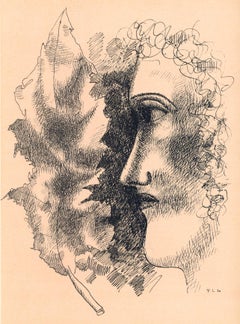
Fernand Leger, Head and Leaf, from Verve, Revue Artistique, 1939

Fernand Leger, Head and Leaf, from Verve, Revue Artistique, 1939

By Fernand Léger

Located in Southampton, NY

This exquisite lithograph by Fernand Leger (1881–1955), titled Tete et Feuille (Head and Leaf), from Verve, Revue Artistique et Litteraire, Vol. II, No. 5–6, originates from the 1939 issue published by Editions de la revue Verve, Paris, under the direction of Teriade, Editeur, Paris, and printed by Mourlot Freres, Paris, 1939. This striking composition epitomizes Leger’s distinct synthesis of mechanical precision and organic vitality. Tete et Feuille demonstrates his fascination with the interplay between geometry and the human figure—translating natural forms into bold, dynamic arrangements of line and color. The juxtaposition of the stylized head and leaf form reveals Leger’s mastery in uniting abstraction with humanism, a hallmark of his mature modernist vision. Through rhythmic design and rich tonal contrast, the work captures the harmony between nature and the machine age that defined much of Leger’s career. Executed as a lithograph on velin du Marais paper, this work measures 14 x 10.5 inches (35.56 x 26.67 cm). Signed in the plate and unnumbered as issued. The edition reflects the exceptional quality of the Mourlot Freres atelier, renowned for its collaborations with the foremost modern masters of the 20th century. Artwork Details: Artist: Fernand Leger (1881–1955) Title: Tete et Feuille (Head and Leaf), from Verve, Revue Artistique et Litteraire, Vol. II, No. 5–6, 1939 Medium: Lithograph on velin du Marais paper Dimensions: 14 x 10.5 inches (35.56 x 26.67 cm) Inscription: Signed in the plate and unnumbered as issued Date: 1939 Publisher: Editions de la revue Verve, Paris, under the direction of Teriade, Editeur, Paris Printer: Mourlot Freres, Paris Condition: Well preserved, consistent with age and medium Provenance: From Verve, Revue Artistique et Litteraire, Vol. II, No. 5–6, published by Editions de la revue Verve, Paris, 1939 About the Publication: Verve, Revue Artistique et Litteraire was one of the most influential art periodicals of the 20th century, founded in Paris in 1937 by the visionary Greek-born publisher Teriade (Stratis Eleftheriades). Conceived as a union of art and literature, Verve featured original lithographs and writings by the foremost artists and thinkers of its time, including Henri Matisse, Pablo Picasso, Marc Chagall, Georges Braque, Joan Miro, and Fernand Leger. Each issue represented a collaboration between artists, poets, and master printers, notably Mourlot Freres, whose exceptional craftsmanship brought color lithography to new aesthetic heights. The 1939 double issue, Vol. II, No. 5–6, is among the most distinguished editions, reflecting both the intellectual vigor and artistic experimentation that defined the pre-war Parisian avant-garde. About the Artist: Fernand Leger (1881–1955) was a visionary French painter, sculptor, designer, and filmmaker whose groundbreaking fusion of modern industry, vivid color, and geometric form transformed the course of 20th-century art. Born in Argentan, Normandy, Leger began as an architectural draftsman before studying at the Academie Julian and the Ecole des Beaux-Arts in Paris, where he absorbed the lessons of Paul Cezanne’s structural rigor and the revolutionary ideas of Cubism. Alongside Pablo Picasso and Georges Braque, he became one of the leading innovators of the avant-garde, yet his work stood apart through its embrace of mechanical rhythm, bold contrasts, and industrial modernity—earning him the title “the painter of the machine age.” His art celebrated the beauty of technology, urban life, and the human form rendered in dynamic, interlocking cylinders and planes, evoking the pulse of the modern world. Immersed in the vibrant Parisian art scene, Leger worked in dialogue with peers and contemporaries such as Alexander Calder, Alberto Giacometti, Salvador Dali, Joan Miro, Wassily Kandinsky, Marcel Duchamp, and Man Ray, all of whom shared his commitment to innovation and the reimagining of artistic expression. Beyond painting, Leger’s creative reach extended into film, design, and monumental public art—his 1924 collaboration on Ballet Mecanique with Dudley Murphy and Man Ray remains a landmark of avant-garde cinema. His later works evolved toward greater clarity and monumentality, celebrating the unity of form, color, and humanity through large-scale murals and mosaics that bridged fine art and architecture. Leger’s synthesis of Cubism, Futurism, and abstraction paved the way for movements such as Pop Art and influenced generations of artists including Roy Lichtenstein, Ellsworth Kelly, Robert Indiana, and Alexander Calder, who admired his fusion of structure, energy, and optimism. Today, his works are prized by major museums and collectors worldwide for their bold visual power and enduring modernity. His highest auction record was achieved by La femme en rouge et vert (1914), which sold for $39,241,000 at Sotheby’s, New York, on May 7, 2008. Fernand Leger Tete et Feuille, Leger Verve, Leger Mourlot...

Category

1930s Fauvist Figurative Prints

Materials

Lithograph

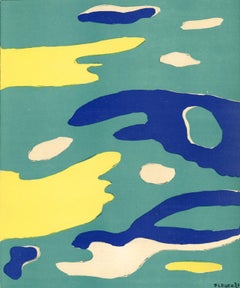
Fernand Leger, Water, from Verve, Revue Artistique, 1937

Fernand Leger, Water, from Verve, Revue Artistique, 1937

By Fernand Léger

Located in Southampton, NY

This exquisite lithograph by Fernand Leger (1881–1955), titled L’Eau (Water), from Verve, Revue Artistique et Litteraire, Vol. I, No. 1, originates from the 1937 issue published by Editions de la revue Verve, Paris, under the direction of Teriade, Editeur, Paris, and printed by Mourlot Freres, Paris, 1937. This vibrant composition embodies Leger’s fascination with the elemental forces of nature reinterpreted through the lens of modernity. L’Eau reflects his ongoing exploration of the harmony between mechanical precision and organic movement, transforming the natural motif of flowing water into an abstract symphony of curves, color, and rhythm. Through its interplay of form and line, the work reveals Leger’s mastery of balance and visual dynamism—an artistic celebration of motion and modern life. Executed as a lithograph on velin du Marais paper, this work measures 14 x 10.5 inches (35.56 x 26.67 cm). Signed in the plate and unnumbered as issued. The edition reflects the superior craftsmanship of the Mourlot Freres atelier, celebrated for its collaborations with the leading modern artists of the 20th century. Artwork Details: Artist: Fernand Leger (1881–1955) Title: L’Eau (Water), from Verve, Revue Artistique et Litteraire, Vol. I, No. 1, 1937 Medium: Lithograph on velin du Marais paper Dimensions: 14 x 10.5 inches (35.56 x 26.67 cm) Inscription: Signed in the plate and unnumbered as issued Date: 1937 Publisher: Editions de la revue Verve, Paris, under the direction of Teriade, Editeur, Paris Printer: Mourlot Freres, Paris Condition: Well preserved, consistent with age and medium Provenance: From Verve, Revue Artistique et Litteraire, Vol. I, No. 1, published by Editions de la revue Verve, Paris, 1937 About the Publication: Verve, Revue Artistique et Litteraire was one of the most influential art periodicals of the 20th century, founded in Paris in 1937 by the visionary Greek-born publisher Teriade (Stratis Eleftheriades). Designed as a meeting point of art, poetry, and philosophy, Verve united the era’s greatest modern artists—including Henri Matisse, Pablo Picasso, Marc Chagall, Georges Braque, Joan Miro, and Fernand Leger—with leading intellectuals such as Paul Eluard and Albert Camus. Printed by the master lithographers Mourlot Freres, each issue was a masterpiece of craftsmanship, presenting original lithographs alongside literary works in a richly designed format. The inaugural issue, Vol. I, No. 1, published in 1937, marked a defining moment in the history of modern art publishing—introducing the vision of Verve as a beacon of artistic collaboration and aesthetic excellence that would shape the visual culture of the 20th century. About the Artist: Fernand Leger (1881–1955) was a visionary French painter, sculptor, designer, and filmmaker whose groundbreaking fusion of modern industry, vivid color, and geometric form transformed the course of 20th-century art. Born in Argentan, Normandy, Leger began as an architectural draftsman before studying at the Academie Julian and the Ecole des Beaux-Arts in Paris, where he absorbed the lessons of Paul Cezanne’s structural rigor and the revolutionary ideas of Cubism. Alongside Pablo Picasso and Georges Braque, he became one of the leading innovators of the avant-garde, yet his work stood apart through its embrace of mechanical rhythm, bold contrasts, and industrial modernity—earning him the title “the painter of the machine age.” His art celebrated the beauty of technology, urban life, and the human form rendered in dynamic, interlocking cylinders and planes, evoking the pulse of the modern world. Immersed in the vibrant Parisian art scene, Leger worked in dialogue with peers and contemporaries such as Alexander Calder, Alberto Giacometti, Salvador Dali, Joan Miro, Wassily Kandinsky, Marcel Duchamp, and Man Ray, all of whom shared his commitment to innovation and the reimagining of artistic expression. Beyond painting, Leger’s creative reach extended into film, design, and monumental public art—his 1924 collaboration on Ballet Mecanique with Dudley Murphy and Man Ray remains a landmark of avant-garde cinema. His later works evolved toward greater clarity and monumentality, celebrating the unity of form, color, and humanity through large-scale murals and mosaics that bridged fine art and architecture. Leger’s synthesis of Cubism, Futurism, and abstraction paved the way for movements such as Pop Art and influenced generations of artists including Roy Lichtenstein, Ellsworth Kelly, Robert Indiana, and Alexander Calder, who admired his fusion of structure, energy, and optimism. Today, his works are prized by major museums and collectors worldwide for their bold visual power and enduring modernity. His highest auction record was achieved by La femme en rouge et vert (1914), which sold for $39,241,000 at Sotheby’s, New York, on May 7, 2008. Fernand Leger L’Eau, Leger Verve, Leger Mourlot...

Category

1930s Cubist Abstract Prints

Materials

Lithograph

Alexander Calder, Untitled, from Derriere le miroir, 1966

Alexander Calder, Untitled, from Derriere le miroir, 1966

By Alexander Calder

Located in Southampton, NY

This exquisite lithograph by Alexander Calder (1898–1976), titled Sans titre (Untitled), from the album Lithographies et eaux-fortes originales, livres illustres originaux, affiches,...

Category

1960s Modern Abstract Prints
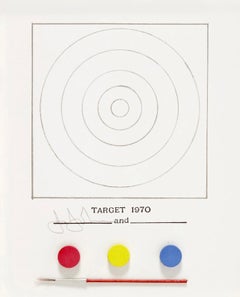
Materials

Lithograph

Henri Matisse, Ballerina, from Derriere le Miroir, 1952 (after)

Henri Matisse, Ballerina, from Derriere le Miroir, 1952 (after)

By Henri Matisse

Located in Southampton, NY

This exquisite lithograph after Henri Matisse (1869–1954), titled Ballerine (Ballerina), originates from the 1952 folio Derriere le Miroir, No. 46–47, published by Maeght Editeur, Pa...

Category

1950s Modern Figurative Prints

Materials

Lithograph

Georges Braque, Cafe-Bar, from Derriere le Miroir, 1964 (after)

Georges Braque, Cafe-Bar, from Derriere le Miroir, 1964 (after)

By Georges Braque

Located in Southampton, NY

This exquisite lithograph after Georges Braque (1882–1963), titled Cafe-Bar, originates from the 1964 folio Derriere le Miroir, Nos. 144–145–146, L’Hommage a Georges Braque (Tribute ...

Category

1960s Cubist Abstract Prints
Materials

Lithograph

Georges Braque, Ajax, from Derriere le Miroir, 1964 (after)

Georges Braque, Ajax, from Derriere le Miroir, 1964 (after)

By Georges Braque

Located in Southampton, NY

This exquisite lithograph after Georges Braque (1882–1963), titled Ajax, originates from the 1964 folio Derriere le Miroir, Nos. 144–145–146, L’Hommage a Georges Braque (Tribute to G...

Category

1960s Cubist Abstract Prints
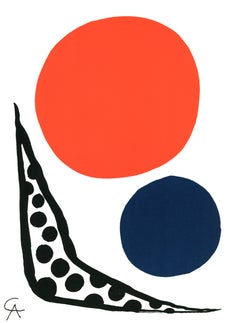
Materials

Lithograph

Georges Braque, The Portuguese, from Derriere le Miroir, 1964 (after)

Georges Braque, The Portuguese, from Derriere le Miroir, 1964 (after)

By Georges Braque

Located in Southampton, NY

This exquisite lithograph after Georges Braque (1882–1963), titled Le Portugais (The Portuguese), originates from the 1964 folio Derriere le Miroir, Nos. 144–145–146, L’Hommage a Geo...

Category

1960s Cubist Abstract Prints
Materials
Lithograph